1- NORMA FRONTALIS
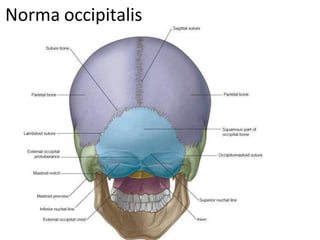
2- NORMA OCCIPITALIS
3- NORMA LATERALIS
4- LATERAL VIEW
Lecture 2
NORMA FRONTALIS
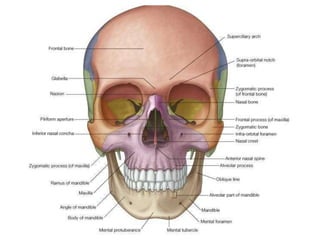
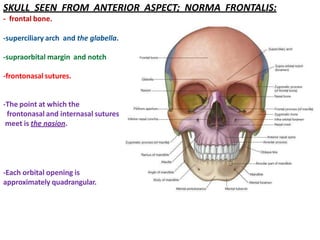
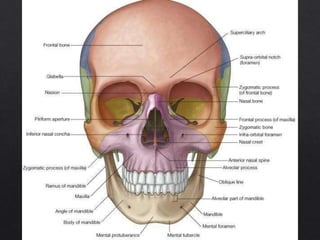
SKULL SEEN FROM ANTERIOR ASPECT; NORMA FRONTALIS:
- frontal bone.
-superciliary arch and the glabella.
-supraorbital margin and notch
-frontonasal sutures.
-The point at which the
frontonasal and internasal sutures
meet is the nasion.
-Each orbital opening is
approximately quadrangular.
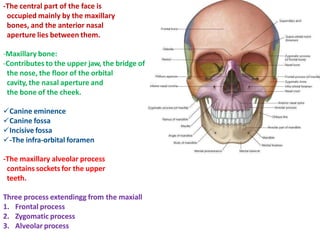
-The central part of the face is
occupied mainly by the maxillary
bones, and the anterior nasal
aperture lies between them.
-Maxillary bone:
-Contributes to the upper jaw, the bridge of
the nose, the floor of the orbital
cavity, the nasal aperture and
the bone of the cheek.
Canine eminence
Canine fossa
Incisive fossa
-The infra-orbital foramen
-The maxillary alveolar process
contains sockets for the upper
teeth.
Three process extendingg from the maxiall
1. Frontal process
2. Zygomatic process
3. Alveolar process
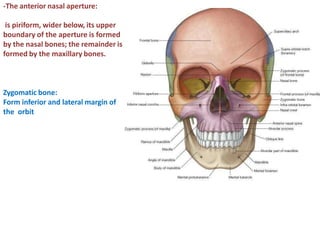
-The anterior nasal aperture:
is piriform, wider below, its upper
boundary of the aperture is formed
by the nasal bones; the remainder is
formed by the maxillary bones.
Zygomatic bone:
Form inferior and lateral margin of
the orbit
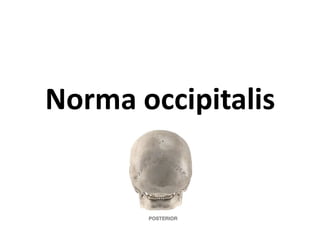
Norma occipitalis
Norma occipitalis
NORMA LATERALIS
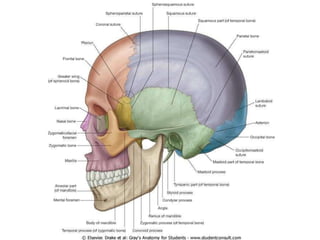
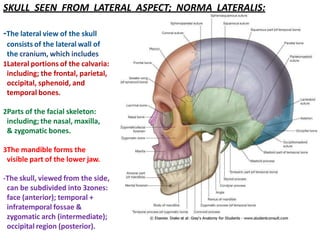
SKULL SEEN FROM LATERAL ASPECT; NORMA LATERALIS:
-The lateral view of the skull
consists of the lateral wall of
the cranium, which includes
1Lateral portions of the calvaria:
including; the frontal, parietal,
occipital, sphenoid, and
temporal bones.
2Parts of the facial skeleton:
including; the nasal, maxilla,
& zygomatic bones.
3The mandible forms the
visible part of the lower jaw.
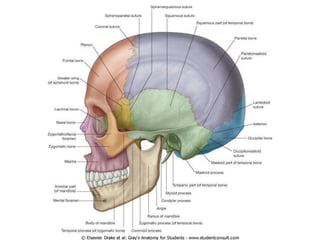
-The skull, viewed from the side,
can be subdivided into 3zones:
face (anterior); temporal +
infratemporal fossae &
zygomatic arch (intermediate);
occipital region (posterior).
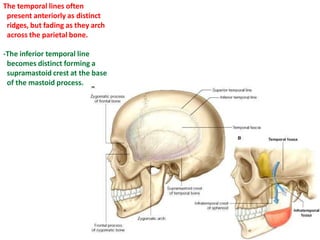
The temporal lines often
present anteriorly as distinct
ridges, but fading as they arch
across the parietal bone.
-The inferior temporal line
becomes distinct forming a
supramastoid crest at the base
of the mastoid process.
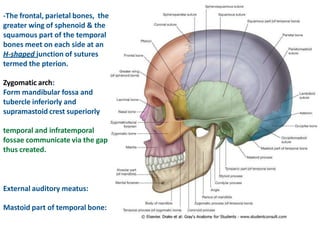
-The frontal, parietal bones, the
greater wing of sphenoid & the
squamous part of the temporal
bones meet on each side at an
H-shaped junction of sutures
termed the pterion.
Zygomatic arch:
Form mandibular fossa and
tubercle inferiorly and
supramastoid crest superiorly
temporal and infratemporal
fossae communicate via the gap
thus created.
External auditory meatus:
Mastoid part of temporal bone:
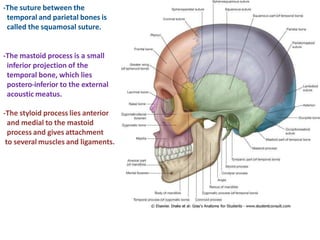
-The suture between the
temporal and parietal bones is
called the squamosal suture.
-The mastoid process is a small
inferior projection of the
temporal bone, which lies
postero-inferior to the external
acoustic meatus.
-The styloid process lies anterior
and medial to the mastoid
process and gives attachment
to several muscles and ligaments.
LATERAL VIEW
-SKULL
TEMPORAL AND INFRATEMPORAL REGION
( LATERAL VIEW)
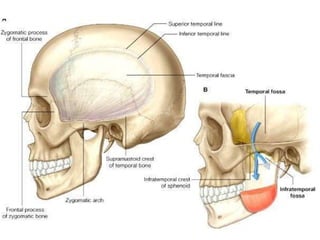
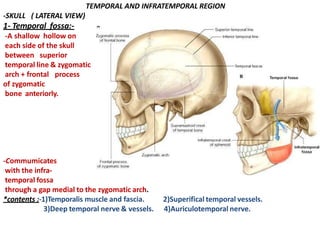
1- Temporal fossa:-
-A shallow hollow on
each side of the skull
between superior
temporal line & zygomatic
arch + frontal process
of zygomatic
bone anteriorly.
-Commumicates
with the infra-
temporal fossa
through a gap medial to the zygomatic arch.
*contents :-1)Temporalis muscle and fascia.
3)Deep temporal nerve & vessels.
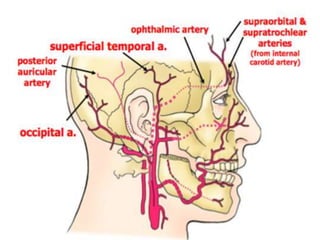
2)Superifical temporal vessels.
4)Auriculotemporal nerve.
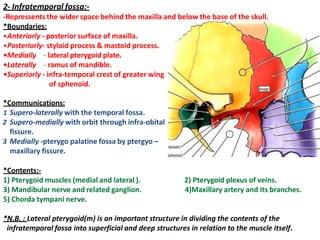
2- Infratemporal fossa:-
-Repressents the wider space behind the maxilla and below the base of the skull.
*Boundaries:
•Anteriorly - posterior surface of maxilla.
•Posteriorly- styloid process & mastoid process.
•Medially
•Laterally
- lateral pterygoid plate.
- ramus of mandible.
•Superiorly - infra-temporal crest of greater wing
of sphenoid.
*Communications:
1 Supero-laterally with the temporal fossa.
2 Supero-medially with orbit through infra-obital
fissure.
3 Medially -pterygo palatine fossa by ptergyo –
maxillary fissure.
*Contents:-
1) Pterygoid muscles (medial and lateral ).
3) Mandibular nerve and related ganglion.
5) Chorda tympani nerve.
2) Pterygoid plexus of veins.
4)Maxillary artery and its branches.
*N.B. : Lateral pterygoid(m) is an important structure in dividing the contents of the
infratemporal fossa into superficial and deep structures in relation to the muscle itself.
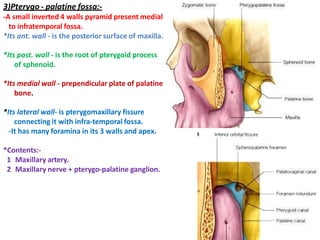
3)Pterygo - palatine fossa:-
-A small inverted 4 walls pyramid present medial
to infratemporal fossa.
*Its ant. wall - is the posterior surface of maxilla.
*Its post. wall - is the root of pterygoid process
of sphenoid.
*Its medial wall - prependicular plate of palatine
bone.
*Its lateral wall- is pterygomaxillary fissure
connecting it with infra-temporal fossa.
-It has many foramina in its 3 walls and apex.
*Contents:-
1 Maxillary artery.
2 Maxillary nerve + pterygo-palatine ganglion.
Thank you …

lateralis and frontalis-lecture 2.pptx

  • 2.
    1- NORMA FRONTALIS 2-NORMA OCCIPITALIS 3- NORMA LATERALIS 4- LATERAL VIEW Lecture 2
  • 3.
  • 5.
    SKULL SEEN FROMANTERIOR ASPECT; NORMA FRONTALIS: - frontal bone. -superciliary arch and the glabella. -supraorbital margin and notch -frontonasal sutures. -The point at which the frontonasal and internasal sutures meet is the nasion. -Each orbital opening is approximately quadrangular.
  • 7.
    -The central partof the face is occupied mainly by the maxillary bones, and the anterior nasal aperture lies between them. -Maxillary bone: -Contributes to the upper jaw, the bridge of the nose, the floor of the orbital cavity, the nasal aperture and the bone of the cheek. Canine eminence Canine fossa Incisive fossa -The infra-orbital foramen -The maxillary alveolar process contains sockets for the upper teeth. Three process extendingg from the maxiall 1. Frontal process 2. Zygomatic process 3. Alveolar process
  • 8.
    -The anterior nasalaperture: is piriform, wider below, its upper boundary of the aperture is formed by the nasal bones; the remainder is formed by the maxillary bones. Zygomatic bone: Form inferior and lateral margin of the orbit
  • 9.
  • 10.
  • 11.
  • 13.
    SKULL SEEN FROMLATERAL ASPECT; NORMA LATERALIS: -The lateral view of the skull consists of the lateral wall of the cranium, which includes 1Lateral portions of the calvaria: including; the frontal, parietal, occipital, sphenoid, and temporal bones. 2Parts of the facial skeleton: including; the nasal, maxilla, & zygomatic bones. 3The mandible forms the visible part of the lower jaw. -The skull, viewed from the side, can be subdivided into 3zones: face (anterior); temporal + infratemporal fossae & zygomatic arch (intermediate); occipital region (posterior).
  • 14.
    The temporal linesoften present anteriorly as distinct ridges, but fading as they arch across the parietal bone. -The inferior temporal line becomes distinct forming a supramastoid crest at the base of the mastoid process.
  • 17.
    -The frontal, parietalbones, the greater wing of sphenoid & the squamous part of the temporal bones meet on each side at an H-shaped junction of sutures termed the pterion. Zygomatic arch: Form mandibular fossa and tubercle inferiorly and supramastoid crest superiorly temporal and infratemporal fossae communicate via the gap thus created. External auditory meatus: Mastoid part of temporal bone:
  • 18.
    -The suture betweenthe temporal and parietal bones is called the squamosal suture. -The mastoid process is a small inferior projection of the temporal bone, which lies postero-inferior to the external acoustic meatus. -The styloid process lies anterior and medial to the mastoid process and gives attachment to several muscles and ligaments.
  • 19.
  • 20.
    -SKULL TEMPORAL AND INFRATEMPORALREGION ( LATERAL VIEW) 1- Temporal fossa:- -A shallow hollow on each side of the skull between superior temporal line & zygomatic arch + frontal process of zygomatic bone anteriorly. -Commumicates with the infra- temporal fossa through a gap medial to the zygomatic arch. *contents :-1)Temporalis muscle and fascia. 3)Deep temporal nerve & vessels. 2)Superifical temporal vessels. 4)Auriculotemporal nerve.
  • 21.
    2- Infratemporal fossa:- -Repressentsthe wider space behind the maxilla and below the base of the skull. *Boundaries: •Anteriorly - posterior surface of maxilla. •Posteriorly- styloid process & mastoid process. •Medially •Laterally - lateral pterygoid plate. - ramus of mandible. •Superiorly - infra-temporal crest of greater wing of sphenoid. *Communications: 1 Supero-laterally with the temporal fossa. 2 Supero-medially with orbit through infra-obital fissure. 3 Medially -pterygo palatine fossa by ptergyo – maxillary fissure. *Contents:- 1) Pterygoid muscles (medial and lateral ). 3) Mandibular nerve and related ganglion. 5) Chorda tympani nerve. 2) Pterygoid plexus of veins. 4)Maxillary artery and its branches. *N.B. : Lateral pterygoid(m) is an important structure in dividing the contents of the infratemporal fossa into superficial and deep structures in relation to the muscle itself.
  • 22.
    3)Pterygo - palatinefossa:- -A small inverted 4 walls pyramid present medial to infratemporal fossa. *Its ant. wall - is the posterior surface of maxilla. *Its post. wall - is the root of pterygoid process of sphenoid. *Its medial wall - prependicular plate of palatine bone. *Its lateral wall- is pterygomaxillary fissure connecting it with infra-temporal fossa. -It has many foramina in its 3 walls and apex. *Contents:- 1 Maxillary artery. 2 Maxillary nerve + pterygo-palatine ganglion.
  • 23.