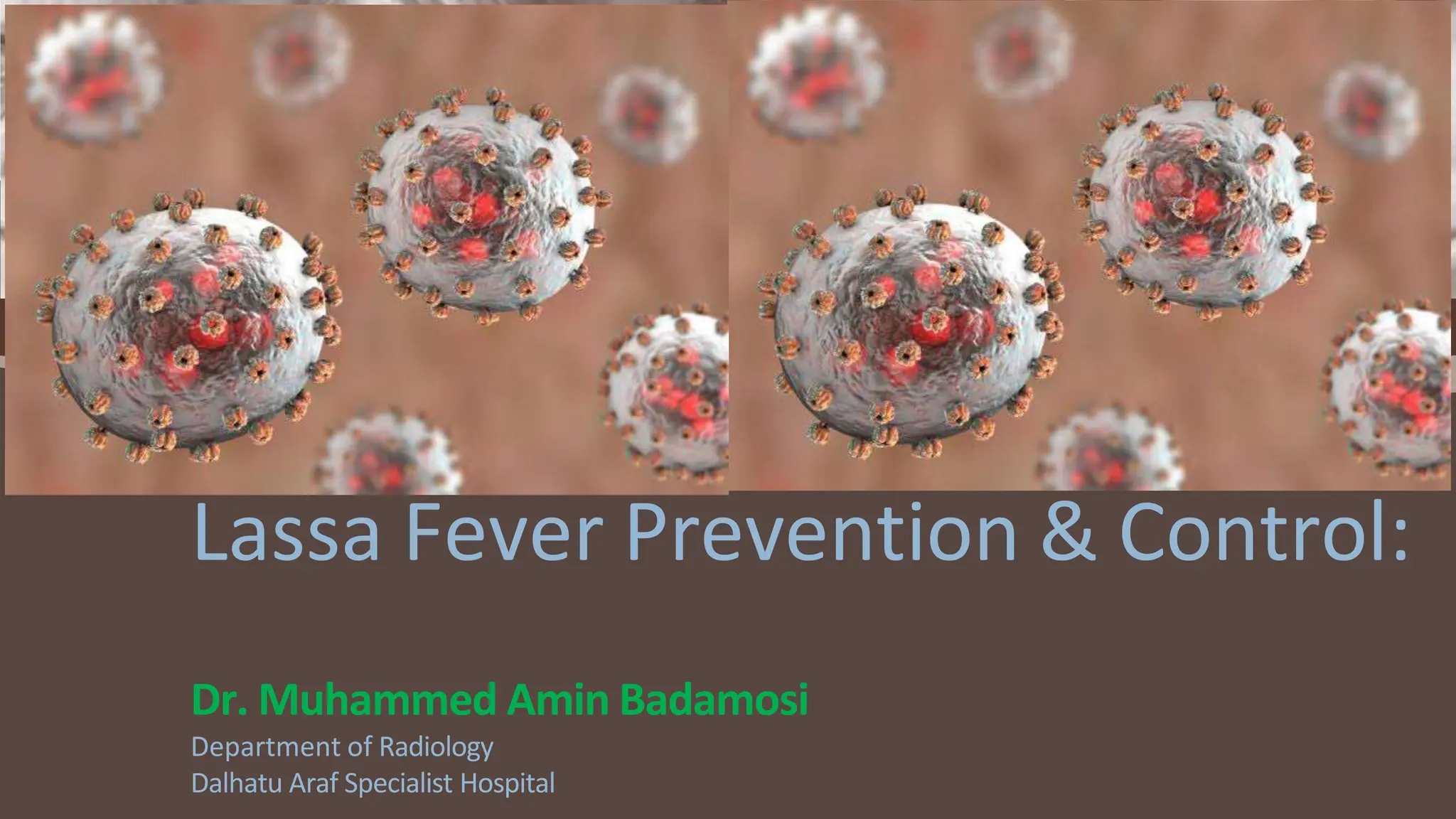
Lassa Fever Prevention & Control:
Dr. Muhammed Amin Badamosi
Department of Radiology
Dalhatu Araf Specialist Hospital
What can
INDIVIDUALS do?
..the pivotal role of the
COMMUNITY
..and the imperatives of
Health System
Strengthening.!
Learning Objectives
At the end of this lecture, we hope that
participants will have:
 refreshed their knowledge of the key
facts about Lassa Fever & related
haemorrhagic fevers
 understood the imperatives for alertness,
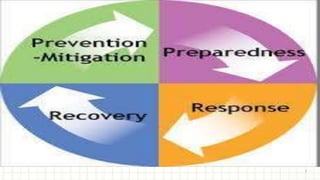
mitigation and preparedness
 Learnt the action points for individual ,
the community and health system in
prevention and control
3
4
The Presentation Outline
•Introduction
• Key facts about Lassa Fever
•What households can do
•Community Roles
•Health facility preparedness
•Health System Action points
•Conclusions
“Lassa fever has killed
hundreds of people in West
Africa, most of them in
Nigeria, since November
2015...
…many of these lives could
have been saved if a rapid
diagnostic test were available
so that people could receive
treatment early.”
5
did
so many have to die?
6
7
To change that,
..let’s talk about Lassa Fever..
8
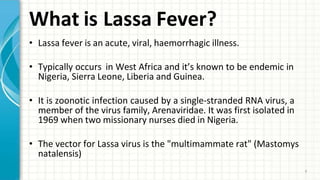
What is Lassa Fever?
9
• Lassa fever is an acute, viral, haemorrhagic illness.
• Typically occurs in West Africa and it’s known to be endemic in
Nigeria, Sierra Leone, Liberia and Guinea.
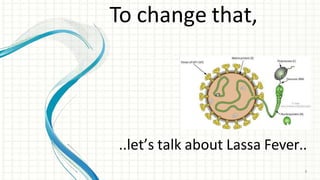
• It is zoonotic infection caused by a single-stranded RNA virus, a
member of the virus family, Arenaviridae. It was first isolated in
1969 when two missionary nurses died in Nigeria.
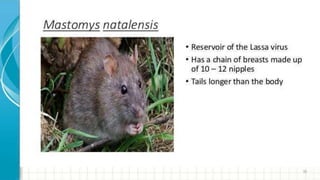
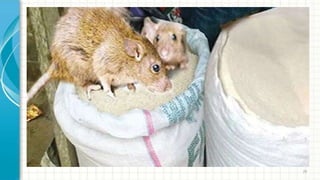
• The vector for Lassa virus is the "multimammate rat" (Mastomys
natalensis)
10
Lassa Fever Virus: Transmission
11
Carried by the Mastomys rat, shed in its urine and droppings :
• The virus is transmitted to humans from direct contact with infected
rats by catching, handling and preparing them for food, or
• through contact with food or household items contaminated with rat
faeces or urine.
• Transmission by air(aerosolized virus) is known.
• The virus can also be transmitted through contact with an infected
person’s body fluids.
• Ratus ratus is being investigated as a possible carrier.
Lassa Fever: Occurrence & Distribution
12
• 100,000 to 300,000, infections per year in west Africa, with approximately 5,000 deaths
[CDC & WHO]
• Accounts for 10%-16% of people admitted to hospitals every year in some places [CDC]
• Most cases are asymptomatic
• Approximately 15%-20% of patients hospitalized for Lassa fever die.
• However, only 1% of all Lassa virus infections result in death.
• In epidemics, case-fatality rate can reach 50% in hospitalized patients.
• Death usually occurs within 14 days of onset symptoms onset in fatal cases
• Affects all age group, both sexes
• Seasonal clustering: late rainy season and early dry season
• Virus is inactivated by heating >56 *C, PH<5.5 or >8.5, UV/gamma rays, detergents
• Explosive nosocomial outbreaks
• Incubation period is 3-21 days
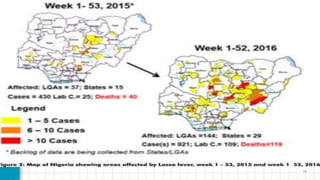
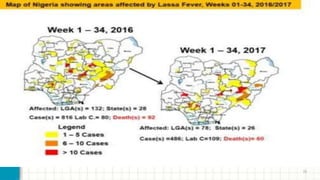
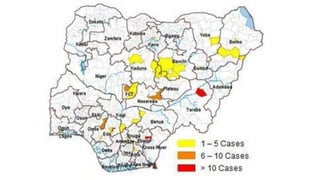
..NCDC REPORTS
Recently in Nigeria...
13
14
15
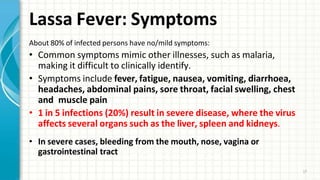
Lassa Fever: Symptoms
17
About 80% of infected persons have no/mild symptoms:
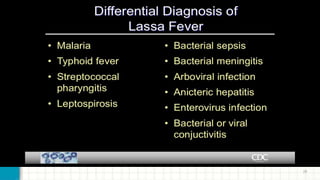
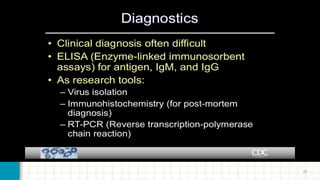
• Common symptoms mimic other illnesses, such as malaria,
making it difficult to clinically identify.
• Symptoms include fever, fatigue, nausea, vomiting, diarrhoea,
headaches, abdominal pains, sore throat, facial swelling, chest
and muscle pain
• 1 in 5 infections (20%) result in severe disease, where the virus
affects several organs such as the liver, spleen and kidneys.
• In severe cases, bleeding from the mouth, nose, vagina or
gastrointestinal tract
18
19
20
Lassa Fever: Treatment & Vaccination
21
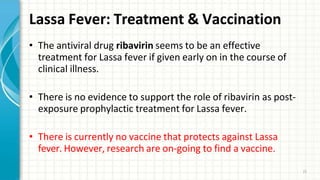
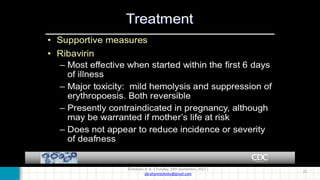
• The antiviral drug ribavirin seems to be an effective
treatment for Lassa fever if given early on in the course of
clinical illness.
• There is no evidence to support the role of ribavirin as post-
exposure prophylactic treatment for Lassa fever.
• There is currently no vaccine that protects against Lassa
fever. However, research are on-going to find a vaccine.
©Idokoko A. B. | Tuesday, 19th September, 2017 |
abrahamidokoko@gmail.com
22
©Idokoko A. B. | Tuesday, 19th September, 2017 |
abrahamidokoko@gmail.com
23
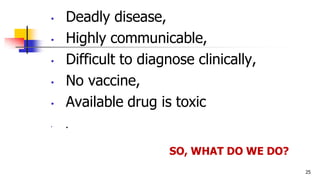
SO, WHAT DO WE DO?
• Deadly disease,
• Highly communicable,
• Difficult to diagnose clinically,
• No vaccine,
• Available drug is toxic
• .
25
Lassa Fever
“Prevention
is not just
better, it is
CHEAPER
than cure”
26
©Idokoko A. B. | Tuesday, 19th September, 2017 |
abrahamidokoko@gmail.com
27
I am just an…
Individual??
What can I do?
28
Prevention and Control: HOUSEHOLDS
28
1) Safe food storage [Store in containers with lid/cover/seal]
2) Avoid buying/eating exposed food from stores/shops
3) Wash all fresh fruits/foods properly before eating
4) Cook your foods thoroughly
5) Regular & proper hand washing and hygiene.
• Avoid contact with blood and body fluids while caring for sick persons
• safe burial practices
6) Wet down surfaces before sweeping
29
Prevention and Control: HOUSEHOLDS (2)
30
7) Disposing of garbage far from the home
8) Keep your home clean and tidy to discourage rats from entering: Make your
homes rat-proof
9) Keep a cat
10) Find, trap and sanitarily dispose off rats: Involve your neighbours
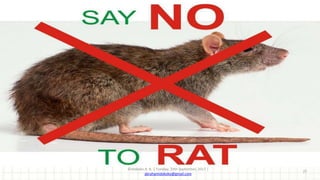
11) Avoid rodents as food source: DO NOT EAT RATS
12) Suspect every case of fever & seek care in a health facility for proper diagnosis
and treatment. Getting medical treatment early is your best chance at
surviving.
13)Avoid contacts with other people when you are ill/feverish
31
Prevention and Control: COMMUNITIES
©Idokoko A. B. | Tuesday, 19th September, 2017 |
abrahamidokoko@gmail.com
32
1) Adopt and implement community-wide program for rodent
control, avoidance and sanitary disposal
2) Include health education sessions in all meetings in the
community. Engage health experts among you to do this
3) Encourage peer-to-peer education on health
4) Participate in the planning, implementation, funding and
evaluation of all health interventions in your community.
5) Encourage your members to seek healthcare
EARLY from designated facilities when ill.
I am a…
Health worker.
You have a primary
responsibility here..
36
Prevention and Control: HEALTH FACILITY
34
1) Maintain high index of suspicion at all times
2) Enforce routine universal precaution by all healthworkers,
applied at all times, for all patients
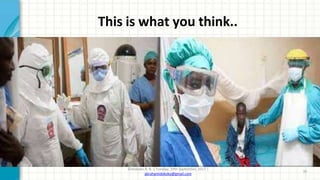
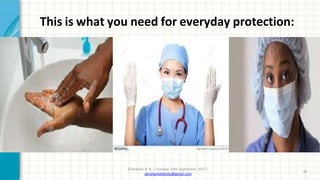
• wearing protective clothing, such as face masks, gloves, gowns, and goggles
• isolating infected patients from contact with unprotected persons until the
disease has run its course or test result rules out VHF.
• Always decontaminate yourself after work before leaving the health facility
3) Ensure hygiene and infection control tools and facilities are
available and working at all times
• such as running water, soap, and complete equipment sterilization tools
This is what you think..
©Idokoko A. B. | Tuesday, 19th September, 2017 |
abrahamidokoko@gmail.com
35
This is what you need for everyday protection:
©Idokoko A. B. | Tuesday, 19th September, 2017 |
abrahamidokoko@gmail.com
36
Prevention and Control: HEALTH FACILITY (2)
37
4) If you suspect something, don’t keep quiet, alert your colleagues and
superiors.
• should immediately contact local and national experts
5) Keep the hospital environment free from rodents: DO WHAT YOU PREACH.
6) Promoting good “community hygiene”. Regularly engage and mobilize your
host community for mass health education and action on the environment.
DON’T KEEP QUIET. If they contract the virus, you are at great risk.
7) All cases of fever MUST BE TESTED AND DIAGNOSED BEFORE TREATMENT
8) DEVELOP specific SOPs for your facility
Prevention and Control: HEALTH FACILITY (3)
©Idokoko A. B. | Tuesday, 19th September, 2017 |
abrahamidokoko@gmail.com
38
• Anyone suspected of having a VHF must use
a chemical toilet
• Disinfect and dispose of instruments
− Use a 0.5% solution of sodium hypochlorite
(1:10 dilution of bleach)
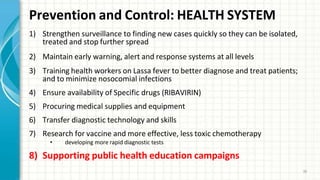
Prevention and Control: HEALTH SYSTEM
39
1) Strengthen surveillance to finding new cases quickly so they can be isolated,
treated and stop further spread
2) Maintain early warning, alert and response systems at all levels
3) Training health workers on Lassa fever to better diagnose and treat patients;
and to minimize nosocomial infections
4) Ensure availability of Specific drugs (RIBAVIRIN)
5) Procuring medical supplies and equipment
6) Transfer diagnostic technology and skills
7) Research for vaccine and more effective, less toxic chemotherapy
• developing more rapid diagnostic tests
8) Supporting public health education campaigns
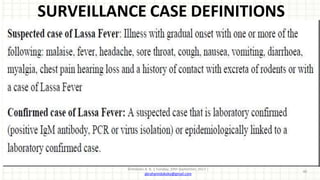
SURVEILLANCE CASE DEFINITIONS
©Idokoko A. B. | Tuesday, 19th September, 2017 |
abrahamidokoko@gmail.com
40
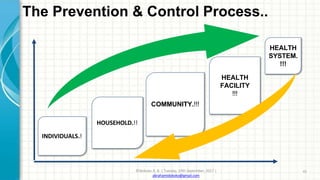
HEALTH
SYSTEM.
!!!
HEALTH
FACILITY
!!!
COMMUNITY.!!!
HOUSEHOLD.!!
INDIVIDUALS.!
The Prevention & Control Process..
©Idokoko A. B. | Tuesday, 19th September, 2017 |
abrahamidokoko@gmail.com
41
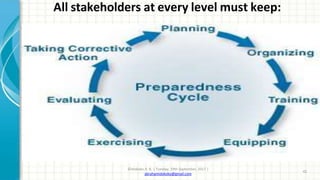
All stakeholders at every level must keep:
©Idokoko A. B. | Tuesday, 19th September, 2017 |
abrahamidokoko@gmail.com
42
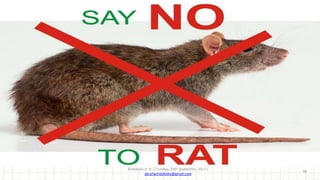
..LET SAY
Once again..
49
©Idokoko A. B. | Tuesday, 19th September, 2017 |
abrahamidokoko@gmail.com
50
In conclusion..,
45
• Lassa fever is a deadly, infectious and endemic disease
in Nigeria that is easily preventable, treatable and
controllable if we all work together.
“Hospital staff are not at great risk for infection as long as
protective measures and proper sterilization methods are used..."
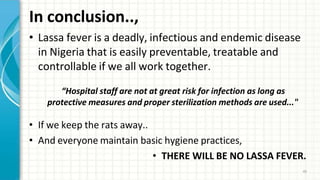
• If we keep the rats away..
• And everyone maintain basic hygiene practices,
• THERE WILL BE NO LASSA FEVER.
My Sources & Further Resources for you
©Idokoko A. B. | Tuesday, 19th September, 2017 |
abrahamidokoko@gmail.com
46
• WHO, Emergencies preparedness, response
http://www.who.int/csr/don/28-june-2017-lassa-fever-nigeria/en/
• Nigeria Centre for Disease Control, Weekly Epidemiological Report,
http://ncdc.gov.ng/reports/weekly
• WHO, Lassa fever,
http://www.who.int/csr/don/archive/disease/lassa_fever/en/
– http://www.who.int/csr/disease/lassafever/en/
• Centers for Disease Control and Prevention, Lassa Fever,
https://www.cdc.gov/vhf/lassa/prevention/index.html
Merci beaucoup.!!
47
QUESTIONS?
COMMENTS?
REMARKS?
48

Lassa fever prevention lecture radiology

  • 1.
    Lassa Fever Prevention& Control: Dr. Muhammed Amin Badamosi Department of Radiology Dalhatu Araf Specialist Hospital
  • 2.
    What can INDIVIDUALS do? ..thepivotal role of the COMMUNITY ..and the imperatives of Health System Strengthening.!
  • 3.
    Learning Objectives At theend of this lecture, we hope that participants will have:  refreshed their knowledge of the key facts about Lassa Fever & related haemorrhagic fevers  understood the imperatives for alertness, mitigation and preparedness  Learnt the action points for individual , the community and health system in prevention and control 3
  • 4.
    4 The Presentation Outline •Introduction •Key facts about Lassa Fever •What households can do •Community Roles •Health facility preparedness •Health System Action points •Conclusions
  • 5.
    “Lassa fever haskilled hundreds of people in West Africa, most of them in Nigeria, since November 2015... …many of these lives could have been saved if a rapid diagnostic test were available so that people could receive treatment early.” 5
  • 6.
  • 7.
  • 8.
    To change that, ..let’stalk about Lassa Fever.. 8
  • 9.
    What is LassaFever? 9 • Lassa fever is an acute, viral, haemorrhagic illness. • Typically occurs in West Africa and it’s known to be endemic in Nigeria, Sierra Leone, Liberia and Guinea. • It is zoonotic infection caused by a single-stranded RNA virus, a member of the virus family, Arenaviridae. It was first isolated in 1969 when two missionary nurses died in Nigeria. • The vector for Lassa virus is the "multimammate rat" (Mastomys natalensis)
  • 10.
  • 11.
    Lassa Fever Virus:Transmission 11 Carried by the Mastomys rat, shed in its urine and droppings : • The virus is transmitted to humans from direct contact with infected rats by catching, handling and preparing them for food, or • through contact with food or household items contaminated with rat faeces or urine. • Transmission by air(aerosolized virus) is known. • The virus can also be transmitted through contact with an infected person’s body fluids. • Ratus ratus is being investigated as a possible carrier.
  • 12.
    Lassa Fever: Occurrence& Distribution 12 • 100,000 to 300,000, infections per year in west Africa, with approximately 5,000 deaths [CDC & WHO] • Accounts for 10%-16% of people admitted to hospitals every year in some places [CDC] • Most cases are asymptomatic • Approximately 15%-20% of patients hospitalized for Lassa fever die. • However, only 1% of all Lassa virus infections result in death. • In epidemics, case-fatality rate can reach 50% in hospitalized patients. • Death usually occurs within 14 days of onset symptoms onset in fatal cases • Affects all age group, both sexes • Seasonal clustering: late rainy season and early dry season • Virus is inactivated by heating >56 *C, PH<5.5 or >8.5, UV/gamma rays, detergents • Explosive nosocomial outbreaks • Incubation period is 3-21 days
  • 13.
  • 14.
  • 15.
  • 17.
    Lassa Fever: Symptoms 17 About80% of infected persons have no/mild symptoms: • Common symptoms mimic other illnesses, such as malaria, making it difficult to clinically identify. • Symptoms include fever, fatigue, nausea, vomiting, diarrhoea, headaches, abdominal pains, sore throat, facial swelling, chest and muscle pain • 1 in 5 infections (20%) result in severe disease, where the virus affects several organs such as the liver, spleen and kidneys. • In severe cases, bleeding from the mouth, nose, vagina or gastrointestinal tract
  • 18.
  • 19.
  • 20.
  • 21.
    Lassa Fever: Treatment& Vaccination 21 • The antiviral drug ribavirin seems to be an effective treatment for Lassa fever if given early on in the course of clinical illness. • There is no evidence to support the role of ribavirin as post- exposure prophylactic treatment for Lassa fever. • There is currently no vaccine that protects against Lassa fever. However, research are on-going to find a vaccine.
  • 22.
    ©Idokoko A. B.| Tuesday, 19th September, 2017 | abrahamidokoko@gmail.com 22
  • 23.
    ©Idokoko A. B.| Tuesday, 19th September, 2017 | abrahamidokoko@gmail.com 23
  • 24.
    SO, WHAT DOWE DO? • Deadly disease, • Highly communicable, • Difficult to diagnose clinically, • No vaccine, • Available drug is toxic • . 25
  • 25.
    Lassa Fever “Prevention is notjust better, it is CHEAPER than cure” 26
  • 26.
    ©Idokoko A. B.| Tuesday, 19th September, 2017 | abrahamidokoko@gmail.com 27
  • 27.
    I am justan… Individual?? What can I do? 28
  • 28.
    Prevention and Control:HOUSEHOLDS 28 1) Safe food storage [Store in containers with lid/cover/seal] 2) Avoid buying/eating exposed food from stores/shops 3) Wash all fresh fruits/foods properly before eating 4) Cook your foods thoroughly 5) Regular & proper hand washing and hygiene. • Avoid contact with blood and body fluids while caring for sick persons • safe burial practices 6) Wet down surfaces before sweeping
  • 29.
  • 30.
    Prevention and Control:HOUSEHOLDS (2) 30 7) Disposing of garbage far from the home 8) Keep your home clean and tidy to discourage rats from entering: Make your homes rat-proof 9) Keep a cat 10) Find, trap and sanitarily dispose off rats: Involve your neighbours 11) Avoid rodents as food source: DO NOT EAT RATS 12) Suspect every case of fever & seek care in a health facility for proper diagnosis and treatment. Getting medical treatment early is your best chance at surviving. 13)Avoid contacts with other people when you are ill/feverish
  • 31.
  • 32.
    Prevention and Control:COMMUNITIES ©Idokoko A. B. | Tuesday, 19th September, 2017 | abrahamidokoko@gmail.com 32 1) Adopt and implement community-wide program for rodent control, avoidance and sanitary disposal 2) Include health education sessions in all meetings in the community. Engage health experts among you to do this 3) Encourage peer-to-peer education on health 4) Participate in the planning, implementation, funding and evaluation of all health interventions in your community. 5) Encourage your members to seek healthcare EARLY from designated facilities when ill.
  • 33.
    I am a… Healthworker. You have a primary responsibility here.. 36
  • 34.
    Prevention and Control:HEALTH FACILITY 34 1) Maintain high index of suspicion at all times 2) Enforce routine universal precaution by all healthworkers, applied at all times, for all patients • wearing protective clothing, such as face masks, gloves, gowns, and goggles • isolating infected patients from contact with unprotected persons until the disease has run its course or test result rules out VHF. • Always decontaminate yourself after work before leaving the health facility 3) Ensure hygiene and infection control tools and facilities are available and working at all times • such as running water, soap, and complete equipment sterilization tools
  • 35.
    This is whatyou think.. ©Idokoko A. B. | Tuesday, 19th September, 2017 | abrahamidokoko@gmail.com 35
  • 36.
    This is whatyou need for everyday protection: ©Idokoko A. B. | Tuesday, 19th September, 2017 | abrahamidokoko@gmail.com 36
  • 37.
    Prevention and Control:HEALTH FACILITY (2) 37 4) If you suspect something, don’t keep quiet, alert your colleagues and superiors. • should immediately contact local and national experts 5) Keep the hospital environment free from rodents: DO WHAT YOU PREACH. 6) Promoting good “community hygiene”. Regularly engage and mobilize your host community for mass health education and action on the environment. DON’T KEEP QUIET. If they contract the virus, you are at great risk. 7) All cases of fever MUST BE TESTED AND DIAGNOSED BEFORE TREATMENT 8) DEVELOP specific SOPs for your facility
  • 38.
    Prevention and Control:HEALTH FACILITY (3) ©Idokoko A. B. | Tuesday, 19th September, 2017 | abrahamidokoko@gmail.com 38 • Anyone suspected of having a VHF must use a chemical toilet • Disinfect and dispose of instruments − Use a 0.5% solution of sodium hypochlorite (1:10 dilution of bleach)
  • 39.
    Prevention and Control:HEALTH SYSTEM 39 1) Strengthen surveillance to finding new cases quickly so they can be isolated, treated and stop further spread 2) Maintain early warning, alert and response systems at all levels 3) Training health workers on Lassa fever to better diagnose and treat patients; and to minimize nosocomial infections 4) Ensure availability of Specific drugs (RIBAVIRIN) 5) Procuring medical supplies and equipment 6) Transfer diagnostic technology and skills 7) Research for vaccine and more effective, less toxic chemotherapy • developing more rapid diagnostic tests 8) Supporting public health education campaigns
  • 40.
    SURVEILLANCE CASE DEFINITIONS ©IdokokoA. B. | Tuesday, 19th September, 2017 | abrahamidokoko@gmail.com 40
  • 41.
    HEALTH SYSTEM. !!! HEALTH FACILITY !!! COMMUNITY.!!! HOUSEHOLD.!! INDIVIDUALS.! The Prevention &Control Process.. ©Idokoko A. B. | Tuesday, 19th September, 2017 | abrahamidokoko@gmail.com 41
  • 42.
    All stakeholders atevery level must keep: ©Idokoko A. B. | Tuesday, 19th September, 2017 | abrahamidokoko@gmail.com 42
  • 43.
  • 44.
    ©Idokoko A. B.| Tuesday, 19th September, 2017 | abrahamidokoko@gmail.com 50
  • 45.
    In conclusion.., 45 • Lassafever is a deadly, infectious and endemic disease in Nigeria that is easily preventable, treatable and controllable if we all work together. “Hospital staff are not at great risk for infection as long as protective measures and proper sterilization methods are used..." • If we keep the rats away.. • And everyone maintain basic hygiene practices, • THERE WILL BE NO LASSA FEVER.
  • 46.
    My Sources &Further Resources for you ©Idokoko A. B. | Tuesday, 19th September, 2017 | abrahamidokoko@gmail.com 46 • WHO, Emergencies preparedness, response http://www.who.int/csr/don/28-june-2017-lassa-fever-nigeria/en/ • Nigeria Centre for Disease Control, Weekly Epidemiological Report, http://ncdc.gov.ng/reports/weekly • WHO, Lassa fever, http://www.who.int/csr/don/archive/disease/lassa_fever/en/ – http://www.who.int/csr/disease/lassafever/en/ • Centers for Disease Control and Prevention, Lassa Fever, https://www.cdc.gov/vhf/lassa/prevention/index.html
  • 47.
  • 48.