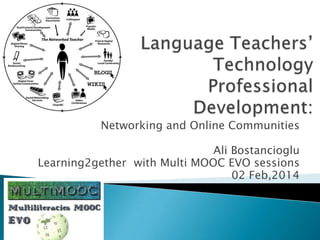
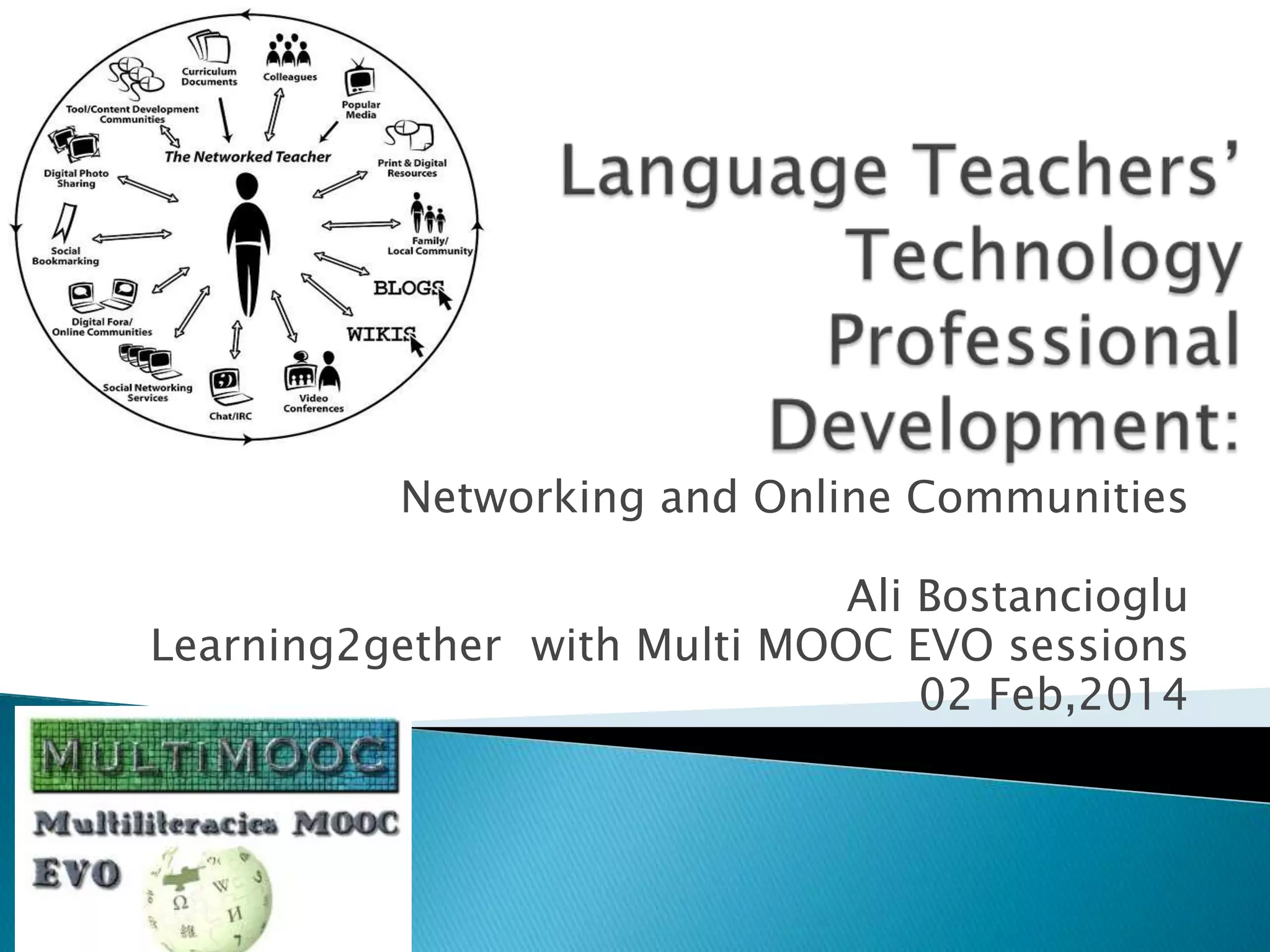
Networking and Online Communities
Ali Bostancioglu
Learning2gether with Multi MOOC EVO sessions
02 Feb,2014






Orient
Declare
Network
Cluster
Focus



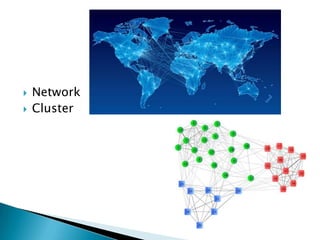
Network
Cluster
 Continuous

Technology

Professional
Development, but Why?
 Networks and
Communities of Practice
in the service of
Professional Development
Pervasiveness of Technology
 Technological change is
fast
 Teachers need to keep up with and develop
new ways of integrating technology.
 Online possibilities as an alternative to f2f
training (time and cost effective)
 Your presence here is a sign that you are
already aware of those topics so I will move
on quickly.



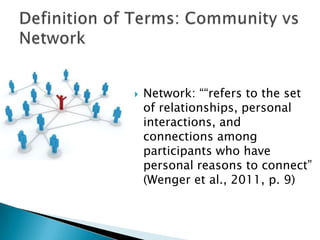
Network: ““refers to the set
of relationships, personal
interactions, and
connections among
participants who have
personal reasons to connect”
(Wenger et al., 2011, p. 9)


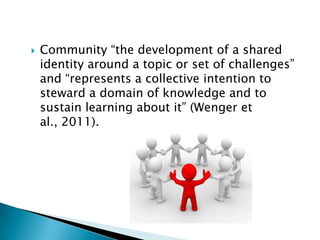
Community “the development of a shared
identity around a topic or set of challenges”
and “represents a collective intention to
steward a domain of knowledge and to
sustain learning about it” (Wenger et
al., 2011).







Community
Provides a domain where members could
cooperate
Resources which members could benefit from
Teaching
techniques, tools, suggestions, perspectives,
and so on
History









However,
A certain amount of interaction and
engagement is necessary.
Not everyone is required to commit to the
community at the same level
A Community could dissolve if members feel
that they have achieved their shared goal.
Not the case for technology though.









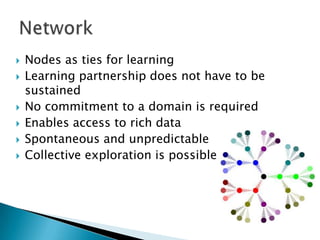
Nodes as ties for learning
Learning partnership does not have to be
sustained
No commitment to a domain is required
Enables access to rich data
Spontaneous and unpredictable
Collective exploration is possible
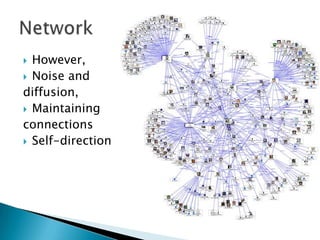
However,
 Noise and
diffusion,
 Maintaining
connections
 Self-direction









While they are two distinct terms, they are not
at opposite ends.
In fact, they are interrelated.
Big community can involve multiple networks
A network could essentially develop into a
community
“The social learning process is enhanced by
dynamic interplay of both community and
network processes” (Wenger et
al, 2011, p.13)
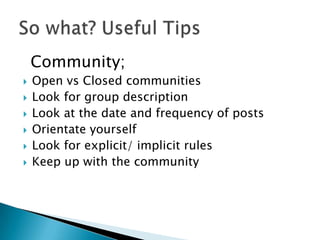
Community;







Open vs Closed communities
Look for group description
Look at the date and frequency of posts
Orientate yourself
Look for explicit/ implicit rules
Keep up with the community
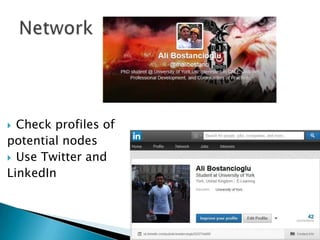
Check profiles of
potential nodes
 Use Twitter and
LinkedIn



More on the use of Twitter

http://blogs.lse.ac.uk/impactofsocialsciences/f
iles/2011/11/PublishedTwitter_Guide_Sept_2011.pdf


Wikis and Blogs


How different Social Media Platforms could be
used in the service of Professional
development?

Review of Social Media Platforms;
http://social-networking-websitesreview.toptenreviews.com/




Twitter



LinkedIn


Facebook



Google +



Hootsuite



Integrating Twitter with Facebook


Lave, J., & Wenger, E. (1991). Situated

learning: Legitimate peripheral participation.
Cambridge: Cambridge University Press.



Wenger, E., Trayner, B., & De Laat, M.F.
(2011). Promoting and assessing value

creation in communities and networks: A
conceptual framework. Heerlen: Ruud de
Moor Centrum, OU




Where does one’s social identity end and
professional identity begin?
Is it possible/ useful to mix both identities?
Could we separate them? (i.e. creating
accounts for professional use and other
accounts for personal use)

Language teachers’ technology professional development

  • 1.
    Networking and OnlineCommunities Ali Bostancioglu Learning2gether with Multi MOOC EVO sessions 02 Feb,2014
  • 2.
  • 3.
  • 4.
     Continuous Technology Professional Development, butWhy?  Networks and Communities of Practice in the service of Professional Development
  • 5.
    Pervasiveness of Technology Technological change is fast  Teachers need to keep up with and develop new ways of integrating technology.  Online possibilities as an alternative to f2f training (time and cost effective)  Your presence here is a sign that you are already aware of those topics so I will move on quickly. 
  • 6.
     Network: ““refers tothe set of relationships, personal interactions, and connections among participants who have personal reasons to connect” (Wenger et al., 2011, p. 9)
  • 7.
     Community “the developmentof a shared identity around a topic or set of challenges” and “represents a collective intention to steward a domain of knowledge and to sustain learning about it” (Wenger et al., 2011).
  • 9.
        Community Provides a domainwhere members could cooperate Resources which members could benefit from Teaching techniques, tools, suggestions, perspectives, and so on History
  • 10.
         However, A certain amountof interaction and engagement is necessary. Not everyone is required to commit to the community at the same level A Community could dissolve if members feel that they have achieved their shared goal. Not the case for technology though.
  • 11.
          Nodes as tiesfor learning Learning partnership does not have to be sustained No commitment to a domain is required Enables access to rich data Spontaneous and unpredictable Collective exploration is possible
  • 12.
    However,  Noise and diffusion, Maintaining connections  Self-direction 
  • 13.
         While they aretwo distinct terms, they are not at opposite ends. In fact, they are interrelated. Big community can involve multiple networks A network could essentially develop into a community “The social learning process is enhanced by dynamic interplay of both community and network processes” (Wenger et al, 2011, p.13)
  • 14.
    Community;       Open vs Closedcommunities Look for group description Look at the date and frequency of posts Orientate yourself Look for explicit/ implicit rules Keep up with the community
  • 15.
    Check profiles of potentialnodes  Use Twitter and LinkedIn 
  • 16.
     More on theuse of Twitter http://blogs.lse.ac.uk/impactofsocialsciences/f iles/2011/11/PublishedTwitter_Guide_Sept_2011.pdf  Wikis and Blogs
  • 17.
     How different SocialMedia Platforms could be used in the service of Professional development? Review of Social Media Platforms; http://social-networking-websitesreview.toptenreviews.com/   Twitter  LinkedIn
  • 18.
  • 19.
     Lave, J., &Wenger, E. (1991). Situated learning: Legitimate peripheral participation. Cambridge: Cambridge University Press.  Wenger, E., Trayner, B., & De Laat, M.F. (2011). Promoting and assessing value creation in communities and networks: A conceptual framework. Heerlen: Ruud de Moor Centrum, OU
  • 21.
      Where does one’ssocial identity end and professional identity begin? Is it possible/ useful to mix both identities? Could we separate them? (i.e. creating accounts for professional use and other accounts for personal use)

Editor's Notes

  • #4 Today I will focus on those two topics.