Dairy Management in Manica:
Findings and Lessons from a
   Gender Assessment in
        Mozambique


        Marinho Nhambeto & Elizabeth Hutchinson

                4th November, 2011
Who We Are
- Land O’Lakes, Inc.
   US$12 billion agribusiness; 1/3 business is dairy
   Second largest cooperative in the U.S.
   Founded on principles of integrity, fairness, honesty and
    respect for individuals
- Land O’Lakes International Development
   Division of Land O’Lakes Inc. founded in 1981, leveraging
    corporate experience and expertise but operates like a
    not-for-profit (primary funders USAID, USDA)
   Our mission is to help farmers around the world improve
    incomes and quality of life
   260+ programs in 76 countries since inception (currently
    33 programs in 28 countries)
Project Background

- 3-Year USDA funded Dairy Development FFP
  project in Manica, Mozambique
   Objectives include:
    - to rebuild Mozambique’s dairy industry to meet market demand
    - to increase incomes for smallholder farmers by participation in a sustainable
      dairy value chain
    - to increase crop yields through utilization of draft animals for cultivation.


- IFPRI/ILRI-funded GAAP project
   Complement the existing FFP project adding gender
    research component
   “Gender, Agriculture, and Assets Research Project”
Activities and Progress

- Mixed methods data collection
   Randomly selected household survey (N: 637, with 167
    dairy households). Quasi-experimental design surveying
    both dairy and non-dairy households
   15 single-gender focus group discussions
     • 5 females with cows; 2 females without cows
     • 6 males with cows; 2 males without cows
   Enumerators/FGD facilitators were local university
    students or project/partner staff
     • All were trained in multi-day training and participated in
       pilot test of tools
Challenges and Constraints

- Timing of data collection
   Heavy rains made some roads inaccessible so some
    groups not represented in qualitative findings
- Language barriers
   Training documents and data collection tools in
    Portuguese and English; not all enumerators/facilitators
    were fluent in all three local languages
- Potential participant bias
   Potential for bias in reponses, since dairy households
    have received asset (dairy cow) from project
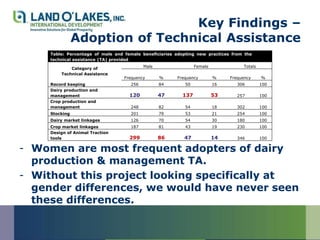
Key Findings –
                Adoption of Technical Assistance
     Table: Percentage of male and female beneficiaries adopting new practices from the
     technical assistance (TA) provided
                                           Male                 Female             Totals
             Category of
         Technical Assistance
                                   Frequency      %     Frequency        %    Frequency     %
     Record keeping                  256          84       50            16      306        100
     Dairy production and
     management                      120          47      137            53      257        100
     Crop production and
     management                      248          82       54            18      302        100
     Stocking                        201          79       53            21      254        100
     Dairy market linkages           126          70       54            30      180        100
     Crop market linkages            187          81       43            19      230        100
     Design of Animal Traction
     tools                           299          86       47            14      346        100


- Women are most frequent adopters of dairy
  production & management TA.
- Without this project looking specifically at
  gender differences, we would have never seen
  these differences.
Key Findings –
             Household Decision Making

- Overall household decision-making remains
  unchanged (decision-making done primarily
  by men).
- With improved dairy cattle and increased
  involvement in dairy management by women,
  both men and women report that women are
  now being consulted with regards to
  decisions made about dairy businesses.
Key Findings –
                        Employment and Labor

- Job creation in dairy management
   283 jobs (207 male/76 female) created in dairy sector
    outside the household
   612 self-employed jobs created at households (324
    females/288 males)
- Ownership of dairy cow does not dictate
  household labor in dairy management
   86% of households are male-headed and men own dairy
    animals.
   Women provide 53% of labor (milking, inputs, milk
    sales); Men 47% of the labor (infrastructure, dairy
    marketing)
Key Findings –
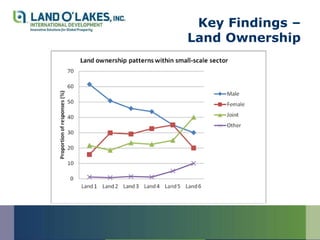
Land Ownership
Key Findings –
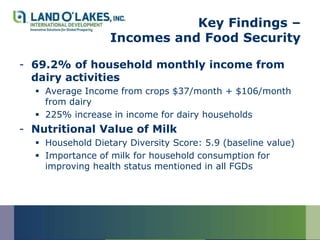
                  Incomes and Food Security

- 69.2% of household monthly income from
  dairy activities
   Average Income from crops $37/month + $106/month
    from dairy
   225% increase in income for dairy households
- Nutritional Value of Milk
   Household Dietary Diversity Score: 5.9 (baseline value)
   Importance of milk for household consumption for
    improving health status mentioned in all FGDs
Mid-Course Corrections

- Incorporating women in training as paravets
  and AI technicians
   Community identifies women for technical roles/training
- Inclusion of women in cooperative
  management committees and MCCs
   Advocacy, awareness, recommendations for women’s
    participation as a sustainability measure
- Incorporating findings from this assessment
  were included in design of proposal
  submitted to USDA for new FFP project
  (Phase 2) in Mozambique
Next Steps

- Case study about gender differences in dairy
  management will occur in Jan-Feb 2012
- Additional data collection with combined
  approach for final assessment in April-June
  2012
   Minor modifications/adjustments to data collection tools
    (survey and FGD guide)
- Learn from this study and make internal use
  of the methods and findings to guide gender
  assessments for other agriculture and food
  security programs
Thank you!

           For more information contact:

Marinho Nhambeto: marinho.nhambeto@idd.landolakes.com
      Lizz Hutchinson: erhutchinson@landolakes.com

Land o lakes_gaap

  • 1.
    Dairy Management inManica: Findings and Lessons from a Gender Assessment in Mozambique Marinho Nhambeto & Elizabeth Hutchinson 4th November, 2011
  • 2.
    Who We Are -Land O’Lakes, Inc.  US$12 billion agribusiness; 1/3 business is dairy  Second largest cooperative in the U.S.  Founded on principles of integrity, fairness, honesty and respect for individuals - Land O’Lakes International Development  Division of Land O’Lakes Inc. founded in 1981, leveraging corporate experience and expertise but operates like a not-for-profit (primary funders USAID, USDA)  Our mission is to help farmers around the world improve incomes and quality of life  260+ programs in 76 countries since inception (currently 33 programs in 28 countries)
  • 3.
    Project Background - 3-YearUSDA funded Dairy Development FFP project in Manica, Mozambique  Objectives include: - to rebuild Mozambique’s dairy industry to meet market demand - to increase incomes for smallholder farmers by participation in a sustainable dairy value chain - to increase crop yields through utilization of draft animals for cultivation. - IFPRI/ILRI-funded GAAP project  Complement the existing FFP project adding gender research component  “Gender, Agriculture, and Assets Research Project”
  • 4.
    Activities and Progress -Mixed methods data collection  Randomly selected household survey (N: 637, with 167 dairy households). Quasi-experimental design surveying both dairy and non-dairy households  15 single-gender focus group discussions • 5 females with cows; 2 females without cows • 6 males with cows; 2 males without cows  Enumerators/FGD facilitators were local university students or project/partner staff • All were trained in multi-day training and participated in pilot test of tools
  • 5.
    Challenges and Constraints -Timing of data collection  Heavy rains made some roads inaccessible so some groups not represented in qualitative findings - Language barriers  Training documents and data collection tools in Portuguese and English; not all enumerators/facilitators were fluent in all three local languages - Potential participant bias  Potential for bias in reponses, since dairy households have received asset (dairy cow) from project
  • 6.
    Key Findings – Adoption of Technical Assistance Table: Percentage of male and female beneficiaries adopting new practices from the technical assistance (TA) provided Male Female Totals Category of Technical Assistance Frequency % Frequency % Frequency % Record keeping 256 84 50 16 306 100 Dairy production and management 120 47 137 53 257 100 Crop production and management 248 82 54 18 302 100 Stocking 201 79 53 21 254 100 Dairy market linkages 126 70 54 30 180 100 Crop market linkages 187 81 43 19 230 100 Design of Animal Traction tools 299 86 47 14 346 100 - Women are most frequent adopters of dairy production & management TA. - Without this project looking specifically at gender differences, we would have never seen these differences.
  • 7.
    Key Findings – Household Decision Making - Overall household decision-making remains unchanged (decision-making done primarily by men). - With improved dairy cattle and increased involvement in dairy management by women, both men and women report that women are now being consulted with regards to decisions made about dairy businesses.
  • 8.
    Key Findings – Employment and Labor - Job creation in dairy management  283 jobs (207 male/76 female) created in dairy sector outside the household  612 self-employed jobs created at households (324 females/288 males) - Ownership of dairy cow does not dictate household labor in dairy management  86% of households are male-headed and men own dairy animals.  Women provide 53% of labor (milking, inputs, milk sales); Men 47% of the labor (infrastructure, dairy marketing)
  • 9.
  • 10.
    Key Findings – Incomes and Food Security - 69.2% of household monthly income from dairy activities  Average Income from crops $37/month + $106/month from dairy  225% increase in income for dairy households - Nutritional Value of Milk  Household Dietary Diversity Score: 5.9 (baseline value)  Importance of milk for household consumption for improving health status mentioned in all FGDs
  • 11.
    Mid-Course Corrections - Incorporatingwomen in training as paravets and AI technicians  Community identifies women for technical roles/training - Inclusion of women in cooperative management committees and MCCs  Advocacy, awareness, recommendations for women’s participation as a sustainability measure - Incorporating findings from this assessment were included in design of proposal submitted to USDA for new FFP project (Phase 2) in Mozambique
  • 12.
    Next Steps - Casestudy about gender differences in dairy management will occur in Jan-Feb 2012 - Additional data collection with combined approach for final assessment in April-June 2012  Minor modifications/adjustments to data collection tools (survey and FGD guide) - Learn from this study and make internal use of the methods and findings to guide gender assessments for other agriculture and food security programs
  • 13.
    Thank you! For more information contact: Marinho Nhambeto: marinho.nhambeto@idd.landolakes.com Lizz Hutchinson: erhutchinson@landolakes.com