LAN Network
LAN stands for Local Area Network. Local Area Network (LAN) is method of
connecting more than one computer. The scope of local area network is private network, single
building or small area up to few kilometers. To exchange information in different companies or
schools or universities used to connect personal computers and workstations.
WAN Network
A WAN (wide area network), is not restricted to a geographical location, although it
might be confined within the bounds of a state or country. A WAN connects several LANs, and
may be limited to an enterprise (a corporation or an organization) or accessible to the public. The
technology is high speed and relatively expensive. The Internet is an example of a worldwide
public WAN.

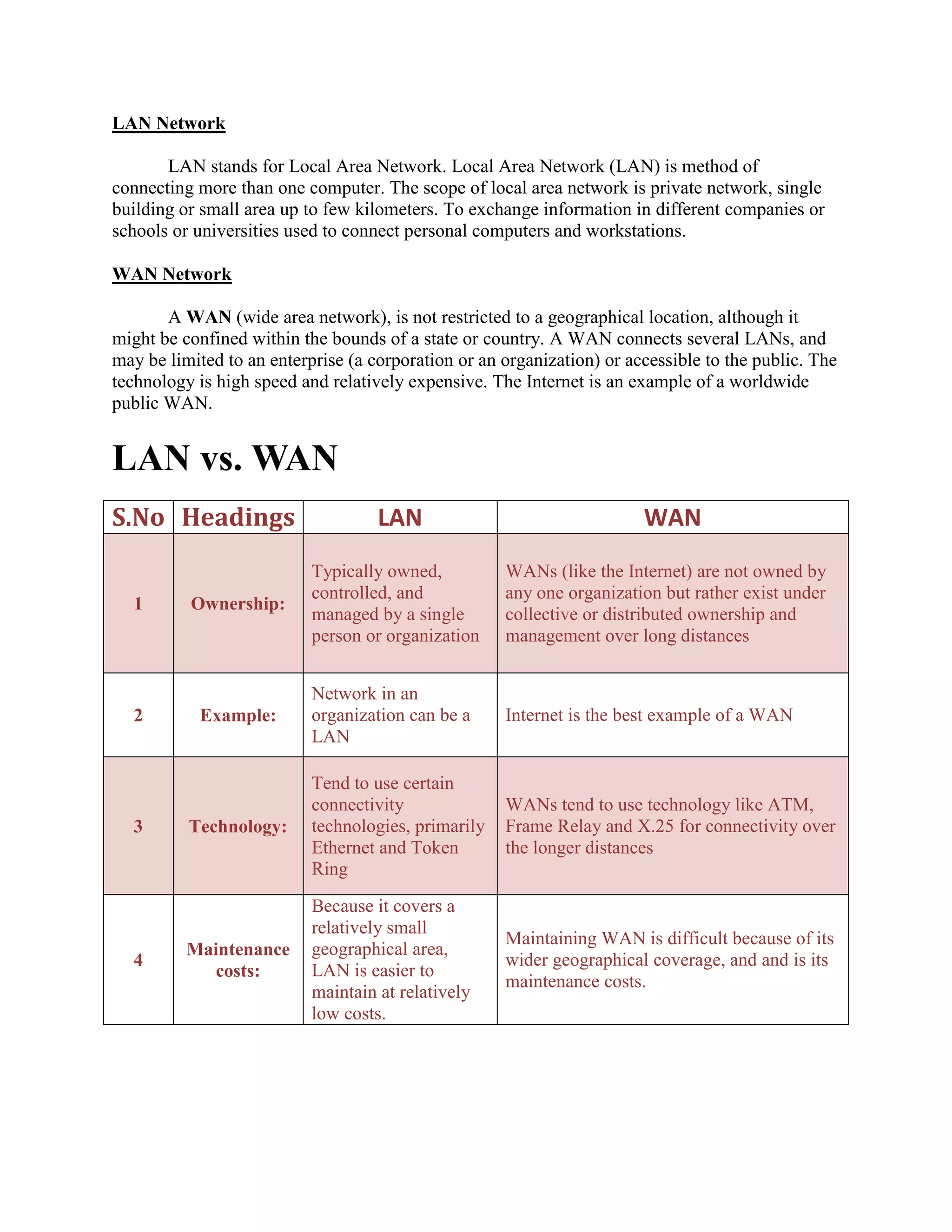
LAN vs. WAN
S.No Headings

LAN

WAN

1

Ownership:

Typically owned,
controlled, and
managed by a single
person or organization

2

Example:

Network in an
organization can be a
LAN

Internet is the best example of a WAN

Technology:

Tend to use certain
connectivity
technologies, primarily
Ethernet and Token
Ring

WANs tend to use technology like ATM,
Frame Relay and X.25 for connectivity over
the longer distances

Maintenance
costs:

Because it covers a
relatively small
geographical area,
LAN is easier to
maintain at relatively
low costs.

Maintaining WAN is difficult because of its
wider geographical coverage, and and is its
maintenance costs.

3

4

WANs (like the Internet) are not owned by
any one organization but rather exist under
collective or distributed ownership and
management over long distances
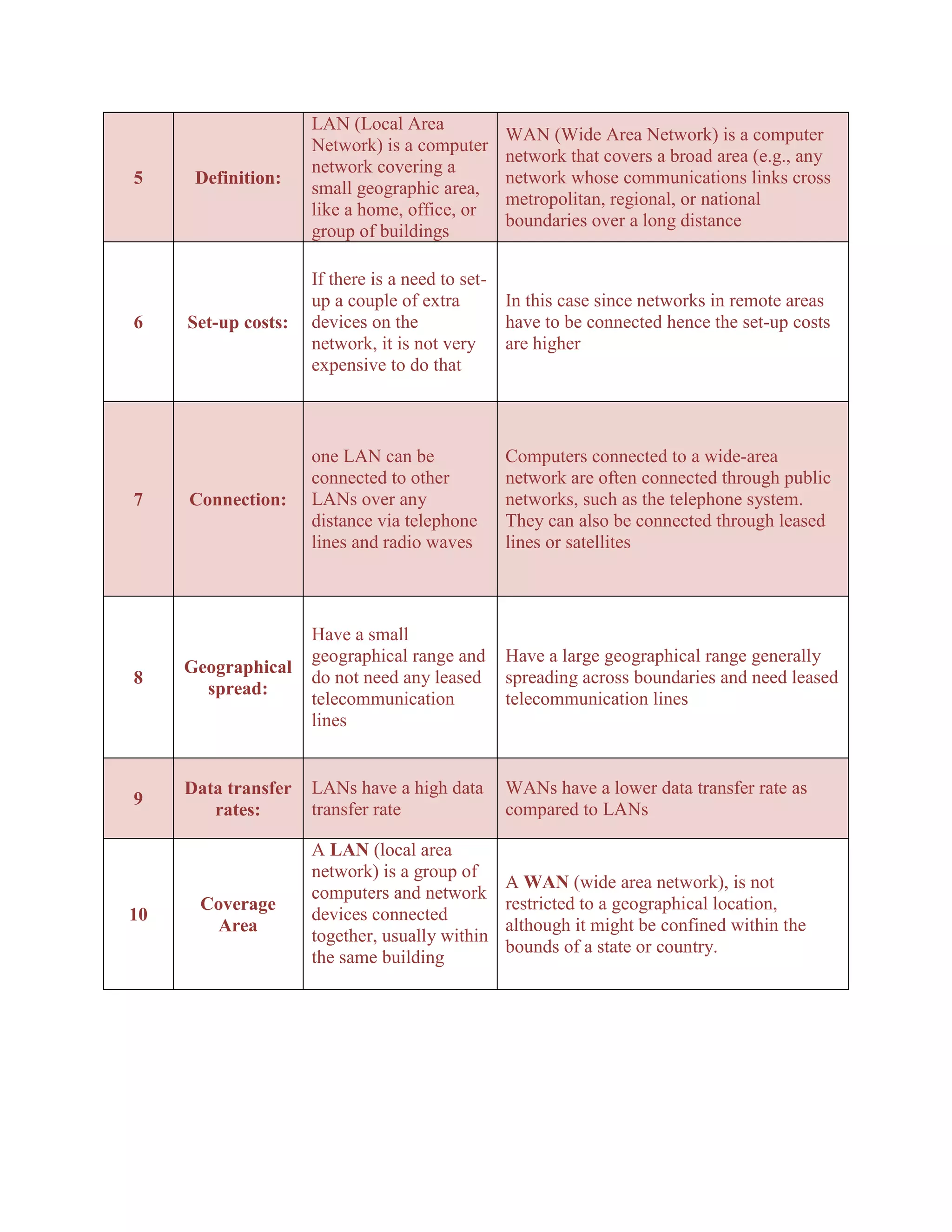
5

Definition:

LAN (Local Area
Network) is a computer
network covering a
small geographic area,
like a home, office, or
group of buildings

WAN (Wide Area Network) is a computer
network that covers a broad area (e.g., any
network whose communications links cross
metropolitan, regional, or national
boundaries over a long distance

Set-up costs:

If there is a need to setup a couple of extra
In this case since networks in remote areas
devices on the
have to be connected hence the set-up costs
network, it is not very
are higher
expensive to do that

Connection:

one LAN can be
connected to other
LANs over any
distance via telephone
lines and radio waves

Computers connected to a wide-area
network are often connected through public
networks, such as the telephone system.
They can also be connected through leased
lines or satellites

8

Geographical
spread:

Have a small
geographical range and
do not need any leased
telecommunication
lines

Have a large geographical range generally
spreading across boundaries and need leased
telecommunication lines

9

Data transfer
rates:

LANs have a high data
transfer rate

WANs have a lower data transfer rate as
compared to LANs

6

7

10

Coverage
Area

A LAN (local area
network) is a group of
computers and network
devices connected
together, usually within
the same building

A WAN (wide area network), is not
restricted to a geographical location,
although it might be confined within the
bounds of a state or country.

Lan vs Man

  • 1.
    LAN Network LAN standsfor Local Area Network. Local Area Network (LAN) is method of connecting more than one computer. The scope of local area network is private network, single building or small area up to few kilometers. To exchange information in different companies or schools or universities used to connect personal computers and workstations. WAN Network A WAN (wide area network), is not restricted to a geographical location, although it might be confined within the bounds of a state or country. A WAN connects several LANs, and may be limited to an enterprise (a corporation or an organization) or accessible to the public. The technology is high speed and relatively expensive. The Internet is an example of a worldwide public WAN. LAN vs. WAN S.No Headings LAN WAN 1 Ownership: Typically owned, controlled, and managed by a single person or organization 2 Example: Network in an organization can be a LAN Internet is the best example of a WAN Technology: Tend to use certain connectivity technologies, primarily Ethernet and Token Ring WANs tend to use technology like ATM, Frame Relay and X.25 for connectivity over the longer distances Maintenance costs: Because it covers a relatively small geographical area, LAN is easier to maintain at relatively low costs. Maintaining WAN is difficult because of its wider geographical coverage, and and is its maintenance costs. 3 4 WANs (like the Internet) are not owned by any one organization but rather exist under collective or distributed ownership and management over long distances
  • 2.
    5 Definition: LAN (Local Area Network)is a computer network covering a small geographic area, like a home, office, or group of buildings WAN (Wide Area Network) is a computer network that covers a broad area (e.g., any network whose communications links cross metropolitan, regional, or national boundaries over a long distance Set-up costs: If there is a need to setup a couple of extra In this case since networks in remote areas devices on the have to be connected hence the set-up costs network, it is not very are higher expensive to do that Connection: one LAN can be connected to other LANs over any distance via telephone lines and radio waves Computers connected to a wide-area network are often connected through public networks, such as the telephone system. They can also be connected through leased lines or satellites 8 Geographical spread: Have a small geographical range and do not need any leased telecommunication lines Have a large geographical range generally spreading across boundaries and need leased telecommunication lines 9 Data transfer rates: LANs have a high data transfer rate WANs have a lower data transfer rate as compared to LANs 6 7 10 Coverage Area A LAN (local area network) is a group of computers and network devices connected together, usually within the same building A WAN (wide area network), is not restricted to a geographical location, although it might be confined within the bounds of a state or country.