Promoting Training & Performance Support
Analytics @ the manufacturing workplace
The Manufacturing Training Analytics (Man.Tr.A.) Maturity Model for Lace Project
Fabrizio Cardinali, Chief Strategy & Marketing Officer sedApta
Group, smart manufacturing made easy
www.sedApta.com
EDEN Annual Meeting 2014, Zagreb
#laceproject
EU Grant Nr 619424
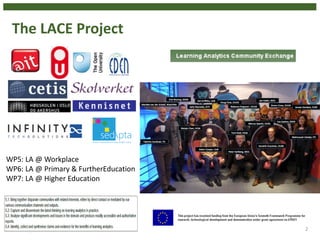
The LACE Project
2
WP5: LA @ Workplace
WP6: LA @ Primary & FurtherEducation
WP7: LA @ Higher Education
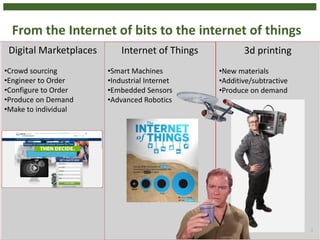
From the Internet of bits to the internet of things
3
Internet of Things
•Smart Machines
•Industrial Internet
•Embedded Sensors
•Advanced Robotics
Digital Marketplaces
•Crowd sourcing
•Engineer to Order
•Configure to Order
•Produce on Demand
•Make to individual
3d printing
•New materials
•Additive/subtractive
•Produce on demand
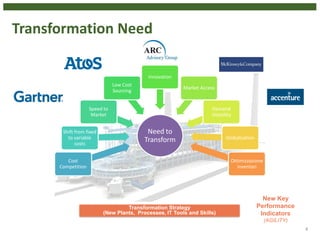
Transformation Need
4
Transformation Strategy
(New Plants, Processes, IT Tools and Skills)
Need to
Transform
Cost
Competition
Shift from fixed
to variable
costs
Speed to
Market
Low Cost
Sourcing
Innovation
Market Access
Demand
Volatility
Globalization
Ottimizzazione
inventari
New Key
Performance
Indicators
(AGILITY)
The «as is» manufacturing industry
5
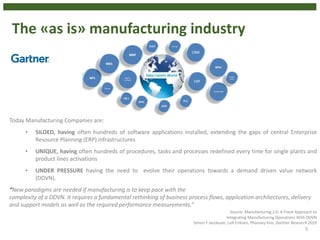
Today Manufacturing Companies are:
• SILOED, having often hundreds of software applications installed, extending the gaps of central Enterprise
Resource Planning (ERP) infrastructures
• UNIQUE, having often hundreds of procedures, tasks and processes redefined every time for single plants and
product lines activations
• UNDER PRESSURE having the need to evolve their operations towards a demand driven value network
(DDVN).
“New paradigms are needed if manufacturing is to keep pace with the
complexity of a DDVN. It requires a fundamental rethinking of business process flows, application architectures, delivery
and support models as well as the required performance measurements.”
Source: Manufacturing 2.0: A Fresh Approach to
Integrating Manufacturing Operations With DDVN
Simon F Jacobson, Leif Eriksen, Phanney Kim, Gartner Research 2010
The «to be» manuafcturing industry
6
Process Driven
Echosystem
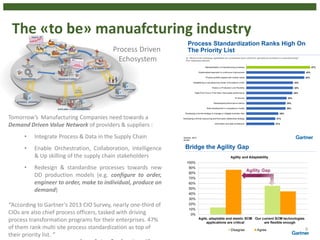
Tomorrow’s Manufacturing Companies need towards a
Demand Driven Value Network of providers & suppliers :
• Integrate Process & Data in the Supply Chain
• Enable Orchestration, Collaboration, Intelligence
& Up skilling of the supply chain stakeholders
• Redesign & standardise processes towards new
DD production models (e.g. configure to order,
engineer to order, make to individual, produce on
demand)
“According to Gartner's 2013 CIO Survey, nearly one-third of
CIOs are also chief process officers, tasked with driving
process transformation programs for their enterprises. 47%
of them rank multi site process standardization as top of
their priority list. ”
7
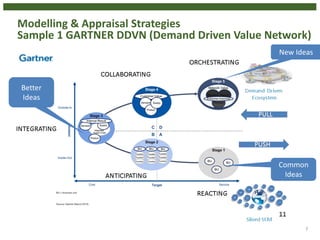
New Ideas
Common
Ideas
Better
Ideas
Modelling & Appraisal Strategies
Sample 1 GARTNER DDVN (Demand Driven Value Network)
8
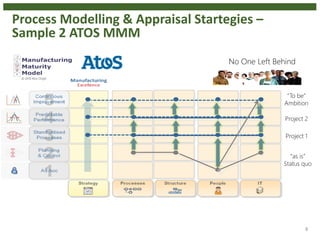
“To be”
Ambition
“as is”
Status quo
Project 1
Project 2
© 2010 Atos Origin
No One Left Behind
Process Modelling & Appraisal Startegies –
Sample 2 ATOS MMM
Supporting People Upskilling & Transformation
1. Performance Support .vs. eLearning
10
Learning Curves
(Hermann Ebbinghaus, 1885)
• 20 minutes after training you forget
42% of what you were trained
• 24 hours after, 67% is forgotten
• 1 month after 79% is forgotten
At the end you with traditional means
you retain 21% of what you were
trained
Performance Support .vs. eLearning
11
Learning Curves
(Hermann Ebbinghaus, 1885)
Retention is dramatically increased by
means of:
• Continuous repetitions whilst executing
tasks @ the workplace
• Contextualized information &
knowledge support whilst taking
decisions @ the workplace
Performance Support .vs. eLearning
12
1
First Training
2
Additional Training
3
Apply & Recall
4
Decision Taking
5
Manage Change
eLearning
Mobile learning
Classroom
Coaching
Electronic Performance Support Systems
70% AT THE
WORKPLACE
20% During
Coaching
10% in the Training
Room
The 70:20:10 perfect mix
The Five Moments of Learning
13
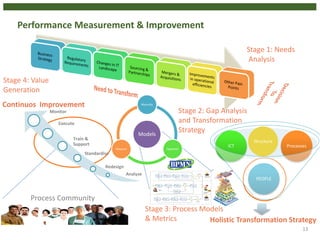
Stage 1: Needs
Analysis
Holistic Transformation Strategy
PEOPLE
ICT Processes
Structure
Stage 2: Gap Analysis
and Transformation
StrategyModels
Maturiity
AppraisalMeasure
Stage 3: Process Models
& Metrics
Process Community
Analyse
Redesign
Standardise
Train &
Support
Execute
Monitor
Continuos Improvement
Stage 4: Value
Generation
Performance Measurement & Improvement
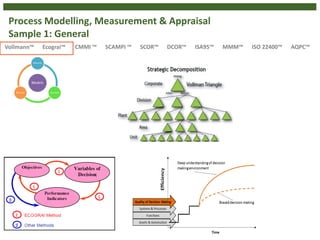
SCOR™ DCOR™SCAMPI ™CMMI ™Vollmann™ MMM™ISA95™Ecograi™ ISO 22400™ AQPC™
Process Modelling, Measurement & Appraisal
Sample 1: General
15
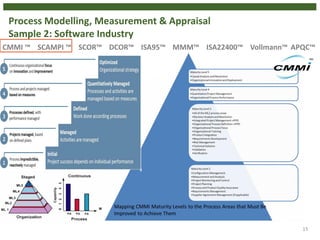
SCOR™ DCOR™SCAMPI ™CMMI ™ Vollmann™MMM™ISA95™ APQC™ISA22400™
Process Modelling, Measurement & Appraisal
Sample 2: Software Industry
16
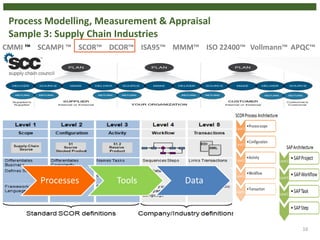
SCOR™ DCOR™SCAMPI ™CMMI ™ Vollmann™MMM™ISA95™ APQC™ISO 22400™
Processes Tools Data
Process Modelling, Measurement & Appraisal
Sample 3: Supply Chain Industries
17
SCOR™ DCOR™SCAMPI ™CMMI ™ Vollmann™MMM™ISA95™ APQC™ISO 22400™
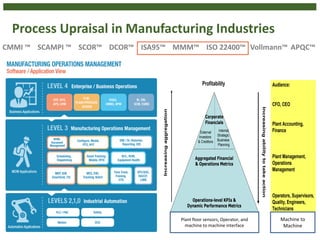
Process Upraisal in Manufacturing Industries
Increasingaggregation
Audience:
CFO, CEO
Plant Accounting,
Finance
Plant Management,
Operations
Management
Operators, Supervisors,
Quality, Engineers,
Technicians
Profitability
Increasingabilitytotakeaction
Corporate
Financials
Aggregated Financial
& Operations Metrics
Operations-level KPIs &
Dynamic Performance Metrics
External
Investors
& Creditors
Internal
Strategic
Business
Planning
Plant floor sensors, Operator, and
machine to machine interface
Machine to
Machine
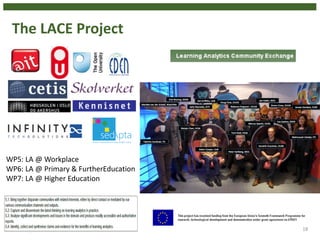
The LACE Project
18
WP5: LA @ Workplace
WP6: LA @ Primary & FurtherEducation
WP7: LA @ Higher Education
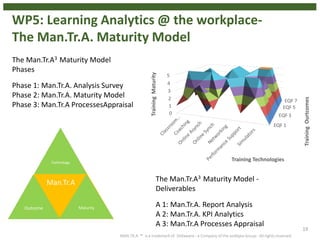
WP5: Learning Analytics @ the workplace-
The Man.Tr.A. Maturity Model
19
EQF 1
EQF 3
EQF 5
EQF 7
0
1
2
3
4
5
TrainingOurtcomes
TrainingMaturity
Training Technologies
MAN.TR.A ™ is a trademark of Skillaware - a Company of the sedApta Group- All rights reserved.
The Man.Tr.A3 Maturity Model
Phases
Phase 1: Man.Tr.A. Analysis Survey
Phase 2: Man.Tr.A. Maturity Model
Phase 3: Man.Tr.A ProcessesAppraisal
Man.Tr.A
Technology
Outcome Maturity
The Man.Tr.A3 Maturity Model -
Deliverables
A 1: Man.Tr.A. Report Analysis
A 2: Man.Tr.A. KPI Analytics
A 3: Man.Tr.A Processes Appraisal
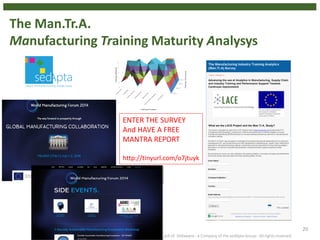
The Man.Tr.A.
Manufacturing Training Maturity Analysys
20
MAN.TR.A ™ is a trademark of Skillaware - a Company of the sedApta Group- All rights reserved.
ENTER THE SURVEY
And HAVE A FREE
MANTRA REPORT
http://tinyurl.com/o7jtuyk
“Promoting Training & Performance Support Analytics @ the manufacturing
workplace. The Manufacturing Training Analytics (Man.Tr.A.) Maturity Model
for Lace Project”
by Fabrizio Cardinali
was presented at EDEN Annual Meeting 2014 on 12 June 2014
Email: Fabrizio.Cardinali@sedApta.com
URL: www.sedApta.com
Twitter: CardinaliF
This work was undertaken as part of the LACE Project, supported by the European Commission Seventh
Framework Programme, grant 619424.
These slides are provided under the Creative Commons Attribution Licence:
http://creativecommons.org/licenses/by/4.0/. Some images used may have different licence terms.
www.laceproject.eu
@laceproject
21

Lace project transforming workplace learning in manufacturing printable

  • 1.
    Promoting Training &Performance Support Analytics @ the manufacturing workplace The Manufacturing Training Analytics (Man.Tr.A.) Maturity Model for Lace Project Fabrizio Cardinali, Chief Strategy & Marketing Officer sedApta Group, smart manufacturing made easy www.sedApta.com EDEN Annual Meeting 2014, Zagreb #laceproject EU Grant Nr 619424
  • 2.
    The LACE Project 2 WP5:LA @ Workplace WP6: LA @ Primary & FurtherEducation WP7: LA @ Higher Education
  • 3.
    From the Internetof bits to the internet of things 3 Internet of Things •Smart Machines •Industrial Internet •Embedded Sensors •Advanced Robotics Digital Marketplaces •Crowd sourcing •Engineer to Order •Configure to Order •Produce on Demand •Make to individual 3d printing •New materials •Additive/subtractive •Produce on demand
  • 4.
    Transformation Need 4 Transformation Strategy (NewPlants, Processes, IT Tools and Skills) Need to Transform Cost Competition Shift from fixed to variable costs Speed to Market Low Cost Sourcing Innovation Market Access Demand Volatility Globalization Ottimizzazione inventari New Key Performance Indicators (AGILITY)
  • 5.
    The «as is»manufacturing industry 5 Today Manufacturing Companies are: • SILOED, having often hundreds of software applications installed, extending the gaps of central Enterprise Resource Planning (ERP) infrastructures • UNIQUE, having often hundreds of procedures, tasks and processes redefined every time for single plants and product lines activations • UNDER PRESSURE having the need to evolve their operations towards a demand driven value network (DDVN). “New paradigms are needed if manufacturing is to keep pace with the complexity of a DDVN. It requires a fundamental rethinking of business process flows, application architectures, delivery and support models as well as the required performance measurements.” Source: Manufacturing 2.0: A Fresh Approach to Integrating Manufacturing Operations With DDVN Simon F Jacobson, Leif Eriksen, Phanney Kim, Gartner Research 2010
  • 6.
    The «to be»manuafcturing industry 6 Process Driven Echosystem Tomorrow’s Manufacturing Companies need towards a Demand Driven Value Network of providers & suppliers : • Integrate Process & Data in the Supply Chain • Enable Orchestration, Collaboration, Intelligence & Up skilling of the supply chain stakeholders • Redesign & standardise processes towards new DD production models (e.g. configure to order, engineer to order, make to individual, produce on demand) “According to Gartner's 2013 CIO Survey, nearly one-third of CIOs are also chief process officers, tasked with driving process transformation programs for their enterprises. 47% of them rank multi site process standardization as top of their priority list. ”
  • 7.
    7 New Ideas Common Ideas Better Ideas Modelling &Appraisal Strategies Sample 1 GARTNER DDVN (Demand Driven Value Network)
  • 8.
    8 “To be” Ambition “as is” Statusquo Project 1 Project 2 © 2010 Atos Origin No One Left Behind Process Modelling & Appraisal Startegies – Sample 2 ATOS MMM
  • 9.
  • 10.
    1. Performance Support.vs. eLearning 10 Learning Curves (Hermann Ebbinghaus, 1885) • 20 minutes after training you forget 42% of what you were trained • 24 hours after, 67% is forgotten • 1 month after 79% is forgotten At the end you with traditional means you retain 21% of what you were trained
  • 11.
    Performance Support .vs.eLearning 11 Learning Curves (Hermann Ebbinghaus, 1885) Retention is dramatically increased by means of: • Continuous repetitions whilst executing tasks @ the workplace • Contextualized information & knowledge support whilst taking decisions @ the workplace
  • 12.
    Performance Support .vs.eLearning 12 1 First Training 2 Additional Training 3 Apply & Recall 4 Decision Taking 5 Manage Change eLearning Mobile learning Classroom Coaching Electronic Performance Support Systems 70% AT THE WORKPLACE 20% During Coaching 10% in the Training Room The 70:20:10 perfect mix The Five Moments of Learning
  • 13.
    13 Stage 1: Needs Analysis HolisticTransformation Strategy PEOPLE ICT Processes Structure Stage 2: Gap Analysis and Transformation StrategyModels Maturiity AppraisalMeasure Stage 3: Process Models & Metrics Process Community Analyse Redesign Standardise Train & Support Execute Monitor Continuos Improvement Stage 4: Value Generation Performance Measurement & Improvement
  • 14.
    SCOR™ DCOR™SCAMPI ™CMMI™Vollmann™ MMM™ISA95™Ecograi™ ISO 22400™ AQPC™ Process Modelling, Measurement & Appraisal Sample 1: General
  • 15.
    15 SCOR™ DCOR™SCAMPI ™CMMI™ Vollmann™MMM™ISA95™ APQC™ISA22400™ Process Modelling, Measurement & Appraisal Sample 2: Software Industry
  • 16.
    16 SCOR™ DCOR™SCAMPI ™CMMI™ Vollmann™MMM™ISA95™ APQC™ISO 22400™ Processes Tools Data Process Modelling, Measurement & Appraisal Sample 3: Supply Chain Industries
  • 17.
    17 SCOR™ DCOR™SCAMPI ™CMMI™ Vollmann™MMM™ISA95™ APQC™ISO 22400™ Process Upraisal in Manufacturing Industries Increasingaggregation Audience: CFO, CEO Plant Accounting, Finance Plant Management, Operations Management Operators, Supervisors, Quality, Engineers, Technicians Profitability Increasingabilitytotakeaction Corporate Financials Aggregated Financial & Operations Metrics Operations-level KPIs & Dynamic Performance Metrics External Investors & Creditors Internal Strategic Business Planning Plant floor sensors, Operator, and machine to machine interface Machine to Machine
  • 18.
    The LACE Project 18 WP5:LA @ Workplace WP6: LA @ Primary & FurtherEducation WP7: LA @ Higher Education
  • 19.
    WP5: Learning Analytics@ the workplace- The Man.Tr.A. Maturity Model 19 EQF 1 EQF 3 EQF 5 EQF 7 0 1 2 3 4 5 TrainingOurtcomes TrainingMaturity Training Technologies MAN.TR.A ™ is a trademark of Skillaware - a Company of the sedApta Group- All rights reserved. The Man.Tr.A3 Maturity Model Phases Phase 1: Man.Tr.A. Analysis Survey Phase 2: Man.Tr.A. Maturity Model Phase 3: Man.Tr.A ProcessesAppraisal Man.Tr.A Technology Outcome Maturity The Man.Tr.A3 Maturity Model - Deliverables A 1: Man.Tr.A. Report Analysis A 2: Man.Tr.A. KPI Analytics A 3: Man.Tr.A Processes Appraisal
  • 20.
    The Man.Tr.A. Manufacturing TrainingMaturity Analysys 20 MAN.TR.A ™ is a trademark of Skillaware - a Company of the sedApta Group- All rights reserved. ENTER THE SURVEY And HAVE A FREE MANTRA REPORT http://tinyurl.com/o7jtuyk
  • 21.
    “Promoting Training &Performance Support Analytics @ the manufacturing workplace. The Manufacturing Training Analytics (Man.Tr.A.) Maturity Model for Lace Project” by Fabrizio Cardinali was presented at EDEN Annual Meeting 2014 on 12 June 2014 Email: Fabrizio.Cardinali@sedApta.com URL: www.sedApta.com Twitter: CardinaliF This work was undertaken as part of the LACE Project, supported by the European Commission Seventh Framework Programme, grant 619424. These slides are provided under the Creative Commons Attribution Licence: http://creativecommons.org/licenses/by/4.0/. Some images used may have different licence terms. www.laceproject.eu @laceproject 21