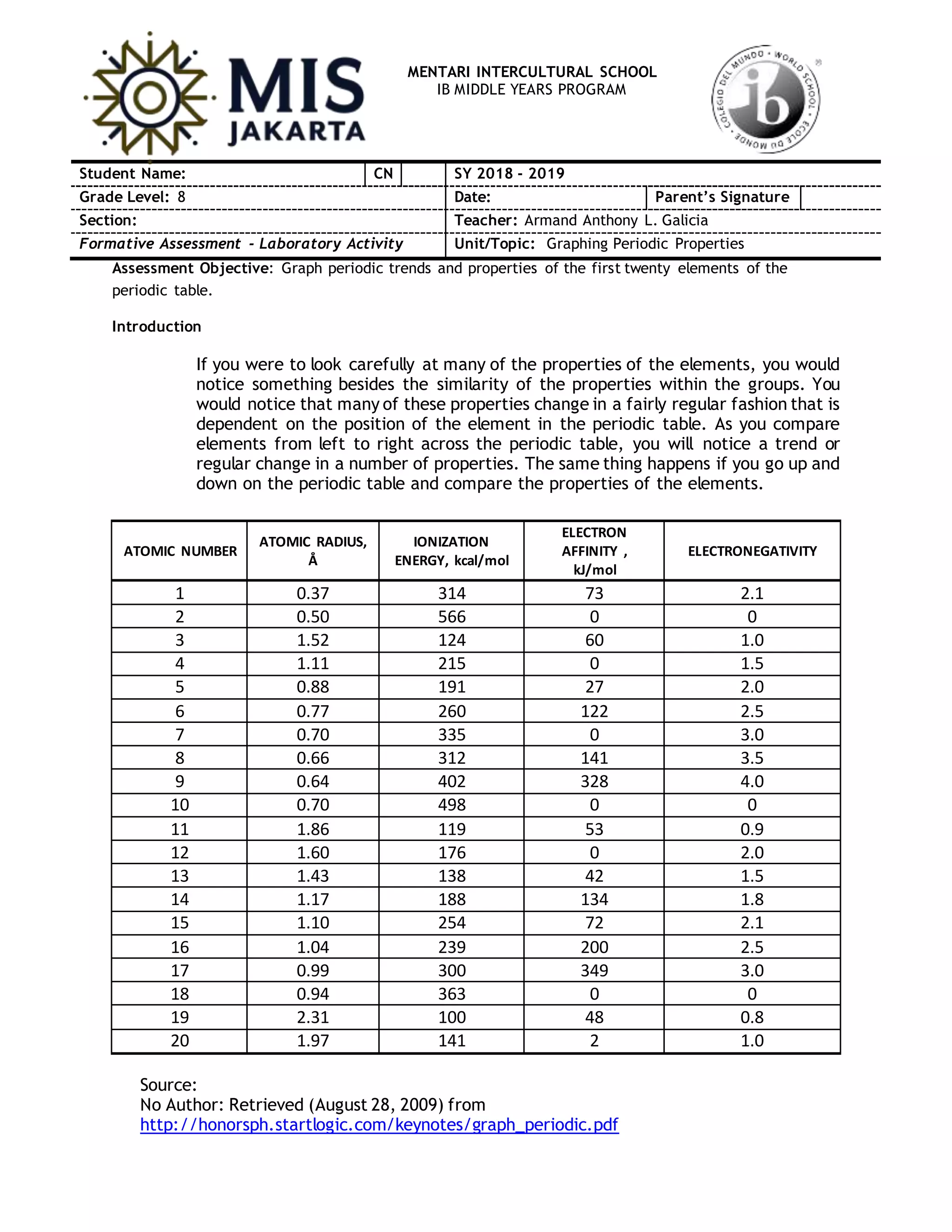
MENTARI INTERCULTURAL SCHOOL
IB MIDDLE YEARS PROGRAM
Assessment Objective: Graph periodic trends and properties of the first twenty elements of the
periodic table.
Introduction
If you were to look carefully at many of the properties of the elements, you would
notice something besides the similarity of the properties within the groups. You
would notice that many of these properties change in a fairly regular fashion that is
dependent on the position of the element in the periodic table. As you compare
elements from left to right across the periodic table, you will notice a trend or
regular change in a number of properties. The same thing happens if you go up and
down on the periodic table and compare the properties of the elements.
Source:
No Author: Retrieved (August 28, 2009) from
http://honorsph.startlogic.com/keynotes/graph_periodic.pdf
Student Name: CN SY 2018 - 2019
Grade Level: 8 Date: Parent’s Signature
Section: Teacher: Armand Anthony L. Galicia
Formative Assessment - Laboratory Activity Unit/Topic: Graphing Periodic Properties
ATOMIC NUMBER
ATOMIC RADIUS,
Å
IONIZATION
ENERGY, kcal/mol
ELECTRON
AFFINITY ,
kJ/mol
ELECTRONEGATIVITY
1 0.37 314 73 2.1
2 0.50 566 0 0
3 1.52 124 60 1.0
4 1.11 215 0 1.5
5 0.88 191 27 2.0
6 0.77 260 122 2.5
7 0.70 335 0 3.0
8 0.66 312 141 3.5
9 0.64 402 328 4.0
10 0.70 498 0 0
11 1.86 119 53 0.9
12 1.60 176 0 2.0
13 1.43 138 42 1.5
14 1.17 188 134 1.8
15 1.10 254 72 2.1
16 1.04 239 200 2.5
17 0.99 300 349 3.0
18 0.94 363 0 0
19 2.31 100 48 0.8
20 1.97 141 2 1.0
Methodology:
Using the data above, make a line graph. A maximum of 2 graphs per page is
allowed. Connect your points since the data is extremely accurate.
1. Atomic Radius (y) vs. Atomic Number (x).
2. Ionization energy (y) vs. Atomic Number (x).
3. Electron affinity (y) vs. Atomic Number (x).
4. Electronegativity (y) vs. Atomic Number (x).
*Important: Label each point with the chemical symbol and use different ink color to show
periods 1, 2, 3 and 4.
Guide Questions:
Use your graphs to answer these questions. Circle the correct answer then explain
why it is correct.
1. Radii of the atoms [increase, decrease] as you go across (L to R) a period? Explain
why.
-------------------------------------------------------------------------------------------------------------------
-------------------------------------------------------------------------------------------------------------------
-----------------------------------------------------------------------------------------------------[Level 3-4]
2. Radii of the atoms [increase, decrease] as you go down a family? Explain why.
-------------------------------------------------------------------------------------------------------------------
-------------------------------------------------------------------------------------------------------------------
-----------------------------------------------------------------------------------------------------[Level 3-4]
3. The energy needed to remove an electron from an atom generally [increases,
decreases] as you go across a period? Explain why this occurs.
-------------------------------------------------------------------------------------------------------------------
-------------------------------------------------------------------------------------------------------------------
-----------------------------------------------------------------------------------------------------[Level 3-4]
4. What is the relationship between ionization energy and members of:
a) The Alkali Metals:
-------------------------------------------------------------------------------------------------------------------
-------------------------------------------------------------------------------------------------------------------
-----------------------------------------------------------------------------------------------------[Level 3-4]
b) The Halogens:
-------------------------------------------------------------------------------------------------------------------
-------------------------------------------------------------------------------------------------------------------
-----------------------------------------------------------------------------------------------------[Level 3-4]
5. Circle the atom with the largest atomic radius (size) in each group: [Level 1-2]
a. aluminum, sulfur, phosphorus b. arsenic, bismuth, nitrogen
c. iron, lithium, silicon d. barium, beryllium, bromine
6. Circle the atom that would require the LEAST amount of energy to remove an electron.
[Level 1-2]
a. magnesium, chlorine, silicon b. lithium, cesium, potassium
c. fluorine, iodine, chlorine d. calcium, bromine, cobalt
7. Circle the atom that would require the MOST amount of energy to remove an electron.
[Level 1-2]
a. lithium, potassium, rubidium b. sodium, chlorine, silicon
c. polonium, oxygen, sulfur d. fluorine, iodine, chlorine

Laboratory activity graphing periodic properties

  • 1.
    MENTARI INTERCULTURAL SCHOOL IBMIDDLE YEARS PROGRAM Assessment Objective: Graph periodic trends and properties of the first twenty elements of the periodic table. Introduction If you were to look carefully at many of the properties of the elements, you would notice something besides the similarity of the properties within the groups. You would notice that many of these properties change in a fairly regular fashion that is dependent on the position of the element in the periodic table. As you compare elements from left to right across the periodic table, you will notice a trend or regular change in a number of properties. The same thing happens if you go up and down on the periodic table and compare the properties of the elements. Source: No Author: Retrieved (August 28, 2009) from http://honorsph.startlogic.com/keynotes/graph_periodic.pdf Student Name: CN SY 2018 - 2019 Grade Level: 8 Date: Parent’s Signature Section: Teacher: Armand Anthony L. Galicia Formative Assessment - Laboratory Activity Unit/Topic: Graphing Periodic Properties ATOMIC NUMBER ATOMIC RADIUS, Å IONIZATION ENERGY, kcal/mol ELECTRON AFFINITY , kJ/mol ELECTRONEGATIVITY 1 0.37 314 73 2.1 2 0.50 566 0 0 3 1.52 124 60 1.0 4 1.11 215 0 1.5 5 0.88 191 27 2.0 6 0.77 260 122 2.5 7 0.70 335 0 3.0 8 0.66 312 141 3.5 9 0.64 402 328 4.0 10 0.70 498 0 0 11 1.86 119 53 0.9 12 1.60 176 0 2.0 13 1.43 138 42 1.5 14 1.17 188 134 1.8 15 1.10 254 72 2.1 16 1.04 239 200 2.5 17 0.99 300 349 3.0 18 0.94 363 0 0 19 2.31 100 48 0.8 20 1.97 141 2 1.0
  • 2.
    Methodology: Using the dataabove, make a line graph. A maximum of 2 graphs per page is allowed. Connect your points since the data is extremely accurate. 1. Atomic Radius (y) vs. Atomic Number (x). 2. Ionization energy (y) vs. Atomic Number (x). 3. Electron affinity (y) vs. Atomic Number (x). 4. Electronegativity (y) vs. Atomic Number (x). *Important: Label each point with the chemical symbol and use different ink color to show periods 1, 2, 3 and 4. Guide Questions: Use your graphs to answer these questions. Circle the correct answer then explain why it is correct. 1. Radii of the atoms [increase, decrease] as you go across (L to R) a period? Explain why. ------------------------------------------------------------------------------------------------------------------- ------------------------------------------------------------------------------------------------------------------- -----------------------------------------------------------------------------------------------------[Level 3-4] 2. Radii of the atoms [increase, decrease] as you go down a family? Explain why. ------------------------------------------------------------------------------------------------------------------- ------------------------------------------------------------------------------------------------------------------- -----------------------------------------------------------------------------------------------------[Level 3-4] 3. The energy needed to remove an electron from an atom generally [increases, decreases] as you go across a period? Explain why this occurs. ------------------------------------------------------------------------------------------------------------------- ------------------------------------------------------------------------------------------------------------------- -----------------------------------------------------------------------------------------------------[Level 3-4] 4. What is the relationship between ionization energy and members of: a) The Alkali Metals: ------------------------------------------------------------------------------------------------------------------- ------------------------------------------------------------------------------------------------------------------- -----------------------------------------------------------------------------------------------------[Level 3-4] b) The Halogens: ------------------------------------------------------------------------------------------------------------------- ------------------------------------------------------------------------------------------------------------------- -----------------------------------------------------------------------------------------------------[Level 3-4] 5. Circle the atom with the largest atomic radius (size) in each group: [Level 1-2] a. aluminum, sulfur, phosphorus b. arsenic, bismuth, nitrogen c. iron, lithium, silicon d. barium, beryllium, bromine 6. Circle the atom that would require the LEAST amount of energy to remove an electron. [Level 1-2] a. magnesium, chlorine, silicon b. lithium, cesium, potassium c. fluorine, iodine, chlorine d. calcium, bromine, cobalt 7. Circle the atom that would require the MOST amount of energy to remove an electron. [Level 1-2] a. lithium, potassium, rubidium b. sodium, chlorine, silicon c. polonium, oxygen, sulfur d. fluorine, iodine, chlorine