!ppt.com
LABOUR ANALGESIA AND
RECENT ADVANCES
• The pain of childbirth is the most severe pain
most women will endure in their lifetimes
• Women in pain don’t need an “indication” for
pain relief in labor.
• According to the American Society of
Anesthesiology (ASA) “in the absence of a
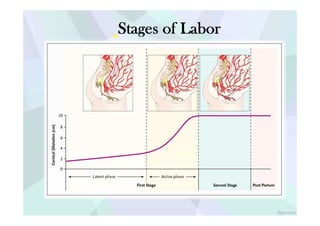
medical contraindication, maternal request is a
sufficient medical indication for pain relief during
labor”
(Statement on pain relief during labor, Oct 17, 2007).
com
THE GOALS OF LABOR ANALGESIA
“Delivery of the infant into the arms of a conscious and pain-free mother is one of the
most exciting and rewarding moments in medicine.”
Moir . Br J Anaesth 1979.
Ideal Obstetric Analgesic
• Attenuate maternal anxiety, fatigue and deliver healthy baby
• Drugs should not cross placental barrier
 Minimal effects on mother, foetus or neonate
 Could be administered late in labour
• Easy to administer with minimal monitoring: IV, bolus,
intermittent or continuous infusion, PCA
• Rapid, Profound, Consistent Analgesia (Stage I & II) & preserve
Ut contractility
• Onset, offset should match time-course of Ut contractions
• Easily reversible if necessary
• Facilitate Surgical Anesthesia avoiding GA
com
Ideal Obstetric Analgesic…..
• No motor effect:
 Ambulation
 Maternal Expulsive Efforts
 Progress of Labour
• LAs
 Effective analgesia with
 Min LA volume (MLAV):
 Min LA Dose (MLAD): ED50 given as a 8 – 12 ml loading dose,
achieves labour analgesia in 1st stage of labour
• Should maintain Uterine blood flow.
History
• The modern era of childbirth analgesia began in
1847 when Dr J Y Simpson administered ether
to a woman in childbirth, and later in the same
year, chloroform
• Queen Victoria was given chloroform by John
Snow (1853) for the birth of her eight child
Prince Leopold and this did much to
popularize the use of pain relief in labour
Inhalational Agents
• 1880: Nitrous oxide Stanislav Klikovick
• 1961: Turnstall –50:50 N2O:O2 in a single cylinder
• 1965: Approval of Entonox by Central Midwives Board
• 1934: Divinyl Ether
• 1975: Isoflurane
 0.75% with O2
 0.2% with Entonox (Isonox)
• 1984: 1% Enflurane in air
• 1995: Desflurane- 1-4.5% in O2
Labour
• Normal Labour
• Series of events that take place in
the genital organs in an effort to
expel the fetus out of the uterus
through the vagina
• Criteria
 Spontaneous in onset
 At term
 Vertex presentation
 Natural termination ( minimal
aids)
• Onset of Labour
• Regular painful uterine
contractions accompanied by
 Ruptured membranes
 Bloody show
 Complete cervical
effacement
• Painful rhythmic contractions
with cervical dilatation of 3-4 cm
10
- 8
E
&
C:
0
6
"D
:!
nl
0 4
ij
~
? 2
C)
u
0
,._____ La ent phase - - - --. Active phase
First Stage Second Stage Post Partum
fpp com
~..I.
Stages of Labor
l
epidural T1O
-L1 _-4-_;
Low caudal or
true saddleblock --(,J._-
Sacral nerve-root
blocks S2-S4
Segmenta
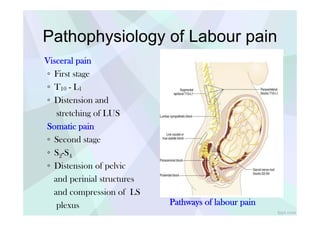
Pathophysiology of Labour pain
Visceral pain
◦ First stage
◦ T10 - L1
◦ Distension and
stretching of LUS
Somatic pain
◦ Second stage
◦ S2-S4
◦ Distension of pelvic
and perinial structures
and compression of LS
Pathways of labour pain
plexus
Early tirst stage
6 Late first stage
C Early second stage
c~ GI_
Pain lnten&lly: D Mild
c::I Moderale
• Severe
Delivery
fppt.com
A
Distribution and intensity of labour pain
during each stage of labour and delivery
p ain
Clinical! pain
syndromes
Causalgia
Prim ip aras (no train
P rimiparas
(prep ared ch ildbirtih
M ultiiparas
in g)
t raining)
(trained a n d untrained)
back pain
a in
Pain (PRI) Scores
50
40
30
Chronic
Cancer p
(non-t enm
Phantom
P ost- herp
Toothach
Arthritis
inal) -----
limb pain
etic neuralgia -
20
e
~
-
-
10
0
Pain after
accident
A mpu tation
of digit
Bruise
Fracture
Cut
Laceration
Sprain
fppt com
Labor
Most severe pain a human can bear
• McGill pain questionnaire comparing pain scores for
women in labor
!ppt.com
Why do we need Obstetric
Analgesia?
• Humanitarian reasons
• Medical reasons
Effect of labour pain on mother
and foetus
Labour pain causes-
• Marked stimulation of respiration and circulation
in mother.
• Activation of sympathetic nervous system
• Mental disturbance- postpartum depression and
post traumatic stress disorder.
_,,,,,,,, paln,strHs ~
,-----..;;;
~
=-- I Rale:11.aof
Hyperventilation Catecholamines
& RespAlkalosis &
~  : Utvasoconstriction ~ L Cortisol _I
ShlfttoL ~ - - -" ' ...
ofODC ! Lipolysis I IHyperglyc.aemia I
Apnoelc
episodes
1', 02 transfer
Metabolic
Acido5~
~
~
Free Fatty
Acids
Foetal
Free Fatty
Ac.ids
Foet:11
Hyperglycaemia
fppt com
_
Effect of labour pain on mother
and foetus
!ppt.com
TECHNIQUES OF
LABOUR
ANALGESIA
Techniques of labour analgesia
Complementary or Alternative treatment
• Mind–body interventions
• Bioelectromagnetic
• Physical methods : massage, heating pads,
warm bath
• Alternative medication : Acupuncture, hypnosis
Conventional Treatments
• Systemic analgesia: IV , inhalational
• Regional techniques
• General anesthesia
com
Mind–body interventions
 Psychoprophylactic Methods:
Breathing exercises
Deep abdominal breathing
Prepared childbirth method
 Hypnosis
 Biofeedback
 EnergyYoga:
Relaxation,concentration, meditation
 Haptonomy: science of affectivity
 Music Therapy
fppt.com
Acupuncture
• Techniques have
been used in China
• Both for surgery as
well as for pain relief
Transcutaneous electrical nerve
stimulation
• Electrical impulses are applied to
skin via electrodes
• For 1st stage electrodes are
placed over T 10 - 11 on either
side of spinous process
• For second stage analgesia
electrodes are placed over s2-s4
• Diminishes the need of analgesia
• Variable success rate
Francis R. TENS (transcutaneous electrical
nerve stimulation) for labour pain. Pract
Midwife. 2012 May;15(5):20-3
X X .J
llJ
~
0
z
.J
llJ
1
0
~
N
..
~
0
fppt.com
X
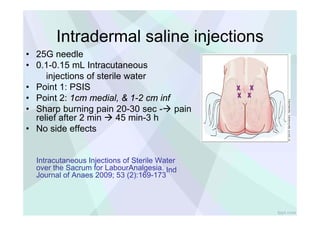
Intradermal saline injections
• 25G needle
• 0.1-0.15 mL Intracutaneous
injections of sterile water
• Point 1: PSIS
• Point 2: 1cm medial, & 1-2 cm inf
• Sharp burning pain 20-30 sec - pain
relief after 2 min  45 min-3 h
• No side effects
Intracutaneous Injections of Sterile Water
over the Sacrum for LabourAnalgesia. Ind
Journal of Anaes 2009; 53 (2):169-173
SYSTEMIC ANALGESIA FOR
LABOR ANALGESIA
Inhalational Agents
• Entonox (N2O:O2 50:50):
• Isoflurane (0.2-0.25%)
• Desflurane (1-4.5% in O2 or Entonox)
• Sevoflurane (0.5 -3%)
com
NITROUS OXIDE
• Entonox (50 % nitrous oxide in oxygen)
• Provides analgesia within 20-30 seconds of inhalation with a maximum
effect after about 45 seconds
• Mother is taught to inhale the mixture , so that peak brain nitrous oxide
concentration coincides with peak contraction pain.
• Does not affect the course of the 1st & 2nd stages of labor and rates of
cesarean delivery
Disadv-
• Increase the rate of maternal O2 desaturation
• Direct respiratory depressant effect
• Maternal drowsiness in 0 – 24% of laboring women
• Environmental pollution
Inhaled analgesia for pain management in labour.
Cochrane Database Syst Rev. 2012 Sep 12;9:CD009351
Sevoflurane
Sevox-
• Used as 0.8% with O2
• recent studies suggest sevoflurane as an effective labor
analgesic
• when compared with Entonox, provided superior pain
relief
• needs specialized equipment
• more intense sedation
Analgesia with sevoflurane during labour: ii. Sevoflurane compared with
Entonox for labour analgesia. Br J Anaesth. 2007 Jan;98(1):110-5.
SYSTEMIC ANALGESIA
IV Opioids-
• Most commonly used class of drugs
 Primary mechanism of action:
-Analgesia and/or heavy sedation.
 Drugs can be given in intermittent doses or via Patient
controlled analgesia
 Inexpensive
 Significantly higher VAS compared with regional
anesthesia.
Side effects of opioids
• Nausea, vomiting,
• Dysphoria
• Respiratory depression.
• All opioids cross the placenta. In utero opioid
exposure results in -
oFoetal bradycardia
odecreased beat-to-beat variability.
oneonatal respiratory depression
!ppt.com
Parenteral opioids
 Pethidine
 Fentanyl
 Remifentanyl
 Tramadol
 Diamorphine
 Nalbuphine
 Butorphanol
Administration can be by IV, IM & patient
controlled methods
Parenteral opioids- Pethidine
 Most commnly used opioid
 Cheap
 IM:50- 100 mg IV:25- 50 mg
 Analgesic effect: 3-4 h
 Fetal exposure: maximum 2-3 h
 Effects on fetus:
Loss of beat to beat variability of FHR
Respiratory depressant effects > pronounced in neonate
Active metabolite- norpethidine- prolonged sedation and
respiratory depression
 Should not be administered in parturients with Cx dystocia
Parenteral Pethidine for labour pain relief : 20-year follow-up cohort
study in offspring. BMJ Open. 2012 May 30;2(3). pii: e000719
Parenteral opioids- Fentanyl
• Short T1/2 & no active metabolites
• Can be used as IV bolus or as PCA
• Usual dose 25- 50 μg IV; Peak effect: 3-5 min
• Analgesic effect : 30- 60 min
• Suitable for prolonged use in labour
• Minimal neonatal respiratory depression
• Adverse effects
Short duration
Sedation
Transient decrease in FHR variability
1.A review of systemic opioids commonly used for labor pain relief. J Midwifery
Womens Health 2011; 56(3):222-39.
2.Analgesia for labour: a survey of Norwegian practice - with a focus on parenteral
opioids. Acta Anaesthesiol Scand 2009; 53(6):794-9.
Parenteral opioids-Remifentanyl
 Ultrashort acting opioid derivative of fentanyl
 Metabolism is independent of hepatic or renal function
 t1/2- 1.3 min
 Prolonged administration doesn’t cause any accumulation
 Fetal exposure minimal
 PCA: 0.25- 0.5 μg/ kg; lockout: 2 min
 Infusion: 25 μg bolus;0.05μg/ kg/min infusion; lockout: 5 min
 Dose dependent maternal sedation
• Remifentanil for labour analgesia: a meta-analysis of randomised controlled
trials Eur J Anaesthesiol. 2012 Apr;29
.
com
REGIONAL ANALGESIA
Techniques
 Most commonly performed regional techniques for labor are-
• Epidural analgesia
• Subarachnoid block
• Combined spinal-epidural blocks.
 Less frequently performed-
• Lumbar sympathetic
• Paracervical block
• Pudendal block
f pt co
Lumbar epidural analgesia
• Gold standard technique for
pain control in obstetrics
• Low doses of local anesthetic
or opioid combinations are
administered to provide a
continuous T10-L1 sensory
block during the first stage of
labor.
• Adv-
 safe and effective
 without appreciable motor
blockade
 extended to provide surgical
anaesthesia
Fluid preloading
• May be beneficial prior to labour
epidurals in situations where fetus is at
increased risk. However, routine use of
preload in current epidural practice is
questionable and may lead to prolonged
labour due to decreased uterine activity.
Test dose controversy
• “Classic” test dose (1.5% lidocaine with epinephrine
1:200,000)
• Concentrated LA and epinephrine can increase the
motor block of the subsequent epidural and therefore
reduce the possibility of walking.
• Ultra-dilute solution of LA such as less than 0.1%
bupivacaine with fentanyl, could not possibly harm a
patient.
• Avoid “classic” test dose for labour analgesia
• Test dose should be considered for operative delivery
(LSCS)
com
Technological advances
• Patient-controlled epidural
analgesia (PCEA)-
New continuous infusion
pumps have been developed
with the capability to receive
patient input and deliver
medication on demand
PCEA
Advantages-
• Excellent patient satisfaction.
• Reduces the total amount of local anesthetic used
• Less unwanted effects - motor block , hypotension
• Reduces the demands on staff on the labor floor
• Gives many parturients a feeling of empowerment
 Continuous infusion with patient-controlled top-ups
better than bolus-only technique.
Campbell dc. Labour analgesia: what’s new and PCEA too. Can J
anesth 2003;50:R1-R7
com
Technological advances
• Ultrasound imaging of the spine has recently been proposed to
facilitate identification of the epidural space and predict difficult
spine score
• Identification of landmarks & estimation of depth of epidural
space
• especially in obese woman and with abnormal lumbosacral
anatomy
fppt.com
Dosage of Epidural Catheter
DRUG INITIAL
INJECTION
CONTINUOUS INFUSION
Bupivacaine 10-15 mL of a 0.25%- 0.0625%-0.125% solution at
0.125% solution 8-15 mL/hr
Ropivacaine 10-15 mL of a 0.1%- 0.5%-0.2% solution at 8-15
0.2% solution mL/hr
Fentanyl 50-100 µg 1-4 µg/mL
Sufentanyl 10-25 µg in a 10-mL 0.03-0.05 µg/mL
volume
Complications
 Dislodgement of catheters
 Haemodynamic instability
- Hypotension & bradycardia
 Respiratory consequences
 Total spinal anesthesia
 Transient paraesthesias (5-25%)
 Intra-vascular injection of the local
anaesthetic drug
 Foetal bradycardia
Complications
 Neurological complications-
- Accidental dural punctures with PDPH
-Direct trauma to the spinal cord
- Cauda equina syndrome
-Adhesive arachnoiditis
- Thrombosis of the anterior spinal artery
Intrathecal Analgesia
• Reliable and rapid onset of neural blockade
• Disadvantages
 Repeated IT injections may be required for a long labor,
thus increasing the risk of PDPH
 Pencil point needle -(1–2%)
 Unacceptably high rate historically associated with
sharp-ended, cutting spinal needle
 Motor block prolongs 2nd stage of labor
 Limited duration with single shot
fppt.com
Intrathecal drugs
INTATHECAL DOSE EFFECT
DRUGS
OPIOIDS ALONE Profound analgesia with
Fentanyl 15-25 mcg absence of motor block
Sufentanil 5-10 mcg No maternal hypotension
Morphine 0.1-0.2 mcg Foetal bradycardia
LA ALONE Excellent analgesia but
Bupivacaine 0.25% 2.5 – 5 mg significant motor block
Ropivacaine 0.2% 2 – 4 mg
Lignocaine 1.5% 20 – 40 mg
ALPHA 2 AGONIST Moderate analgesia of short
Clonidine 30 – 50 mcg duration
Significant sedation and
hypotnsion
pt co

Combined spinal epidural anesthesia
This method uses epidural needle placement,
followed by insertion of the spinal needle
through a side lumen on the epidural needle or
directly through the epidural needle lumen.
fppt com
Advantages of CSE
• Rapid onset of analgesia
• Reliable, fewer failed, or patchy blocks
• Effective sacral analgesia in advanced
labor
• Better patient satisfaction
• Aids epidural localization in difficult backs
• Side effects are acceptably low
Disadvantages of CSE
• Failure of catheter
• PDPH
• Cannot test whether epidural catheter is functional
• Foetal bradycardia
• Common to spinal
• Does a few minutes advantage in analgesic onset
matter?.
Combined spinal-epidural versus epidural analgesia in labour. Simmons et al
Cochrane database syst rev 2012 Oct 17;10:CD003401
DRUGS FOR NEURAXIAL ANALGESIA
The ideal analgesic drug for neuraxial labor
analgesia would-
 provide rapid onset of effective analgesia
 minimal motor blockade
 minimal risk of maternal toxicity
 negligible effect on uterine activity and
uteroplacental perfusion.
 limited placental transfer
 long duration of action
 minimal effects on progress or outcome of labor
!ppt.com
Drugs
• Local anaesthetics
- Bupivacaine
- Ropivacaine
- Levobupivacaine
• Adjuvants
- Opiods
- Clonidine
- Neostigmine
Bupivacaine
 Bupivacaine is an amide local anesthetic
 onset of action with bupivacaine is rapid
 duration of anesthesia is significantly longer
with bupivacaine than with any other
commonly used local anesthetic.
 It has a high protein binding capacity (95%)
has a low fetal/maternal ratio (0.2 to 0.4)
 Relative motor sparing
 Cardiotoxic
ROPIVACAINE
• Ropivacaine is a homologue of bupivacaine,
formulated as a single levorotary enantiomer.
• Its latency and duration of action are similar to
bupivacaine
• it has less potential for cardiac toxicity.
• studies suggest that ropivacaine is
approximately 40% less potent than bupivacaine
Ngan Kee WD, Ng FF, Khaw KS, Lee A, Gin T. Determination and
comparison of graded dose–response curves for epidural bupivacaine and
ropivacaine for analgesia in laboring nulliparous women. Anesthesiology
2010;113:445-53.
Levobupivacaine
• S(-) enantiomer of bupivacaine
• No difference in onset, spread and
duration of analgesia
• Less potency
• Advantage- less motor blockade
- less cardiotoxic .
Khaw K, Ngan Kee WD, Ng F, Leung P. Dose-finding comparison of spinal
levobupivacaine and bupivacaine for caesarean section. Int J Obstet Anesth
2004; 13: S17
ADJUVANTS- OPIOIDS
The combination of a local anesthetic with a lipid-soluble opioid allows
the use of lower doses of each agent, thus minimizing undesirable side
effects
• Synergistic effect by acting directly on opioid receptors in the spinal cord
• “ultralight epidurals”.
Fentanyl -
• rapid onset of anlgesia
• minimum respiratory depression
• 10 -25µ.
• Adv-
decreased motor blockade
decreased hemodynamic instability
• Side effects –
pruritis, nausea, vomiting, urinary retention
Sufentanil-
10 times more potent than fentanyl
• Dose -2.5-7.5µg
Karla S, Saraswat N, Agnihotri GS. Comparision of efficacy of bupivacaine and
fentanyl with bupivacaine and sufentanil for epidural labor analgesia.
SaudiJAnaesth2010;4:178-81.
NEWER ADJUVANTS
• Clonidine-
• α2 adrenergic agonist
• Prolongs sensory block
• 15 µg an optimal dose
• Side effects
-hypotension
- bradycardia
- sedation
Van de Velde M, Berends N, Kumar AE, et al. Effects of epidural clonidine
and neostigmine following intrathecal labour analgesia: a randomised,
double-blind, Int J Obstet Anaesth. 2009;18:207–14.
!ppt.com
Newer Insights into the Myths and
Controversies
f pt com
Prolonged 2nd stage of labour
• Early epidural did not affect lengths of labour or
caesarean rates
• It is actually associated with shorter labour compared with
late epidural placement
• Women managed actively in labour, regardless of timing
of epidural placement, had shorter duration than controls
Weiczorek, IJOA 2010, 19:273-7, Uppal, Anaesthesia 2010, 65:652
Kajekar, IJOA 2010, 19:S44.
Increased rate of operative and instrumental
delivery: Is epidural the cause?
 In nulliparous women of a very low-risk population, use of
epidural analgesia for labor pain was associated with higher risks of
emergency cesarean section and vacuum extraction.
• Eriksen LM et al . Mode of delivery after epidural analgesia in a cohort of low-
risk nulliparas. Birth. 2011 Dec;38(4):
 The Cochrane Database Systemic trials 2012 have emphasized that epidural
analgesia had no statistically significant impact on the risk of caesarean
section
Timing of epidural during labour:
Epidural taken early vs. late?
 In RCT of 750 primigravid women in early labour,
concluded that there was no difference in caesarean
rates when neuraxial analgesia was administered early
in labour (2 cm) vs. a group where epidural analgesia
was administered late in labour (4–5 cm).
 The ACOG and the American Society of
Anesthesiologists (ASA) have also jointly emphasized
“ Maternal request is a sufficient indication for pain relief
in labour.”
Wong CA, et al. risk of caesarean delivery in neuraxial analgesia given
early vs late in labour. N Engl J Med. 2005;352:655–65.
Maternal Fever?
• Minimal increase in body temperature after
induction :
– little clinical significance
– Not associated with neonatal infection
• Intrapartum temperature elevation, epidural use, and adverse outcome in
term infants. Pediatrics.2012 Feb;129(2):
Backache and epidural?
• Epidural analgesia has not been associated with an
increase in the prevalence or incidence of backache.
• Lim Y et al. Dispelling the myth of epidural pain relief in childbirth. Singapore Med J
2006; 47: 1096.
• Loughnan BA et al. epidural analgesia & backache- a randomised control
trial. BJA 2002; 88: 466-72
• Charlotte J Howell et al. Randomised study of long term outcome after
epidural versus non-epidural analgesia during labour. BMJ 2002;325-357
f t 0
Fetal bradycardia
• Incidence of 11-30%
• Management of fetal bradycardia associated with uterine
hyperactivity:
• LUD, fluids, oxygen, interrupting oxytocin administration,
raising maternal BP, IV or SL NTG
Reynolds F, Best Practice & Research Clinical Obstetrics and
Gynaecology 2010, 24: 289-302
• CSE with subarachnoid injection of local anaesthetic
without opioids f/b early initiation of epidural analgesia
provides satisfactory pain relief
• minimises the risks of opioid-induced transient fetal
bradycardia.
Archives of Gynecology and Obstetrics 2009; 279: 329–34.
Breast feeding
• Low-dose local anaesthetic ⁄ low-dose fentanyl epidural
labour analgesia regimens (as is the current practice in
many obstetric anaesthesia centres) do not clinically
affect breastfeeding and should be still offered to
mothers wishing to breastfeed their babies.
•Wilson et al. Epidural analgesia and breastfeeding: a randomised controlled trial of epidural
techniques with and without fentanyl and a non-epidural comparison group. Anaesthesia 2010;
65: 145–53.
•Beilin et al. Effect of labor epidural analgesia with and without fentanyl on infant
•breast-feeding: a prospective, randomized, double-blind study. Anesthesiology 2005; 103:
1211–7.
fppt.com
THANK YOU

labor analgesia.pdf

  • 1.
  • 2.
    • The painof childbirth is the most severe pain most women will endure in their lifetimes • Women in pain don’t need an “indication” for pain relief in labor. • According to the American Society of Anesthesiology (ASA) “in the absence of a medical contraindication, maternal request is a sufficient medical indication for pain relief during labor” (Statement on pain relief during labor, Oct 17, 2007).
  • 3.
    com THE GOALS OFLABOR ANALGESIA “Delivery of the infant into the arms of a conscious and pain-free mother is one of the most exciting and rewarding moments in medicine.” Moir . Br J Anaesth 1979.
  • 4.
    Ideal Obstetric Analgesic •Attenuate maternal anxiety, fatigue and deliver healthy baby • Drugs should not cross placental barrier  Minimal effects on mother, foetus or neonate  Could be administered late in labour • Easy to administer with minimal monitoring: IV, bolus, intermittent or continuous infusion, PCA • Rapid, Profound, Consistent Analgesia (Stage I & II) & preserve Ut contractility • Onset, offset should match time-course of Ut contractions • Easily reversible if necessary • Facilitate Surgical Anesthesia avoiding GA
  • 5.
    com Ideal Obstetric Analgesic….. •No motor effect:  Ambulation  Maternal Expulsive Efforts  Progress of Labour • LAs  Effective analgesia with  Min LA volume (MLAV):  Min LA Dose (MLAD): ED50 given as a 8 – 12 ml loading dose, achieves labour analgesia in 1st stage of labour • Should maintain Uterine blood flow.
  • 6.
    History • The modernera of childbirth analgesia began in 1847 when Dr J Y Simpson administered ether to a woman in childbirth, and later in the same year, chloroform • Queen Victoria was given chloroform by John Snow (1853) for the birth of her eight child Prince Leopold and this did much to popularize the use of pain relief in labour
  • 7.
    Inhalational Agents • 1880:Nitrous oxide Stanislav Klikovick • 1961: Turnstall –50:50 N2O:O2 in a single cylinder • 1965: Approval of Entonox by Central Midwives Board • 1934: Divinyl Ether • 1975: Isoflurane  0.75% with O2  0.2% with Entonox (Isonox) • 1984: 1% Enflurane in air • 1995: Desflurane- 1-4.5% in O2
  • 8.
    Labour • Normal Labour •Series of events that take place in the genital organs in an effort to expel the fetus out of the uterus through the vagina • Criteria  Spontaneous in onset  At term  Vertex presentation  Natural termination ( minimal aids) • Onset of Labour • Regular painful uterine contractions accompanied by  Ruptured membranes  Bloody show  Complete cervical effacement • Painful rhythmic contractions with cervical dilatation of 3-4 cm
  • 9.
    10 - 8 E & C: 0 6 "D :! nl 0 4 ij ~ ?2 C) u 0 ,._____ La ent phase - - - --. Active phase First Stage Second Stage Post Partum fpp com ~..I. Stages of Labor
  • 10.
    l epidural T1O -L1 _-4-_; Lowcaudal or true saddleblock --(,J._- Sacral nerve-root blocks S2-S4 Segmenta Pathophysiology of Labour pain Visceral pain ◦ First stage ◦ T10 - L1 ◦ Distension and stretching of LUS Somatic pain ◦ Second stage ◦ S2-S4 ◦ Distension of pelvic and perinial structures and compression of LS Pathways of labour pain plexus
  • 11.
    Early tirst stage 6Late first stage C Early second stage c~ GI_ Pain lnten&lly: D Mild c::I Moderale • Severe Delivery fppt.com A Distribution and intensity of labour pain during each stage of labour and delivery
  • 12.
    p ain Clinical! pain syndromes Causalgia Primip aras (no train P rimiparas (prep ared ch ildbirtih M ultiiparas in g) t raining) (trained a n d untrained) back pain a in Pain (PRI) Scores 50 40 30 Chronic Cancer p (non-t enm Phantom P ost- herp Toothach Arthritis inal) ----- limb pain etic neuralgia - 20 e ~ - - 10 0 Pain after accident A mpu tation of digit Bruise Fracture Cut Laceration Sprain fppt com Labor Most severe pain a human can bear • McGill pain questionnaire comparing pain scores for women in labor
  • 13.
    !ppt.com Why do weneed Obstetric Analgesia? • Humanitarian reasons • Medical reasons
  • 14.
    Effect of labourpain on mother and foetus Labour pain causes- • Marked stimulation of respiration and circulation in mother. • Activation of sympathetic nervous system • Mental disturbance- postpartum depression and post traumatic stress disorder.
  • 15.
    _,,,,,,,, paln,strHs ~ ,-----..;;; ~ =--I Rale:11.aof Hyperventilation Catecholamines & RespAlkalosis & ~ : Utvasoconstriction ~ L Cortisol _I ShlfttoL ~ - - -" ' ... ofODC ! Lipolysis I IHyperglyc.aemia I Apnoelc episodes 1', 02 transfer Metabolic Acido5~ ~ ~ Free Fatty Acids Foetal Free Fatty Ac.ids Foet:11 Hyperglycaemia fppt com _ Effect of labour pain on mother and foetus
  • 16.
  • 17.
    Techniques of labouranalgesia Complementary or Alternative treatment • Mind–body interventions • Bioelectromagnetic • Physical methods : massage, heating pads, warm bath • Alternative medication : Acupuncture, hypnosis Conventional Treatments • Systemic analgesia: IV , inhalational • Regional techniques • General anesthesia
  • 18.
    com Mind–body interventions  PsychoprophylacticMethods: Breathing exercises Deep abdominal breathing Prepared childbirth method  Hypnosis  Biofeedback  EnergyYoga: Relaxation,concentration, meditation  Haptonomy: science of affectivity  Music Therapy
  • 19.
    fppt.com Acupuncture • Techniques have beenused in China • Both for surgery as well as for pain relief
  • 20.
    Transcutaneous electrical nerve stimulation •Electrical impulses are applied to skin via electrodes • For 1st stage electrodes are placed over T 10 - 11 on either side of spinous process • For second stage analgesia electrodes are placed over s2-s4 • Diminishes the need of analgesia • Variable success rate Francis R. TENS (transcutaneous electrical nerve stimulation) for labour pain. Pract Midwife. 2012 May;15(5):20-3
  • 21.
    X X .J llJ ~ 0 z .J llJ 1 0 ~ N .. ~ 0 fppt.com X Intradermalsaline injections • 25G needle • 0.1-0.15 mL Intracutaneous injections of sterile water • Point 1: PSIS • Point 2: 1cm medial, & 1-2 cm inf • Sharp burning pain 20-30 sec - pain relief after 2 min  45 min-3 h • No side effects Intracutaneous Injections of Sterile Water over the Sacrum for LabourAnalgesia. Ind Journal of Anaes 2009; 53 (2):169-173
  • 22.
    SYSTEMIC ANALGESIA FOR LABORANALGESIA Inhalational Agents • Entonox (N2O:O2 50:50): • Isoflurane (0.2-0.25%) • Desflurane (1-4.5% in O2 or Entonox) • Sevoflurane (0.5 -3%)
  • 23.
    com NITROUS OXIDE • Entonox(50 % nitrous oxide in oxygen) • Provides analgesia within 20-30 seconds of inhalation with a maximum effect after about 45 seconds • Mother is taught to inhale the mixture , so that peak brain nitrous oxide concentration coincides with peak contraction pain. • Does not affect the course of the 1st & 2nd stages of labor and rates of cesarean delivery Disadv- • Increase the rate of maternal O2 desaturation • Direct respiratory depressant effect • Maternal drowsiness in 0 – 24% of laboring women • Environmental pollution Inhaled analgesia for pain management in labour. Cochrane Database Syst Rev. 2012 Sep 12;9:CD009351
  • 24.
    Sevoflurane Sevox- • Used as0.8% with O2 • recent studies suggest sevoflurane as an effective labor analgesic • when compared with Entonox, provided superior pain relief • needs specialized equipment • more intense sedation Analgesia with sevoflurane during labour: ii. Sevoflurane compared with Entonox for labour analgesia. Br J Anaesth. 2007 Jan;98(1):110-5.
  • 25.
    SYSTEMIC ANALGESIA IV Opioids- •Most commonly used class of drugs  Primary mechanism of action: -Analgesia and/or heavy sedation.  Drugs can be given in intermittent doses or via Patient controlled analgesia  Inexpensive  Significantly higher VAS compared with regional anesthesia.
  • 26.
    Side effects ofopioids • Nausea, vomiting, • Dysphoria • Respiratory depression. • All opioids cross the placenta. In utero opioid exposure results in - oFoetal bradycardia odecreased beat-to-beat variability. oneonatal respiratory depression
  • 27.
    !ppt.com Parenteral opioids  Pethidine Fentanyl  Remifentanyl  Tramadol  Diamorphine  Nalbuphine  Butorphanol Administration can be by IV, IM & patient controlled methods
  • 28.
    Parenteral opioids- Pethidine Most commnly used opioid  Cheap  IM:50- 100 mg IV:25- 50 mg  Analgesic effect: 3-4 h  Fetal exposure: maximum 2-3 h  Effects on fetus: Loss of beat to beat variability of FHR Respiratory depressant effects > pronounced in neonate Active metabolite- norpethidine- prolonged sedation and respiratory depression  Should not be administered in parturients with Cx dystocia Parenteral Pethidine for labour pain relief : 20-year follow-up cohort study in offspring. BMJ Open. 2012 May 30;2(3). pii: e000719
  • 29.
    Parenteral opioids- Fentanyl •Short T1/2 & no active metabolites • Can be used as IV bolus or as PCA • Usual dose 25- 50 μg IV; Peak effect: 3-5 min • Analgesic effect : 30- 60 min • Suitable for prolonged use in labour • Minimal neonatal respiratory depression • Adverse effects Short duration Sedation Transient decrease in FHR variability 1.A review of systemic opioids commonly used for labor pain relief. J Midwifery Womens Health 2011; 56(3):222-39. 2.Analgesia for labour: a survey of Norwegian practice - with a focus on parenteral opioids. Acta Anaesthesiol Scand 2009; 53(6):794-9.
  • 30.
    Parenteral opioids-Remifentanyl  Ultrashortacting opioid derivative of fentanyl  Metabolism is independent of hepatic or renal function  t1/2- 1.3 min  Prolonged administration doesn’t cause any accumulation  Fetal exposure minimal  PCA: 0.25- 0.5 μg/ kg; lockout: 2 min  Infusion: 25 μg bolus;0.05μg/ kg/min infusion; lockout: 5 min  Dose dependent maternal sedation • Remifentanil for labour analgesia: a meta-analysis of randomised controlled trials Eur J Anaesthesiol. 2012 Apr;29 .
  • 31.
    com REGIONAL ANALGESIA Techniques  Mostcommonly performed regional techniques for labor are- • Epidural analgesia • Subarachnoid block • Combined spinal-epidural blocks.  Less frequently performed- • Lumbar sympathetic • Paracervical block • Pudendal block
  • 32.
    f pt co Lumbarepidural analgesia • Gold standard technique for pain control in obstetrics • Low doses of local anesthetic or opioid combinations are administered to provide a continuous T10-L1 sensory block during the first stage of labor. • Adv-  safe and effective  without appreciable motor blockade  extended to provide surgical anaesthesia
  • 33.
    Fluid preloading • Maybe beneficial prior to labour epidurals in situations where fetus is at increased risk. However, routine use of preload in current epidural practice is questionable and may lead to prolonged labour due to decreased uterine activity.
  • 34.
    Test dose controversy •“Classic” test dose (1.5% lidocaine with epinephrine 1:200,000) • Concentrated LA and epinephrine can increase the motor block of the subsequent epidural and therefore reduce the possibility of walking. • Ultra-dilute solution of LA such as less than 0.1% bupivacaine with fentanyl, could not possibly harm a patient. • Avoid “classic” test dose for labour analgesia • Test dose should be considered for operative delivery (LSCS)
  • 35.
    com Technological advances • Patient-controlledepidural analgesia (PCEA)- New continuous infusion pumps have been developed with the capability to receive patient input and deliver medication on demand
  • 36.
    PCEA Advantages- • Excellent patientsatisfaction. • Reduces the total amount of local anesthetic used • Less unwanted effects - motor block , hypotension • Reduces the demands on staff on the labor floor • Gives many parturients a feeling of empowerment  Continuous infusion with patient-controlled top-ups better than bolus-only technique. Campbell dc. Labour analgesia: what’s new and PCEA too. Can J anesth 2003;50:R1-R7
  • 37.
    com Technological advances • Ultrasoundimaging of the spine has recently been proposed to facilitate identification of the epidural space and predict difficult spine score • Identification of landmarks & estimation of depth of epidural space • especially in obese woman and with abnormal lumbosacral anatomy
  • 38.
    fppt.com Dosage of EpiduralCatheter DRUG INITIAL INJECTION CONTINUOUS INFUSION Bupivacaine 10-15 mL of a 0.25%- 0.0625%-0.125% solution at 0.125% solution 8-15 mL/hr Ropivacaine 10-15 mL of a 0.1%- 0.5%-0.2% solution at 8-15 0.2% solution mL/hr Fentanyl 50-100 µg 1-4 µg/mL Sufentanyl 10-25 µg in a 10-mL 0.03-0.05 µg/mL volume
  • 39.
    Complications  Dislodgement ofcatheters  Haemodynamic instability - Hypotension & bradycardia  Respiratory consequences  Total spinal anesthesia  Transient paraesthesias (5-25%)  Intra-vascular injection of the local anaesthetic drug  Foetal bradycardia
  • 40.
    Complications  Neurological complications- -Accidental dural punctures with PDPH -Direct trauma to the spinal cord - Cauda equina syndrome -Adhesive arachnoiditis - Thrombosis of the anterior spinal artery
  • 41.
    Intrathecal Analgesia • Reliableand rapid onset of neural blockade • Disadvantages  Repeated IT injections may be required for a long labor, thus increasing the risk of PDPH  Pencil point needle -(1–2%)  Unacceptably high rate historically associated with sharp-ended, cutting spinal needle  Motor block prolongs 2nd stage of labor  Limited duration with single shot
  • 42.
    fppt.com Intrathecal drugs INTATHECAL DOSEEFFECT DRUGS OPIOIDS ALONE Profound analgesia with Fentanyl 15-25 mcg absence of motor block Sufentanil 5-10 mcg No maternal hypotension Morphine 0.1-0.2 mcg Foetal bradycardia LA ALONE Excellent analgesia but Bupivacaine 0.25% 2.5 – 5 mg significant motor block Ropivacaine 0.2% 2 – 4 mg Lignocaine 1.5% 20 – 40 mg ALPHA 2 AGONIST Moderate analgesia of short Clonidine 30 – 50 mcg duration Significant sedation and hypotnsion
  • 43.
    pt co  Combined spinalepidural anesthesia This method uses epidural needle placement, followed by insertion of the spinal needle through a side lumen on the epidural needle or directly through the epidural needle lumen.
  • 44.
  • 45.
    Advantages of CSE •Rapid onset of analgesia • Reliable, fewer failed, or patchy blocks • Effective sacral analgesia in advanced labor • Better patient satisfaction • Aids epidural localization in difficult backs • Side effects are acceptably low
  • 46.
    Disadvantages of CSE •Failure of catheter • PDPH • Cannot test whether epidural catheter is functional • Foetal bradycardia • Common to spinal • Does a few minutes advantage in analgesic onset matter?. Combined spinal-epidural versus epidural analgesia in labour. Simmons et al Cochrane database syst rev 2012 Oct 17;10:CD003401
  • 47.
    DRUGS FOR NEURAXIALANALGESIA The ideal analgesic drug for neuraxial labor analgesia would-  provide rapid onset of effective analgesia  minimal motor blockade  minimal risk of maternal toxicity  negligible effect on uterine activity and uteroplacental perfusion.  limited placental transfer  long duration of action  minimal effects on progress or outcome of labor
  • 48.
    !ppt.com Drugs • Local anaesthetics -Bupivacaine - Ropivacaine - Levobupivacaine • Adjuvants - Opiods - Clonidine - Neostigmine
  • 49.
    Bupivacaine  Bupivacaine isan amide local anesthetic  onset of action with bupivacaine is rapid  duration of anesthesia is significantly longer with bupivacaine than with any other commonly used local anesthetic.  It has a high protein binding capacity (95%) has a low fetal/maternal ratio (0.2 to 0.4)  Relative motor sparing  Cardiotoxic
  • 50.
    ROPIVACAINE • Ropivacaine isa homologue of bupivacaine, formulated as a single levorotary enantiomer. • Its latency and duration of action are similar to bupivacaine • it has less potential for cardiac toxicity. • studies suggest that ropivacaine is approximately 40% less potent than bupivacaine Ngan Kee WD, Ng FF, Khaw KS, Lee A, Gin T. Determination and comparison of graded dose–response curves for epidural bupivacaine and ropivacaine for analgesia in laboring nulliparous women. Anesthesiology 2010;113:445-53.
  • 51.
    Levobupivacaine • S(-) enantiomerof bupivacaine • No difference in onset, spread and duration of analgesia • Less potency • Advantage- less motor blockade - less cardiotoxic . Khaw K, Ngan Kee WD, Ng F, Leung P. Dose-finding comparison of spinal levobupivacaine and bupivacaine for caesarean section. Int J Obstet Anesth 2004; 13: S17
  • 52.
    ADJUVANTS- OPIOIDS The combinationof a local anesthetic with a lipid-soluble opioid allows the use of lower doses of each agent, thus minimizing undesirable side effects • Synergistic effect by acting directly on opioid receptors in the spinal cord • “ultralight epidurals”. Fentanyl - • rapid onset of anlgesia • minimum respiratory depression • 10 -25µ. • Adv- decreased motor blockade decreased hemodynamic instability • Side effects – pruritis, nausea, vomiting, urinary retention
  • 53.
    Sufentanil- 10 times morepotent than fentanyl • Dose -2.5-7.5µg Karla S, Saraswat N, Agnihotri GS. Comparision of efficacy of bupivacaine and fentanyl with bupivacaine and sufentanil for epidural labor analgesia. SaudiJAnaesth2010;4:178-81.
  • 54.
    NEWER ADJUVANTS • Clonidine- •α2 adrenergic agonist • Prolongs sensory block • 15 µg an optimal dose • Side effects -hypotension - bradycardia - sedation Van de Velde M, Berends N, Kumar AE, et al. Effects of epidural clonidine and neostigmine following intrathecal labour analgesia: a randomised, double-blind, Int J Obstet Anaesth. 2009;18:207–14.
  • 55.
    !ppt.com Newer Insights intothe Myths and Controversies
  • 56.
    f pt com Prolonged2nd stage of labour • Early epidural did not affect lengths of labour or caesarean rates • It is actually associated with shorter labour compared with late epidural placement • Women managed actively in labour, regardless of timing of epidural placement, had shorter duration than controls Weiczorek, IJOA 2010, 19:273-7, Uppal, Anaesthesia 2010, 65:652 Kajekar, IJOA 2010, 19:S44.
  • 57.
    Increased rate ofoperative and instrumental delivery: Is epidural the cause?  In nulliparous women of a very low-risk population, use of epidural analgesia for labor pain was associated with higher risks of emergency cesarean section and vacuum extraction. • Eriksen LM et al . Mode of delivery after epidural analgesia in a cohort of low- risk nulliparas. Birth. 2011 Dec;38(4):  The Cochrane Database Systemic trials 2012 have emphasized that epidural analgesia had no statistically significant impact on the risk of caesarean section
  • 58.
    Timing of epiduralduring labour: Epidural taken early vs. late?  In RCT of 750 primigravid women in early labour, concluded that there was no difference in caesarean rates when neuraxial analgesia was administered early in labour (2 cm) vs. a group where epidural analgesia was administered late in labour (4–5 cm).  The ACOG and the American Society of Anesthesiologists (ASA) have also jointly emphasized “ Maternal request is a sufficient indication for pain relief in labour.” Wong CA, et al. risk of caesarean delivery in neuraxial analgesia given early vs late in labour. N Engl J Med. 2005;352:655–65.
  • 59.
    Maternal Fever? • Minimalincrease in body temperature after induction : – little clinical significance – Not associated with neonatal infection • Intrapartum temperature elevation, epidural use, and adverse outcome in term infants. Pediatrics.2012 Feb;129(2):
  • 60.
    Backache and epidural? •Epidural analgesia has not been associated with an increase in the prevalence or incidence of backache. • Lim Y et al. Dispelling the myth of epidural pain relief in childbirth. Singapore Med J 2006; 47: 1096. • Loughnan BA et al. epidural analgesia & backache- a randomised control trial. BJA 2002; 88: 466-72 • Charlotte J Howell et al. Randomised study of long term outcome after epidural versus non-epidural analgesia during labour. BMJ 2002;325-357
  • 61.
    f t 0 Fetalbradycardia • Incidence of 11-30% • Management of fetal bradycardia associated with uterine hyperactivity: • LUD, fluids, oxygen, interrupting oxytocin administration, raising maternal BP, IV or SL NTG Reynolds F, Best Practice & Research Clinical Obstetrics and Gynaecology 2010, 24: 289-302 • CSE with subarachnoid injection of local anaesthetic without opioids f/b early initiation of epidural analgesia provides satisfactory pain relief • minimises the risks of opioid-induced transient fetal bradycardia. Archives of Gynecology and Obstetrics 2009; 279: 329–34.
  • 62.
    Breast feeding • Low-doselocal anaesthetic ⁄ low-dose fentanyl epidural labour analgesia regimens (as is the current practice in many obstetric anaesthesia centres) do not clinically affect breastfeeding and should be still offered to mothers wishing to breastfeed their babies. •Wilson et al. Epidural analgesia and breastfeeding: a randomised controlled trial of epidural techniques with and without fentanyl and a non-epidural comparison group. Anaesthesia 2010; 65: 145–53. •Beilin et al. Effect of labor epidural analgesia with and without fentanyl on infant •breast-feeding: a prospective, randomized, double-blind study. Anesthesiology 2005; 103: 1211–7.
  • 63.