ALEX DAUGHTRY's Lab Result

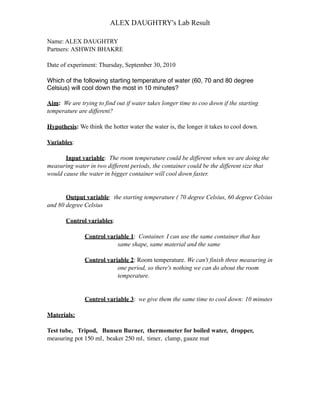
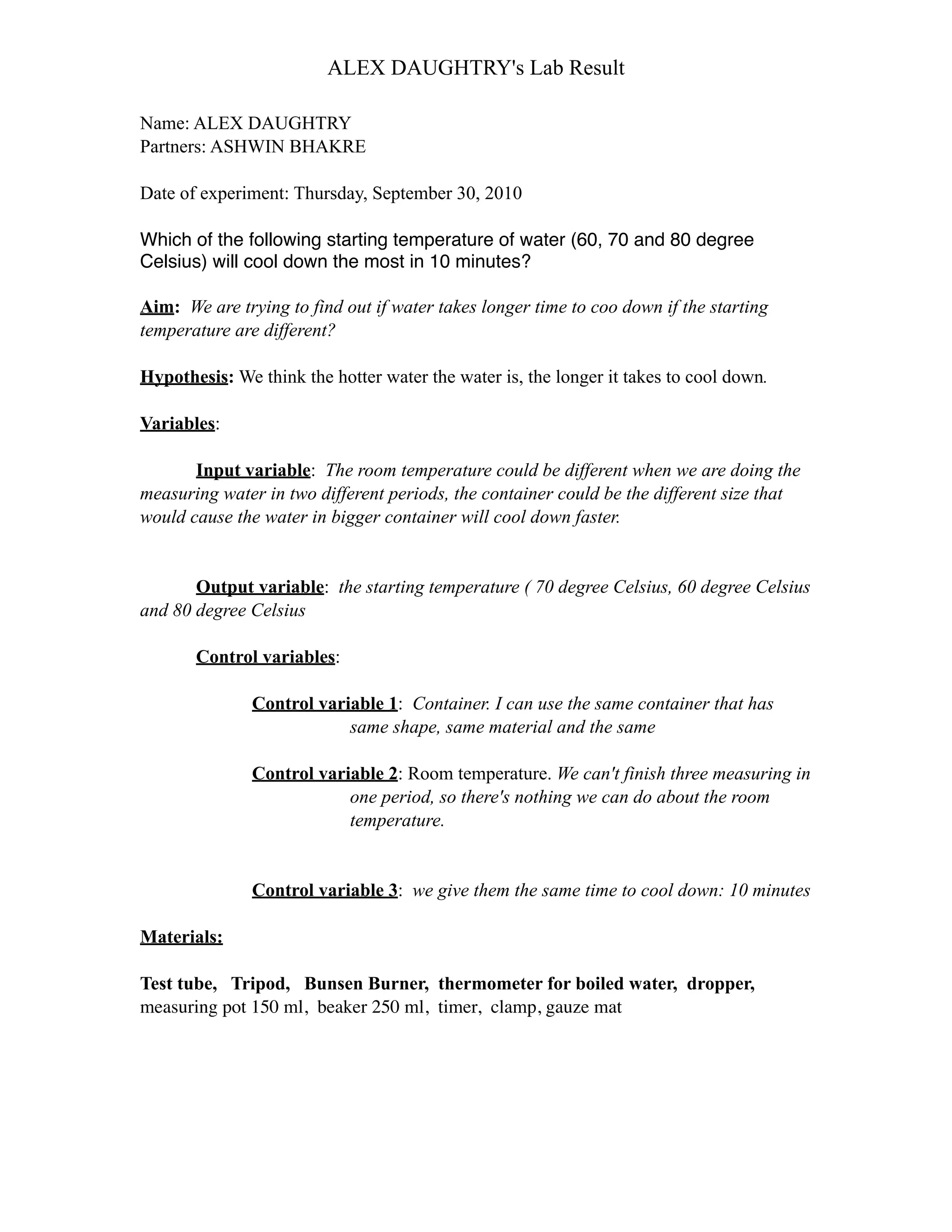
Name: ALEX DAUGHTRY
Partners: ASHWIN BHAKRE

Date of experiment: Thursday, September 30, 2010

Which of the following starting temperature of water (60, 70 and 80 degree
Celsius) will cool down the most in 10 minutes?

Aim: We are trying to find out if water takes longer time to coo down if the starting
temperature are different?

Hypothesis: We think the hotter water the water is, the longer it takes to cool down.

Variables:

       Input variable: The room temperature could be different when we are doing the
measuring water in two different periods, the container could be the different size that
would cause the water in bigger container will cool down faster.


       Output variable: the starting temperature ( 70 degree Celsius, 60 degree Celsius
and 80 degree Celsius

       Control variables:

               Control variable 1: Container. I can use the same container that has
                           same shape, same material and the same

               Control variable 2: Room temperature. We can't finish three measuring in
                           one period, so there's nothing we can do about the room
                           temperature.


               Control variable 3: we give them the same time to cool down: 10 minutes

Materials:

Test tube, Tripod, Bunsen Burner, thermometer for boiled water, dropper,
measuring pot 150 ml, beaker 250 ml, timer, clamp, gauze mat
ALEX DAUGHTRY's Lab Result


Method:

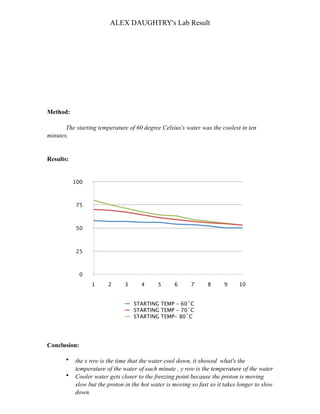
       The starting temperature of 60 degree Celsius's water was the coolest in ten
minutes.


Results:


           100


            75


            50


            25


              0
                  1     2      3      4     5      6      7      8     9      10


                                   STARTING TEMP - 60˚C
                                   STARTING TEMP - 70˚C
                                   STARTING TEMP- 80˚C


Conclusion:

       •   the x row is the time that the water cool down, it showed what's the
           temperature of the water of each minute , y row is the temperature of the water
       •   Cooler water gets closer to the freezing point because the proton is moving
           slow but the proton in the hot water is moving so fast so it takes longer to slow
           down.
ALEX DAUGHTRY's Lab Result

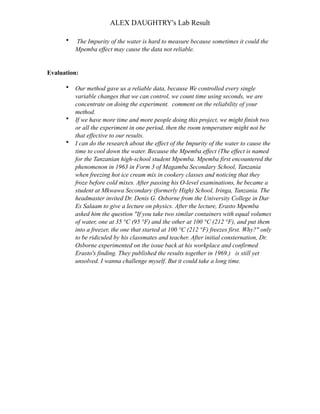
      •   The Impurity of the water is hard to measure because sometimes it could the
          Mpemba effect may cause the data not reliable.


Evaluation:

      •   Our method gave us a reliable data, because We controlled every single
          variable changes that we can control, we count time using seconds, we are
          concentrate on doing the experiment. comment on the reliability of your
          method.
      •   If we have more time and more people doing this project, we might finish two
          or all the experiment in one period, then the room temperature might not be
          that effective to our results.
      •   I can do the research about the effect of the Impurity of the water to cause the
          time to cool down the water. Because the Mpemba effect (The effect is named
          for the Tanzanian high-school student Mpemba. Mpemba first encountered the
          phenomenon in 1963 in Form 3 of Magamba Secondary School, Tanzania
          when freezing hot ice cream mix in cookery classes and noticing that they
          froze before cold mixes. After passing his O-level examinations, he became a
          student at Mkwawa Secondary (formerly High) School, Iringa, Tanzania. The
          headmaster invited Dr. Denis G. Osborne from the University College in Dar
          Es Salaam to give a lecture on physics. After the lecture, Erasto Mpemba
          asked him the question "If you take two similar containers with equal volumes
          of water, one at 35 °C (95 °F) and the other at 100 °C (212 °F), and put them
          into a freezer, the one that started at 100 °C (212 °F) freezes first. Why?" only
          to be ridiculed by his classmates and teacher. After initial consternation, Dr.
          Osborne experimented on the issue back at his workplace and confirmed
          Erasto's finding. They published the results together in 1969.) is still yet
          unsolved. I wanna challenge myself. But it could take a long time.

Lab report format_guide_g7

  • 1.
    ALEX DAUGHTRY's LabResult Name: ALEX DAUGHTRY Partners: ASHWIN BHAKRE Date of experiment: Thursday, September 30, 2010 Which of the following starting temperature of water (60, 70 and 80 degree Celsius) will cool down the most in 10 minutes? Aim: We are trying to find out if water takes longer time to coo down if the starting temperature are different? Hypothesis: We think the hotter water the water is, the longer it takes to cool down. Variables: Input variable: The room temperature could be different when we are doing the measuring water in two different periods, the container could be the different size that would cause the water in bigger container will cool down faster. Output variable: the starting temperature ( 70 degree Celsius, 60 degree Celsius and 80 degree Celsius Control variables: Control variable 1: Container. I can use the same container that has same shape, same material and the same Control variable 2: Room temperature. We can't finish three measuring in one period, so there's nothing we can do about the room temperature. Control variable 3: we give them the same time to cool down: 10 minutes Materials: Test tube, Tripod, Bunsen Burner, thermometer for boiled water, dropper, measuring pot 150 ml, beaker 250 ml, timer, clamp, gauze mat
  • 2.
    ALEX DAUGHTRY's LabResult Method: The starting temperature of 60 degree Celsius's water was the coolest in ten minutes. Results: 100 75 50 25 0 1 2 3 4 5 6 7 8 9 10 STARTING TEMP - 60˚C STARTING TEMP - 70˚C STARTING TEMP- 80˚C Conclusion: • the x row is the time that the water cool down, it showed what's the temperature of the water of each minute , y row is the temperature of the water • Cooler water gets closer to the freezing point because the proton is moving slow but the proton in the hot water is moving so fast so it takes longer to slow down.
  • 3.
    ALEX DAUGHTRY's LabResult • The Impurity of the water is hard to measure because sometimes it could the Mpemba effect may cause the data not reliable. Evaluation: • Our method gave us a reliable data, because We controlled every single variable changes that we can control, we count time using seconds, we are concentrate on doing the experiment. comment on the reliability of your method. • If we have more time and more people doing this project, we might finish two or all the experiment in one period, then the room temperature might not be that effective to our results. • I can do the research about the effect of the Impurity of the water to cause the time to cool down the water. Because the Mpemba effect (The effect is named for the Tanzanian high-school student Mpemba. Mpemba first encountered the phenomenon in 1963 in Form 3 of Magamba Secondary School, Tanzania when freezing hot ice cream mix in cookery classes and noticing that they froze before cold mixes. After passing his O-level examinations, he became a student at Mkwawa Secondary (formerly High) School, Iringa, Tanzania. The headmaster invited Dr. Denis G. Osborne from the University College in Dar Es Salaam to give a lecture on physics. After the lecture, Erasto Mpemba asked him the question "If you take two similar containers with equal volumes of water, one at 35 °C (95 °F) and the other at 100 °C (212 °F), and put them into a freezer, the one that started at 100 °C (212 °F) freezes first. Why?" only to be ridiculed by his classmates and teacher. After initial consternation, Dr. Osborne experimented on the issue back at his workplace and confirmed Erasto's finding. They published the results together in 1969.) is still yet unsolved. I wanna challenge myself. But it could take a long time.