Endometriosis
Introduction
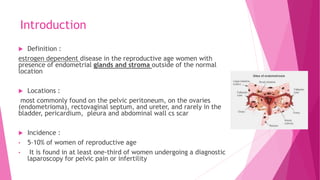
 Definition :
estrogen dependent disease in the reproductive age women with
presence of endometrial glands and stroma outside of the normal
location
 Locations :
most commonly found on the pelvic peritoneum, on the ovaries
(endometrioma), rectovaginal septum, and ureter, and rarely in the
bladder, pericardium, pleura and abdominal wall cs scar
 Incidence :
• 5–10% of women of reproductive age
• It is found in at least one-third of women undergoing a diagnostic
laparoscopy for pelvic pain or infertility
Etiology
Many theories may explain it :
 Sampson’s implantation theory
 Meyer’s ‘coelomic metaplasia’ theory
 Genetic and immunological factors
 Vascular and lymphatic spread
Sampson’s implantation theory
it is this retrograde menstrual regurgitation of viable
endometrial glands and tissue along patent Fallopian tubes,
and that subsequent implantation on the pelvic peritoneal
surface causes endometriosis
Support the theory :
Endometriosis in Genital tract flow obstruction cases
Endometriosis in cs scar
Meyer’s ‘coelomic metaplasia’ theory
Dedifferentiation of peritoneal cells lining the Mullerian duct
back to their primitive origin, which then transform into
endometrial cells
Genetic and immunological factors
There appears to be an increased incidence in first-degree
relatives of patients with the disorder and racial differences,
with increased incidence among oriental women and a low
prevalence in women of Afro-Caribbean origin
Vascular and lymphatic spread
explains the rare findings of endometriosis in sites
outside the peritoneal cavity, such as the lung
Presentation
 Pelvic pain
 Infertility
 Asymptomatic (incidental finding )
 Abnormal bleeding
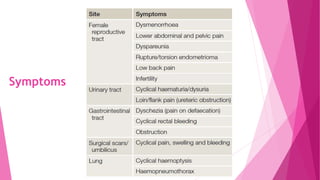
Symptoms
Diagnosis
physical examination
 thickening or nodularity of the uterosacral ligament
 tenderness in the pouch of Douglas
 an adnexal mass or a fixed retroverted uterus
 Bluish nodules in the vagina or the cervix
 Bluish nodule or tender mass on superficial palpation of the abdomen
Diagnosis
Laparoscopy
 The gold standard
 Visualization of red, puckered, black ‘matchstick’ or appear white and fibrous
 Benefit of biopsy for histopathology confirmation
Diagnosis
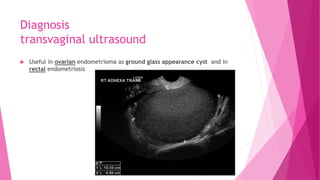
transvaginal ultrasound
 Useful in ovarian endometrioma as ground glass appearance cyst and in
rectal endometriosis
Other diagnostic tools
 MRI can detect lesions >5 mm in size, particularly in deep tissues, for example
the rectovaginal septum
 Biomarkers as CA125 increased but not specific
Management of pelvic pain
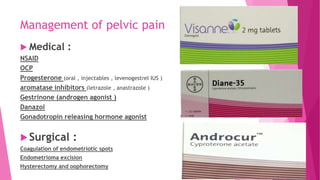
 Medical :
NSAID
OCP
Progesterone (oral , injectables , levenogestrel IUS )
aromatase inhibitors (letrazole , anastrazole )
Gestrinone (androgen agonist )
Danazol
Gonadotropin releasing hormone agonist
Surgical :
Coagulation of endometriotic spots
Endometrioma excision
Hysterectomy and oophorectomy
Infertility and endometriosis
 30% and 40% of patients with endometriosis complain of difficulty in conceiving
 Medical therapy shouldn’t be used for infertility (OCP , progesterone …. etc)
 Surgical treatment by coagulation of spots in mild to moderate cases improves
spontaneous fertility
 In more sever cases , surgery if possible with IVF
 Endometrioma excision if :
 Symptomatic
 Interfere with ovum pick up during IVF process (more than 3 cm )
Removal of ovarian endometrioma for the aim of fertility is not justified due to the
risk of decrease ovarian reserve

L35 Endometriosis

  • 1.
  • 2.
    Introduction  Definition : estrogendependent disease in the reproductive age women with presence of endometrial glands and stroma outside of the normal location  Locations : most commonly found on the pelvic peritoneum, on the ovaries (endometrioma), rectovaginal septum, and ureter, and rarely in the bladder, pericardium, pleura and abdominal wall cs scar  Incidence : • 5–10% of women of reproductive age • It is found in at least one-third of women undergoing a diagnostic laparoscopy for pelvic pain or infertility
  • 3.
    Etiology Many theories mayexplain it :  Sampson’s implantation theory  Meyer’s ‘coelomic metaplasia’ theory  Genetic and immunological factors  Vascular and lymphatic spread
  • 4.
    Sampson’s implantation theory itis this retrograde menstrual regurgitation of viable endometrial glands and tissue along patent Fallopian tubes, and that subsequent implantation on the pelvic peritoneal surface causes endometriosis Support the theory : Endometriosis in Genital tract flow obstruction cases Endometriosis in cs scar
  • 5.
    Meyer’s ‘coelomic metaplasia’theory Dedifferentiation of peritoneal cells lining the Mullerian duct back to their primitive origin, which then transform into endometrial cells
  • 6.
    Genetic and immunologicalfactors There appears to be an increased incidence in first-degree relatives of patients with the disorder and racial differences, with increased incidence among oriental women and a low prevalence in women of Afro-Caribbean origin
  • 7.
    Vascular and lymphaticspread explains the rare findings of endometriosis in sites outside the peritoneal cavity, such as the lung
  • 8.
    Presentation  Pelvic pain Infertility  Asymptomatic (incidental finding )  Abnormal bleeding
  • 9.
  • 10.
    Diagnosis physical examination  thickeningor nodularity of the uterosacral ligament  tenderness in the pouch of Douglas  an adnexal mass or a fixed retroverted uterus  Bluish nodules in the vagina or the cervix  Bluish nodule or tender mass on superficial palpation of the abdomen
  • 11.
    Diagnosis Laparoscopy  The goldstandard  Visualization of red, puckered, black ‘matchstick’ or appear white and fibrous  Benefit of biopsy for histopathology confirmation
  • 12.
    Diagnosis transvaginal ultrasound  Usefulin ovarian endometrioma as ground glass appearance cyst and in rectal endometriosis
  • 13.
    Other diagnostic tools MRI can detect lesions >5 mm in size, particularly in deep tissues, for example the rectovaginal septum  Biomarkers as CA125 increased but not specific
  • 14.
    Management of pelvicpain  Medical : NSAID OCP Progesterone (oral , injectables , levenogestrel IUS ) aromatase inhibitors (letrazole , anastrazole ) Gestrinone (androgen agonist ) Danazol Gonadotropin releasing hormone agonist Surgical : Coagulation of endometriotic spots Endometrioma excision Hysterectomy and oophorectomy
  • 15.
    Infertility and endometriosis 30% and 40% of patients with endometriosis complain of difficulty in conceiving  Medical therapy shouldn’t be used for infertility (OCP , progesterone …. etc)  Surgical treatment by coagulation of spots in mild to moderate cases improves spontaneous fertility  In more sever cases , surgery if possible with IVF  Endometrioma excision if :  Symptomatic  Interfere with ovum pick up during IVF process (more than 3 cm ) Removal of ovarian endometrioma for the aim of fertility is not justified due to the risk of decrease ovarian reserve