KNOWING YOUR BEES:
HOW TO BECOME A BETTER BEEKEEPER
JONATHAN R. ENGELSMA, PH.D.
OUTLINE
• Background
• Think like a bee
• 10 ways to get to know
your bees better
OUTLINE
• Background
• Think like a bee
• 10 ways to get to know
your bees better
QUICK BACKGROUNDER
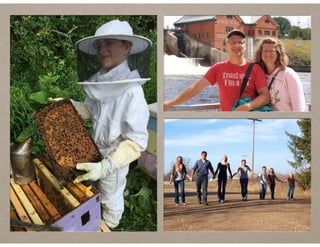
• We are a family of nine from Nunica, MI
• Mieke and Jonathan share a background in agriculture
• Jonathan works as a prof in GVSU’s School of Computing
• Starting keeping bees in 1984.
• Family runs a sideline bee operation
• run 50-70 colonies mainly for honey production
• retail the annual honey crop
• sell nucs when able.
• Website: http://hudsonvillehoney.com
A brief but relevant diversion on fastidious Dutch homemakers…
OUTLINE
• Background
• Think like a bee
• 10 ways to get to know
your bees better
How do you think like a bee?
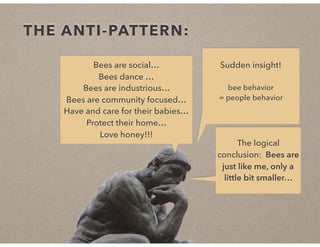
THE ANTI-PATTERN:
Bees are social…
Bees dance …
Bees are industrious…
Bees are community focused…
Have and care for their babies…
Protect their home…
Love honey!!!
Sudden insight!
bee behavior
= people behavior
The logical
conclusion: Bees are
just like me, only a
little bit smaller…
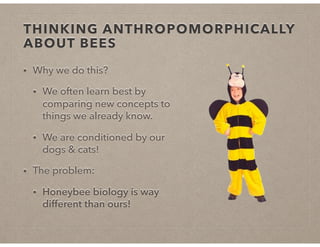
THINKING ANTHROPOMORPHICALLY
ABOUT BEES
• Why we do this?
• We often learn best by
comparing new concepts to
things we already know.
• We are conditioned by our
dogs & cats!
• The problem:
• Honeybee biology is way
different than ours!
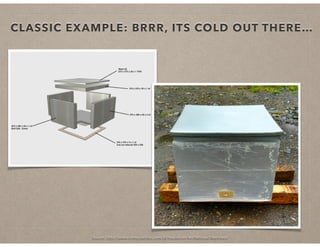
CLASSIC EXAMPLE: BRRR, ITS COLD OUT THERE…
Source: http://www.instructables.com/id/Insulation-for-National-Beehives/
Obvious Conclusion: The more you know about your
bees, the more successful a beekeeper you will be.
OUTLINE
• Background
• Think like a bee
• 10 ways to get to know
your bees better
#1 GET/BE A MENTOR
• Get a mentor
• Learn faster / better
• Avoid costly mistakes
• More fun than going solo!
• Your local club can help you
find a mentor!
• Be a mentor
• Learn by mentoring others.
• Grow the community
• Give back Credit: Anne Marie Fauvel
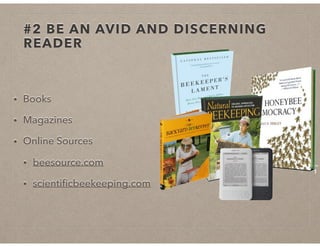
#2 BE AN AVID AND DISCERNING
READER
• Books
• Magazines
• Online Sources
• beesource.com
• scientificbeekeeping.com
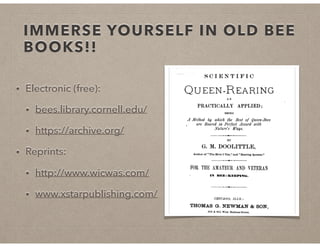
IMMERSE YOURSELF IN OLD BEE
BOOKS!!
• Electronic (free):
• bees.library.cornell.edu/
• https://archive.org/
• Reprints:
• http://www.wicwas.com/
• www.xstarpublishing.com/
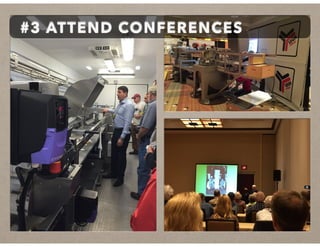
#3 ATTEND CONFERENCES
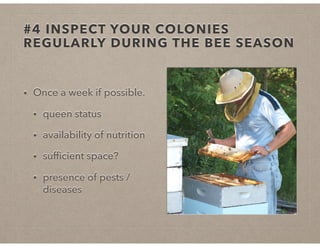
#4 INSPECT YOUR COLONIES
REGULARLY DURING THE BEE SEASON
• Once a week if possible.
• queen status
• availability of nutrition
• sufficient space?
• presence of pests /
diseases
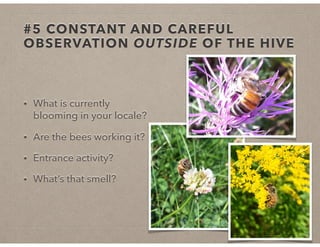
#5 CONSTANT AND CAREFUL
OBSERVATION OUTSIDE OF THE HIVE
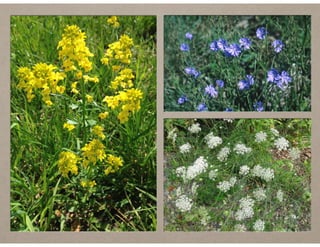
• What is currently
blooming in your locale?
• Are the bees working it?
• Entrance activity?
• What’s that smell?
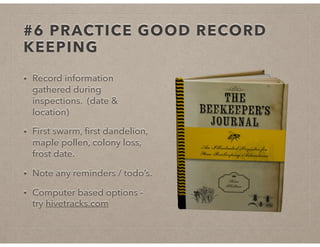
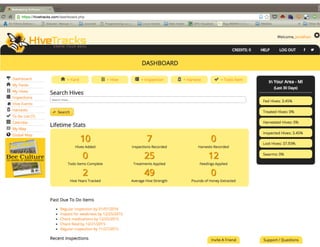
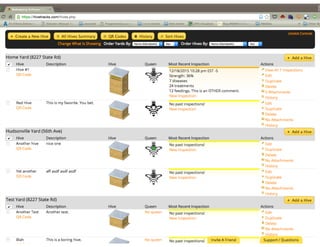
#6 PRACTICE GOOD RECORD
KEEPING
• Record information
gathered during
inspections. (date &
location)
• First swarm, first dandelion,
maple pollen, colony loss,
frost date.
• Note any reminders / todo’s.
• Computer based options -
try hivetracks.com
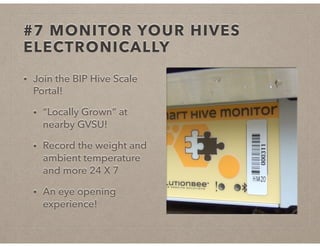
#7 MONITOR YOUR HIVES
ELECTRONICALLY
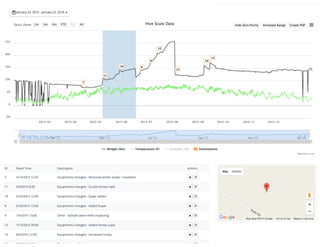
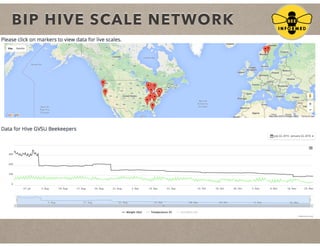
• Join the BIP Hive Scale
Portal!
• “Locally Grown” at
nearby GVSU!
• Record the weight and
ambient temperature
and more 24 X 7
• An eye opening
experience!
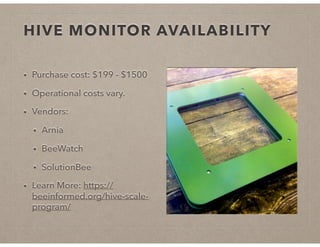
HIVE MONITOR AVAILABILITY
• Purchase cost: $199 - $1500
• Operational costs vary.
• Vendors:
• Arnia
• BeeWatch
• SolutionBee
• Learn More: https://
beeinformed.org/hive-scale-
program/
BIP HIVE SCALE NETWORK
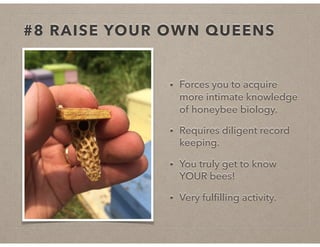
#8 RAISE YOUR OWN QUEENS
• Forces you to acquire
more intimate knowledge
of honeybee biology.
• Requires diligent record
keeping.
• You truly get to know
YOUR bees!
• Very fulfilling activity.
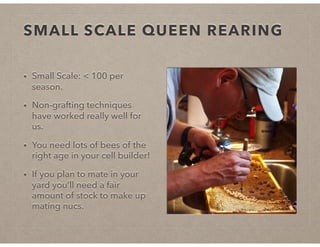
SMALL SCALE QUEEN REARING
• Small Scale: < 100 per
season.
• Non-grafting techniques
have worked really well for
us.
• You need lots of bees of the
right age in your cell builder!
• If you plan to mate in your
yard you’ll need a fair
amount of stock to make up
mating nucs.
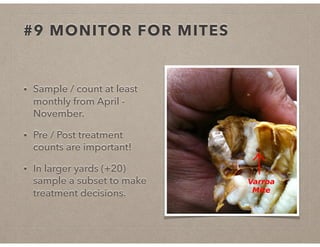
#9 MONITOR FOR MITES
• Sample / count at least
monthly from April -
November.
• Pre / Post treatment
counts are important!
• In larger yards (+20)
sample a subset to make
treatment decisions.
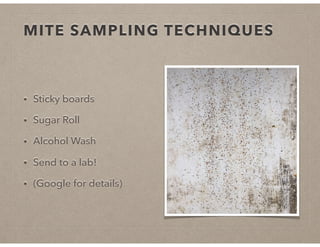
MITE SAMPLING TECHNIQUES
• Sticky boards
• Sugar Roll
• Alcohol Wash
• Send to a lab!
• (Google for details)
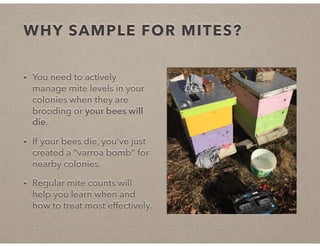
WHY SAMPLE FOR MITES?
• You need to actively
manage mite levels in your
colonies when they are
brooding or your bees will
die.
• If your bees die, you’ve just
created a “varroa bomb” for
nearby colonies.
• Regular mite counts will
help you learn when and
how to treat most effectively.
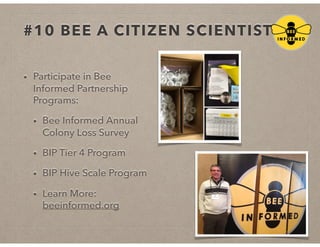
#10 BEE A CITIZEN SCIENTIST!
• Participate in Bee
Informed Partnership
Programs:
• Bee Informed Annual
Colony Loss Survey
• BIP Tier 4 Program
• BIP Hive Scale Program
• Learn More:
beeinformed.org
ANY QUESTIONS?
Jonathan Engelsma’s Contact Info:
• email: jengelsma@gmail.com
• web: http://hudsonvillehoney.com
• twitter.com/honeyandcandles
• Like us! /hudsonvillehoney
• A copy of these slides are posted on:
• http://slideshare.net/jonathanengelsma

Knowing Your Bees: Becoming a Better Beekeeper

  • 1.
    KNOWING YOUR BEES: HOWTO BECOME A BETTER BEEKEEPER JONATHAN R. ENGELSMA, PH.D.
  • 2.
    OUTLINE • Background • Thinklike a bee • 10 ways to get to know your bees better
  • 3.
    OUTLINE • Background • Thinklike a bee • 10 ways to get to know your bees better
  • 4.
    QUICK BACKGROUNDER • Weare a family of nine from Nunica, MI • Mieke and Jonathan share a background in agriculture • Jonathan works as a prof in GVSU’s School of Computing • Starting keeping bees in 1984. • Family runs a sideline bee operation • run 50-70 colonies mainly for honey production • retail the annual honey crop • sell nucs when able. • Website: http://hudsonvillehoney.com
  • 6.
    A brief butrelevant diversion on fastidious Dutch homemakers…
  • 7.
    OUTLINE • Background • Thinklike a bee • 10 ways to get to know your bees better
  • 8.
    How do youthink like a bee?
  • 9.
    THE ANTI-PATTERN: Bees aresocial… Bees dance … Bees are industrious… Bees are community focused… Have and care for their babies… Protect their home… Love honey!!! Sudden insight! bee behavior = people behavior The logical conclusion: Bees are just like me, only a little bit smaller…
  • 10.
    THINKING ANTHROPOMORPHICALLY ABOUT BEES •Why we do this? • We often learn best by comparing new concepts to things we already know. • We are conditioned by our dogs & cats! • The problem: • Honeybee biology is way different than ours!
  • 11.
    CLASSIC EXAMPLE: BRRR,ITS COLD OUT THERE… Source: http://www.instructables.com/id/Insulation-for-National-Beehives/
  • 12.
    Obvious Conclusion: Themore you know about your bees, the more successful a beekeeper you will be.
  • 13.
    OUTLINE • Background • Thinklike a bee • 10 ways to get to know your bees better
  • 14.
    #1 GET/BE AMENTOR • Get a mentor • Learn faster / better • Avoid costly mistakes • More fun than going solo! • Your local club can help you find a mentor! • Be a mentor • Learn by mentoring others. • Grow the community • Give back Credit: Anne Marie Fauvel
  • 15.
    #2 BE ANAVID AND DISCERNING READER • Books • Magazines • Online Sources • beesource.com • scientificbeekeeping.com
  • 16.
    IMMERSE YOURSELF INOLD BEE BOOKS!! • Electronic (free): • bees.library.cornell.edu/ • https://archive.org/ • Reprints: • http://www.wicwas.com/ • www.xstarpublishing.com/
  • 17.
  • 18.
    #4 INSPECT YOURCOLONIES REGULARLY DURING THE BEE SEASON • Once a week if possible. • queen status • availability of nutrition • sufficient space? • presence of pests / diseases
  • 19.
    #5 CONSTANT ANDCAREFUL OBSERVATION OUTSIDE OF THE HIVE • What is currently blooming in your locale? • Are the bees working it? • Entrance activity? • What’s that smell?
  • 21.
    #6 PRACTICE GOODRECORD KEEPING • Record information gathered during inspections. (date & location) • First swarm, first dandelion, maple pollen, colony loss, frost date. • Note any reminders / todo’s. • Computer based options - try hivetracks.com
  • 24.
    #7 MONITOR YOURHIVES ELECTRONICALLY • Join the BIP Hive Scale Portal! • “Locally Grown” at nearby GVSU! • Record the weight and ambient temperature and more 24 X 7 • An eye opening experience!
  • 26.
    HIVE MONITOR AVAILABILITY •Purchase cost: $199 - $1500 • Operational costs vary. • Vendors: • Arnia • BeeWatch • SolutionBee • Learn More: https:// beeinformed.org/hive-scale- program/
  • 27.
  • 28.
    #8 RAISE YOUROWN QUEENS • Forces you to acquire more intimate knowledge of honeybee biology. • Requires diligent record keeping. • You truly get to know YOUR bees! • Very fulfilling activity.
  • 29.
    SMALL SCALE QUEENREARING • Small Scale: < 100 per season. • Non-grafting techniques have worked really well for us. • You need lots of bees of the right age in your cell builder! • If you plan to mate in your yard you’ll need a fair amount of stock to make up mating nucs.
  • 31.
    #9 MONITOR FORMITES • Sample / count at least monthly from April - November. • Pre / Post treatment counts are important! • In larger yards (+20) sample a subset to make treatment decisions.
  • 32.
    MITE SAMPLING TECHNIQUES •Sticky boards • Sugar Roll • Alcohol Wash • Send to a lab! • (Google for details)
  • 33.
    WHY SAMPLE FORMITES? • You need to actively manage mite levels in your colonies when they are brooding or your bees will die. • If your bees die, you’ve just created a “varroa bomb” for nearby colonies. • Regular mite counts will help you learn when and how to treat most effectively.
  • 34.
    #10 BEE ACITIZEN SCIENTIST! • Participate in Bee Informed Partnership Programs: • Bee Informed Annual Colony Loss Survey • BIP Tier 4 Program • BIP Hive Scale Program • Learn More: beeinformed.org
  • 35.
    ANY QUESTIONS? Jonathan Engelsma’sContact Info: • email: jengelsma@gmail.com • web: http://hudsonvillehoney.com • twitter.com/honeyandcandles • Like us! /hudsonvillehoney • A copy of these slides are posted on: • http://slideshare.net/jonathanengelsma