Expansion Opportunities in Beekeeping
Grant F. C. Gillard
Jackson, MO gillard5@charter.net
www.grantgillard.weebly.com
www.slideshare.net
“Going Big Time”
Attrition of Beginners…
Within two years
80% of all beginner
will have quit.
But there are those who
persist…
Evolution of a Beekeeper
 First year – scared, intimidated, micromanage
 Second year – this is easy, I’m a pro
 Third year – I can make some “real” money
 Fourth year – Wow! This is an expensive hobby
 Fifth year – Whew, this is a lot of work
 Sixth year – I finally broke even…this year.
 Seventh year – I need some new equipment
 Eighth year – I’m in too deep to quit
 Ninth year – You know, I kind of enjoy it.
☻
☻
‫ס‬‫ס‬
What Makes Expansion Work?
 Efficiency – working smarter, not just harder
-- making the best use of resources (time)
 Economics – sales, return on investment
 Energy – Always something else, always
more work to be done
 Expediency – getting things done when they
need to be done.
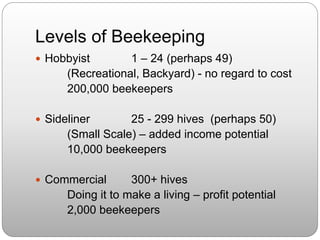
Levels of Beekeeping
 Hobbyist 1 – 24 (perhaps 49)
(Recreational, Backyard) - no regard to cost
200,000 beekeepers
 Sideliner 25 - 299 hives (perhaps 50)
(Small Scale) – added income potential
10,000 beekeepers
 Commercial 300+ hives
Doing it to make a living – profit potential
2,000 beekeepers
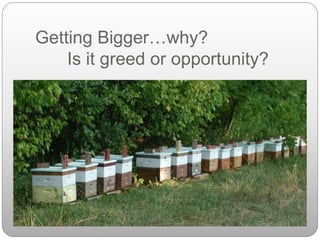
Getting Bigger…why?
Is it greed or opportunity?
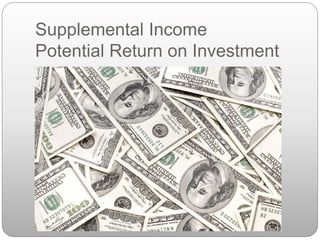
Supplemental Income
Potential Return on Investment
Three types of beekeeping**
 Honey production
 Queen rearing, nucs and packages
 Pollination (largely migratory)
**Removals and cut-outs
**Educational opportunities
One will prevail…
…others may overlap.
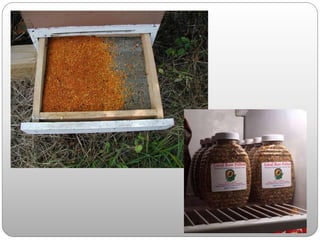
Pollen
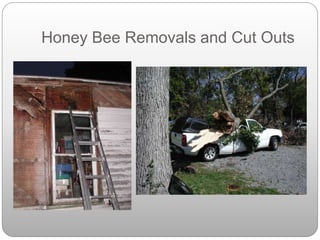
Honey Bee Removals and Cut Outs
Three Keys to Success
 1. Understand honey bee biology
Seasonality, swarming, honey production
 2. Determine your priority, purpose or quest
 3. Fold #2 into #1
We work with the bees,
the bees don’t work for us.
Is there a downside?
 Less TLC and personal attention
 More “herd mentality”
 Always something to do
 Always something to fix and repair
 Always someone who stops by the shop
 Certain seasons demand your full
attention (swarming, queen rearing)
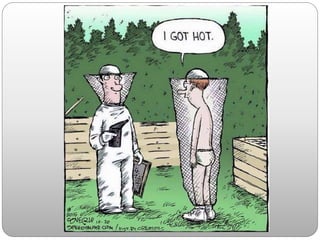
 You have to attend hives in all kinds of
weather
Getting bigger…how?
1. Buy (and move) existing hives
2. Buy nucs and packages
3. Split everything - OTS
“Innovative Beekeeping”
https://www.createspace.com/5966374
4. Collect and trap swarms
5. Bee rescues and cut-outs
Each one is a trade-off of time and labor
against out of pocket costs
Acquiring Equipment
Make your own from scrap and cull
wood, packing crates
Make your own from purchased lumber
(Home Depot)
Buy used and clean it up, repaint
Buy new and assemble
Each option is a trade-off of time and
labor against out of pocket costs
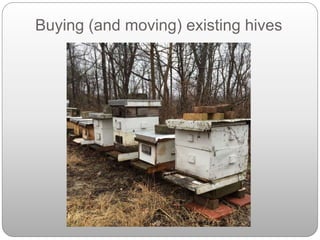
Buying (and moving) existing hives
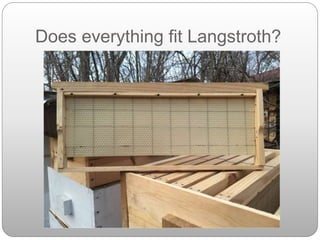
Does everything fit Langstroth?
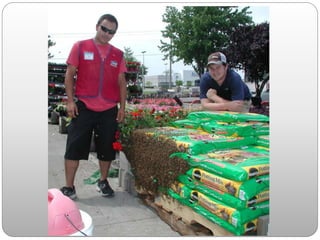
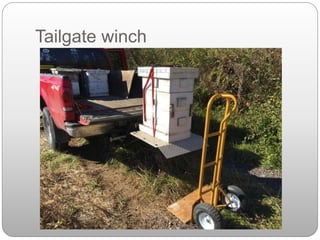
Tailgate winch
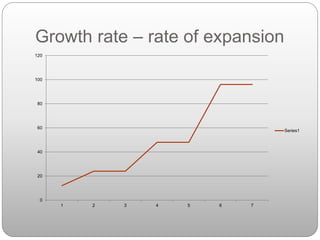
Growth rate – rate of expansion
0
20
40
60
80
100
120
1 2 3 4 5 6 7
Series1
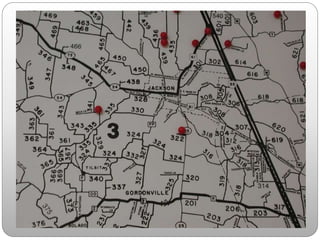
The need for more apiaries
“Where Can I Keep My Bees?”
https://www.createspace.com/4044187
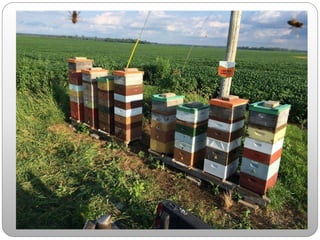
 Finding suitable locations, placement (LP tank)
 Distance from home
 How many hives can I bring, what’s too many?
 Diversity of floral sources
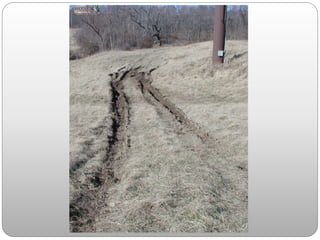
 Access: 24/7, by truck, farm gates
 Water, full sun, shelter from winds
 Neighbors
 Adjacent crops, pesticide application, mono
 “Social Rent”
Legal Stuff
 Written lease
 Rental agreement
 Landlord relationships – communication
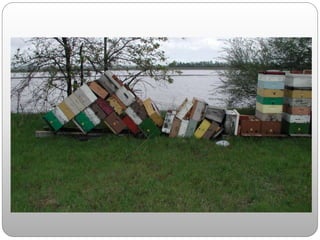
 Damage to landlord’s property
 Damage to your bee hives
 Legal structure, LLC “individuals acting on behalf of a
company are personally liable for their tortious conduct, even if
they did so on behalf of the company.”
 Business Insurance, not home owners,
basic liability
Record Keeping
The biggest lie we tell ourselves is…
“I don’t need to write it down.
I’ll just remember it.”
Low-Tech Record Keeping
Just remember stuff…sure.
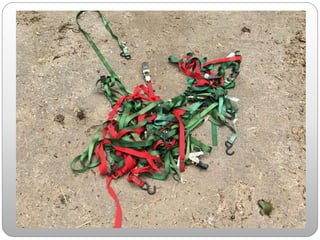
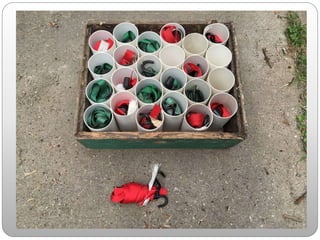
Bricks…but what do they mean?
Writing on the lid
(Sharpie, permanent marker, pencil)
Writing on the side of the brood box
Note card
in between the inner/outer covers
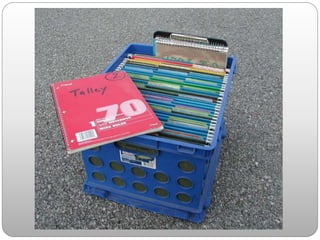
Pocket calendars
Spiral notebooks
Record Keeping
 Several on-line “in the cloud” systems
and “smart phone” apps
 Less details with more hives
 Written, accessible notes
 Need to be reviewed before each day
Where do I need to go?
What do I need to do?
What do I need to get it done?
Outyard management
 Everything you need for that day is on
the truck
 Some centralized storage
 Organization and time management
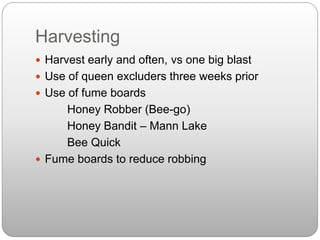
Harvesting
 Harvest early and often, vs one big blast
 Use of queen excluders three weeks prior
 Use of fume boards
Honey Robber (Bee-go)
Honey Bandit – Mann Lake
Bee Quick
 Fume boards to reduce robbing
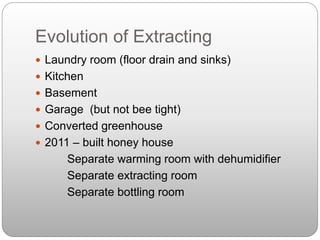
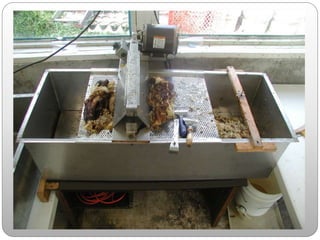
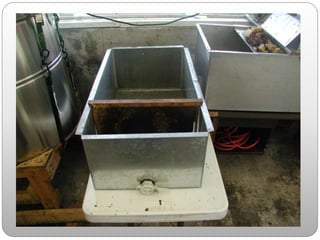
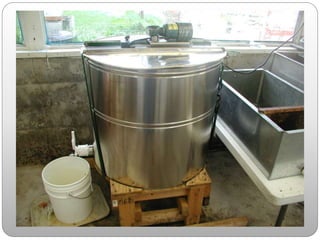
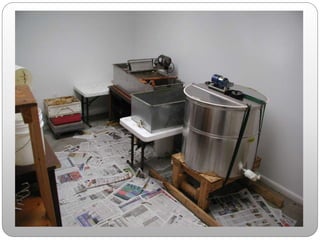
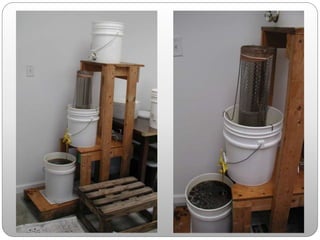
Evolution of Extracting
 Laundry room (floor drain and sinks)
 Kitchen
 Basement
 Garage (but not bee tight)
 Converted greenhouse
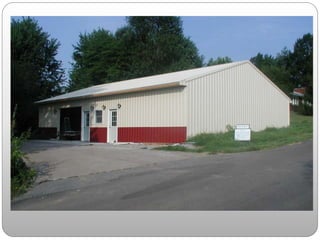
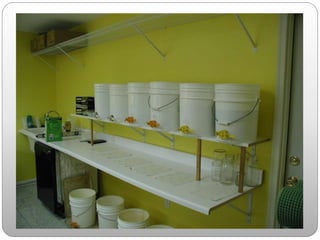
 2011 – built honey house
Separate warming room with dehumidifier
Separate extracting room
Separate bottling room
A Word About Health Inspections
 County Health Department trumps the state
 “Jelly Law” Section 261.241.1 (State Statute)
Only for direct-to-consumer sales
Basically removes the commercial kitchen
 SB500 – 2015, State Legislature
Allows honey to be processed in the domicile
where it is produced, then sold to a third
party. No commercial kitchen.
 If you have a separate honey house, unattached,
SB500 does not apply, must be inspected by
state…but they are easy to work with.
Marketing
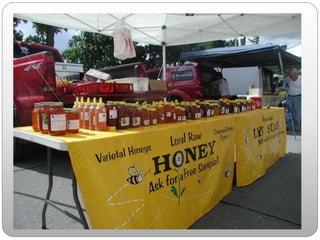
 Retail – Direct to consumer
Farmer’s Markets*
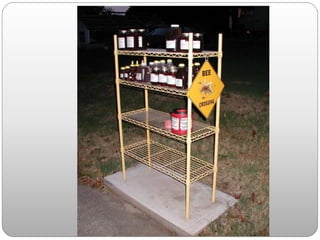
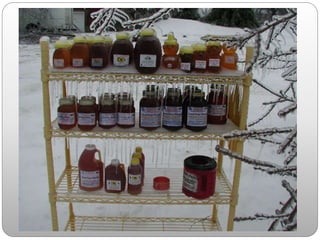
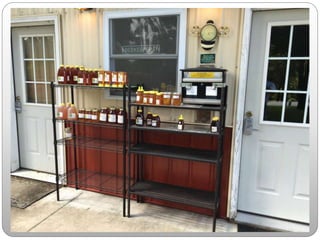
Driveway (honor box)
What sizes?
 Wholesale – to third party
Sell to a “reseller” bottled (Health Food)
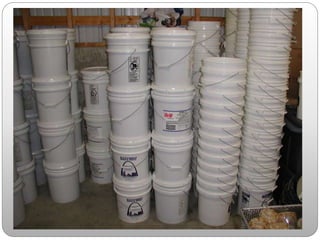
Sell to other beekeepers(buckets or barrels)
*politics, rules and regulations
Hired Help?
 Seasonal, hire some teenager
 Cash under the table, or legally reported
 Insurance, taxes, etc.
 Honey house needs rest rooms
 Rest rooms need septic or sewer
 Barter with other beekeepers and trade
for nucs or used equipment
Business Structure
 LLC (still liable)
 Partnership
 Do you keep your day job?
Health insurance, pension
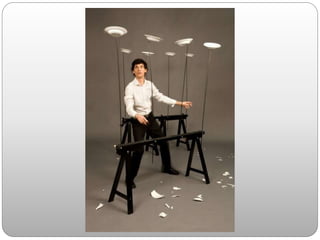
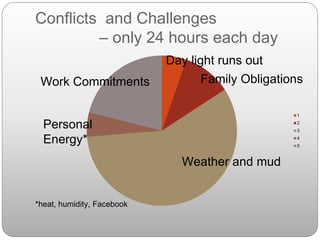
Conflicts and Challenges
– only 24 hours each day
1
2
3
4
5
Weather and mud
Work Commitments Family Obligations
Day light runs out
Personal
Energy*
*heat, humidity, Facebook
Where to?
Secrets to Success:
(with just about anything)
 Identify your purpose
What do I want?
 Make appropriate plans
How am I going to get there?
 Rearrange your priorities
Where do I invest my energy?
 Pursue it with passion
How much do I want it? (Hunger Factor)
Grant Gillard gillard5@charter.net
www.grantgillard.weebly.com
www.slideshare.net

Kc 1 expansion opportunities

  • 1.
    Expansion Opportunities inBeekeeping Grant F. C. Gillard Jackson, MO gillard5@charter.net www.grantgillard.weebly.com www.slideshare.net “Going Big Time”
  • 2.
    Attrition of Beginners… Withintwo years 80% of all beginner will have quit. But there are those who persist…
  • 3.
    Evolution of aBeekeeper  First year – scared, intimidated, micromanage  Second year – this is easy, I’m a pro  Third year – I can make some “real” money  Fourth year – Wow! This is an expensive hobby  Fifth year – Whew, this is a lot of work  Sixth year – I finally broke even…this year.  Seventh year – I need some new equipment  Eighth year – I’m in too deep to quit  Ninth year – You know, I kind of enjoy it.
  • 4.
  • 5.
  • 6.
    What Makes ExpansionWork?  Efficiency – working smarter, not just harder -- making the best use of resources (time)  Economics – sales, return on investment  Energy – Always something else, always more work to be done  Expediency – getting things done when they need to be done.
  • 7.
    Levels of Beekeeping Hobbyist 1 – 24 (perhaps 49) (Recreational, Backyard) - no regard to cost 200,000 beekeepers  Sideliner 25 - 299 hives (perhaps 50) (Small Scale) – added income potential 10,000 beekeepers  Commercial 300+ hives Doing it to make a living – profit potential 2,000 beekeepers
  • 8.
    Getting Bigger…why? Is itgreed or opportunity?
  • 9.
  • 10.
    Three types ofbeekeeping**  Honey production  Queen rearing, nucs and packages  Pollination (largely migratory) **Removals and cut-outs **Educational opportunities One will prevail… …others may overlap.
  • 12.
  • 13.
    Honey Bee Removalsand Cut Outs
  • 15.
    Three Keys toSuccess  1. Understand honey bee biology Seasonality, swarming, honey production  2. Determine your priority, purpose or quest  3. Fold #2 into #1 We work with the bees, the bees don’t work for us.
  • 16.
    Is there adownside?  Less TLC and personal attention  More “herd mentality”  Always something to do  Always something to fix and repair  Always someone who stops by the shop  Certain seasons demand your full attention (swarming, queen rearing)  You have to attend hives in all kinds of weather
  • 19.
    Getting bigger…how? 1. Buy(and move) existing hives 2. Buy nucs and packages 3. Split everything - OTS “Innovative Beekeeping” https://www.createspace.com/5966374 4. Collect and trap swarms 5. Bee rescues and cut-outs Each one is a trade-off of time and labor against out of pocket costs
  • 20.
    Acquiring Equipment Make yourown from scrap and cull wood, packing crates Make your own from purchased lumber (Home Depot) Buy used and clean it up, repaint Buy new and assemble Each option is a trade-off of time and labor against out of pocket costs
  • 21.
    Buying (and moving)existing hives
  • 22.
  • 25.
  • 26.
    Growth rate –rate of expansion 0 20 40 60 80 100 120 1 2 3 4 5 6 7 Series1
  • 27.
    The need formore apiaries “Where Can I Keep My Bees?” https://www.createspace.com/4044187  Finding suitable locations, placement (LP tank)  Distance from home  How many hives can I bring, what’s too many?  Diversity of floral sources  Access: 24/7, by truck, farm gates  Water, full sun, shelter from winds  Neighbors  Adjacent crops, pesticide application, mono  “Social Rent”
  • 32.
    Legal Stuff  Writtenlease  Rental agreement  Landlord relationships – communication  Damage to landlord’s property  Damage to your bee hives  Legal structure, LLC “individuals acting on behalf of a company are personally liable for their tortious conduct, even if they did so on behalf of the company.”  Business Insurance, not home owners, basic liability
  • 33.
    Record Keeping The biggestlie we tell ourselves is… “I don’t need to write it down. I’ll just remember it.”
  • 34.
    Low-Tech Record Keeping Justremember stuff…sure. Bricks…but what do they mean? Writing on the lid (Sharpie, permanent marker, pencil) Writing on the side of the brood box Note card in between the inner/outer covers Pocket calendars Spiral notebooks
  • 35.
    Record Keeping  Severalon-line “in the cloud” systems and “smart phone” apps  Less details with more hives  Written, accessible notes  Need to be reviewed before each day Where do I need to go? What do I need to do? What do I need to get it done?
  • 39.
    Outyard management  Everythingyou need for that day is on the truck  Some centralized storage  Organization and time management
  • 44.
    Harvesting  Harvest earlyand often, vs one big blast  Use of queen excluders three weeks prior  Use of fume boards Honey Robber (Bee-go) Honey Bandit – Mann Lake Bee Quick  Fume boards to reduce robbing
  • 45.
    Evolution of Extracting Laundry room (floor drain and sinks)  Kitchen  Basement  Garage (but not bee tight)  Converted greenhouse  2011 – built honey house Separate warming room with dehumidifier Separate extracting room Separate bottling room
  • 54.
    A Word AboutHealth Inspections  County Health Department trumps the state  “Jelly Law” Section 261.241.1 (State Statute) Only for direct-to-consumer sales Basically removes the commercial kitchen  SB500 – 2015, State Legislature Allows honey to be processed in the domicile where it is produced, then sold to a third party. No commercial kitchen.  If you have a separate honey house, unattached, SB500 does not apply, must be inspected by state…but they are easy to work with.
  • 55.
    Marketing  Retail –Direct to consumer Farmer’s Markets* Driveway (honor box) What sizes?  Wholesale – to third party Sell to a “reseller” bottled (Health Food) Sell to other beekeepers(buckets or barrels) *politics, rules and regulations
  • 59.
    Hired Help?  Seasonal,hire some teenager  Cash under the table, or legally reported  Insurance, taxes, etc.  Honey house needs rest rooms  Rest rooms need septic or sewer  Barter with other beekeepers and trade for nucs or used equipment
  • 60.
    Business Structure  LLC(still liable)  Partnership  Do you keep your day job? Health insurance, pension
  • 61.
    Conflicts and Challenges –only 24 hours each day 1 2 3 4 5 Weather and mud Work Commitments Family Obligations Day light runs out Personal Energy* *heat, humidity, Facebook
  • 62.
  • 63.
    Secrets to Success: (withjust about anything)  Identify your purpose What do I want?  Make appropriate plans How am I going to get there?  Rearrange your priorities Where do I invest my energy?  Pursue it with passion How much do I want it? (Hunger Factor)
  • 64.