The role of GP in prevention of
   tick-borne meningoencephalitis

Professor Janko Kersnik, PhD, MSc, MD
                 FM Department
       Medical School Ljubljana and Maribor

       Primož Kušar, MSc, MD
       Primary Health Care Centre Ljubljana
Aims of the presentation
   The importance of primary care approach in
    primary prevention
   The role of family doctors
   Good practice
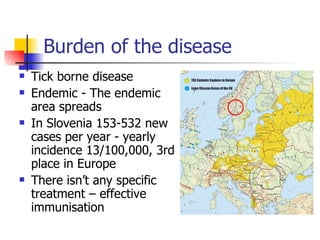
Burden of the disease
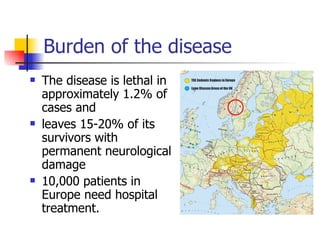
   Tick borne disease
   Endemic - The endemic
    area spreads
   In Slovenia 153-532 new
    cases per year - yearly
    incidence 13/100,000, 3rd
    place in Europe
   There isn’t any specific
    treatment – effective
    immunisation
Burden of the disease
   The disease is lethal in
    approximately 1.2% of
    cases and
   leaves 15-20% of its
    survivors with
    permanent neurological
    damage
   10,000 patients in
    Europe need hospital
    treatment.
Slovenian case
   Immunisation rate in Slovenia is 10%
   Immunisation rate in children is even lover -
    4%
   But the government claims quality care
    provided by paediatricians and by public
    health institutes
   What goes wrong?
Good practice from Austria
   Before 1981 prevalence same in Austria and
    Slovenia
   In 1981 new campaign
   Immunisation rate raised from 6% in 1981 to
    86-90% in 2001
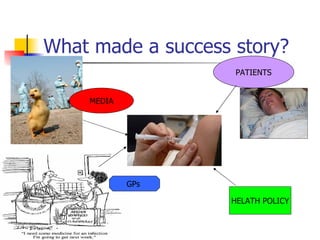
What made a success story?
                    PATIENTS


    MEDIA


            GPs

                   HELATH POLICY
The role of a GP?
    PRTEVENTION               TREATMENT
   Immunisation advice      First contact with
   Patient motivation        the patients
   Offering                 Difficult diagnosis
    immunisation             Follow up
   Keeping records on
    immunisations
What do we have to know
about vaccination?
   Basic vaccination with three shuts
   Can be done simultaneously – different place
   First two shuts preferably during winter
    months
   Serologically proven patients are immune to
    next course of the disease
Conclusions
Tick Born Meningitis

Tick Born Meningitis

  • 1.
    The role ofGP in prevention of tick-borne meningoencephalitis Professor Janko Kersnik, PhD, MSc, MD FM Department Medical School Ljubljana and Maribor Primož Kušar, MSc, MD Primary Health Care Centre Ljubljana
  • 2.
    Aims of thepresentation  The importance of primary care approach in primary prevention  The role of family doctors  Good practice
  • 3.
    Burden of thedisease  Tick borne disease  Endemic - The endemic area spreads  In Slovenia 153-532 new cases per year - yearly incidence 13/100,000, 3rd place in Europe  There isn’t any specific treatment – effective immunisation
  • 4.
    Burden of thedisease  The disease is lethal in approximately 1.2% of cases and  leaves 15-20% of its survivors with permanent neurological damage  10,000 patients in Europe need hospital treatment.
  • 5.
    Slovenian case  Immunisation rate in Slovenia is 10%  Immunisation rate in children is even lover - 4%  But the government claims quality care provided by paediatricians and by public health institutes  What goes wrong?
  • 6.
    Good practice fromAustria  Before 1981 prevalence same in Austria and Slovenia  In 1981 new campaign  Immunisation rate raised from 6% in 1981 to 86-90% in 2001
  • 7.
    What made asuccess story? PATIENTS MEDIA GPs HELATH POLICY
  • 8.
    The role ofa GP? PRTEVENTION TREATMENT  Immunisation advice  First contact with  Patient motivation the patients  Offering  Difficult diagnosis immunisation  Follow up  Keeping records on immunisations
  • 9.
    What do wehave to know about vaccination?  Basic vaccination with three shuts  Can be done simultaneously – different place  First two shuts preferably during winter months  Serologically proven patients are immune to next course of the disease
  • 10.