Soil Formation
 By: Curtanna Whittington & Leshanna Lofton
Soils may be formed in place from rock
or formed in weathered rock and
minerals that have been transported
from where the original rock occurred.
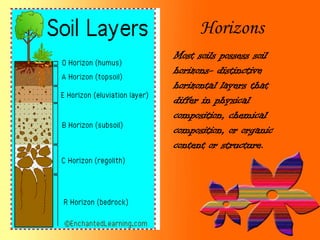
Horizons
Most soils possess soil
horizons- distinctive
horizontal layers that
differ in physical
composition, chemical
composition, or organic
content or structure.
Soil Characteristics
(Color] The color of a soil reveals details about its
composition and fertility.
(Texture] Soil textures based on particle size.
(Structure] Soil structure describes the arrangement of soil
particles. Which you can see it in the “clumpiness” of soil.
(pH] a soil’s acidity or alkalinity affects its ability to
support plant growth.
Soil Degradation
The soil characteristics needed for plant
growth or other ecosystem services. Also,
soil degradation results in major ecosystem
changes.
Soil Desertification
It’s a loss of more than 10% of productivity due to
erosion, soil compaction, forest removal, overgrazing,
drought, salt buildup, climate change, depletion of
water sources, and other factors.
Soil Pollution
    Irrigation and pesticide use can improve soil
    productivity in the short term, but they can pollute soil
    in the long term.


•   Irrigation – using source other than precipitation to water crops.

• Salinization – the buildup of salts in the surface layers of soil.

• Pesticides – a chemical used to kill organisms that attack or
  compete with plants that humans value.
Soil Conservation Practices:
    Soil Conservation is maintaining good soil health, by various practices. The
    aim of soil conversation is to prevent soil erosion, soil’s overuse and
    prevent soil contamination from chemicals. There are many ways to
    conserve soil, some are suited to those areas where farming is done, and
    some are according to the soil needs.

    Examples :
•    Intercropping
•    Crop Rotation
•    Shelterbelts
•    Conservation Tillage
•    Terracing
•    Contour Farming

Kkk

  • 1.
    Soil Formation By:Curtanna Whittington & Leshanna Lofton
  • 2.
    Soils may beformed in place from rock or formed in weathered rock and minerals that have been transported from where the original rock occurred.
  • 3.
    Horizons Most soils possesssoil horizons- distinctive horizontal layers that differ in physical composition, chemical composition, or organic content or structure.
  • 4.
    Soil Characteristics (Color] Thecolor of a soil reveals details about its composition and fertility. (Texture] Soil textures based on particle size. (Structure] Soil structure describes the arrangement of soil particles. Which you can see it in the “clumpiness” of soil. (pH] a soil’s acidity or alkalinity affects its ability to support plant growth.
  • 5.
    Soil Degradation The soilcharacteristics needed for plant growth or other ecosystem services. Also, soil degradation results in major ecosystem changes.
  • 6.
    Soil Desertification It’s aloss of more than 10% of productivity due to erosion, soil compaction, forest removal, overgrazing, drought, salt buildup, climate change, depletion of water sources, and other factors.
  • 7.
    Soil Pollution Irrigation and pesticide use can improve soil productivity in the short term, but they can pollute soil in the long term. • Irrigation – using source other than precipitation to water crops. • Salinization – the buildup of salts in the surface layers of soil. • Pesticides – a chemical used to kill organisms that attack or compete with plants that humans value.
  • 8.
    Soil Conservation Practices: Soil Conservation is maintaining good soil health, by various practices. The aim of soil conversation is to prevent soil erosion, soil’s overuse and prevent soil contamination from chemicals. There are many ways to conserve soil, some are suited to those areas where farming is done, and some are according to the soil needs. Examples : • Intercropping • Crop Rotation • Shelterbelts • Conservation Tillage • Terracing • Contour Farming