Smart Cities Initiative Annual Conference
KI E-Mobility and powermatching
Stefan Klug (Fraunhofer ISI)
Hein de Wilde (ECN)
Don Guikink, Joost Adriaanse & Ewoud Werkman (TNO)
1
Key Innovation Rationale
• Electromobility (E-mobility) is the most important alternative transport
technology to reduce CO2 emissions
• Electricity generation should match electricity demand including
electricity needed for e-mobility
• Main challenge is to deploy e-mobility at a larger scale
• On the transition path focus on organisations with large vehicle fleets
operated on short distances
• E-mobility is only part of the solution for urban mobility
(emissions/CO2)
2
3
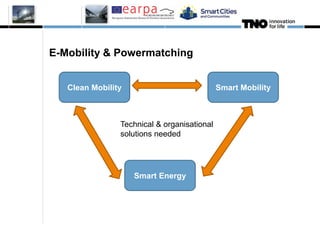
Clean Mobility Smart Mobility
Smart Energy
E-Mobility & Powermatching
Technical & organisational
solutions needed
4
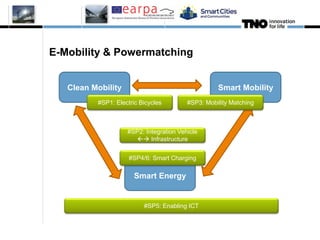
Clean Mobility Smart Mobility
Smart Energy
#SP1: Electric Bicycles
#SP2: Integration Vehicle
 Infrastructure
#SP3: Mobility Matching
#SP4/6: Smart Charging
#SP5: Enabling ICT
E-Mobility & Powermatching
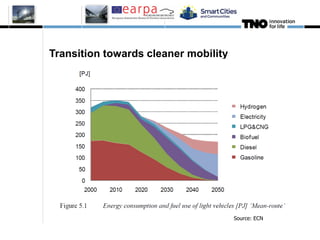
Transition towards cleaner mobility
5
Source: ECN
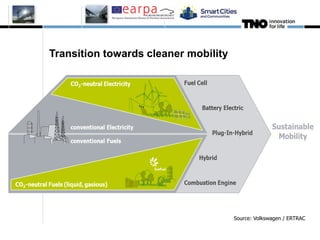
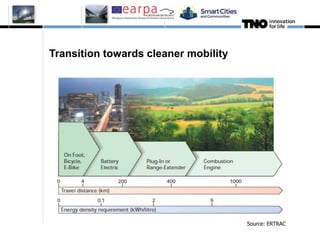
Transition towards cleaner mobility
6
Source: Volkswagen / ERTRAC
7
Source: ERTRAC
Transition towards cleaner mobility
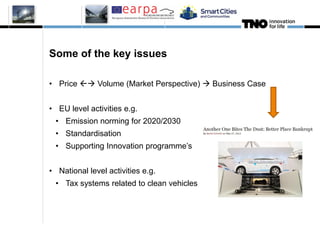
Some of the key issues
• Price  Volume (Market Perspective)  Business Case
• EU level activities e.g.
• Emission norming for 2020/2030
• Standardisation
• Supporting Innovation programme’s
• National level activities e.g.
• Tax systems related to clean vehicles
8
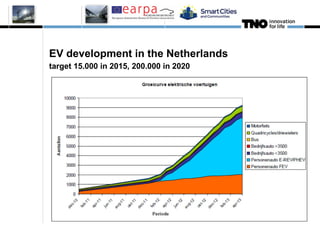
EV development in the Netherlands
target 15.000 in 2015, 200.000 in 2020
9
Some of the key issues
• Price  Volume (Market Perspective)  Business Case
• EU level activities e.g.
• Emission norming for 2020/2030 and standardisation
• Supporting Innovation programme’s
• National level activities e.g.
• Tax systems related to clean veh
• Local issues:
• Environmental zones / parking
• Charging infrastructure
10
11
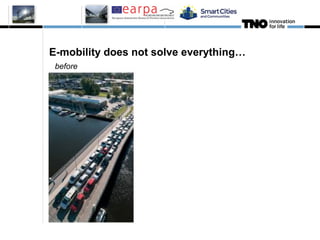
E-mobility does not solve everything…
before
12
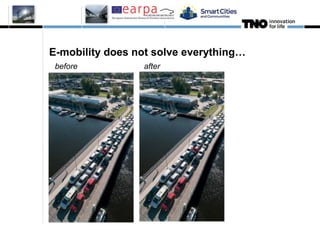
E-mobility does not solve everything…
before after
13
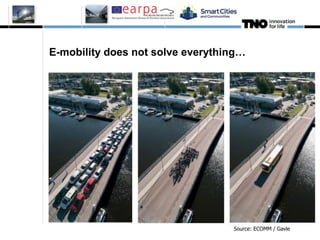
E-mobility does not solve everything…
Source: ECOMM / Gavle
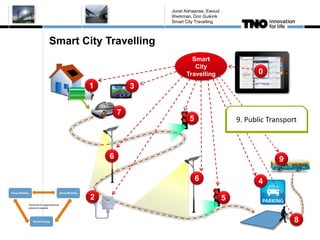
0. Planning your trip1. Load electric car
Smart City Travelling
Joost Adriaanse, Ewoud
Werkman, Don Guikink
Smart City Travelling
31
4
2
5
5
6
6
Smart
City
Travelling 0
9
8
7
2. Check emission3. Plan route4. Reserve Parking
5. Optimise traffic
lights on route
6. Adjust lightning7. Travel by car
8. Walk to public
transport
9. Public Transport
Smart Cities Initiative Annual Conference
KI E-Mobility and powermatching
Thank You
Stefan Klug (Fraunhofer ISI)
Hein de Wilde (ECN)
Don Guikink, Joost Adriaanse & Ewoud Werkman (TNO)

Ki e mobility and powermatching v4

  • 1.
    Smart Cities InitiativeAnnual Conference KI E-Mobility and powermatching Stefan Klug (Fraunhofer ISI) Hein de Wilde (ECN) Don Guikink, Joost Adriaanse & Ewoud Werkman (TNO)
  • 2.
  • 3.
    Key Innovation Rationale •Electromobility (E-mobility) is the most important alternative transport technology to reduce CO2 emissions • Electricity generation should match electricity demand including electricity needed for e-mobility • Main challenge is to deploy e-mobility at a larger scale • On the transition path focus on organisations with large vehicle fleets operated on short distances • E-mobility is only part of the solution for urban mobility (emissions/CO2) 2
  • 4.
    3 Clean Mobility SmartMobility Smart Energy E-Mobility & Powermatching Technical & organisational solutions needed
  • 5.
    4 Clean Mobility SmartMobility Smart Energy #SP1: Electric Bicycles #SP2: Integration Vehicle  Infrastructure #SP3: Mobility Matching #SP4/6: Smart Charging #SP5: Enabling ICT E-Mobility & Powermatching
  • 6.
    Transition towards cleanermobility 5 Source: ECN
  • 7.
    Transition towards cleanermobility 6 Source: Volkswagen / ERTRAC
  • 8.
  • 9.
    Some of thekey issues • Price  Volume (Market Perspective)  Business Case • EU level activities e.g. • Emission norming for 2020/2030 • Standardisation • Supporting Innovation programme’s • National level activities e.g. • Tax systems related to clean vehicles 8
  • 10.
    EV development inthe Netherlands target 15.000 in 2015, 200.000 in 2020 9
  • 11.
    Some of thekey issues • Price  Volume (Market Perspective)  Business Case • EU level activities e.g. • Emission norming for 2020/2030 and standardisation • Supporting Innovation programme’s • National level activities e.g. • Tax systems related to clean veh • Local issues: • Environmental zones / parking • Charging infrastructure 10
  • 12.
    11 E-mobility does notsolve everything… before
  • 13.
    12 E-mobility does notsolve everything… before after
  • 14.
    13 E-mobility does notsolve everything… Source: ECOMM / Gavle
  • 15.
    0. Planning yourtrip1. Load electric car Smart City Travelling Joost Adriaanse, Ewoud Werkman, Don Guikink Smart City Travelling 31 4 2 5 5 6 6 Smart City Travelling 0 9 8 7 2. Check emission3. Plan route4. Reserve Parking 5. Optimise traffic lights on route 6. Adjust lightning7. Travel by car 8. Walk to public transport 9. Public Transport
  • 16.
    Smart Cities InitiativeAnnual Conference KI E-Mobility and powermatching Thank You Stefan Klug (Fraunhofer ISI) Hein de Wilde (ECN) Don Guikink, Joost Adriaanse & Ewoud Werkman (TNO)