Transforming your Security Team
Keeping Security relevant
amid Digital Transformation
WEBINAR
2
M.Sc., B.Sc.
A b o u t M e
RYAN MEEKS
MANAGER,
CYBER SECURITY SERVICES
3
T H E
AGENDA
What is Digital Transformation?
Cyber Security & Digital
Transformation
Cost of Security Breaches
Cyber Security Threats
Aligning Cyber Security with
Digital Transformation
4
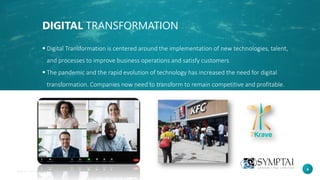
DIGITAL TRANSFORMATION
▪ Digital Transformation is centered around the implementation of new technologies, talent,
and processes to improve business operations and satisfy customers
▪ The pandemic and the rapid evolution of technology has increased the need for digital
transformation. Companies now need to transform to remain competitive and profitable.
Cyber Security
& Digital
Transformation
Cost of Security
Breaches
Cyber Security
Threats
Aligning Cyber
Security with
Digital
Transformation
HOW DOES CYBER SECURITY PLAY A PART
IN DIGITAL TRANSFORMATION?
6
CYBER SECURITY & DIGITAL TRANSFORMATION
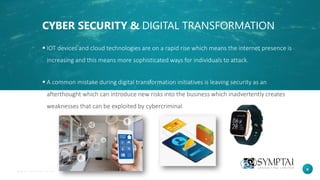
▪ IOT devices and cloud technologies are on a rapid rise which means the internet presence is
increasing and this means more sophisticated ways for individuals to attack.
▪ A common mistake during digital transformation initiatives is leaving security as an
afterthought which can introduce new risks into the business which inadvertently creates
weaknesses that can be exploited by cybercriminal
7
CYBER SECURITY &
DIGITAL TRANSFORMATION
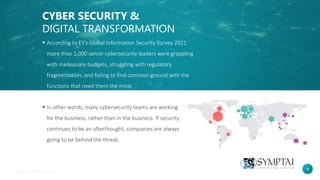
▪ According to EY’s Global Information Security Survey 2021
more than 1,000 senior cybersecurity leaders were grappling
with inadequate budgets, struggling with regulatory
fragmentation, and failing to find common ground with the
functions that need them the most.
▪ In other words, many cybersecurity teams are working
for the business, rather than in the business. If security
continues to be an afterthought, companies are always
going to be behind the threat.
8
CYBER SECURITY &
DIGITAL TRANSFORMATION
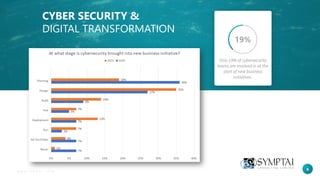
Only 19% of cybersecurity
teams are involved in at the
start of new business
initiatives.
19%
Cybersecurity &
Digital
Transformation
Cost of Security
Breaches
Cyber Security
Threats
Aligning Cyber
Security with
Digital
Transformation
WHAT’S THE COST TO BUSINESSES?
10
COST OF
SECURITY BREACHES
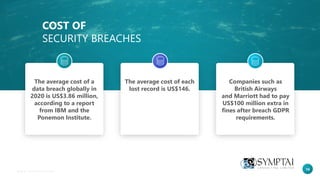
The average cost of a
data breach globally in
2020 is US$3.86 million,
according to a report
from IBM and the
Ponemon Institute.
The average cost of each
lost record is US$146.
Companies such as
British Airways
and Marriott had to pay
US$100 million extra in
fines after breach GDPR
requirements.
11
COST OF
SECURITY BREACHES
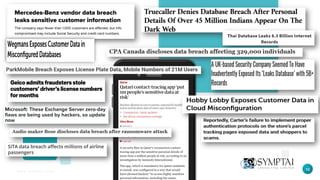
Data breaches can be significant and Catastrophic. The impact includes:
▪ Increased customer turnover
▪ Lost revenue due to system downtime
▪ The increasing cost of acquiring new business due to diminished
reputation
▪ Reputational Damages
▪ Regulatory fines
12
Cybersecurity &
Digital
Transformation
Cost of Security
Breaches
Cyber Security
Threats
Aligning Cyber
Security with
Digital
Transformation
HOW ARE CYBERCRIMINALS EXPLOITING
DIGITAL TRANSFORMATION
14
CYBER THREATS
Transforming your business digitally
can introduce security flaws and
weaknesses into your systems
▪ Fast upgrades and deployments of technology
such as those seen through the COVID-19
pandemic can create problems such as cloud
misconfigurations.
▪ Credit card breaches and sensitive data storage
▪ Poorly secured remote access connection
▪ Botnet attack
▪ Shadow IT
▪ Limited resources
15
CYBER THREATS
Emerging threats include:
• Infiltration of Internet of Things
(IoT) devices
• Artificial Intelligence (AI) as a
weapon
Traditional exploits:
• Ransomware
• Social engineering attack:
phishing, vishing, smishing
• Denial of service and
distributed denial of service
attacks
• Malicious Insider
• Human error/careless
employees
• System hacking
• Password attacks
Cybersecurity &
Digital
Transformation
Cost of Security
Breaches
Cyber Security
Threats
Aligning Cyber
Security with
Digital
Transformation
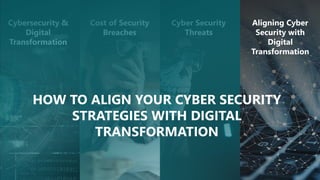
HOW TO ALIGN YOUR CYBER SECURITY
STRATEGIES WITH DIGITAL
TRANSFORMATION
17
ALIGN
STRATEGIES
A cyber security strategy is a prerequisite for
successfully running a business. It aligns its actions
with the enterprise goals and ensures the right
balance between mitigating risk and enabling
business innovation.
Security Strategies:
▪ Secure-by-Design
▪ Balance customer experience & security
▪ Evaluate your security choices
▪ Conduct regular assessments
▪ Transform your team
▪ Building a secure culture
18
SECURE-BY-
DESIGN
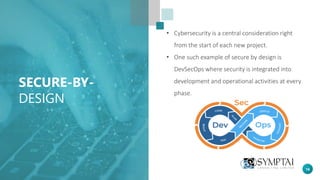
• Cybersecurity is a central consideration right
from the start of each new project.
• One such example of secure by design is
DevSecOps where security is integrated into
development and operational activities at every
phase.
19
BALANCING
CUSTOMER
EXPERIENCE &
SECURITY
• A reasonable balance should be struck between
security and experience to ensure that the
customers are offered a seamless journey while
protecting the customers from exploitative
attackers.
20
EVALUATE YOUR
CHOICE OF
SECURITY
SOLUTIONS WISELY
• Ensure that the solutions you choose to protect
your business are aligned to your strategy and
provide the protection you’ll need now and in the
future.
• Do not depend on a silver bullet.
21
CONDUCT
REGULAR RISK
AND SECURITY
ASSESSMENTS
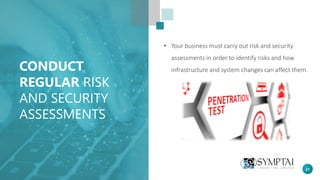
• Your business must carry out risk and security
assessments in order to identify risks and how
infrastructure and system changes can affect them.
22
TRANSFORM
YOUR SECURITY
TEAM
• Equip staff members with the knowledge and
understanding of industry regulations and best
practices concerning cyber security.
• Investments should be made to acquire, train
and maintain talent in the cybersecurity space.
This will ensure that the company has access to
the competencies necessary to build and
maintain secure initiatives.
23
BUILDING A
SECURE CULTURE
• Developing and sustaining an effective security
culture is an essential component of a protective
security regime and helps mitigate against a
range of threats that could cause physical,
reputational or financial damage to
organizations.
• Getting security culture right will help develop a
security conscious workforce and promote the
desired security behaviours you want from your
staff.
24
CONSIDER
OUTSIDE SUPPORT
• Digital transformation can create new risks that
existing team members might not be experienced
enough at identifying and addressing.
• Seek the support of professionals. Short-term skills
can be acquired through outsourcing security
functions to a managed security service providers
(MSSPs) or Consulting Company.
25
Cyber Security
Services
Transformation,
Assurance and
Compliance
HOW SYMPTAI CAN
SUPPORT YOU
26
www.symptai.com
OFFICE
(876) 968-6189
info@symptai.com
F O R I N Q U I R I E S O R F O L L O W - U P S
CONTACT US

Keeping security relevant amid digital transformation

  • 1.
    Transforming your SecurityTeam Keeping Security relevant amid Digital Transformation WEBINAR
  • 2.
    2 M.Sc., B.Sc. A bo u t M e RYAN MEEKS MANAGER, CYBER SECURITY SERVICES
  • 3.
    3 T H E AGENDA Whatis Digital Transformation? Cyber Security & Digital Transformation Cost of Security Breaches Cyber Security Threats Aligning Cyber Security with Digital Transformation
  • 4.
    4 DIGITAL TRANSFORMATION ▪ DigitalTransformation is centered around the implementation of new technologies, talent, and processes to improve business operations and satisfy customers ▪ The pandemic and the rapid evolution of technology has increased the need for digital transformation. Companies now need to transform to remain competitive and profitable.
  • 5.
    Cyber Security & Digital Transformation Costof Security Breaches Cyber Security Threats Aligning Cyber Security with Digital Transformation HOW DOES CYBER SECURITY PLAY A PART IN DIGITAL TRANSFORMATION?
  • 6.
    6 CYBER SECURITY &DIGITAL TRANSFORMATION ▪ IOT devices and cloud technologies are on a rapid rise which means the internet presence is increasing and this means more sophisticated ways for individuals to attack. ▪ A common mistake during digital transformation initiatives is leaving security as an afterthought which can introduce new risks into the business which inadvertently creates weaknesses that can be exploited by cybercriminal
  • 7.
    7 CYBER SECURITY & DIGITALTRANSFORMATION ▪ According to EY’s Global Information Security Survey 2021 more than 1,000 senior cybersecurity leaders were grappling with inadequate budgets, struggling with regulatory fragmentation, and failing to find common ground with the functions that need them the most. ▪ In other words, many cybersecurity teams are working for the business, rather than in the business. If security continues to be an afterthought, companies are always going to be behind the threat.
  • 8.
    8 CYBER SECURITY & DIGITALTRANSFORMATION Only 19% of cybersecurity teams are involved in at the start of new business initiatives. 19%
  • 9.
    Cybersecurity & Digital Transformation Cost ofSecurity Breaches Cyber Security Threats Aligning Cyber Security with Digital Transformation WHAT’S THE COST TO BUSINESSES?
  • 10.
    10 COST OF SECURITY BREACHES Theaverage cost of a data breach globally in 2020 is US$3.86 million, according to a report from IBM and the Ponemon Institute. The average cost of each lost record is US$146. Companies such as British Airways and Marriott had to pay US$100 million extra in fines after breach GDPR requirements.
  • 11.
    11 COST OF SECURITY BREACHES Databreaches can be significant and Catastrophic. The impact includes: ▪ Increased customer turnover ▪ Lost revenue due to system downtime ▪ The increasing cost of acquiring new business due to diminished reputation ▪ Reputational Damages ▪ Regulatory fines
  • 12.
  • 13.
    Cybersecurity & Digital Transformation Cost ofSecurity Breaches Cyber Security Threats Aligning Cyber Security with Digital Transformation HOW ARE CYBERCRIMINALS EXPLOITING DIGITAL TRANSFORMATION
  • 14.
    14 CYBER THREATS Transforming yourbusiness digitally can introduce security flaws and weaknesses into your systems ▪ Fast upgrades and deployments of technology such as those seen through the COVID-19 pandemic can create problems such as cloud misconfigurations. ▪ Credit card breaches and sensitive data storage ▪ Poorly secured remote access connection ▪ Botnet attack ▪ Shadow IT ▪ Limited resources
  • 15.
    15 CYBER THREATS Emerging threatsinclude: • Infiltration of Internet of Things (IoT) devices • Artificial Intelligence (AI) as a weapon Traditional exploits: • Ransomware • Social engineering attack: phishing, vishing, smishing • Denial of service and distributed denial of service attacks • Malicious Insider • Human error/careless employees • System hacking • Password attacks
  • 16.
    Cybersecurity & Digital Transformation Cost ofSecurity Breaches Cyber Security Threats Aligning Cyber Security with Digital Transformation HOW TO ALIGN YOUR CYBER SECURITY STRATEGIES WITH DIGITAL TRANSFORMATION
  • 17.
    17 ALIGN STRATEGIES A cyber securitystrategy is a prerequisite for successfully running a business. It aligns its actions with the enterprise goals and ensures the right balance between mitigating risk and enabling business innovation. Security Strategies: ▪ Secure-by-Design ▪ Balance customer experience & security ▪ Evaluate your security choices ▪ Conduct regular assessments ▪ Transform your team ▪ Building a secure culture
  • 18.
    18 SECURE-BY- DESIGN • Cybersecurity isa central consideration right from the start of each new project. • One such example of secure by design is DevSecOps where security is integrated into development and operational activities at every phase.
  • 19.
    19 BALANCING CUSTOMER EXPERIENCE & SECURITY • Areasonable balance should be struck between security and experience to ensure that the customers are offered a seamless journey while protecting the customers from exploitative attackers.
  • 20.
    20 EVALUATE YOUR CHOICE OF SECURITY SOLUTIONSWISELY • Ensure that the solutions you choose to protect your business are aligned to your strategy and provide the protection you’ll need now and in the future. • Do not depend on a silver bullet.
  • 21.
    21 CONDUCT REGULAR RISK AND SECURITY ASSESSMENTS •Your business must carry out risk and security assessments in order to identify risks and how infrastructure and system changes can affect them.
  • 22.
    22 TRANSFORM YOUR SECURITY TEAM • Equipstaff members with the knowledge and understanding of industry regulations and best practices concerning cyber security. • Investments should be made to acquire, train and maintain talent in the cybersecurity space. This will ensure that the company has access to the competencies necessary to build and maintain secure initiatives.
  • 23.
    23 BUILDING A SECURE CULTURE •Developing and sustaining an effective security culture is an essential component of a protective security regime and helps mitigate against a range of threats that could cause physical, reputational or financial damage to organizations. • Getting security culture right will help develop a security conscious workforce and promote the desired security behaviours you want from your staff.
  • 24.
    24 CONSIDER OUTSIDE SUPPORT • Digitaltransformation can create new risks that existing team members might not be experienced enough at identifying and addressing. • Seek the support of professionals. Short-term skills can be acquired through outsourcing security functions to a managed security service providers (MSSPs) or Consulting Company.
  • 25.
  • 26.
    26 www.symptai.com OFFICE (876) 968-6189 info@symptai.com F OR I N Q U I R I E S O R F O L L O W - U P S CONTACT US