Carter, Elliott, Greenup, Lincoln, Martin,
Menifee, & Mercer County Adult Education
Let’s get to know each other …
I’ll go first 
1. First name
2. Favorite hobby and/or TV show
3. A goal that you have
You’re
already
on your
way!
Your next steps …
 TABE assessment
 Helps you – and us
– know your
strengths, as well as
what you need to
work on
 One-on-one meeting
 Allows you to create
a learning plan that
best meets your
needs, goals and
schedule
 Classes and
Study
 We find that
students who are
able to attend
classes regularly
and study outside
of class progress
more quickly
toward their
goals. In addition
to scheduled
classes, we have
other learning
opportunities.
 Other learning
opportunities:
 Learning lab
 Distance learning
 Fast Forward online
program
About Us
 Center Hours
 Center Locations
 Contact
Information
 Website
 Social Media
How long will it take me?
 Different for
every person
 Where you
are now
 How much
work you put
into it
How long will it take me?
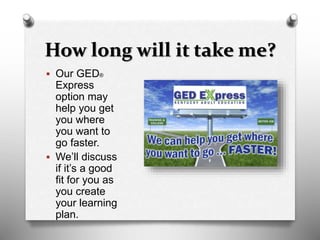
 Our GED®
Express
option may
help you get
you where
you want to
go faster.
 We’ll discuss
if it’s a good
fit for you as
you create
your learning
plan.
A different kind of learning
experience …
 What were
your previous
learning
experiences
like?
 Positive?
 Negative?
 Adult
education is
different!
Life happens …
 You’re an
adult, so
sometimes
things may
happen that
cause you to
have to “stop
out.”
 Stay in
contact, and
we can help
you get back
on track.
You’re not alone …
 Caring,
knowledgeable staff
 Help you build
academic and
technological skills
for the GED® test
and beyond
Understanding yourself as a
learner …
 Did you have any
learning issues
when you were in
school previously,
such as difficulties
with reading or
staying focused?
Understanding yourself as a
learner …
 You may benefit from
some learning
accommodations, such
as:
 Fidgets
 Chewing gum
 Colored filters
 Visors
 You may qualify for testing
accommodations, such
as:
 Extra time
 Extra breaks
 Separate testing space
Understanding yourself as a
learner …
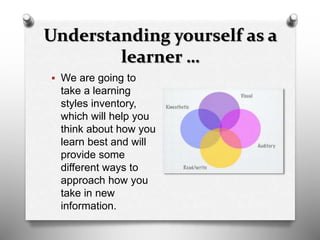
 We are going to
take a learning
styles inventory,
which will help you
think about how you
learn best and will
provide some
different ways to
approach how you
take in new
information.
Busting Barriers
 It is also important,
before you begin
this process, to
identify barriers that
may make it more
difficult to reach
your goals – and to
address them from
the outset.
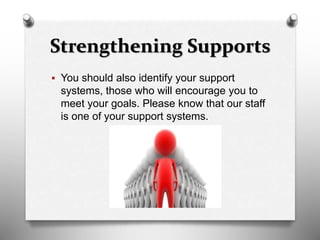
Strengthening Supports
 You should also identify your support
systems, those who will encourage you to
meet your goals. Please know that our staff
is one of your support systems.
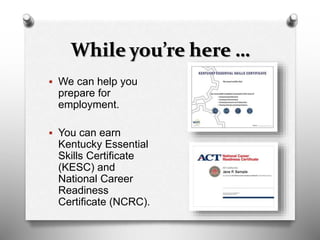
While you’re here …
 We can help you
prepare for
employment.

 You can earn
Kentucky Essential
Skills Certificate
(KESC) and
National Career
Readiness
Certificate (NCRC).
While you’re here …
 We can help you prepare for further
education.
 You can build your academic and study skills
to help you prepare for training or college.
While you’re here …
 You can participate
in Accelerating
Opportunity
Kentucky (AOKY).
 You can earn your
GED® diploma
while earning
college credit and
certification.
Before you take the
GED® test …
 You will need to be
given the green
light to take the
GED Ready™ test.
 You may be able to
get on a faster track
toward earning your
diploma, called
GED® Express.
About the GED Ready™ test
 Four modules
 Language Arts
 Social Studies
 Science
 Math
 Can take one
module at a time –
and then, if pass,
can take same
GED® test module
About the GED Ready™ test
 Same look and feel
as GED® test
 200 points per
module
 Minimum of 150 to
pass
 Better you do on
GED Ready™,
better you’ll do on
actual test (highly
predictive)
About the GED® test
 Four sections
 Language Arts
 Social Studies
 Science
 Math
“It’s easier if
you split them
up. You are
more fresh if
you can take
one test at a
time.”
- Debbie Reynolds,
Kentucky GED® graduate
About the GED® test
 Computer-based
 Makes it easier to
focus on each
question
 Get scores back
same day you test
 More testing
opportunities to
better fit your busy
schedule
“I’m a horrible
test taker. I
actually liked the
fact that it’s all
computerized. It
didn’t seem like I
was in a
(traditional) test
setting, so I was
more relaxed.”
- Matthew Chandler,
Kentucky GED® graduate
About the GED® test
 200 points per
module
 Minimum passing
score on each
module = 150
 Need overall score
of 600 to pass
 GED® score with
honors =
170+/module
Once you earn your GED® diploma …
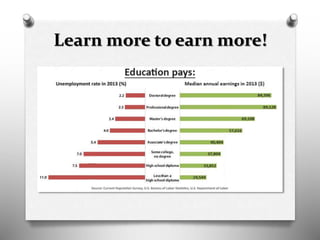
 According to 2013 U.S. Department of
Labor statistics, GED®/high school
graduates earn an average of $9,300
more per year than non-graduates.
Learn more to earn more!
Policies & Procedures
 Attendance policy
 Cell phone policy
 Other policies
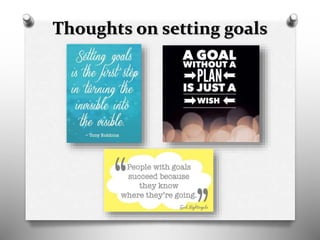
Thoughts on setting goals
What ?’s do
you have
for us?
What’s next?
 TABE assessment
 One-on-one
meeting to create
learning plan
 Certificate of
Completion

Kedc orientation powerpoint

  • 1.
    Carter, Elliott, Greenup,Lincoln, Martin, Menifee, & Mercer County Adult Education
  • 3.
    Let’s get toknow each other … I’ll go first  1. First name 2. Favorite hobby and/or TV show 3. A goal that you have
  • 5.
  • 6.
    Your next steps…  TABE assessment  Helps you – and us – know your strengths, as well as what you need to work on  One-on-one meeting  Allows you to create a learning plan that best meets your needs, goals and schedule
  • 7.
     Classes and Study We find that students who are able to attend classes regularly and study outside of class progress more quickly toward their goals. In addition to scheduled classes, we have other learning opportunities.  Other learning opportunities:  Learning lab  Distance learning  Fast Forward online program
  • 8.
    About Us  CenterHours  Center Locations  Contact Information  Website  Social Media
  • 9.
    How long willit take me?  Different for every person  Where you are now  How much work you put into it
  • 10.
    How long willit take me?  Our GED® Express option may help you get you where you want to go faster.  We’ll discuss if it’s a good fit for you as you create your learning plan.
  • 11.
    A different kindof learning experience …  What were your previous learning experiences like?  Positive?  Negative?  Adult education is different!
  • 12.
    Life happens … You’re an adult, so sometimes things may happen that cause you to have to “stop out.”  Stay in contact, and we can help you get back on track.
  • 13.
    You’re not alone…  Caring, knowledgeable staff  Help you build academic and technological skills for the GED® test and beyond
  • 14.
    Understanding yourself asa learner …  Did you have any learning issues when you were in school previously, such as difficulties with reading or staying focused?
  • 15.
    Understanding yourself asa learner …  You may benefit from some learning accommodations, such as:  Fidgets  Chewing gum  Colored filters  Visors  You may qualify for testing accommodations, such as:  Extra time  Extra breaks  Separate testing space
  • 16.
    Understanding yourself asa learner …  We are going to take a learning styles inventory, which will help you think about how you learn best and will provide some different ways to approach how you take in new information.
  • 17.
    Busting Barriers  Itis also important, before you begin this process, to identify barriers that may make it more difficult to reach your goals – and to address them from the outset.
  • 18.
    Strengthening Supports  Youshould also identify your support systems, those who will encourage you to meet your goals. Please know that our staff is one of your support systems.
  • 19.
    While you’re here…  We can help you prepare for employment.  You can earn Kentucky Essential Skills Certificate (KESC) and National Career Readiness Certificate (NCRC).
  • 20.
    While you’re here…  We can help you prepare for further education.  You can build your academic and study skills to help you prepare for training or college.
  • 21.
    While you’re here…  You can participate in Accelerating Opportunity Kentucky (AOKY).  You can earn your GED® diploma while earning college credit and certification.
  • 22.
    Before you takethe GED® test …  You will need to be given the green light to take the GED Ready™ test.  You may be able to get on a faster track toward earning your diploma, called GED® Express.
  • 23.
    About the GEDReady™ test  Four modules  Language Arts  Social Studies  Science  Math  Can take one module at a time – and then, if pass, can take same GED® test module
  • 24.
    About the GEDReady™ test  Same look and feel as GED® test  200 points per module  Minimum of 150 to pass  Better you do on GED Ready™, better you’ll do on actual test (highly predictive)
  • 25.
    About the GED®test  Four sections  Language Arts  Social Studies  Science  Math “It’s easier if you split them up. You are more fresh if you can take one test at a time.” - Debbie Reynolds, Kentucky GED® graduate
  • 26.
    About the GED®test  Computer-based  Makes it easier to focus on each question  Get scores back same day you test  More testing opportunities to better fit your busy schedule “I’m a horrible test taker. I actually liked the fact that it’s all computerized. It didn’t seem like I was in a (traditional) test setting, so I was more relaxed.” - Matthew Chandler, Kentucky GED® graduate
  • 27.
    About the GED®test  200 points per module  Minimum passing score on each module = 150  Need overall score of 600 to pass  GED® score with honors = 170+/module
  • 28.
    Once you earnyour GED® diploma …  According to 2013 U.S. Department of Labor statistics, GED®/high school graduates earn an average of $9,300 more per year than non-graduates.
  • 29.
    Learn more toearn more!
  • 30.
    Policies & Procedures Attendance policy  Cell phone policy  Other policies
  • 31.
  • 32.
    What ?’s do youhave for us?
  • 33.
    What’s next?  TABEassessment  One-on-one meeting to create learning plan  Certificate of Completion

Editor's Notes

  • #11 N
  • #13 NOTE: In adult education centers, we understand that adults have many responsibilities and life issues pop up. Stress to students that you understand that they may have to “stop out” at some point – not “drop out.” Encourage them to let you know when they have those kinds of issues and to stay in contact so that you can help them get back on track when the time is right.
  • #16 NOTE: Let students know that you will help them address any learning issues they may have – either at your center or by providing referrals to other relevant agencies. Let them know that you have some simple-to-implement accommodations that may help them learn better – and that they may even qualify for some testing accommodations. If possible, have some of the learning accommodations available on your tables during orientation and encourage students to try them out.
  • #17 NOTE: You may choose to administer this now or later in your orientation session. You may want to share how you want to ensure that they have as many tools as possible to be successful learners, and this is just one more for their learning toolbox.
  • #18 NOTE: You may choose to work through “Barrier Busters/Support Strengtheners” sheet now or later in your orientation session.
  • #19 NOTE: You may choose to work through “Barrier Busters/Support Strengtheners” sheet now or later in your orientation session.
  • #20 NOTE: You could say something like, “Not only can you earn your GED diploma while you’re here, you can also earn your Kentucky Essential Skills Certificate and National Career Readiness Certificate! These certificates are valuable additions to your portfolio and resume and may help you get a leg-up on being hired. To earn the Kentucky Essential Skills Certificate, you must complete online coursework in communicating effectively, conveying professionalism, promoting teamwork and collaboration and thinking critically and solving problems. To earn the National Career Readiness Certificate – or NCRC – you must successfully complete the WorkKeys assessment, which has three parts: reading for information, applied mathematics and locating information. Depending upon your WorkKeys scores, you will earn an NCRC at one of three levels – silver, gold or platinum.”
  • #21 NOTE: This is a good time to plant the seed that students should start thinking beyond the GED test – and to let them know that you can help. Share all the ways you can help them get to where they want to go – from helping them build skills and set goals to helping them complete the FAFSA, etc. You may want to include a testimonial (video, picture with quote) from a student (or two) who earned a GED diploma then went to further training/college.
  • #22 NOTE: If your adult education program does not have AOKY available, please delete this slide. If it does, please list your available programs here. You may even want to have your local AOKY coordinator speak to your orientation group.
  • #23 NOTE: Explain here what your requirements are for people to be approved to take the GED Ready test modules. Share information here about GED Express.
  • #29 NOTE: Can have students fill out their “blank checks” to themselves – blank check available on kyae.ky.gov marketing page.
  • #30 NOTE: As you can see on this chart, the more you learn, the more you earn! If you earn your GED diploma and an associate degree, you can expect to make an average of approximately $15,850 more per year than someone without those credentials – and it only goes up from there! ($9,300 for GED diploma, additional $6, 552 with associate degree)
  • #32 NOTE: You may choose to use this opportunity to complete the Goal Setting sheet with students or as a way to set it up as a future activity.
  • #34 NOTE: You may choose when to use “Certificate of Completion” – either at end of group orientation or after group orientation + TABE assessment + one-on-one session … or ? If you’ve held off on completing other activities – such as learning styles or goal setting – that may need to be added here.