-is an individual or team sport
that involves using arms and
legs to move the body through
water.
OLYMPIC POOL’S DIMENSION
COMPETITIVE
TYPES OF STROKES
* FREESTYLE
* BREAST STROKE
* BACKSTROKE
* BUTTERFLY
FREESTYLE
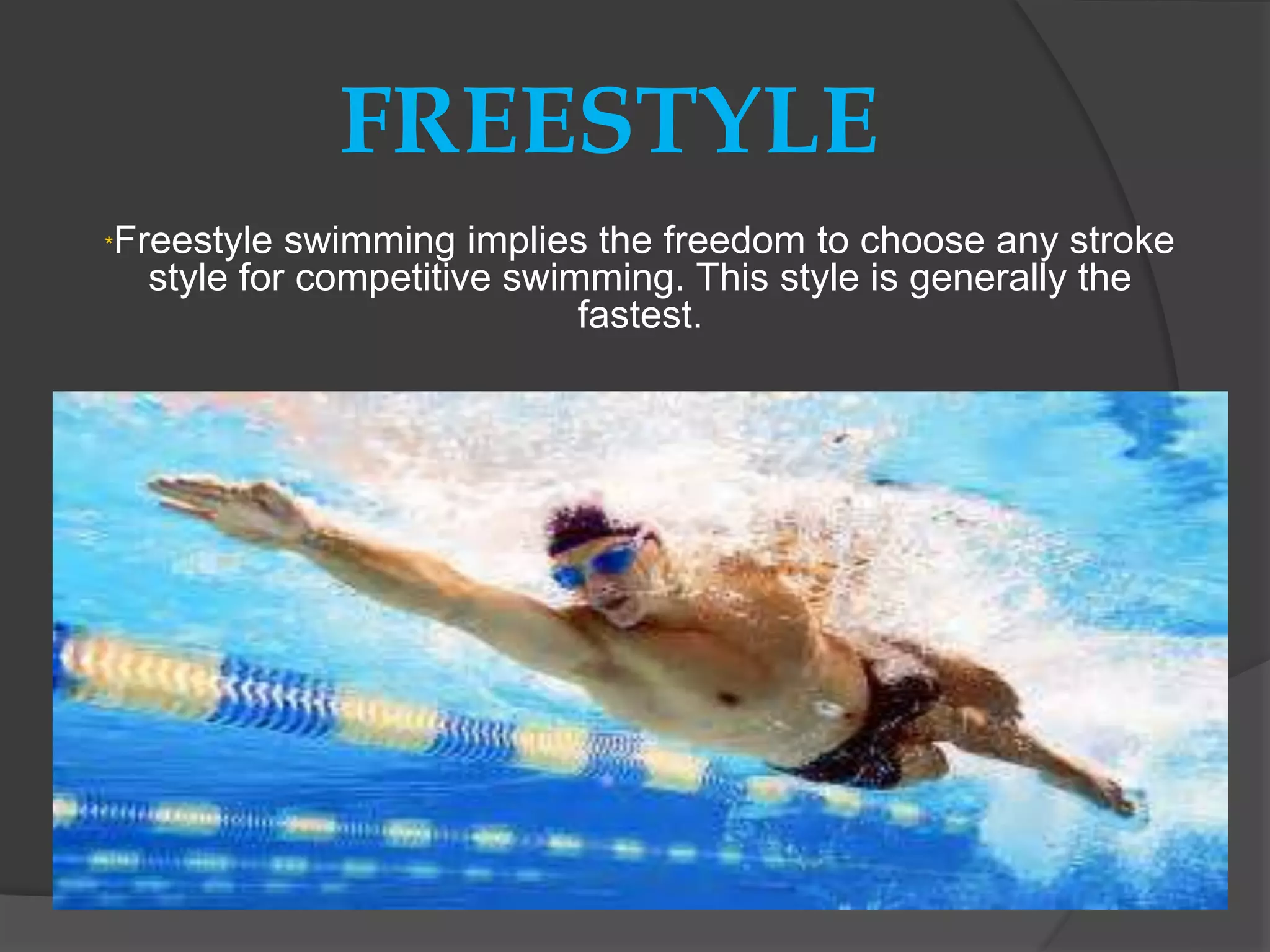
*Freestyle swimming implies the freedom to choose any stroke
style for competitive swimming. This style is generally the
fastest.
BACKSTROKE
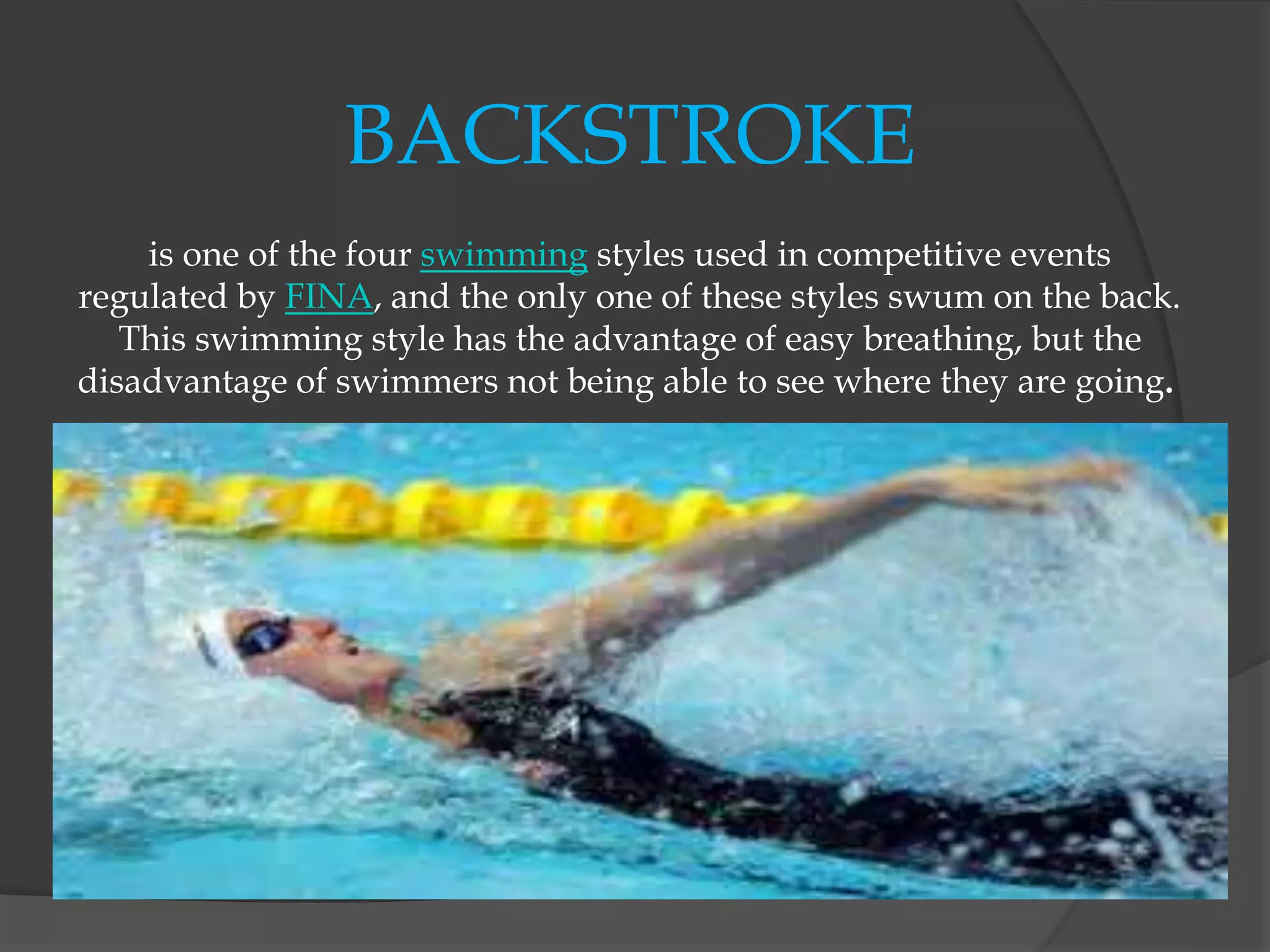
is one of the four swimming styles used in competitive events
regulated by FINA, and the only one of these styles swum on the back.
This swimming style has the advantage of easy breathing, but the
disadvantage of swimmers not being able to see where they are going.
BREASTSTROKE
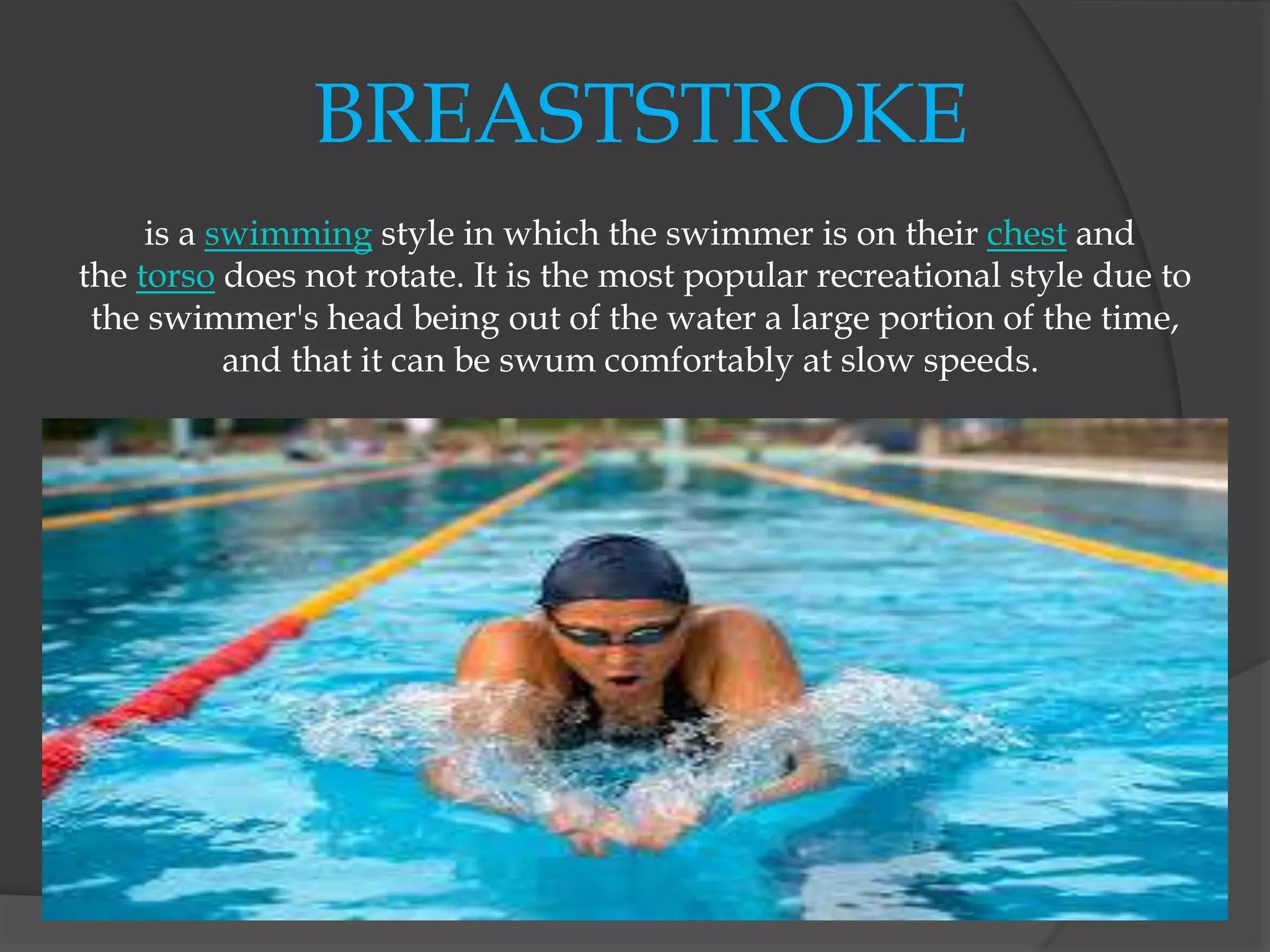
is a swimming style in which the swimmer is on their chest and
the torso does not rotate. It is the most popular recreational style due to
the swimmer's head being out of the water a large portion of the time,
and that it can be swum comfortably at slow speeds.
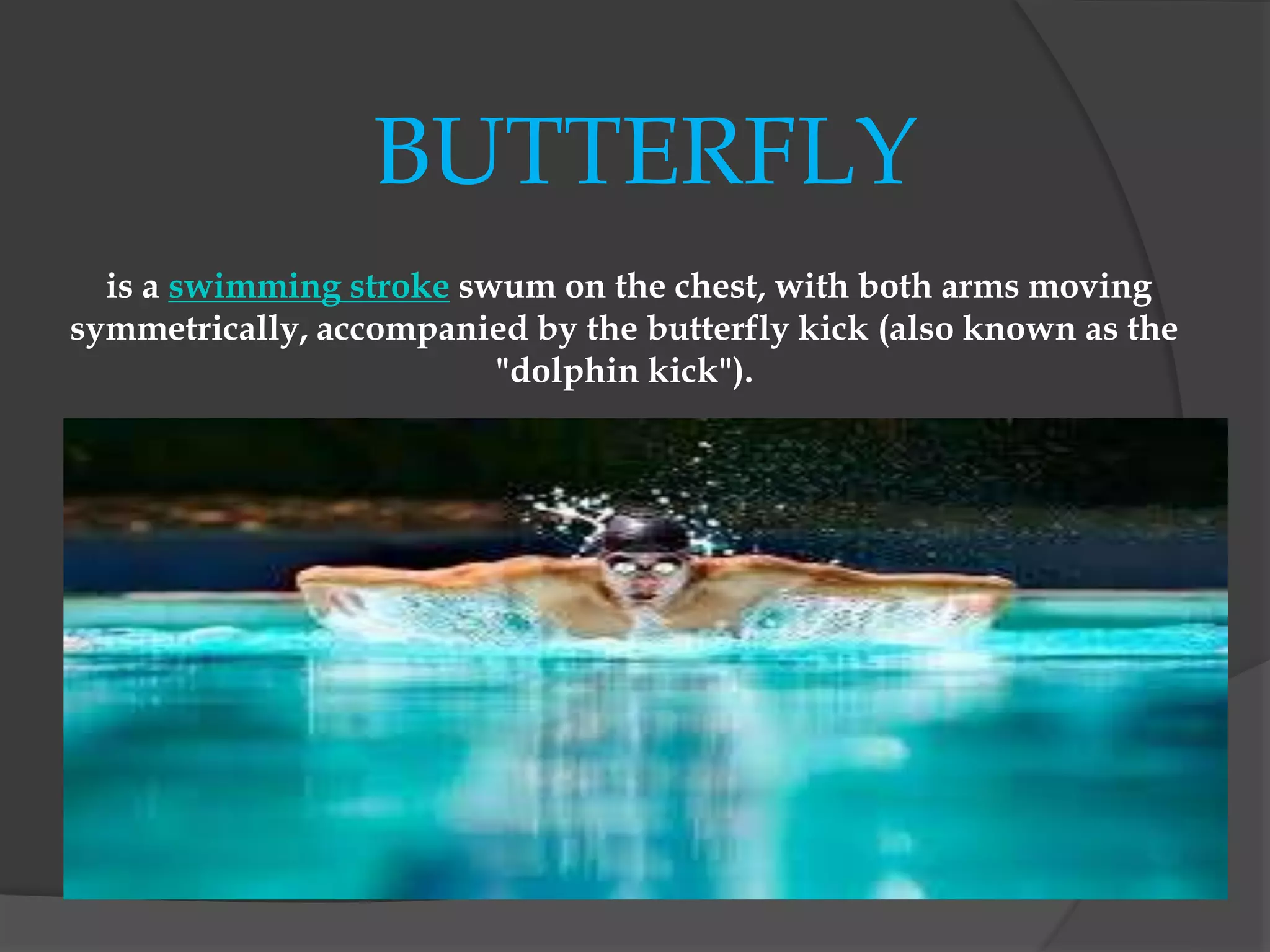
BUTTERFLY
is a swimming stroke swum on the chest, with both arms moving
symmetrically, accompanied by the butterfly kick (also known as the
"dolphin kick").
Individual medley consists of a
single swimmer swimming
equal distances of four
different strokes within one
race.
 Individual medley consists of four strokes.
The swimmer will swim one quarter of the
race in each style, in a certain order. The
strokes are swum in this order:
 Butterfly
 Backstroke
 Breaststroke
 Freestyle (this can be any stroke except the
butterfly, backstroke, or breaststroke; most
swimmers use the front crawl)
Medley relay consists of four
different swimmers in
one relay race, each
swimming one of the four
strokes.
Medley relay is swum by four different swimmers,
each swimming one of the four strokes.
 The order of the strokes is as follows:
 Backstroke
 Breaststroke
 Butterfly
 Freestyle the only limitation being that none
of backstroke, breaststroke, or butterfly
stroke may be used for this leg. Most
swimmers use the front crawl.
SWIMMING OFFICIALS
*REFEREE
*STARTER
*CLERK OF COURSE
*TIMEKEEPERS
*INSPECTOR OF TURNS
*JUDGES OF STROKE
*FINISH JUDGES
The referee has full control and authority over
all officials. The referee will enforce all rules
and decisions of FINA and shall decide all
questions relating to the actual conduct of the
meet, and event or the competition, the final
settlement of which is not otherwise covered
by the rules.
The starter has full control of the swimmers from
the time the referee turns the swimmers over to
him/her until the race commences.
The clerk of course (also called the "bullpen")
assembles swimmers prior to each event, and is
responsible for organizing ("seeding")
swimmers into heats based on their times.
Each timekeeper takes the time of the
swimmers in the lane assigned to
him/her.
Each inspector of turns ensures that
swimmers comply with the relevant rules
for turning as well as the relevant rules
for start and finish of the race.
They follow the swimmers during their swim back and
forth across the pool. They ensure that the rules related
to the style of swimming designated for the event are
being observed, and observe the turns and the finishes
to assist the inspectors of turns.
Finish judges determine the order of finish and
make sure the swimmers finish in accordance
with the rules (two hands simultaneously for
breaststroke and butterfly, on the back for
backstroke, etc.)
Swimming Presentation

Swimming Presentation

  • 3.
    -is an individualor team sport that involves using arms and legs to move the body through water.
  • 4.
  • 5.
    COMPETITIVE TYPES OF STROKES *FREESTYLE * BREAST STROKE * BACKSTROKE * BUTTERFLY
  • 6.
    FREESTYLE *Freestyle swimming impliesthe freedom to choose any stroke style for competitive swimming. This style is generally the fastest.
  • 7.
    BACKSTROKE is one ofthe four swimming styles used in competitive events regulated by FINA, and the only one of these styles swum on the back. This swimming style has the advantage of easy breathing, but the disadvantage of swimmers not being able to see where they are going.
  • 8.
    BREASTSTROKE is a swimmingstyle in which the swimmer is on their chest and the torso does not rotate. It is the most popular recreational style due to the swimmer's head being out of the water a large portion of the time, and that it can be swum comfortably at slow speeds.
  • 9.
    BUTTERFLY is a swimmingstroke swum on the chest, with both arms moving symmetrically, accompanied by the butterfly kick (also known as the "dolphin kick").
  • 10.
    Individual medley consistsof a single swimmer swimming equal distances of four different strokes within one race.
  • 11.
     Individual medleyconsists of four strokes. The swimmer will swim one quarter of the race in each style, in a certain order. The strokes are swum in this order:  Butterfly  Backstroke  Breaststroke  Freestyle (this can be any stroke except the butterfly, backstroke, or breaststroke; most swimmers use the front crawl)
  • 12.
    Medley relay consistsof four different swimmers in one relay race, each swimming one of the four strokes.
  • 13.
    Medley relay isswum by four different swimmers, each swimming one of the four strokes.  The order of the strokes is as follows:  Backstroke  Breaststroke  Butterfly  Freestyle the only limitation being that none of backstroke, breaststroke, or butterfly stroke may be used for this leg. Most swimmers use the front crawl.
  • 14.
    SWIMMING OFFICIALS *REFEREE *STARTER *CLERK OFCOURSE *TIMEKEEPERS *INSPECTOR OF TURNS *JUDGES OF STROKE *FINISH JUDGES
  • 15.
    The referee hasfull control and authority over all officials. The referee will enforce all rules and decisions of FINA and shall decide all questions relating to the actual conduct of the meet, and event or the competition, the final settlement of which is not otherwise covered by the rules.
  • 16.
    The starter hasfull control of the swimmers from the time the referee turns the swimmers over to him/her until the race commences.
  • 17.
    The clerk ofcourse (also called the "bullpen") assembles swimmers prior to each event, and is responsible for organizing ("seeding") swimmers into heats based on their times.
  • 18.
    Each timekeeper takesthe time of the swimmers in the lane assigned to him/her.
  • 19.
    Each inspector ofturns ensures that swimmers comply with the relevant rules for turning as well as the relevant rules for start and finish of the race.
  • 20.
    They follow theswimmers during their swim back and forth across the pool. They ensure that the rules related to the style of swimming designated for the event are being observed, and observe the turns and the finishes to assist the inspectors of turns.
  • 21.
    Finish judges determinethe order of finish and make sure the swimmers finish in accordance with the rules (two hands simultaneously for breaststroke and butterfly, on the back for backstroke, etc.)