Set Work In Progress
Limits
Kanban - Chapter 10
Limits for tasks
• set Work in Progress (WiP) limits in the team
• WiP are individually for the producer, pair, team
• WiP can be adapted any times in the team
Limits for queues
• queues should be as small as possible
• necessity: variability can be restricted and the
workflow are maintained
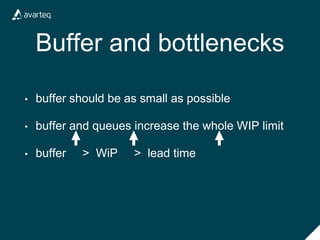
Buffer and bottlenecks
• buffer should be as small as possible
• buffer and queues increase the whole WIP limit
• buffer > WiP > lead time
Size of the input queue
• the size of the input queue is given by the
prioritization meeting
• input queue should be refilling as fast as possible
• idle time is to avoid
Unlimited sections
• theory of constraints „Drum Buffer Rope“ allows
partly no WiP
• Kanban provides WiP per column, but
sometimes with exceptions (e.g. queue column)
Do not put pressure on team
• small WiP limits causes pressure on the team
- results is that the project stops
• use idle times for optimization
• J-curve effect
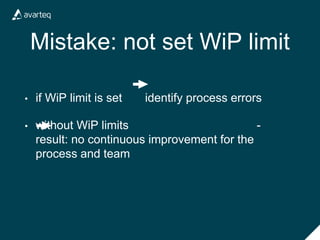
Mistake: not set WiP limit
• if WiP limit is set identify process errors
• without WiP limits -
result: no continuous improvement for the
process and team
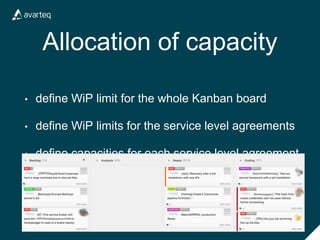
Allocation of capacity
• define WiP limit for the whole Kanban board
• define WiP limits for the service level agreements
• define capacities for each service level agreement
Conclusion
• define WiP limits per board, column, person
• individually adaption of the WiP
• use positive tension of the WiP limits

Kanban - Set Work in Progress Limits

  • 1.
    Set Work InProgress Limits Kanban - Chapter 10
  • 2.
    Limits for tasks •set Work in Progress (WiP) limits in the team • WiP are individually for the producer, pair, team • WiP can be adapted any times in the team
  • 3.
    Limits for queues •queues should be as small as possible • necessity: variability can be restricted and the workflow are maintained
  • 4.
    Buffer and bottlenecks •buffer should be as small as possible • buffer and queues increase the whole WIP limit • buffer > WiP > lead time
  • 5.
    Size of theinput queue • the size of the input queue is given by the prioritization meeting • input queue should be refilling as fast as possible • idle time is to avoid
  • 6.
    Unlimited sections • theoryof constraints „Drum Buffer Rope“ allows partly no WiP • Kanban provides WiP per column, but sometimes with exceptions (e.g. queue column)
  • 7.
    Do not putpressure on team • small WiP limits causes pressure on the team - results is that the project stops • use idle times for optimization • J-curve effect
  • 8.
    Mistake: not setWiP limit • if WiP limit is set identify process errors • without WiP limits - result: no continuous improvement for the process and team
  • 9.
    Allocation of capacity •define WiP limit for the whole Kanban board • define WiP limits for the service level agreements • define capacities for each service level agreement
  • 10.
    Conclusion • define WiPlimits per board, column, person • individually adaption of the WiP • use positive tension of the WiP limits