INTRODUCTION
• LOCATION –AURANGABAD,
MAHARASTRA
• BUILT IN -8TH CENTURY BY
RASTRAKUTA KING KRISND 1.
• STYLE – DRAVIDIAN
ARCHITECTURE
 ARCHITECTS WERE FROM THE SOUTH INDIAN
PALLAVA KINGDOM.
 IT IS A MONOLITIC STRUCTURE , NOTABLE
FOR IT’S VERTICAL EXCAVATION, CARVER’S
STARTED AT THE TOP OF THE ORIGINAL
ROCK, AND EXCAVATED DOWN WARD.
 IT IS ESTIMATED THAT ABOUT 400,000 TONS
OF ROCKS WAS SCOOPED OUT OVER
HUNDREDS OF YEARS OF CONSTRUCT IT OUT
OF A SINGLE ROCK.
THE SCHEME OF KAILASA RESOLVES INTO FOUR
PARTS.
1. BODY OF THE TEMPLE
2. ENTRANCE GATEWAY
3. AN INTERMEDIATE NANDI SHRINE
4. CLOSTERS SURROUNDING THE COURTYARD
 ON EACH SIDE THE
COURTYARD
SUPPLEMENTARY
CHAMBERS HAVE BEEN
EXCAVATED.
 THERE ARE TWO FREE
STANDING PILLARS,
DHWAJASTAMBHAS, 51
FEET HIGH, ONE ON EACH
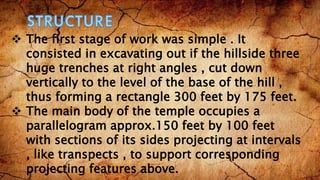
 The first stage of work was simple . It
consisted in excavating out if the hillside three
huge trenches at right angles , cut down
vertically to the level of the base of the hill ,
thus forming a rectangle 300 feet by 175 feet.
 The main body of the temple occupies a
parallelogram approx.150 feet by 100 feet
with sections of its sides projecting at intervals
, like transpects , to support corresponding
projecting features above.
 PLINTH APPEARS LIKE
GROUND STORY, WHICH
IS 25 FEET HIGH.
 CENTRAL SPACE OF THE
SIDES IS OCCUPIED BY A
GRAND FRIEZE OF
BOIDLY CARVED
ELEPHANYS & LIONS.
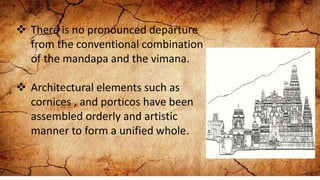
 There is no pronounced departure
from the conventional combination
of the mandapa and the vimana.
 Architectural elements such as
cornices , and porticos have been
assembled orderly and artistic
manner to form a unified whole.
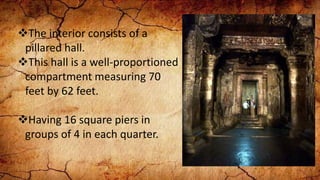
The interior consists of a
pillared hall.
This hall is a well-proportioned
compartment measuring 70
feet by 62 feet.
Having 16 square piers in
groups of 4 in each quarter.
There is a nandi shrine
standing on a 25 feet
square solid pavilion.
A living rock bridge
connects the Nandi
Mandap to the porch of
the temple
 The walls of the temple tell the
story of the epic Ramayana
through intricate, illustrative
carvings.
 Apart Lalibela, Ethiopia and
Mahabalipuram ; it is the finest
example of free-standing
carved-out, rock-cut
architecture in the world
 One of the biggest
monolithic structure
in the world.
 Awarded as a
UNESCO world
Heritage site 1983.
KAILASH TEMPLE

KAILASH TEMPLE

  • 2.
    INTRODUCTION • LOCATION –AURANGABAD, MAHARASTRA •BUILT IN -8TH CENTURY BY RASTRAKUTA KING KRISND 1. • STYLE – DRAVIDIAN ARCHITECTURE
  • 3.
     ARCHITECTS WEREFROM THE SOUTH INDIAN PALLAVA KINGDOM.  IT IS A MONOLITIC STRUCTURE , NOTABLE FOR IT’S VERTICAL EXCAVATION, CARVER’S STARTED AT THE TOP OF THE ORIGINAL ROCK, AND EXCAVATED DOWN WARD.  IT IS ESTIMATED THAT ABOUT 400,000 TONS OF ROCKS WAS SCOOPED OUT OVER HUNDREDS OF YEARS OF CONSTRUCT IT OUT OF A SINGLE ROCK.
  • 4.
    THE SCHEME OFKAILASA RESOLVES INTO FOUR PARTS. 1. BODY OF THE TEMPLE 2. ENTRANCE GATEWAY 3. AN INTERMEDIATE NANDI SHRINE 4. CLOSTERS SURROUNDING THE COURTYARD
  • 5.
     ON EACHSIDE THE COURTYARD SUPPLEMENTARY CHAMBERS HAVE BEEN EXCAVATED.  THERE ARE TWO FREE STANDING PILLARS, DHWAJASTAMBHAS, 51 FEET HIGH, ONE ON EACH
  • 7.
     The firststage of work was simple . It consisted in excavating out if the hillside three huge trenches at right angles , cut down vertically to the level of the base of the hill , thus forming a rectangle 300 feet by 175 feet.  The main body of the temple occupies a parallelogram approx.150 feet by 100 feet with sections of its sides projecting at intervals , like transpects , to support corresponding projecting features above.
  • 8.
     PLINTH APPEARSLIKE GROUND STORY, WHICH IS 25 FEET HIGH.  CENTRAL SPACE OF THE SIDES IS OCCUPIED BY A GRAND FRIEZE OF BOIDLY CARVED ELEPHANYS & LIONS.
  • 9.
     There isno pronounced departure from the conventional combination of the mandapa and the vimana.  Architectural elements such as cornices , and porticos have been assembled orderly and artistic manner to form a unified whole.
  • 10.
    The interior consistsof a pillared hall. This hall is a well-proportioned compartment measuring 70 feet by 62 feet. Having 16 square piers in groups of 4 in each quarter.
  • 11.
    There is anandi shrine standing on a 25 feet square solid pavilion. A living rock bridge connects the Nandi Mandap to the porch of the temple
  • 12.
     The wallsof the temple tell the story of the epic Ramayana through intricate, illustrative carvings.  Apart Lalibela, Ethiopia and Mahabalipuram ; it is the finest example of free-standing carved-out, rock-cut architecture in the world
  • 13.
     One ofthe biggest monolithic structure in the world.  Awarded as a UNESCO world Heritage site 1983.