Communications as a ServiceJUST - 24 September 2009©Joren De Wachter
CaaS – what will we talk aboutWhat?Why?How?WIIFM?Who owns what?© Joren De Wachter
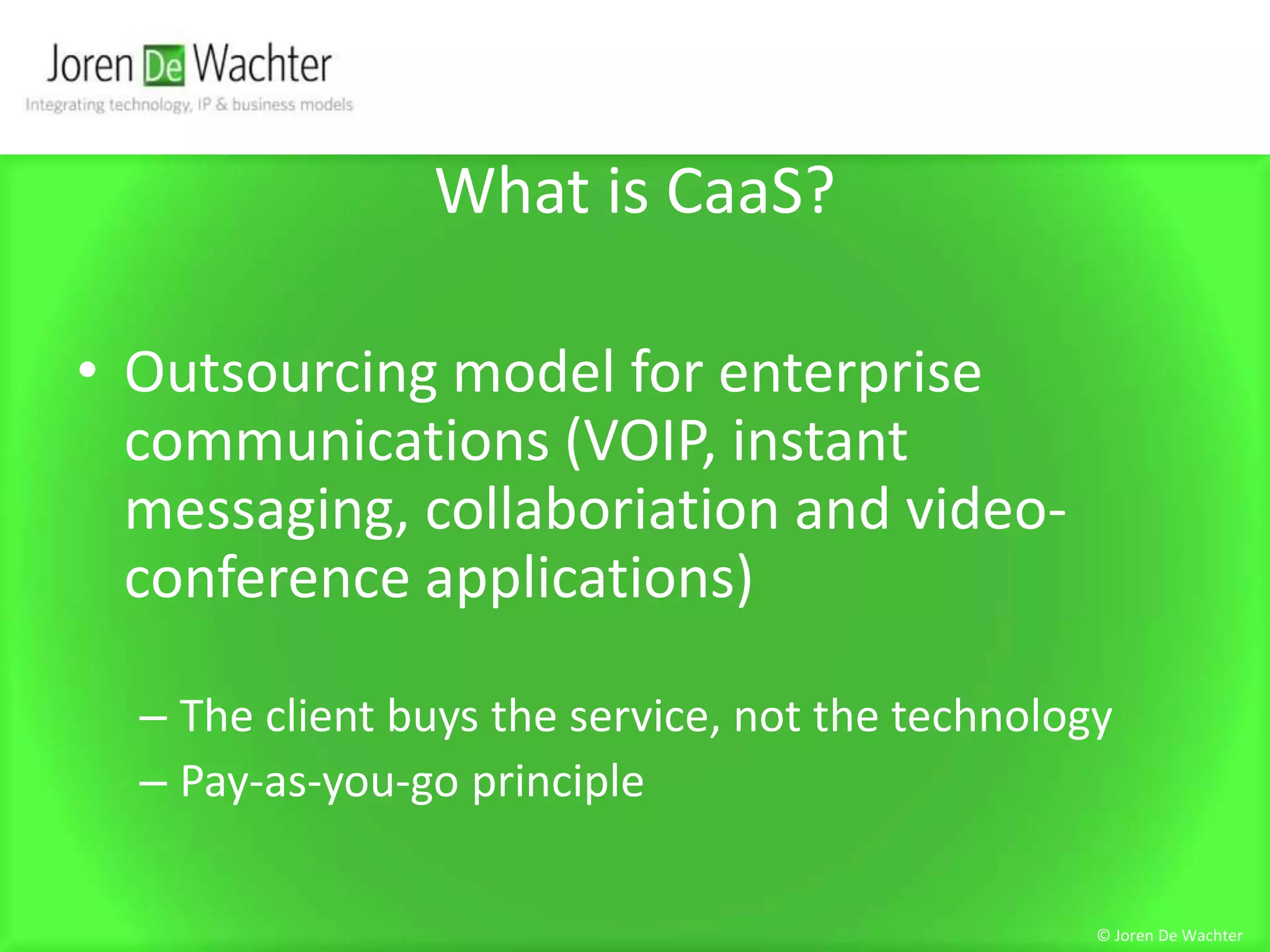
What is CaaS?Outsourcing model for enterprise communications (VOIP, instant messaging, collaboriation and video-conference applications)The client buys the service, not the technologyPay-as-you-go principle© Joren De Wachter
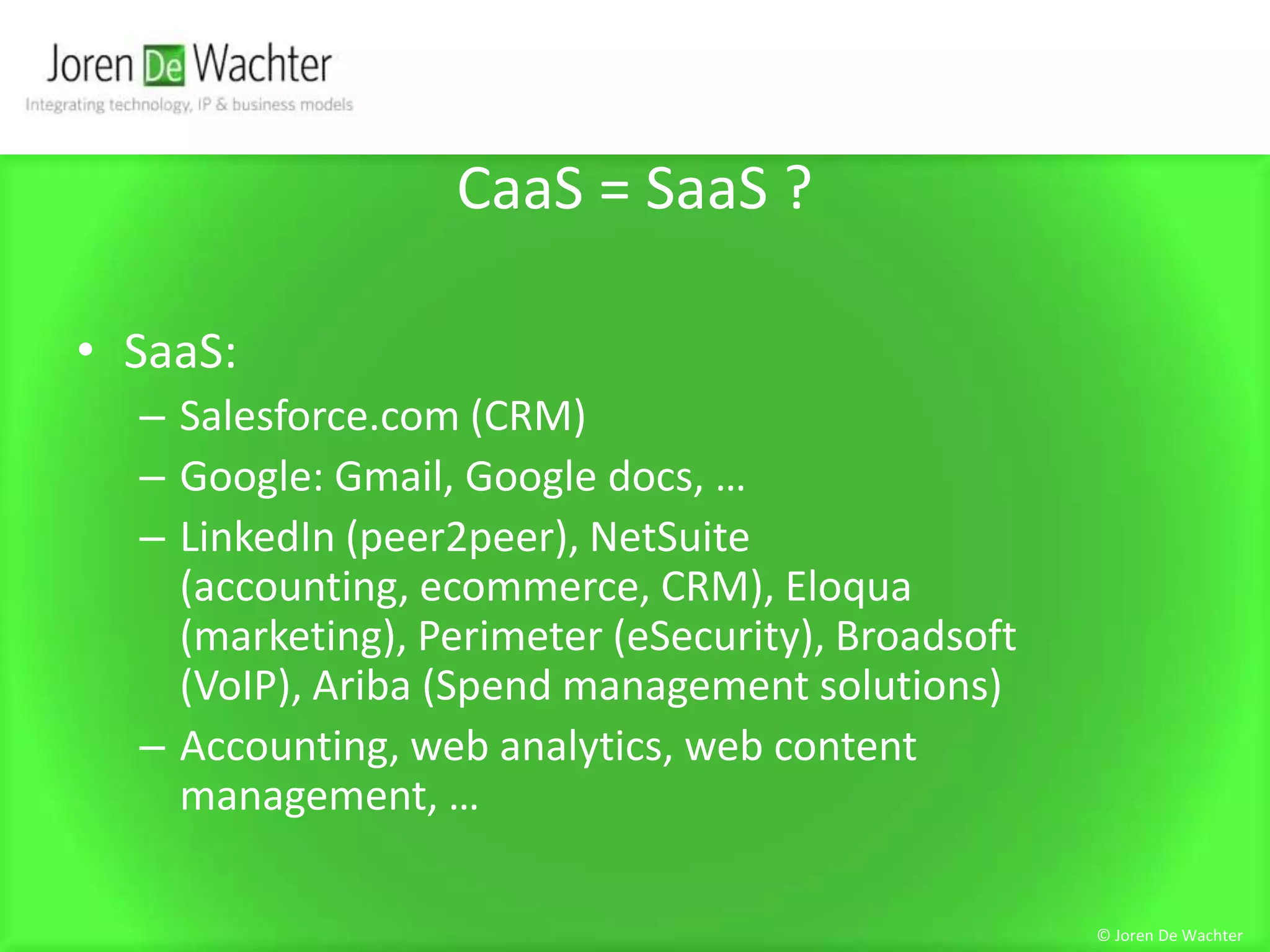
CaaS = SaaS ?SaaS:Salesforce.com (CRM)Google: Gmail, Google docs, …LinkedIn (peer2peer), NetSuite (accounting, ecommerce, CRM), Eloqua (marketing), Perimeter (eSecurity), Broadsoft (VoIP), Ariba (Spend management solutions)Accounting, web analytics, web content management, …© Joren De Wachter
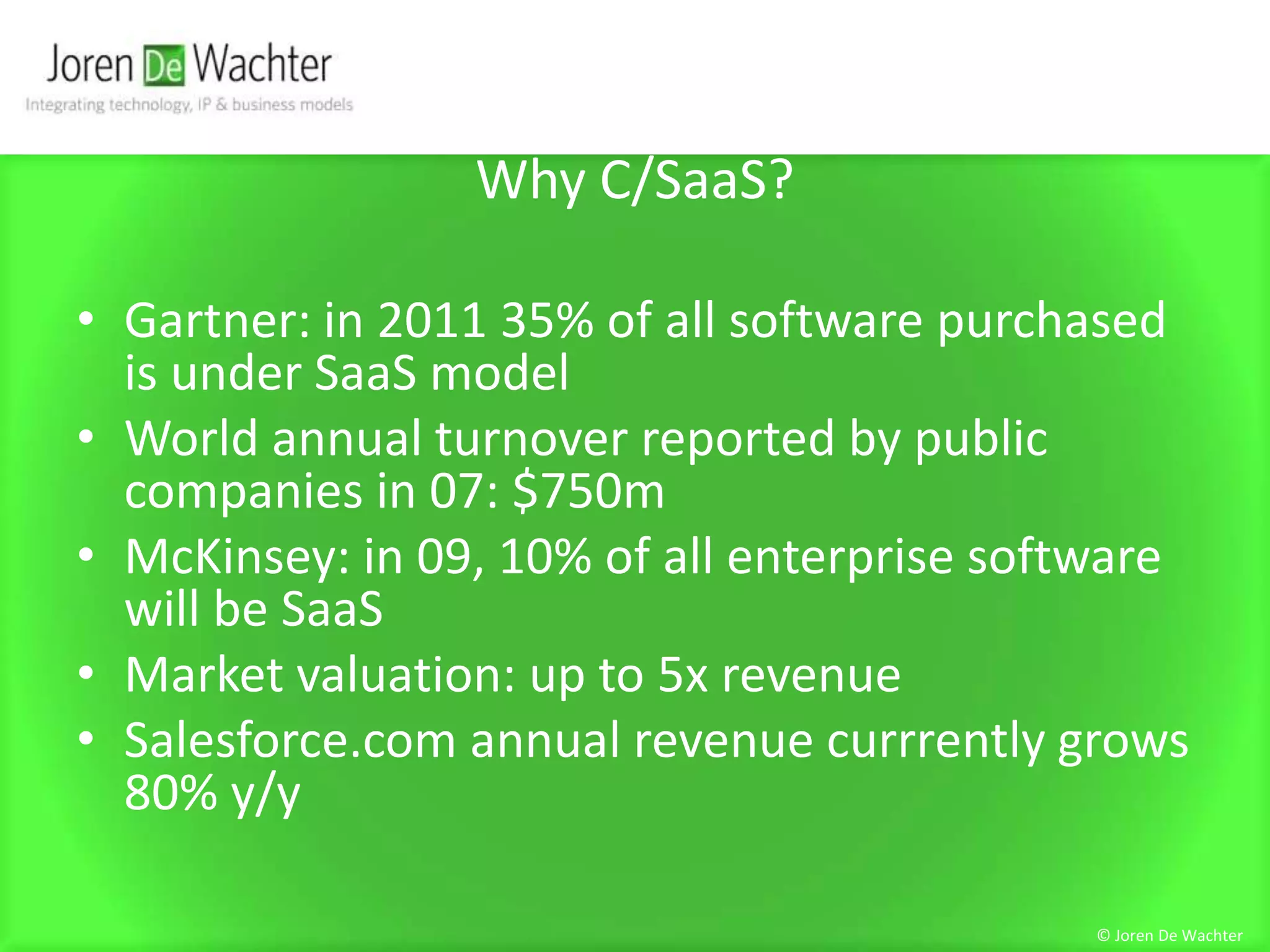
Why C/SaaS?Gartner: in 2011 35% of all software purchased is under SaaS modelWorld annual turnover reported by public companies in 07: $750mMcKinsey: in 09, 10% of all enterprise software will be SaaSMarket valuation: up to 5x revenueSalesforce.com annual revenue currrently grows 80% y/y© Joren De Wachter
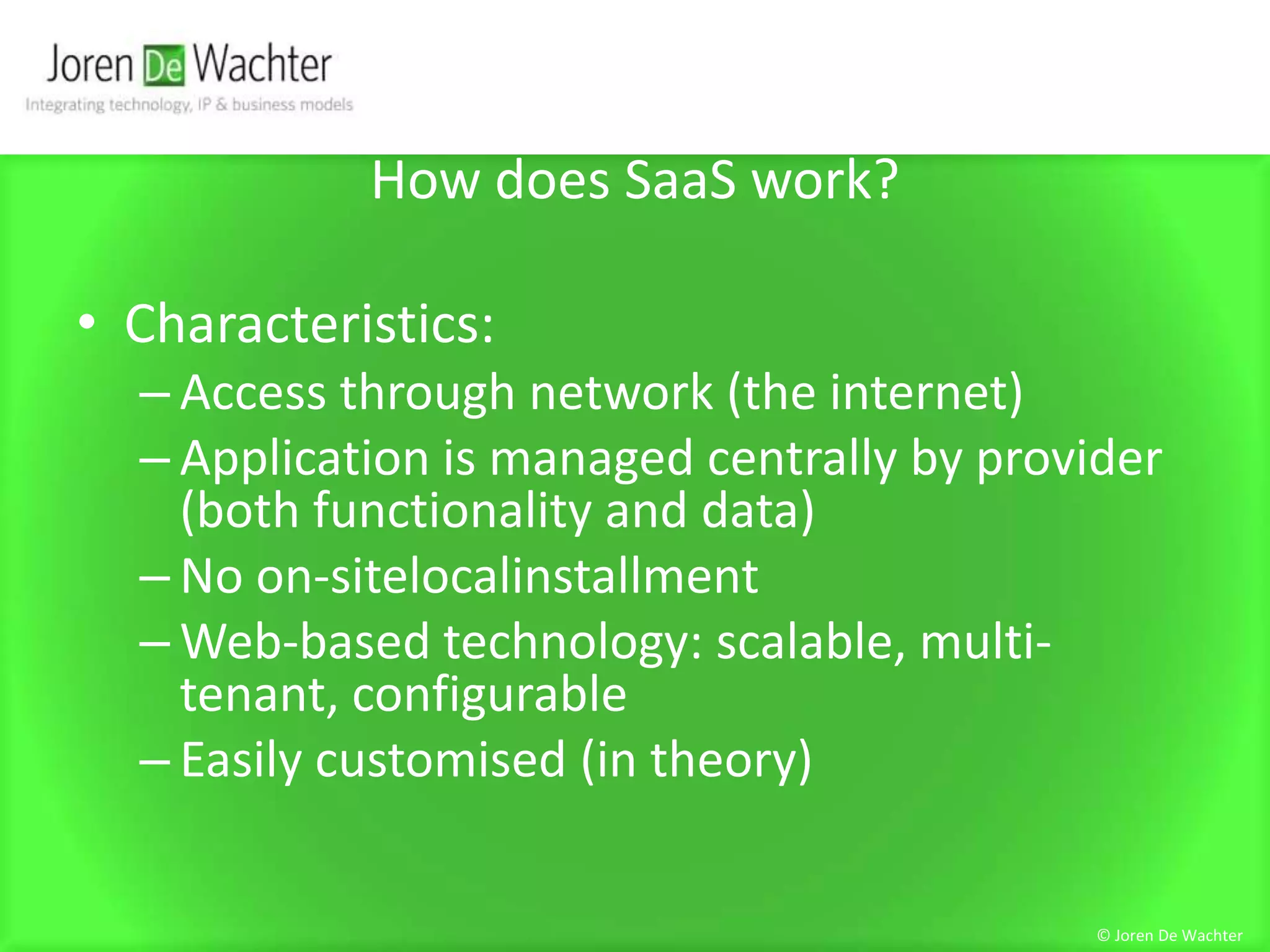
How does SaaS work?Characteristics:Access through network (the internet) Application is managed centrally by provider (both functionality and data)No on-sitelocalinstallmentWeb-based technology: scalable, multi-tenant, configurableEasily customised (in theory)© Joren De Wachter
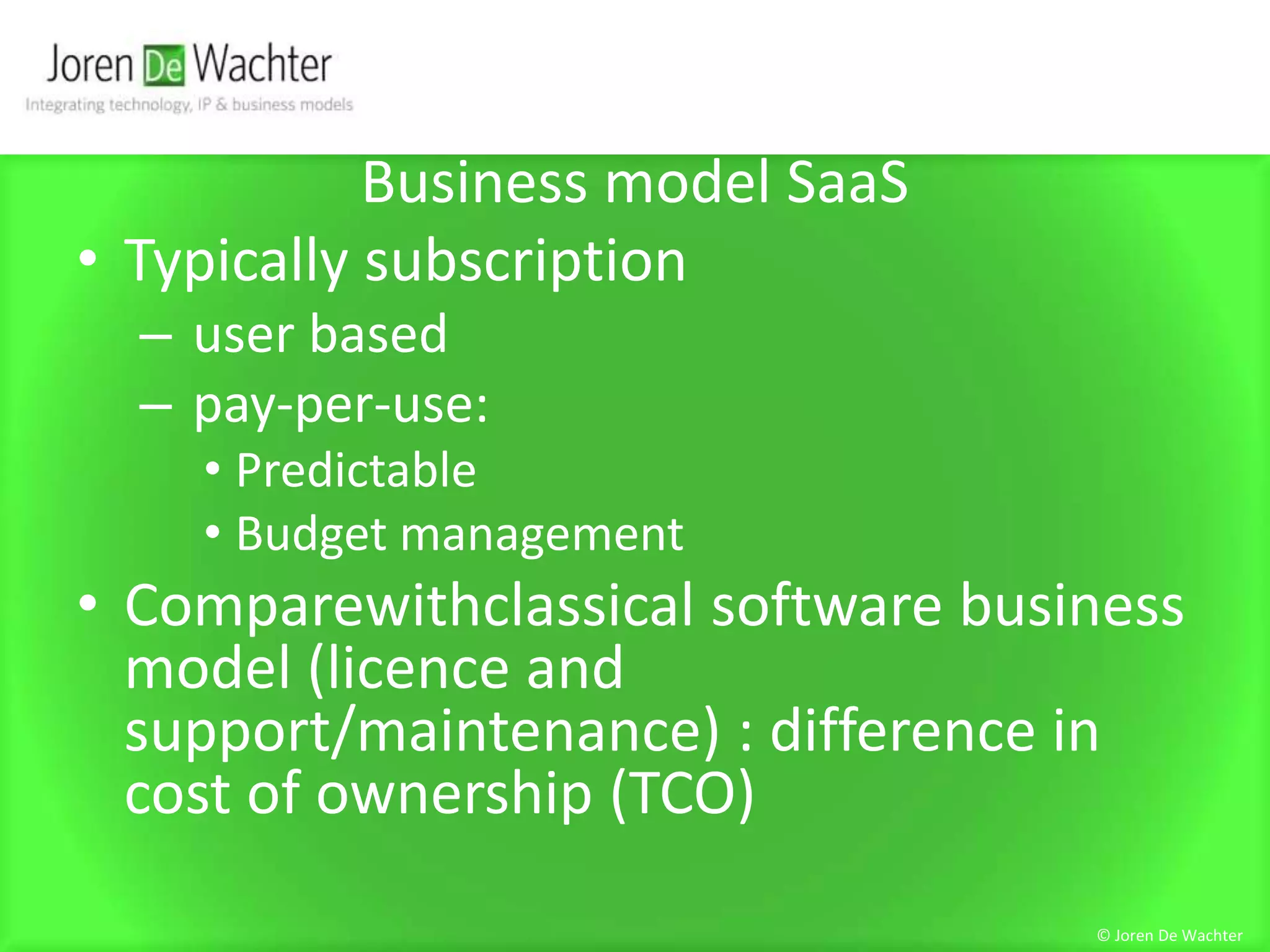
Business model SaaSTypically subscription user based  pay-per-use:PredictableBudget management Comparewithclassical software business model (licence and support/maintenance) : difference in cost of ownership (TCO)© Joren De Wachter
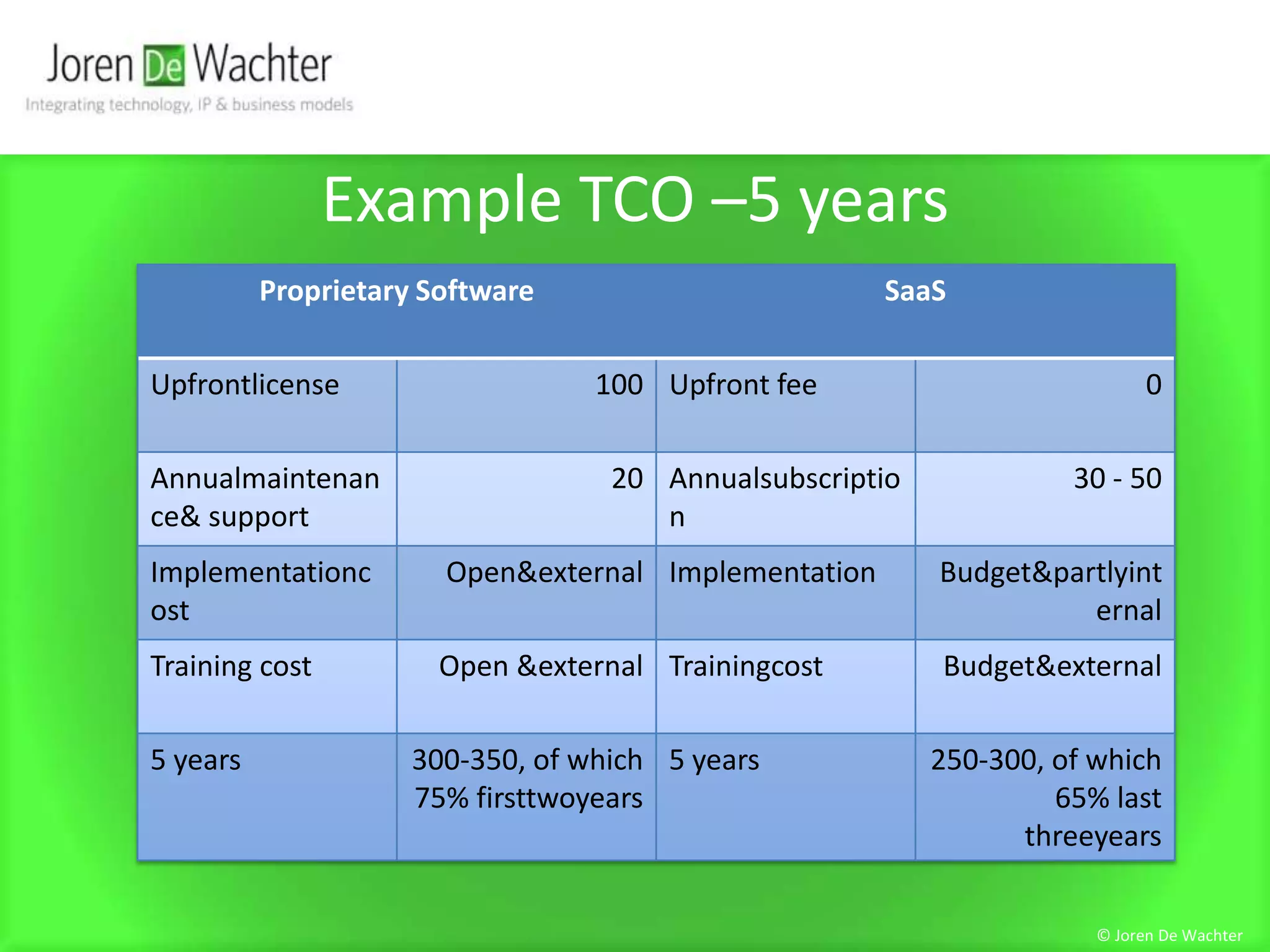
Example TCO –5 years© Joren De Wachter
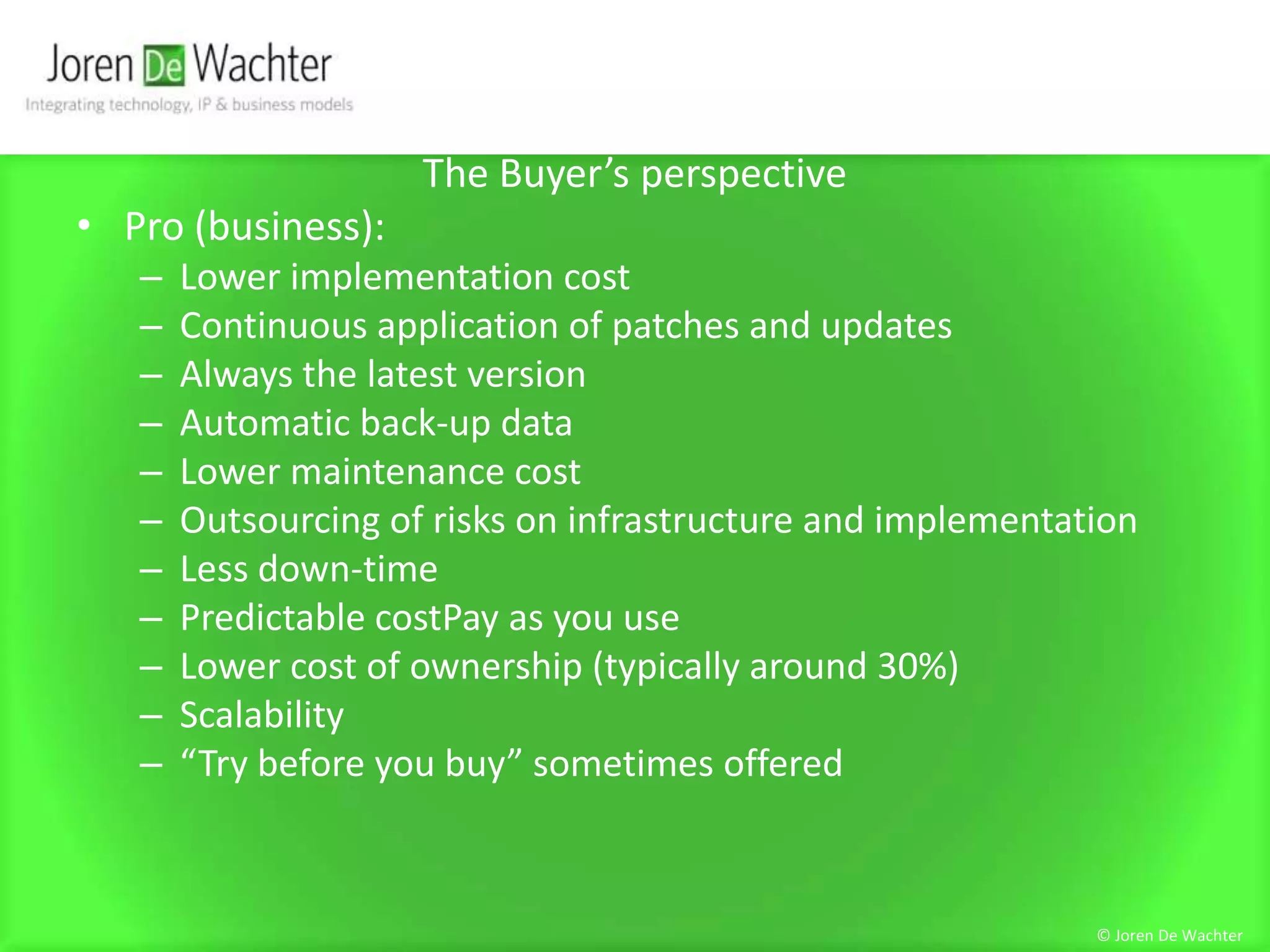
The Buyer’s perspectivePro (business):Lower implementation costContinuous application of patches and updatesAlways the latest versionAutomatic back-up dataLower maintenance costOutsourcing of risks on infrastructure and implementationLess down-timePredictable costPay as you useLower cost of ownership (typically around 30%)Scalability“Try before you buy” sometimes offered© Joren De Wachter
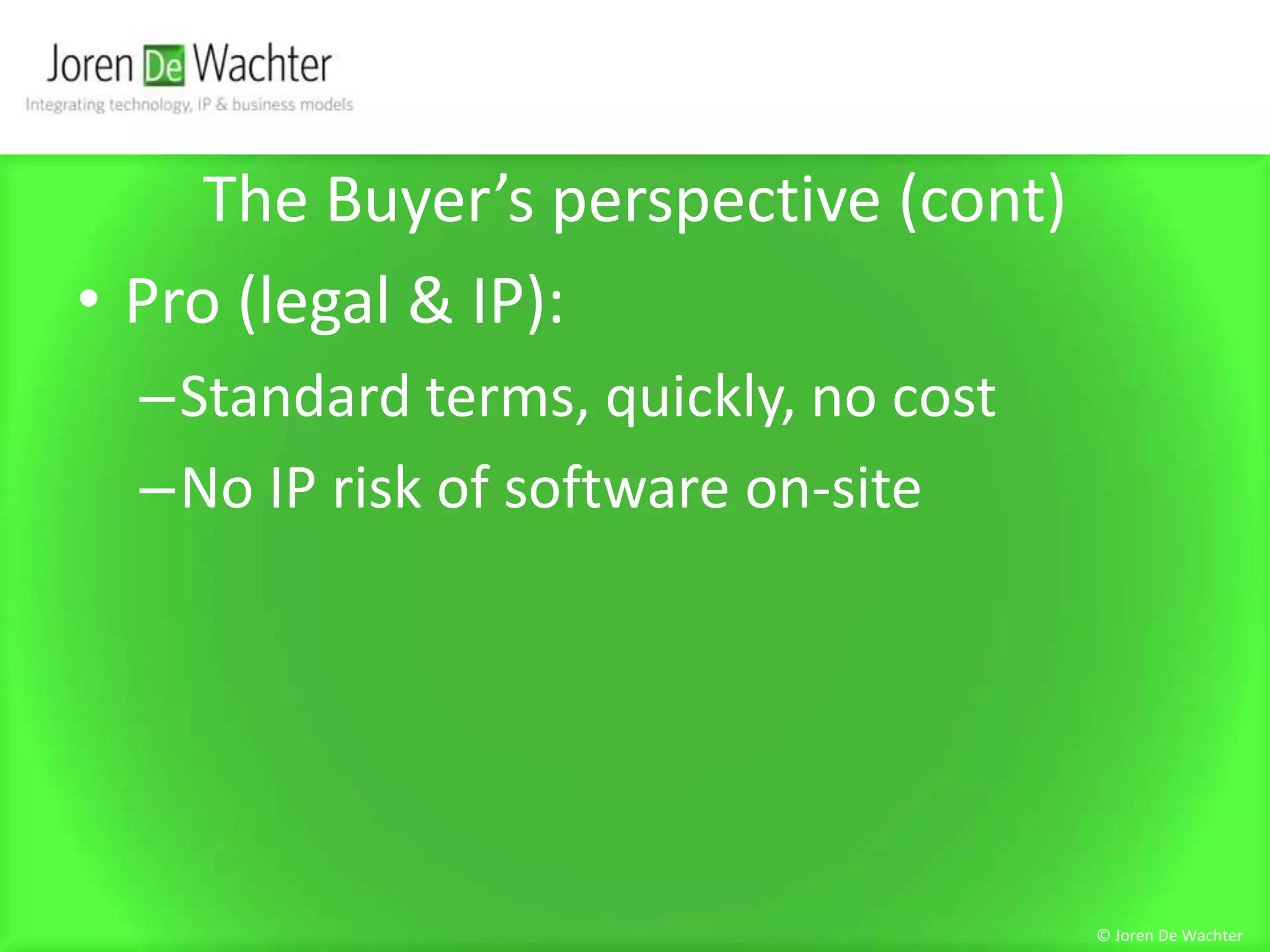
The Buyer’s perspective (cont)Pro (legal & IP):Standard terms, quickly, no costNo IP risk of software on-site© Joren De Wachter
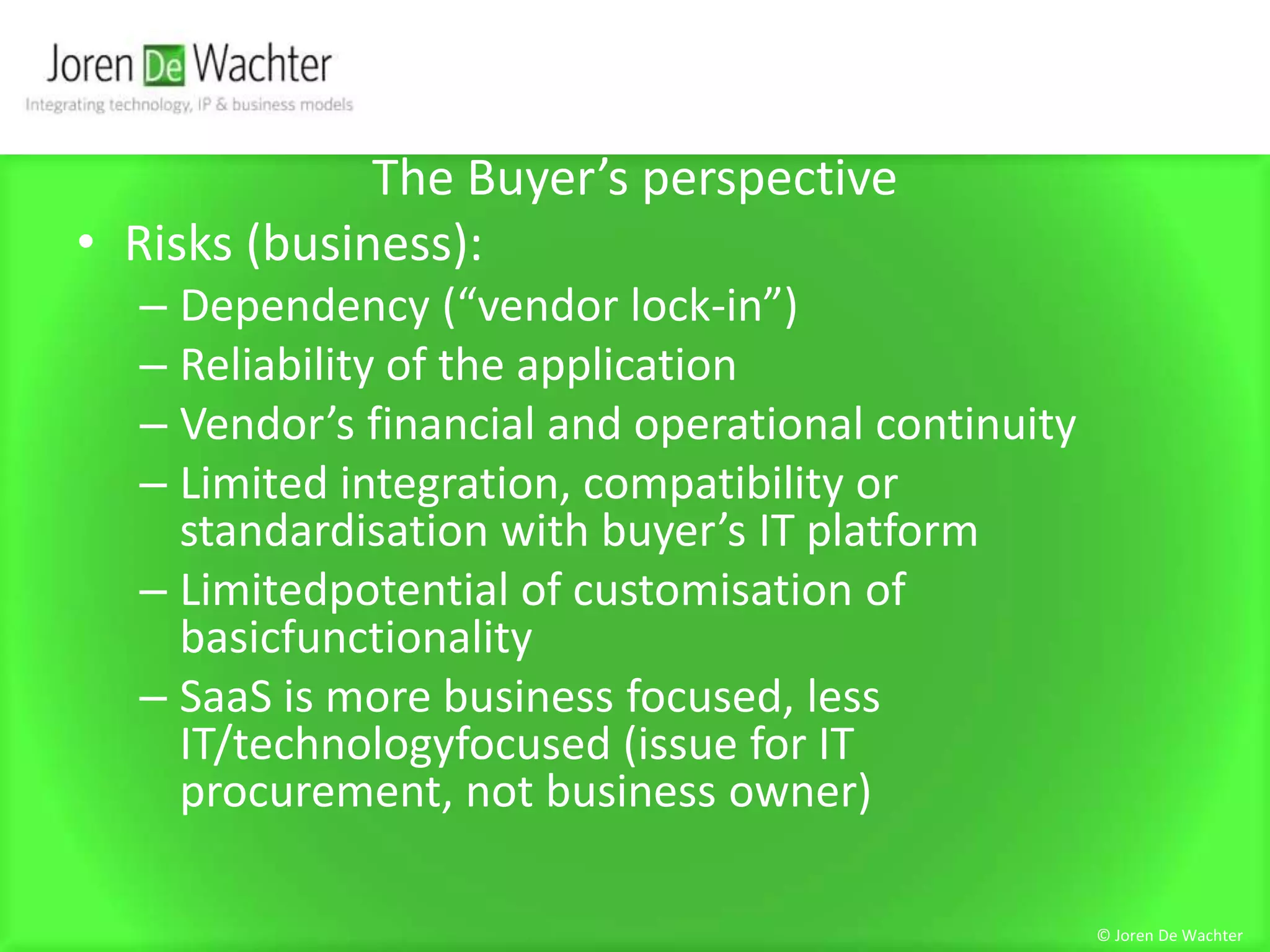
The Buyer’s perspectiveRisks (business): Dependency (“vendor lock-in”)Reliability of the applicationVendor’s financial and operational continuityLimited integration, compatibility or standardisation with buyer’s IT platformLimitedpotential of customisation of basicfunctionalitySaaS is more business focused, less IT/technologyfocused (issue for IT procurement, not business owner)© Joren De Wachter
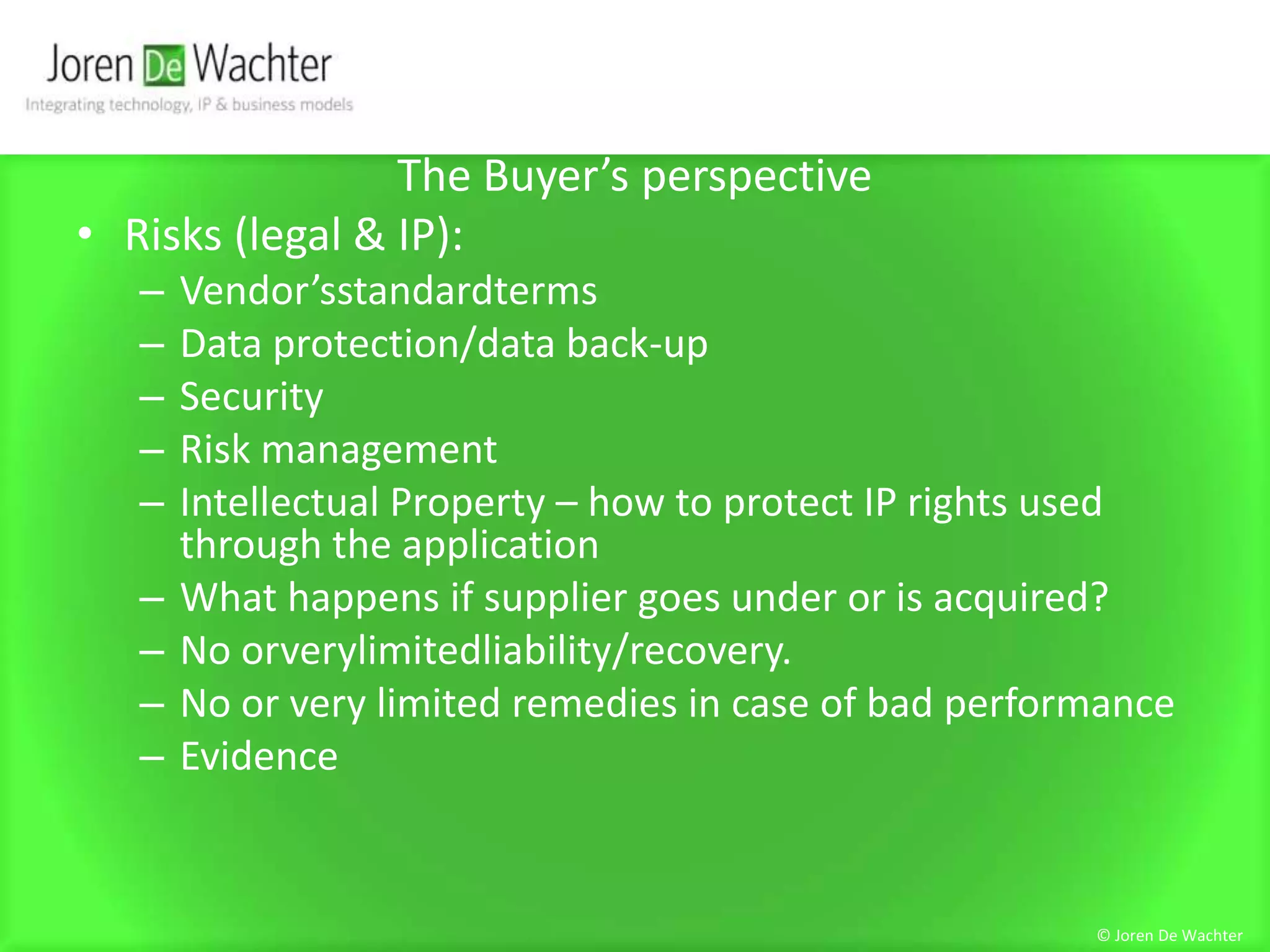
The Buyer’s perspectiveRisks (legal & IP):Vendor’sstandardtermsData protection/data back-upSecurityRisk managementIntellectual Property – how to protect IP rights used through the applicationWhat happens if supplier goes under or is acquired?No orverylimitedliability/recovery. No or very limited remedies in case of bad performanceEvidence© Joren De Wachter
The Provider’s perspectivePro (business):Cost of R&D: only one development, but multiple useCost of Support: only one version supportedProjectablerevenuestreamsNo“on-site” support at customer’s siteInternalimplementation, verylimited issues aroundintegration, back-office, etc…Focus on smaller upgrades“Sticky” applicationfor the customerObviouscross-sale marketing potential© Joren De Wachter
The Provider’s perspectivePro (legal & IP):One contract, standardrisk-managementNo discussion on IP rightsLowerlegalexposureDuration of contract undercontrol (yearlyupfrontpayment)© Joren De Wachter
The Provider’s perspectiveRisks (business):Cash-flow (investment upfront)Salesapproach: farming, nothuntingHosting? A lot of implicationsSecuritycostHigh Service level expectationsCost of Back-up serviceClientswillrequestSLA’s, KPI’s and penaltiesAudit – transparencyNo implementation revenu (services)Upfront high sales and marketing cost, lowercostforincrementalgrowthMore customerfocused, less product focused© Joren De Wachter
The Provider’s perspectiveRisks (legal & IP):PotentialliabilitymuchlargerthananticipatedIP rights: risk of breach of third party rightsData protection/ data security – use of the service by the customer (cf. ISP – “notice and take down”)Full protectionnot compatible withbusiness model© Joren De Wachter
The Investor’s perspectivePro:ProjectablerevenueHighervaluation (up to 5x revenue)Low marginalcost of newcustomersLowergeneral“cost of sale”Better cost management R&D© Joren De Wachter
The Investor’s perspectiveRisksDuring transition to SaaS model (walk through the desert):Preferred timing: on major release/new functionalityUse of new pricing model (appels/oranges) – if you keep upfront license, use premiumDetermine contract duration(service level vs. Flexibility)Operating margin willsufferduringtransitionSales culture : focus on MRR (Monthly recurring revenue) – bookings become irrelevantDirect sales most important channel (partners/alliances?)Sales cultuur: adapt bonus system & structure – important!Transfer as many customers as quickly as possibleNew services/cross-sales: analyse, benchmarking, business intelligence, etc…Start-up :Cash-flowBusiness model© Joren De Wachter
Conclusion: WIIFMPro:Cost benefit, shared between customer and providerBusiness focused instead of IT focusedInvestor valuationRisks:Business-critical applicationsHigh-end innovative niche productsCost of transitionLegal risk managementIntellectual Propertyexample: Salesforce.com© Joren De Wachter
Conclusion: IP issuesData protection, data retention, data liabilityOwnership vs. Right to use?Extent of use/license?Trade secrets?Copyright?Patents?Security?SaaS less appropriate for IP sensitive matters© Joren De Wachter
Questions?© Joren De Wachter
Thank YouJoren.dewachter@jorendewachter.com+32 476 43 20 47©Joren De Wachter

Software as a Service

  • 1.
    Communications as aServiceJUST - 24 September 2009©Joren De Wachter
  • 2.
    CaaS – whatwill we talk aboutWhat?Why?How?WIIFM?Who owns what?© Joren De Wachter
  • 3.
    What is CaaS?Outsourcingmodel for enterprise communications (VOIP, instant messaging, collaboriation and video-conference applications)The client buys the service, not the technologyPay-as-you-go principle© Joren De Wachter
  • 4.
    CaaS = SaaS?SaaS:Salesforce.com (CRM)Google: Gmail, Google docs, …LinkedIn (peer2peer), NetSuite (accounting, ecommerce, CRM), Eloqua (marketing), Perimeter (eSecurity), Broadsoft (VoIP), Ariba (Spend management solutions)Accounting, web analytics, web content management, …© Joren De Wachter
  • 5.
    Why C/SaaS?Gartner: in2011 35% of all software purchased is under SaaS modelWorld annual turnover reported by public companies in 07: $750mMcKinsey: in 09, 10% of all enterprise software will be SaaSMarket valuation: up to 5x revenueSalesforce.com annual revenue currrently grows 80% y/y© Joren De Wachter
  • 6.
    How does SaaSwork?Characteristics:Access through network (the internet) Application is managed centrally by provider (both functionality and data)No on-sitelocalinstallmentWeb-based technology: scalable, multi-tenant, configurableEasily customised (in theory)© Joren De Wachter
  • 7.
    Business model SaaSTypicallysubscription user based pay-per-use:PredictableBudget management Comparewithclassical software business model (licence and support/maintenance) : difference in cost of ownership (TCO)© Joren De Wachter
  • 8.
    Example TCO –5years© Joren De Wachter
  • 9.
    The Buyer’s perspectivePro(business):Lower implementation costContinuous application of patches and updatesAlways the latest versionAutomatic back-up dataLower maintenance costOutsourcing of risks on infrastructure and implementationLess down-timePredictable costPay as you useLower cost of ownership (typically around 30%)Scalability“Try before you buy” sometimes offered© Joren De Wachter
  • 10.
    The Buyer’s perspective(cont)Pro (legal & IP):Standard terms, quickly, no costNo IP risk of software on-site© Joren De Wachter
  • 11.
    The Buyer’s perspectiveRisks(business): Dependency (“vendor lock-in”)Reliability of the applicationVendor’s financial and operational continuityLimited integration, compatibility or standardisation with buyer’s IT platformLimitedpotential of customisation of basicfunctionalitySaaS is more business focused, less IT/technologyfocused (issue for IT procurement, not business owner)© Joren De Wachter
  • 12.
    The Buyer’s perspectiveRisks(legal & IP):Vendor’sstandardtermsData protection/data back-upSecurityRisk managementIntellectual Property – how to protect IP rights used through the applicationWhat happens if supplier goes under or is acquired?No orverylimitedliability/recovery. No or very limited remedies in case of bad performanceEvidence© Joren De Wachter
  • 13.
    The Provider’s perspectivePro(business):Cost of R&D: only one development, but multiple useCost of Support: only one version supportedProjectablerevenuestreamsNo“on-site” support at customer’s siteInternalimplementation, verylimited issues aroundintegration, back-office, etc…Focus on smaller upgrades“Sticky” applicationfor the customerObviouscross-sale marketing potential© Joren De Wachter
  • 14.
    The Provider’s perspectivePro(legal & IP):One contract, standardrisk-managementNo discussion on IP rightsLowerlegalexposureDuration of contract undercontrol (yearlyupfrontpayment)© Joren De Wachter
  • 15.
    The Provider’s perspectiveRisks(business):Cash-flow (investment upfront)Salesapproach: farming, nothuntingHosting? A lot of implicationsSecuritycostHigh Service level expectationsCost of Back-up serviceClientswillrequestSLA’s, KPI’s and penaltiesAudit – transparencyNo implementation revenu (services)Upfront high sales and marketing cost, lowercostforincrementalgrowthMore customerfocused, less product focused© Joren De Wachter
  • 16.
    The Provider’s perspectiveRisks(legal & IP):PotentialliabilitymuchlargerthananticipatedIP rights: risk of breach of third party rightsData protection/ data security – use of the service by the customer (cf. ISP – “notice and take down”)Full protectionnot compatible withbusiness model© Joren De Wachter
  • 17.
    The Investor’s perspectivePro:ProjectablerevenueHighervaluation(up to 5x revenue)Low marginalcost of newcustomersLowergeneral“cost of sale”Better cost management R&D© Joren De Wachter
  • 18.
    The Investor’s perspectiveRisksDuringtransition to SaaS model (walk through the desert):Preferred timing: on major release/new functionalityUse of new pricing model (appels/oranges) – if you keep upfront license, use premiumDetermine contract duration(service level vs. Flexibility)Operating margin willsufferduringtransitionSales culture : focus on MRR (Monthly recurring revenue) – bookings become irrelevantDirect sales most important channel (partners/alliances?)Sales cultuur: adapt bonus system & structure – important!Transfer as many customers as quickly as possibleNew services/cross-sales: analyse, benchmarking, business intelligence, etc…Start-up :Cash-flowBusiness model© Joren De Wachter
  • 19.
    Conclusion: WIIFMPro:Cost benefit,shared between customer and providerBusiness focused instead of IT focusedInvestor valuationRisks:Business-critical applicationsHigh-end innovative niche productsCost of transitionLegal risk managementIntellectual Propertyexample: Salesforce.com© Joren De Wachter
  • 20.
    Conclusion: IP issuesDataprotection, data retention, data liabilityOwnership vs. Right to use?Extent of use/license?Trade secrets?Copyright?Patents?Security?SaaS less appropriate for IP sensitive matters© Joren De Wachter
  • 21.
  • 22.