Kelly Cari
Lymaris B. Pagan Palermo
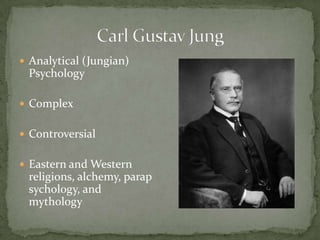
 Analytical (Jungian)
 Psychology

 Complex


 Controversial


 Eastern and Western
 religions, alchemy, parap
 sychology, and
 mythology
 Ambiguous


 Lack of a coherent, clearly structured system of
  thought

 Life rarely follows the logical


 Never believed to have all the answers
 Scientific study of paranormal phenomena


 This includes:
   mental telepathy
   precognition
   extrasensory perception
   psychokinesis
   out-of-body experience.
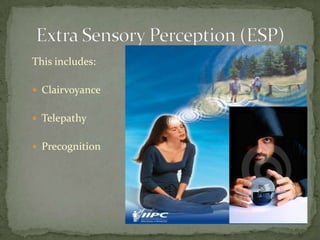
This includes:

 Clairvoyance


 Telepathy


 Precognition
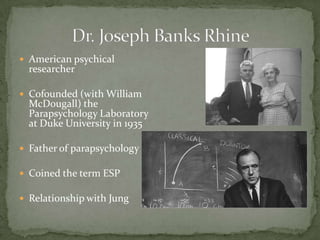
 American psychical
  researcher

 Cofounded (with William
  McDougall) the
  Parapsychology Laboratory
  at Duke University in 1935

 Father of parapsychology

 Coined the term ESP

 Relationship with Jung
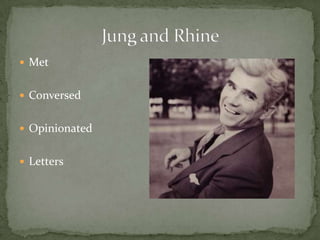
 Met


 Conversed


 Opinionated


 Letters
 “It was exciting to watch him [Jung] and Rhine
 together … Jung the cosmopolite, the man of
 enormous erudition,” and Rhine, “a man whom only
 America could have produced—quiet, low-
 spoken, intense, with that slow-burning fuse of humor
 innate in his speech, gravely deferential to
 Jung, putting his problems before Jung without any
 plea for help, any servility, any expectation of
 praise, with the obvious feeling that the problem of
 man and his nature was so sacrosanct and vital a one
 that Jung was obliged to help him, as he was to tell
 Jung what he knew.’’
 Jung has inspired the New Age movement with his interest in
  occultism, Eastern religions, the I Ching, and mythology.

 With his cousin Helene ("Helly") Preiswerk, he conducted spiritistic
  experiments.

 According to William Sloane, Jung was intrigued with not only
  astrology, but the Chinese method of divination that he termed “rune
  sticks”. A type of divinity.

 While Jung was still a student, he read various works on occultism and
  attended Spiritualist séances.

 In Jung’s later years, he became absorbed with the ancient cosmologies
  and spent a considerable amount of time analyzing
  Gnostic, alchemical, and mystical systems of thought (Drury, 1992).
 Always interested in spirituality and
 parapsychology, Carl Jung dabbled in the arts of the
 spiritual world, which led him to the exploration of the
 realms of the human unconscious that was often being
 ignored in modern-day medicine.

 The old Chinese text, The Secret of the Gold
 Flower, awakened Jung's interest in alchemy. His major
 study in this field, Psychologie und Alchemie, was
 published in German in 1944. In his own library Jung
 had a number of rare alchemical books and folios.
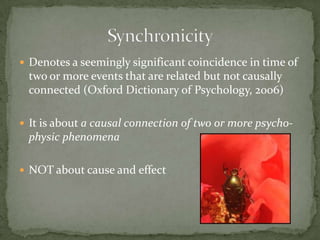
 Denotes a seemingly significant coincidence in time of
 two or more events that are related but not causally
 connected (Oxford Dictionary of Psychology, 2006)

 It is about a causal connection of two or more psycho-
 physic phenomena

 NOT about cause and effect
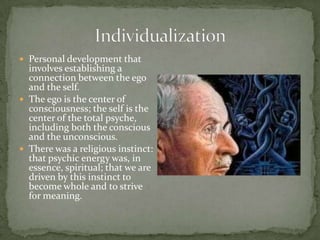
 Personal development that
  involves establishing a
  connection between the ego
  and the self.
 The ego is the center of
  consciousness; the self is the
  center of the total psyche,
  including both the conscious
  and the unconscious.
 There was a religious instinct:
  that psychic energy was, in
  essence, spiritual; that we are
  driven by this instinct to
  become whole and to strive
  for meaning.
 Psychology and Alchemy


 NOT the transformation of material lead into gold


 BUT the transformation of the human soul on its path
 to perfection
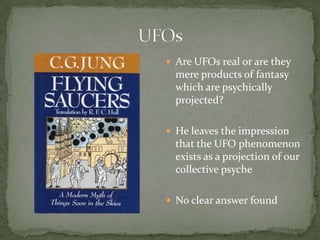
 Are UFOs real or are they
  mere products of fantasy
  which are psychically
  projected?

 He leaves the impression
  that the UFO phenomenon
  exists as a projection of our
  collective psyche

 No clear answer found
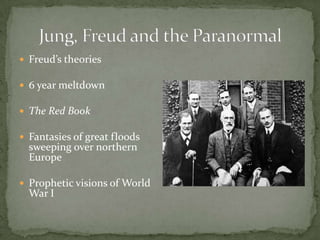
 Freud’s theories

 6 year meltdown

 The Red Book

 Fantasies of great floods
  sweeping over northern
  Europe

 Prophetic visions of World
  War I
 Spring 1909, Vienna


 Jung asked for Freud’s opinion on precognition and
 parapsychology

 Loud cracks


 Perfect example of paranormal phenomenon
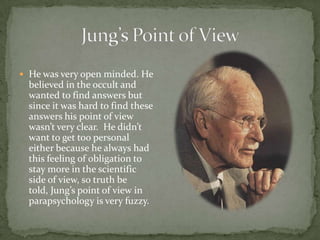
 He was very open minded. He
  believed in the occult and
  wanted to find answers but
  since it was hard to find these
  answers his point of view
  wasn’t very clear. He didn’t
  want to get too personal
  either because he always had
  this feeling of obligation to
  stay more in the scientific
  side of view, so truth be
  told, Jung’s point of view in
  parapsychology is very fuzzy.
 Colman A.M. (2006). Oxford Dictionary of Psychology (2nd
  ed.). New York: Oxford University Press.

 Drury N. (1992). Dictionary of Mysticism and the Esoteric
  Traditions. ABC-Clio Inc.

 Shepard, L.A. (1984). Encyclopedia of Occultism &
  Parapsychology (2nd ed.). Vol. 2. Detroit, Michigan: Gale
  Group, Inc.

 Sloane, W. (1975). Jung and Rhine. The Journal of the C. G.
  Jung Foundation for Analytical Psychology, 2(8), 73-75.
 http://www.cgjungny.org/


 http://www.rhine.org/
Jung parapsicologia-091203114944-phpapp01

Jung parapsicologia-091203114944-phpapp01

  • 1.
    Kelly Cari Lymaris B.Pagan Palermo
  • 2.
     Analytical (Jungian) Psychology  Complex  Controversial  Eastern and Western religions, alchemy, parap sychology, and mythology
  • 3.
     Ambiguous  Lackof a coherent, clearly structured system of thought  Life rarely follows the logical  Never believed to have all the answers
  • 4.
     Scientific studyof paranormal phenomena  This includes:  mental telepathy  precognition  extrasensory perception  psychokinesis  out-of-body experience.
  • 5.
    This includes:  Clairvoyance Telepathy  Precognition
  • 6.
     American psychical researcher  Cofounded (with William McDougall) the Parapsychology Laboratory at Duke University in 1935  Father of parapsychology  Coined the term ESP  Relationship with Jung
  • 7.
     Met  Conversed Opinionated  Letters
  • 8.
     “It wasexciting to watch him [Jung] and Rhine together … Jung the cosmopolite, the man of enormous erudition,” and Rhine, “a man whom only America could have produced—quiet, low- spoken, intense, with that slow-burning fuse of humor innate in his speech, gravely deferential to Jung, putting his problems before Jung without any plea for help, any servility, any expectation of praise, with the obvious feeling that the problem of man and his nature was so sacrosanct and vital a one that Jung was obliged to help him, as he was to tell Jung what he knew.’’
  • 9.
     Jung hasinspired the New Age movement with his interest in occultism, Eastern religions, the I Ching, and mythology.  With his cousin Helene ("Helly") Preiswerk, he conducted spiritistic experiments.  According to William Sloane, Jung was intrigued with not only astrology, but the Chinese method of divination that he termed “rune sticks”. A type of divinity.  While Jung was still a student, he read various works on occultism and attended Spiritualist séances.  In Jung’s later years, he became absorbed with the ancient cosmologies and spent a considerable amount of time analyzing Gnostic, alchemical, and mystical systems of thought (Drury, 1992).
  • 10.
     Always interestedin spirituality and parapsychology, Carl Jung dabbled in the arts of the spiritual world, which led him to the exploration of the realms of the human unconscious that was often being ignored in modern-day medicine.  The old Chinese text, The Secret of the Gold Flower, awakened Jung's interest in alchemy. His major study in this field, Psychologie und Alchemie, was published in German in 1944. In his own library Jung had a number of rare alchemical books and folios.
  • 11.
     Denotes aseemingly significant coincidence in time of two or more events that are related but not causally connected (Oxford Dictionary of Psychology, 2006)  It is about a causal connection of two or more psycho- physic phenomena  NOT about cause and effect
  • 12.
     Personal developmentthat involves establishing a connection between the ego and the self.  The ego is the center of consciousness; the self is the center of the total psyche, including both the conscious and the unconscious.  There was a religious instinct: that psychic energy was, in essence, spiritual; that we are driven by this instinct to become whole and to strive for meaning.
  • 13.
     Psychology andAlchemy  NOT the transformation of material lead into gold  BUT the transformation of the human soul on its path to perfection
  • 14.
     Are UFOsreal or are they mere products of fantasy which are psychically projected?  He leaves the impression that the UFO phenomenon exists as a projection of our collective psyche  No clear answer found
  • 15.
     Freud’s theories 6 year meltdown  The Red Book  Fantasies of great floods sweeping over northern Europe  Prophetic visions of World War I
  • 16.
     Spring 1909,Vienna  Jung asked for Freud’s opinion on precognition and parapsychology  Loud cracks  Perfect example of paranormal phenomenon
  • 17.
     He wasvery open minded. He believed in the occult and wanted to find answers but since it was hard to find these answers his point of view wasn’t very clear. He didn’t want to get too personal either because he always had this feeling of obligation to stay more in the scientific side of view, so truth be told, Jung’s point of view in parapsychology is very fuzzy.
  • 19.
     Colman A.M.(2006). Oxford Dictionary of Psychology (2nd ed.). New York: Oxford University Press.  Drury N. (1992). Dictionary of Mysticism and the Esoteric Traditions. ABC-Clio Inc.  Shepard, L.A. (1984). Encyclopedia of Occultism & Parapsychology (2nd ed.). Vol. 2. Detroit, Michigan: Gale Group, Inc.  Sloane, W. (1975). Jung and Rhine. The Journal of the C. G. Jung Foundation for Analytical Psychology, 2(8), 73-75.
  • 20.

Editor's Notes