Copyright
by
Aaron Alexander Jones
2015
The Dissertation Committee for Aaron Alexander Jones Certifies that this is the
approved version of the following dissertation:
Mineralogical Controls on Microbial Community Structure and
Biogeochemical Processes in Subsurface Environments
Committee:
Philip C. Bennett, Supervisor
Daniel O. Breecker
Christopher R. Omelon
Christopher J. Bell
Christine V. Hawkes
Mineralogical Controls on Microbial Community Structure and
Biogeochemical Processes in Subsurface Environments
by
Aaron Alexander Jones, B.S.Geo.Sci; M.S.Geo.Sci
Dissertation
Presented to the Faculty of the Graduate School of
The University of Texas at Austin
in Partial Fulfillment
of the Requirements
for the Degree of
Doctor of Philosophy
The University of Texas at Austin
December 2015
Dedication
To my family, friends and especially my wife.
v
Acknowledgements
I would like to thank the friends who supported me through these years. There
were many periods of extreme self-doubt and I relied heavily on you to keep me positive
and get me back on track. I know this is a cliché, but there really aren’t words to express
the level of my gratitude to you all, but here I go… I would not have been able to do this
without the love, support, patience, and encouragement of my wife, Holly. Thank you
Holly for bringing joy to my life. Thank you Jay Santillan for being the best friend I’ve
ever had. I am forever indebted to Chris Omelon for his insight, support, and friendship.
I thank my advisors, committee members, and research group members for their
support, guidance, and insights over these many years. Specifically, I owe Phil Bennett a
huge debt of gratitude for his mentorship. Phil’s guidance is primarily responsible for the
scientist I have become. Thank you, Phil, for the countless times you helped me see the
forest for the trees. I would like to thank Annette Engel for laying the groundwork for
this research. I would like to thank the GEO 381G (Geomicrobiology) students of the
past 5 years for “enthusiastically” assisting me with field research. You made crawling
into a stinky, hot, toxic hole in the ground to spend hours collecting slime much more
bearable.
I acknowledge that my research was funded from the contributions of The
Geological Society of America, The National Science Foundation, and the Jackson
School of Geosciences.
vi
Mineralogical Controls on Microbial Community Structure and
Biogeochemical Processes in Subsurface Environments
Aaron Alexander Jones, Ph.D.
The University of Texas at Austin, 2015
Supervisor: Philip C. Bennett
Abstract
Nearly every ecological habitat in the microbiological world is predominately
occupied by complex assemblages of multicellular, multifunctional communities attached
to surfaces as biofilms. The motivating factors for this stationary community lifestyle
appear to be as diverse as the organisms that occupy these habitats. However, there are
also many commonalities primarily relating to nutritional requirements and
environmental tolerances. Broadly, this dissertation focuses primarily on linking these
motivating factors to specific microorganisms within diverse biofilm communities
attached to mineral surfaces. To do this I used continuous-flow laboratory biofilm
reactors (inoculated with a diverse subsurface biofilm community) to assess the roles of
surface type, media pH, and carbon and phosphate availability on biofilm accumulation,
community structure, function, and phylogenetic variability. I demonstrate that in
nutrient-limited systems, taxonomy and growth of biofilm communities is highly
dependent on surface chemistry to support their nutritional requirements and
environmental tolerances. Moreover I present rigorous statistical evidence that, for a
variety of environments, microbial communities attached to similar natural surfaces types
vii
(carbonates vs. silicates vs. aluminosilicates) are more phylogenetically similar. I find
that surface type controls up to 90% of the variance in phylogenetic diversity of a system
regardless of environmental pressures. This is strong evidence that mineral selection is
genetically ingrained.
We provide validated methodology for the use of continuous flow-bioreactors to
expose the fundamentally dynamic nature of microbial structure within biofilms. I
demonstrate that these shifts in community structure can occur rapidly, impacting
geochemistry and carbonate mineral solubility. Specifically, carbonate dissolution is
highly accelerated under autotrophic conditions dominated by sulfur-oxidizers.
Immediately after adding acetate the community shifts to heterotrophic sulfur-reducers
resulting in carbonate precipitation. Additionally, these functional shifts can be inferred
by monitoring geochemical indicators (δ13
CCO2, [CO2], Ca2+
, and pH). I provide evidence
that the responsiveness of carbonate system reactions to the metabolic products of
sulfuric acid cave ecosystems are ideal model ecosystems for studying the effects of
microbial community structure on stable carbon isotope fractionation.
I submit that biogeochemical interactions with mineral surfaces have influenced
development, evolution, and diversification of microbial life. Throughout geologic time,
microorganisms have enhanced survival by colonizing mineral surfaces and developing
complex biofilm communities genetically primed for specific mineral habitats.
viii
Table of Contents
List of Tables ......................................................................................................... xi	
List of Figures..................................................................................................... xvii	
Chapter 1: Introduction...........................................................................................1	
1.1 Motivation and Problem Statement ..........................................................1	
1.2 Novel Questions........................................................................................6	
1.3 Dissertation Organization .........................................................................7	
Chapter 2: Mineral microniches control the diversity of subsurface microbial
populations....................................................................................................11	
2.1 Abstract...................................................................................................11	
2.2 Introduction.............................................................................................12	
2.3 Materials and Methods............................................................................15	
2.3.1 Mineral Substrata Preparation.....................................................16	
2.3.2 Microbial Inoculant.....................................................................19	
2.3.3 Biomass Accumulation...............................................................20	
2.3.4 Community Analysis ..................................................................21	
2.4 Results.....................................................................................................25	
2.4.1 Biofilm Accumulation ................................................................25	
2.4.2 Microbial Diversity.....................................................................31	
2.5 Discussion...............................................................................................38	
2.6 Conclusions.............................................................................................49	
Chapter 3: Revealing hidden diversity: investigating the impact of minerals on
biofilm community structure and diversity...................................................52	
3.1 Abstract...................................................................................................52	
3.2 Introduction.............................................................................................53	
3.3 Materials and Methods............................................................................55	
3.3.1 Flow through Biofilm Reactor (CDC)........................................55	
3.3.2 Mineral Substrata Preparation.....................................................57
ix
3.3.3 Biomass measurement and extraction.........................................60	
3.3.4 Biodiversity Metrics and Statistical Analysis.............................62	
3.4 Results.....................................................................................................66	
3.4.1 Effect of reactor conditions on bacterial diversity......................66	
3.4.2 Effect of mineralogy on bacterial diversity ................................73	
3.4.3 Taxonomic composition and condition sensitive taxa................78	
3.4.4 Biofilm Abundance.....................................................................88	
3.5 Discussion...............................................................................................92	
3.5.1 Sulfur-Metabolizers ....................................................................93	
3.5.2 Acidophiles .................................................................................96	
3.5.3 Gram-positives and other potential biophysical/mineral relationships
.....................................................................................................98	
3.5.4 Biofilm Accumulation and Mineralogy....................................101	
3.5.5 Planktonic vs. Attached Communities......................................104	
3.6 Conclusions...........................................................................................107	
Chapter 4: Biogeochemical dynamics of sulfuric-acid speleogenesis: A proof of
concept environment for inferring microbial community structure and function
using δ13
CCO2 ...............................................................................................109	
4.1 Abstract.................................................................................................109	
4.2 Introduction...........................................................................................110	
4.3 Materials and Methods..........................................................................113	
4.3.1 Solid Surface Preparation and Characterization .......................113	
4.3.2 Liquid Media Preparation for Chamber Experiments...............115	
4.3.3 Microbial Inoculants.................................................................115	
4.3.4 Experimental Variations ...........................................................116	
4.3.5 PCR Amplification and 454 Sequencing of 16S rRNA............117	
4.4 Results...................................................................................................120	
4.4.1 Abiotic Experiments .................................................................120	
4.4.2 Thiothrix unzii Experiments......................................................125	
4.4.3 LKC Mixed Culture Experiments.............................................126	
4.4.4 Changes in Mixed Culture Community....................................132
x
4.4.5 SEM Observations of Surface Features....................................136	
4.4.6 Results of Sulfur Chemistry...............................................................139	
4.5 Discussion.............................................................................................139	
4.5.1 Limestone Dissolution by Thiothrix unzii ................................139	
4.5.2 Limestone Dissolution by LKC Mixed Communities ..............144	
4.6 Conclusions...........................................................................................152	
Chapter 5: Synthesis and Concluding Remarks..................................................154	
5.1 Synthesis of Doctoral Research ............................................................154	
References............................................................................................................158
xi
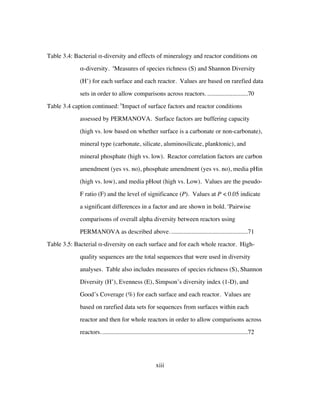
List of Tables
Table 2.1: General composition, common subsurface environments, potential benefits
to microorganisms, and special properties specific to the rocks/minerals
used in the biofilm reactor experiments. Superscripts refer to papers with
additional information (1-Bennett and Others 2001, 2-Steinhauer and
Others 2010, 3-Edwards and Others 2005).......................................18	
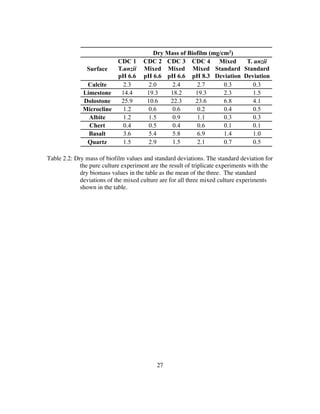
Table 2.2: Dry mass of biofilm values and standard deviations. The standard
deviation for the pure culture experiment are the result of triplicate
experiments with the dry biomass values in the table as the mean of the
three. The standard deviations of the mixed culture are for all three
mixed culture experiments shown in the table..................................27	
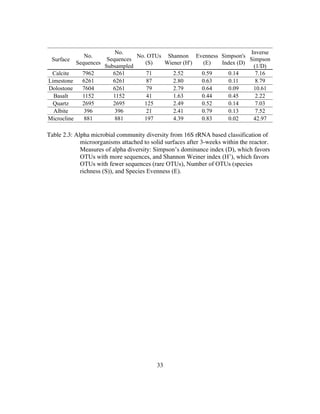
Table 2.3: Alpha microbial community diversity from 16S rRNA based classification
of microorganisms attached to solid surfaces after 3-weeks within the
reactor. Measures of alpha diversity: Simpson’s dominance index (D),
which favors OTUs with more sequences, and Shannon Weiner index
(H’), which favors OTUs with fewer sequences (rare OTUs), Number of
OTUs (species richness (S)), and Species Evenness (E). .................33	
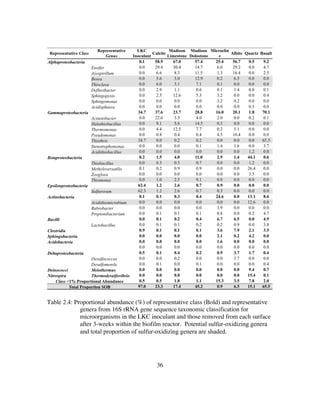
Table 2.4: Proportional abundance (%) of representative class (Bold) and
representative genera from 16S rRNA gene sequence taxonomic
classification for microorganisms in the LKC inoculant and those
removed from each surface after 3-weeks within the biofilm reactor.
Potential sulfur-oxidizing genera and total proportion of sulfur-oxidizing
genera are shaded..............................................................................36
xii
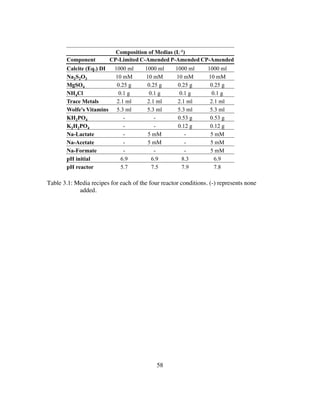
Table 3.1: Media recipes for each of the four reactor conditions. (-) represents none
added.................................................................................................58	
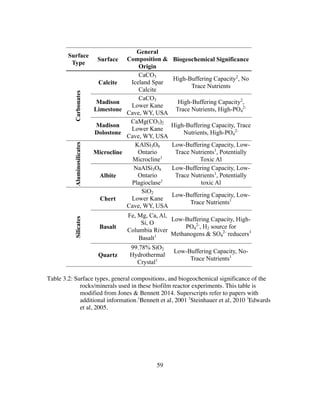
Table 3.2: Surface types, general compositions, and biogeochemical significance of
the rocks/minerals used in these biofilm reactor experiments. This table
is modified from Jones & Bennett 2014. Superscripts refer to papers
with additional information.1
Bennett et al, 2001 2
Steinhauer et al, 2010
3
Edwards et al, 2005..........................................................................59	
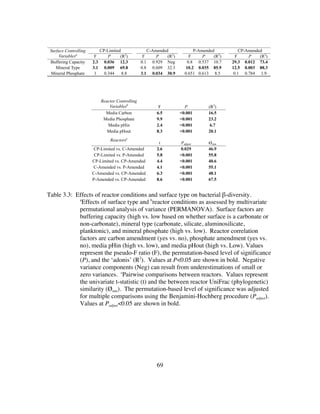
Table 3.3: Effects of reactor conditions and surface type on bacterial β-diversity.
a
Effects of surface type and b
reactor conditions as assessed by
multivariate permutational analysis of variance (PERMANOVA).
Surface factors are buffering capacity (high vs. low based on whether
surface is a carbonate or non-carbonate), mineral type (carbonate,
silicate, aluminosilicate, planktonic), and mineral phosphate (high vs.
low). Reactor correlation factors are carbon amendment (yes vs. no),
phosphate amendment (yes vs. no), media pHin (high vs. low), and
media pHout (high vs. Low). Values represent the pseudo-F ratio (F),
the permutation-based level of significance (P), and the ‘adonis’ (R2
).
Values at P<0.05 are shown in bold. Negative variance components
(Neg) can result from underestimations of small or zero variances.
c
Pairwise comparisons between reactors. Values represent the univariate
t-statistic (t) and the between reactor UniFrac (phylogenetic) similarity
(Øsim). The permutation-based level of significance was adjusted for
multiple comparisons using the Benjamini-Hochberg procedure (Padjust).
Values at Padjust<0.05 are shown in bold............................................69
xiii
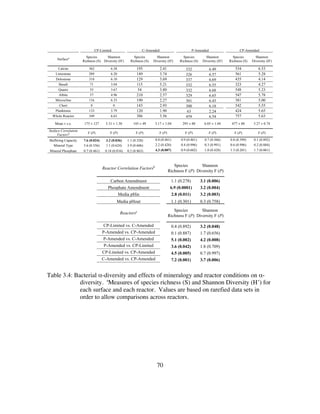
Table 3.4: Bacterial α-diversity and effects of mineralogy and reactor conditions on
α-diversity. a
Measures of species richness (S) and Shannon Diversity
(H’) for each surface and each reactor. Values are based on rarefied data
sets in order to allow comparisons across reactors...........................70	
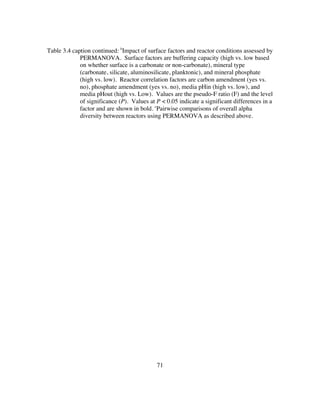
Table 3.4 caption continued: b
Impact of surface factors and reactor conditions
assessed by PERMANOVA. Surface factors are buffering capacity
(high vs. low based on whether surface is a carbonate or non-carbonate),
mineral type (carbonate, silicate, aluminosilicate, planktonic), and
mineral phosphate (high vs. low). Reactor correlation factors are carbon
amendment (yes vs. no), phosphate amendment (yes vs. no), media pHin
(high vs. low), and media pHout (high vs. Low). Values are the pseudo-
F ratio (F) and the level of significance (P). Values at P < 0.05 indicate
a significant differences in a factor and are shown in bold. c
Pairwise
comparisons of overall alpha diversity between reactors using
PERMANOVA as described above..................................................71	
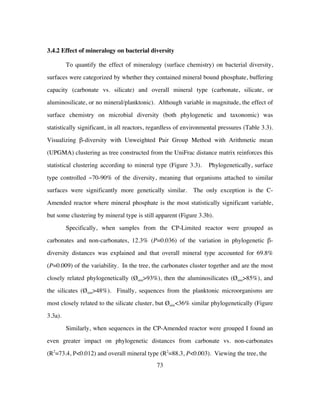
Table 3.5: Bacterial α-diversity on each surface and for each whole reactor. High-
quality sequences are the total sequences that were used in diversity
analyses. Table also includes measures of species richness (S), Shannon
Diversity (H’), Evenness (E), Simpson’s diversity index (1-D), and
Good’s Coverage (%) for each surface and each reactor. Values are
based on rarefied data sets for sequences from surfaces within each
reactor and then for whole reactors in order to allow comparisons across
reactors..............................................................................................72
xiv
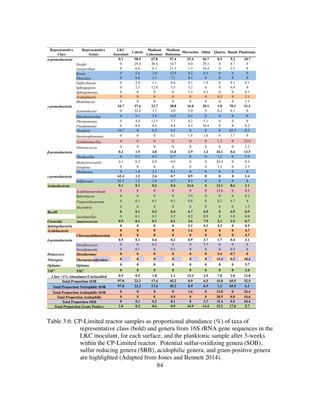
Table 3.6: CP-Limited reactor samples as proportional abundance (%) of taxa of
representative class (bold) and genera from 16S rRNA gene sequences
in the LKC inoculant, for each surface, and the planktonic sample after
3-weeks within the CP-Limited reactor. Potential sulfur-oxidizing
genera (SOB), sulfur reducing genera (SRB), acidophilic genera, and
gram-positive genera are highlighted (Adapted from Jones and Bennett
2014). ................................................................................................84	
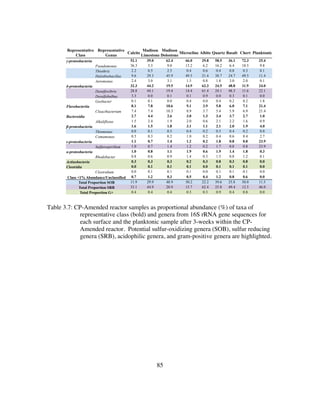
Table 3.7: CP-Amended reactor samples as proportional abundance (%) of taxa of
representative class (bold) and genera from 16S rRNA gene sequences
for each surface and the planktonic sample after 3-weeks within the CP-
Amended reactor. Potential sulfur-oxidizing genera (SOB), sulfur
reducing genera (SRB), acidophilic genera, and gram-positive genera are
highlighted. .......................................................................................85	
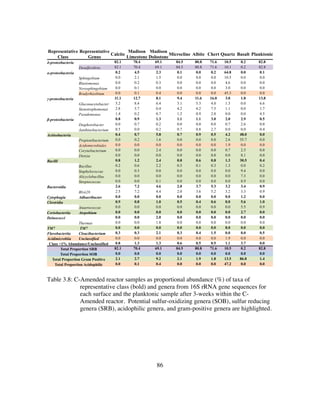
Table 3.8: C-Amended reactor samples as proportional abundance (%) of taxa of
representative class (bold) and genera from 16S rRNA gene sequences
for each surface and the planktonic sample after 3-weeks within the C-
Amended reactor. Potential sulfur-oxidizing genera (SOB), sulfur
reducing genera (SRB), acidophilic genera, and gram-positive genera are
highlighted. .......................................................................................86	
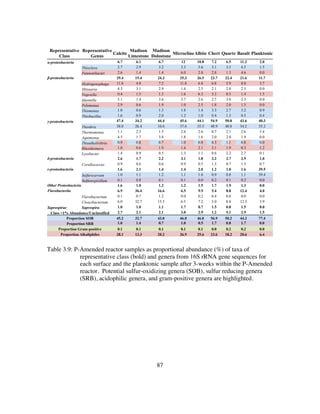
Table 3.9: P-Amended reactor samples as proportional abundance (%) of taxa of
representative class (bold) and genera from 16S rRNA gene sequences
for each surface and the planktonic sample after 3-weeks within the P-
Amended reactor. Potential sulfur-oxidizing genera (SOB), sulfur
reducing genera (SRB), acidophilic genera, and gram-positive genera are
highlighted. .......................................................................................87
xv
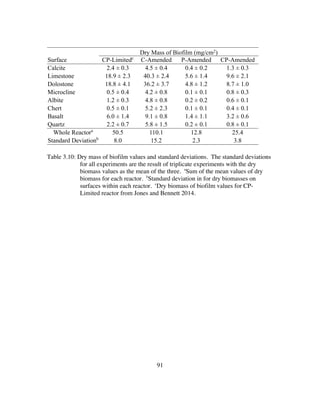
Table 3.10: Dry mass of biofilm values and standard deviations. The standard
deviations for all experiments are the result of triplicate experiments
with the dry biomass values as the mean of the three. a
Sum of the mean
values of dry biomass for each reactor. b
Standard deviation in for dry
biomasses on surfaces within each reactor. c
Dry biomass of biofilm
values for CP-Limited reactor from Jones and Bennett 2014...........91	
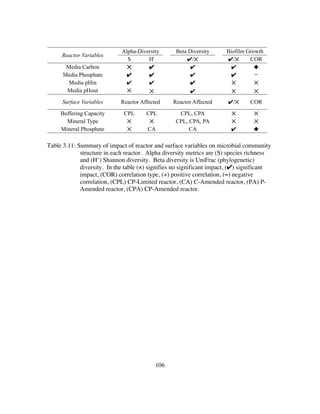
Table 3.11: Summary of impact of reactor and surface variables on microbial
community structure in each reactor. Alpha diversity metrics are (S)
species richness and (H’) Shannon diversity. Beta diversity is UniFrac
(phylogenetic) diversity. In the table (×) signifies no significant impact,
(✔) significant impact, (COR) correlation type, (+) positive correlation,
(−) negative correlation, (CPL) CP-Limited reactor, (CA) C-Amended
reactor, (PA) P-Amended reactor, (CPA) CP-Amended reactor....106	
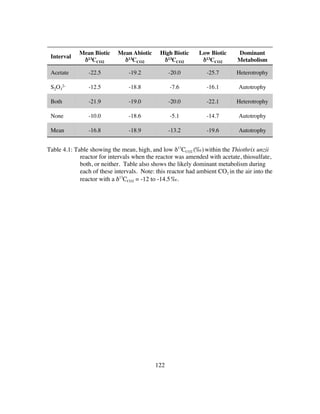
Table 4.1: Table showing the mean, high, and low δ13
CCO2 (‰)within the Thiothrix
unzii reactor for intervals when the reactor was amended with acetate,
thiosulfate, both, or neither. Table also shows the likely dominant
metabolism during each of these intervals. Note: this reactor had
ambient CO2 in the air into the reactor with a δ13
CCO2 = -12 to -14.5‰.
.........................................................................................................122	
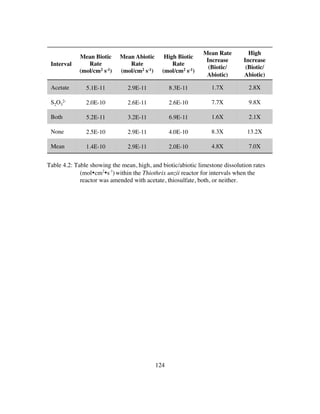
Table 4.2: Table showing the mean, high, and biotic/abiotic limestone dissolution
rates (mol•cm2
•s-1
)within the Thiothrix unzii reactor for intervals when
the reactor was amended with acetate, thiosulfate, both, or neither.124
xvi
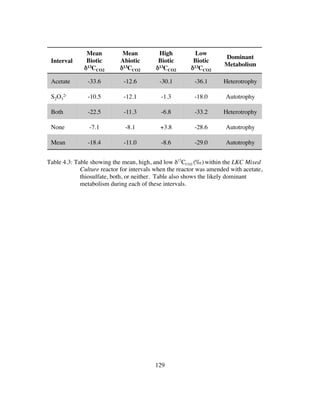
Table 4.3: Table showing the mean, high, and low δ13
CCO2 (‰)within the LKC Mixed
Culture reactor for intervals when the reactor was amended with acetate,
thiosulfate, both, or neither. Table also shows the likely dominant
metabolism during each of these intervals......................................129	
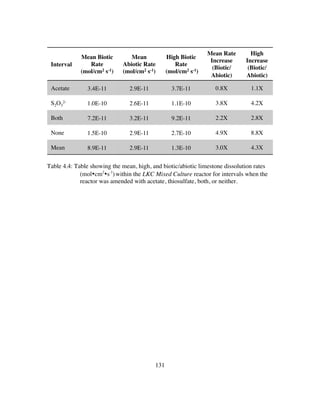
Table 4.4: Table showing the mean, high, and biotic/abiotic limestone dissolution
rates (mol•cm2
•s-1
)within the LKC Mixed Culture reactor for intervals
when the reactor was amended with acetate, thiosulfate, both, or neither.
.........................................................................................................131	
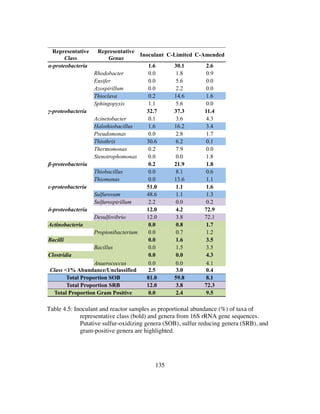
Table 4.5: Inoculant and reactor samples as proportional abundance (%) of taxa of
representative class (bold) and genera from 16S rRNA gene sequences.
Putative sulfur-oxidizing genera (SOB), sulfur reducing genera (SRB),
and gram-positive genera are highlighted.......................................135	
Table 4.6: Summary of mean Δ [Sulfur] (mM) of various sulfur species during
specific periods and overall summary of findings from this study. When
S2O3
2-
in is 0.89mM, Acetate in is 2mM, SO4
2-
in from MgSO4 is
0.94mM...........................................................................................151
xvii
List of Figures
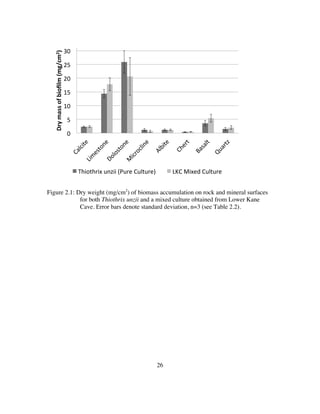
Figure 2.1: Dry weight (mg/cm2
) of biomass accumulation on rock and mineral
surfaces for both Thiothrix unzii and a mixed culture obtained from
Lower Kane Cave. Error bars denote standard deviation, n=3 (see Table
2.2). ...................................................................................................26	
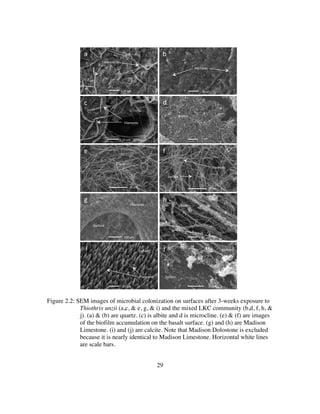
Figure 2.2: SEM images of microbial colonization on surfaces after 3-weeks exposure
to Thiothrix unzii (a,c, & e, g, & i) and the mixed LKC community (b,d,
f, h, & j). (a) & (b) are quartz. (c) is albite and d is microcline. (e) & (f)
are images of the biofilm accumulation on the basalt surface. (g) and (h)
are Madison Limestone. (i) and (j) are calcite. Note that Madison
Dolostone is excluded because it is nearly identical to Madison
Limestone. Horizontal white lines are scale bars..............................29	
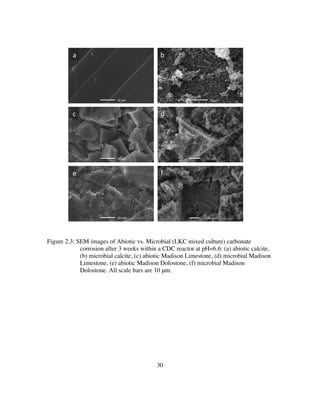
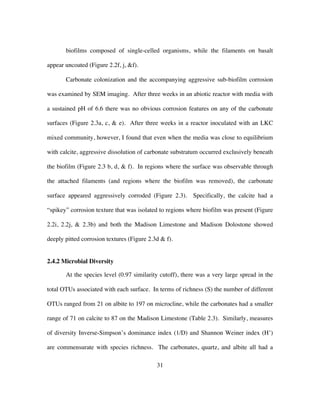
Figure 2.3: SEM images of Abiotic vs. Microbial (LKC mixed culture) carbonate
corrosion after 3 weeks within a CDC reactor at pH=6.6: (a) abiotic
calcite, (b) microbial calcite, (c) abiotic Madison Limestone, (d)
microbial Madison Limestone, (e) abiotic Madison Dolostone, (f)
microbial Madison Dolostone. All scale bars are 10 μm..................30
xviii
Figure 2.4: Dendrogram of bacterial β-diversity displaying the overlap in bacterial
communities colonizing various solid surfaces. The key (bottom left)
contains class level taxonomy associated with each mineral surface (see
Table 2.4 for proportional abundances). The scale bar represents 0.05
(5%) dissimilarity in sequences isolated from each mineral/rock surface
(proportion of sequences belonging to unshared OTUs). Dissimilarity
increases with branch length in the outward direction. Each of the
carbonate branches are ≤2% in length. Branch lengths were calculated
using the abundance based Sorenson similarity index wherein OTUs
were assigned at ≥ 97% similarity in sequences...............................37	
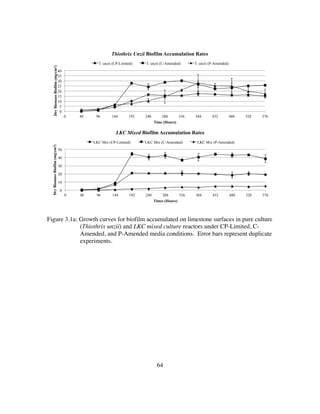
Figure 3.1a: Growth curves for biofilm accumulated on limestone surfaces in pure
culture (Thiothrix unzii) and LKC mixed culture reactors under CP-
Limited, C-Amended, and P-Amended media conditions. Error bars
represent duplicate experiments........................................................64	
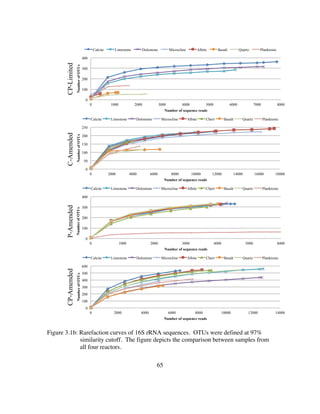
Figure 3.1b: Rarefaction curves of 16S rRNA sequences. OTUs were defined at 97%
similarity cutoff. The figure depicts the comparison between samples
from all four reactors. .......................................................................65	
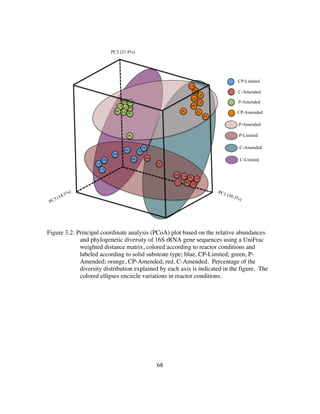
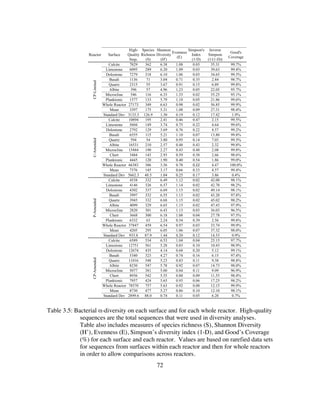
Figure 3.2: Principal coordinate analysis (PCoA) plot based on the relative
abundances and phylogenetic diversity of 16S rRNA gene sequences
using a UniFrac weighted distance matrix, colored according to reactor
conditions and labeled according to solid substrate type; blue, CP-
Limited; green, P-Amended; orange, CP-Amended; red, C-Amended.
Percentage of the diversity distribution explained by each axis is
indicated in the figure. The colored ellipses encircle variations in
reactor conditions..............................................................................68
xix
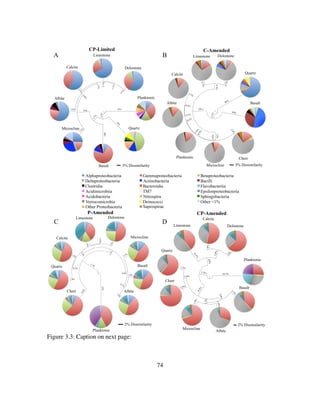
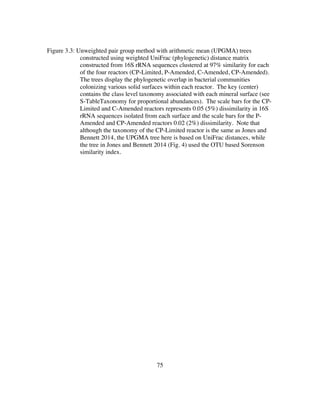
Figure 3.3: Unweighted pair group method with arithmetic mean (UPGMA) trees
constructed using weighted UniFrac (phylogenetic) distance matrix
constructed from 16S rRNA sequences clustered at 97% similarity for
each of the four reactors (CP-Limited, P-Amended, C-Amended, CP-
Amended). The trees display the phylogenetic overlap in bacterial
communities colonizing various solid surfaces within each reactor. The
key (center) contains the class level taxonomy associated with each
mineral surface (see S-TableTaxonomy for proportional abundances).
The scale bars for the CP-Limited and C-Amended reactors represents
0.05 (5%) dissimilarity in 16S rRNA sequences isolated from each
surface and the scale bars for the P-Amended and CP-Amended reactors
0.02 (2%) dissimilarity. Note that although the taxonomy of the CP-
Limited reactor is the same as Jones and Bennett 2014, the UPGMA tree
here is based on UniFrac distances, while the tree in Jones and Bennett
2014 (Fig. 4) used the OTU based Sorenson similarity index..........75	
Figure 3.4: Venn diagram of the shared bacterial genera found in the four reactors
(CP-Limited, P-Amended, C-Amended, CP-Amended). Overlaps
between the reactors are indicated by overlaps in the diagram. .......83	
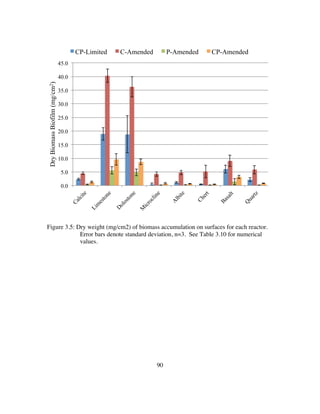
Figure 3.5: Dry weight (mg/cm2) of biomass accumulation on surfaces for each
reactor. Error bars denote standard deviation, n=3. See Table 3.10 for
numerical values. ..............................................................................90
xx
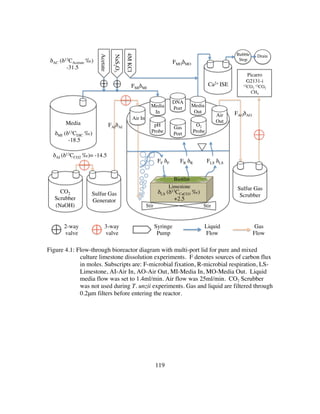
Figure 4.1: Flow-through bioreactor diagram with multi-port lid for pure and mixed
culture limestone dissolution experiments. F denotes sources of carbon
flux in moles. Subscripts are: F-microbial fixation, R-microbial
respiration, LS-Limestone, AI-Air In, AO-Air Out, MI-Media In, MO-
Media Out. Liquid media flow was set to 1.4ml/min. Air flow was
25ml/min. CO2 Scrubber was not used during T. unzii experiments. Gas
and liquid are filtered through 0.2μm filters before entering the reactor.
.........................................................................................................119	
Figure 4.2: Log of CO2 gas concentration (atm) in the headspace and δ13
CCO2 (‰)
within the Thiothrix unzii pure culture reactor. Also shown are the flux
from air in CO2 gas concentration (atm) and the air in δ13
CCO2 (‰) since
the air in for this reactor was not CO2 scrubbed. Periods when acetate
(Yellow), thiosulfate (Blue), or both acetate and thiosulfate (Green) are
shaded accordingly. Note that this figure shows a representative period
taken from the much longer experiment.........................................121	
Figure 4.3: Log of calcium concentration (mM) and pH within the Thiothrix unzii
pure culture reactor. Periods when acetate (Yellow), thiosulfate (Blue),
or both acetate and thiosulfate (Green) are shaded accordingly. Note that
this figure shows a representative period taken from the much longer
experiment.......................................................................................123
xxi
Figure 4.4: Log of CO2 gas concentration (atm) in the headspace and δ13
CCO2 (‰)
within the LKC Mixed Culture reactor. Also shown are the δ13
CAcetate
(‰) and δ13
CCaCO3 (‰) from limestone. The CO2 was scrubbed from the
air into this reactor. Periods when acetate (Yellow), thiosulfate (Blue),
or both acetate and thiosulfate (Green) are shaded accordingly. Note that
this figure shows a representative period taken from the much longer
experiment.......................................................................................128	
Figure 4.5: Log of calcium concentration (mM) and pH within the LKC Mixed
Culture reactor. Periods when acetate (Yellow), thiosulfate (Blue), or
both acetate and thiosulfate (Green) are shaded accordingly. Note that
this figure shows a representative period taken from the much longer
experiment.......................................................................................130	
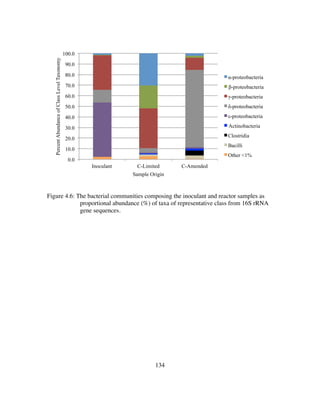
Figure 4.6: The bacterial communities composing the inoculant and reactor samples
as proportional abundance (%) of taxa of representative class from 16S
rRNA gene sequences.....................................................................134	
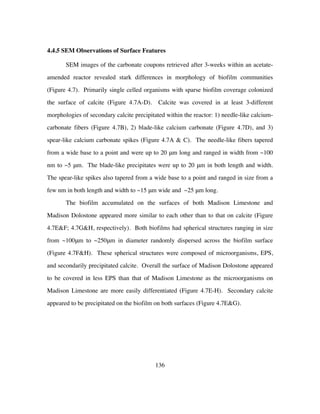
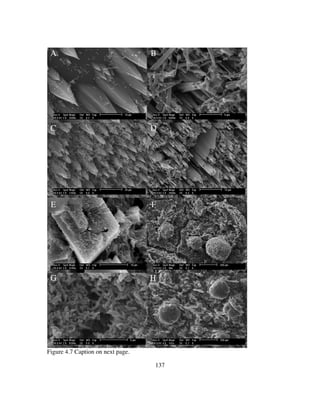
Figure 4.7: SEM images of carbonate surfaces colonized by LKC mixed cultures after
3-weeks within a CDC reactor amended with acetate. Microbial
community is primarily composed of the SRB Desulfovibrio. A, B, C,
& D are calcite surfaces with microorganisms attached; note the scale
bars are 10μm, 5μm, 20μm, and 10μm, respectively. E & F are
Limestone covered in biofilm; note the scale bars are 10μm and 200μm,
respectively. G & H are Dolostone covered in biofilm; note the scale
bars are 10μm and 200μm, respectively. ........................................138
xxii
Figure 4.8: Limestone dissolution is the result of both autotrophy and heterotrophy in
Thiothrix unzii pure cultures. For each of the specified intervals: Gray is
the δ13
CCaCO3, yellow is δ13
CAcetate, green isδ13
CCO2 of the ambient air
entering the reactor, orange is the δ13
CCO2 of the headspace under abiotic
conditions, blue is the mean δ13
CCO2 of the biotic reactor, red (-) are the
lowest biotic δ13
CCO2, black (+) are the highest biotic δ13
CCO2. A.
Heterotrophy when acetate and thiosulfate are supplied. B.
Heterotrophy when acetate is supplied and thiosulfate withheld. C.
Autotrophy when thiosulfate is supplied and acetate is withheld. D.
Autotrophy when both acetate and thiosulfate are withheld...........143	
Figure 4.9: Limestone dissolution is the result of both autotrophy and heterotrophy in
the LKC Mixed culture reactor. For each of the specified intervals: Gray
is the δ13
CCaCO3, yellow is δ13
CAcetate, green isδ13
CCO2 of the ambient air
entering the reactor, orange is the δ13
CCO2 of the headspace under abiotic
conditions, blue is the mean δ13
CCO2 of the biotic reactor, red (-) are the
lowest biotic δ13
CCO2, black (+) are the highest biotic δ13
CCO2. Note that
there is no δ13
CCO2 for the ambient air entering this reactor. A.
Heterotrophy when acetate and thiosulfate are supplied. B.
Heterotrophy when acetate is supplied and thiosulfate withheld. C.
Autotrophy when thiosulfate is supplied and acetate is withheld. D.
Autotrophy when both acetate and thiosulfate are withheld...........150
1
Chapter 1: Introduction
1.1 MOTIVATION AND PROBLEM STATEMENT
One of most fundamental and profound aspects of research in the interdisciplinary
field of Geomicrobiology is the relationship between microorganisms and natural
(mineral and rock) surfaces. This is largely due to the fact that the vast majority of
microorganisms exist in biofilms attached to mineral surfaces. This is especially true for
subsurface environments, where it has been estimated that 99.9% of microorganisms
adhere to this lifestyle (Madigan et al, 2009). In the subsurface, caves, deep marine
sediments, deep soils, or any of the other vast and abundant examples of dark, nutrient
poor environments, microbes are highly dependent on geochemical interactions with
natural surfaces as a source of energy or nutrients (Anderson, 2001; Chapelle et al, 2002;
Edwards et al, 2005; Edwards et al, 2012; Stevens, 1997). It is reasonable to hypothesize
that, throughout geologic time, the structure and function of these microorganisms would
have adapted and evolved to take advantage of geochemical interactions with specific
surface types. So I ask if there are genetically engrained affinities for specific surface
types and can I detect it? Once I know that these relationships exist I may be able to use
that knowledge to exploit the biogeochemical consequences of specific relationships.
Studies have suggested the geochemical composition of solid surfaces and
nutrient availability may play a role in distribution of taxa in the subsurface and soils
(Carson et al, 2009; Dalton et al, 1994; Huang et al, 1998; Ohashi et al, 1995; Rogers &
Bennett, 2004; Rogers et al, 1998; Rogers et al, 2001; Sylvan et al, 2012). These studies
have shown correlations between occurrences of specific taxa and specific surfaces types.
However, until this study, there has not been a comprehensive study assessing the relative
impacts of environmental pressures (carbon source, pH, phosphate availability) and
2
surface chemistry pressures (buffering ability, nutrient availability) on community
structure, phylogenetic diversity, taxonomic diversity, membership, and biofilm
accumulation. Additionally, herein I attempt to identify a statistically significant link
between phylogenetic diversity of microbial communities to specific natural surface types
under a variety of geochemical conditions.
Fundamentally, biofilms attached to surfaces can exert highly localized control on
geochemistry of the surrounding microenvironment (Bennett et al, 2000). The effect on
geochemistry is highly variable as it is both a function of actively metabolizing
microorganisms and a consequence of passive reactions with EPS or even microbial cell
walls (Bennett et al, 1996; Ehrlich, 1996). Furthermore, these interactions often results in
dissolution of the surface and/or precipitation of secondary minerals (Ehrlich, 1996).
There are many suggested mechanisms for this process, for the sake of brevity, two
examples include: EPS and cell walls of prokaryotes acting as nucleation sites for mineral
precipitation, by binding solutes (Aloisi et al, 2006; Ferris, 2000; Roberts et al, 2004),
and microbial metabolism-induced dissolution/precipitation (Engel et al, 2004b;
Steinhauer et al, 2010). Due their participation in the global carbon cycle, most
biogeochemically-induced dissolution or precipitation reactions involve carbonate
minerals, but it has been shown repeatedly that attached microorganisms can facilitate
and significantly alter rates of mineral and rock dissolution/precipitation of silicates,
hydroxides/oxides, sulfides/sulfates, and phosphates (Schultze-Lam et al, 1996). Despite
this, the mechanisms behind the vast majority of these biogeochemical interactions are
either not understood or have yet to be documented.
One overt consequence of these interactions is the formation of carbonate karst.
Generally, these landscapes form where soluble carbonate rocks dissolve by chemical
solution forming distinctive surface features (e.g. sinkholes and dolines) and subsurface
3
voids features such as caves (White, 1988). Within caves such as Movile Caves
(Romania), the Frasassi Caves (Italy), and Lower Kane Cave (LKC, Wyoming, USA) the
combination of abiotic autoxidation and microbiological oxidation of H2S produces SO4
2-
and H+
that promotes limestone dissolution through sulfuric-acid speleogenesis (SAS)
(Egemeier, 1981). This happens as a consequence of both abiotic and biotic reaction
pathways, but is particularly influenced by the metabolism of chemolithotrophic sulfur
oxidizing bacteria (SOB) (Egemeier, 1981; Engel, 2004; Steinhauer et al, 2010).
LKC is situated in the Bighorn River Valley, WY, USA (44o
44’ N, 108o
11’ W),
and has a single horizontal passage extending ~325 meters along the axial trace of the
Little Sheep Mountain Anticline in the Madison Limestone (Stock et al, 2006). The
Madison Formation is Mississippian age (~350mya) massive (~150–250m thick)
limestone and dolostone with occasional thinly interbedded shale and chert nodules
(Peterson, 1984). Recharge water to the LKC stream is a mixture of meteoric water from
Madison Limestone and slightly thermal waters from depth (Peterson, 1984). There are 4
sulfidic springs within LKC that serve as the metabolic backbone for filamentous
microbial mats that accumulate where the springs enter the cave stream (Egemeier, 1981;
Engel et al, 2004a; Peterson, 1984).
The microbial taxonomy within LKC has been previously documented (Engel et
al, 2003). In summary, microorganisms belonging to many distinct lineages within the
phylum Proteobacteria are associated with these spring features. The community is
dominated primarily by sulfur-oxidizers of the classes Gammaproteobacteria and
Epsilonproteobacteria, and lesser amounts of Betaproteobacteria most closely related to
the genera; Thiothrix, Thiobacillus, Thiomonas, Thiomicrospira, Thiovulum, and
Achromatium (Engel, 2004; Engel et al, 2003). Additionally, I have found that there is a
large abundance of sulfur-reducers of the class Deltaproteobacteria represented by
4
members of the genera Desulfocapsa and Desulfovibrio thriving in oxygen-depleted
niches directly beneath or even within sulfur-oxidizing biofilms. However, there have
been no extensive studies of the sulfur-reducing populations in these caves. It has only
been documented that Desulfocapsa has been found within LKC and Frasassi Caves in
Italy (Engel et al, 2004a; Macalady et al, 2006).
Sulfur-metabolizing communities are uniquely suited to the experiments
described herein, due to the multitude of metabolic pathways provided by the sulfur
system. Chemolithoautotrophic SOB gain energy from oxidation of reduced sulfur
compounds such as sulfide, thiosulfate, polythionic acids, thiocyanate, carbon disulfide,
carbonyl sulfide and methylated sulfur compounds (Kelly et al, 1997; Kelly et al, 1994).
CO2 reduction in the Calvin Cycle is dependent on the electrons provided by sulfur
oxidation (Reaction 1) (Kelly, 1999).
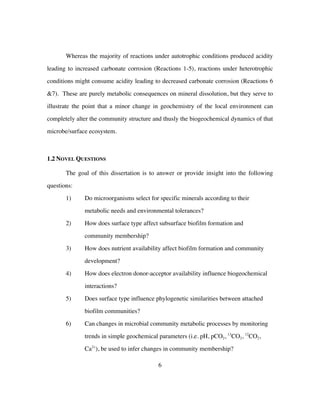
6CO2 + 3S2O3
2-
+ 9H2O à C6H12O6 + 6SO4
2-
+ 6H+
(1)
In reaction 1, thiosulfate is shown as the electron donor because it was used in the
experiments described herein. Additional reactions help to illustrate the effect of sulfur
oxidation (both biotic and abiotic) on carbonate dissolution, through either production or
consumption of acidity. These reactions include (Kelly, 1999):
H2S + 2O2 à SO4
2-
+ 2H+
ΔGo
= -714kJ•mol−1
(2)
HS-
+ 0.5O2 à So
+ OH-
ΔGo
= -145kJ•mol−1
(3)
So
+ H2O + 1.5O2 à SO4
2-
+ 2H+
ΔGo
= -507kJ•mol−1
(4)
S2O3
2-
+ H2O + 2O2 à 2SO4
2-
+ 2H+
ΔGo
= -739kJ•mol−1
(5)
5
Thiothrix unzii and other SOB species oxidize H2S, S2O3
2-
and So
to sulfate
(Reactions 2, 3, & 5), while many SOB partially oxidize sulfide and store the resulting So
internally (Reaction 3) where it can later be oxidized (Reaction 4) in times of low sulfide
availability (Ehrlich, 1996; Smith & Strohl, 1991).
Generally, the microorganisms within LKC are neutrophilic SOB (Engel et al,
2004a). However, it is clear from reactions 1-5 that most pathways available to
neutrophilic SOB generate acidity as a byproduct. The fortuitous presence of highly
buffering CaCO3 composing the local limestone host rock consumes this acidity-leading
to aggressive corrosion and accelerated speleogenesis. It has long been suspected that
these neutrophilic, but acid-producing microorganisms can only exist here because
carbonate dissolution acts to stabilize the local pH (Steinhauer et al, 2010). An
investigation into the nature of this relationship is presented in Chapter 2 of this
dissertation.
Acetate promotes heterotrophic growth and most biological sulfur reduction
results from acetate consumption (Sørensen et al, 1981). For example, most sulfur-
reducing bacteria (SRB) capable of utilizing acetate with So
use the tricarboxylic acid
(TCA) cycle (Galushko & Schink, 2000) for the following reaction:
CH3COO−
+ 4So
+ H+
+ 2H2O à 4H2S + 2CO2 ΔGo
= -39kJ•mol−1
(6)
Other SRB may be capable of utilizing acetate for sulfate reduction:
CH3COO−
+ SO4
2−
+ 3H+
à H2S + 2CO2 + 2H2O ΔGo
= -63kJ•mol−1
(7)
6
Whereas the majority of reactions under autotrophic conditions produced acidity
leading to increased carbonate corrosion (Reactions 1-5), reactions under heterotrophic
conditions might consume acidity leading to decreased carbonate corrosion (Reactions 6
&7). These are purely metabolic consequences on mineral dissolution, but they serve to
illustrate the point that a minor change in geochemistry of the local environment can
completely alter the community structure and thusly the biogeochemical dynamics of that
microbe/surface ecosystem.
1.2 NOVEL QUESTIONS
The goal of this dissertation is to answer or provide insight into the following
questions:
1) Do microorganisms select for specific minerals according to their
metabolic needs and environmental tolerances?
2) How does surface type affect subsurface biofilm formation and
community membership?
3) How does nutrient availability affect biofilm formation and community
development?
4) How does electron donor-acceptor availability influence biogeochemical
interactions?
5) Does surface type influence phylogenetic similarities between attached
biofilm communities?
6) Can changes in microbial community metabolic processes by monitoring
trends in simple geochemical parameters (i.e. pH, pCO2, 13
CO2, 12
CO2,
Ca2+
), be used to infer changes in community membership?
7
7) How dynamic are the taxonomic compositions of subsurface microbial
communities?
8) How do changes in microbial community structure impact carbonate
dissolution or precipitation?
9) Are affinities for specific minerals genetically engrained and can I detect
them?
1.3 DISSERTATION ORGANIZATION
Three chapters of this dissertation are dedicated to addressing the aforementioned
questions. The first of these main chapters is already published in a peer reviewed
journal (Jones & Bennett, 2014). The second of these chapters is submitted for the peer
review process. All three of these chapters are prepared following the peer reviewed
journal publication format. Therefore, each chapter has its own abstract, introduction,
methods, results, discussion, and conclusion sections. References are collated at the end
of this dissertation. Here I present a general description of these dissertation chapters
while highlighting independent significance.
Chapter 2 examines the role of rocks and minerals on microbial community
structure in dark oligotrophic subsurface environments. I use laboratory flow-through
bioreactors inoculated with pure and mixed cultures to investigate microbial biofilm
growth and community structure as they colonize a variety of natural surfaces. Analysis
of total biomass accumulation, SEM micrographs, and 16S rRNA sequences of attached
microorganisms suggests that surface-chemistry influences microbial community
structure, biomass accumulation, diversity, and taxonomy. Furthermore, I find that
specific microorganisms are better adapted to take advantage of specific minerals/rocks.
8
Interpretations based on taxonomy of attached communities suggest that microbes select
for specific minerals according to their metabolic requirements and environmental
tolerances. Specifically, the combination of buffering-capacity, cell wall
electronegativity, nutrient content of the rock, and competitive exclusion of some
populations control biomass density, α-diversity (local diversity), and β-diversity (global
diversity) of the attached communities on mineral and rock surfaces. I suggest that these
relationships may be ingrained in the genetics of microorganisms as they have adapted
and evolved, largely attached to these surfaces.
Chapter 3 examines the phylogenetic relationship between microorganisms and
the natural surfaces they colonize. I use high-throughput pyrosequencing of bacterial 16S
rRNA sequences to examine the response of community structure and diversity to
environmental stimuli (pH variability, carbon and phosphate limitations/amendments) as
biofilms develop on various geochemical surface types (carbonates, silicates,
aluminosilicates, planktonic) within laboratory flow-through biofilm reactors. I use
phylogenetic distance measures (UniFrac), to cluster the microorganisms according to
their genetic diversity. Through permutational multivariate analysis of variance
(PERMANOVA) I evaluate the statistical probability that mineralogy and/or environment
influence microbial phylogeny and community structure (McArdle & Anderson, 2001). I
show that surface type significantly controls ~70-90% of microbial phylogenetic diversity
regardless of environmental pressures. Consistent patterns also emerged in the taxonomy
of specific guilds (sulfur-oxidizers/reducers, gram-positives, acidophiles) due to
variations in media chemistry. I also determine the relative impacts of environmental
pressures (carbon source, pH, phosphate availability) on community structure,
phylogenetic diversity, taxonomic diversity, membership, and biomass accumulation.
There have been studies demonstrating preference of specific taxa to specific surfaces.
9
However, this study is likely the first to statistically link the phylogenetic diversity of
microbial communities to specific natural surface types under a variety of geochemical
conditions. Additionally, I coin the term mineraltrophic and define it as microorganisms
with a genetically ingrained affinity for specific mineral types.
Chapter 4 is an investigation into the effect of non-photosynthetic communities on
stable carbon isotope signatures. I test the viability of using the biogeochemical
dynamics of carbon cycling by sulfur metabolizers in sulfuric acid karst environments to
infer microbial community structure and function using δ13
CCO2. Here I inoculate
separate flow-through bioreactors with 1) a pure culture of mixotrophic sulfur-oxidizing
Thiothrix unzii and 2) a mixed culture (composed of SOB and SRB) from LKC to see if
metabolic shifts can be detected by monitoring select geochemical indicators (δ13
CCO2,
[CO2], Ca2+
, and pH). I find that changes in carbonate solubility are uniquely and
adequately sensitive to changes in sulfur metabolizing community function. Carbonate
dissolution is ~13X faster than abiotic rates when a reactor community is dominated by
autotrophic sulfur-oxidizers. The increased dissolution and preferential reduction of
12
CCO2 over 13
CCO2, causes heavier δ13
CCO2 that is enriched up to +3.8‰. Under
heterotrophic conditions, sulfate-reduction pathways dominate causing decreased
carbonate dissolution rate. The slower rate and preferential oxidation of 12
CAcetate causes
lighter δ13
CCO2 values depleted in 13
C to values as low as -36‰. Using 16S rRNA
sequences of communities, during specific metabolic intervals, I show that this is an ideal
system to use stable carbon isotopes to infer community structure and function.
Additionally, this study documented the responsiveness of guild composition in a
microbial community to geochemical stimuli. Future studies using this method have the
potential to resolve microbial community function, composition, and carbon balance to at
unprecedented levels of detail.
10
Chapter 5 is a synthesis of the findings of these investigations with concluding
remarks. Specifically this chapter highlights significant findings and scientific impact of
each investigation separately and in the context of the whole dissertation. This chapter is
also an account of the motivations that connect the separate chapters. Furthermore, this
chapter critically evaluates the successes and failures of each investigation as they pertain
to potential future investigations.
11
Chapter 2: Mineral microniches control the diversity of
subsurface microbial populations
2.1 ABSTRACT
Rocks and minerals surround the subsurface microbial habitat, yet mineralogy and
rock chemistry are rarely considered when characterizing microbial diversity and the
microbial ecosystem (Ehrlich, 1996; Konhauser, 2007). Using laboratory biofilm reactors
with both a pure culture of Thiothrix unzii and a mixed environmental sulfur-
metabolizing community I found that the combination of buffering-capacity, cell wall
electronegativity, nutrient content of the rock, and competitive exclusion of some
populations control biomass density, α-diversity (local diversity), and β-diversity (global
diversity) of the attached communities on mineral and rock surfaces. This suggests that
different populations are better adapted to, and more competitive on, specific rock types.
The primary influence on rock/mineral colonization by sulfur-oxidizing organisms is the
acid-buffering capacity of the mineral substratum, with neutrophiles preferentially
colonizing highly buffering carbonate rocks, while acidophiles select non-buffering
quartz. Beyond chemical controls, Thiothrix (often found in mid-ocean ridge
environments) demonstrates an affinity for basalt, where it excludes other sulfur-
oxidizers. A pure culture of T. unzii preferentially colonizes carbonates while all very
closely related Thiothrix spp. are excluded from these same rock samples in a mixed
culture. I report here e1xperimental evidence that microorganisms colonize rock surfaces
1 This chapter has been published as: A.A. Jones, P.C. Bennett, 2014, Mineral microniches control the
diversity of subsurface populations, Geomicrobiology Journal, 31: 246-261. Research for this publication
was supervised and co-authored by Philip C. Bennett.
12
according to the rock’s chemistry and the organism’s metabolic requirements and
tolerances. These results suggest that adaptations to specific rocks are retained even when
the organism is displaced in time and space from an ancestral rock habitat.
2.2 INTRODUCTION
In the subsurface environment most microorganisms are found attached to rock
surfaces (Ehrlich, 1996; Konhauser, 2007), sometimes forming complex biofilm
communities, but often simply as scattered individual cells or groups of cells. The
traditional view of the association between microorganisms and minerals in the
subsurface focuses on attraction forces, surface conditioning, attachment mechanisms,
and biofilm development (Banfield & Hamers, 1997; Hazen et al, 1991; Korber et al,
1995), and the mineral matrix is assumed to be a simple, homogeneous and largely
unreactive substratum. The microbial community, in contrast, is viewed as a dynamic
and complex consortium that is influenced almost exclusively by physicochemical (e.g.,
temperature, pH, redox potential, salinity) or biochemical (e.g., growth substrate, nutrient
or electron acceptor availability) factors (Madigan et al, 2009). Rocks and minerals,
however, are neither simple nor homogeneous, and often contain trace elements or other
properties that may be either toxic or beneficial to microbial growth, accessory phases
containing valuable nutrients, and may provide benefits such as pH buffering or
advantageous surface properties.
One overt consequence of subsurface microbe-mineral interactions is the
formation of karst porosity and even caves through microbially enhanced limestone
corrosion. Generally, karst and cave development (speleogenesis) occurs in soluble
13
carbonate rocks that dissolve by chemical solution, creating cavernous porosity (caves) in
the subsurface as well as distinctive surface features such as sinkholes and dolines
(White, 1988). For most karst development the dominant acid generating species is
carbon dioxide derived from surface processes, and the process is termed epigenic karst
(White, 1988).
For a few caves, however, including Movile Caves (Romania), the Frasassi Caves
(Italy), and Lower Kane Cave, acid is generated by the oxidation of hydrogen sulfide to
form sulfuric acid that promotes rapid limestone dissolution (Palmer, 1991). This
process, termed sulfuric acid speleogenesis, or SAS, is suspected of being implicated in
up to 20% of the karst worldwide, and is an important subsurface weathering
phenomenon. Early studies of LKC, the type locale for SAS (Egemeier, 1981), assumed
that abiotic H2S autoxidation is the important process and did not consider microbial H2S
oxidation. However, members of our research group have shown that microbial
oxidation is likely the predominate pathway (Engel et al, 2004b; Steinhauer et al, 2010).
In these systems, chemolithotrophic sulfur-oxidizing bacteria (SOB) take advantage of
the redox gradient and generate energy through oxidation of H2S and other reduced sulfur
compounds (Engel et al, 2004a; Engel et al, 2004b; Sarbu et al, 2000; Sarbu et al, 1996).
Previous field experiments suggest differential colonization of rock surfaces
(Bennett et al, 2001; Engel et al, 2004a; Rogers & Bennett, 2004), where different
minerals sustain different communities, and different amounts of biomass. However,
these studies were based largely on morphological characteristics observed by scanning
electron microscopy (SEM) of individual mineral specimens from field microcosm
14
experiments. More recently, indications from long-term field incubations with sulfide
minerals suggest community differentiation between different sulfide mineral
compositions (Sylvan et al, 2012). Additionally, there appears to be a correlation
between microbial community structure and mineralogy in the soil zone (Carson et al,
2009).
The subsurface and other non-photic (dark) biospheres are the largest
microbiological habitat on earth and the most poorly understood (Edwards et al, 2012).
Research has revealed evidence that microorganisms in these habitats are likely highly
dependent on minerals for a variety of functions. These include the dependence of
lithoautotrophs living in the Columbia River Basalt Group on the basalts for a series of
complex biogeochemical processes (Anderson et al, 2001; Stevens, 1997; Stevens &
McKinley, 1995). In both continental aquifers and deep ocean sediments, the interaction
of H2O with Fe2+
in the minerals composing basalt generates H2, which can be used by
methanogens or sulfate reducers to generate metabolic energy in the absence of light
(Chapelle et al, 2002; Edwards et al, 2005).
We hypothesize that in these complex subsurface microbial communities, factors
such as mineral chemistry, buffer capacity, and trace element (nutrient) content, influence
microbial diversity and surface colonization, as not every organism will be capable of
taking advantage of every mineral surface attribute, giving rise to unique associations
between a specific population and specific substratum. Considering that microbes have
evolved through time often in contact with mineral surfaces, it is likely that microbes and
minerals may have evolved together through geologic time (Hazen et al, 2008) resulting
15
in microbial communities uniquely adapted to a surface, with each mineral surface being
specifically altered by its best-adapted and most competitive community. This study
assesses the impact of mineralogy on microbial community structure in the subsurface
using laboratory reactors, which allowed microbial colonization of assorted surfaces by
both a pure and mixed environmental sulfur-metabolizing microbial inoculant.
Variations in microbial community structure were qualified and quantified by optical
analysis, measuring total biomass accumulated, and high throughput sequencing
technology for analysis of taxonomic diversity. I report here direct laboratory evidence
for a selective relationship between rock composition and microbial ecology. The data
revealed that under the nutrient-limited conditions common to aquifers and the deep
subsurface, the community structure can be differentiated at the scale of individual
mineral grains, and that each mineral supports a unique microbial consortium that
expresses specific metabolic functions in order to take advantage of, or protect itself
from, the unique aspects of that mineral.
2.3 MATERIALS AND METHODS
To investigate the effect of mineralogy on microbial community structure, I used
laboratory flow through biofilm reactors (CDC). Each reactor consisted of eight (8)
sterile polypropylene coupon holders suspended in a 1-liter glass vessel with a side-arm
discharge port. A liquid media (described herein) was circulated through the vessel while
mixing and shear were generated by a magnetic stir vane rotated by a magnetic stir plate
at 115 RPM. Sampling of the coupons was conducted by aseptically removing individual
16
coupon holders and harvesting the coupons. A typical experiment was three weeks in
duration.
The reaction solution was prepared by equilibrating DI-H2O water with finely
powdered Iceland spar calcite. Equilibrium status, with respect to calcite, was
determined by analysis of DIC, [Ca2+
], and pH. This solution was then filtered to 0.2 μm
and 8.3 ml of 0.1 N H2SO4, 0.1 g MgSO4 and 0.25 g NH4Cl was added per liter and
autoclaved at 121o
C for 45 minutes before adding 2 ml/L and 5 ml/L of filter-sterilized
trace metal solution and Wolfe’s Vitamin solution, respectively (Burlage, 1998).
The final prepared solution had a pH of ~6.9 and contained (approximately) 0.1
mM HCO3
−
, 0.83 mM SO4
=
and 1.0 mM Ca2+
, with a typical saturation state with respect
to calcite (Ωcalcite) of ~0.01 (SI~-2). Where, Ωcalcite=IAP/Ksp, IAP is the ion activity
product (aCa2+
· aCO3
2−
) and Ksp is the calcite solubility product. Six hundred ml of this
solution was transferred to a vessel to be combined with the reduced sulfur source, and
pumped aseptically through the reactor at 1.2 ml/min. The reduced sulfur electron donor
was S2O3
2-
and was prepared from a stock filter sterilized 1M solution of Na2S2O3 mixed
in-line via a syringe pump to a final concentration of 0.83 mM. Reactor volume was held
constant at 400 ml, and the outflow tubing was outfitted with a glass bubble trap to
ensure no microbial contamination from drainage.
2.3.1 Mineral Substrata Preparation
Bulk mineral specimens of Iceland spar calcite (calcite), Ontario microcline
(microcline), albite, chert, Columbia River basalt (basalt), and quartz were obtained from
17
Ward’s Natural Science Establishment Incorporated, and these minerals have been
previously used and characterized (Bennett et al, 2001). Unaltered Mississippian-age
Upper Madison Limestone and Upper Madison Dolostone was collected from an outcrop
near Lower Kane Cave and characterized by X-Ray powder diffraction (XRD) and
environmental scanning electron microscope (ESEM) energy dispersive x-ray analysis
(FEI-Philips XL-30 TMP). The limestone is a nearly pure calcite (microsparite) with
minor quartz component, and the Madison Dolostone is nearly pure dolomite also with a
minor quartz component (Plummer et al, 1990). For ease of reference the general
composition, natural geologic setting, potential benefits to microorganisms, and specific
attributes of each of these specimens is presented in Table 2.1. Analysis of ammonia and
phosphate in dissolved Madison Limestone and Madison Dolostone were done by
colorimetry (Chemetrics) after first dissolving 1g of each into concentrated hydrochloric
acid.
All samples for use in the biofilm chamber except the Iceland spar calcite were
cored with a diamond coring bit on a drill press, cut to ~2 mm thickness with a diamond
saw, and polished using thin section preparation techniques both to give a uniform
starting surface and to match the dimensions necessary to fit the CDC reactor rods (12.7
mm outer diameter). Iceland spar calcite was prepared to the same specifications by first
fracturing the samples to the correct thickness with a razor blade and then hand polishing
the samples with 600 grit sandpaper to the correct diameter and circular shape. Prior to
the experiment, mineral coupons were rinsed with media solution to remove debris,
weighed to 0.1 mg, mounted on the coupon holders and suspended in the reactor, and the
18
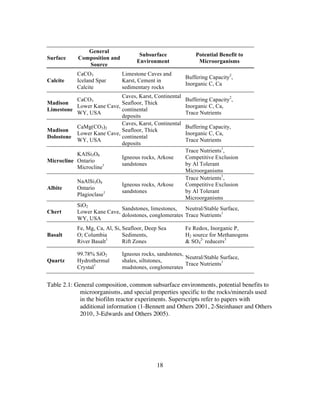
Surface
General
Composition and
Source
Subsurface
Environment
Potential Benefit to
Microorganisms
Calcite
CaCO3
Iceland Spar
Calcite
Limestone Caves and
Karst, Cement in
sedimentary rocks
Buffering Capacity2
,
Inorganic C, Ca
Madison
Limestone
CaCO3
Lower Kane Cave,
WY, USA
Caves, Karst, Continental
Seafloor, Thick
continental
deposits
Buffering Capacity2
,
Inorganic C, Ca,
Trace Nutrients
Madison
Dolostone
CaMg(CO3)2
Lower Kane Cave,
WY, USA
Caves, Karst, Continental
Seafloor, Thick
continental
deposits
Buffering Capacity,
Inorganic C, Ca,
Trace Nutrients
Microcline
KAlSi3O8
Ontario
Microcline1
Igneous rocks, Arkose
sandstones
Trace Nutrients1
,
Competitive Exclusion
by Al Tolerant
Microorganisms
Albite
NaAlSi3O8
Ontario
Plagioclase1
Igneous rocks, Arkose
sandstones
Trace Nutrients1
,
Competitive Exclusion
by Al Tolerant
Microorganisms
Chert
SiO2
Lower Kane Cave,
WY, USA
Sandstones, limestones,
dolostones, conglomerates
Neutral/Stable Surface,
Trace Nutrients1
Basalt
Fe, Mg, Ca, Al, Si,
O; Columbia
River Basalt1
Seafloor, Deep Sea
Sediments,
Rift Zones
Fe Redox, Inorganic P,
H2 source for Methanogens
& SO4
2-
reducers3
Quartz
99.78% SiO2
Hydrothermal
Crystal1
Igneous rocks, sandstones,
shales, siltstones,
mudstones, conglomerates
Neutral/Stable Surface,
Trace Nutrients1
Table 2.1: General composition, common subsurface environments, potential benefits to
microorganisms, and special properties specific to the rocks/minerals used
in the biofilm reactor experiments. Superscripts refer to papers with
additional information (1-Bennett and Others 2001, 2-Steinhauer and Others
2010, 3-Edwards and Others 2005).
19
entire apparatus was autoclaved at 121o
C for 45 minutes. Scanning electron
microscope (SEM) examination of all starting material specimens was used to compare
with coupons run through the experimental processes.
2.3.2 Microbial Inoculant
Thiothrix unzii was used as the pure-culture inoculant for the biofilm experiments.
T. unzii is a colorless, filamentous, neutrophilic, chemoautotrophic, sulfur-oxidizing
member of the Gammaproteobacteria class that is known to use both sulfide and
thiosulfate as sulfur sources and have the ability to store sulfur intracellularly (Howarth et
al, 1999). T. unzii is closely related to Thiothrix spp. that are known to dominate the
biomat community within Lower Kane Cave (Engel, 2004). After the reactor had
stabilized with media flowing through it, 15 ml of cultured T. unzii was added to the
reactor for the experimental run.
A Lower Kane Cave (LKC) biomat was used as the environmental inoculant for
the biofilm reactors. LKC is located in the Bighorn River Valley, WY, USA (44o
44’ N,
108o
11’ W) and has a single horizontal passage extending about 325 meters into the
canyon wall, parallel to the fold axis of the Little Sheep Mountain Anticline in the
Madison Limestone (Stock et al, 2006). The Madison Formation is ~150–250 m thick
Mississippian-age thin to medium-bedded massive grey limestone and dolomite with
occasional chert and shale (Peterson, 1984). The cave has three major and several minor
springs that discharge sulfidic water to a single cave stream that discharges at the cave
entrance. Spring discharge water is a mixture of meteoric water from Madison
Limestone and slightly thermal (~23.5o
C) waters from fractures in the Little Sheep
20
Mountain Anticline (Peterson, 1984). LKC is near several Madison hosted oil fields,
from which sulfidic waters originate (Egemeier, 1981; Peterson, 1984).
The LKC springs support thick biomats dominated by a diverse consortium of
SOB from the Epsilonproteobacteria and Gammaproteobacteria classes as well other
members of the Proteobacteria lineage (Engel, 2004). Microorganisms belonging to
many distinct lineages within the Proteobacteria are associated with these spring features
that include the following genera: Thiothrix, Thiobacillus, Thiomonas, Thiomicrospira,
Thiovulum, and Achromatium (Engel, 2004; Engel et al, 2003). The dominant organisms
in the microaerophilic stream reaches near discharge outlets belong to lineages within the
Epsilonproteobacteria class (Engel et al, 2003); as oxygen increases, Thiothrix spp.
dominate the mat communities (Engel, 2004). Many members of these lineages are
known sulfur-oxidizers.
The mixed community was obtained from Lower Kane Cave at 196 meters from
the back of the cave at the upper spring location. Samples were collected in the field in
sterile falcon tubes with a small amount of stream water, and transported back to the
laboratory for use in the experiments. Approximately 15 ml of the raw mat was added to
the sterilized and stabilized CDC biofilm reactor for each experiment.
2.3.3 Biomass Accumulation
Specific experiments were run to measure biomass accumulation on the mineral
coupons. Three reactor experiments were run under identical input media conditions at
pH 6.6, with an additional experiment at pH 8.3 in equilibrium with calcite. Each
triplicate set of mineral coupons was weighed, placed in a drying oven overnight at
21
104o
C, then weighed again. The triplicate coupons were then processed by 3 x 5-minute
cycles of alternating sonication and vortexing in a calcite equilibrated (to prevent
dissolution) 2% tween 20 solution to remove the biomass, and then dried and weighed
again. The difference between the final dry weight with biomass and the dry weight after
processing was assumed to be the accumulated biomass. Select chips were also retrieved
for imaging on a FEI-Philips XL-30 TMP SEM following previously published methods
for chemical critical point drying (Bennett et al, 2006).
2.3.4 Community Analysis
Identical experiments were run specifically for microbial community analysis by
16S rRNA sequencing and analysis. DNA extraction was conducted using methods
modified slightly from Engel and others (Engel et al, 2003). Biomass was aseptically
removed from the substrata coupons and transferred to a sterilized solution composed of
1 mM EDTA and 0.9X phosphate-buffered saline (PBS) and samples were physically
disrupted by freeze-thaw (3 times, -80°C to 65°C) cycles. The samples were then
disrupted by 5-minute cycles of alternating sonication and vortexing (3X). The solutions
were then transferred into sterile 15 ml tubes and centrifuged at 5000 rpm for 10 minutes,
and the supernatant decanted. Genomic DNA was extracted from biomass using an
Ultraclean Microbial DNA Isolation Kit (MoBio Laboratories, Inc.; Catalog # 12224-50)
and stored at -80°C. Bacterial 16S rRNA genes were amplified using the 28F/519R
primer set (Lane, 1991), adaptors and barcodes for 454 pyrosequencing were ligated, and
22
sequencing on a Roche 454 GS-FLX TitaniumTM
(454 Life Sciences, Branford, CT,
USA) was performed at the Research and Testing Laboratory (Lubbock, TX, USA).
Sequences were depleted of barcodes and primers, and then short sequences
<150bp, sequences with ambiguous base calls, and sequences with homopolymer runs
exceeding 6bp were all removed. Sequences were then denoised using Ampliconnoise
and chimeras removed using Chimera Slayer (Haas et al, 2011; Quince et al, 2011). An
average minimum quality score of 25 over a window of 50 bp was used to remove low
quality sequences (Bowen De León et al, 2012). For statistical analysis, operational
taxonomic units were defined by clustering at 3% divergence (97% similarity) (Barriuso
et al, 2011). OTUs were then taxonomically classified using BLASTn against a curated
GreenGenes database (DeSantis et al, 2006) and compiled into each taxonomic level with
the actual number of sequences and proportional abundances of sequences within each
sample that map to the designated taxonomic classification. Due to the shorter length of
sequences obtained from 454 pyrosequencing it is generally considered acceptable to
resolve taxonomic identity to the genus level. Therefore, the analyses reported herein do
not attempt to overreach to the species level.
The resulting dataset was manually processed to reveal both sequence counts and
proportional abundances of microbial sequences present on each substratum. To assess
the impact of mineralogy on metabolism of attached communities, the taxonomy of
sulfur-oxidizing bacteria (SOB, the dominant organism in LKC) was resolved to the
genus level and the assigned taxa were compared to extant taxa described in the
literature.
23
Alpha and beta diversity values were calculated on the resulting datasets using
Mothur (Schloss et al, 2009). Microbial community alpha diversity for sequences
attached to each surface was evaluated in terms of the species richness (S, the total
number of OTUs), Simpson dominance index (D, Formula 2.1), Shannon index (H’,
Formula 2.2), and species evenness (E, Formula 2.3). Inverse-Simpson (1/D) gives more
weight to dominant OTUs by expressing the likelihood that two individuals, chosen at
random, will belong to different OTUs. The Shannon Weiner index (H’) gives more
weight to the rare individuals representing low abundance OTUs:
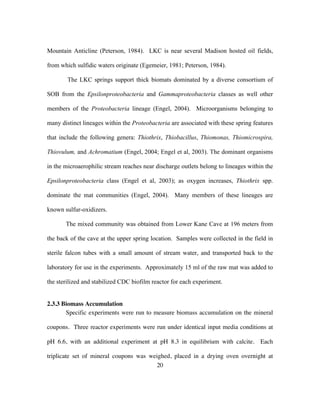
𝐷 =
𝑛𝑖(𝑛𝑖!!)
𝑁(𝑁!!)
!
!!! (2.1)
where ni is the number of sequences assigned to the ith OTU and N is the total number of
sequences within the sample (Hill et al, 2003).
𝐻!
= − 𝑝!ln(𝑝!)!
!!! (2.2)
where pi is the proportion of sequences assigned to the ith OTU (Hill et al, 2003).
𝐸 =
𝐻′
!" (𝑆)
(2.3)
Where H’, and S are the Shannon index and species richness, respectively (Hill et al,
2003).
There are several formulas that can be used to calculate beta diversity each with
its limitations and specialized applicability (Chao et al, 2005). For this study the
abundance-based Sorenson similarity index (β) (Formula 2.4) was used to calculate the
fraction of individual sequences that belong to shared OTUs (Chao et al, 2005).
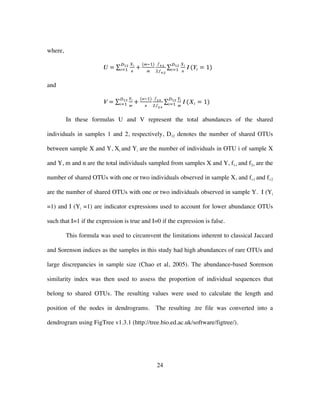
𝑆 𝑎𝑏𝑑 =
!𝑈𝑉
𝑈!𝑉
(2.4)
24
where,
𝑈 =
𝑋𝑖
𝑛
𝐷!"
𝑖!! +
(𝑚!!)
𝑚
𝑓!!
!𝑓!!
𝑋𝑖
𝑛
𝐼
𝐷!"
𝑖!! (𝑌𝑖 = 1)
and
𝑉 =
𝑌𝑖
𝑚
𝐷!"
𝑖!! +
(𝑛!!)
𝑛
𝑓!!
!𝑓!!
𝑌𝑖
𝑚
𝐼
𝐷!"
𝑖!! (𝑋𝑖 = 1)
In these formulas U and V represent the total abundances of the shared
individuals in samples 1 and 2, respectively, D12 denotes the number of shared OTUs
between sample X and Y, Xi and Yi are the number of individuals in OTU i of sample X
and Y, m and n are the total individuals sampled from samples X and Y, f1+ and f2+ are the
number of shared OTUs with one or two individuals observed in sample X, and f+1 and f+2
are the number of shared OTUs with one or two individuals observed in sample Y. I (Yi
=1) and I (Yi =1) are indicator expressions used to account for lower abundance OTUs
such that I=1 if the expression is true and I=0 if the expression is false.
This formula was used to circumvent the limitations inherent to classical Jaccard
and Sorenson indices as the samples in this study had high abundances of rare OTUs and
large discrepancies in sample size (Chao et al, 2005). The abundance-based Sorenson
similarity index was then used to assess the proportion of individual sequences that
belong to shared OTUs. The resulting values were used to calculate the length and
position of the nodes in dendrograms. The resulting .tre file was converted into a
dendrogram using FigTree v1.3.1 (http://tree.bio.ed.ac.uk/software/figtree/).
25
2.4 RESULTS
2.4.1 Biofilm Accumulation
For the 3-week pure culture experiments using Thiothrix unzii the greatest biofilm
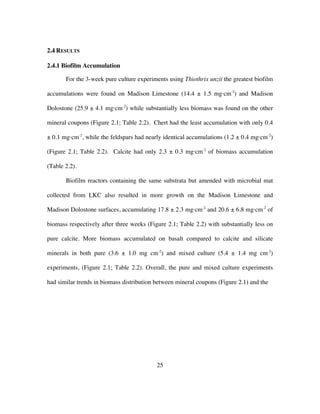
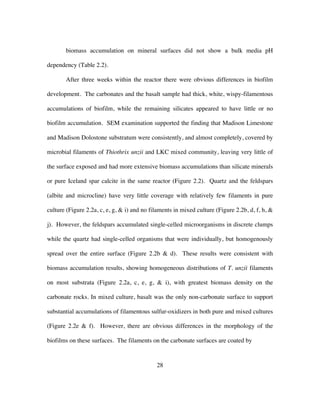
accumulations were found on Madison Limestone (14.4 ± 1.5 mg·cm-2
) and Madison
Dolostone (25.9 ± 4.1 mg·cm-2
) while substantially less biomass was found on the other
mineral coupons (Figure 2.1; Table 2.2). Chert had the least accumulation with only 0.4
± 0.1 mg·cm-2
, while the feldspars had nearly identical accumulations (1.2 ± 0.4 mg·cm-2
)
(Figure 2.1; Table 2.2). Calcite had only 2.3 ± 0.3 mg·cm-2
of biomass accumulation
(Table 2.2).
Biofilm reactors containing the same substrata but amended with microbial mat
collected from LKC also resulted in more growth on the Madison Limestone and
Madison Dolostone surfaces, accumulating 17.8 ± 2.3 mg·cm-2
and 20.6 ± 6.8 mg·cm-2
of
biomass respectively after three weeks (Figure 2.1; Table 2.2) with substantially less on
pure calcite. More biomass accumulated on basalt compared to calcite and silicate
minerals in both pure (3.6 ± 1.0 mg cm-2
) and mixed culture (5.4 ± 1.4 mg cm-2
)
experiments, (Figure 2.1; Table 2.2). Overall, the pure and mixed culture experiments
had similar trends in biomass distribution between mineral coupons (Figure 2.1) and the
26
Figure 2.1: Dry weight (mg/cm2
) of biomass accumulation on rock and mineral surfaces
for both Thiothrix unzii and a mixed culture obtained from Lower Kane
Cave. Error bars denote standard deviation, n=3 (see Table 2.2).
0"
5"
10"
15"
20"
25"
30"
Dry$mass$of$biofilm$(mg/cm2)$
Thiothrix"unzii"(Pure"Culture)" LKC"Mixed"Culture"
27
Table 2.2: Dry mass of biofilm values and standard deviations. The standard deviation for
the pure culture experiment are the result of triplicate experiments with the
dry biomass values in the table as the mean of the three. The standard
deviations of the mixed culture are for all three mixed culture experiments
shown in the table.
Dry Mass of Biofilm (mg/cm2)
Surface
CDC 1
T.unzii
pH 6.6
CDC 2
Mixed
pH 6.6
CDC 3
Mixed
pH 6.6
CDC 4
Mixed
pH 8.3
Mixed
Standard
Deviation
T. unzii
Standard
Deviation
Calcite 2.3 2.0 2.4 2.7 0.3 0.3
Limestone 14.4 19.3 18.2 19.3 2.3 1.5
Dolostone 25.9 10.6 22.3 23.6 6.8 4.1
Microcline 1.2 0.6 0.6 0.2 0.4 0.5
Albite 1.2 1.5 0.9 1.1 0.3 0.3
Chert 0.4 0.5 0.4 0.6 0.1 0.1
Basalt 3.6 5.4 5.8 6.9 1.4 1.0
Quartz 1.5 2.9 1.5 2.1 0.7 0.5
28
biomass accumulation on mineral surfaces did not show a bulk media pH
dependency (Table 2.2).
After three weeks within the reactor there were obvious differences in biofilm
development. The carbonates and the basalt sample had thick, white, wispy-filamentous
accumulations of biofilm, while the remaining silicates appeared to have little or no
biofilm accumulation. SEM examination supported the finding that Madison Limestone
and Madison Dolostone substratum were consistently, and almost completely, covered by
microbial filaments of Thiothrix unzii and LKC mixed community, leaving very little of
the surface exposed and had more extensive biomass accumulations than silicate minerals
or pure Iceland spar calcite in the same reactor (Figure 2.2). Quartz and the feldspars
(albite and microcline) have very little coverage with relatively few filaments in pure
culture (Figure 2.2a, c, e, g, & i) and no filaments in mixed culture (Figure 2.2b, d, f, h, &
j). However, the feldspars accumulated single-celled microorganisms in discrete clumps
while the quartz had single-celled organisms that were individually, but homogenously
spread over the entire surface (Figure 2.2b & d). These results were consistent with
biomass accumulation results, showing homogeneous distributions of T. unzii filaments
on most substrata (Figure 2.2a, c, e, g, & i), with greatest biomass density on the
carbonate rocks. In mixed culture, basalt was the only non-carbonate surface to support
substantial accumulations of filamentous sulfur-oxidizers in both pure and mixed cultures
(Figure 2.2e & f). However, there are obvious differences in the morphology of the
biofilms on these surfaces. The filaments on the carbonate surfaces are coated by
29
Figure 2.2: SEM images of microbial colonization on surfaces after 3-weeks exposure to
Thiothrix unzii (a,c, & e, g, & i) and the mixed LKC community (b,d, f, h, &
j). (a) & (b) are quartz. (c) is albite and d is microcline. (e) & (f) are images
of the biofilm accumulation on the basalt surface. (g) and (h) are Madison
Limestone. (i) and (j) are calcite. Note that Madison Dolostone is excluded
because it is nearly identical to Madison Limestone. Horizontal white lines
are scale bars.
20#μm#
5#μm#
10#μm#10#μm#
10#μm#
20#μm#
a#
c#
e#
b#
d#
f#
10#μm#100#μm#
10#μm#20#μm#
g# h#
i# j#
Filaments#
Filaments#
Filaments#
Filaments# Biofilm#
Filaments#
Surface#
Surface#
Surface#
Surface#
Biofilm#
Microbes#
Filaments#
Biofilm#
30
Figure 2.3: SEM images of Abiotic vs. Microbial (LKC mixed culture) carbonate
corrosion after 3 weeks within a CDC reactor at pH=6.6: (a) abiotic calcite,
(b) microbial calcite, (c) abiotic Madison Limestone, (d) microbial Madison
Limestone, (e) abiotic Madison Dolostone, (f) microbial Madison
Dolostone. All scale bars are 10 μm.
10#μm#
10#μm#
10#μm#
a#
c#
e#
b#
d#
f#
10#μm#
10#μm#
10#μm#
#
31
biofilms composed of single-celled organisms, while the filaments on basalt
appear uncoated (Figure 2.2f, j, &f).
Carbonate colonization and the accompanying aggressive sub-biofilm corrosion
was examined by SEM imaging. After three weeks in an abiotic reactor with media with
a sustained pH of 6.6 there was no obvious corrosion features on any of the carbonate
surfaces (Figure 2.3a, c, & e). After three weeks in a reactor inoculated with an LKC
mixed community, however, I found that even when the media was close to equilibrium
with calcite, aggressive dissolution of carbonate substratum occurred exclusively beneath
the biofilm (Figure 2.3 b, d, & f). In regions where the surface was observable through
the attached filaments (and regions where the biofilm was removed), the carbonate
surface appeared aggressively corroded (Figure 2.3). Specifically, the calcite had a
“spikey” corrosion texture that was isolated to regions where biofilm was present (Figure
2.2i, 2.2j, & 2.3b) and both the Madison Limestone and Madison Dolostone showed
deeply pitted corrosion textures (Figure 2.3d & f).
2.4.2 Microbial Diversity
At the species level (0.97 similarity cutoff), there was a very large spread in the
total OTUs associated with each surface. In terms of richness (S) the number of different
OTUs ranged from 21 on albite to 197 on microcline, while the carbonates had a smaller
range of 71 on calcite to 87 on the Madison Limestone (Table 2.3). Similarly, measures
of diversity Inverse-Simpson’s dominance index (1/D) and Shannon Weiner index (H’)
are commensurate with species richness. The carbonates, quartz, and albite all had a
32
small range of H’ (from 2.41 to 2.80) and 1/D (from 7.03 to 10.61) values (Table 2.3).
The outliers were basalt with the lowest diversity (H’=1.63 & 1/D=2.22) and microcline
with the highest diversity (H’=4.39 & 1/D=42.97)(Table 2.3).
A majority of the microbes in the original LKC inoculant came from two
dominant classes representing ~97.1% of the total sequences (Table 2.4).
Epsilonproteobacteria represented ~62.4% and Gammaproteobacteria was found to
represent ~34.7% of the community. Deltaproteobacteria represented only ~0.5% of the
community (Table 2.4). At the genus level, these major lineages were nearly completely
composed of Sulfurovum spp. (~62.3%) and Thiothrix spp. (~34.7%), respectively (Table
2.4).
Despite this dominance of Epsilonproteobacteria in the inoculant,
Epsilonproteobacteria were almost exclusively found on the carbonates as the
representative genus Sulfurovum (Table 2.4, Figure 2.4). Gammaproteobacteria were
proportionally abundant on the carbonates (>23%) and basalt (~70%); and less abundant
on albite (~20%), microcline (~16%), basalt (~9%) and quartz (~1.8%) (Table 2.4, Figure
2.4). Deltaproteobacteria were rare on every surface, but most abundant on albite (~4%)
as the genus Desulfococcus (Table 2.4, Figure 2.4). Alphaproteobacteria were
proportionally abundant on the carbonates (>57%) and albite (>56%) and less abundant
on microcline (~24%), basalt (~9%), and barely detected on quartz (Table 2.4, Figure
2.4).
33
Table 2.3: Alpha microbial community diversity from 16S rRNA based classification of
microorganisms attached to solid surfaces after 3-weeks within the reactor.
Measures of alpha diversity: Simpson’s dominance index (D), which favors
OTUs with more sequences, and Shannon Weiner index (H’), which favors
OTUs with fewer sequences (rare OTUs), Number of OTUs (species
richness (S)), and Species Evenness (E).
Surface
No.
Sequences
No.
Sequences
Subsampled
No. OTUs
(S)
Shannon
Wiener (H')
Evenness
(E)
Simpson's
Index (D)
Inverse
Simpson
(1/D)
Calcite 7962 6261 71 2.52 0.59 0.14 7.16
Limestone 6261 6261 87 2.80 0.63 0.11 8.79
Dolostone 7604 6261 79 2.79 0.64 0.09 10.61
Basalt 1152 1152 41 1.63 0.44 0.45 2.22
Quartz 2695 2695 125 2.49 0.52 0.14 7.03
Albite 396 396 21 2.41 0.79 0.13 7.52
Microcline 881 881 197 4.39 0.83 0.02 42.97
34
Molecular characterization of the biofilm community on the mineral surfaces
revealed a high degree of similarity between the carbonate surface microbial
assemblages. The overlap in bacterial community membership between two samples (β-
diversity), based on the fraction of sequences that belonged to shared operational
taxonomic units (OTUs), was estimated by the abundance-based Sorenson similarity
index (β). Here I defined OTUs at the 0.03 distance level, so sequences with ≥ 97%
similarity were designated by a single OTU. β-diversity analysis of the carbonates
revealed that Madison Limestone, Madison Dolostone and calcite had a high degree of
similarity with β>0.98, where β =0 indicates no similarity and β=1 indicates that samples
are completely similar (Chao et al, 2005). The majority of the community on the
carbonates was composed of Alphaproteobacteria (~57-67%) and Gammaproteobacteria
(~24-38%)(Figure 2.4; Table 2.4). The basalt community structure was most closely
related to the carbonates with β~0.69. Basalt was dominated by Gammaproteobacteria
(~70%), primarily represented by microorganisms most closely related to the genus
Thiothrix (~66%) (Table 2.4).
Microbial taxonomic similarities between silicate substrata were far less than their
carbonate counterparts (Figure 2.4). Microcline and albite had the greatest similarity
between taxon distribution (β~0.35). The community on microcline was composed
mostly of Alphaproteobacteria (~25%), Gammaproteobacteria (~16%), and had the
largest proportional abundance of Actinobacteria (~25%). Similarly, the community on
albite was dominated by Alphaproteobacteria (~57%) and Gammaproteobacteria
(~20%), but had no detectable Actinobacteria (Table 2.4). The Gram-positive
35
microorganisms of the Phyla Firmicutes and Actinobacteria were found almost
exclusively on silicate surfaces and were most abundant on the feldspars (Table 2.4). Of
the silicates, the community on microcline and albite were most closely related to quartz
with β~0.03 and β~0.025, respectively. Quartz had the least similar community structure
to any other mineral surface with β~0.035 when compared to sequences represented
within OTUs assigned to carbonate surfaces (Figure 2.4). This lack of similarity was
evident as quartz was the only surface to not accumulate significant Alphaproteobacteria
(<1%) while also being the only surface to accumulate significant Betaproteobacteria
(~44%) and Nitrospira (~15%).
At the genus level, there were nine taxonomic groups that are likely SOB (Table
2.4). These genera are Bosea, Thioclava, Halothiobacillus, Thiothix, Thobacillus,
Thiomonas, Sulfurovum, Acidithiobacillus, and Acidithiobacillus. The carbonates
accumulated a community with a large proportional abundance (~17-45%) of potential
sulfur-oxidizing microorganisms with representatives of Bosea, Thioclava,
Halothiobacillus, Thiothrix, Thiobacillus, and Sulfurovum (Table 2.4). Additionally,
quartz accumulated ~15% potential SOB composed almost entirely of
Acidithiomicrobium (~13%), with representatives of Acidithiobacillus (1%) and
Thiobacillus (~1%) (Table 2.4). Basalt had the largest proportional abundance of SOB
with ~65% representatives of the genus Thiothrix. The feldspars, microcline had <1%
SOB and albite had ~6% potential SOB (Table 2.4).
36
Table 2.4: Proportional abundance (%) of representative class (Bold) and representative
genera from 16S rRNA gene sequence taxonomic classification for
microorganisms in the LKC inoculant and those removed from each surface
after 3-weeks within the biofilm reactor. Potential sulfur-oxidizing genera
and total proportion of sulfur-oxidizing genera are shaded.
Representative Class
Representative
Genus
LKC
Inoculant
Calcite
Madison
Limestone
Madison
Dolostone
Microclin
e
Albite Quartz Basalt
Alphaproteobacteria 0.1 58.9 67.0 57.4 25.4 56.7 0.5 9.2
Ensifer 0.0 29.4 30.4 14.7 6.0 29.2 0.0 4.7
Azospirillum 0.0 6.6 8.3 11.5 1.3 16.4 0.0 2.5
Bosea 0.0 5.6 3.0 12.9 0.2 6.5 0.0 0.0
Thioclava 0.0 6.0 3.1 7.1 0.1 0.0 0.0 0.0
Defluvibacter 0.0 2.9 1.1 0.6 0.1 1.4 0.0 0.1
Sphingopyxis 0.0 2.5 12.6 5.3 3.2 0.0 0.0 0.4
Sphingomonas 0.0 0.0 0.0 0.0 3.2 0.2 0.0 0.0
Acidisphaera 0.0 0.0 0.0 0.0 0.0 0.0 0.3 0.0
Gammaproteobacteria 34.7 37.6 23.7 28.8 16.0 20.1 1.8 70.1
Acinetobacter 0.0 22.6 3.5 4.0 2.0 0.0 0.2 0.1
Halothiobacillus 0.0 9.1 5.6 14.5 0.3 0.0 0.0 0.0
Thermomonas 0.0 4.4 12.5 7.7 0.2 5.1 0.0 0.0
Pseudomonas 0.0 0.8 0.4 0.4 4.5 10.4 0.0 0.0
Thiothrix 34.7 0.0 0.2 0.2 0.0 0.0 0.0 65.5
Stenotrophomonas 0.0 0.0 0.0 0.1 1.4 1.6 0.0 3.7
Acidithiobacillus 0.0 0.0 0.0 0.0 0.0 0.0 1.2 0.0
Betaproteobacteria 0.2 1.5 4.0 11.0 2.9 1.4 44.1 0.6
Thiobacillus 0.0 0.3 0.5 0.7 0.0 0.0 1.2 0.0
Methyloversatilis 0.1 0.2 0.9 0.9 0.0 0.0 26.4 0.0
Zoogloea 0.0 0.0 0.0 0.0 0.0 0.0 3.5 0.0
Thiomonas 0.0 1.0 2.5 9.1 0.0 0.0 0.0 0.0
Epsilonproteobacteria 62.4 1.2 2.6 0.7 0.9 0.0 0.0 0.0
Sulfurovum 62.3 1.2 2.6 0.7 0.3 0.0 0.0 0.0
Actinobacteria 0.1 0.1 0.3 0.4 24.6 0.0 13.1 8.6
Acidithiomicrobium 0.0 0.0 0.0 0.0 0.0 0.0 12.6 0.0
Rubrobacter 0.0 0.0 0.0 0.0 3.9 0.0 0.0 0.0
Propionibacterium 0.0 0.1 0.1 0.1 0.8 0.0 0.2 4.7
Bacilli 0.0 0.1 0.2 0.4 6.7 6.5 0.0 4.9
Lactobacillus 0.0 0.1 0.1 0.2 0.2 0.9 0.0 3.8
Clostridia 0.9 0.1 0.1 0.1 3.6 7.9 2.1 3.5
Sphingobacteria 0.0 0.0 0.0 0.0 2.1 0.2 4.2 0.0
Acidobacteria 0.0 0.0 0.0 0.0 1.6 0.0 0.0 0.0
0.0 0.0 0.0 0.0 0.0 0.0 0.0 0.0
Deltaproteobacteria 0.5 0.1 0.4 0.2 0.9 3.7 1.7 0.4
Desulfococcus 0.0 0.0 0.2 0.0 0.0 3.7 0.0 0.0
Desulfomonile 0.0 0.1 0.0 0.1 0.0 0.0 0.0 0.4
Deinococci Meiothermus 0.0 0.0 0.0 0.0 0.0 0.0 9.4 0.7
Nitrospira Thermodesulfovibrio 0.0 0.0 0.0 0.0 0.0 0.0 15.4 0.1
Class <1% Proportional Abundance 0.5 0.5 1.8 1.1 15.3 3.5 7.8 2.0
Total Proportion SOB 97.0 23.3 17.4 45.2 0.9 6.5 15.1 65.5
37
Figure 2.4: Dendrogram of bacterial β-diversity displaying the overlap in bacterial
communities colonizing various solid surfaces. The key (bottom left)
contains class level taxonomy associated with each mineral surface (see
Table 2.4 for proportional abundances). The scale bar represents 0.05 (5%)
dissimilarity in sequences isolated from each mineral/rock surface
(proportion of sequences belonging to unshared OTUs). Dissimilarity
increases with branch length in the outward direction. Each of the carbonate
branches are ≤2% in length. Branch lengths were calculated using the
abundance based Sorenson similarity index wherein OTUs were assigned at
≥ 97% similarity in sequences.
0.05
Quartz'
Limestone'
Dolostone'
Calcite'
Basalt'
Albite'
Microcline'
49%' 32%' 16%'
15%'
2.5%'
5%'Dissimilarity'
Alphaproteobacteria'
Gammaproteobacteria'
Betaproteobacteria'
Epsilonproteobacteria'
AcEnobacteria'
Nitrospira'
Bacilli'
Clostridia'
Sphingobacteria'
Acidobacteria'
Deltaproteobacteria'
Deinococci'
Other'<1%'
38
2.5 DISCUSSION
Microbes influence mineral dissolution, alteration, and precipitation (Ehrlich,
1996), and a variety of mechanisms have been implicated, including acid or alkali
production, changing redox conditions, or the production of chelating biomolecules
(Bennett et al, 2000; Bennett et al, 2001; Hiebert & Bennett, 1992). Often these
observations are interpreted as a coincidental outcome of microbial metabolic processes,
but increasingly I find that microbes benefit by interacting with minerals. Specific
examples include access to mineral electron acceptors (Lovley & Phillips, 1986),
buffering of excess acidity (Engel et al, 2004b), dissolution of apatite to release P
(Jansson, 1987; Rogers & Bennett, 2004), and sulfide and ferromagnesian silicate
dissolution for enzyme cofactors (Banfield et al, 1999) such as copper for the particulate
form of methane monooxygenase (Knapp et al, 2007; Semrau et al, 2010). Even subtle
differences in the chemistry of similar minerals or glasses result in dissimilar surface
biofilms, based on the presence or absence of a limiting nutrient or toxic element (Rogers
& Bennett, 2004).
As an alternative to analyzing sequences of nearly full-length PCR amplicons of
homologous genes from environmental DNA samples, sequence fragments from
hypervariable regions in rRNA can provide measures of richness and relative abundance
for OTUs in microbial communities providing information about taxonomic identity and
microbial diversity that has previously been unobtainable (Sogin et al, 2006). This
technological advance offers a novel method for statistical comparison of complex
microbial communities (Schloss et al, 2009). Combining this information with
39
environmental biogeochemical variability allows researchers to isolate the impact of this
variability on microbial community structure.
In this study, 16S rRNA analysis of microorganisms attached to mineral surfaces
revealed substantial variability in microbial community structure on different minerals.
However there was a large discrepancy in the total number of sequences that could be
used to analyze diversity. While this should have had a minimal effect on α-diversity
values, adjustments were required for β-diversity calculations. With this in mind, all
calculations were normalized to the smallest dataset for each analysis and the remaining
samples were randomly sampled in order to maximize the entire breadth of the dataset
(6261 using only the carbonates, 2695 including the quartz, 1152 including the basalt,
881 including microcline, and 396 including albite). The diversity values were
normalized to the number of sequences subsampled (Anderson et al, 2011). When
examining variations in community structure, proportional abundance is important and
should not be ignored in these types of studies, as quantitatively dominant species will
likely play a larger role in biogeochemical processes within the community (Anderson et
al, 2011).
LKC is host to a very diverse microbial community and previous studies provide
details of the microbial taxonomy and phylogeny of the biomass (Engel	et	al,	2003). LKC
hosts microbial mats dominated by putative autotrophic, sulfur-oxidizing bacteria (SOB)
of the Epsilonproteobacteria and Gammaproteobacteria classes, with sulfate-reducing
Deltaproteobacteria dominating the associated anaerobic community (Engel	et	al,	2003;	
Engel	et	al,	2004a). Consistent with previous studies, the environmental inoculant used in
40
this study was also dominated by Gammaproteobacteria (34.7%) and
Epsilonproteobacteria (62.4%) (Table 2.4). In the inoculant, these two lineages were
composed almost exclusively of the genera Thiothrix spp. and Sulfurovum spp.,
respectively. Sulfurovum spp. are known to be mesophilic microaerobes that use sulfur
species as electron donors capable of using either nitrate or oxygen as the electron
acceptor (Huber et al, 2007). Epsilonproteobacteria have recently been recognized as
important filamentous, sulfur-oxidizing members of deep-sea hydrothermal vent
communities (Campbell et al, 2001; Corre et al, 2001). Lower Kane Cave was the first
nonmarine natural system that was found to be dominated by the acitivity of
Epsilonproteobacteria (Engel	et	al,	2003). However, Epsilonproteobacteria were poorly
represented in microbial communities colonizing mineral surfaces and were limited to
calcite and Madison Limestone surfaces (Table 2.4). The lack of representation of
filamentous Epsilonproteobacteria, which dominate in waters with high sulfide to
oxygen ratios, is likely due to this oxygen sensitivity (Macalady et al, 2008). The reactor
conditions maintained relatively low sulfide and high oxygen, which not only favors
Thiothrix but also maintains a higher energy environment that favors greater diversity
(Engel et al, 2004a; Macalady et al, 2008). Epsilonproteobacteria are commonly found
associated with deep sea hydrothermal features such as chimneys that are primarily
composed of carbonate minerals (Brazelton et al, 2010). Although limited, their
representation on carbonate surfaces (calcite (1.2%), Madison Limestone (2.6%),
Madison Dolostone (0.7%)) and near exclusion from non-carbonates supports a
41
hypothesis that mineralogy controls microbial community composition and that
neutrophilic SOB preferentially colonize highly-buffering carbonates (Table 2.4).
As a result of the oxidation of sulfur compounds and production of mineral
acidity, SOB corrode carbonate minerals (Barton & Luiszer, 2005; Davis et al, 2007;
Engel et al, 2004b; Macalady et al, 2007; Steinhauer et al, 2010), and I find there is a link
between microbial community composition and mineral weathering reactions. In biofilm
reactors, all sulfur-oxidizing genera that colonized carbonate surfaces were neutrophilic
(~17% to ~45% of the representative sequences; Table 2.4), and had a much greater
affinity for carbonate rocks over silicates. This association reflects the advantage of
colonizing a buffering mineral surface for neutrophilic but acid-producing bacteria,
whereby dissolution of carbonate minerals neutralizes excess acidity generated by the
oxidation of both So
and S203
2-
:
2CaCO3 + So
+ 1.5O2 + H2O ⇔ SO4
2-
+ 2HCO3
-
+ 2Ca2+
2CaCO3 + S2O3
2-
+2O2 + H2O ⇔ 2SO4
2-
+ 2HCO3
-
+ 2Ca2+
These biogeochemical dependencies cause the carbonates (Madison Limestone,
Madison Dolostone, and calcite) to accumulate nearly identical communities (β>0.98)
while having relatively low β-diversity values when compared to non-buffering basalt
(β<0.69), albite (β<0.60), microcline (β<0.50), and quartz (β<0.035) (Figure 2.4). This
indicates that the microbial communities on carbonates are nearly identical at the species
level. Additionally, this dependency results in aggressive dissolution of the carbonate
mineral, producing a characteristic weathered surface texture (Figure 2.3). These textures
42
have been documented in past studies and are indicative of biofilm mediated carbonate
corrosion (Jones, 2010; Steinhauer et al, 2010). This aggressive corrosion was observed
when the bulk media pH was 6.6 and 8.3 and appears to be independent of bulk media pH
(Figure 2.3). This suggests highly localized control of biogeochemical conditions by
microbes within a biofilm.
Similarly, each mineral surface reacts uniquely to the metabolic production of
acidity by attached microorganisms resulting in geochemical microniches. Specifically,
each mineral has the capacity to: 1) buffer the produced acidity (i.e. carbonates), 2)
enhance local acidity (i.e. pyrite), or 3) remain relatively unreactive (i.e. quartz). These
variable pH microniches have the potential to benefit microbial communities that are
uniquely adapted to take advantage of specific geochemical conditions. While
neutrophilic SOB dominated the carbonates, there were few found on the silicates. The
classifiable microbial community on quartz was composed of ~15% SOB, with ~91% of
those sequences associated with acidophilic sulfur-oxidizing genera (Table 2.4),
including Gammaproteobacteria Acidithiobacillus and Actinobacteria
Acidithiomicrobium which represented the only acidophilic SOB found in samples
collected from LKC. Both micoorganisms are autotrophic aerobes that require reduced
sulfur to grow; Acidithiobacillus is an obligate acidophile with an optimum pH of <4.0
(Kelly & Wood, 2000a) and Acidithiomicrobium is a facultative acidophile with an
optimum pH ~2 (Stackebrandt & Schumann, 2006). Acidophilic acid-producing
organisms would have an advantageous position on quartz due to the low acid-buffering
43
capacity of this mineral that does not interfere with the maintenance of an acidic
microenvironment.
Additionally, the quartz surface is the only surface to accumulate microorganisms
of the class Nitrospira (Table 2.4). Generally, members of this class are categorized as
metabolically diverse aerobic chemolithotrophs capable of oxidizing nitrite to nitrate and
of dissimilatory sulfate reduction (Garrity & Holt, 2001). At the genus level, these
sequences are most similar to Thermodesulfovibrio, which is the one representative genus
of this lineage that is thermophilic, anaerobic, and obligately acidophilic (Garrity & Holt,
2001). Furthermore, the acidophilic sulfur-reducer Thermodesulfovibrio were found
together with the acidophilic sulfur-oxidizers (Acidithiobacillus and Acidithiomicrobium)
in similar amounts at ~15% each (Table 2.4). This suggests a symbiotic relationship
between these two types of organisms that may both be taking advantage of the low-acid
buffering capacity of quartz.
Members of the genus Meiothermus were found in high abundance on the quartz
surface. Meiothermus has recently been implicated as a major cause of biofouling in
paper producing machinery where it accumulates in large quantities on machinery that
operate at pH below 6 (Kolari et al, 2003). It is likely that the affinity of Meiothermus for
quartz is due to this acidophilic behavior.
Gram-positive bacteria were almost completely excluded from colonization of the
carbonate surfaces, but were found in relatively high abundance on all of the silicate
surfaces (Table 2.4). Specifically, microcline had the highest abundance of members of
the Phyla Actinobacteria (~25%) and albite had the highest abundance of the Phyla
44
Firmicutes (~14% as Bacilli and Clostridia). Although, bacterial cell walls of both
Gram-negative and Gram-positive are predominantly electronegative, the Gram-positive
cell has a higher surface area to volume ratio resulting in regions of the outermost wall
with greater concentrations of COO-
groups and a net greater electronegativity
(Beveridge, 1988). This increased electronegativity has been implicated in a greater
incidence of mineral nucleation (particularly silicate) through anion binding to positive
sites created by multivalent metal cations which salt-bridge silica ions to the wall and
thus play a direct role in silicate binding by microorganisms (Mera & Beveridge, 1993).
Additionally, Gram-positive microorganisms generally possess a large concentration of
electropositive amino groups and a proton motive force that extrudes protons into the cell
wall that causes a greater concentration of electropositive sites surrounding Gram-
positive cells (Beveridge, 1981). Both of these processes would benefit from a lower pH
as abundant H+
ions would occupy negatively charged carboxyl radicals and reduce the
electrostatic repulsive forces for anions (Mera & Beveridge, 1993). In fact, it is under
acidic conditions, such as those achievable on non-buffering silicate surfaces, that these
microorganisms most effectively form metal silicate minerals (Mera & Beveridge, 1993).
Therefore, Gram-positive bacteria may have a competitive advantage over Gram-negative
bacteria as the electronegativity of their cell walls provides a more stable connection to
silicate mineral surfaces.
The quartz surface had the largest proportion of Betaproteobacteria (~44%),
largely represented by the genus Methyloversatilis (Table 2.4). Members of this genus
are Gram-negative, non-motile rods, that are facultative methanotrophs capable of
45
growing on single or multi-carbon compounds (Kalyuzhnaya et al, 2006).
Methanotrophy has been implicated previously as an important part of carbon cycling
within sulfidic caves such as Movile Cave in Romania by actively converting CH4 into
complex organic compounds, which help to sustain a diverse microbial community (Chen
et al, 2009). Low dissolved methane within LKC (<80 μmol L-1
) is likely prohibitive to
growth of methanotrophs and low population sizes of methanogens have been indicated
within LKC (Engel et al, 2004a). However, within the laboratory reactor, it appears that
the quartz surface provided some advantage to these microorganisms (Table 2.4). The
large proportion of Methyloversatilis on quartz is probably tied to populations of
methanogenic Archaea that are likely present, but whose genes were not sequenced in
these experiments or previous experiments.
Quartz is also stable in acidic conditions without mobilizing potentially toxic
aluminum, as is the case for feldspars (Bousserrhine et al, 1998; Flis et al, 1993; Wood,
1995). There is a very low abundance of putative neutrophilic sulfur-oxidizing genera
(0.7%) on microcline and (~6%) on albite (Table 2.4), which have a low buffer capacity
and the potential for mobilizing aluminum via acid-catalyzed hydrolysis (Chou &
Wollast, 1985). The presence of toxic aluminum and lack of buffering in microcline and
albite both restrict microbial growth (Figure 2.1) and increase α-diversity to the highest
observed diversity of any surface (Table 2.3) as colonizing microbes struggle to thrive
and gain a competitive advantage. This result is consistent with recent studies that
showed that the number of bacterial and fungal ribotypes attached to a natural surface
was positively correlated with aluminum concentration of that surface (Gleeson et al,
46
2005; Gleeson et al, 2006). However, the effect is nullified on the albite surface due to
the presence of the sulfur-reducing Desulfococcus, which could act to neutralize some of
the generated acidity and release of toxic aluminum, decreasing the effect of aluminum
on α-diversity of the attached communities (Table 2.4). Alternatively, higher diversity in
microbial communities has been negatively correlated to dissolution rate of mineral
surfaces (Uroz et al, 2011). It has been suggested that this might cause non-specific
colonization by bacterial communities that can dissolve the mineral and extract mineral
bound nutrients and are thus well adapted to poor-nutrient conditions (Uroz et al, 2011).
Some microorganisms have the capacity to neutralize local aluminum toxicity.
The feldspar surfaces were host to a relatively large abundance of members of the genus
Pseudomonas (Table 2.4). Species of Pseudomonas (specifically, P. fluorescens) have
been shown in previous studies to have the ability to neutralize toxic aluminum by a
variety of mechanisms (Appanna et al, 1995; Hamel & Appanna, 2003; Singh et al, 2005;
Singh et al, 2009).
Members of the genus Ensifer colonize all surfaces, except quartz, in relatively
high proportional abundance with an apparent lack of discrimination (Table 2.4). The
type species Ensifer adherens is a known bacterial predator that attaches endwise to a
host cell where it can cause lysis (Balkwill, 2005; Casida, 1982). Additionally, Ensifer
has a symbiotic relationship with Bacillus, as Ensifer promotes Bacillus spore
germination and receives vital nutrients that are produced during spore activation
(Balkwill, 2005). This may explain the ubiquity of this microorganism on each surface as
discrimination is not due to the surface type, but to the type and quantity of “food” (other
47
microorganisms) that is attached to the surface. The absence of Ensifer on quartz is
possibly due to the locally adverse conditions imparted by the acidophilic inhabitants,
discussed herein. This lysogenicity is also common in Azospirillum species, which show
the similar trends in colonization ubiquity as Ensifer, and exclusion from quartz, but at
lower proportional abundance (Döbereiner & Pedrosa, 1987).
There are also more subtle controls on community and growth. The α-diversity
values (Simpson’s dominance index (D), Shannon diversity index (H’), and Evenness
(E)), are all consistent with a relatively diverse and highly similar (β~0.98) microbial
community on the carbonate surfaces (Chao et al, 2005). Despite similarities in
community structure, (β-diversity, Figure 2.4), far less biomass accumulated on calcite
compared to environmental carbonate surfaces (i.e. Madison Limestone & Madison
Dolostone) in both pure and mixed cultures composed primarily of neutrophilic,
autotrophic, acid-producing organisms (Figure 2.1; Table 2.2) even though the substrata
have essentially equivalent buffering capacity. This suggests that acid buffering is not the
sole factor influencing microbial accumulation, and other variables such as mineral-
derived nutrient availability and competition between populations within the sulfur-
oxidizing guild are potentially important.
We hypothesize that when allowed to choose between a pure calcite, limestone or
dolostone rocks, there was preferential colonization of the Madison Dolostone and then
Madison Limestone due to the availability of trace P in these rocks (~2905 μmol kg-1
and
~736.8 μmol kg-1
respectively) that was not detected in calcite. Ortho-phosphate is an
essential macronutrient for microbial growth and development, but mineral sources of P
48
such as apatite are relatively insoluble (Goldstein, 1986). Microbially generated
inorganic and organic acids are primarily responsible for the solubilization of mineral-
bound P (Banik & Dey, 1982; Craven & Hayasaka, 1982; Goldstein et al, 2003; Leyval
& Berthelin, 1989). The difference in P concentration is therefore likely responsible for
the greater biofilm growth on Madison Dolostone than Madison Limestone and calcite,
but mineral buffering capacity is the controlling factor for community composition
(Figure 2.1, Figure 2.4).
Additionally, increased calcium concentration has been shown to have a positive
effect on cell viability in acidic pHs (Dilworth et al, 1999; Draghi et al, 2010;
Indrasumunar et al, 2012). Ca2+
appears to directly protect cellular components from
degradation under low pHs (as low as 4) as well as increase the production of EPS
(Dilworth et al, 1999). In our study, microorganisms were found in large proportional
abundance on the highly corroded carbonate surfaces, where Ca2+
would be locally
abundant (Figure 2.1).
Similarly, colonization of silicates, by both pure and mixed cultures, was
preferential towards P-bearing basalt over the other silicates that had no detectable
inorganic P (Table 2.2). Our laboratory experiments were maintained in a phosphate-
limited condition (similar to the cave stream environment) while the basalt used for these
experiments had abundant phosphate (~3000 μmol/kg) in the form of apatite (Bennett et
al, 2001). In the pure culture experiment, the preferred substrates were the carbonate
rock samples Madison Limestone and Madison Dolostone. In contrast, with the mixed
culture experiments Thiothrix spp. overwhelmingly selected the basalt, with few
49
sequences found on the Madison Limestone and Madison Dolostone (Table 2.4). As a
result, the basalt-hosted biofilm had a low α-diversity with ~66% abundance of a
filamentous organism closely associated with Thiothrix unzii (>99% similarity, Engel
2004), which competitively excluded all other SOB from colonizing the basalt surface
(Table 2.4). Therefore, I hypothesize a relationship based on nutrient limitations, mineral
nutrient sources, and competition by other SOB populations.
Initially, the abundance of Thiothrix unzii and Thiothrix spp. on basalt appears to
reflect a less-than-ideal environment for dominance by neutrophilic, acid-producing
microorganisms. However, in nature Thiothrix unzii grows on sulfide, thiosulfate, or
sulfur, and is found in association with mid-ocean basalts (Dulov et al, 1991; Jannasch &
Mottl, 1985; Kalanetra et al, 2004; Moyer et al, 1995; Schauer et al, 2011). The
overwhelming dominance by Thiothrix spp. was surprising and suggests an adaptive
ability of these microorganisms to tolerate basalt and efficiently extract limiting nutrients,
namely P. This attribute may not be shared by other organisms in the consortium and
may indicate an adaptation to that rock substratum that is expressed when that mineral is
introduced, even when there is no basalt present in the region where that organism was
collected.
2.6 CONCLUSIONS
Subsurface environments are composed of a diverse array of minerals with
varying chemical compositions. Core sampling often targets for specific physical
(temperature) or geochemical (redox) conditions under the assumption that the associated
50
microbial community is homogeneously distributed. However I argue that this is not the
case. By inoculating laboratory reactors containing a variety of minerals with a microbial
community from a cave with a deep (hypogenic) energy source (H2S) I found that
subsurface microbial communities have specific associations to specific minerals.
Phylotypes closely related to neutrophilic sulfur-oxidizing microorganisms have an
affinity for acid-buffering carbonate surfaces and accumulate significantly greater
biomass on carbonates with abundant mineral bound nutrients. Phylotypes closely
related to acidophilic acid-producing microorganisms are exclusively associated with
non-buffering minerals such as quartz, even though growth is not abundant due to
mineral-bound nutrient limitations. However, acid producing phylotypes, both
acidophilic and neutrophilic, do not colonize aluminosilicates as their metabolism would
release toxic aluminum. Additionally, there appear to be specific associations, such as
Thiothrix (a microorganism commonly found associated with mid-ocean ridge basalts)
with basalt, where it competitively excludes all other SOB. This indicates an adaptation
to that rock substratum that is expressed when that mineral is introduced, even when
there is no basalt present in the region where that organism was collected.
Our results show that under the nutrient-limited conditions common to aquifers
and the deep subsurface, the community structure can be differentiated at the scale of
individual mineral grains, and that each mineral supports a unique microbial consortium
that expresses specific metabolic functions in order to take advantage of, or protect itself
from, the unique aspects of that mineral. Even grains of a polymineralic rock such as
basalt can support a different community on different mineral exposures, at the scale of a
51
few microns (Rogers & Bennett, 2004). The results of this study, in context with
previous research summarized above, describes a fundamental property of microbe-
mineral interactions in the subsurface biome. This association has been evolving over
~3.5 billion years and a relationship between mineral and biochemical reactions may be
critical to the origin of the first functional cell (Hazen, 2006; Smith, 1998). I propose that
bacteria evolved predominantly on or in close association with minerals, and that
successful growth is significantly influenced by mineralogy that gives particular
microorganisms, a population or consortium, a competitive advantage and therefore
directly impacts both local and global microbial diversity. Our results and recent findings
suggest that minerals have also evolved through time due to the influence of living
microorganisms (Barskov, 2008). Therefore, I argue that this is in fact a co-evolutionary
relationship based on fundamental and preferential associations between microorganisms
and minerals.
52
Chapter 3: Revealing hidden diversity: investigating the impact of
minerals on biofilm community structure and diversity
3.1 ABSTRACT
Throughout geologic time, microorganisms evolved in direct contact with mineral
surfaces. It stands to reason that the pliant and inconstant nature of these environments
likely caused dynamic ecological shifts in these microbial communities that should be
detectable in the phylogenetics of attached communities. I used laboratory biofilm
reactors (inoculated with a diverse subsurface community) to explore the phylogenetic
and taxonomic variability in microbial communities as a function of surface type
(carbonate, silicate, aluminosilicate), media pH, and carbon and phosphate availability.
Using high-throughput pyrosequencing, I found that surface type significantly controlled
~70-90% of the variance in phylogenetic diversity regardless of environmental pressures.
Consistent patterns also emerged in the taxonomy of specific guilds (sulfur-
oxidizers/reducers, Gram-positives, acidophiles) due to variations in media chemistry.
Media phosphate availability was key property associated with variation in phylogeny
and taxonomy of whole reactors and was negatively correlated with biofilm accumulation
and α-diversity (species richness and evenness). However, mineral-bound phosphate
limitations were correlated with less biofilm. Carbon added to the media was correlated
with a significant increase in biofilm accumulation and overall α-diversity. Additionally,
planktonic communities were phylogenetically distant from those in biofilms. All
reactors harbored structurally (taxonomically and phylogenetically) distinct microbial
communities.
53
3.2 INTRODUCTION
The vast majority of microorganisms in the subsurface exist in biofilms attached
to solid surfaces; it is estimated that the attached community represents up to 99.9% of
the total biomass of microorganisms in a subsurface environment (Madigan et al, 2009).
Unlike laboratory growth experiments the subsurface mineral assemblage is complex and
heterogeneous with many different minerals contributing many different surface
chemistries that offer a wide range of advantages or disadvantages to each microbial
population. These mineral attributes could contribute to growth, present challenges, or
influence community membership or biofilm diversity, while the attached community
will directly perturb the mineral surface, forming a coupled biogeochemical system, with
that perturbation dependent on the community composition. While the diversity in bulk
sediments and soils has been characterized in a variety of settings, each environment
likely contains uniquely complex mineralogical habitats with dramatic microscale spatial
heterogeneities in associated microbial communities. The purpose of this study is to
directly characterize the mineralogical contribution to microbial diversity, and test that
contribution under a range of media types and environmental conditions.
Several factors have been suggested to control dynamic diversity and growth, and
stimulate specific biogeochemical survival strategies employed by attached biofilm
communities. These include physical properties (hydrodynamics) of the bulk fluid
(Kugaprasatham et al, 1992), physical and chemical nature of the solid substratum
(Carson et al, 2009; Dalton et al; Rogers & Bennett, 2004; Rogers et al, 1998; Sylvan et
al, 2012), composition of the microbial community (Lawrence et al), and nutrient
availability (primarily carbon, phosphorous, and nitrogen) (Huang et al, 1998; Ohashi et
al, 1995; Rogers et al, 2001). pH is often identified as a key factor controlling microbial
community composition (Chu et al, 2010; Fierer & Jackson, 2006; Lauber et al, 2009;
54
Siciliano et al, 2014; Winsley et al, 2014). Biofilm and EPS production are both
influenced by the nutrient content of the growth medium with respect to available carbon,
or limitations in K or P that affect biofilm development (Ellwood et al, 1982; Matin et al,
1989; Wrangstadh et al, 1990. Nutrient limitations, for example, stimulate the production
of extracellular polysaccharides (EPS) (EPS) (Ellwood et al, 1982; Matin et al, 1989;
Wrangstadh et al, 1990) (Eboigbodin et al, 2007; Zisu & Shah, 2003). However, few
studies examine complex natural communities on natural surfaces. In oligotrophic
environments, such as those in the subsurface, microorganisms are likely to be highly
dependent on minerals (“mineraltrophic”) as they support a variety of biogeochemical
processes (Anderson, 2001; Chapelle et al, 2002; Edwards et al, 2005; Edwards et al,
2012; Stevens, 1997).
Previously, using flow-through biofilm reactors inoculated with biomass from a
microbial mat gathered from the sulfidic cave Lower Kane Cave (LKC), located in
Bighorn River Valley, WY, USA. I found that specific clades appeared to have an
affinity for specific mineral types according to their metabolic requirements and
environmental tolerances (Jones & Bennett, 2014). The motivation of those experiments,
however was specifically to evaluate the role of mineralogy in selecting for neutrophilic,
but acid-producing sulfur-oxidizers (SOB) in subsurface karst environments. As such,
experiments were designed to mimic the nutrient-limited environment found within LKC,
where sulfidic water serves as the metabolic backbone for a diverse microbial community
within the cave (Egemeier, 1981; Engel et al, 2004a). This led me to hypothesize that
phylogenetically similar microorganisms would still show an affinity for specific natural
surface types (e.g. carbonates, silicates, aluminosilicates) even under variable nutrient
limitations.
55
For this study I utilize high-throughput 454-pyrosequencing (Margulies et al,
2005) of bacterial 16S rRNA sequences to examine the response of community structure
and diversity to environmental stimuli (pH variability, carbon and phosphate
limitations/amendments) as biofilms develop on mineral surfaces within flow-through
biofilm reactors. I use phylogenetic distance measures (UniFrac), to account for the
relationships among populations attached to the various surfaces (Lozupone & Knight,
2005). The UniFrac distances were then subjected to permutational multivariate analysis
of variance (PERMANOVA) in order to evaluate mineralogical and environmental
influence on microbial community structure (McArdle & Anderson, 2001). Additionally,
I re-evaluate the 16S rRNA sequences from Jones & Bennett (2014) using more robust
methodology with this new hypothesis in mind. I can then evaluate if surface type
significantly impacts microbial community structure, and biofilm accumulation under a
variety of environmental conditions. I then use taxonomy to identify consistent responses
to variations in media and surface chemistry among specific guilds (SOB, SRB, Gram-
positives, Acidophiles), which I can use to interpret the ecological role of the detected
taxa.
3.3 MATERIALS AND METHODS
3.3.1 Flow through Biofilm Reactor (CDC)
For these experiments I used a modified CDC biofilm reactor (Biosurface
Technologies, Bozeman, MT, USA): a 1-liter glass vessel with a ported polyethylene top
that supports 8 polypropylene rods each holding up to three coupons (12.7 mm OD disks
~3 mm thick). The reactor was operated as a continuous-flow stirred reactor at
56
1.5ml/min liquid medium flow. Consistent shear and mixing at all positions within the
reactors was maintained using a stir vane rotated by a magnetic stir plate.
Samples were collected in the field at Lower Kane Cave (LKC) (WY, USA) in
sterile falcon tubes. The mixed environmental inoculant for these experiments was
identical to that used in Jones & Bennett (2014). The inoculum is a consortium
composed primarily of autotrophic sulfur-oxidizing members of lineages
Gammaproteobacteria (34.7%) of the genus Thiothrix, and Epsilonproteobacteria
(62.4%) of the genus Sulfurovum (Engel et al, 2003; Engel et al, 2004a; Jones & Bennett,
2014), but with many other Bacterial lineages at lower abundance. Approximately 15 ml
of the raw mat was added to the sterilized CDC biofilm reactor for each experiment.
Synthetic cave water was prepared by equilibrating DI-H2O water with finely
powdered Iceland spar calcite to equilibrium. The solution was filtered to 0.2 μm and 0.1
g MgSO4 and 0.25 g NH4Cl were added per liter and autoclaved at 121°C for 45 minutes
before adding 2 ml/L and 5 ml/L of filter-sterilized trace metal solution and Wolfe’s
Vitamin solution, respectively (Burlage, 1998). The reduced sulfur electron donor was
S2O3
2-
prepared from a stock filter-sterilized 1M solution of Na2S2O3 mixed in-line via a
syringe pump to a final concentration of 0.83 mM.
Amendments (P, C, or both) were then added to this basic liquid media or pH
adjusted to examine the influence of environmental conditions (Table 3.1). Specifically,
the carbon/phosphorus-limited (CP-Limited) media used in Jones & Bennett (2014) was
this basic liquid media with sterile 0.1 N H2SO4 added to achieve a final pH of 6.9 (Jones
and Bennett 2014). The C-Amended medium was prepared by amending the basic
medium with 5 mM Na-Acetate, 5 mM Na-Lactate and filter sterilized 0.1 N H2SO4
added to a final pH of 6.9. The P-Amended media was prepared with 0.53 g/L KH2PO4
and 0.12 g/L K2H2PO4 and filter sterilized NaOH added to a final pH of 8.3. The no
57
limitation medium (CP-Amended) was amended with 5 mM Na-Acetate, 5 mM Na-
Lactate, 5 mM Na-Formate, 0.53 g/L KH2PO4, 0.12 g/L K2H2PO4, and 0.1 N H2SO4
added to achieve a final pH of 6.9 (Table 3.1).
3.3.2 Mineral Substrata Preparation
Mineral/rock substrata were selected to represent the lithology of a variety of
geologic environments (Table 3.2). The surfaces were broadly categorized into mineral
types (carbonates, silicates, aluminosilicates, planktonic (none)). Each of the selected
specimens offers potential advantages and disadvantages to microorganisms equipped to
exploit (or defend against) them and are described briefly in Table 3.2. Specimens of
calcite, microcline, albite, basalt, and quartz were obtained from Ward’s Natural Science
Establishment Incorporated, and these minerals have been previously characterized
(Bennett et al, 2001)(Jones & Bennett, 2014). Unaltered Mississippian-age Upper
Madison Limestone, Upper Madison Dolostone and the contained chert, were collected
from an outcrop near Lower Kane Cave. The Madison limestone is nearly pure calcite
(microsparite) with a minor quartz component, and the Madison Dolostone is nearly pure
dolomite also with a minor quartz component (Plummer et al, 1990). Mineral coupons
were prepared using previously published methods (Jones & Bennett, 2014).
58
Table 3.1: Media recipes for each of the four reactor conditions. (-) represents none
added.
Composition of Medias (L-1)
Component CP-Limited C-Amended P-Amended CP-Amended
Calcite (Eq.) DI 1000 ml 1000 ml 1000 ml 1000 ml
Na2S2O3 10 mM 10 mM 10 mM 10 mM
MgSO4 0.25 g 0.25 g 0.25 g 0.25 g
NH4Cl 0.1 g 0.1 g 0.1 g 0.1 g
Trace Metals 2.1 ml 2.1 ml 2.1 ml 2.1 ml
Wolfe's Vitamins 5.3 ml 5.3 ml 5.3 ml 5.3 ml
KH2PO4 - - 0.53 g 0.53 g
K2H2PO4 - - 0.12 g 0.12 g
Na-Lactate - 5 mM - 5 mM
Na-Acetate - 5 mM - 5 mM
Na-Formate - - - 5 mM
pH initial 6.9 6.9 8.3 6.9
pH reactor 5.7 7.5 7.9 7.8
59
Table 3.2: Surface types, general compositions, and biogeochemical significance of the
rocks/minerals used in these biofilm reactor experiments. This table is
modified from Jones & Bennett 2014. Superscripts refer to papers with
additional information.1
Bennett et al, 2001 2
Steinhauer et al, 2010 3
Edwards
et al, 2005.
Surface
Type
Surface
General
Composition &
Origin
Biogeochemical Significance
Carbonates
Calcite
CaCO3
Iceland Spar
Calcite
High-Buffering Capacity2
, No
Trace Nutrients
Madison
Limestone
CaCO3
Lower Kane
Cave, WY, USA
High-Buffering Capacity2
,
Trace Nutrients, High-PO4
2-
Madison
Dolostone
CaMg(CO3)2
Lower Kane
Cave, WY, USA
High-Buffering Capacity, Trace
Nutrients, High-PO4
2-
Aluminosilicates
Microcline
KAlSi3O8
Ontario
Microcline1
Low-Buffering Capacity, Low-
Trace Nutrients1
, Potentially
Toxic Al
Albite
NaAlSi3O8
Ontario
Plagioclase1
Low-Buffering Capacity, Low-
Trace Nutrients1
, Potentially
toxic Al
Silicates
Chert
SiO2
Lower Kane
Cave, WY, USA
Low-Buffering Capacity, Low-
Trace Nutrients1
Basalt
Fe, Mg, Ca, Al,
Si, O
Columbia River
Basalt1
Low-Buffering Capacity, High-
PO4
2-
, H2 source for
Methanogens & SO4
2-
reducers3
Quartz
99.78% SiO2
Hydrothermal
Crystal1
Low-Buffering Capacity, No-
Trace Nutrients1
60
3.3.3 Biomass measurement and extraction
To measure biomass accumulation after 3 weeks, triplicate mineral coupons were
weighed (wet, biofilm attached), dried overnight at 104°C, weighed again (dry, biofilm
attached), processed by 3 x 5-minute cycles of alternating sonication and vortexing in a
calcite equilibrated (to prevent dissolution) 2% tween 20 solution to remove biomass,
dried overnight again, and weighed again (dry, biofilm removed). The dry weight of
biomass accumulated is the difference between the final dry weight with biomass and the
dry weight after processing.
Biofilm growth curves were constructed in order to determine the standard
duration (3-weeks) of each experiment. Curves were constructed for both pure and
mixed culture reactors under CP-Limited, C-Amended, and P-Amended conditions. For
these experiments, limestone was the sole surface type occupying all 24 coupon spaces.
Two limestone coupons (chosen randomly) were sacrificed at 48-hour intervals and
biomass was measured according to the method described above. The resulting curves
are shown in Figure 3.1a.
For DNA extraction, biomass was aseptically isolated from mineral coupons in 1
mM EDTA and 0.9X phosphate-buffered saline (PBS with physical disruption by freeze-
thaw (3 times, -80°C to 65°C) cycles followed by alternating sonication and vortexing (3
X 5-minutes) (Jones & Bennett, 2014). The biomass was isolated from solution by
centrifugation at 5000 rpm for 10 minutes, and the supernatant decanted. DNA
extraction from biomass was conducted using an Ultraclean Microbial DNA Isolation Kit
(MoBio Laboratories, Inc.; Catalog # 12224-50). DNA samples were quantified and
qualified using a Nanodrop spectrophotometer (Nyxor Biotech, Paris, France). Bacterial
tag-encoded FLX-titanium amplicon pyrosequencing (bTEFAP) was used to evaluate the
bacterial populations removed from the mineral surfaces at MR DNA Lab
61
(www.mrdnalab.com, Shallowater, TX, USA). The bTEFAP procedures are based on
Research and Testing Laboratory protocols http://www.researchandtesting.com and are
previously described (Dowd et al, 2008). Briefly, the 16S universal Eubacterial primers
27F (5’-AGRGTTTGATCMTGGCTCAG-3’) and 519R (5’-
GTNTTACNGCGGCKGCTG-3’) were used to amplify the v1-v3 region of 16S rRNA
genes using 30 cycles of PCR. HotStarTaq Plus Master Mix Kit (Qiagen) was used for
PCR under the following conditions: 94°C for 3 min, followed by 28 cycles of 94°C for
30 s; 53°C for 40 s and 72°C for 1 min after which a final elongation step at 72°C for 5
min was performed. After PCR, all amplicon products from the different samples were
mixed in equal volumes and purified using Agencourt Ampure Beads (Agencourt
Bioscience Corporation, Beverly, Ma). Adaptors and barcodes for 454 pyrosequencing
were ligated, and sequencing on a Roche 454 GS-FLX TitaniumTM
(454 Life Sciences,
Branford, CT, USA).
Sequences were preprocessed using the open source software package QIIME
version 1.9 (http://qiime.sourceforge.net), (Caporaso et al, 2010). QIIME was also used
for identification of operational taxonomic units (OTUs), taxonomic assignment, and
community structure statistical analyses and comparisons. In preprocessing, we remove
from further analysis: sequences < 200 bp or > 550 bp, sequences with ambiguous base
calls (>6 bp), sequences with homopolymer runs (>6 bp), low quality scores (<25 bp),
sequences with primer mismatches, and barcode errors (>1 bp). Additionally, noisy
sequences were discarded using the “denoise_wrapper” script (Reeder & Knight, 2010).
Chimeric sequences were removed using ChimeraSlayer with the QIIME default settings
after OTU-picking and taxonomic assignment.
The uclust method was used to pick de novo OTUs at 3% (genus level)
divergences. Representative sequences for each OTU were then aligned with PyNAST
62
and taxonomy was assigned with the uclust consensus taxonomy assigner using the
greengenes_13_8 reference database. Potential contaminants and OTUs with less than 4
members were then filtered from the resulting OTU table. After taxonomy was
determined and OTUs were assigned, this dataset was manually processed to reveal both
sequence counts and proportional abundances of microbial sequences present on each
substratum. Assigned taxa were compared with extant taxa described in the literature, at
the genus level, to infer the putative ecological role of these microorganisms.
3.3.4 Biodiversity Metrics and Statistical Analysis
Community diversity was evaluated using both standard statistical analysis on
OTUs (e.g. Species Richness, Shannon-Wiener, Simpson’s) and phylogenetic analysis
(Bohannan & Hughes, 2003). α and β-diversity values were calculated on the resulting
datasets using QIIME with selective manual calculations for validation (Caporaso et al,
2010; Hill et al, 2003). Due to the different number of sequences among samples, the
data was normalized for diversity analysis using rarefaction curves. Rarefaction curves
of the observed richness were calculated in QIIME using 100000-fold resampling without
replacement (Figure 3.1b). Estimates of α-diversity were based on evenly rarefied OTU
abundance matrices and included observed species richness (S), the reciprocal of the
Simpson dominance index (D), Shannon-Weiner index (H’), and species evenness (E)
(Hill et al, 2003). Sampling effort was estimated using Good’s coverage (Good, 1953).
The reciprocal Simpson dominance index (D) gives more weight to dominant OTUs by
expressing the likelihood that two individuals, chosen at random, will belong to different
OTUs. The effect of geochemical (pHin, pHout, C-P Availability) and mineralogical
(mineral geochemistry, P-Availability, Buffering Capacity) variations on microbial
63
community diversity was assessed at rarefication depths according to the smallest sample
within each subset.
Beta diversity (global diversity) both between communities on multiple surfaces
and between reactors was assessed using weighted UniFrac (phylogenetic) distance
matrices at sequence divergences of 3% (Lozupone et al, 2011) between samples were
calculated after rarefying all samples. The effect of geochemistry on microbial/mineral
associations was depicted using UniFrac distance based 3D Principal Coordinate
Analysis (PCoA) plots (Borg & Groenen, 2005), and UPGMA trees (Felsenstein, 2004).
To assess the statistical significances in microbial community dissimilarity
between particular groups, the UniFrac distance matrix generated in QIIME was analyzed
with R statistical software (R foundation for Statistical Computing, Vienna, Austria).
Statistical significance was considered at P<0.05. Alpha diversity metrics were
compared within and between reactor types using Wilcoxon signed rank test. Testing for
the presence of a significant effect of sample type on beta diversity metrics was done
using permutational multivariate analysis of variance (PERMANOVA) and the ‘Adonis’
function from the R package ‘vegan’, which partitions the distance matrix among sources
of variation, fits linear models to distance matrices and uses a permutation test (105
) with
pseudo-F ratios to obtain P-values (McArdle & Anderson, 2001). Data sets for the effect
of phosphate and carbon on microbial biomass were analyzed by analysis of variance
(ANOVA) with significance at P<0.05.
64
Figure 3.1a: Growth curves for biofilm accumulated on limestone surfaces in pure culture
(Thiothrix unzii) and LKC mixed culture reactors under CP-Limited, C-
Amended, and P-Amended media conditions. Error bars represent duplicate
experiments.
0
5
10
15
20
25
30
35
40
0 48 96 144 192 240 288 336 384 432 480 528 576
DryBiomassBiofilm(mg/cm2)	
Time (Hours)
Thiothrix Unzii Biofilm Accumulation Rates
T. unzii (CP-Limited) T. unzii (C-Amended) T. unzii (P-Amended)
0
10
20
30
40
50
0 48 96 144 192 240 288 336 384 432 480 528 576
DryBiomassBiofilm(mg/cm2)	
Times (Hours)
LKC Mixed Biofilm Accumulation Rates
LKC Mix (CP-Limited) LKC Mix (C-Amended) LKC Mix (P-Amended)
65
Figure 3.1b: Rarefaction curves of 16S rRNA sequences. OTUs were defined at 97%
similarity cutoff. The figure depicts the comparison between samples from
all four reactors.
0
50
100
150
200
250
0 2000 4000 6000 8000 10000 12000 14000 16000 18000
NumberofOTUs
Number of sequence reads
Calcite Limestone Dolostone Microcline Albite Chert Basalt Quartz Planktonic
0
100
200
300
400
500
600
0 2000 4000 6000 8000 10000 12000 14000
NumberofOTUs
Number of sequence reads
Calcite Limestone Dolostone Microcline Albite Chert Basalt Quartz Planktonic
0
100
200
300
400
0 1000 2000 3000 4000 5000 6000
NumberofOTUs
Number of sequence reads
Calcite Limestone Dolostone Microcline Albite Chert Basalt Quartz Planktonic
0
100
200
300
400
0 1000 2000 3000 4000 5000 6000 7000 8000
NumberofOTUs
Number of sequence reads
Calcite Limestone Dolostone Microcline Albite Basalt Quartz Planktonic
CP-LimitedC-AmendedP-AmendedCP-Amended
66
3.4 RESULTS
3.4.1 Effect of reactor conditions on bacterial diversity
There were 578,969 total raw sequences obtained from all samples and all the
four reactors. Of those, a total of 209,973 (CP-Limited – 27,173 total with an average of
3397 ± 3133 per sample, C-Amended – 66,383 total with an average of 7376 ± 5662 per
sample, P-Amended – 34,847 total with an average of 4205 ± 934 per sample, CP-
Amended – 78,570 total with and average of 8730 ± 2900 per sample) bacterial 16S high-
quality sequences with an average read length of 440 bp were obtained for the 35 samples
(9 samples per reactor except 8 for CP-Limited).
Rarefactions were performed for each reactor independently at the maximum
subsampling depth that would allow the inclusion of all samples within that reactor.
Accordingly, the CP-Limited reactor was rarefied to a depth of 396 reads, C-Amended to
594 reads, P-Amended to 2820 reads, and CP-Amended to 5077 reads. Overall, the mean
species richness was 275.8 species. However the mean species richness varied greatly
per reactor: CP-Limited, 175.1 species; C-Amended, 145.0; P-Amended, 294.7; CP-
Amended, 477.2. Additionally, the total unique OTUs varied greatly per reactor: CP-
Limited, 349; C-Amended, 386; P-Amended, 459; CP-Amended, 757. Rarefaction
curves for richness of 33 (except CP-Limited microcline and albite) of the 35 samples
approach a plateau at their respective maximum sampling depth, indicating an adequate
sampling procedure (Figure 3.1). Additionally, the overall average Good’s coverage is
98.4 ± 0.9% including CP-Limited microcline and albite with Good’s coverage values of
95.1% and 95.7%, respectively, indicating an adequate sampling procedure.
The reactor conditions (C, P, and pH) and the surface types were all significant
drivers of variation in bacterial β-diversity and taxonomy. The overall bacterial
communities were between 40.6% and 67.5% UniFrac (phylogenetically) similar. These
67
differences are evident when plotted in PCoA and were statistically significant between
all reactors (P<0.001; Figure 3.2). All four reactor systems formed distinct clusters in the
ordination space. The clusters were quantitatively supported by high dissimilarity values
and PERMANOVA and ‘Adonis’ analyses. Overall, the effect of separate reactor
conditions as a whole on β-diversity was confirmed by ‘Adonis’ with an R2
value of
0.456 (45.6%, P<0.001) of the variation in distances is explained by grouping the
samples into their respective reactors (Figure 3.2, Table 3.3). The effect overall reactor
conditions had on community structure was comprised of the effect of phosphate
amendment contributing 23.2%, carbon amendment contributing 16.5%, and media pH
buffering contributing 20.1% of the variability in β-diversity between reactors (P<0.001;
Table 3.3).
The effects of reactor conditions on α-diversity were statistically less robust,
although significant shifts were still detected (Table 3.4). The reactor conditions only
had a significant effect on α-diversity when comparing specific reactors (Table 3.4).
Differences in both α-diversity were most significantly driven by whether the reactor was
amended with phosphate or not as both P-Limited reactors have the lowest species
richnesses and both C-Limited reactors have the highest Shannon diversity (Table 3.4).
For a complete list of α-diversity values see (Table 3.5).
68
Figure 3.2: Principal coordinate analysis (PCoA) plot based on the relative abundances
and phylogenetic diversity of 16S rRNA gene sequences using a UniFrac
weighted distance matrix, colored according to reactor conditions and
labeled according to solid substrate type; blue, CP-Limited; green, P-
Amended; orange, CP-Amended; red, C-Amended. Percentage of the
diversity distribution explained by each axis is indicated in the figure. The
colored ellipses encircle variations in reactor conditions.
CA LS
DS
MC
AL
PC2 (21.8%)
PC3 (14.1%) PC1 (30.3%)
PL
PL
PL
AL
AL AL
CA
CA
BA
BA
LS
LS
LS
DS
DS
DS
QZ
QZ
QZ
QZ
CH
MC
MC
MC
CH
CH
CP-Limited
P-Amended
CP-Amended
C-Amended
PL
BA
CA
BA
P-Amended
P-Limited
C-Amended
C-Limited
69
Table 3.3: Effects of reactor conditions and surface type on bacterial β-diversity.
a
Effects of surface type and b
reactor conditions as assessed by multivariate
permutational analysis of variance (PERMANOVA). Surface factors are
buffering capacity (high vs. low based on whether surface is a carbonate or
non-carbonate), mineral type (carbonate, silicate, aluminosilicate,
planktonic), and mineral phosphate (high vs. low). Reactor correlation
factors are carbon amendment (yes vs. no), phosphate amendment (yes vs.
no), media pHin (high vs. low), and media pHout (high vs. Low). Values
represent the pseudo-F ratio (F), the permutation-based level of significance
(P), and the ‘adonis’ (R2
). Values at P<0.05 are shown in bold. Negative
variance components (Neg) can result from underestimations of small or
zero variances. c
Pairwise comparisons between reactors. Values represent
the univariate t-statistic (t) and the between reactor UniFrac (phylogenetic)
similarity (Øsim). The permutation-based level of significance was adjusted
for multiple comparisons using the Benjamini-Hochberg procedure (Padjust).
Values at Padjust<0.05 are shown in bold.
Reactor Controlling
Variablesb
F P (R2
)
Media Carbon 6.5 <0.001 16.5
Media Phosphate 9.9 <0.001 23.2
Media pHin 2.4 <0.001 6.7
Media pHout 8.3 <0.001 20.1
Reactorsc
t Padjust Øsim
CP-Limited vs. C-Amended 2.6 0.029 46.9
CP-Limited vs. P-Amended 5.8 <0.001 55.8
CP-Limited vs. CP-Amended 4.4 <0.001 40.6
C-Amended vs. P-Amended 4.1 <0.001 55.1
C-Amended vs. CP-Amended 6.3 <0.001 48.1
P-Amended vs. CP-Amended 8.6 <0.001 67.5
Surface Controlling
Variablesa
CP-Limited C-Amended P-Amended CP-Amended
F P (R2
) F P (R2
) F P (R2
) F P (R2
)
Buffering Capacity 2.3 0.036 12.3 0.1 0.929 Neg 0.8 0.537 10.7 29.3 0.012 73.4
Mineral Type 3.1 0.009 69.8 0.8 0.609 32.3 10.2 0.035 85.9 12.5 0.003 88.3
Mineral Phosphate 1 0.344 8.8 3.1 0.034 30.9 0.651 0.613 8.5 0.1 0.784 1.9
70
Table 3.4: Bacterial α-diversity and effects of mineralogy and reactor conditions on α-
diversity. a
Measures of species richness (S) and Shannon Diversity (H’) for
each surface and each reactor. Values are based on rarefied data sets in
order to allow comparisons across reactors.
CP-Limited C-Amended P-Amended CP-Amended
Surfacea Species
Richness (S)
Shannon
Diversity (H')
Species
Richness (S)
Shannon
Diversity (H')
Species
Richness (S)
Shannon
Diversity (H')
Species
Richness (S)
Shannon
Diversity (H')
Calcite 362 6.38 195 2.41 332 6.49 534 6.53
Limestone 289 6.20 149 3.74 326 6.57 561 5.28
Dolostone 318 6.10 129 3.69 337 6.69 435 4.14
Basalt 71 3.04 115 5.21 332 6.55 323 4.27
Quartz 55 3.67 54 3.80 332 6.68 548 5.23
Albite 57 4.96 210 2.57 329 6.65 547 5.78
Microcline 116 6.33 190 2.27 301 6.43 381 5.00
Chert 0 0 143 2.93 300 6.18 542 5.55
Planktonic 133 5.79 120 1.90 63 2.24 424 5.65
Whole Reactor 349 6.63 386 3.56 459 6.54 757 5.63
Mean ± s.e. 175 ± 127 5.31 ± 1.30 145 ± 49 3.17 ± 1.04 295 ± 88 6.05 ± 1.44 477 ± 88 5.27 ± 0.74
Surface Correlation
Factorsb F (P) F (P) F (P) F (P) F (P) F (P) F (P) F (P)
Buffering Capacity 7.6 (0.024) 3.2 (0.036) 1.1 (0.328) 0.8 (0.461) 0.9 (0.461) 0.7 (0.566) 0.8 (0.399) 0.1 (0.892)
Mineral Type 5.6 (0.556) 1.1 (0.624) 3.9 (0.606) 2.2 (0.420) 0.4 (0.996) 0.3 (0.991) 0.6 (0.996) 0.2 (0.884)
Mineral Phosphate 0.7 (0.461) 0.18 (0.834) 0.2 (0.863) 4.3 (0.007) 0.9 (0.602) 1.0 (0.428) 1.3 (0.201) 1.7 (0.061)
Reactor Correlation Factorsb Species
Richness F (P)
Shannon
Diversity F (P)
Carbon Amendment 1.1 (0.278) 3.1 (0.006)
Phosphate Amendment 6.9 (0.0001) 3.2 (0.004)
Media pHin 2.8 (0.011) 3.2 (0.003)
Media pHout 1.1 (0.301) 0.3 (0.758)
Reactorsc Species
Richness F (P)
Shannon
Diversity F (P)
CP-Limited vs. C-Amended 0.4 (0.892) 3.2 (0.048)
P-Amended vs. CP-Amended 0.1 (0.887) 1.7 (0.656)
P-Amended vs. C-Amended 5.1 (0.002) 4.2 (0.008)
P-Amended vs. CP-Limited 3.6 (0.042) 1.8 (0.709)
CP-Limited vs. CP-Amended 4.5 (0.005) 0.7 (0.997)
C-Amended vs. CP-Amended 7.2 (0.001) 3.7 (0.006)
71
Table 3.4 caption continued: b
Impact of surface factors and reactor conditions assessed by
PERMANOVA. Surface factors are buffering capacity (high vs. low based
on whether surface is a carbonate or non-carbonate), mineral type
(carbonate, silicate, aluminosilicate, planktonic), and mineral phosphate
(high vs. low). Reactor correlation factors are carbon amendment (yes vs.
no), phosphate amendment (yes vs. no), media pHin (high vs. low), and
media pHout (high vs. Low). Values are the pseudo-F ratio (F) and the level
of significance (P). Values at P < 0.05 indicate a significant differences in a
factor and are shown in bold. c
Pairwise comparisons of overall alpha
diversity between reactors using PERMANOVA as described above.
72
Table 3.5: Bacterial α-diversity on each surface and for each whole reactor. High-quality
sequences are the total sequences that were used in diversity analyses.
Table also includes measures of species richness (S), Shannon Diversity
(H’), Evenness (E), Simpson’s diversity index (1-D), and Good’s Coverage
(%) for each surface and each reactor. Values are based on rarefied data sets
for sequences from surfaces within each reactor and then for whole reactors
in order to allow comparisons across reactors.
Reactor Surface
High-
Quality
Seqs.
Species
Richness
(S)
Shannon
Diversity
(H')
Evenness
(E)
Simpson's
Index
(1-D)
Inverse
Simpson
(1/(1-D))
Good's
Coverage
CP-Limited
Calcite 7829 362 6.38 1.08 0.03 35.31 99.7%
Limestone 6095 289 6.20 1.09 0.03 39.63 99.4%
Dolostone 7279 318 6.10 1.06 0.03 34.65 99.5%
Basalt 1136 71 3.04 0.71 0.35 2.84 98.7%
Quartz 2315 55 3.67 0.91 0.15 6.89 99.8%
Albite 396 57 4.96 1.23 0.05 22.05 95.7%
Microcline 546 116 6.33 1.33 0.02 55.25 95.1%
Planktonic 1577 133 5.79 1.18 0.05 21.86 99.6%
Whole Reactor 27173 349 6.63 0.98 0.02 56.85 99.9%
Mean 3397 175 5.31 1.08 0.09 27.31 98.4%
Standard Dev 3133.3 126.9 1.30 0.19 0.12 17.42 1.9%
C-Amended
Calcite 10894 195 2.41 0.46 0.47 2.15 99.5%
Limestone 5604 149 3.74 0.75 0.22 4.64 99.6%
Dolostone 2792 129 3.69 0.76 0.22 4.57 99.2%
Basalt 6555 115 5.21 1.10 0.07 13.80 99.8%
Quartz 594 54 3.80 0.95 0.14 7.03 99.5%
Albite 16531 210 2.57 0.48 0.43 2.32 99.8%
Microcline 15484 190 2.27 0.43 0.48 2.08 99.8%
Chert 3484 143 2.93 0.59 0.38 2.66 98.6%
Planktonic 4445 120 1.90 0.40 0.54 1.86 99.0%
Whole Reactor 66383 386 3.56 0.78 0.22$ 4.47 100.0%
Mean 7376 145 3.17 0.66 0.33 4.57 99.4%
Standard Dev 5662.3 48.5 1.04 0.25 0.17 3.86 0.4%
P-Amended
Calcite 4538 332 6.49 1.12 0.02 42.00 98.1%
Limestone 4146 326 6.57 1.14 0.02 42.70 98.2%
Dolostone 4302 337 6.69 1.15 0.02 49.14 98.1%
Basalt 3997 332 6.55 1.13 0.02 43.20 97.8%
Quartz 3945 332 6.68 1.15 0.02 45.02 98.2%
Albite 4099 329 6.65 1.15 0.02 47.43 97.9%
Microcline 2820 301 6.43 1.13 0.03 36.03 96.5%
Chert 3668 300 6.18 1.08 0.04 27.78 97.5%
Planktonic 6332 63 2.24 0.54 0.39 2.56 99.8%
Whole Reactor 37847 459 6.54 0.97 0.03 33.74 99.9%
Mean 4205 295 6.05 1.06 0.07 37.32 98.0%
Standard Dev 933.8 87.9 1.44 0.20 0.12 14.53 0.9%
CP-Amended
Calcite 6589 534 6.53 1.04 0.04 25.15 97.7%
Limestone 12751 561 5.28 0.83 0.10 10.43 98.9%
Dolostone 12674 435 4.14 0.68 0.20 5.12 99.1%
Basalt 5340 323 4.27 0.74 0.16 6.15 97.4%
Quartz 11016 548 5.23 0.83 0.11 9.38 98.8%
Albite 8230 547 5.78 0.92 0.07 14.73 98.0%
Microcline 5077 381 5.00 0.84 0.11 9.09 96.9%
Chert 8936 542 5.55 0.88 0.09 11.55 98.4%
Planktonic 7957 424 5.65 0.93 0.06 17.25 98.2%
Whole Reactor 78570 757 5.63 0.92 0.08 12.15 99.9%
Mean 8730 477 5.27 0.86 0.10 12.10 98.1%
Standard Dev 2899.6 88.0 0.74 0.11 0.05 6.20 0.7%
73
3.4.2 Effect of mineralogy on bacterial diversity
To quantify the effect of mineralogy (surface chemistry) on bacterial diversity,
surfaces were categorized by whether they contained mineral bound phosphate, buffering
capacity (carbonate vs. silicate) and overall mineral type (carbonate, silicate, or
aluminosilicate, or no mineral/planktonic). Although variable in magnitude, the effect of
surface chemistry on microbial diversity (both phylogenetic and taxonomic) was
statistically significant, in all reactors, regardless of environmental pressures (Table 3.3).
Visualizing β-diversity with Unweighted Pair Group Method with Arithmetic mean
(UPGMA) clustering as tree constructed from the UniFrac distance matrix reinforces this
statistical clustering according to mineral type (Figure 3.3). Phylogenetically, surface
type controlled ~70-90% of the diversity, meaning that organisms attached to similar
surfaces were significantly more genetically similar. The only exception is the C-
Amended reactor where mineral phosphate is the most statistically significant variable,
but some clustering by mineral type is still apparent (Figure 3.3b).
Specifically, when samples from the CP-Limited reactor were grouped as
carbonates and non-carbonates, 12.3% (P=0.036) of the variation in phylogenetic β-
diversity distances was explained and that overall mineral type accounted for 69.8%
(P=0.009) of the variability. In the tree, the carbonates cluster together and are the most
closely related phylogenetically (Øsim>93%), then the aluminosilicates (Øsim>85%), and
the silicates (Øsim>48%). Finally, sequences from the planktonic microorganisms are
most closely related to the silicate cluster, but Øsim<36% similar phylogenetically (Figure
3.3a).
Similarly, when sequences in the CP-Amended reactor were grouped I found an
even greater impact on phylogenetic distances from carbonate vs. non-carbonates
(R2
=73.4, P<0.012) and overall mineral type (R2
=88.3, P<0.003). Viewing the tree, the
74
Figure 3.3: Caption on next page:
Alphaproteobacteria Gammaproteobacteria Betaproteobacteria
Deltaproteobacteria Actinobacteria Bacilli
Clostridia Bacteroidia Flavobacteriia
Acidimicrobiia TM7 Epsilonproteobacteria
Acidobacteria Nitrospira Sphingobacteria
Verrucomicrobia Deinococci Other <1%
Other Proteobacteria Saprospirae
0.02
2% Dissimilarity
Calcite
Limestone Dolostone
Microcline)
Albite
Quartz
Chert
18.5%
3.1%
2.0%
8.5%
2.8%
2.8%
5.2%
4.8%
8.2%
1.2%
1.9%
1.9%
2.0%
3.2%
3.2%
5.8%
Planktonic
Basalt
2% Dissimilarity
Limestone Dolostone
Planktonic
Quartz
Calcite
Chert
Microcline
Albite
Basalt
0.02
Albite
Limestone Dolostone
Calcite
Quartz Basalt
Microcline
Chert
2% Dissimilarity
7.7%
12%
4.4%
1.4%
1.4%
1.5%
1.5%
0.2%
0.3%
1.3%
1.5%
0.8%
0.7%
1.4%
2.1%
1.4%
Planktonic
2% Dissimilarity
Limestone Dolostone
Calcite Microcline
Basalt
AlbiteChert
Planktonic
Quartz
0.05
Limestone Dolostone
Calcite
Microcline
Basalt
Quartz
Chert
Albite
9.3%
6.7%
6.7%
2.1%
0.3%
2.1%
2.4%
13%
23%
46%
39%
7.1%
0.2%
0.2%
2.8%
2.6%
PlanktonicPlanktonic
Quartz
Albite
Calcite
Basalt
Chert
Microcline
Limestone Dolostone
CP-Limited C-Amended
P-Amended CP-Amended
5% Dissimilarity
0.04
Planktonic
Quartz
Limestone
Dolostone
13%
Calcite
Microcline
20%
1.5%
1.1%
26%
32%
Basalt
Albite
2.7%
2.7%
3.7%
5.3%
5.7%
7.2%
5.2%
2.0%
5%#Dissimilarity#
5% Dissimilarity
Dolostone
Planktonic
Quartz
Calcite
Albite
Microcline
Basalt
LimestoneA B
C D
75
Figure 3.3: Unweighted pair group method with arithmetic mean (UPGMA) trees
constructed using weighted UniFrac (phylogenetic) distance matrix
constructed from 16S rRNA sequences clustered at 97% similarity for each
of the four reactors (CP-Limited, P-Amended, C-Amended, CP-Amended).
The trees display the phylogenetic overlap in bacterial communities
colonizing various solid surfaces within each reactor. The key (center)
contains the class level taxonomy associated with each mineral surface (see
S-TableTaxonomy for proportional abundances). The scale bars for the CP-
Limited and C-Amended reactors represents 0.05 (5%) dissimilarity in 16S
rRNA sequences isolated from each surface and the scale bars for the P-
Amended and CP-Amended reactors 0.02 (2%) dissimilarity. Note that
although the taxonomy of the CP-Limited reactor is the same as Jones and
Bennett 2014, the UPGMA tree here is based on UniFrac distances, while
the tree in Jones and Bennett 2014 (Fig. 4) used the OTU based Sorenson
similarity index.
76
sequences in the CP-Amended reactor cluster according to mineral type (Figure
3.3d). In the CP-Amended reactor carbonates are less closely related (Øsim>80%) than in
the CP-Limited reactor. However, the silicates (Øsim>86%) and the aluminosilicates
(Øsim>96%) are more closely related than in the CP-Limited reactor. Additionally, the
planktonic sample is equally related to, but substantially different from, every mineral
type cluster (Øsim~63%).
In the C-Amended reactor, mineral phosphate availability accounted for 30.9%
(P=0.034) of the phylogenetic variability, but mineral type had no statistically significant
impact on phylogenetic relatedness. Again the carbonates cluster together with limestone
and dolostone more closely related (Øsim>86%) and calcite (Øsim~68%). However, the
sequences from calcite are more similar to albite (Øsim~96%), microcline (Øsim~95%),
chert (Øsim~94%), and the planktonic (Øsim~95%) samples. Furthermore, basalt and
quartz have very low phylogenetic similarity to all other samples in the C-Amended
reactor, with <8% similarity to each other, basalt <23% related to any other sample, and
quartz <9% similar to all other samples (Figure 3.3b).
Finally, 85.9% (P=0.035) of the phylogenetic variability in the P-Amended
reactor was controlled by overall variations in mineral chemistry, but mineral buffering
(carbonate vs. non-carbonate) and mineral phosphate availability had no significant
impact. The UPGMA tree reveals clustering similar to, but less significant than that of
the CP-limited and CP-Amended reactors (Figure 3.3). The P-Amended reactor had the
least amount of phylogenetic variability between surface attached communities of all
reactors. The carbonate samples are >95% similar, but all surface samples are >91%
similar. The planktonic sample is the least similar sample to all other samples in the P-
Amended reactor (Øsim>75%).
77
Within the CP-Limited reactor there was a significant difference in species
richness between carbonates and non-carbonates (P=0.024). Additionally, there was a
significant difference in Shannon diversity between carbonates and non-carbonates
(P=0.036). Within the C-Amended reactor Shannon diversity was significantly impacted
by mineral phosphate concentration (P=0.007, Table 3.4).
Although there were no statistically significant differences in Shannon diversity
or species richness of communities within the other reactors, there were notable
differences in these parameters. In terms of species richness (S), samples from the C-
Amended reactor had a total of 386 unique OTUs. The number of OTUs varied from 54
on quartz to 210 on albite (Table 3.4). Although there was large variability in species
richness it could not be significantly tied to a correlation factor. Within the C-Amended
reactor microcline, albite, and calcite had the least diverse attached communities
(H’=2.27, 2.57, & 2.41 respectively). However, the planktonic community had the
lowest diversity (H’=1.90). In the CP-Limited reactor basalt had the lowest Shannon
diversity, but in the C-Amended reactor had the highest Shannon diversity (H’=3.04 vs.
5.21, respectively).
Within both the P-Amended and CP-Amended reactor, differences in alpha-
diversity values among attached microorganisms were statistically small and not
significant. However, as whole reactors, the two P-Amended reactors had significantly
higher species richnesses. Therefore, species richness was significantly tied to whether
the reactor was P-Amended (P=0.0001) and the pHin (P=0.011) of the reactor.
Additionally, the P-Amended reactors had significantly higher overall and individual
Shannon diversity values. The overall Shannon diversity of each reactor was tied to
mineral phosphate availability (P=0.001), whether or not the reactor was C-amended
(P=0.006), whether or not the reactor was P-amended (P=0.004), and the pHin of the
78
media into the reactor (P=0.003). Additionally, the planktonic community within the P-
Amended reactor was significantly less diverse than the attached communities within that
reactor (Table 3.4).
3.4.3 Taxonomic composition and condition sensitive taxa
The taxonomic complexity of communities within each reactor and shared
between reactors is visualized in Figure 3.4 and a complete list of all detected bacterial
taxa, summarized at the class and genus level, is provided in Tables 3.6-3.9. Upon
taxonomy assignment, these OTUs represented 280 unique bacterial genera. 73 genera,
out of the 280, had a relative abundance of more than 1% in any given sample and these
are listed in Tables 3.6-3.9. At this level, the composition of microbial communities
included 11 bacterial phyla: Acidobacteria, Actinobacteria, Bacteroidetes, Chloroflexi,
Firmicutes, Nitrospirae, Planctomycetes, Proteobacteria, Thermi, TM7, and
Verrucomicrobia. Proteobacteria was the most abundant phylum across all 35 samples
with the exception of basalt in the C-Amended reactor. The composition of microbial
communities included 20 bacterial classes: Alphaproteobacteria, Betaproteobacteria,
Deltaproteobacteria, Gammaproteobacteria, Epsilonproteobacteria, Acidobacteria,
Acidomicrobiia, Actinobacteria, Bacilli, Bacteroidia, Clostridia, Coriobacteriia,
Cytophagia, Deinococci, Flavobacteria, Nitrospira, Opitutae, Saprospirae,
Sphingobacteria, and TM7.
OTUs classified at lower taxonomic levels (genus) contain more information
relevant to inferring their putative ecological role in each unique bioreactor ecosystem.
Once I classified the sequences at the genus level, I was able to examine individual
responses of these OTUs and identify guilds that respond similarly to geochemical
79
variables. Taxonomically, there is very little overlap between overall reactor
communities (Figure 3.4). All reactors harbored structurally, taxonomically, and
phylogenetically distinct microbial communities. At the genus level, there are no
common taxa shared between all 4 reactors or between the CP-Limited, C-Amended, and
P-Amended taken together (Figure 3.4). The C-Amended, P-Amended, and CP-
Amended share only members of the genus Cloacibacterium. Further responses of
genera to geochemical variability is summarized in these results, followed by a more
detailed discussion in the context of extant literature in the Discussion section, herein.
Sequencing of the inoculant revealed only ~10 OTUs due to the overwhelming
dominance of Gammaproteobacteria (34.7%) and Epsilonproteobacteria (62.4%)
composed primarily of the genera Thiothrix spp. and Sulfurovum spp., respectively (Jones
& Bennett, 2014). By providing a variety of potential selective advantages I revealed the
presence hundreds of OTUs representing a consortium of microorganisms. Furthermore,
Epsilonproteobacteria were poorly represented in the microbial communities colonizing
mineral surfaces in all reactors despite their relative abundance in the inoculant (Tables
3.6-3.9). However, Epsilonproteobacteria were detected in abundance in planktonic
samples from the P-Amended and CP-Amended reactors (Figure 3.3c & d).
Taxonomically, surfaces within the CP-Limited reactor had distinct lineages,
which also appeared to be constrained by mineralogy and mineral buffering capacity.
Many of the details of the distribution of taxonomies were discussed thoroughly in a
previous study (Jones & Bennett, 2014). In summary, I found that the taxonomy of
communities associated with carbonates were nearly identical; primarily composed of
Alphaproteobacteria (57-67%), Gammaproteobacteria (23-38%) and Betaproteobacteria
(1.5-11%). The communities also had minor amounts (<3% proportional abundance)
Epsilonproteobacteria, Actinobacteria, Bacilli, Clostridia, and Deltaproteobacteria
80
(Table 3.6). These communities were substantially dominated by putative neutrophilic
sulfur oxidizers (SOB) (Thioclava, Halothiobacillus, Thiothrix, Sulfurovum, and Bosea)
in relatively large proportional abundances (17-45%) when compared to other
communities within the same reactor (Table 3.6). Quartz was colonized by a large
proportion of putative acidophilic organisms (Acidisphaera, Meiothermus,
Acidithiomicrobium, Acidithiobacillus and Thermodesulfovibrio) that are found only in
the quartz sample. Additionally, sequences isolated from the basalt surface were closely
related to members of the genus Thiothrix (~66%). Furthermore, gram-positive
microorganisms (Actinobacteria, Bacilli, Clostridia, and TM7) were found almost
exclusively on silicates and aluminosilicates, but particularly on aluminosilicates (Table
3.6).
The planktonic community is both phylogenetically and taxonomically distinct
from any of the attached communities (Figure 3.3a). The primary differences
taxonomically are the significant abundance of Acidithiobacillus, Chloroacidobacterium,
Acidisphaera, Thiobacillus, and Thermodesulfovibrio) which supports the phylogenetic
assessment that these organisms are most similar to those found on quartz, but still
significantly different (Øsim<36% to quartz, P<0.05).
The CP-Amended reactor had the least variable community across the mineral
surfaces (Figure 3.3), and consisted of minor phylogenetic variability in populations
primarily composed of Gammaproteobacteria (Halothiobacillus 29.8-72.3%) and
Deltaproteobacteria (Desulfovibrio 11.9-61.4%; Table 3.7). The planktonic community
also had high abundances of these genera, but also had nearly equal abundances of
Flavobacteria (Cloacibacterium, 21.4%) and Epsilonproteobacteria (Sulfurospirillum,
23.9%) in the planktonic sample (Table 3.7). Gram-positive bacteria were nearly absent
81
(<1%) on all surfaces in the CP-Amended reactor, and not detectable in the planktonic
sample (Table 3.7).
Most surfaces within the C-Amended (P-Limited) reactor were dominated by
members of the class Deltaproteobacteria (Desulfovibrio 69.1-84.5%). These surfaces
had nearly identical community memberships with minor representation from members
of the lineages Gammaproteobacteria (8.1-16.0%), Bacilli (0.6-2.4%), Actinobacteria
(0.4-48.0%), Bacteriodia (2.0-7.2%), and Clostridia (0.4-1.0%) (Table 3.8). However,
Desulfovibrio spp. was not dominant on either quartz (10.1%) or basalt (0.2%) (Table
3.8). Quartz was dominated by Alphaproteobacteria (64.8%); primarily of the genus
Bradyrhizobium (45.3%) (Table 3.8). Basalt was dominated by gram-positive
Actinobacteria (48.0%); primarily of the genus Propionibacterium (35.7%) and a variety
of members of the lineage Bacilli (30.5%) represented by members of the genera
Staphylococcus (9.4%), Alicyclobacillus (7.3%), and Streptococcus (8.9%); all of which
are nearly exclusive to the basalt surface (Table 3.8). Quartz had low representation from
Actinobacteria (4.2%) represented by members of the genera Propionibacterium (2.6%)
and Acidomicrobiales (1.9%), Bacilli (1.3%) composed completely of the genus Bacillus,
Bacteroidia (3.2%) composed completely of the genus Blvii28, and was the only
community to contain members of the candidate division TM7 (8.0%) (Table 3.8). The
microbial community on basalt contained members of the lineage Bacteroida as Blvii28
(3.2%), Clostridia as Anerococcus (5.6%), and was the only community to contain
members of the class Cytophagia as Adhaeribacter (1.2%) and Coriobacteriia as
Atobium (2.7%) (Table 3.8).
Surfaces within the C-Limited (P-Amended) reactor had nearly identical
community structures dominated by Gammaproteobacteria (34.2-54.9%) represented
primarily by the genus Thiothrix (26.4-48.9%), with lesser abundance of members of the
82
genera Thermonas (0.7-2.6%), Aquimonas (1.6-4.5%), Thioalkalivibrio (0.3-1.1%),
Rheinheimera (0.3-2.1%), and Lysobacter (0.5-2.7%) (Table 3.9). The other dominant
lineage was Betaproteobacteria (16.0-32.1%) represented primarily by the genus
Hydrogenophaga (4.8-11.8%), with lesser representations from the genera Mitsuaria
(1.4-4.3%), Vogesella (0.4-6.3%), Ideonella (1.4-5.1%), Pelomonas (0.6-2.9%),
Thiomonas (0.6-3.3%), and Thiobacillus (0.4-2.0%) on all surfaces with representatives
of the genus Acidovorax (0.2-1.0%) excluded from the surfaces of calcite, microcline,
and basalt (Table 3.9). Alphaproteobacteria (6.3-12.6%) and Flavobacteria (7.1-38.6%)
represent the next most abundant lineages on all surfaces and gram-positive bacteria were
almost completely absent from the reactor (Table 3.9).
Epsilonproteobacteria was poorly represented within the P-Amended reactor with
between 1.1-2.0% proportional abundance across all surfaces as members of the genera
Sulfurovum spp. and Sulfurospirillum spp. (Table 3.9). However, similar to the CP-
Amended reactor, Epsilonproteobacteria was found in high abundance (39.5%) as
members of the planktonic community, closely related to Sulfuricurvum. Within the
Alphaproteobacteria lineage, the genera Thioclava (2.7-5.6%) and Pannonibacter (1.3-
2.8%) were the most dominant (Table 3.9). Within the Flavobacteria lineage, the genera
Bergeyella (3.9-21.1%) and Flavobacterium (0.9-14.8%) are the most dominant (Table
3.9). Deltaproteobacteria (1.2-3.4%) are poorly represented on all surfaces and primarily
composed of representatives of the genus Corallococcus (Table 3.9).
83
Figure 3.4: Venn diagram of the shared bacterial genera found in the four reactors (CP-
Limited, P-Amended, C-Amended, CP-Amended). Overlaps between the
reactors are indicated by overlaps in the diagram.
CP-Limited
ε-proteobacteria:
Sulfurospirillum
β-proteobacteria:
Thiomonas
Flavobacterium:
Cloacibacterium
γ-proteobacteria:
Thiothrix
γ-proteobacteria:
Pseudomonas
Actinobacteria:
Propionibacterium
Clostridia:
Anaerococcus
Deinococci*
TM7
α-proteobacteria:
Thioclava
β-proteobacteria:
Thiobacillus,
Thiomonas
γ-proteobacteria:
Thiothrix,
Thermomonas
β-proteobacteria: Thiomonas
γ-proteobacteria: Halothiobacillus,
Thiothrix, Pseudomonas
α-proteobacteria: Rhodobacter
Clostridia: Anaerococcus
δ-proteobacteria:
Desulfovibrio,
γ-proteobacteria:
Pseudomonas
Flavobacteriia:
Cloacibacterium
Actinobacteria
Clostridia:
Anaerococcus
Coriobacteriia:
Atopobium
None
None
β-proteobacteria:
Thiomonas
γ-proteobacteria:
Thiothrix
γ-proteobacteria:
Pseudomonas
Clostridia:
Anaerococcus
α-proteobacteria:
Bosea, Thioclava,
Ensifer, Azospirillum,
Rhodobacter
β-proteobacteria:
Thiobacillus, Thiomonas,
Methyloversatilis
γ-proteobacteria:
Halothiobacillus, Thiothrix,
Acidithiobacillus, Acinetobacter,
Thermomonas, Pseudomonas
δ-proteobacteria: Desulfococcus
ε-proteobacteria: Sulfurovum
Actinobacteria:
Acidithiomicrobium,
Propionibacterium
Clostridia: Anaerococcus
Nitrospira:
Thermodesulfovibrio
Deinococci:
Meiothermus
TM7:
TM7
α-proteobacteria:
Rhodobacter
β-proteobacteria:
Thiomonas
γ-proteobacteria:
Halothiobacillus, Thiothrix,
Pseudomonas, Aeromonas
δ-proteobacteria:
Desulfovibrio, Desulfobulbus,
Geobacter
Flavobacteriia: Cloacibacterium
Bacteroidia: Alkaliflexus
ε-proteobacteria:
Sulfurospirillum
Actinobacteria
Clostridia:
Anaerococcus
Coriobacteriia:
Atopobium
α-proteobacteria:
Breadyrhizobium, Sphingobium
γ-proteobacteria: Gluconacetobacter,
Stenotrophomonas, Pseudomonas
δ-proteobacteria: Desulfovibrio,
Actinobacteria: Propionibacterium,
Corynebacterium, Dietzia, Acidomicrobiales
Bacteroidia: Blvii28
Deinococci: Thermus
Bacilli: Bacillus, Staphylococcus,
Alicyclobacillus, Streptococcus
Clostridia: Anaerococcus
Flavobacteriia: Cloacibacterium
Coriobacteriia: Atopobium
TM7
α-proteobacteria:
Thioclava, Pannonibacter
β-proteobacteria: Thiobacillus, Thiomonas,
Hydrogenophaga, Mitsuaria, Vogesella,
Ideonella, Pelomonas
γ-proteobacteria: Thiothrix, Thioalkalivibrio,
Thermomonas, Aquimonas, Lysobacter
ε-proteobacteria: Sulfuricurvum,
Sulfurospirillum
Flavobacterium: Cloacibacterium
Saprospirae: Saprospira
δ-proteobacteria: Corallococcus
Flavobacterium: Cloacibacterium
C-Amended P-Amended
CP-Amended
84
Table 3.6: CP-Limited reactor samples as proportional abundance (%) of taxa of
representative class (bold) and genera from 16S rRNA gene sequences in the
LKC inoculant, for each surface, and the planktonic sample after 3-weeks
within the CP-Limited reactor. Potential sulfur-oxidizing genera (SOB),
sulfur reducing genera (SRB), acidophilic genera, and gram-positive genera
are highlighted (Adapted from Jones and Bennett 2014).
Representative
Class
Representative
Genus
LKC
Inoculant
Calcite
Madison
Limestone
Madison
Dolostone
Microcline Albite Quartz Basalt Planktonic
α-proteobacteria 0.1 58.9 67.0 57.4 25.4 56.7 0.5 9.2 10.7
Ensifer 0 29.4 30.4 14.7 6.0 29.2 0 4.7 0
Azospirillum 0 6.6 8.3 11.5 1.3 16.4 0 2.5 0
Bosea 0 5.6 3.0 12.9 0.2 6.5 0 0 0
Thioclava 0 6.0 3.1 7.1 0.1 0 0 0 0
Defluvibacter 0 2.9 1.1 0.6 0.1 1.4 0 0.1 0.1
Sphingopyxis 0 2.5 12.6 5.3 3.2 0 0 0.4 0
Sphingomonas 0 0 0 0 3.2 0.2 0 0 0.1
Acidisphaera 0 0 0 0 0 0 0.3 0 3.1
Rhodobacter 0 0 0 0 0 0 0 0 1.5
γ-proteobacteria 34.7 37.6 23.7 28.8 16.0 20.1 1.8 70.1 31.1
Acinetobacter 0 22.6 3.5 4.0 2.0 0 0.2 0.1 0
Halothiobacillus 0 9.1 5.6 14.5 0.3 0 0 0 0
Thermomonas 0 4.4 12.5 7.7 0.2 5.1 0 0 0
Pseudomonas 0 0.8 0.4 0.4 4.5 10.4 0 0 0.2
Thiothrix 34.7 0 0.2 0.2 0 0 0 65.5 0.2
Stenotrophomonas 0 0 0 0.1 1.4 1.6 0 3.7 0
Acidithiobacillus 0 0 0 0 0 0 1.2 0 25.9
Nitrosococcus 0 0 0 0 0 0 0 0 2.2
β-proteobacteria 0.2 1.5 4.0 11.0 2.9 1.4 44.1 0.6 13.5
Thiobacillus 0 0.3 0.5 0.7 0 0 1.2 0 5.9
Methyloversatilis 0.1 0.2 0.9 0.9 0 0 26.4 0 0.4
Zoogloea 0 0 0 0 0 0 3.5 0 2.5
Thiomonas 0 1.0 2.5 9.1 0 0 0 0 0
ε-proteobacteria 62.4 1.2 2.6 0.7 0.9 0 0 0 1.4
Sulfurovum 62.3 1.2 2.6 0.7 0.3 0 0 0 0
Actinobacteria 0.1 0.1 0.3 0.4 24.6 0 13.1 8.6 2.1
Acidithiomicrobium 0 0 0 0 0 0 12.6 0 0.5
Rubrobacter 0 0 0 0 3.9 0 0 0 0.1
Propionibacterium 0 0.1 0.1 0.1 0.8 0 0.2 4.7 0
Microthrix 0 0 0 0 0 0 0 0 1.5
Bacilli 0 0.1 0.2 0.4 6.7 6.5 0 4.9 0.9
Lactobacillus 0 0.1 0.1 0.2 0.2 0.9 0 3.8 0.0
Clostridia Anaerococcus 0.9 0.1 0.1 0.1 3.6 7.9 2.1 3.5 0.7
Sphingobacteria 0 0 0 0 2.1 0.2 4.2 0 0.9
Acidobacteria 0 0 0 0 1.6 0 0 0 4.7
Chloroacidobacterium 0 0 0 0 0 0 0 0 4.7
δ-proteobacteria 0.5 0.1 0.4 0.2 0.9 3.7 1.7 0.4 3.1
Desulfococcus 0 0 0.2 0 0 3.7 0 0 0
Desulfomonile 0 0.1 0 0.1 0 0 0 0.4 0
Deinococci Meiothermus 0 0 0 0 0 0 9.4 0.7 0
Nitrospira Thermodesulfovibrio 0 0 0 0 0 0 15.4 0.1 10.4
Opitutae Opitutus 0 0 0 0 0 0 0 0 5.7
TM7 TM7 0 0 0 0 0 0 0 0 2.0
Class <1% Abundance/Unclassified 0.5 0.5 1.8 1.1 15.3 3.5 7.8 2.0 12.8
Total Proportion SOB 97.0 23.3 17.4 45.2 0.9 6.5 15.0 65.5 32.5
Total Proportion Netrophilic SOB 97.0 23.3 17.4 45.2 0.9 6.5 1.2 65.5 6.1
Total Proportion Acidophilic SOB 0 0 0 0 1.6 0 13.8 0 26.4
Total Proportion Acidophilic 0 0 0 0.9 0 0 38.9 0.8 44.6
Total Proportion SRB 0 0.1 0.2 0.1 0 3.7 15.4 0.5 10.4
Total Proportion Gram Positive 1.0 0.3 0.6 0.9 34.9 14.4 15.2 17.0 5.7
85
Table 3.7: CP-Amended reactor samples as proportional abundance (%) of taxa of
representative class (bold) and genera from 16S rRNA gene sequences for
each surface and the planktonic sample after 3-weeks within the CP-
Amended reactor. Potential sulfur-oxidizing genera (SOB), sulfur reducing
genera (SRB), acidophilic genera, and gram-positive genera are highlighted.
Representative
Class
Representative
Genus
Calcite
Madison
Limestone
Madison
Dolostone
Microcline Albite Quartz Basalt Chert Planktonic
γ-proteobacteria 52.1 39.0 62.4 66.0 29.8 58.5 36.1 72.3 25.4
Pseudomonas 36.3 5.3 9.0 13.2 6.2 16.2 6.4 18.5 9.8
Thiothrix 2.2 0.5 2.5 0.4 0.6 0.4 0.8 0.3 0.1
Halothiobacillus 9.6 29.3 45.9 49.5 21.4 38.7 24.7 49.5 11.4
Aeromonas 2.4 3.0 3.1 1.5 0.8 1.8 3.0 2.0 0.1
δ-proteobacteria 32.3 44.2 19.5 14.9 62.3 24.5 48.8 11.9 24.0
Desulfovibrio 28.8 44.1 19.4 14.4 61.4 24.1 48.3 11.6 22.1
Desulfobulbus 3.3 0.0 0.1 0.1 0.9 0.0 0.3 0.1 0.0
Geobacter 0.1 0.1 0.0 0.4 0.0 0.4 0.2 0.2 1.8
Flavobacteriia 8.1 7.8 10.6 9.1 3.9 5.8 6.0 7.1 21.4
Cloacibacterium 7.4 7.4 10.3 8.9 3.7 5.4 5.9 6.9 21.4
Bacteroidia 2.7 4.4 2.6 3.0 1.3 3.4 3.7 2.7 1.0
Alkaliflexus 1.5 2.4 1.9 2.0 0.6 2.1 2.2 1.6 0.9
β-proteobacteria 1.6 1.5 1.8 3.1 1.1 2.1 2.0 1.9 4.0
Thiomonas 0.0 0.1 0.5 0.4 0.2 0.5 0.4 0.2 0.0
Comamonas 0.5 0.3 0.2 1.0 0.2 0.4 0.6 0.4 2.7
ε-proteobacteria 1.1 0.7 1.4 1.2 0.2 1.8 0.8 0.8 23.9
Sulfurospirillum 1.0 0.7 1.4 1.2 0.2 1.7 0.8 0.8 23.9
α-proteobacteria 1.0 0.8 1.1 1.9 0.6 1.9 1.4 1.8 0.3
Rhodobacter 0.8 0.6 0.9 1.4 0.3 1.5 0.8 1.2 0.1
Actinobacteria 0.3 0.3 0.3 0.2 0.3 0.8 0.3 0.8 0.0
Clostridia 0.0 0.1 0.1 0.1 0.0 0.1 0.1 0.1 0.0
Clostridium 0.0 0.1 0.1 0.1 0.0 0.1 0.1 0.1 0.0
Class <1% Abundance/Unclassified 0.7 1.2 0.3 0.5 0.4 1.2 0.8 0.6 0.0
Total Proportion SOB 11.9 29.9 48.9 50.2 22.2 39.6 25.8 50.0 11.5
Total Proportion SRB 33.1 44.9 20.9 15.7 62.4 25.8 49.4 12.5 46.0
Total Proportion G+ 0.4 0.4 0.4 0.3 0.3 0.9 0.4 0.8 0.0
86
Table 3.8: C-Amended reactor samples as proportional abundance (%) of taxa of
representative class (bold) and genera from 16S rRNA gene sequences for
each surface and the planktonic sample after 3-weeks within the C-
Amended reactor. Potential sulfur-oxidizing genera (SOB), sulfur reducing
genera (SRB), acidophilic genera, and gram-positive genera are highlighted.
Representative
Class
Representative
Genus
Calcite
Madison
Limestone
Madison
Dolostone
Microcline Albite Chert Quartz Basalt Planktonic
δ-proteobacteria 82.1 70.4 69.1 84.5 80.8 71.6 10.5 0.2 82.8
Desulfovibrio 82.1 70.4 69.1 84.5 80.8 71.6 10.1 0.2 82.8
α-proteobacteria 0.2 4.5 2.3 0.1 0.0 0.2 64.8 0.0 0.1
Sphingobium 0.0 2.1 1.5 0.0 0.0 0.0 10.5 0.0 0.0
Blastomonas 0.0 0.2 0.3 0.0 0.0 0.0 4.6 0.0 0.0
Novosphingobium 0.0 0.1 0.0 0.0 0.0 0.0 3.0 0.0 0.0
Bradyrhizobium 0.0 0.1 0.4 0.0 0.0 0.0 45.3 0.0 0.0
γ-proteobacteria 11.1 12.7 8.1 9.4 11.6 16.0 3.0 1.8 13.8
Gluconacetobacter 5.2 8.4 6.4 3.1 5.3 4.0 1.3 0.0 6.6
Stenotrophomonas 2.8 3.7 0.4 4.2 4.2 7.5 1.1 0.0 1.7
Pseudomonas 1.4 0.2 0.7 1.2 0.9 2.0 0.0 0.0 4.5
β-proteobacteria 0.8 0.9 1.3 1.1 1.1 3.0 2.0 2.9 0.5
Diaphorobacter 0.0 0.7 0.2 0.0 0.0 0.0 0.7 2.6 0.0
Janthinobacterium 0.5 0.0 0.2 0.7 0.8 2.7 0.0 0.0 0.4
Actinobacteria 0.4 0.7 5.8 0.7 0.9 0.5 4.2 48.0 0.0
Propionibacterium 0.0 0.2 1.6 0.0 0.0 0.0 2.6 35.7 0.0
Acidomicrobiales 0.0 0.0 0.0 0.0 0.0 0.0 1.9 0.0 0.0
Corynebacterium 0.0 0.0 2.4 0.0 0.0 0.0 0.7 2.5 0.0
Dietzia 0.0 0.0 0.0 0.0 0.0 0.0 0.0 8.1 0.0
Bacilli 0.8 1.2 2.4 0.8 0.6 0.8 1.3 30.5 0.4
Bacillus 0.2 0.6 2.2 0.5 0.1 0.3 1.3 0.0 0.2
Staphylococcus 0.0 0.3 0.0 0.0 0.0 0.0 0.0 9.4 0.0
Alicyclobacillus 0.0 0.0 0.0 0.0 0.0 0.0 0.0 7.3 0.0
Streptococcus 0.0 0.0 0.1 0.0 0.0 0.0 0.0 8.9 0.0
Bacteroidia 2.6 7.2 4.6 2.0 3.7 5.3 3.2 3.4 0.9
Blvii28 2.5 7.2 4.4 2.0 3.6 5.2 3.2 3.3 0.9
Cytophagia Adhaeribacter 0.0 0.0 0.0 0.0 0.0 0.0 0.0 1.2 0.0
Clostridia 0.9 0.8 1.0 0.5 0.4 0.6 0.0 5.6 1.0
Anaerococcus 0.0 0.0 0.0 0.0 0.0 0.0 0.0 5.5 0.9
Coriobacteriia Atopobium 0.0 0.0 0.0 0.0 0.0 0.0 0.0 2.7 0.0
Deinococci 0.0 0.0 2.0 0.0 0.0 0.0 0.0 0.0 0.0
Thermus 0.0 0.0 1.8 0.0 0.0 0.0 0.0 0.0 0.0
TM7 TM7 0.0 0.0 0.0 0.0 0.0 0.0 8.0 0.0 0.0
Flavobacteriia Cloacibacterium 0.3 0.3 2.1 0.3 0.4 1.5 0.0 0.0 0.5
Acidimicrobiia Unclassified 0.0 0.0 0.0 0.0 0.0 0.0 1.9 0.0 0.0
Class <1% Abundance/Unclassified 0.8 1.3 1.3 0.6 0.5 0.5 1.1 3.7 0.0
Total Proportion SRB 82.1 70.4 69.1 84.5 80.8 71.6 10.5 0.2 82.8
Total Proportion SOB 0.0 0.0 0.0 0.0 0.0 0.0 0.0 0.0 0.0
Total Proportion Gram Positive 2.1 2.7 9.2 2.1 1.9 1.8 13.5 86.8 1.4
Total Proportion Acidophilic 0.0 0.1 0.4 0.0 0.0 0.0 47.2 0.0 0.0
87
Table 3.9: P-Amended reactor samples as proportional abundance (%) of taxa of
representative class (bold) and genera from 16S rRNA gene sequences for
each surface and the planktonic sample after 3-weeks within the P-Amended
reactor. Potential sulfur-oxidizing genera (SOB), sulfur reducing genera
(SRB), acidophilic genera, and gram-positive genera are highlighted.
Representative
Class
Representative
Genus
Calcite
Madison
Limestone
Madison
Dolostone
MicroclineAlbite Chert Quartz Basalt Planktonic
α-proteobacteria 6.7 6.1 6.7 12 10.8 7.2 6.5 11.2 2.0
Thioclava 2.7 2.9 3.2 3.3 5.6 3.1 3.5 4.5 1.5
Pannonibacter 2.6 1.4 1.4 6.0 2.8 2.8 1.3 4.6 0.0
β-proteobacteria 29.4 15.4 24.3 25.3 26.5 23.7 22.4 21.6 11.7
Hydrogenophaga 11.8 4.8 7.2 11.8 6.8 6.8 5.9 8.0 3.7
Mitsuaria 4.3 3.1 2.9 1.4 2.5 2.1 2.8 2.5 0.0
Vogesella 0.4 1.5 1.3 1.6 6.3 5.3 0.5 1.4 1.5
Ideonella 5.1 1.4 3.6 3.7 2.6 2.7 3.8 2.3 0.0
Pelomonas 2.9 0.6 1.9 1.0 2.5 1.8 2.0 1.5 0.0
Thiomonas 1.0 0.6 1.3 1.8 1.4 3.3 2.7 3.2 0.9
Thiobacillus 1.6 0.9 2.0 1.2 1.0 0.4 1.3 0.5 0.4
γ-proteobacteria 47.4 34.2 44.4 45.6 44.1 54.9 50.8 43.6 40.3
Thiothrix 38.0 26.4 34.6 37.6 35.5 48.9 40.8 34.2 35.2
Thermomonas 1.1 2.3 1.5 2.4 2.6 0.7 2.1 2.6 3.4
Aquimonas 4.5 1.7 3.8 1.8 1.6 2.0 2.0 1.9 0.0
Thioalkalivibrio 0.9 0.8 0.7 1.0 0.8 0.3 1.1 0.8 0.0
Rheinheimera 1.0 0.6 1.9 1.4 2.1 2.1 1.9 0.3 1.2
Lysobacter 1.4 0.9 0.5 1.3 1.1 0.6 2.2 2.7 0.1
δ-proteobacteria 2.6 1.7 2.2 3.1 1.8 3.2 2.7 3.9 1.0
Corallococcus 0.9 0.6 0.6 0.9 0.5 1.5 0.7 1.5 0.7
ε-proteobacteria 1.6 2.1 1.4 1.4 2.0 1.2 1.0 1.6 39.5
Sulfuricurvum 1.0 1.1 1.2 1.1 1.6 0.9 0.8 1.1 39.4
Sulfurospirillum 0.1 0.8 0.1 0.1 0.0 0.2 0.1 0.2 0.0
Other Proteobacteria 1.6 1.0 1.2 1.2 1.5 1.7 1.9 1.3 0.0
Flavobacteriia 6.9 36.4 16.6 6.5 9.9 5.4 8.8 12.4 4.0
Flavobacterium 0.1 0.7 1.2 0.0 0.2 0.4 0.0 0.0 0.0
Cloacibacterium 6.0 32.7 15.3 6.5 7.2 5.0 8.8 12.3 3.9
Saprospirae Saprospira 1.0 1.0 1.1 1.7 0.7 1.5 0.8 1.5 0.0
Class <1% Abundance/Unclassified 2.7 2.1 2.1 3.0 2.9 1.2 5.1 2.9 1.5
Proportion SOB 45.2 32.7 43.0 46.0 46.0 56.9 50.2 44.3 77.4
Proportion SRB 1.0 1.4 0.7 1.0 0.5 1.7 0.8 1.7 0.0
Proportion Gram-positive 0.1 0.1 0.1 0.1 0.1 0.0 0.2 0.2 0.0
Proportion Alkaliphiles 28.1 13.3 20.2 26.9 25.6 23.6 18.2 20.6 6.4
88
3.4.4 Biofilm Abundance
Biomass accumulation on the mineral coupon surfaces was measured (in
triplicate) after 3-weeks within each reactor. I found significant discrepancies in biofilm
growth both among reactors and between surfaces within each reactor. These trends are
visualized in Figure 3.5 and the actual values can be found in Table 3.10. In summary,
the total dry mass of biofilm for the CP-Limited, C-Amended, P-Amended, and CP-
Amended reactors was 50.5 mg·cm-2
, 110.1 mg·cm-2
, 12.8 mg·cm-2
, and 25.4 mg·cm-2
,
respectively (Figure 3.5).
Previously, I found that in a CP-Limited reactor limestone and dolostone
accumulated substantially greater biomass than any other surface, including calcite (Jones
& Bennett, 2014). This correlation was observed in both pure cultures of the
mixotrophic, sulfur-oxidizing Thiothrix unzii and the mixed cultures. Furthermore, these
trends were observed within both high and low-pH bioreactors. I concluded that greater
biomass was accumulated on surfaces with greater concentrations of phosphate, as
phosphate rich basalt also accumulated significantly greater biomass (Jones & Bennett,
2014).
ANOVA analysis revealed that the addition of phosphate and carbon affected
overall (total) attached microbial biomass, with significantly lower biofilm biomass
(P<0.002) recorded in reactors where phosphate was added and, to a lesser degree,
significantly higher biofilm biomass (P<0.04) recorded in reactors where carbon was
added. Additionally, I was able to assess the potential impact of pH on biomass
accumulation by comparing these new results with those found in previous experiments
(Jones & Bennett, 2014). Previously I conducted bioreactor experiments under
conditions identical to CP-Limited, but at a constant pH=8.3. ANOVA analysis of those
89
triplicate results, combined with those from these reactors revealed that pH was not
significantly correlated to biofilm accumulation.
Within each reactor biomass distribution was tied to mineral phosphate
concentration, albeit to varying degrees dependent on the media phosphate and carbon
amendments (Figure 3.5). In the CP-Limited reactor, High-P surfaces (limestone,
dolostone, and basalt) accumulated between ~3-40X that of low-P surfaces while those in
the C-Amended reactor were between ~2-10X higher. However, within the C-Amended
reactor the total biomass on every surface was ~2-10X higher than the CP-Limited
reactor and the standard deviation of biofilm accumulation on each surface was nearly
double that of the CP-Limited reactor (~15.2 mg·cm-2
vs. ~8.0 mg·cm-2
) (Table 3.10).
The P-Amended reactor had the lowest biofilm accumulation on every surface.
However, the high-P surfaces accumulated between ~3-60X higher biomass than low-P
surfaces. Although this is the largest discrepancy, the actual variation in total biomass
(SD ~2.3 mg·cm-2
) was lowest in the P-Amended reactor (Table 3.10).
In the CP-Amended reactor, as with all other reactors, there was substantially
more biofilm on high-P surfaces than on low-P surfaces (~2-24X; Figure 3.5). Overall,
the CP-Amended reactor only accumulated more biomass than the P-Amended reactor.
Additionally, the CP-Amended reactor had the second lowest standard deviation (~3.8
mg·cm-2
) in biomass accumulated between surfaces.
90
Figure 3.5: Dry weight (mg/cm2) of biomass accumulation on surfaces for each reactor.
Error bars denote standard deviation, n=3. See Table 3.10 for numerical
values.
0.0
5.0
10.0
15.0
20.0
25.0
30.0
35.0
40.0
45.0
Calcite
Lim
estone
D
olostone
M
icrocline
A
lbite
Chert
Basalt
Q
uartz
DryBiomassBiofilm(mg/cm2) CP-Limited C-Amended P-Amended CP-Amended
91
Table 3.10: Dry mass of biofilm values and standard deviations. The standard deviations
for all experiments are the result of triplicate experiments with the dry
biomass values as the mean of the three. a
Sum of the mean values of dry
biomass for each reactor. b
Standard deviation in for dry biomasses on
surfaces within each reactor. c
Dry biomass of biofilm values for CP-
Limited reactor from Jones and Bennett 2014.
Dry Mass of Biofilm (mg/cm2)
Surface CP-Limitedc
C-Amended P-Amended CP-Amended
Calcite 2.4 ± 0.3 4.5 ± 0.4 0.4 ± 0.2 1.3 ± 0.3
Limestone 18.9 ± 2.3 40.3 ± 2.4 5.6 ± 1.4 9.6 ± 2.1
Dolostone 18.8 ± 4.1 36.2 ± 3.7 4.8 ± 1.2 8.7 ± 1.0
Microcline 0.5 ± 0.4 4.2 ± 0.8 0.1 ± 0.1 0.8 ± 0.3
Albite 1.2 ± 0.3 4.8 ± 0.8 0.2 ± 0.2 0.6 ± 0.1
Chert 0.5 ± 0.1 5.2 ± 2.3 0.1 ± 0.1 0.4 ± 0.1
Basalt 6.0 ± 1.4 9.1 ± 0.8 1.4 ± 1.1 3.2 ± 0.6
Quartz 2.2 ± 0.7 5.8 ± 1.5 0.2 ± 0.1 0.8 ± 0.1
Whole Reactora
50.5 110.1 12.8 25.4
Standard Deviationb
8.0 15.2 2.3 3.8
92
3.5 DISCUSSION
These laboratory reactor experiments represent a unique study evaluating the
influence of natural surface types on microbial community structure and taxonomic and
phylogenetic disparity between both attached and planktonic communities under varying
environmental pressures (pH, TOC, Nutrients, surface chemistry). Multivariate analysis
showed that the effect of surface chemistry on microbial β-diversity was significant, in all
reactors, regardless of macroenvironmental pressures. Within each reactor UniFrac
(phylogenetic) analysis revealed that microorganisms on similar surface types
(carbonates, silicates, or Al-silicates) were more phylogenetically similar (Figure 3.3).
Previously, researchers have observed that different mineral type can exert strong
control on microbial community structure of attached communities in both soils and
surface outcrops (Carson et al, 2009; Gleeson et al, 2006). Very recently, Hartmann et al.
(2015) went much further, showing that soil chemistry and local environmental chemistry
both play an integral role in microbial community structure (phylogeny and taxonomy) in
both nutrient-limited and nutrient-rich soils (Hartmann et al, 2015). Here, I show that
while media pH, phosphate amendments, and carbon amendments significantly impacted
the overall community membership within every reactor, the distribution of that
community among surfaces is ultimately controlled by surface type. Additionally, I show
that phosphate amendments, carbon amendments, surface phosphate availability all
significantly impacted biofilm accumulation. In fact, mineral phosphate concentration
exerted significant control on biomass accumulation under all reactor conditions (Figure
3.5). Overall taxonomy and proportional abundance were significantly sensitive to
variations in media and surface chemistry with consistent patterns emerging among
specific guilds (SOB, SRB, Gram-positives, acidophiles).
93
Principal coordinate analysis (PCoA) along with permutative multivariate analysis
(PERMANOVA) of UniFrac (phylogenetic) similarity matrixes and taxonomic
assignment reveal that all four reactor systems harbored structurally, taxonomically, and
phylogenetically distinct microbial communities (Figures 3.2 & 3.4). Structurally,
phosphate amendments in the media had the largest impact on overall species richness
with both P-Amended reactors having ~2-3 fold higher richness values than either of the
P-Limited reactors (Table 3.4). Additionally, media phosphate had the greatest impact on
β-diversity, as the P-Amended reactors were 67.5% phylogentically similar. Both
phosphate and carbon amendments have a significant, but opposite impact on Shannon
diversity. P-Amended media has higher Shannon diversity and C-Amended media has
lower Shannon diversity (Table 3.4). Concurrently the pHin of the media was
significantly correlated with increases in both the species richness and overall Shannon
diversity of reactor communities (Table 3.4). However, pHin had very little impact on
similarity of microbial communities between reactors, but pHout had the second greatest
impact (Table 3.3). As I will discuss, pHout is largely a function of the metabolism of the
taxa present within each reactor, which is statistically controlled by both carbon and
phosphate amendments to the media (Table 3.3).
3.5.1 Sulfur-Metabolizers
Although PERMANOVA and UniFrac analyses reveal the phosphate-amended
(P-Amended and CP-Amended) reactors to be most phylogenetically similar (Øsim=67.5%
Table 3.3), the taxonomic shift caused by carbon-amendments has the most dynamic
geochemical consequences (Figure 3.3, Tables 3.6-3.9). In both C-Limited reactors (CP-
Limited and P-Amended) neutrophilic, but acid producing sulfur-oxidizing
94
microorganisms were dominant (Tables 3.6 & 3.9). In the CP-Limited reactor, these
SOB preferentially colonized highly-buffering carbonates (Table 3.6). In Jones and
Bennett 2014, I hypothesized that SOB would benefit from this preference as the
carbonates would buffer the acidity generated by sulfur-oxidation to sulfate:
2CaCO3 + S° + 1.5O2 + H2O à SO4
2-
+ 2HCO3
-
+ 2Ca2+
2CaCO3 + S2O3
2-
+2O2 + H2O à 2SO4
2-
+ 2HCO3
-
+ 2Ca2+
This caused aggressive dissolution of the carbonates (Calcite, Madison
Limestone, and Madison Dolostone) which was confirmed by SEM analysis (Jones &
Bennett, 2014). In the CP-Limited reactor, potential SOB were identified as members of
the genera Thiothrix, Thioclava, Halothiobacillus, Thiobacillus, Bosea, Thiomonas, and
Sulfurovum (Jones & Bennett, 2014). It should be noted that our previous investigation
was limited to interpretation of taxonomic similarities of the microbial communities
within the CP-Limited reactor. Here I reveal significant phylogenetic and taxonomic
similarities between those communities (Jones & Bennett, 2014).
Within the P-Amended reactor, media buffering reduced the dependence of
neutrophilic SOB on mineral buffering of metabolically generated acidity. As a result,
potential SOB were found ubiquitously on every surface, represented by the genera
Thiothrix (26.4-48.9%), Thioalkalivibrio (0.3-1.1%), Thiomonas (0.6-3.3%), and
Thiobacillus (0.4-2.0%). Also, the P-Amended reactor had the least phylogenetic
variability between surface attached communities. UniFrac analysis showed that all
communities were very similar (>91% similar) (Figure 3.3c). Despite this high degree of
similarity, 85.9% (P=0.035) of the phylogenetic variability in the P-Amended reactor was
controlled by overall variations in mineral chemistry. Regardless, both of these reactor
95
communities were composed of chemoautotrophic microorganisms, as the reactor media
was carbon limited.
Similarly, SOB were ubiquitous on every surface within the CP-Amended reactor,
as members of the genera Halothiobacillus (9.6-49.5%), Thiothrix (0.3-2.5%), and
Thiomonas (0-0.5%). However, the addition of a carbon source (in the form of acetate,
lactate, and formate) to the media promotes chemoheterotrophic growth. In fact, both of
the C-Amended reactors have significant quantities of Deltaproteobacteria (0.2-84.5% in
C-Amended, 11.6-61.4% in CP-Amended), represented by members of the genus
Desulfovibrio (Tables 3.7 & 3.8). Desulfovibrio is a motile, vibrio-shaped, heterotrophic,
sulfur-reducing bacteria capable of growth on a variety of sulfur substrates (as the
terminal electron acceptor) as well as lactate, pyruvate, acetate, propionate, and butyrate
(as electron donor and carbon source) (Cypionka, 2000; Liu & Peck, 1981). Until
recently, members of the genus Desulfovibrio were thought to be anaerobic, but now are
known to not only tolerate, but actively grow and metabolize in aerobic environments
(Abdollahi & Wimpenny, 1990; Cypionka, 2000; Eschemann et al, 1999).
Metabolic sulfate reduction by SRB generally causes an increase in pH (Dupraz et
al, 2009; Lyons et al, 1984; Van Lith et al, 2003; Walter et al, 1993). The geochemical
consequences of sulfur-reduction by Desulfovibrio are localized consumption of acidity
by paired acetate (shown below), lactate, or formate oxidation with reduction of inorganic
sulfur compounds.
CH3COO-
+ S2O3
2-
+ H+
à 2HS-
+ 2CO2 + H2O
CH3COO-
+ SO4
2-
à HS-
+ 2CO2 + 2OH-
96
Also, in aerobic environments, several species of Desulfovibrio have been shown
to pair sulfur-reduction with O2 reduction to H2O (Cypionka, 2000).
CH3COO-
+ S2O3
2-
+ O2 + 2H+
à S° + SO3
2-
+ 4CO2 + 4H2O
This reaction will also consume acidity resulting in a localized increase in pH.
Within the C-Amended reactor, the metabolism of SRB allows more favorable conditions
to be established on feldspars (albite & microcline) where consumption of local acidity
decreases the mobility of potentially toxic mineral-bound aluminum. This has the added
effect of decreasing the overall species richness (alpha-diversity) as well as increasing the
amount of shared species (beta-diversity) between the surfaces (Figure 3.3b, Table 3.4).
Overall, the dominance of these organisms was statistically correlated with lower
Shannon diversity and β-diversity with less phylogenetic diversity between surfaces
within C-Amended reactors (Table 3.4, Figure 3.3b & d). Decreased species richness has
been documented to be a function of increasing carbon concentration (Larson & Passy,
2013). However, decrease in species diversity, in attached communities, as a function of
carbon limitation across multiple surfaces is previously undocumented.
3.5.2 Acidophiles
Previously, I found that, in a CP-Limited system, although neutrophilic SOB
dominated the carbonates, few were found on silicates (Jones & Bennett, 2014). The
community on quartz in the CP-limited system was largely composed (~39%) of
acidophilic and acid-tolerant microorganisms, including the SOB genera
Acidithiobacillus and Acidithiomicrobium, the acidophilic SRB Thermodesulfovibrio, and
97
other potentially acid-tolerant microorganisms which were all found exclusively on
quartz (Jones & Bennett, 2014).
Significant proportions of potentially acidophilic microorganisms were only
found in the CP-Limited and C-Amended reactors as the sustained pH in these reactors
provided a selective advantage on specific surfaces. In the C-Amended system, members
of the genus Bradyrhizobium were found in very high abundance (45.3%) almost
exclusively on the quartz surface (Table 3.8). Members of the genus Bradyrhizobium are
Gram-negative, aerobic, non-spore-forming rods, motile by a single subpolar flagellum
(Leon-Barrios et al, 1991). Most members of this lineage grow best at pH ~6.0 and
poorly or not at all at pH>8.0 (Leon-Barrios et al, 1991). However, most
Bradyrhizobium strains are commonly found in ultisols (acidic soils with a pH range of 4-
5) and are indigenous to podzolic soils with a pH of 4.6 (Ozawa et al, 1999). Recently,
the highly acid-tolerant Bradyrhizobium canariense was isolated and shown to grow well
at pHs as low as 4.2 (Vinuesa et al, 2005). Additionally, acidophilic Acidomicrobiales
was found exclusively associated with quartz (Table 3.8).
Furthermore, TM7, a recently described candidate division of the domain
Bacteria, was found exclusively on the quartz surface (Table 3.8). TM7 is only the third
bacterial lineage recognized to have gram-positive representatives and exist in a wide
variety of terrestrial and aquatic habitats (Hugenholtz et al, 2001). It should be noted that
candidate phylum TM7 has recently been renamed as phylum Candidatus
Saccharibacteria (Albertsen et al, 2013). Members of this candidate division have
recently been found as abundant representatives of acidophilic communities in acid mine
drainage with pH ~3.0 and therefore may be an acid tolerant lineage (Hao et al, 2007).
Recently, a study in to the geographical distribution of TM7 found that it displays
correlations with acidic, highly-siliceous (high SiO2) sediments (Winsley et al, 2014).
98
Additionally, TM7 was found in the planktonic sample from the CP-Limited
reactor, which also had a significant proportion (~45%) of acidophilic microorganisms
(Table 3.6).
3.5.3 Gram-positives and other potential biophysical/mineral relationships
Gram-positive organisms were more abundant in the two reactors where a lower
pH was maintained (Tables 3.6-3.9). Within these reactors, Gram-positive organisms
trended towards surfaces with lower buffering capacity (non-carbonates). Specifically, in
the C-Amended reactor, Gram-positive Actinobacteria, Bacilli, and Clostridia composed
a large proportion (86.8%) of the microbial community associated with basalt (Table
3.8). Actinobacteria in particular represented 48.0% of the total community.
Actinobacteria have been implicated in previous studies to have a significant role in the
weathering of volcanic rocks, particularly basaltic rocks and is found commonly in nature
as one of the dominant lineages present in biofilms on basaltic outcrops (Cockell et al,
2013; Gomez-Alvarez et al, 2007; Kelly et al; Weber & King, 2010). The dominance of
Actinobacteria on basalt is also consistent with a study of microorganisms associated
with volcanic ash and basalt deposits in Kilauea Volcano, Hawaii, USA where it was the
only phylum present at all of the sites investigated (Gomez-Alvarez et al, 2007).
Additionally, a multitude of studies of microbial communities within basaltic lava caves
reveal Actinobacteria as the one of the dominant and most ubiquitous genera within
biofilms attached to basalts (Hathaway et al, 2014; Howarth, 1981; Northup et al, 2011;
Staley & Crawford, 1975). Consistent with our observed trends, despite this ubiquity in
lava cave biofilms, Northup et al 2011 found a lack of Actinobacteria on secondary
mineral and non-basaltic surfaces within lava caves.
99
In the CP-Limited reactor, I found Actinobacteria (specifically Propionibacterium
spp.) associated with basalt in high abundance (Jones & Bennett, 2014), but it is
significantly more dominant in the C-Amended reactor (Table 3.8). Recent studies
demonstrated that the ability of Actinobacteria to weather basaltic materials in order to
access mineral bound nutrients is increased significantly when provided a carbon source
(Cockell et al, 2013). This diverse phylum is thought to have evolved ~2.7 BYA and it
has been hypothesized that this ability to efficiently derive nutrients from volcanic rocks
has led to it’s longevity and dominance (Cockell et al, 2013). Therefore, I hypothesize
that the dominance of Actinobacteria on basalt in the C-Amended reactor is largely due
to this long-lived evolutionary advantage over other lineages to derive mineral bound
nutrients in otherwise nutrient limited systems.
Similarly, the Gram-positive Phylum Firmicutes, which contains the classes
Bacilli and Clostridia is commonly found on and in basaltic rocks and soils (Kelly et al;
Weber & King, 2010). Once again, this association was observed in a CP-Limited
reactor (Jones & Bennett, 2014). Beyond this, not as much attention has been paid to this
association in the literature. Although, it has been suggested that the presence of the
Gram-positive peptidoglycan layer is an ancestral function of early terrestrial growth
habitats (Battistuzzi & Hedges, 2009). However, I propose that research into this
common association may yield similar results to that conducted on Actinobacteria.
In the CP-Limited, Gram-positive microorganisms were negligible on the
carbonate surfaces (0-1%), but abundant on all silicate surfaces (14.4-34.9%) (Table 3.6).
Previously, I hypothesized that Gram-positive bacteria may have a competitive advantage
in low pH environments (non-buffering surfaces) as the electronegativity of their cell
walls is adheres better to silicate surfaces (Jones & Bennett, 2014). Additionally, Gram-
positive bacteria such as Bacillus spp. and TM7 are more attracted to silicate surfaces in
100
low pH environments due to pyoverdine siderophores (Gordienko & Kurdish, 2007;
Winsley et al, 2014). In both of the low-pH (and low P) reactors (CP-Limited and C-
Amended) there is a clear bias for Gram-positive bacteria on silicate surfaces (Tables 3.6
and 3.8). The increase in ubiquity of Gram-positive organisms within the C-Amended
reactor is likely because the Gram-positive organisms present in the reactor are
heterotrophic. Furthermore, Gram-positives are negligible on all surfaces in the high-
pH/C-limited reactor (P-amended). This signifies that pH and C may be the controlling
factors on Gram-positive membership in microbial biofilm communities and additionally
explains the lack of Gram-positive organisms within either of the reactors (P-Amended
and CP-Amended) where a high pH was sustained (Tables 3.7 & 3.9).
The cell wall of Gram-negative bacteria is composed of the cytoplasmic
membrane, the peptidoglycan layer, and the outer membrane. The inner leaflet of the
outer membrane is composed of only phospholipids, while the outer leaflet is usually
composed of lipopolysaccharides (LPSs) (Lüderitz et al, 1982). Microorganisms in the
genus Sphingomonas were originally described as strictly aerobic, chemoheterotrophic,
Gram-negative, rod-shaped bacteria that differ from other Gram-negatives as they lack
LPS and instead contain glycosphingolipids (GSLs) as cell envelope components
(Yabuuchi et al, 1990). In 2001, the genera Sphingobium, Novosphingobium,
Sphingopyxis, and Blastomonas were added to the Alphaproteobacteria lineage, all
containing GSLs as cell envelope components (Hiraishi et al, 2000; Takeuchi et al, 2001).
As outer membrane components, LPS and GSL are located at the interface of the
cell and its environment and are critical to processes involved in surface adhesion (Abu-
Lail & Camesano, 2003; Walker et al, 2004). In the C-Amended reactor, bacteria with
GSL (Sphingobium, Blastomonas, and Novosphingobium) show an affinity for the quartz
surface where they represent 18.1% of the total community, are completely absent on all
101
other surfaces except Madison Limestone (2.4%) and Madison Dolostone (1.8%) (Table
3.8). Results of a recent study show that GSL had significantly larger and more uniform
coverage on surfaces, especially a quartz crystal surface, when compared to LPS
(Gutman et al, 2014). This strong surface adhesion, along with other physiochemical
properties of GSL (namely high hydrophobicity), has been implicated in the ubiquity of
GSL organisms in oligotrophic and extreme environments (Eguchi et al, 1996; Gutman et
al, 2014; Laskin & White, 1999; Sun et al, 2013). Furthermore, high membrane elasticity
of GSL containing cells is a property that might contribute to bacterial cell integrity,
resistance, and overall survival (Gutman et al, 2014). Additionally, there is evidence that
GSLs aid microorganisms in modulation of cellular pH (Sillence, 2013; Varela et al,
2014; Yamaguchi & Kasamo, 2002).
All of these properties combine to ensure stability on a quartz surface over other
surfaces within the C-Amended reactor. These members of the Alphaproteobacteria
lineage have the unique ability to tolerate a low pH environment without having to
compete with the overwhelmingly dominant heterotrophic SRB on other surfaces within
this reactor (Table 3.8).
3.5.4 Biofilm Accumulation and Mineralogy
ANOVA analysis of biofilm accumulated (in triplicate) on each surface revealed
that revealed that P-Amended reactors had significantly lower biofilm biomass
(P<0.002), but high-phosphate surfaces (limestone, dolostone, basalt) had significantly
higher biomass (2-60X; Figure 3.5). Previously, I found that the primary control on total
biomass accumulation was the concentration of mineral bound nutrients, particularly in
the form of phosphate (Figure 3.5) (Jones & Bennett, 2014). These results agree with
102
several studies have reported that microorganisms exhibit active adhesion/detachment
processes that may be a response to local nutrient availability (Araújo et al, 2010;
Dawson et al, 1981; Kjelleberg & Hermansson, 1984; Marshall, 1996; Van Loosdrecht et
al, 1990; Wrangstadh et al, 1990). In particular, these investigators have noted that
starvation or nutrient availability can stimulate a change in the partitioning of a microbial
community between the solid and aqueous phases (Ginn et al, 2002). During starvation
bacteria show increased levels of adhesion by increasing production of EPS, allowing
them to take advantage of organic and inorganic compounds that accumulate at solid-
liquid interfaces (Dawson et al, 1981).
These previous investigations speculated that such tactics may be particularly
important in oligotrophic waters where bacteria are exposed to conditions of extreme
nutrient limitation. I observed that bacteria exploit these tactics in a multitude of nutrient
and environmental conditions. In P-Amended reactors the magnitude of actual variation
(standard deviation) in total biomass between high-P and low-P surfaces was much lower
(Figure 3.5, Table 3.10). It is easy to intuit that the availability of media phosphate
reduces the reliance on surface-bound phosphate for survival, but these surfaces are still
favored by non-motile bacteria.
Significantly higher biofilm was also significantly correlated with the addition of
a carbon source (P<0.04) in the form of acetate, lactate, and/or formate, regardless of
both media phosphate, mineral phosphate, and media pH (Figure 3.5, Table 3.10). Both
of the C-Amended reactors accumulated ~2X the total biomass of their respective P-
Amended counterparts (CP-Limited 50.5 mg·cm-2
vs. C-Amended 110.1 mg·cm-2
, and P-
Amended 12.8 mg·cm-2
vs. CP-Amended 25.4 mg·cm-2
). Carbon limitations in the C-
Limited reactors resulted in reduced biofilm accumulation by decreasing the metabolic
efficacy of heterotrophic populations (Matin et al, 1989). Additionally, in response to
103
nutrient limitations (phosphate in the C-Amended reactor), non-spore forming
heterotrophic bacteria form significantly more EPS than in nutrient abundant (CP-
Amended) conditions (Matin et al, 1989; Wrangstadh et al, 1990). This appears to be the
case here, as the C-Amended reactors allowed for growth of heterotrophs (Tables 3.7 &
3.9). It should be noted that this dramatic increase in biofilm concentration is complex as
it is likely tied to dynamic biochemical and biophysical interactions of specific
heterotrophic taxa with the local environment.
Furthermore, the microbial communities on all surfaces were nearly identical
(Figure 3.3c). The relatively high pHs of both P-Amended medias reduces the
dependence of neutrophilic, but acid-producing SOB for highly-buffering carbonates as
media buffering facilitated acid consumption. Consequently, neutrophilic SOB colonized
all surfaces at high proportional abundances (Table 3.9). SOB on all surfaces were
represented by the genera Thiobacillus (Kelly & Harrison, 1989), Thiomonas (Kelly &
Wood, 2000b), Thiothrix (Larkin, 1989), Thioalkalivibrio (Sorokin et al, 2006) ,
Sulfurovum (Inagaki et al, 2004), and Sulfurospirillum (Schumacher et al, 1992) (Table
3.9).
Additionally, the relatively basic pH of the P-Amended reactor provided an
environmental advantage for potentially alkaliphilic microorganisms, constituting a
proportional abundance of 13.3-28.1% on all surfaces (Table 3.9). The most abundant of
these organisms were members of the class β-proteobacteria. Of this lineage,
Hydrogenophaga was the most abundant on all surfaces. Hydrogenophaga is a well-
known aerobic, hydrogen-oxidizing microorganism commonly associated with
subsurface serpentinization processes. Although many members of this genus were
thought to be obligately neutrophilic, recently many members of this lineage have been
isolated from and shown to thrive in high-alkalinity environments (Roadcap et al, 2005;
104
Suzuki et al, 2013; Willems et al, 1989). Finally, obligately alkaliphilic SOB of the
genus Thioalkalivibrio are found exclusively within this reactor (Tables 3.6-3.9).
Members of the genus Thioalkalivibrio live optimally at pHs from 7.5-10 (Sorokin et al,
2006).
3.5.5 Planktonic vs. Attached Communities
The planktonic communities and inoculants were phylogenetically distant from
those in biofilms in every reactor (Figure 3.3; Tables 3.6-3.9). A majority of the
microbes in the inoculants came from two dominant classes (Epsilonproteobacteria and
Gammaproteobacteria) representing ~97.1% of the total sequences (Table 3.6; Jones and
Bennett 2014). Despite the dominance of Epsilonproteobacteria in the inoculant,
Epsilonproteobacteria were all but absent in surface samples from every reactor (Figure
3.3; Tables 3.6-3.9). Epsilonproteobacteria were only present in appreciable amounts in
the planktonic samples obtained from the P-Amended (39.5% as Sulfuricurvum) and CP-
Amended (23.9% as Sulfurospirillum) reactors.
The high degree of phylogenetic similarity (67.5%) between the two P-Amended
reactors is due, at least in part, to the high proportion of Epsilonproteobacteria found
exclusively in these samples (Figure 3.3; Tables 3.6-3.9). However, members of this
lineage were composed entirely of members of the genus Sulfuricurvum and
Sulfurospirillum, within the P-Amended and CP-Amended reactors, respectively.
Sulfuricurvum is a motile, chemolithoautotrophic, facultatively anaerobic, SOB which
grows best at near neutral pHs (Kodama & Watanabe, 2004). Sulfurospirillum is a
motile, chemoheterotrophic, facultatively anaerobic, SRB which also grows best at near
neutral pHs and is capable of using acetate as a carbon source and acetate and formate as
105
electron donors (Kodama et al, 2007). These common reactor media conditions of
phosphate availability and neutral to high media pH combined with the motility of these
organisms to provide suitable conditions for these organisms not achieved on any
surfaces or within the other reactors.
Within the CP-Limited reactor, the relatively lower pH of the reactor media
provided optimal conditions for acidophilic microorganisms to dominate resulting in a
phylogenetically and taxonomically distinct community (Figure 3.3). The significant
abundance of Acidithiobacillus, Chloroacidobacterium, Acidisphaera, Thiobacillus, and
Thermodesulfovibrio supports the phylogenetic assessment that these organisms are most
similar to those found on quartz, but still significantly different (Øsim<36% to quartz,
P<0.05). Additionally, the planktonic sample in the CP-Limited reactor is the only
sample to contain Acidobacteria, which have been shown to prefer low pH, oligotrophic
environments (Table 3.6) (Fierer et al, 2007; Jones et al, 2009).
The key findings of this study are summarized in Table 3.11.
106
Table 3.11: Summary of impact of reactor and surface variables on microbial community
structure in each reactor. Alpha diversity metrics are (S) species richness
and (H’) Shannon diversity. Beta diversity is UniFrac (phylogenetic)
diversity. In the table (×) signifies no significant impact, (✔) significant
impact, (COR) correlation type, (+) positive correlation, (−) negative
correlation, (CPL) CP-Limited reactor, (CA) C-Amended reactor, (PA) P-
Amended reactor, (CPA) CP-Amended reactor.
Reactor Variables
Alpha-Diversity Beta Diversity Biofilm Growth
S H' ✔/✕ ✔/✕ COR
Media Carbon ✕ ✔ ✔ ✔ ✚
Media Phosphate ✔ ✔ ✔ ✔ −
Media pHin ✔ ✔ ✔ ✕ ✕
Media pHout ✕ ✕ !! ✔ !! ✕ ✕
Surface Variables Reactor Affected Reactor Affected ✔/✕ COR
Buffering Capacity CPL CPL CPL, CPA ✕ ✕
Mineral Type ✕ ✕ CPL, CPA, PA ✕ ✕
Mineral Phosphate ✕ CA CA ✔ ✚
107
3.6 CONCLUSIONS
This study is particularly interesting due to the insights into the importance of the,
as of yet, unculturable members of a microbial consortium. Different types of data
analysis (taxonomy and phylogenetic) reveal important results independently, but
taxonomic analysis alone fails to expose the link between mineralogy (surface type) and
microbial lineage contained in the 16S rRNA of unknown organisms. It is these types of
investigations that shed light upon the true extent of biogeographical influence on the
natural history of life.
Additionally, I reported a statistically significant link between phylogenetic
diversity of microbial communities and specific natural surface types under a variety of
geochemical conditions. This suggests that phylogenetically similar microorganisms are
significantly more likely to have similar surface niche requirements. In resource stressed
and harsh environments, minerals could act as environmental filters providing specific
microniches for metabolically similar microorganisms. Successful growth and
succession would then be a function of the capacity of a microorganism, or community,
to facilitate, tolerate, or adapt to microenvironmental cultivation and modification of the
geochemical conditions at the microbe-mineral interface. Environmental pressures such
as pH and carbon and phosphate variability will determine the extent of taxonomic
disparity between mineral microniches, but surface type ultimately controls the
phylogenetic diversity between these microenvironments. Due to their unique and
variable chemical compositions, rocks and minerals should be considered as ecosystems
that are primarily colonized by uniquely adapted microbes. Further investigation is
required to determine if these phylogenetic similarities are the result of ecological shifts
caused by environmental stresses imposed by localized surface geochemistry or latent
adaptations by specific keystone organisms.
108
Finally, this study validated the use of continuous flow bioreactors to assess the
dynamic microbial diversity as a function of interactions between microorganisms,
growth medium composition, and surface type availability. This allowed me to assess the
major biogeochemical reactions in a controlled setting and further constrain the key
parameters affecting microbial diversity, not by replicating the complexity of the natural
system, but by fine tuning parameters in order to evaluate their influence on microbial
communities.
109
Chapter 4: Biogeochemical dynamics of sulfuric-acid speleogenesis: A
proof of concept environment for inferring microbial community
structure and function using δ13
CCO2
4.1 ABSTRACT
Our previous investigations revealed significant variation in microbial community
structure as a result of changing surface chemistry and metabolites. Carbonate mineral
solubility is particularly sensitive to the metabolic byproducts of sulfur metabolizing
communities. Bacterial carbon cycling, through the reduction of CO2 or oxidation of
reduced carbon substrates like acetate, are associated with a kinetic isotope effect (KIE)
which discriminates against 13
C. This could lead to significant, but unique carbon isotope
signatures, dependent on the function of an active microbial community. Here I
inoculated separate flow through bioreactors with 1) a pure culture of mixotrophic sulfur-
oxidizing Thiothrix unzii and 2) a mixed culture (composed of SOB and SRB) from LKC
to see if these shifts could be detected by monitoring select geochemical indicators
(δ13
CCO2, [CO2], Ca2+
, and pH). I found that the mixed community reactor was
geochemically dynamic and prediction of dominant metabolisms and guild composition
(e.g. sulfide-oxidizers, sulfate-reducers, autotrophs, heterotrophs) was indeed possible.
During heterotrophic sulfur reduction, the preferred consumption of [12
C] acetate caused
δ13
CCO2 to become depleted in 13
C. Conversely, during autotrophic sulfur oxidation to
sulfate, the preferred consumption of 12
CCO2 caused δ13
CCO2 to become enriched in 13
C.
Additionally, I was able to assess the effects of these rapid community functional shifts
on carbonate dissolution rate. I found that dissolution was fastest (13.2X abiotic rates) in
pure cultures of SOB and (8.8X abiotic rates) in mixed cultures when no external sulfur
or acetate was provided. Furthermore, 16S rRNA sequencing during selected intervals
reveal rapid adaptation of community structure and membership to changes in
110
geochemistry. Community composition shifted from an SOB dominated inoculant
(~81% SOB; 12% SRB), to SRB dominated when supplied acetate (~72% SRB; ~8%
SOB), back to SOB dominated when acetate was withheld (~60% SOB; ~4% SRB). The
function of these communities was confirmed geochemically. This investigation
provides insight into the dynamic processes taking place in microbial communities
involved in mineral dissolution/precipitation within natural environments. These results
also function as a proof of concept for using active sulfuric acid cave ecosystems to
explore the effects of competing microbial metabolisms on carbon cycling and stable
carbon isotope fractionation.
4.2 INTRODUCTION
Studies utilizing changes in stable isotope ratios as indicators of autotrophy vs.
heterotrophy must take place in controlled systems (Ruby et al, 1987). It stands to reason
that this system must contain metabolically sensitive peripheral geochemical indicators of
metabolic shifts to buttress trends in stable isotope ratios. I propose that a carbonate
system meets these criteria. Specifically, the sensitivity and responsiveness of reaction
kinetics of the carbonate system when exposed to the metabolic products of active
sulfuric acid cave ecosystems make LKC an ideal model ecosystem. Due to the
inherently large diversity of microbial communities within these environments, there are
a variety of metabolic pathways that can impact limestone dissolution and carbon cycling
to varying degrees.
Microbially-mediated carbon isotope fractionation by autotrophic microbes is
primarily a result of the assimilation of carbon dioxide and bicarbonate ions (Konhauser,
2007). All common pathways of autotrophic carbon fixation discriminate against heavy
111
13
C, leaving the remaining carbon pool isotopically enriched in 13
C (Schidlowski, 2000).
This discrimination is due to kinetic isotope effects inherent in both the diffusional
transport of carbon dioxide or bicarbonate ion across the cell wall and the enzymatic
reaction of the assimilatory pathway that fixes carbon dioxide (Schidlowski, 2000). The
magnitude of this non-equilibrium discrimination is dependent on many variables
including pCO2, pH, temperature, microbial metabolism, and other variables mentioned
in (Roeske & O'Leary, 1984).
Acetate was shown in previous experiments to promote heterotrophic growth, is a
key intermediate during the degradation of organic matter, and acetate consumption is
linked to ~50% of all sulfate reduction (Sørensen et al, 1981). Little is known about
carbon isotope fractionation during acetate utilization by microorganisms, but the
consequences of these reactions should be obvious. For example, most sulfur reducers
(SRB) that are capable of utilizing acetate with So
use the tricarboxylic acid (TCA) cycle
(Galushko & Schink, 2000) for the following reaction:
CH3COO−
+ 4So
+ H+
+ 2H2O à 4H2S + 2CO2 ΔGo
= -39kJ•mol−1
(1)
This reaction would leave the acetate pool enriched in 13
C, and the remaining
CO2(g)/HCO3
-
(aq)/CO3
2-
(aq) system will be isotopically depleted in 13
C. Other SRB may be
capable of utilizing acetate for sulfate reduction:
CH3COO−
+ SO4
2−
+ 3H+
à H2S + 2CO2 + 2H2O ΔGo
= -63kJ•mol−1
(2)
At first glance, it appears that reaction (2) would have an identical effect on the
isotope pool as reaction (1). There are several reasons why this would not be true. First,
112
reaction (1) yields much less free energy than reaction (2) for each mol of acetate
oxidized. Therefore, to do the same amount of work, a sulfur reducer would have to use
much more acetate, resulting in a larger isotope fractionation and thus a lighter δ13
CCO2
(Goevert & Conrad, 2009).
Additionally, when these reactions take place in a carbonate system, the relative
impact on pH will have consequences on carbonate solubility. While the response in
carbonate dissolution rate will not reveal all utilized reaction pathways, it should be an
indicator of the dominant reaction pathway. For example, a primary reaction pathway
using reaction (2), would consume 3mol of H+
for every 1mol of acetate. This would
cause a greater pH increase and drop in Δ[Ca2+
] than reaction (1). In a calcite
undersaturated system, this would also decrease carbonate dissolution rate, resulting in
lower [CO2(g)] and lighter δ13
CCO2 than when reaction (1) is the primary pathway.
Herein, I intend to exploit the aforementioned geochemical intricacies, along with
a few others, to predict changes in microbial community structure by monitoring simple
geochemical parameters (i.e. pH, pCO2, 13
CO2, 12
CO2, Ca2+
). This is an investigation into
the fundamental nature of the microbe mineral relationship. Therefore, the goal is not to
absolutely quantify an effect, but to gain further insight into the nature of these
interactions. In order to monitor these variations, I outfitted a continuous flow bioreactor
with a Picarro Wavelength-Scanned Cavity Ring Down Spectrometer (WS-CRDS) which
continuously monitored and logged [CO2], [12
CO2], and [13
CO2]. I simultaneously
monitored [Ca2+
] and pH in order to quantify the impact of microbial metabolism on
limestone dissolution rate. Additionally, I utilize high-throughput 454-pyrosequencing
(Margulies et al, 2005) of bacterial 16S rRNA sequences to confirm that changes in the
microbial community structure support the inferred functional reaction pathways
indicated by geochemical trends. I hypothesize that prediction of dominant metabolisms
113
(community function) and guild composition (e.g. sulfide-oxidizers, sulfate-reducers,
autotrophs, heterotrophs) is possible.
4.3 MATERIALS AND METHODS
4.3.1 Solid Surface Preparation and Characterization
Previously characterized, unaltered Upper Madison Limestone from LKC was
used as the reactive surface. The Madison limestone was prepared to the exact
specifications laid out in Steinhauer et al, (2010). Briefly, the limestone was crushed and
sieved, 1-2mm fraction collected, rinsed in DI-H2O, dipped in 0.01N H2SO4 to remove
surface impurities, rinsed in DI-H2O again. Following this preparation method produces
samples of Madison limestone with a geometric specific surface area of 0.0019 m2
/g and
a BET surface area of 0.133 m2
/g (Kr) and 0.18 m2
/g (Ar). For consistency with previous
investigations, I used the geometric surface area for calculating dissolution rates within
each reactor (Steinhauer et al, 2010). The limestone chips were weighed to ± 0.1mg,
with ~10.0000g of limestone for each reactor, encased in 850μm pore size mesh bags,
autoclaved at 121o
C for 45 minutes, and aseptically placed into the reactors. Before and
after each of the experiments, the limestone surface was imaged on a FEI-Philips XL-30
TMP SEM following previously published methods for chemical critical point drying
(Bennett et al, 2006).
Laboratory chemostat experiments were used to measure reaction variables in a
controlled setting while manipulating electron donor/acceptor availability. These
laboratory experiments were conducted within parallel 1L Teflon chemostat chambers
(one as an abiotic control, the other biotic) with multiport lids. Media was pumped
through the reactor via peristaltic pump at an average rate of 1.41 ml/min while
114
maintaining a constant reactor headspace of 400ml. Additionally, I outfitted the
continuous flow bioreactors with a Picarro Wavelength-Scanned Cavity Ring Down
Spectrometer (WS-CRDS) that continuously monitored and logged 12
CO2 and 13
CO2 of
the air in the reactor headspace at ppmv sensitivity and isotope ratios at <0.3‰ precision.
The pump on the Picarro draws air at ~25 ml/min. The pH within each reactor was
logged at regular intervals using an Omega pH probe and OM-CP-Bridge-110-10 data
logger. Water samples were collected periodically from the outflow of both chambers
and analyzed for [DIC] and alkalinity. [Ca2+
] was monitored and logged using an [Ca2+
]
ion specific electrode (ISE). [Ca2+
] was verified periodically by measuring total hardness
by EDTA titration (Eaton et al, 2005), and by ICP-MS analysis. The change in hardness
over time was the result of changing [Ca2+
] due to dissolution of the Madison Limestone.
Periodic thiosulfate concentrations were measured by the Sulfite Iodometric method
(Eaton et al, 2005). Dissolved sulfide and sulfate were measured against standards by
methylene blue complex and turbidimetric method, respectively (Chemetrics). The
laboratory reactor is illustrated in Figure 4.1.
CO2 isotope compositions are reported in the usual δ-notation (e.g., δ13
C)
expressed here in permil (‰) and defined as follows:
𝛿! =
𝑅! !"#$%&
𝑅! !"#$%#&%
− 1 10!
‰
where Ra is the 13
C/12
C ratios relative to the PDB standards.
Furthermore, the carbon isotope fractionation between two end members (A and
B) will be expressed as Δ13
CA−B. which is defined as Δ13
CA−B= δ13
CA − δ13CB. In the
115
carbonate system, it is possible to use Δ13
CA−B as an approximation of the 13
C enrichment
factor εA−B = 103
(αA−B−1).
4.3.2 Liquid Media Preparation for Chamber Experiments
DI-H2O was equilibrated with powdered Madison Limestone with a known
δ13
CCaCO3 = +2.5‰. The limestone equilibrated media was then filtered through a .22μm
filter and amended with 0.1 g MgSO4 and 0.25 g NH4Cl was added per liter before
autoclaving at 121°C for 45 minutes. After autoclaving, 2 ml/L and 5 ml/L of filter-
sterilized trace metal solution and Wolfe’s Vitamin solution, respectively (Burlage,
1998). The final sterile solution was adjusted with sterile 1N HCl to a final pH of ~7.3
and contain 0.1 mM HCO3
−
, 1.0 mM Ca2+
, with a Ω with respect to calcite (Ωcalcite) of
~0.01.
4.3.3 Microbial Inoculants
The mixed community inoculant was obtained from Lower Kane Cave at 196
meters from the back of the cave near the upper spring location. Samples were collected
in the field in sterile falcon tubes with a small amount of stream water, and transported
back to the laboratory for use in the experiments. Approximately 15ml of biomat was
added to the sterilized chamber for each experiment.
Additionally, experiments were conducted using a pure culture of Thiothrix unzii
(ATCC 49747) using an identical suite of electron donors at variable concentrations.
This served as a baseline for a purely sulfur-oxidizing community versus the mixed
metabolism community from LKC. Thiothrix unzii is a colorless, filamentous,
neutrophilic, mixotrophic, sulfur-oxidizing member of the Gammaproteobacteria class
116
that is known to use both sulfide and thiosulfate as sulfur sources and have the ability to
store sulfur intracellularly (Howarth et al, 1999). T. unzii is closely related to Thiothrix
spp. that are known to dominate the community within Lower Kane Cave (Engel, 2004).
After the reactor had stabilized with media flowing through it, 15ml of cultured Thiothrix
unzii was added for each experimental run.
4.3.4 Experimental Variations
This experimental design is intended to investigate the effects of electron
donor/acceptor type and concentration on microbial corrosion of limestone. To this end,
the apparatus was constructed in order to enable complete removal of CO2 from airflow
into the chamber through the use of a CO2 scrubber containing NaOH pellets. In some
experiments the media was amended with sterile acetate in order to support heterotrophic
conditions for growth. T. unzii is thought to be facultatively mixotrophic, but grows best
as an autotroph. For this reason I ran the pure culture experiments with 0.2μm filtered
ambient air as the input with ambient CO2 concentration input matching that of laboratory
air. Without this source of ambient CO2, growth and metabolic activity was insignificant.
All mixed culture experiments were run with CO2 scrubbed air as the metabolic activity
of heterotrophs provided enough CO2 to support autotrophic growth without an outside
source. Acetate was prepared from a stock of Na-acetate at varying concentrations
(ranging from 0 to 9.5mM), filter sterilized, and injected via syringe pump through a
0.22μm sterile filter (Figure 4.1).
Thiosulfate was used as the reduced sulfur source as it provided multiple valences
of sulfur to support oxidation or reduction. The S2O3
2-
was prepared from a stock 1M
solution of Na2S2O3. This solution was filter sterilized and pumped via syringe pump at
117
varying concentrations (ranging from 0 to 0.89mM) into the input media solution through
T-fittings directly after the peristaltic pump. The final liquid media was pumped through
the reactors while a magnetic stir bar, rotated by a magnetic stir plate at 115 RPM,
generated mixing and shear.
4.3.5 PCR Amplification and 454 Sequencing of 16S rRNA
Changes to the microbial community structure within the bioreactors were
evaluated in order to support interpretations of the biogeochemical processes occurring
within the reactor. Samples were aseptically removed from reactors during select periods
of geochemical fluctuations. Bacterial tag-encoded FLX-titanium amplicon
pyrosequencing (bTEFAP) was used to evaluate the bacterial populations removed from
the reactors at MR DNA Lab (www.mrdnalab.com, Shallowater, TX, USA). The
bTEFAP procedures are based on Research and Testing Laboratory protocols
http://www.researchandtesting.com and are previously described (Dowd et al, 2008).
Briefly, the 16S universal Eubacterial primers 27F (5’-
AGRGTTTGATCMTGGCTCAG-3’) and 519R (5’-GTNTTACNGCGGCKGCTG-3’)
were used for amplifying the v1-v3 region of 16S rRNA genes using 30 cycles of PCR.
HotStarTaq Plus Master Mix Kit (Qiagen) was used for PCR under the following
conditions: 94°C for 3 min, followed by 28 cycles of 94°C for 30 s; 53°C for 40 s and
72°C for 1 min after which a final elongation step at 72°C for 5 min was performed.
After PCR, all amplicon products from the different samples were mixed in equal
volumes and purified using Agencourt Ampure Beads (Agencourt Bioscience
Corporation, Beverly, Ma). Adaptors and barcodes for 454 pyrosequencing were ligated,
118
and sequencing on a Roche 454 GS-FLX TitaniumTM
(454 Life Sciences, Branford, CT,
USA).
Sequences were preprocessed using the open source software package QIIME
version 1.9 (http://qiime.sourceforge.net), which allows analysis of high-throughput
community sequence data (Caporaso et al, 2010). QIIME was also used for identification
of operational taxonomic units (OTUs), taxonomic assignment, and community structure
statistical analyses and comparisons. In preprocessing, sequences were culled if they
were <200bp long, >550bp long, if they contained ambiguous base calls >6bp, or
contained homopolymer runs >6bp, if they had low quality scores <25, contained any
primer mismatches, or barcode errors >1bp. Additionally, noisy sequences were
discarded using the “denoise_wrapper” script (Reeder & Knight, 2010). Chimeric
sequences were removed using ChimeraSlayer with the QIIME default settings after
OTU-picking and taxonomic assignment.
QIIME was also used for OTU clustering and taxonomic-based analysis. The
uclust method was used to pick de novo OTUs at 3% (genus level) divergences.
Representative sequences for each OTU were then aligned with PyNAST and taxonomy
was assigned with the uclust consensus taxonomy assigner using the greengenes_13_8
reference database. Potential contaminants and OTUs with less than 4 members were
then filtered from the resulting the resulting OTU table.
119
Figure 4.1: Flow-through bioreactor diagram with multi-port lid for pure and mixed
culture limestone dissolution experiments. F denotes sources of carbon flux
in moles. Subscripts are: F-microbial fixation, R-microbial respiration, LS-
Limestone, AI-Air In, AO-Air Out, MI-Media In, MO-Media Out. Liquid
media flow was set to 1.4ml/min. Air flow was 25ml/min. CO2 Scrubber
was not used during T. unzii experiments. Gas and liquid are filtered through
0.2μm filters before entering the reactor.
Ca2+ ISE
Sulfur Gas
ScrubberSulfur Gas
Generator
CO2
Scrubber
(NaOH)
Picarro
G2131-i
12CO2
13CO2
CH4
Media
Acetate
4MKCl
Bubble
Stop
Drain
Stir Stir
Limestone
Biofilm
Air In
Air
Out
Media
In
Media
Out
pH
Probe
Gas
Port
DNA
Port
O2
Probe
FR δRFF δF FLS δLS
FAOδAO
FAIδAI
FMIδMI
FMOδMO
NaS2O3
δAC (δ13CAcetate ‰)
-31.5
δAI (δ13CCO2 ‰)= -14.5
δLS (δ13CCaCO3 ‰)
+2.5
δMI (δ13CDIC ‰)
-18.5
2-way
valve
3-way
valve
Syringe
Pump
Liquid
Flow
Gas
Flow
120
4.4 RESULTS
4.4.1 Abiotic Experiments
The average dissolution rate for abiotic reactor experiments varied slightly due to
geochemical parameters (addition of acetate, S2O3
2-
, both, or neither) of the media (Table
4.1). However, once each experiment reached steady state, abiotic limestone dissolution
rate, pH, and [Ca2+
] remained constant. For each of the abiotic experiments steady state
was reached within 24 hours of initiation. During initial equilibration with limestone the
pH rose to ~8.3 which is consistent with a water in equilibrium with calcite and
atmospheric CO2. Overall, the mean dissolution rate over the entirety of the abiotic
experiment was 2.97 × 10⁻¹¹
mol•cm-2
•s-1
. SEM images of the limestone retrieved from
an abiotic reactor run under identical conditions showed no obvious evidence of
dissolution (See Chapter 2: Figure 2.3).
To mimic the conditions of the bioreactor experiments, abiotic reactors were run
with CO2 scrubbed air and with ambient CO2 from the lab. When compared to the biotic
reactors, there was relatively little variability in the δ13
CCO2 of the headspace gas within
the abiotic reactor regardless if the air input was CO2 scrubbed or not. By definition,
when ambient CO2 was not supplied CO2 flux was due to exchange of DIC with
headspace gas and carbonate dissolution. In the non-CO2 scrubbed abiotic reactor, the
mean value of δ13
CCO2 was lowest (-12.6‰) when the media was amended with 9.7 mM
acetate. However, δ13
CO2 of the headspace was nearly identical when S2O3
2-
was added (-
12.1‰). In the abiotic reactor with ambient CO2, there was minor variability in δ13
CCO2
values (Table 4.2). Only when neither acetate nor S2O3
2-
was added to the CO2 scrubbed
reactor did the abiotic mean δ13
CCO2 reached -8.1‰ (Table 4.3). However, δ13
CCO2 of the
ambient CO2 reactor was significantly lower (-19.2‰ to -18.6‰) when compared to the
CO2 scrubbed reactor (-12.6‰ to -8.1‰).
121
Figure 4.2: Log of CO2 gas concentration (atm) in the headspace and δ13
CCO2 (‰) within
the Thiothrix unzii pure culture reactor. Also shown are the flux from air in
CO2 gas concentration (atm) and the air in δ13
CCO2 (‰) since the air in for
this reactor was not CO2 scrubbed. Periods when acetate (Yellow),
thiosulfate (Blue), or both acetate and thiosulfate (Green) are shaded
accordingly. Note that this figure shows a representative period taken from
the much longer experiment.
-30
-25
-20
-15
-10
-5
0.00E+00
5.00E-04
1.00E-03
1.50E-03
2.00E-03
0 1000 2000 3000 4000 5000 6000 7000
δ13CO2
Time (min)
12CO2 atm
Background 12CO2 (atm)
δ13CO2
Background δ
Time (min)
Acetate S2O3
2- Both
1000 2000 3000 4000 5000 6000 70000
-30
2.0
1.5
1.0
-20
-25
0.5
0
δ13CCO2 (‰)
[CO2]
Headspace
δ13CCO2
Headspace
[CO2]
Airin
δ13CCO2
Airin
-15
-10
-5
[CO2]×10-3(atm)
122
Table 4.1: Table showing the mean, high, and low δ13
CCO2 (‰)within the Thiothrix unzii
reactor for intervals when the reactor was amended with acetate, thiosulfate,
both, or neither. Table also shows the likely dominant metabolism during
each of these intervals. Note: this reactor had ambient CO2 in the air into the
reactor with a δ13
CCO2 = -12 to -14.5‰.
Interval
Mean Biotic
δ13CCO2
Mean Abiotic
δ13CCO2
High Biotic
δ13CCO2
Low Biotic
δ13CCO2
Dominant
Metabolism
Acetate -22.5 -19.2 -20.0 -25.7 Heterotrophy
S2O3
2- -12.5 -18.8 -7.6 -16.1 Autotrophy
Both -21.9 -19.0 -20.0 -22.1 Heterotrophy
None -10.0 -18.6 -5.1 -14.7 Autotrophy
Mean -16.8 -18.9 -13.2 -19.6 Autotrophy
123
Figure 4.3: Log of calcium concentration (mM) and pH within the Thiothrix unzii pure
culture reactor. Periods when acetate (Yellow), thiosulfate (Blue), or both
acetate and thiosulfate (Green) are shaded accordingly. Note that this figure
shows a representative period taken from the much longer experiment.
6"
6.5"
7"
7.5"
8"
8.5"
9"
9.5"
0"
0.5"
1"
1.5"
2"
2.5"
3"
0" 1000" 2000" 3000" 4000" 5000" 6000" 7000"
Ca2+(mM)
Time%(min)%
mM/min"Ca2+"
pH"
9.5
8.5
9.0
8.0
7.5
7.0
6.5
6.0
3.0
2.5
2.0
1.5
1.0
0.5
0
1000 2000 3000 4000 5000 6000 70000
[Ca2+](mM)
pH
[Ca2+]pH
Time (min)
Acetate S2O3
2- Both
124
Table 4.2: Table showing the mean, high, and biotic/abiotic limestone dissolution rates
(mol•cm2
•s-1
)within the Thiothrix unzii reactor for intervals when the
reactor was amended with acetate, thiosulfate, both, or neither.
Interval
Mean Biotic
Rate
(mol/cm2 s-1)
Mean Abiotic
Rate
(mol/cm2 s-1)
High Biotic
Rate
(mol/cm2 s-1)
Mean Rate
Increase
(Biotic/
Abiotic)
High
Increase
(Biotic/
Abiotic)
Acetate 5.1E-11 2.9E-11 8.3E-11 1.7X 2.8X
S2O3
2-
2.0E-10 2.6E-11 2.6E-10 7.7X 9.8X
Both 5.2E-11 3.2E-11 6.9E-11 1.6X 2.1X
None 2.5E-10 2.9E-11 4.0E-10 8.3X 13.2X
Mean 1.4E-10 2.9E-11 2.0E-10 4.8X 7.0X
125
4.4.2 Thiothrix unzii Experiments
As stated in Methods, the Thiothrix unzii experiments failed to produce viable
cultures without an outside source of CO2. Therefore, the pure culture experiments were
run with an ambient source of filtered laboratory air with an ambient [CO2] averaging
~450ppm and δ13
CCO2 of air in (δAI) of -14.6‰. It should be noted that both [CO2] and
δ13
CCO2 of the ambient air were sensitive to laboratory conditions (e.g. human presence
and diurnal fluctuations). The flux of carbon in from the air (FAI) was 5.0 × 10⁻⁷
± 3.4 ×
10-8
mol•min-1
as C. The flux of carbon in from the media (FMI) was negligible at 4.0 ×
10-10
± 2.1 × 10⁻¹¹
mol•min-1
as C. Additional reactor constraints are shown on Figure 1.
Overall, the mean δ13
CCO2 was -16.8‰. When amended with acetate the
headspace δ13
CCO2 was lighter with a mean value of -22.5‰. The mean δ13
CCO2 was
heaviest, most 13
C enriched, when neither acetate nor S2O3
2-
were supplied (Table 4.1).
The headspace δ13
CCO2 increased sharply, by as much as ~20‰ in about 65 minutes, when
acetate supply is shut off (Figure 4.2). The highest δ13
CCO2 recorded in this experiment
was -5.1‰ and the lowest was -25.7‰ (Table 4.1). It should be noted that these highs
and lows in δ13
CCO2 coincided with highs and lows in [CO2] (Figure 4.2).
The pH and dissolution rates achieved within the reactor inoculated with pure
cultures of T. unzii were dynamic and quickly responded to environmental stimuli (Figure
4.3). The mean rate of dissolution achieved in this reactor (1.40 × 10⁻¹⁰
mol.
cm-2.
s-1
) is
~4.8X faster than the mean abiotic rate (Table 4.2). The addition of acetate only resulted
in a mean increase in dissolution rate ~1.80X faster than the abiotic rate and ~1.57X
faster when added with S2O3
2-
. The mean increase in dissolution rate when only S2O3
2-
was supplied to the media was ~7.7X faster than the mean abiotic rate with a high of
~9.8X faster (Table 4.2).
126
Immediately after supply of external electron donors was removed the system
geochemistry had the most dramatic response. Within minutes, the pH of the entire
reactor shifted as much as 2 log units (Figure 4.3). Both the highest (pH~8.0) and lowest
(pH~6.2) pH values and dissolution rates were recorded during these periods. Overall,
the mean dissolution rate during these periods (2.54 × 10⁻¹⁰
mol•cm-2.
•s-1
) was ~8.3X
faster than abiotic rates and ~1.8X faster than the mean T. unzii rate. Additionally, the
highest dissolution rate of 4.04 × 10⁻¹⁰
mol•cm-2
•s-1
(~13.2X faster than abiotic mean) was
recorded during one of these periods (Table 4.2).
4.4.3 LKC Mixed Culture Experiments
As stated in Methods, the mixed culture experiments were run with an ambient
source of filtered laboratory air with the CO2 scrubbed by NaOH. Therefore the flux of
carbon in from the air (FAI) was 0.0 mol•min-1
as C. As with the T. unzii experiments,
there was minor flux of carbon from the media (FMI) of 4.0 × 10⁻¹⁰
± 2.1 × 10⁻¹¹
mol•min-1
as C.
Overall, the mean δ13
CCO2 was slightly lower than that of the T. unzii reactor with
a value of 18.4‰. During intervals when acetate was delivered to the media the
headspace δ13
CCO2 was substantially lower, with a mean value of -33.6‰, but reached
values as low as -36.1‰, and only as high as -30.1‰ (Table 4.3). Again, the heaviest
mean δ13
CCO2 was when neither acetate nor S2O3
2-
were supplied; reaching values as high
as +3.8‰ (Table 4.3). The headspace δ13
CCO2 range (~43.0‰) was much larger than that
of the T. unzii reactor (Figure 4.4). Although the range was greater, the mixed culture
geochemical response was slower to respond to stimuli, often requiring several hundred
minutes to plateau (Figure 4.4). For a summary of the variance in δ13
CCO2 see Table 4.3.
127
At times, these δ13
CCO2 values were heavier than the δ13
CCO2 of the Madison limestone and
lower than that of the acetate substrate (Figure 4.4). Additionally, it should be noted that
the highs and lows in δ13
CCO2 generally opposed the highs and lows in [CO2 (g)], showing
an opposite trend to that seen in T. unzii experiments (Figure 4.4).
The pH and dissolution rates achieved within the mixed culture reactor were
dynamic, but responded less quickly to environmental stimuli (Figure 4.5). The mean
rate of dissolution achieved in this reactor (8.9 × 10⁻¹¹
mol•cm-2
•s-1
) is ~4.3X faster than
the mean abiotic rate (Table 4.4). The addition of acetate resulted in a mean increase in
dissolution rate ~1.1X faster than the abiotic rate, and at times even resulted in negative
ΔCa2+
(Table 4.4; Figure 4.5). When S2O3
2-
alone was added to the media the mean
dissolution rate was ~3.8X faster than the mean abiotic rate with a high of ~4.2X faster
(Table 4.4). When S2O3
2-
and acetate were added the mean dissolution rate was cut in
half (Table 4.4).
Similar to the T. unzii reactor, immediately after supply of acetate and thiosulfate
are removed the system geochemistry has the most dramatic response (Figure 4.5).
However, where these changes in the T. unzii occur over the course of minutes, in the
mixed culture reactor these changes occurred over the course of thousands of minutes (up
to 2500 minutes; ~42 hours) whereby the pH of the entire reactor would shift as much as
2 log units (Figure 4.5). The highest pH values (pH~8.6) and dissolution rate (2.7 × 10⁻¹⁰
mol•cm-2
•s-1
; ~8.8X faster than abiotic) were recorded during one of these intervals
(Table 4.5). Overall, the mean dissolution rate during these periods (1.5 × 10⁻¹⁰
mol•cm-
2
•s-1
) was ~4.9X faster than mean abiotic rates and ~1.7X faster than the mean mixed
culture rate (Table 4.4).
128
Figure 4.4: Log of CO2 gas concentration (atm) in the headspace and δ13
CCO2 (‰) within
the LKC Mixed Culture reactor. Also shown are the δ13
CAcetate (‰) and
δ13
CCaCO3 (‰) from limestone. The CO2 was scrubbed from the air into this
reactor. Periods when acetate (Yellow), thiosulfate (Blue), or both acetate
and thiosulfate (Green) are shaded accordingly. Note that this figure shows a
representative period taken from the much longer experiment.
-45
-40
-35
-30
-25
-20
-15
-10
-5
0
5
0.00E+00
2.00E-04
4.00E-04
6.00E-04
8.00E-04
1.00E-03
1.20E-03
1.40E-03
1.60E-03
1.80E-03
0 5000 10000 15000 20000 25000 30000 35000
12CO2%atm%
Measured%δ13CO2%
5000 10000 25000 30000 350000
Time (min)
Acetate S2O3
2- Both
15000 20000
-30
-20
-25
[CO2]
Headspace
δ13CCO2
Headspace
δ13CAcetate
δ13CCaCO3
Limestone
-15
0
+5
-35
-40
-45
-30
-5
1.8
1.2
0.2
0
1.6
1.4
1.0
0.6
0.4
0.8
[CO2]×10-3(atm)
δ13CCO2(‰)
129
Table 4.3: Table showing the mean, high, and low δ13
CCO2 (‰)within the LKC Mixed
Culture reactor for intervals when the reactor was amended with acetate,
thiosulfate, both, or neither. Table also shows the likely dominant
metabolism during each of these intervals.
Interval
Mean
Biotic
δ13CCO2
Mean
Abiotic
δ13CCO2
High
Biotic
δ13CCO2
Low
Biotic
δ13CCO2
Dominant
Metabolism
Acetate -33.6 -12.6 -30.1 -36.1 Heterotrophy
S2O3
2- -10.5 -12.1 -1.3 -18.0 Autotrophy
Both -22.5 -11.3 -6.8 -33.2 Heterotrophy
None -7.1 -8.1 +3.8 -28.6 Autotrophy
Mean -18.4 -11.0 -8.6 -29.0 Autotrophy
130
Figure 4.5: Log of calcium concentration (mM) and pH within the LKC Mixed Culture
reactor. Periods when acetate (Yellow), thiosulfate (Blue), or both acetate
and thiosulfate (Green) are shaded accordingly. Note that this figure shows a
representative period taken from the much longer experiment.
5"
5.5"
6"
6.5"
7"
7.5"
8"
8.5"
9"
0.00E+00"
5.00E+04"
1.00E+03"
1.50E+03"
2.00E+03"
2.50E+03"
3.00E+03"
0" 5000" 10000" 15000" 20000" 25000" 30000" 35000"
mM/min&Ca2+&
Time&
mM/min"Ca2+"
Chamber"pH"
8.5
9.0
8.0
7.5
7.0
6.5
6.0
2.2
1.9
1.5
1.1
0.7
0.4
0
5000 10000 15000 20000 25000 30000 350000
[Ca2+](mM)
pH
[Ca2+]pH
Time (min)
Acetate S2O3
2- Both
5.5
5.0
131
Table 4.4: Table showing the mean, high, and biotic/abiotic limestone dissolution rates
(mol•cm2
•s-1
)within the LKC Mixed Culture reactor for intervals when the
reactor was amended with acetate, thiosulfate, both, or neither.
Interval
Mean Biotic
Rate
(mol/cm2 s-1)
Mean
Abiotic Rate
(mol/cm2 s-1)
High Biotic
Rate
(mol/cm2 s-1)
Mean Rate
Increase
(Biotic/
Abiotic)
High
Increase
(Biotic/
Abiotic)
Acetate 3.4E-11 2.9E-11 3.7E-11 0.8X 1.1X
S2O3
2-
1.0E-10 2.6E-11 1.1E-10 3.8X 4.2X
Both 7.2E-11 3.2E-11 9.2E-11 2.2X 2.8X
None 1.5E-10 2.9E-11 2.7E-10 4.9X 8.8X
Mean 8.9E-11 2.9E-11 1.3E-10 3.0X 4.3X
132
4.4.4 Changes in Mixed Culture Community
Three microbial samples were collected during these experiments for community
characterization by 16S rRNA sequencing. I used the resulting data, in conjunction with
geochemical data, to infer the putative ecological role during periods of substantial
geochemical variation within the bioreactor ecosystem. Once I classified the sequences
at the genus level, I was able to examine individual responses of these OTUs and
identify guilds that respond similarly to geochemical variables. There were ~30,216 total
raw sequences obtained from the three samples for which sequencing was performed. Of
those, a total of 21,488 (LKC-Inoculant – 6318, C-Limited – 7845, and C-Amended –
7325) bacterial 16S high-quality sequences with an average read length of 420 bp were
obtained.
The taxonomic compositions of communities composing each sample are
visualized in Figure 4.6 and a complete list the detected bacterial taxa (>1% proportional
abundance) summarized at the class and genus level, is provided in Table 4.5. 19 genera
had a relative abundance of more than 1%. At this level, the composition of microbial
communities included 8 bacterial classes: Alphaproteobacteria, Betaproteobacteria,
Deltaproteobacteria, Gammaproteobacteria, Epsilonproteobacteria, Actinobacteria,
Bacilli, and Clostridia. Significant variation was obvious at this taxonomic level. For
example, Alphaproteobacteria and Betaproteobacteria were abundant within the C-
Limited sample, but not the inoculant or the C-Amended sample (Figure 4.6). Although,
Epsilonproteobacteria are abundant in the inoculant (51.0%) they are nearly absent in
both the C-Limited and C-Amended samples (Figure 4.6). Additionally,
Deltaproteobacteria are significantly more abundant within the C-Amended sample
(Figure 4.6).
133
At the genus level, community compositions vary significantly between samples.
Primarily, the inoculant was composed of the greatest proportion of putative SOB
(81.0%) composed primarily of members of the lineage Thiothrix and Sulfurovum (Table
4.5). The inoculant also hosted a small, but not insignificant, contingent of putative SRB
(12.0%) composed exclusively of members of the genus Desulfovibrio. Similarly, a large
proportion of C-Limited community was composed of putative SOB (59.8%), but these
were mostly members of the lineages Thioclava, Halothiobacillus, Thiomonas, and
Thiobacillus. Additionally, putative SRB were nearly absent (3.8%) from the C-Limited
community (Table 4.5). In stark contrast, the C-Amended community had a substantial
proportion of the putative SRB Desulfovibrio (72.3%), but a relatively insignificant
proportional abundance of putative SOB (8.1%) (Table 4.5). Another notable difference
is the relatively large proportion of gram-positive microorganisms in the C-Amended
sample when compared to the other two samples.
134
Figure 4.6: The bacterial communities composing the inoculant and reactor samples as
proportional abundance (%) of taxa of representative class from 16S rRNA
gene sequences.
0.0
10.0
20.0
30.0
40.0
50.0
60.0
70.0
80.0
90.0
100.0
Inoculant C-Limited C-Amended
PercentAbundanceofClassLevelTaxonomy
Sample Origin
α-proteobacteria
β-proteobacteria
γ-proteobacteria
δ-proteobacteria
ε-proteobacteria
Actinobacteria
Clostridia
Bacilli
Other <1%
135
Table 4.5: Inoculant and reactor samples as proportional abundance (%) of taxa of
representative class (bold) and genera from 16S rRNA gene sequences.
Putative sulfur-oxidizing genera (SOB), sulfur reducing genera (SRB), and
gram-positive genera are highlighted.
Representative
Class
Representative
Genus
Inoculant C-Limited C-Amended
α-proteobacteria 1.6 30.1 2.6
Rhodobacter 0.0 1.8 0.9
Ensifer 0.0 5.6 0.0
Azospirillum 0.0 2.2 0.0
Thioclava 0.2 14.6 1.6
Sphingopyxis 1.1 5.6 0.0
γ-proteobacteria 32.7 37.3 11.4
Acinetobacter 0.1 3.6 4.3
Halothiobacillus 1.6 16.2 3.4
Pseudomonas 0.0 2.8 1.7
Thiothrix 30.6 6.2 0.1
Thermomonas 0.2 7.9 0.0
Stenotrophomonas 0.0 0.0 1.8
β-proteobacteria 0.2 21.9 1.8
Thiobacillus 0.0 8.1 0.6
Thiomonas 0.0 13.6 1.1
ε-proteobacteria 51.0 1.1 1.6
Sulfurovum 48.6 1.1 1.3
Sulfurospirillum 2.2 0.0 0.2
δ-proteobacteria 12.0 4.2 72.9
Desulfovibrio 12.0 3.8 72.1
Actinobacteria 0.0 0.8 1.7
Propionibacterium 0.0 0.7 1.2
Bacilli 0.0 1.6 3.5
Bacillus 0.0 1.5 3.5
Clostridia 0.0 0.0 4.3
Anaerococcus 0.0 0.0 4.1
Class <1% Abundance/Unclassified 2.5 3.0 0.4
Total Proportion SOB 81.0 59.8 8.1
Total Proportion SRB 12.0 3.8 72.3
Total Proportion Gram Positive 0.0 2.4 9.5
136
4.4.5 SEM Observations of Surface Features
SEM images of the carbonate coupons retrieved after 3-weeks within an acetate-
amended reactor revealed stark differences in morphology of biofilm communities
(Figure 4.7). Primarily single celled organisms with sparse biofilm coverage colonized
the surface of calcite (Figure 4.7A-D). Calcite was covered in at least 3-different
morphologies of secondary calcite precipitated within the reactor: 1) needle-like calcium-
carbonate fibers (Figure 4.7B), 2) blade-like calcium carbonate (Figure 4.7D), and 3)
spear-like calcium carbonate spikes (Figure 4.7A & C). The needle-like fibers tapered
from a wide base to a point and were up to 20 μm long and ranged in width from ~100
nm to ~5 μm. The blade-like precipitates were up to 20 μm in both length and width.
The spear-like spikes also tapered from a wide base to a point and ranged in size from a
few nm in both length and width to ~15 μm wide and ~25 μm long.
The biofilm accumulated on the surfaces of both Madison Limestone and
Madison Dolostone appeared more similar to each other than to that on calcite (Figure
4.7E&F; 4.7G&H, respectively). Both biofilms had spherical structures ranging in size
from ~100μm to ~250μm in diameter randomly dispersed across the biofilm surface
(Figure 4.7F&H). These spherical structures were composed of microorganisms, EPS,
and secondarily precipitated calcite. Overall the surface of Madison Dolostone appeared
to be covered in less EPS than that of Madison Limestone as the microorganisms on
Madison Limestone are more easily differentiated (Figure 4.7E-H). Secondary calcite
appeared to be precipitated on the biofilm on both surfaces (Figure 4.7E&G).
137
Figure 4.7 Caption on next page.
A B
C D
E F
HG
138
Figure 4.7: SEM images of carbonate surfaces colonized by LKC mixed cultures after 3-
weeks within a CDC reactor amended with acetate. Microbial community is
primarily composed of the SRB Desulfovibrio. A, B, C, & D are calcite
surfaces with microorganisms attached; note the scale bars are 10μm, 5μm,
20μm, and 10μm, respectively. E & F are Limestone covered in biofilm;
note the scale bars are 10μm and 200μm, respectively. G & H are Dolostone
covered in biofilm; note the scale bars are 10μm and 200μm, respectively.
139
4.4.6 RESULTS OF SULFUR CHEMISTRY
Concentrations of sulfur species (S2O3
2-
, SO4
2-
, and H2S) were measured at
discrete intervals to confirm inferred reaction pathways for bioreactor communities.
These values are summarized as mean values in Table 4.6. In the T. unzii reactor, when
S2O3
2-
was supplied at concentrations of 0.89mM with acetate, 0.77mM of S2O3
2-
was
consumed. Under all other condition intervals, S2O3
2-
was completely consumed. Sulfate
production was detected in every reactor except T. unzii reactor supplied with acetate and
S2O3
2-
. H2S was only detected in every interval within the mixed culture reactor except
intervals supplied with S2O3
2-
and acetate (Table 4.6).
4.5 DISCUSSION
4.5.1 Limestone Dissolution by Thiothrix unzii
When first described by Winogradsky in 1888, bacteria of the genus Thiothrix
were hypothesized to be autotrophic. Since then, it has been shown that many Thiothrix
spp. strains are capable of switching between heterotrophy, mixotrophy, and autotrophy,
depending on environmental conditions (Odintsova et al, 1993; Rossetti et al, 2003). The
effects and geochemical consequences of the dynamic mixotrophic behavior of Thiothrix
unzii (on SAS) were directly observable throughout these experiments. Figure 4.8 serves
to summarize the impact of T. unzii on limestone dissolution under heterotrophic (acetate
+ thiosulfate, acetate only) and autototrophic (thiosulfate only, thiosulfate and acetate
withheld) conditions and the inferred dominant metabolic pathways during these
intervals.
The limestone mean dissolution rate in the T. unzii reactor was ~4.8X the abiotic
rate over the course of the entire experiment (Table 4.2). Time intervals with the lowest
140
dissolution rates (2.1-2.8X mean abiotic rates) coincided with intervals where acetate was
supplied (Table 4.2). During periods when acetate was supplied T unzii was using
heterotrophy by the following reaction (Nielsen et al, 2000):
2CH3COO−
+ S2O3
2−
+ O2 + 2H+
à So
+ SO3
2−
+ 4CO2 + 4H2O (3)
ΔGo
= +26.8kJ•(mol S-substrate)−1
Acetate supplied with S2O3
2−
has been shown to increase the efficacy of S2O3
2−
conversion to So
and SO3
2−
as well as expedite S2O3
2−
oxidation to SO4
2−
in the presence of
O2 (Nielsen et al, 2000). Herein, this causes small increases in the pH of the reactor
during these periods, a decrease in ΔCa2+
, and a significantly lighter mean value of
δ13
CCO2 (Figure 4.8A). Despite the decrease in limestone dissolution rate, the increased
metabolic production of CO2 by heterotrophy shown in reaction (3) increases headspace
[CO2] (Figure 4.2). The headspace [CO2] rises to a slightly higher [CO2], but much
lighter δ13
CCO2 than the δ13
CCO2 of the Airin (Figure 4.8A). This is most likely due to
selective oxidation of 12
CAcetate and results in a Δ13
CHS−Air≅8-12‰ (Figure 4.8A).
When acetate was supplied without S2O3
2-
, heterotrophy is again performed by T.
unzii through the following reaction (Nielsen et al, 2000):
2So
+ 2CH3COO−
+ 7O2 à 2SO4
2−
+ 4CO2 + 2H+
+ 2H2O (4)
ΔGo
= -507.4kJ•(mol S-substrate)−1
Whereby, mixotrophic strains of Thiothrix have been shown to pair acetate with
sulfur oxidation against oxygen, resulting in increased growth yield (Nielsen et al, 2000;
Odintsova et al, 1993). This causes a slightly higher mean dissolution rate than the
141
acetate and S2O3
2-
intervals as there is some light acid production from oxidation of
internal So
(Figure 4.8B). This was confirmed by measuring production of SO4
2−
(0.08mM) during these intervals (Table 4.6). Additional confirmation comes from the
increase in [CO2] and lighter δ13
CCO2 than when acetate and S2O3
2-
are supplied (Table 4.1;
Figure 4.2; Figure 4.8).
Major geochemical changes occurred when S2O3
2-
was provided in the absence of
acetate. The significant increase in [CO2] and enrichment of δ13
CCO2 in 13
CO2 are
accompanied by a large drop in pH and increase in [Ca2+
]. This trend is indicative of a
switch towards autotrophy by the T. unzii that likely follows this reaction (Kelly, 1999):
6CO2 + 3S2O3
2–
+ 9H2O à C6H12O6 + 6SO4
2–
+ 6H+
(5)
ΔGo
= -738.4kJ•(mol S-substrate)−1
This reaction also selects for the relatively light 12
CO2 over 13
CO2 leaving the
headspace reservoir heavier (Figure 4.2, Figure 4.8C). Although CO2 is being consumed
through autotrophy the [CO2] increases dramatically due to the significant increase in
limestone dissolution and drop in pH of the media, which release CO2 back into the
headspace (Figure 4.8C). As further confirmation of this reaction pathway, sulfur species
measurements during these periods showed a complete removal of S2O3
2-
from the media
across the reactor (Table 4.6). This was accompanied by SO4
2-
production to a ~1.25X
higher concentration than S2O3
2-
consumed (Table 4.6).
The highest rates of limestone dissolution were recorded when no acetate or
S2O3
2-
were provided (Table 4.2, Figure 4.8D). During these intervals the heaviest
δ13
CCO2, highest CO2, and lowest pHs were also recorded. This trend is again indicative
of autotrophy that likely follows this reaction:
142
6CO2 + 4S° + 10H2O à C6H12O6 + 4SO4
2-
+8H+
(6)
ΔGo
= -507.4kJ•(mol S-substrate)−1
Thiothrix unzii has been shown to oxidize internally stored sulfur during these
periods when S2O3
2-
is withheld (Steinhauer et al, 2010). Production of SO4
2-
was
confirmed photometrically at mean concentrations of ~1.90mM during these periods
(Table 4.6). Again the increased [CO2] despite autotrophy is due to the significant
increase in limestone dissolution (~13X abiotic rates) and drop in pH (up to 2 log units)
of the media, which release relatively heavy CO2 (Δ13
CLS−Air≅16‰) back into the
headspace (Figure 4.3; Figure 4.8D).
143
Figure 4.8: Limestone dissolution is the result of both autotrophy and heterotrophy in
Thiothrix unzii pure cultures. For each of the specified intervals: Gray is the
δ13
CCaCO3, yellow is δ13
CAcetate, green isδ13
CCO2 of the ambient air entering the
reactor, orange is the δ13
CCO2 of the headspace under abiotic conditions, blue
is the mean δ13
CCO2 of the biotic reactor, red (-) are the lowest biotic δ13
CCO2,
black (+) are the highest biotic δ13
CCO2. A. Heterotrophy when acetate and
thiosulfate are supplied. B. Heterotrophy when acetate is supplied and
thiosulfate withheld. C. Autotrophy when thiosulfate is supplied and acetate
is withheld. D. Autotrophy when both acetate and thiosulfate are withheld.
Acetate +
Thiosulfate
Acetate
Thiosulfate
Neither
0 +5-5-10-15-20-25-30-35-40
Air In Biotic MeanAcetateLimestone Abiotic Biotic HighBiotic Low
Δ[CO2]
0
LS Dis. Rate
Biotic/Abiotic
0 5 10 15
δ13CCO2 (‰ PDB)
2CH3COO− + S2O3
2− + O2 + 2H+ à So + SO3
2− + 4CO2 + 4H2O
Δδ13CCO2= -9.0‰
A
2So + 2CH3COO− + 7O2 à 2SO4
2− + 4CO2 + 2H+ + 2H2O
Δδ13CCO2= -8.4‰
B
6CO2 + 3S2O3
2– + 9H2O à C6H12O6 + 6SO4
2– + 6H+
Δδ13CCO2= +1.0‰
C
6CO2 + 4S0 + 10H2O à C6H12O6 + 4SO4
2- + 8H+
Δδ13CCO2= +3.5‰
D
Δδ13CCO2= -12.7‰
Δδ13CCO2= -8.6‰
Δδ13CCO2= +5.9‰
Δδ13CCO2= +8.4‰
144
4.5.2 Limestone Dissolution by LKC Mixed Communities
Our previous investigations revealed significant variation in microbial community
structure, composition, and growth (See Chapter 3). Here I inoculated a reactor with a
mixed culture from LKC to see if I could detect these shifts by monitoring select
geochemical indicators (δ13
CCO2, [CO2], Ca2+
, and pH). I found that the mixed
community reactor was geochemically dynamic and prediction of dominant metabolisms
and guild makeup was indeed possible. Figure 4.9 serves to summarize the impact of
LKC mixed communities on limestone dissolution under heterotrophic (acetate +
thiosulfate, acetate only) and autototrophic (thiosulfate only, thiosulfate and acetate
withheld) conditions and the inferred dominant metabolic pathways during these
intervals.
The inoculant was primarily composed of putative SOB (81.0%) most closely
related to members of the genera Thiothrix and Sulfurovum (Table 4.5). The inoculant
also contained putative SRB (12.0%) composed exclusively of members of the genus
Desulfovibrio. The presence of a diverse consortium, composed of autotrophs,
mixotrophs, and heterotrophs is confirmation that the inoculant was ideal to test our
hypotheses. Additionally, this inoculant is very similar to the inoculant used in
bioreactors from Chapters 2 and 3 (Jones & Bennett, 2014).
Shortly after inoculation, the media was amended with S2O3
2−
and acetate.
Although there were periods of both high and low reactor pH, after equilibration, pH was
relatively high and ΔCa2+
was relatively low during these intervals (Figure 4.5).
Additionally, the lightest mean and overall δ13
CCO2 were achieved during these intervals
(Figure 4.4). This indicates heterotrophy and when combined with geochemical trends
suggests dominance of the reaction pathway (Cypionka, 2000):
145
CH3COO−
+ S2O3
2−
+ O2 + 2H+
à So
+ SO3
2−
+ 4CO2 + 4H2O (7)
ΔGo
= +26.8kJ•(mol S-substrate)−1
This ability to pair sulfur-reduction with O2 reduction to H2O has been shown in
Desulfovibrio in previous experiments and has been implicated in carbonate precipitation
(Cypionka, 2000; Dupraz et al, 2009). During these intervals, as δ13
CCO2 decreases there
is a proportional increase in headspace [CO2] consistent with the increased metabolic
production of CO2 by heterotrophy shown in this reaction (Figure 4.4; Figure 4.9A).
Interestingly, this reaction generally consumes acidity, but there is still a net
increase in limestone dissolution rate of ~2.8X abiotic rates (Table 4.4; Figure 4.9A).
Additionally, for these time periods SO4
2-
was measured at 0.28mM and all 0.89mM
S2O3
2-
was consumed. The increase in dissolution rate was nearly identical to that
achieved in pure culture experiments using heterotrophy, but ~4X as much SO4
2-
was
generated in the mixed culture reactor (Table 4.6). This suggests the following reaction
pathway is also taking place driven by autotrophic SOB (Kelly, 1999):
2So
+ 3O2 + 2H2O à 4SO4
2−
+ 4H+
(8)
ΔGo
= -507.4kJ•(mol S-substrate)−1
Examination by light microscopy revealed visible sulfur globules in filaments
before and absence of these globules after these intervals. The ability to oxidize
internally stored sulfur by Thiothrix spp. has been shown previously (Howarth et al,
1999; Steinhauer et al, 2010).
During intervals when acetate was supplied without S2O3
2-
, the mean dissolution
rate is nearly identical to the abiotic rate (Table 4.4; Figure 4.9B). However, the mean
146
δ13
CCO2 during these intervals is up to ~21.9‰ lighter than the mean abiotic δ13
CCO2;
indicating heterotrophy (Figure 4.9B). This trend combined with the increased [CO2] and
high pHs during these intervals suggests the dominant reaction pathway (Goevert &
Conrad, 2009):
CH3COO−
+ SO4
2−
à HS−
+ 2CO2 + 2OH−
(9)
ΔGo
= -24.2kJ•(mol S-substrate)−1
This was validated by detection of sulfide during this interval (Table 4.6). It
should be noted that both olfactory and photometric methods detected sulfide.
During a period of sulfide production, I aseptically removed biomass from the
bioreactor for 16S rRNA sequencing. Results of this analysis revealed significant
taxonomic changes to the community compared to the inoculant (Table 4.5). The
overwhelming dominance of Desulfovibrio is consistent with previous bioreactor
experiments amended with acetate whereby the addition of acetate to reactors promoted
chemoheterotrophic growth (See Chapter 3).
Indeed, Desulfovibrio is a motile, heterotrophic, sulfur-reducing microorganism
capable of growth on a variety of sulfur substrates, including S2O3
2-
and SO4
2−
(Cypionka,
2000; Liu & Peck, 1981). If the metabolism of members of this genus went unchecked,
the resulting pH increase might lead calcite precipitation. However, sequencing also
revealed the minor presence of SOB (8.1%) in this community. The presence of SOB
here, but not in the community attached to limestone in the acetate-amended reactor from
Chapter 3 is likely due to frequent changes in geochemical conditions within these
reactors from autotrophic to heterotrophic.
147
The metabolic activity of SRB in biofilms has been previously linked to calcite
precipitation (Baumgartner et al, 2006; Dupraz et al, 2009; Lyons et al, 1984; Van Lith et
al, 2003; Visscher et al, 2000; Walter et al, 1993). Visual evidence that carbonate
precipitation occurs when Desulfovibrio metabolism occurs becomes apparent by
examining SEM images of carbonates from the acetate-amended reactor from Chapter 3
(Figure 4.7A-E). The communities attached to carbonates had up to ~82% proportional
abundance (Chapter 3; Table 3.8)
The exopolymers that make up the EPS of SRB, including species of
Desulfovibrio, tend to bind copious amounts of calcium ions. This is due to the high
proportion of low pKa exopolymers; specifically carboxylic acids (pKa=3), sulfinic acids
(pKa=7.0-7.1), and amino groups (pKa=8.4-9.2) (Braissant et al, 2007; Dupraz et al,
2009). Any increase in pH due to metabolism of Desulfovibrio would cause more of
these exopolymers to deprotonate, binding additional calcium ions, increasing the
saturation with respect to calcite. Even the cell walls of metabolically inactive SRB have
been shown to seed calcite precipitation (Bosak & Newman, 2003; Bosak & Newman,
2005; Ferris, 2000). Furthermore, Bosak and Newman (2005) extracted EPS from
Desulfovibrio desulfuricans and showed that the presence of EPS alone resulted in more
numerous calcite nucleations, compared to control experiments. Also, Aloisi et al. (2006)
showed that metabolizing cells of Desulfovibrio produce cell-bound nanoglobules,
composed of EPS, that seed calcium precipitation prior to release from the cell (Aloisi et
al, 2006). As a consequence of some, if not all, of these mechanisms calcite precipitates
on carbonate surfaces and on microbial biofilms in acetate-amended reactors (Figure 4.7).
The variety of morphologies of secondary calcite precipitation is likely the result
of these processes, as well. The needle-like, spear-like, and blade-like calcium carbonate
morphologies (Figure 4.7A-D) have been shown to be caused by environmentally driven,
148
passive mineralization where the mineral surface serves as the template for crystal
nucleation (Dupraz et al, 2009; Perry et al, 2007). The spherical microbialite structures
that are present on Madison Limestone and Madison Dolostone (Figure 4.7F&H) are
consistent with calcium carbonate structures resulting directly from concentrated
microbial metabolism due to high biomass concentration; whereby the significant EPS
and organic matrix serves as the template for crystal morphologies (Dupraz et al, 2009).
Limestone dissolution rates were highest during intervals when acetate was not
supplied (Table 4.4; Figure 4.9C&D). Geochemical trends during these intervals
suggested autotrophy to be dominant (Figure 4.9C&D). In both of these intervals δ13
CCO2
became heavier, [CO2] increased, pH dropped, and [Ca2+
] increased (Figure 4.4 & Figure
4.5). These trends suggest the following reactions to be dominant:
6CO2 + 3S2O3
2–
+ 9H2O à C6H12O6 + 6SO4
2–
+ 6H+
(10)
ΔGo
= -738.7kJ•(mol S-substrate)−1
when S2O3
2-
was supplied and:
6CO2 + 4S° + 10H2O à C6H12O6 + 4SO4
2-
+8H+
(11)
ΔGo
= -507.4kJ•(mol S-substrate)−1
if neither S2O3
2-
nor acetate were supplied (Kelly, 1999).
Stoichiometrically, reaction (11) produces more acidity and lead to greater
dissolution rates. Indeed, when S2O3
2-
is supplied, limestone dissolution takes place at
nearly half the rate as when none is supplied (Table 4.4, Figure 4.9C&D). Additionally,
sulfide and sulfate were both produced, indicating minor heterotrophy taking place within
149
the reactor during both intervals. Autotrophic activity in S2O3
2-
amended intervals
produced less sulfate (producing acidity) while heterotrophic activity produced more
sulfide (consuming acidity) when compared to the S2O3
2-
and acetate limited interval
(Table 4.6). It should also be noted that dissolution rates are relatively lower in the
mixed culture reactor than pure culture reactor; likely due to the presence and metabolism
of SRB..
16S rRNA sequencing of samples taken during intervals without acetate confirms
our intuition that autotrophic SOB dominate during these intervals. This community
structure was significantly different than that of both the inoculant and samples taken
during acetate amended intervals (Figure 4.6). The overwhelming dominance of SOB
(~60%) is consistent with previous CP-Limited (carbon and phosphate-limited)
bioreactor experiments whereby autotrophic SOB dominated on carbonate surfaces (See
Chapter 3).
150
Figure 4.9: Limestone dissolution is the result of both autotrophy and heterotrophy in the
LKC Mixed culture reactor. For each of the specified intervals: Gray is the
δ13
CCaCO3, yellow is δ13
CAcetate, green isδ13
CCO2 of the ambient air entering the
reactor, orange is the δ13
CCO2 of the headspace under abiotic conditions, blue
is the mean δ13
CCO2 of the biotic reactor, red (-) are the lowest biotic δ13
CCO2,
black (+) are the highest biotic δ13
CCO2. Note that there is no δ13
CCO2 for the
ambient air entering this reactor. A. Heterotrophy when acetate and
thiosulfate are supplied. B. Heterotrophy when acetate is supplied and
thiosulfate withheld. C. Autotrophy when thiosulfate is supplied and acetate
is withheld. D. Autotrophy when both acetate and thiosulfate are withheld.
Acetate +
Thiosulfate
Acetate
Thiosulfate
Neither
0 +5-5-10-15-20-25-30-35-40
δ13CCO2 (‰ PDB)
Δ[CO2]
0
LS Dis. Rate
Biotic/Abiotic
0 2.5 5 7.5 10
2CH3COO− + S2O3
2− + O2 + 2H+ à So + SO3
2− + 4CO2 + 4H2O
Δδ13CCO2= -21.0‰
A
CH3COO− + SO4
2− à HS− + 2CO2 + 2OH−
Δδ13CCO2= -11.2‰
B
6CO2 + 3S2O3
2– + 9H2O à C6H12O6 + 6SO4
2– + 6H+
Δδ13CCO2= +1.6‰
C
6CO2 + 4S0 + 10H2O à C6H12O6 + 4SO4
2- + 8H+
Δδ13CCO2= +1.0‰
D
Air In Biotic MeanAcetateLimestone Abiotic Biotic HighBiotic Low
Δδ13CCO2= -23.5‰
Δδ13CCO2= +10.8‰
Δδ13CCO2= +11.9‰
Δδ13CCO2= -21.9‰
151
Table 4.6: Summary of mean Δ [Sulfur] (mM) of various sulfur species during specific
periods and overall summary of findings from this study. When S2O3
2-
in is
0.89mM, Acetate in is 2mM, SO4
2-
in from MgSO4 is 0.94mM.
S2O3
2-
(Yes/No)
Acetate
(Yes/No)
Δ13CHS
Mean
Δ[CO2]
Dominant Reaction Pathway
Dominant Metabolism
ΔS2O3
2-
(mM)
ΔSO4
2-
(mM)
ΔH2S
(mM)
LS Dis. Rate
Mean: High
(Biotic/Abiotic)
T.Unzii
Yes Yes ~0 ~0
2CH3COO− + S2O3
2− + O2 + 2H+ à So + SO3
2− + 4CO2 + 4H2O
Heterotrophic
-0.77 ~0 0 1.6X : 2.1X
No Yes Lighter ~0
2So + 2CH3COO− + 7O2 à 2SO4
2− + 4CO2 + 2H+ + 2H2O
Heterotrophic
N/A 0.08 0 1.7X : 2.8X
Yes No Heavier Increase
6CO2 + 3S2O3
2– + 9H2O à C6H12O6 + 6SO4
2– + 6H+
Autotrophic
-0.89 +1.10 0 7.7X : 9.8X
No No Heavier Increase
6CO2 + 4S0 + 10H2O à C6H12O6 + 4SO4
2- + 8H+		
Autotrophic
N/A +1.90 0 8.3 : 13.2X
LKCMixedCulture
Yes Yes Lighter Increase
2CH3COO− + S2O3
2− + O2 + 2H+ à So + SO3
2− + 4CO2 + 4H2O
Heterotrophic
-0.89 +0.28 0 2.2X : 2.8X
No Yes Lighter Increase
CH3COO− + SO4
2− à HS− + 2CO2 + 2OH−
Heterotrophic
N/A +0.01 +0.22 0.8X : 1.1X
Yes No Heavier Decrease
6CO2 + 3S2O3
2– + 9H2O à C6H12O6 + 6SO4
2– + 6H+
Autotrophic
-0.89 +0.52 +0.17 3.8X : 4.2X
No No Heavier Decrease
6CO2 + 4S0 + 10H2O à C6H12O6 + 4SO4
2- + 8H+		
Autotrophic
N/A +1.63 +0.04 4.9X : 8.8X
152
4.6 CONCLUSIONS
Through these experiments, unique patterns emerged allowing me to link
geochemical trends to community structure and function. δ13
CCO2 of headspace gas can
be used in a bioreactor to distinguish between heterotrophic and autotrophic contribution
to CO2 efflux. However, this method may be limited to an experimental system
composed of metabolically sensitive peripheral geochemical indicators of metabolic
shifts. An ideal system would contain minerals near equilibrium conditions with the
liquid media and diverse functional communities able to metabolize under a wide range
of geochemical conditions. Herein, a laboratory reactor synthetic sulfuric acid carbonate
karst system met these criteria. Furthermore, the sensitivity and responsiveness of the
reaction kinetics of the carbonate system when exposed metabolic byproducts provided
insight into the constraints on biogenesis of sulfuric acid caves. By simultaneously
measuring and logging (δ13
CCO2, [CO2], Ca2+
, and pH), I showed increased calcite
dissolution rates up to ~13X abiotic rates under autotrophic conditions and limited
dissolution under heterotrophic conditions. Additionally, I observed complete shift of
metabolic function of the microbial communities and taxonomic composition within a
matter of hours. Community composition shifted from a SOB dominated inoculant, to
SRB dominated when supplied acetate, and finally back to SOB dominated when acetate
was withheld. These changes initiated within minutes of changing geochemical input.
Additionally, the methodology for monitoring changes laid out here is minimally invasive
to the community function, resulting in low experimental bias.
It is important to note that the goal was not to absolutely quantify an effect, but to
gain further insight into the nature of these interactions. Additional trends may be
observed through a more critical analysis of this substantial data set. Although it was
outside of the scope of this investigation, a mass balance of carbon concentrations and
153
isotopic compositions was not achievable without simultaneous monitoring of DIC in the
media outflow from the reactor. Future laboratory bioreactor experiments should be
conducted with this in mind. If this is done, this method has the potential to resolve the
microbial community function, composition, and carbon balance to an exceptional level
of detail.
154
Chapter 5: Synthesis and Concluding Remarks
5.1 SYNTHESIS OF DOCTORAL RESEARCH
The ubiquity and scale of microorganisms existing in biofilms attached to mineral
surfaces likely makes it one of the most important and impactful geochemical processes
on earth. The vast majority of previous research into mechanisms behind, or
consequences of mineral colonization have been narrowly focused on isolated factors
such as nutrients, energy, protection, attractive forces, or pH buffering to name a few.
This may be the first comprehensive study assessing the relative impacts of
environmental pressures (carbon source, pH, phosphate availability) and surface
chemistry pressures (buffering ability, nutrient availability) on community structure,
phylogenetic diversity, taxonomic diversity, membership, and biofilm accumulation.
We conclude that the development, evolution, and diversification of microbial life
was influenced by the biogeochemical interactions with mineral surfaces. Throughout
geologic time, microorganisms have enhanced survival by colonizing mineral surfaces
and developing complex biofilm communities, the structure and function of which is best
suited to that specific mineral habitat. The insights that led to this conclusion were
serendipitous and resulted in an early departure from the original course of this research.
In the early stages of this investigation, I tested a hypothesis that, when given a
variety of mineral surfaces, neutrophilic SOB would preferentially colonize highly
buffering carbonate surfaces in order to buffer the acidity generated by their metabolism.
I conceived flow through-bioreactor experiments optimized to entice SOB to demonstrate
this behavior. The media had to be at a sufficiently low pH to not buffer the
metabolically generated acidity. Nutrients had to be kept to a minimum to limit
planktonic growth, but critical vitamins would need to be supplied or nothing would
grow. The mineral suite had to offer unique incentives to the community and disprove
155
the null-hypothesis. Under these conditions, I showed that neutrophilic, but acid
producing microorganisms preferentially colonize highly buffering carbonates in both
pure and mixed cultures (Chapter 2).
Fortuitously, these CP-Limited conditions also provided the required
environmental impetus for preferential surface selection by other metabolic guilds.
Acidophiles preferentially colonized non-buffering silicates, silicates selected for gram-
positives, and aluminosilicates selected for aluminotolerant microorganisms.
Additionally, biofilm accumulation was highest on minerals with abundant phosphate
content. In summary, similar taxa, with presumably similar metabolic functions and
environmental tolerances were found on similar minerals. I concluded that
microorganisms colonize mineral surfaces according to these functions and tolerances;
for nutrient limited subsurface environments. More importantly, I asked if this
relationship would hold up under other geochemical conditions.
We hypothesized that under heterotrophic conditions SRB would dominate on all
surfaces, eliminating the selective bias. If I increased the pH, to 8.3, and added
phosphate, media buffering might also eliminate the observed selective bias.
Additionally, if provided phosphate in the media, biofilm accumulation should be similar
on all surfaces. So, I designed medias to test these hypotheses.
In short, our intuitions were validated in Chapter 3. Briefly, media phosphate was
correlated with decreased biofilm accumulation on P-bearing minerals. Adding acetate to
the CP-Limited media encouraged heterotrophic growth of SRB on nearly every surface
(exceptions, acidophiles on quartz, G+ on basalt) and nearly eliminated taxonomic bias.
Increasing the pH to 8.3 and adding phosphate eliminated all of the taxonomic biases
observed in the CP-limited media from Chapter 2 and SOB thrived on all surfaces.
Adding both acetate and phosphate to the media also eliminated taxonomic biases, but
156
SOB and SRB both thrived on all surfaces. The planktonic samples were exceptional in
all reactors except the C-Amended reactor.
Trends in diversity and guild abundance (e.g. sulfur-oxidizers/reducers, G+,
acidophiles, heterotrophs, autotrophs) were observed and statistically validated for whole
reactor conditions. At the genus level, there were no taxa shared between all 4-reacotors.
This suggested that the community structure was more sensitive to environmental stimuli
than previously expected. The addition of acetate was correlated with shifts from
autotrophy to heterotrophy, SRB occurrence, increased alpha-diversity, and decreased
beta-diversity. The addition of phosphate was most strongly correlated with decreased
alpha-diversity and beta-diversity.
Despite the high taxonomic variation between reactors, there was surprisingly
little taxonomic variation between surfaces within each reactor. It was only after I
calculated phylogenetic distances (UniFrac) for the 16S rRNA sequences from each
surface and subjected the distance matrixes to permutational multivariate analysis of
variance (PERMANOVA) that I was able to correlate community composition with
surface type. Once this was accomplished I found that surface type (carbonate, silicate,
aluminosilicate, or planktonic) controlled up to 90% of the variance in phylogenetic
diversity within each reactor. Succinctly, microbes on similar surfaces were more
genetically similar. This is strong evidence in favor of our hypothesis that mineral
selection is genetically engrained. However, further investigations are needed to
determine if this is the case or if the communities diverge genetically after colonization.
However, due to the short duration of the experiments, the former is significantly more
likely.
Finally, I explored the biogeochemical consequences of these community shifts
on mineral dissolution (Chapter 4). So, I exploited the knowledge gained in these
157
experiments to investigate the effect of dynamic shifts in community structure on
sulfuric-acid speleogenesis. Autotrophic conditions favored autotrophic acid-producing
SOB and heterotrophic conditions favored growth of acidity-consuming-heterotrophic
SRB. I hypothesized opposing effects on geochemical participants of the carbonate
system precipitation/dissolution. I also hypothesized that I could detect shifts in
community function, and possibly structure, by monitoring changes in δ13
CCO2 of the
headspace of a bioreactor.
All of these hypotheses were confirmed. Autotrophic conditions favored the
growth of SOB leading to increased dissolution rates up to ~13X abiotic rates,
heterotrophic conditions led to much slower dissolution rates and even intervals of calcite
precipitation. Through 16S rRNA sequencing I confirmed that 13
CCO2-enriched δ13
CCO2
was an indicator of autotrophic SOB and 13
CCO2-depleted δ13
CCO2 was an indicator of
heterotrophic SRB. These effects were substantial with heterotrophic intervals as low as
δ13
CCO2 =-36.1 and autotrophic intervals as high as δ13
CCO2 =+3.8.
These geochemical changes indicating shifting metabolic function in microbial
communities (ultimately taxonomic composition) were incredibly fast. Within minutes,
geochemical changes initiated and complete community overturn occurred within a
matter of hours. I concluded that the responsiveness and geochemical consequences of
these shifts demonstrate a proof of concept for using active sulfuric acid cave ecosystems
to explore the effects of competing microbial metabolisms on carbon cycling and stable
carbon isotope fractionation.
158
References
Abdollahi H, Wimpenny JWT. (1990). Effects of oxygen on the growth of Desulfovibrio
desulfuricans. J Gen Microbiol 136: 1025.
Abu-Lail NI, Camesano TA. (2003). Role of Ionic Strength on the Relationship of
Biopolymer Conformation, DLVO Contributions, and Steric Interactions to Bioadhesion
of Pseudomonas putida KT2442. Biomacromolecules 4: 1000-1012.
Albertsen M, Hugenholtz P, Skarshewski A, Nielsen KL, Tyson GW, Nielsen PH.
(2013). Genome sequences of rare, uncultured bacteria obtained by differential coverage
binning of multiple metagenomes. Nat Biotech 31: 533-538.
Aloisi G, Gloter A, Krüger M, Wallmann K, Guyot F, Zuddas P. (2006). Nucleation of
calcium carbonate on bacterial nanoglobules. Geology 34: 1017-1020.
Anderson MJ. (2001). A new method for non-parametric multivariate analysis of
variance. Austral Ecology 26: 32-46.
Anderson MJ, Crist TO, Chase JM, Vellend M, Inouye BD, Freestone AL, Sanders NJ,
Cornell HV, Comita LS, Davies KF, Harrison SP, Kraft NJB, Stegen JC, Swenson NG.
(2011). Navigating the multiple meanings of β diversity: a roadmap for the practicing
ecologist. Ecology Letters 14: 19-28.
Anderson RT, Chapelle FH, Lovley DR. (2001). Comment on “Abiotic Controls on H2
Production from Basalt−Water Reactions and Implications for Aquifer
Biogeochemistry”. Environmental Science & Technology 35: 1556-1557.
Appanna VD, Finn H, Pierre MS. (1995). Exocellular phosphatidylethanolamine
production and multiple-metal tolerance in Pseudomonas fluorescens. FEMS Microbiol
Lett 131: 53-56.
Araújo E, de Andrade N, da Silva L, de Carvalho A, de Sá Silva C, Ramos A. (2010).
Control of Microbial Adhesion as a Strategy for Food and Bioprocess Technology. Food
Bioprocess Technol 3: 321-332.
Balkwill D. (2005). Ensifer Casida 1982, 343 VP. In Bergey’s Manual® of Systematic
Bacteriology, Brenner D, Krieg N, Garrity G, Staley J, Boone D, Vos P, Goodfellow M,
Rainey F, Schleifer K-H (eds), 87, pp 354-358. Springer US.
159
Banfield JF, Barker WW, Welch SA, Taunton A. (1999). Biological impact on mineral
dissolution: Application of the lichen model to understanding mineral weathering in the
rhizosphere Proceedings of the National Academy of Sciences 96 3404-3411.
Banfield JF, Hamers RJ. (1997). Processes at minerals and surfaces with relevance to
microorganisms and prebiotic synthesis. In Geomicrobiology: Interactions Between
Microbes and Minerals, Reviews in Mineralogy Volume 35, Banfield JF, Nealson KH
(eds), pp 81-122. Washington, D.C.: Mineralogical Society of America.
Banik S, Dey B. (1982). Available phosphate content of an alluvial soil as influenced by
inoculation of some isolated phosphate-solubilizing micro-organisms. Plant and Soil 69:
353-364.
Barriuso J, Valverde J, Mellado R. (2011). Estimation of bacterial diversity using next
generation sequencing of 16S rDNA: a comparison of different workflows. BMC
Bioinformatics 12: 1-12.
Barskov IS. (2008). Biomineralization and Evolution. Coevolution of Mineral and
Biological Worlds. In Biosphere Origin and Evolution, Dobretsov N, Kolchanov N,
Rozanov A, Zavarzin G (eds), 15, pp 211-218. New York, USA: Springer US.
Barton HA, Luiszer F. (2005). Microbial metabolic structure in a sulfidic cave host
spring: Potential mechanisms of biospeleogenesis. Journal of Cave and Karst Studies
67: 28-38.
Battistuzzi FU, Hedges SB. (2009). A Major Clade of Prokaryotes with Ancient
Adaptations to Life on Land. Mol Biol Evol 26: 335-343.
Baumgartner LK, Reid RP, Dupraz C, Decho AW, Buckley DH, Spear JR, Przekop KM,
Visscher PT. (2006). Sulfate reducing bacteria in microbial mats: Changing paradigms,
new discoveries. Sedimentary Geology 185: 131-145.
Bennett PC, Engel AS, Roberts JA. (2006). Counting and imaging bacteria on mineral
surfaces. Methods of Investigating Microbial-Mineral Interactions 14: 37-78.
Bennett PC, Hiebert FK, Choi WJ. (1996). Microbial colonization and weathering of
silicates in a petroleum-contaminated groundwater. Chemical Geology 132: 45-53.
Bennett PC, Hiebert FK, Rogers JR. (2000). Microbial control of mineral–groundwater
equilibria:Macroscale to microscale. Hydrogeology Journal 8: 47-62.
Bennett PC, Rogers JR, Choi WJ. (2001). Silicates , Silicate Weathering , and Microbial
Ecology. Geomicrobiology Journal 18: 3-19.
160
Beveridge TJ. (1981). Ultrastructure, Chemistry, and Function of the Bacterial Wall. In
International Review of Cytology, G.H. Bourne JFD, Jeon KW (eds), Vol. Volume 72, pp
229-317. Academic Press.
Beveridge TJ. (1988). The bacterial surface: general considerations towards design and
function. Can J Microbiol 34: 363-372.
Bohannan BJ, Hughes J. (2003). New approaches to analyzing microbial biodiversity
data. Curr Opin Microbiol 6: 282-287.
Borg I, Groenen PJ. (2005). Modern multidimensional scaling: Theory and applications:
Springer Science & Business Media.
Bosak T, Newman DK. (2003). Microbial nucleation of calcium carbonate in the
Precambrian. Geology 31: 577-580.
Bosak T, Newman DK. (2005). Microbial kinetic controls on calcite morphology in
supersaturated solutions. Journal of Sedimentary Research 75: 190-199.
Bousserrhine N, Gasser U, Jeanroy E, Berthelin J. (1998). Effect of aluminium
substitution on ferri-reducing bacterial activity and dissolution of goethites. Comptes
Rendus de l' Academie des Sciences, Serie II Sciences de la Terre et des Planetes 326:
617-624.
Bowen De León K, Ramsay B, Fields M. (2012). Quality-Score Refinement of SSU
rRNA Gene Pyrosequencing Differs Across Gene Region for Environmental Samples.
Microb Ecol 64: 499-508.
Braissant O, Decho AW, Dupraz C, Glunk C, Przekop KM, Visscher PT. (2007).
Exopolymeric substances of sulfate-reducing bacteria: Interactions with calcium at
alkaline pH and implication for formation of carbonate minerals. Geobiology 5: 401--
411.
Brazelton WJ, Ludwig KA, Sogin ML, Andreishcheva EN, Kelley DS, Shen C-C,
Edwards RL, Baross JA. (2010). Archaea and bacteria with surprising microdiversity
show shifts in dominance over 1,000-year time scales in hydrothermal chimneys.
Proceedings of the National Academy of Sciences 107: 1612-1617.
Burlage RS. (1998). Techniques in microbial ecology, New York, NY, USA: Oxford
University Press, USA.
161
Campbell BJ, Jeanthon C, Kostka JE, Luther III GW, Cary SC. (2001). Growth and
phylogenetic properties of novel bacteria belonging to the Epsilon subdivision of the
Proteobacteria enriched from Alvinella pompejana and deep-sea hydrothermal vents.
AEM 67: 4566-4572.
Caporaso JG, Kuczynski J, Stombaugh J, Bittinger K, Bushman FD, Costello EK, Fierer
N, Pena AG, Goodrich JK, Gordon JI, Huttley GA, Kelley ST, Knights D, Koenig JE,
Ley RE, Lozupone CA, McDonald D, Muegge BD, Pirrung M, Reeder J, Sevinsky JR,
Turnbaugh PJ, Walters WA, Widmann J, Yatsunenko T, Zaneveld J, Knight R. (2010).
QIIME allows analysis of high-throughput community sequencing data. Nature Methods
7: 335-336.
Carson JK, Campbell L, Rooney D, Clipson N, Gleeson DB. (2009). Minerals in soil
select distinct bacterial communities in their microhabitats. FEMS Microbiology Ecology
67: 381–388.
Casida LE. (1982). Ensifer adhaerens gen. nov., sp. nov.: A Bacterial Predator of Bacteria
in Soil. International Journal of Systematic Bacteriology 32: 339-345.
Chao A, Chazdon RL, Colwell RK, Shen T-J. (2005). A new statistical approach for
assessing similarity of species composition with incidence and abundance data. Ecology
Letters 8: 148-159.
Chapelle FH, O'Neil KO, Bradley PM, Methe BA, Ciufo SA, Knobel LL, Lovley DR.
(2002). A hydrogen-based subsurface microbial community dominated by methanogens.
Nature 415: 312-315.
Chen Y, Wu L, Boden R, Hillebrand A, Kumaresan D, Moussard H, Baciu M, Lu Y,
Colin Murrell J. (2009). Life without light: microbial diversity and evidence of sulfur-
and ammonium-based chemolithotrophy in Movile Cave. The ISME journal 3: 1093-
1104.
Chou L, Wollast R. (1985). Steady-state kinetics and dissolution mechanisms of albite.
American Journal of Science 285: 963-993.
Chu H, Fierer N, Lauber CL, Caporaso J, Knight R, Grogan P. (2010). Soil bacterial
diversity in the Arctic is not fundamentally different from that found in other biomes.
Environmental Microbiology 12: 2998-3006.
Cockell CS, Kelly LC, Marteinsson V. (2013). Actinobacteria—An Ancient Phylum
Active in Volcanic Rock Weathering. Geomicrobiology Journal 30: 706-720.
162
Corre E, Reysenbach A-L, Prieur D. (2001). e-Proteobacterial diversity from a deep-sea
hydrothermal vent on the Mid-Altantic Ridge. FEMS Microbiol Lett 205: 329-335.
Craven PA, Hayasaka SS. (1982). Inorganic phosphate solubilization by rhizosphere
bacteria in a Zostera marina community. Can J Microbiol 28: 605-610.
Cypionka H. (2000). Oxygen respiration by Desulfovibrio species. Annu Rev Microbiol
54: 827-848.
Dalton HM, Poulsen Lk Fau - Halasz P, Halasz P Fau - Angles ML, Angles Ml Fau -
Goodman AE, Goodman Ae Fau - Marshall KC, Marshall KC. (1994). Substratum-
induced morphological changes in a marine bacterium and their relevance to biofilm
structure. J Bacteriol 176: 6900-6906.
Davis KJ, Nealson KH, Luttge A. (2007). Calcite and dolomite dissolution rates in the
context of microbe-mineral surface interactions. Geobiology 5: 191-205.
Dawson MP, Humphrey B, Marshall K. (1981). Adhesion: A tactic in the survival
strategy of a marine vibrio during starvation. Curr Microbiol 6: 195-199.
DeSantis TZ, Hugenholtz P, Larsen N, Rojas M, Brodie EL, Keller K, Huber T, Dalevi
D, Hu P, Andersen GL. (2006). Greengenes, a Chimera-Checked 16S rRNA Gene
Database and Workbench Compatible with ARB. Appl Environ Microbiol 72: 5069-
5072.
Dilworth MJ, Rynne FG, Castelli JM, Vivas-Marfisi AI, Glenn AR. (1999). Survival and
exopolysaccharide production in Sinorhizobium meliloti WSM419 are affected by
calcium and low pH. Microbiology 145: 1585-1593.
Döbereiner J, Pedrosa F. (1987). The genus Azospirillum. Nitrogen-fixing bacteria in
non-leguminous crop plants. Madison: Science Tech. Publishers.
Dowd SE, Wolcott RD, Sun Y, McKeehan T, Smith E, Rhoads D. (2008). Polymicrobial
nature of chronic diabetic foot ulcer biofilm infections determined using bacterial tag
encoded FLX amplicon pyrosequencing (bTEFAP). PLoS one 3: e3326.
Draghi WO, Del Papa MF, Pistorio M, Lozano M, De LosÁngeles Giusti M, Torres
Tejerizo GA, Jofré E, Boiardi JL, Lagares A. (2010). Cultural conditions required for the
induction of an adaptive acid-tolerance response (ATR) in Sinorhizobium meliloti and the
question as to whether or not the ATR helps rhizobia improve their symbiosis with alfalfa
at low pH. FEMS Microbiol Lett 302: 123-130.
163
Dulov LE, Lein AY, Dubinina GA, Pimenov NV. (1991). Microbial Processes at the Lost
City vent field, mide-atlantic ridge. Microbiology 74: 97-103.
Dupraz C, Reid RP, Braissant O, Decho AW, Norman RS, Visscher PT. (2009).
Processes of carbonate precipitation in modern microbial mats. Earth-Science Reviews
96: 141-162.
Eaton AD, Clesceri LS, Rice EW, Greenberg AE. (2005). Standard Methods for the
Examination of Water and Wastewater, 21 edn. Washington, DC: American Public
Health Association, American Water Works Association, Water Environment Federation.
Eboigbodin KE, Ojeda JJ, Biggs CA. (2007). Investigating the Surface Properties of
Escherichia coli under Glucose Controlled Conditions and Its Effect on Aggregation.
Langmuir 23: 6691-6697.
Edwards KJ, Bach W, McCollom TM. (2005). Geomicrobiology in oceanography:
microbe–mineral interactions at and below the seafloor. Trends Microbiol 13: 449-456.
Edwards KJ, Becker K, Colwell F. (2012). The Deep, Dark Energy Biosphere:
Intraterrestrial Life on Earth. Annual Review of Earth and Planetary Sciences 40: 551-
568.
Egemeier SJ. (1981). Cavern development by thermal waters. National Speleological
Society Bulletin 43: 31-51.
Eguchi M, Nishikawa T, MacDonald K, Cavicchioli R, Gottschal JC, Kjelleberg S.
(1996). Responses to Stress and Nutrient Availability by the Marine Ultramicrobacterium
Sphingomonas sp. Strain RB2256. Appl Environ Microbiol 62: 1287-1294.
Ehrlich HL. (1996). How microbes influence mineral growth and dissolution. Chemical
Geology 132: 5-9.
Ellwood DC, Keevil CW, Marsh PD, Brown CM, Wardell JN, Roux NL. (1982).
Surface-Associated Growth [and Discussion]. Philosophical Transactions of the Royal
Society of London B, Biological Sciences 297: 517-532.
Engel AS. (2004). Geomicrobiology of sulfuric acid speleogenesis; microbial diversity,
nutrient cycling, and controls on cave formation. University of Texas, Austin, Austin,
TX.
Engel AS, Lee N, Porter ML, Stern LA, Bennett PC, Wagner M. (2003). Filamentous
“Epsilonproteobacteria” Dominate Microbial Mats from Sulfidic Cave Springs Appl
Environ Microbiol 69 5503-5511.
164
Engel AS, Porter ML, Stern La, Quinlan S, Bennett PC. (2004a). Bacterial diversity and
ecosystem function of filamentous microbial mats from aphotic (cave) sulfidic springs
dominated by chemolithoautotrophic "Epsilonproteobacteria". FEMS Microbiology
Ecology 51: 31-53.
Engel AS, Stern LA, Bennett PC. (2004b). Microbial contributions to cave formation:
New insights into sulfuric acid speleogenesis. Geology 32: 369-372.
Eschemann A, Kühl M, Cypionka H. (1999). Aerotaxis in Desulfovibrio. Environmental
Microbiology 1: 489.
Felsenstein J. (2004). Inferring phylogenies. Sinauer Associates Incorporated
Sunderland, Massachusetts
Ferris FG. (2000). Microbe-Metal Interactions in Sediments. In Microbial Sediments,
Riding R, Awramik S (eds), 14, pp 121-126. Springer Berlin Heidelberg.
Fierer N, Bradford MA, Jackson RB. (2007). Toward an Ecological Classification of Soil
Bacteria. Ecology 88: 1354-1364.
Fierer N, Jackson RB. (2006). The diversity and biogeography of soil bacterial
communities. Proc Natl Acad Sci U S A 103: 626-631.
Flis SE, Glen AR, Dilworth MJ. (1993). The interaction between aluminium and root-
nodule bacteria. Soil Biol Biochem 25: 403-441.
Galushko AS, Schink B. (2000). Oxidation of acetate through reactions of the citric acid
cycle by Geobacter sulfurreducens in pure culture and in syntrophic coculture. Arch
Microbiol 174: 314-321.
Garrity G, Holt J. (2001). Phylum BVIII. Nitrospirae phy. nov. In Bergey’s Manual® of
Systematic Bacteriology, Boone D, Castenholz R (eds), 25, pp 451-464. Springer New
York.
Ginn TR, Wood BD, Nelson KE, Scheibe TD, Murphy EM, Clement TP. (2002).
Processes in microbial transport in the natural subsurface. Advances in Water Resources
25: 1017-1042.
Gleeson D, Clipson N, Melville K, Gadd G, McDermott F. (2005). Characterization of
Fungal Community Structure on a Weathered Pegmatitic Granite. Microb Ecol 50: 360-
368.
165
Gleeson D, Kennedy N, Clipson N, Melville K, Gadd G, McDermott F. (2006).
Characterization of Bacterial Community Structure on a Weathered Pegmatitic Granite.
Microb Ecol 51: 526-534.
Goevert D, Conrad R. (2009). Stable carbon isotope fractionation by acetotrophic sulfur-
reducing bacteria. FEMS Microbiology Ecology 71: 218-225.
Goldstein A, Lester T, Brown J. (2003). Research on the metabolic engineering of the
direct oxidation pathway for extraction of phosphate from ore has generated preliminary
evidence for PQQ biosynthesis in Escherichia coli as well as a possible role for the
highly conserved region of quinoprote. Biochimica et Biophysica Acta (BBA) - Proteins
& Proteomics 1647: 266-271.
Goldstein AH. (1986). Bacterial solubilization of mineral phosphates: Historical
perspective and future prospects. American Journal of Alternative Agriculture 1: 51-57.
Gomez-Alvarez V, King GM, Nüsslein K. (2007). Comparative bacterial diversity in
recent Hawaiian volcanic deposits of different ages. FEMS Microbiology Ecology 60: 60-
-73.
Good IJ. (1953). The population frequencies of species and the estimation of population
parameters. Biometrika 40: 237-264.
Gordienko AS, Kurdish IK. (2007). Electrical properties and interaction with silicon
dioxide particles of Bacillus subtilis cells. Biofizika 52: 314-317.
Gutman J, Kaufman Y, Kawahara K, Walker SL, Freger V, Herzberg M. (2014).
Interactions of Glycosphingolipids and Lipopolysaccharides with Silica and Polyamide
Surfaces: Adsorption and Viscoelastic Properties. Biomacromolecules 15: 2128-2137.
Haas BJ, Gevers D, Earl AM, Feldgarden M, Ward DV, Giannoukos G, Ciulla D, Tabbaa
D, Highlander SK, Sodergren E, Methé B, DeSantis TZ, Consortium THM, Petrosino JF,
Knight R, Birren BW. (2011). Chimeric 16S rRNA sequence formation and detection in
Sanger and 454-pyrosequenced PCR amplicons. Genome Res 21: 494-504.
Hamel R, Appanna VD. (2003). Aluminum detoxification in Pseudomonas fluorescens is
mediated by oxalate and phosphatidylethanolamine. Biochimica et Biophysica Acta
(BBA) - General Subjects 1619: 70-76.
Hao C-b, Zhang H-x, Bai Z-h, Hu Q, Zhang B-g. (2007). A novel acidophile community
populating waste ore deposits at an acid mine drainage site. Journal of Environmental
Sciences 19: 444-450.
166
Hartmann M, Frey B, Mayer J, Mader P, Widmer F. (2015). Distinct soil microbial
diversity under long-term organic and conventional farming. ISME J 9: 1177-1194.
Hathaway JJM, Garcia MG, Balasch MM, Spilde MN, Stone FD, Dapkevicius MDLNE,
Amorim IR, Gabriel R, Borges PAV, Northup DE. (2014). Comparison of Bacterial
Diversity in Azorean and Hawai'ian Lava Cave Microbial Mats. Geomicrobiology
Journal 31: 205-220.
Hazen RM. (2006). Mineral surfaces and the prebiotic selection and organization of
biomolecules. American Mineralogist 91: 1715-1729.
Hazen RM, Papineau D, Bleeker W, Downs RT, Ferry JM, McCoy TJ, Sverjensdy DA,
Yang H. (2008). Mineral evolution. American Mineralogist 93: 1693-1720.
Hazen TC, Jimenez L, de Victoria GL. (1991). Comparison of bacteria from deep
subsurface sediment and adjacent ground water. Microb Ecol 22: 293-304.
Hiebert FK, Bennett PC. (1992). Microbial control of silicate weathering in organic-rich
ground water. Science 258: 278-281.
Hill TCJ, Walsh KA, Harris JA, Moffett BF. (2003). Using ecological diversity measures
with bacterial communities. FEMS Microbiology Ecology 43: 1-11.
Hiraishi A, Kuraishi H, Kawahara K. (2000). Emendation of the description of
Blastomonas natatoria (Sly 1985) Sly and Cahill 1997 as an aerobic photosynthetic
bacterium and reclassification of Erythromonas ursincola Yurkov et al. 1997 as
Blastomonas ursincola comb. nov. International journal of systematic and evolutionary
microbiology 50: 1113-1118.
Howarth F. (1981). Community structure and niche differentiation in Hawaiian lava
tubes. US/IBP synthesis series
Howarth R, Unz RF, Seviour EM, Seviour RJ, Blackall LL, Pickup RW, Jones JG,
Yaguchi J, Head IM. (1999). Phylogenetic relationships of filamentous sulfur bacteria
(Thiothrix spp. and Eikelboom type 021N bacteria) isolated from wastewatertreatment
plants and description of Thiothrix eikelboomii sp. nov., Thiothrix unzii sp. nov.,
Thiothrix fructosivorans sp. . International Journal of Systematic and Evolutionary
Microbiology 49 1817-1827.
Huang C-T, Xu KD, McFeters GA, Stewart PS. (1998). Spatial Patterns of Alkaline
Phosphatase Expression within Bacterial Colonies and Biofilms in Response to
Phosphate Starvation. Appl Environ Microbiol 64: 1526-1531.
167
Huber JA, Welch DBM, Morrison HG, Huse SM, Neal PR, Butterfield DA, Sogin ML.
(2007). Microbial Population Structures in the Deep Marine Biosphere. Science 318: 97-
100.
Hugenholtz P, Tyson GW, Webb RI, Wagner AM, Blackall LL. (2001). Investigation of
Candidate Division TM7, a Recently Recognized Major Lineage of the Domain Bacteria
with No Known Pure-Culture Representatives. Appl Environ Microbiol 67: 411-419.
Inagaki F, Takai K, Nealson KH, Horikoshi K. (2004). Sulfurovum lithotrophicum gen.
nov., sp. nov., a novel sulfur-oxidizing chemolithoautotroph within the ε-Proteobacteria
isolated from Okinawa Trough hydrothermal sediments. International Journal of
Systematic and Evolutionary Microbiology 54: 1477-1482.
Indrasumunar A, Menzies NW, Dart PJ. (2012). Calcium affects the competitiveness of
acid-sensitive and acid-tolerant strains of Bradyrhizobium japonicum in nodulating and
fixing nitrogen with two soybean cultivars in acid soil. Soil Biology and Biochemistry 46:
115-122.
Jannasch HW, Mottl MJ. (1985). Geomicrobiology of Deep-Sea Hydrothermal Vents.
Science 229: 717-725.
Jansson M. (1987). Anaerobic dissolution of iron-phosphorus complexes in sediment due
to the activity of nitrate-reducing bacteria. Microb Ecol 14: 81-89.
Jones AA, Bennett PC. (2014). Mineral Microniches Control the Diversity of Subsurface
Microbial Populations. Geomicrobiology Journal 31: 246-261.
Jones B. (2010). Microbes in caves: agents of calcite corrosion and precipitation.
Geological Society, London, Special Publications 336: 7-30.
Jones RT, Robeson MS, Lauber CL, Hamady M, Knight R, Fierer N. (2009). A
comprehensive survey of soil acidobacterial diversity using pyrosequencing and clone
library analyses. ISME J 3: 442-453.
Kalanetra KM, Huston SL, Nelson DC. (2004). Novel, Attached, Sulfur-Oxidizing
Bacteria at Shallow Hydrothermal Vents Possess Vacuoles Not Involved in Respiratory
Nitrate Accumulation. Appl Environ Microbiol 70: 7487-7496.
Kalyuzhnaya MG, De Marco P, Bowerman S, Pacheco CC, Lara JC, Lidstrom ME,
Chistoserdova L. (2006). Methyloversatilis universalis gen. nov., sp. nov., a novel taxon
within the Betaproteobacteria represented by three methylotrophic isolates. International
Journal of Systematic and Evolutionary Microbiology 56: 2517-2522.
168
Kelly DP. (1999). Thermodynamic aspects of energy conservation by chemolithotrophic
sulfur bacteria in relation to the sulfur oxidation pathways. Arch Microbiol 171: 219-229.
Kelly DP, Harrison AP. (1989). The genus Thiobacillus. In Bergey's Manual of
Determinative Bacteriology, Staley JT, Pfenning N, Bryant MP, Holdt JG (eds), Vol. 3,
pp 1842-1858. Baltimore: Williams and Wilkins.
Kelly DP, Shergill JK, Lu W-P, Wood AP. (1997). Oxidative metabolism of inorganic
sulfur compounds by bacteria. Antonie Van Leeuwenhoek 71: 95-107.
Kelly DP, Wood AP. (2000a). Reclassification of some species of Thiobacillus
Acidithiobacillus gen . nov ., Halothiobacillus. International Journal of Systematic and
Evolutionary Microbiology 50: 511-516.
Kelly DP, Wood AP. (2000b). Reclassification of some species of Thiobacillus to the
newly designated genera Acidithiobacillus gen. nov., Halothiobacillus gen. nov. and
Thermithiobacillus gen. nov. International Journal of Systematic and Evolutionary
Microbiology 50: 511-516.
Kelly DP, Wood AP, Jordan SL, Padden AN, Gorlenko VM, Dubinina GA. (1994).
Biological production and consumption of gaseous sulphur compounds. Biochemical
Society Transactions, Atmospheric Gas Production and Consumption 22: 1011-1014.
Kelly LC, Cockell Cs Fau - Herrera-Belaroussi A, Herrera-Belaroussi A Fau - Piceno Y,
Piceno Y Fau - Andersen G, Andersen G Fau - DeSantis T, DeSantis T Fau - Brodie E,
Brodie E Fau - Thorsteinsson T, Thorsteinsson T Fau - Marteinsson V, Marteinsson V
Fau - Poly F, Poly F Fau - LeRoux X, LeRoux X. (2010). Bacterial diversity of terrestrial
crystalline volcanic rocks, Iceland. Environmental Microbiology
Kjelleberg S, Hermansson M. (1984). Starvation-induced effects on bacterial surface
characteristics. Appl Environ Microbiol 48: 497-503.
Knapp CW, Fowle DA, Kulczycki E, Roberts JA, Graham DW. (2007). Methane
monooxygenase gene expression mediated by methanobactin in the presence of mineral
copper sources. . Proc Natl Acad Sci U S A 104: 12040-12045.
Kodama Y, Ha LT, Watanabe K. (2007). Sulfurospirillum cavolei sp. nov., a facultatively
anaerobic sulfur-reducing bacterium isolated from an underground crude oil storage
cavity. International Journal of Systematic and Evolutionary Microbiology 57: 827-831.
Kodama Y, Watanabe K. (2004). Sulfuricurvum kujiense gen. nov., sp. nov., a
facultatively anaerobic, chemolithoautotrophic, sulfur-oxidizing bacterium isolated from
169
an underground crude-oil storage cavity. International Journal of Systematic and
Evolutionary Microbiology 54: 2297-2300.
Kolari M, Nuutinen J, Rainey FA, Salkinoja-Salonen MS. (2003). Colored moderately
thermophilic bacteria in paper-machine biofilms. J Ind Microbiol Biotechnol 30: 225-
238.
Konhauser KO. (2007). Introduction to Geomicrobiology, Malden, MA: Blackwell.
Korber DR, Lawrence JR, Lappin-Scott HM, Costerton JW. (1995). Growth of
microorganisms on surfaces, . In Microbial Biofilms, Lappin-Scott HM, Costerton JW
(eds), pp 15-45. Cambridge, UK: University Press.
Kugaprasatham S, Nagaoka H, Ohgaki S. (1992). Effect of turbulence on nitrifying
biofilms at non-limiting substrate conditions. Water Research 26: 1629-1638.
Lane DJ. (1991). 16S/23S rRNA sequencing. In Nucleic Acid Techniques in Bacterial
Systematics, Stackebrandt E, Goodfellow M (eds), pp 115-175. New York: Wiley.
Larkin LM. (1989). Genus II. Thiothrix Winogradsky 1888. In Bergey's Manual of
Systematic Bacteriology, Staley JP, Bryant MP, Pfenning N, Holt JG (eds), Vol. 3, pp
2098-2101. Baltimore: Williams and Wilkins.
Larson CA, Passy SI. (2013). Rates of species accumulation and taxonomic
diversification during phototrophic biofilm development are controlled by both nutrient
supply and current velocity. Appl Environ Microbiol 79: 2054-2060.
Laskin AI, White DC. (1999). Preface to special issue on Sphingomonas. J Ind Microbiol
Biotechnol 23: 231-231.
Lauber CL, Hamady M, Knight R, Fierer N. (2009). Pyrosequencing-based assessment of
soil pH as a predictor of soil bacterial community structure at the continental scale. Appl
Environ Microbiol 75: 5111-5120.
Lawrence JR, Korber DF, Hoyle BD, Costerton JW, Caldwell DE. (1991). Optical
sectioning of microbial biofilms. J Bacteriol 173: 6558-6567.
Leon-Barrios M, Gutierrez-Navarro AM, Perez-Galdona R, Corzo J. (1991).
Characterization of canary island isolates of Bradyrhizobium sp. (Chamaecytisus
proliferus). Soil Biology and Biochemistry 23: 487-489.
170
Leyval C, Berthelin J. (1989). Interactions between Laccaria laccata, Agrobacterium
radiobacter and beech roots: Influence on P, K, Mg, and Fe mobilization from minerals
and plant growth. Plant and Soil 117: 103-110.
Liu CL, Peck HD. (1981). Comparative bioenergetics of sulfate reduction in
Desulfovibrio and Desulfotomaculum spp. Journal of Bacteriology 145: 966.
Lovley DR, Phillips EJP. (1986). Organic matter mineralization with reduction of ferric
iron in anaeorbic sediments. Appl Environ Microbiol 51: 683-689.
Lozupone C, Knight R. (2005). UniFrac: a New Phylogenetic Method for Comparing
Microbial Communities. Appl Environ Microbiol 71: 8228-8235.
Lozupone C, Lladser ME, Knights D, Stombaugh J, Knight R. (2011). UniFrac: an
effective distance metric for microbial community comparison. The ISME journal 5: 169-
172.
Lüderitz O, Freudenberg MA, Galanos C, Lehmann V, Rietschel ET, Shaw DH. (1982).
Lipopolysaccharides of gram-negative bacteria. Current topics in membranes and
transport 17: 79-151.
Lyons WB, Long DT, Hines ME, Gaudette HE, Armstrong PB. (1984). Calcification of
cyanobacterial mats in Solar Lake, Sinai. Geology 12: 623-626.
Macalady JL, Dattagupta S, Schaperdoth I, Jones DS, Druschel GK, Eastman D. (2008).
Niche differentiation among sulfur-oxidizing bacterial populations in cave waters. The
ISME Journal 2: 590-601.
Macalady JL, Jones DS, Lyon EH. (2007). Extremely acidic, pendulous cave wall
biofilms from the Frasassi cave system, Italy. Environmental Microbiology 9: 1402-1414.
Macalady JL, Lyon EH, Koffman B, Albertson LK, Meyer K, Galdenzi S, Mariani S.
(2006). Dominant Microbial Populations in Limestone-Corroding Stream Biofilms,
Frasassi Cave System, Italy. Appl Environ Microbiol 72: 5596-5609.
Madigan MT, Martinko JM, Dunlap PV, Clark DP. (2009). Brock Biology of
Microorganisms, 12th edn. San Francisco, CA: Pearson Benjamin Cummings.
Margulies M, Egholm M, Altman WE, Attiya S, Bader JS, Bemben LA, Berka J,
Braverman MS, Chen Y-J, Chen Z, Dewell SB, Du L, Fierro JM, Gomes XV, Godwin
BC, He W, Helgesen S, Ho CH, Irzyk GP, Jando SC, Alenquer MLI, Jarvie TP, Jirage
KB, Kim J-B, Knight JR, Lanza JR, Leamon JH, Lefkowitz SM, Lei M, Li J, Lohman
KL, Lu H, Makhijani VB, McDade KE, McKenna MP, Myers EW, Nickerson E, Nobile
171
JR, Plant R, Puc BP, Ronan MT, Roth GT, Sarkis GJ, Simons JF, Simpson JW,
Srinivasan M, Tartaro KR, Tomasz A, Vogt KA, Volkmer GA, Wang SH, Wang Y,
Weiner MP, Yu P, Begley RF, Rothberg JM. (2005). Genome sequencing in
microfabricated high-density picolitre reactors. Nature 437: 376-380.
Marshall KC. (1996). Adhesion as a strategy for access to nutrients: Wiley: New York.
Matin A, Auger EA, Blum PH, Schultz JE. (1989). Genetic Basis of Starvation Survival
in Nondifferentiating Bacteria. Annu Rev Microbiol 43: 293-314.
McArdle BH, Anderson MJ. (2001). Fitting Multivariate Models to Community Data: A
Comment on Distance-Based Redundancy Analysis. Ecology 82: 290-297.
Mera MU, Beveridge TJ. (1993). Mechanism of silicate binding to the bacterial cell wall
in Bacillus subtilis. J Bacteriol 175: 1936-1945.
Moyer CL, Dobbs FC, Karl DM. (1995). Phylogenetic diversity of the bacterial
community from a microbial mat at an active, hydrothermal vent system, Loihi
Seamount, Hawaii. Appl Environ Microbiol 61: 1555-1562.
Nielsen PH, Aquino de Muro M, Nielsen JL. (2000). Studies of the in situ physiology of
Thiothrix spp. present in activated sludge. Environmental Microbiology 2: 389-398.
Northup D, Melim L, Spilde M, Hathaway J, Garcia M, Moya M, Stone F, Boston P,
Dapkevicius M, Riquelme C. (2011). Lava cave microbial communities within mats and
secondary mineral deposits: implications for life detection on other planets. Astrobiology
11: 601-618.
Odintsova EV, Wood AP, Kelly DP. (1993). Chemolithoautotrophic Growth Of
Thiothrix-Ramosa. Arch Microbiol 160: 152-157.
Ohashi A, Viraj de Silva DG, Mobarry B, Manem JA, Stahl DA, Rittmann BE. (1995).
Influence of substrate C/N ratio on the structure of multi-species biofilms consisting of
nitrifiers and heterotrophs. Water Science and Technology 32: 75-84.
Ozawa T, Imai Y, Sukiman HI, Karsono H, Ariani D, Saono S. (1999). Low pH and
aluminum tolerance of Bradyrhizobium strains isolated from acid soils in Indonesia. Soil
Science and Plant Nutrition 45: 987-992.
Palmer AN. (1991). Origin and morphology of limestone caves. Geological Society Of
America Bulletin 103: 1-21.
172
Perry RS, McLoughlin N, Lynne BY, Sephton MA, Oliver JD, Perry CC, Campbell K,
Engel MH, Farmer JD, Brasier MD, Staley JT. (2007). Defining biominerals and
organominerals: Direct and indirect indicators of life. Sedimentary Geology 201: 157-
179.
Peterson JA. (1984). Stratigraphy and Sedimentary Facies of the Madison Limestone and
Associated Rocks in Parts of Montana, Nebraska, North Dakota, South Dakota, and
Wyoming, Alexandria, VA: Deptartment of the Interior, U.S. Geological Survey.
Plummer LN, Busby F, Lee RW, Hanshaw BB. (1990). Geochemical modeling of the
Madison Aquifer in parts of Montana, Wyoming, and South Dakota. Water Resources
Res 26: 1981-2014.
Quince C, Lanzen A, Davenport R, Turnbaugh P. (2011). Removing Noise From
Pyrosequenced Amplicons. BMC Bioinformatics 12: 38.
Reeder J, Knight R. (2010). Rapidly denoising pyrosequencing amplicon reads by
exploiting rank-abundance distributions. Nature methods 7: 668-669.
Roadcap GS, Kelly WR, Bethke CM. (2005). Geochemistry of Extremely Alkaline (pH>
12) Ground Water in Slag‐Fill Aquifers. Groundwater 43: 806-816.
Roberts JA, Bennett PC, Gonzalez LA, Macpherson GL, Milliken KL. (2004). Microbial
precipitatoin of dolomite in methanogenic groundwater. Geology 32: 277-280.
Roeske CA, O'Leary MH. (1984). Carbon isotope effects on enzyme-catalyzed
carboxylation of ribulose bisphosphate. Biochemistry (Mosc) 23: 6275-6284.
Rogers JR, Bennett PC. (2004). Mineral stimulation of subsurface microorganisms:
release of limiting nutrients from silicates. Chemical Geology 203: 91-108.
Rogers JR, Bennett PC, Choi WJ. (1998). Feldspars as a source of nutrients for
microorganisms American Mineralogist 83 1532-1540.
Rogers JR, Bennett PC, Choi WJ. (2001). Enhanced weathering of silicates by subsurface
microorganisms: a strategy to release liminity inorganic nutrients? 10th International
Symposium on Water-Rock Interaction
Rossetti S, Blackall LL, Levantesi C, Uccelletti D, Tandoi V. (2003). Phylogenetic and
physiological characterization of a heterotrophic, chemolithoautotrophic Thiothrix strain
isolated from activated sludge. International Journal of Systematic and Evolutionary
Microbiology 53: 1271-1276.
173
Ruby EG, Jannasch HW, Dueser WG. (1987). Fractionation of stable carbon isotopes
during chemoautotrophic growth of sulfur-oxidizing bacteria. Appl Environ Microbiol
53: 1940-1943.
Sarbu SM, Galdenzi S, Menichetti M, Gentile G. (2000). Geology and biology of Grotte
di Frasassi (Frasassi Caves) in Central Italy, an ecological multi-disciplinary study of a
hypogenic underground karst system. In Ecosystems of the World: Subterranean
Ecosystems, Wilkens H, Culver, D., Humphreys, S. (ed), Vol. 30, pp 361-381. Oxford:
Elsevier Science.
Sarbu SM, Kane TC, Kinkle BK. (1996). Chemoautotrophically based cave ecosystem.
Science 272: 1953-1955.
Schauer R, Røy H, Augustin N, Gennerich H-H, Peters M, Wenzhoefer F, Amann R,
Meyerdierks A. (2011). Bacterial sulfur cycling shapes microbial communities in surface
sediments of an ultramafic hydrothermal vent field. Environmental microbiology 13:
2633-2648.
Schidlowski M. (2000). Carbon isotopes and microbial sediments. In Microbial
Sediments, Riding RE, Awaramik, S.M. (ed), pp 84-95. Berlin: Springer-Verlag.
Schloss PD, Westcott SL, Ryabin T, Hall JR, Hartmann M, Hollister EB, Lesniewski RA,
Oakley BB, Parks DH, Robinson CJ, Sahl JW, Stres B, Thallinger GG, Van Horn DJ,
Weber CF. (2009). Introducing mothur: Open-Source, Platform-Independent,
Community-Supported Software for Describing and Comparing Microbial Communities.
Appl Environ Microbiol 75: 7537-7541.
Schultze-Lam S, Fortin D, Davis B, Beveridge T. (1996). Mineralization of bacterial
surfaces. Chemical Geology 132: 171-181.
Schumacher W, Kroneck PMH, Pfenning N. (1992). Comparative systematic study on
"Spirillum" 5175, Campylobacter, and Wolinella species - description of "Spirillum"
5175 as Sulfurospirillum deleyianum gen., nov. spec. nov. Arch Microbiol 158: 287-293.
Semrau JD, DiSpirito AA, Yoon S. (2010). Methanotrophs and copper. FEMS Microbiol
Rev 34: 496-531.
Siciliano SD, Palmer AS, Winsley T, Lamb E, Bissett A, Brown MV, van Dorst J, Ji M,
Ferrari BC, Grogan P. (2014). Soil fertility is associated with fungal and bacterial
richness, whereas pH is associated with community composition in polar soil microbial
communities. Soil Biology and Biochemistry 78: 10-20.
174
Sillence DJ. (2013). Glucosylceramide modulates endolysosomal pH in Gaucher disease.
Mol Genet Metab 109: 194-200.
Singh R, Beriault R, Middaugh J, Hamel R, Chenier D, Appanna V, Kalyuzhnyi S.
(2005). Aluminum-tolerant Pseudomonas fluorescens: ROS toxicity and enhanced
NADPH production. Extremophiles 9: 367-373.
Singh R, Lemire J, Mailloux RJ, Chénier D, Hamel R, Appanna VD. (2009). An ATP and
Oxalate Generating Variant Tricarboxylic Acid Cycle Counters Aluminum Toxicity in
Pseudomonas fluorescens. PLoS ONE 4: e7344.
Smith D, Strohl W. (1991). Sulfur-oxidizing bacteria. In Variations in Autotrophic Life,
Shively J, Barton L (eds), p 356. London: Academic Press.
Smith JV. (1998). Biochemical evolution. I. Polymerization on internal, organophilic
silica surfaces of dealuminated zeolites and feldspars. Proceedings of the National
Academy of Sciences 95: 3370–3375.
Sogin ML, Morrison HG, Huber JA, Welch DM, Huse SM, Neal PR, Arrieta JM, Herndl
GJ. (2006). Microbial diversity in the deep sea and the underexplored “rare biosphere”.
Proceedings of the National Academy of Sciences 103: 12115-12120.
Sørensen J, Christensen D, Jørgensen BB. (1981). Volatile Fatty Acids and Hydrogen as
Substrates for Sulfate-Reducing Bacteria in Anaerobic Marine Sediment. Appl Environ
Microbiol 42: 5-11.
Sorokin DY, Banciu H, Robertson LA, Kuenen JG. (2006). Haloalkaliphilic sulfur-
oxidizing bacteria. In The prokaryotes, pp 969-984. Springer.
Stackebrandt E, Schumann P. (2006). Introduction to the Taxonomy of Actinobacteria. In
The Prokaryotes, Dworkin M, Falkow S, Rosenberg E, Schleifer K-H, Stackebrandt E
(eds), 16, pp 297-321. Springer New York.
Staley J, Crawford R. (1975). The biologist’s chamber: lava tube slime. Cascade Caver
14: 20-21.
Steinhauer ES, Omelon CR, Bennett PC. (2010). Limestone Corrosion by Neutrophilic
Sulfur-Oxidizing Bacteria: A Coupled Microbe-Mineral System. Geomicrobiology
Journal 27: 723-738.
Stevens T. (1997). Lithoautotrophy in the subsurface. FEMS Microbiol Rev 20: 327-337.
175
Stevens TO, McKinley JP. (1995). Lithoautotrophic microbial ecosystems in deep basalt
aquifers. Science 270: 450-454.
Stock GM, Riihimaki CA, Anderson RS. (2006). Age constraints on cave development
and landscape evolution in the Bighorn Basin of Wyoming, USA. Journal of Cave and
Karst Studies 68: 76-84.
Sun W, Liu W, Cui L, Zhang M, Wang B. (2013). Characterization and identification of a
chlorine-resistant bacterium, Sphingomonas TS001, from a model drinking water
distribution system. Sci Total Environ 458–460: 169-175.
Suzuki S, Ishii Si, Wu A, Cheung A, Tenney A, Wanger G, Kuenen JG, Nealson KH.
(2013). Microbial diversity in The Cedars, an ultrabasic, ultrareducing, and low salinity
serpentinizing ecosystem. Proceedings of the National Academy of Sciences 110: 15336-
15341.
Sylvan JB, Toner BM, Edwards KJ. (2012). Life and Death of Deep-Sea Vents: Bacterial
Diversity and Ecosystem Succession on Inactive Hydrothermal Sulfides. mBio 3:
e00279-00211.
Takeuchi M, Hamana K, Hiraishi A. (2001). Proposal of the genus Sphingomonas sensu
stricto and three new genera, Sphingobium, Novosphingobium and Sphingopyxis, on the
basis of phylogenetic and chemotaxonomic analyses. International Journal of Systematic
and Evolutionary Microbiology 51: 1405-1417.
Uroz S, Turpault MP, Delaruelle C, Mareschal L, Pierrat JC, Frey-Klett P. (2011).
Minerals Affect the Specific Diversity of Forest Soil Bacterial Communities.
Geomicrobiology Journal 29: 88-98.
Van Lith Y, Warthmann R, Vasconcelos C, McKenzie JA. (2003). Sulphate-reducing
bacteria induce low-temperature Ca-dolomite and high Mg-calcite formation. Geobiology
1: 71--79.
Van Loosdrecht M, Lyklema J, Norde W, Zehnder A. (1990). Influence of interfaces on
microbial activity. Microbiol Rev 54: 75-87.
Varela ARP, Gonçalves da Silva AMPS, Fedorov A, Futerman AH, Prieto M, Silva LC.
(2014). Influence of Intracellular Membrane pH on Sphingolipid Organization and
Membrane Biophysical Properties. Langmuir 30: 4094-4104.
Vinuesa P, León-Barrios M, Silva C, Willems A, Jarabo-Lorenzo A, Pérez-Galdona R,
Werner D, Martínez-Romero E. (2005). Bradyrhizobium canariense sp. nov., an acid-
tolerant endosymbiont that nodulates endemic genistoid legumes (Papilionoideae:
176
Genisteae) from the Canary Islands, along with Bradyrhizobium japonicum bv.
genistearum, Bradyrhizobium genospecies alpha and Bradyrhizobium genospecies beta.
International Journal of Systematic and Evolutionary Microbiology 55: 569-575.
Visscher PT, Reid RP, Bebout BM. (2000). Microscale observations of sulfate reduction:
Correlation of microbial activity with lithified micritic laminae in modern marine
stromatolites. Geology 28: 919-922.
Walker SL, Redman JA, Elimelech M. (2004). Role of Cell Surface Lipopolysaccharides
in Escherichia coli K12 Adhesion and Transport. Langmuir 20: 7736-7746.
Walter LM, Bischof SA, Patterson WP, Lyons TW, O'Nions RK, Gruszczynski M,
Sellwood BW, Coleman ML. (1993). Dissolution and Recrystallization in Modern Shelf
Carbonates: Evidence from Pore Water and Solid Phase Chemistry. Philosophical
Transactions: Physical Sciences and Engineering 344: 27-36.
Weber CF, King GM. (2010). Distribution and diversity of carbon monoxide-oxidizing
bacteria and bulk bacterial communities across a succession gradient on a Hawaiian
volcanic deposit. Environmental Microbiology 12: 1855--1867.
White WB. (1988). Geomorphology and hydrology of karst terrains, Vol. 464: Oxford
University Press New York.
Willems A, Busse J, Goor M, Pot B, Falsen E, Jantzen E, Hoste B, Gillis M, Kersters K,
Auling G. (1989). Hydrogenophaga, a new genus of hydrogen-oxidizing bacteria that
includes Hydrogenophaga flava comb. nov.(formerly Pseudomonas flava),
Hydrogenophaga palleronii (formerly Pseudomonas palleronii), Hydrogenophaga
pseudoflava (formerly Pseudomonas pseudoflava and “Pseudomonas carboxydoflava”),
and Hydrogenophaga taeniospiralis (formerly Pseudomonas taeniospiralis).
International journal of systematic bacteriology 39: 319-333.
Winsley TJ, Snape I, McKinlay J, Stark J, van Dorst JM, Ji M, Ferrari BC, Siciliano SD.
(2014). The ecological controls on the prevalence of candidate division TM7 in polar
regions. Frontiers in microbiology 5
Wood M. (1995). Mechanism of aluminium toxicity to soil bacteria and possible
ecological implications. Plant and Soil 171: 63-69.
Wrangstadh M, Szewzyk U, Ostling J, Kjelleberg S. (1990). Starvation-specific
formation of a peripheral exopolysaccharide by a marine Pseudomonas sp., strain S9.
Appl Environ Microbiol 56: 2065-2072.
177
Yabuuchi E, Yano I, Oyaizu H, Hashimoto Y, Ezaki T, Yamamoto H. (1990). Proposals
of Sphingomonas paucimobilis gen. nov. and comb. nov., Sphingomonas
parapaucimobilis sp. nov., Sphingomonas yanoikuyae sp. nov., Sphingomonas adhaesiva
sp. nov., Sphingomonas capsulata comb, nov., and Two Genospecies of the Genus
Sphingomonas. Microbiol Immunol 34: 99-119.
Yamaguchi M, Kasamo K. (2002). Modulation of proton pumping across proteoliposome
membranes reconstituted with tonoplast H+-ATPase from cultured rice (Oryza sativa L.
var. Boro) cells by acyl steryl glucoside and steryl glucoside. Plant Cell Physiol 43: 816-
822.
Zisu B, Shah NP. (2003). Effects of pH, Temperature, Supplementation with Whey
Protein Concentrate, and Adjunct Cultures on the Production of Exopolysaccharides by
Streptococcus thermophilus 1275. J Dairy Sci 86: 3405-3415.

JONES-DISSERTATION-2015

  • 1.
  • 2.
    The Dissertation Committeefor Aaron Alexander Jones Certifies that this is the approved version of the following dissertation: Mineralogical Controls on Microbial Community Structure and Biogeochemical Processes in Subsurface Environments Committee: Philip C. Bennett, Supervisor Daniel O. Breecker Christopher R. Omelon Christopher J. Bell Christine V. Hawkes
  • 3.
    Mineralogical Controls onMicrobial Community Structure and Biogeochemical Processes in Subsurface Environments by Aaron Alexander Jones, B.S.Geo.Sci; M.S.Geo.Sci Dissertation Presented to the Faculty of the Graduate School of The University of Texas at Austin in Partial Fulfillment of the Requirements for the Degree of Doctor of Philosophy The University of Texas at Austin December 2015
  • 4.
    Dedication To my family,friends and especially my wife.
  • 5.
    v Acknowledgements I would liketo thank the friends who supported me through these years. There were many periods of extreme self-doubt and I relied heavily on you to keep me positive and get me back on track. I know this is a cliché, but there really aren’t words to express the level of my gratitude to you all, but here I go… I would not have been able to do this without the love, support, patience, and encouragement of my wife, Holly. Thank you Holly for bringing joy to my life. Thank you Jay Santillan for being the best friend I’ve ever had. I am forever indebted to Chris Omelon for his insight, support, and friendship. I thank my advisors, committee members, and research group members for their support, guidance, and insights over these many years. Specifically, I owe Phil Bennett a huge debt of gratitude for his mentorship. Phil’s guidance is primarily responsible for the scientist I have become. Thank you, Phil, for the countless times you helped me see the forest for the trees. I would like to thank Annette Engel for laying the groundwork for this research. I would like to thank the GEO 381G (Geomicrobiology) students of the past 5 years for “enthusiastically” assisting me with field research. You made crawling into a stinky, hot, toxic hole in the ground to spend hours collecting slime much more bearable. I acknowledge that my research was funded from the contributions of The Geological Society of America, The National Science Foundation, and the Jackson School of Geosciences.
  • 6.
    vi Mineralogical Controls onMicrobial Community Structure and Biogeochemical Processes in Subsurface Environments Aaron Alexander Jones, Ph.D. The University of Texas at Austin, 2015 Supervisor: Philip C. Bennett Abstract Nearly every ecological habitat in the microbiological world is predominately occupied by complex assemblages of multicellular, multifunctional communities attached to surfaces as biofilms. The motivating factors for this stationary community lifestyle appear to be as diverse as the organisms that occupy these habitats. However, there are also many commonalities primarily relating to nutritional requirements and environmental tolerances. Broadly, this dissertation focuses primarily on linking these motivating factors to specific microorganisms within diverse biofilm communities attached to mineral surfaces. To do this I used continuous-flow laboratory biofilm reactors (inoculated with a diverse subsurface biofilm community) to assess the roles of surface type, media pH, and carbon and phosphate availability on biofilm accumulation, community structure, function, and phylogenetic variability. I demonstrate that in nutrient-limited systems, taxonomy and growth of biofilm communities is highly dependent on surface chemistry to support their nutritional requirements and environmental tolerances. Moreover I present rigorous statistical evidence that, for a variety of environments, microbial communities attached to similar natural surfaces types
  • 7.
    vii (carbonates vs. silicatesvs. aluminosilicates) are more phylogenetically similar. I find that surface type controls up to 90% of the variance in phylogenetic diversity of a system regardless of environmental pressures. This is strong evidence that mineral selection is genetically ingrained. We provide validated methodology for the use of continuous flow-bioreactors to expose the fundamentally dynamic nature of microbial structure within biofilms. I demonstrate that these shifts in community structure can occur rapidly, impacting geochemistry and carbonate mineral solubility. Specifically, carbonate dissolution is highly accelerated under autotrophic conditions dominated by sulfur-oxidizers. Immediately after adding acetate the community shifts to heterotrophic sulfur-reducers resulting in carbonate precipitation. Additionally, these functional shifts can be inferred by monitoring geochemical indicators (δ13 CCO2, [CO2], Ca2+ , and pH). I provide evidence that the responsiveness of carbonate system reactions to the metabolic products of sulfuric acid cave ecosystems are ideal model ecosystems for studying the effects of microbial community structure on stable carbon isotope fractionation. I submit that biogeochemical interactions with mineral surfaces have influenced development, evolution, and diversification of microbial life. Throughout geologic time, microorganisms have enhanced survival by colonizing mineral surfaces and developing complex biofilm communities genetically primed for specific mineral habitats.
  • 8.
    viii Table of Contents Listof Tables ......................................................................................................... xi List of Figures..................................................................................................... xvii Chapter 1: Introduction...........................................................................................1 1.1 Motivation and Problem Statement ..........................................................1 1.2 Novel Questions........................................................................................6 1.3 Dissertation Organization .........................................................................7 Chapter 2: Mineral microniches control the diversity of subsurface microbial populations....................................................................................................11 2.1 Abstract...................................................................................................11 2.2 Introduction.............................................................................................12 2.3 Materials and Methods............................................................................15 2.3.1 Mineral Substrata Preparation.....................................................16 2.3.2 Microbial Inoculant.....................................................................19 2.3.3 Biomass Accumulation...............................................................20 2.3.4 Community Analysis ..................................................................21 2.4 Results.....................................................................................................25 2.4.1 Biofilm Accumulation ................................................................25 2.4.2 Microbial Diversity.....................................................................31 2.5 Discussion...............................................................................................38 2.6 Conclusions.............................................................................................49 Chapter 3: Revealing hidden diversity: investigating the impact of minerals on biofilm community structure and diversity...................................................52 3.1 Abstract...................................................................................................52 3.2 Introduction.............................................................................................53 3.3 Materials and Methods............................................................................55 3.3.1 Flow through Biofilm Reactor (CDC)........................................55 3.3.2 Mineral Substrata Preparation.....................................................57
  • 9.
    ix 3.3.3 Biomass measurementand extraction.........................................60 3.3.4 Biodiversity Metrics and Statistical Analysis.............................62 3.4 Results.....................................................................................................66 3.4.1 Effect of reactor conditions on bacterial diversity......................66 3.4.2 Effect of mineralogy on bacterial diversity ................................73 3.4.3 Taxonomic composition and condition sensitive taxa................78 3.4.4 Biofilm Abundance.....................................................................88 3.5 Discussion...............................................................................................92 3.5.1 Sulfur-Metabolizers ....................................................................93 3.5.2 Acidophiles .................................................................................96 3.5.3 Gram-positives and other potential biophysical/mineral relationships .....................................................................................................98 3.5.4 Biofilm Accumulation and Mineralogy....................................101 3.5.5 Planktonic vs. Attached Communities......................................104 3.6 Conclusions...........................................................................................107 Chapter 4: Biogeochemical dynamics of sulfuric-acid speleogenesis: A proof of concept environment for inferring microbial community structure and function using δ13 CCO2 ...............................................................................................109 4.1 Abstract.................................................................................................109 4.2 Introduction...........................................................................................110 4.3 Materials and Methods..........................................................................113 4.3.1 Solid Surface Preparation and Characterization .......................113 4.3.2 Liquid Media Preparation for Chamber Experiments...............115 4.3.3 Microbial Inoculants.................................................................115 4.3.4 Experimental Variations ...........................................................116 4.3.5 PCR Amplification and 454 Sequencing of 16S rRNA............117 4.4 Results...................................................................................................120 4.4.1 Abiotic Experiments .................................................................120 4.4.2 Thiothrix unzii Experiments......................................................125 4.4.3 LKC Mixed Culture Experiments.............................................126 4.4.4 Changes in Mixed Culture Community....................................132
  • 10.
    x 4.4.5 SEM Observationsof Surface Features....................................136 4.4.6 Results of Sulfur Chemistry...............................................................139 4.5 Discussion.............................................................................................139 4.5.1 Limestone Dissolution by Thiothrix unzii ................................139 4.5.2 Limestone Dissolution by LKC Mixed Communities ..............144 4.6 Conclusions...........................................................................................152 Chapter 5: Synthesis and Concluding Remarks..................................................154 5.1 Synthesis of Doctoral Research ............................................................154 References............................................................................................................158
  • 11.
    xi List of Tables Table2.1: General composition, common subsurface environments, potential benefits to microorganisms, and special properties specific to the rocks/minerals used in the biofilm reactor experiments. Superscripts refer to papers with additional information (1-Bennett and Others 2001, 2-Steinhauer and Others 2010, 3-Edwards and Others 2005).......................................18 Table 2.2: Dry mass of biofilm values and standard deviations. The standard deviation for the pure culture experiment are the result of triplicate experiments with the dry biomass values in the table as the mean of the three. The standard deviations of the mixed culture are for all three mixed culture experiments shown in the table..................................27 Table 2.3: Alpha microbial community diversity from 16S rRNA based classification of microorganisms attached to solid surfaces after 3-weeks within the reactor. Measures of alpha diversity: Simpson’s dominance index (D), which favors OTUs with more sequences, and Shannon Weiner index (H’), which favors OTUs with fewer sequences (rare OTUs), Number of OTUs (species richness (S)), and Species Evenness (E). .................33 Table 2.4: Proportional abundance (%) of representative class (Bold) and representative genera from 16S rRNA gene sequence taxonomic classification for microorganisms in the LKC inoculant and those removed from each surface after 3-weeks within the biofilm reactor. Potential sulfur-oxidizing genera and total proportion of sulfur-oxidizing genera are shaded..............................................................................36
  • 12.
    xii Table 3.1: Mediarecipes for each of the four reactor conditions. (-) represents none added.................................................................................................58 Table 3.2: Surface types, general compositions, and biogeochemical significance of the rocks/minerals used in these biofilm reactor experiments. This table is modified from Jones & Bennett 2014. Superscripts refer to papers with additional information.1 Bennett et al, 2001 2 Steinhauer et al, 2010 3 Edwards et al, 2005..........................................................................59 Table 3.3: Effects of reactor conditions and surface type on bacterial β-diversity. a Effects of surface type and b reactor conditions as assessed by multivariate permutational analysis of variance (PERMANOVA). Surface factors are buffering capacity (high vs. low based on whether surface is a carbonate or non-carbonate), mineral type (carbonate, silicate, aluminosilicate, planktonic), and mineral phosphate (high vs. low). Reactor correlation factors are carbon amendment (yes vs. no), phosphate amendment (yes vs. no), media pHin (high vs. low), and media pHout (high vs. Low). Values represent the pseudo-F ratio (F), the permutation-based level of significance (P), and the ‘adonis’ (R2 ). Values at P<0.05 are shown in bold. Negative variance components (Neg) can result from underestimations of small or zero variances. c Pairwise comparisons between reactors. Values represent the univariate t-statistic (t) and the between reactor UniFrac (phylogenetic) similarity (Øsim). The permutation-based level of significance was adjusted for multiple comparisons using the Benjamini-Hochberg procedure (Padjust). Values at Padjust<0.05 are shown in bold............................................69
  • 13.
    xiii Table 3.4: Bacterialα-diversity and effects of mineralogy and reactor conditions on α-diversity. a Measures of species richness (S) and Shannon Diversity (H’) for each surface and each reactor. Values are based on rarefied data sets in order to allow comparisons across reactors...........................70 Table 3.4 caption continued: b Impact of surface factors and reactor conditions assessed by PERMANOVA. Surface factors are buffering capacity (high vs. low based on whether surface is a carbonate or non-carbonate), mineral type (carbonate, silicate, aluminosilicate, planktonic), and mineral phosphate (high vs. low). Reactor correlation factors are carbon amendment (yes vs. no), phosphate amendment (yes vs. no), media pHin (high vs. low), and media pHout (high vs. Low). Values are the pseudo- F ratio (F) and the level of significance (P). Values at P < 0.05 indicate a significant differences in a factor and are shown in bold. c Pairwise comparisons of overall alpha diversity between reactors using PERMANOVA as described above..................................................71 Table 3.5: Bacterial α-diversity on each surface and for each whole reactor. High- quality sequences are the total sequences that were used in diversity analyses. Table also includes measures of species richness (S), Shannon Diversity (H’), Evenness (E), Simpson’s diversity index (1-D), and Good’s Coverage (%) for each surface and each reactor. Values are based on rarefied data sets for sequences from surfaces within each reactor and then for whole reactors in order to allow comparisons across reactors..............................................................................................72
  • 14.
    xiv Table 3.6: CP-Limitedreactor samples as proportional abundance (%) of taxa of representative class (bold) and genera from 16S rRNA gene sequences in the LKC inoculant, for each surface, and the planktonic sample after 3-weeks within the CP-Limited reactor. Potential sulfur-oxidizing genera (SOB), sulfur reducing genera (SRB), acidophilic genera, and gram-positive genera are highlighted (Adapted from Jones and Bennett 2014). ................................................................................................84 Table 3.7: CP-Amended reactor samples as proportional abundance (%) of taxa of representative class (bold) and genera from 16S rRNA gene sequences for each surface and the planktonic sample after 3-weeks within the CP- Amended reactor. Potential sulfur-oxidizing genera (SOB), sulfur reducing genera (SRB), acidophilic genera, and gram-positive genera are highlighted. .......................................................................................85 Table 3.8: C-Amended reactor samples as proportional abundance (%) of taxa of representative class (bold) and genera from 16S rRNA gene sequences for each surface and the planktonic sample after 3-weeks within the C- Amended reactor. Potential sulfur-oxidizing genera (SOB), sulfur reducing genera (SRB), acidophilic genera, and gram-positive genera are highlighted. .......................................................................................86 Table 3.9: P-Amended reactor samples as proportional abundance (%) of taxa of representative class (bold) and genera from 16S rRNA gene sequences for each surface and the planktonic sample after 3-weeks within the P- Amended reactor. Potential sulfur-oxidizing genera (SOB), sulfur reducing genera (SRB), acidophilic genera, and gram-positive genera are highlighted. .......................................................................................87
  • 15.
    xv Table 3.10: Drymass of biofilm values and standard deviations. The standard deviations for all experiments are the result of triplicate experiments with the dry biomass values as the mean of the three. a Sum of the mean values of dry biomass for each reactor. b Standard deviation in for dry biomasses on surfaces within each reactor. c Dry biomass of biofilm values for CP-Limited reactor from Jones and Bennett 2014...........91 Table 3.11: Summary of impact of reactor and surface variables on microbial community structure in each reactor. Alpha diversity metrics are (S) species richness and (H’) Shannon diversity. Beta diversity is UniFrac (phylogenetic) diversity. In the table (×) signifies no significant impact, (✔) significant impact, (COR) correlation type, (+) positive correlation, (−) negative correlation, (CPL) CP-Limited reactor, (CA) C-Amended reactor, (PA) P-Amended reactor, (CPA) CP-Amended reactor....106 Table 4.1: Table showing the mean, high, and low δ13 CCO2 (‰)within the Thiothrix unzii reactor for intervals when the reactor was amended with acetate, thiosulfate, both, or neither. Table also shows the likely dominant metabolism during each of these intervals. Note: this reactor had ambient CO2 in the air into the reactor with a δ13 CCO2 = -12 to -14.5‰. .........................................................................................................122 Table 4.2: Table showing the mean, high, and biotic/abiotic limestone dissolution rates (mol•cm2 •s-1 )within the Thiothrix unzii reactor for intervals when the reactor was amended with acetate, thiosulfate, both, or neither.124
  • 16.
    xvi Table 4.3: Tableshowing the mean, high, and low δ13 CCO2 (‰)within the LKC Mixed Culture reactor for intervals when the reactor was amended with acetate, thiosulfate, both, or neither. Table also shows the likely dominant metabolism during each of these intervals......................................129 Table 4.4: Table showing the mean, high, and biotic/abiotic limestone dissolution rates (mol•cm2 •s-1 )within the LKC Mixed Culture reactor for intervals when the reactor was amended with acetate, thiosulfate, both, or neither. .........................................................................................................131 Table 4.5: Inoculant and reactor samples as proportional abundance (%) of taxa of representative class (bold) and genera from 16S rRNA gene sequences. Putative sulfur-oxidizing genera (SOB), sulfur reducing genera (SRB), and gram-positive genera are highlighted.......................................135 Table 4.6: Summary of mean Δ [Sulfur] (mM) of various sulfur species during specific periods and overall summary of findings from this study. When S2O3 2- in is 0.89mM, Acetate in is 2mM, SO4 2- in from MgSO4 is 0.94mM...........................................................................................151
  • 17.
    xvii List of Figures Figure2.1: Dry weight (mg/cm2 ) of biomass accumulation on rock and mineral surfaces for both Thiothrix unzii and a mixed culture obtained from Lower Kane Cave. Error bars denote standard deviation, n=3 (see Table 2.2). ...................................................................................................26 Figure 2.2: SEM images of microbial colonization on surfaces after 3-weeks exposure to Thiothrix unzii (a,c, & e, g, & i) and the mixed LKC community (b,d, f, h, & j). (a) & (b) are quartz. (c) is albite and d is microcline. (e) & (f) are images of the biofilm accumulation on the basalt surface. (g) and (h) are Madison Limestone. (i) and (j) are calcite. Note that Madison Dolostone is excluded because it is nearly identical to Madison Limestone. Horizontal white lines are scale bars..............................29 Figure 2.3: SEM images of Abiotic vs. Microbial (LKC mixed culture) carbonate corrosion after 3 weeks within a CDC reactor at pH=6.6: (a) abiotic calcite, (b) microbial calcite, (c) abiotic Madison Limestone, (d) microbial Madison Limestone, (e) abiotic Madison Dolostone, (f) microbial Madison Dolostone. All scale bars are 10 μm..................30
  • 18.
    xviii Figure 2.4: Dendrogramof bacterial β-diversity displaying the overlap in bacterial communities colonizing various solid surfaces. The key (bottom left) contains class level taxonomy associated with each mineral surface (see Table 2.4 for proportional abundances). The scale bar represents 0.05 (5%) dissimilarity in sequences isolated from each mineral/rock surface (proportion of sequences belonging to unshared OTUs). Dissimilarity increases with branch length in the outward direction. Each of the carbonate branches are ≤2% in length. Branch lengths were calculated using the abundance based Sorenson similarity index wherein OTUs were assigned at ≥ 97% similarity in sequences...............................37 Figure 3.1a: Growth curves for biofilm accumulated on limestone surfaces in pure culture (Thiothrix unzii) and LKC mixed culture reactors under CP- Limited, C-Amended, and P-Amended media conditions. Error bars represent duplicate experiments........................................................64 Figure 3.1b: Rarefaction curves of 16S rRNA sequences. OTUs were defined at 97% similarity cutoff. The figure depicts the comparison between samples from all four reactors. .......................................................................65 Figure 3.2: Principal coordinate analysis (PCoA) plot based on the relative abundances and phylogenetic diversity of 16S rRNA gene sequences using a UniFrac weighted distance matrix, colored according to reactor conditions and labeled according to solid substrate type; blue, CP- Limited; green, P-Amended; orange, CP-Amended; red, C-Amended. Percentage of the diversity distribution explained by each axis is indicated in the figure. The colored ellipses encircle variations in reactor conditions..............................................................................68
  • 19.
    xix Figure 3.3: Unweightedpair group method with arithmetic mean (UPGMA) trees constructed using weighted UniFrac (phylogenetic) distance matrix constructed from 16S rRNA sequences clustered at 97% similarity for each of the four reactors (CP-Limited, P-Amended, C-Amended, CP- Amended). The trees display the phylogenetic overlap in bacterial communities colonizing various solid surfaces within each reactor. The key (center) contains the class level taxonomy associated with each mineral surface (see S-TableTaxonomy for proportional abundances). The scale bars for the CP-Limited and C-Amended reactors represents 0.05 (5%) dissimilarity in 16S rRNA sequences isolated from each surface and the scale bars for the P-Amended and CP-Amended reactors 0.02 (2%) dissimilarity. Note that although the taxonomy of the CP- Limited reactor is the same as Jones and Bennett 2014, the UPGMA tree here is based on UniFrac distances, while the tree in Jones and Bennett 2014 (Fig. 4) used the OTU based Sorenson similarity index..........75 Figure 3.4: Venn diagram of the shared bacterial genera found in the four reactors (CP-Limited, P-Amended, C-Amended, CP-Amended). Overlaps between the reactors are indicated by overlaps in the diagram. .......83 Figure 3.5: Dry weight (mg/cm2) of biomass accumulation on surfaces for each reactor. Error bars denote standard deviation, n=3. See Table 3.10 for numerical values. ..............................................................................90
  • 20.
    xx Figure 4.1: Flow-throughbioreactor diagram with multi-port lid for pure and mixed culture limestone dissolution experiments. F denotes sources of carbon flux in moles. Subscripts are: F-microbial fixation, R-microbial respiration, LS-Limestone, AI-Air In, AO-Air Out, MI-Media In, MO- Media Out. Liquid media flow was set to 1.4ml/min. Air flow was 25ml/min. CO2 Scrubber was not used during T. unzii experiments. Gas and liquid are filtered through 0.2μm filters before entering the reactor. .........................................................................................................119 Figure 4.2: Log of CO2 gas concentration (atm) in the headspace and δ13 CCO2 (‰) within the Thiothrix unzii pure culture reactor. Also shown are the flux from air in CO2 gas concentration (atm) and the air in δ13 CCO2 (‰) since the air in for this reactor was not CO2 scrubbed. Periods when acetate (Yellow), thiosulfate (Blue), or both acetate and thiosulfate (Green) are shaded accordingly. Note that this figure shows a representative period taken from the much longer experiment.........................................121 Figure 4.3: Log of calcium concentration (mM) and pH within the Thiothrix unzii pure culture reactor. Periods when acetate (Yellow), thiosulfate (Blue), or both acetate and thiosulfate (Green) are shaded accordingly. Note that this figure shows a representative period taken from the much longer experiment.......................................................................................123
  • 21.
    xxi Figure 4.4: Logof CO2 gas concentration (atm) in the headspace and δ13 CCO2 (‰) within the LKC Mixed Culture reactor. Also shown are the δ13 CAcetate (‰) and δ13 CCaCO3 (‰) from limestone. The CO2 was scrubbed from the air into this reactor. Periods when acetate (Yellow), thiosulfate (Blue), or both acetate and thiosulfate (Green) are shaded accordingly. Note that this figure shows a representative period taken from the much longer experiment.......................................................................................128 Figure 4.5: Log of calcium concentration (mM) and pH within the LKC Mixed Culture reactor. Periods when acetate (Yellow), thiosulfate (Blue), or both acetate and thiosulfate (Green) are shaded accordingly. Note that this figure shows a representative period taken from the much longer experiment.......................................................................................130 Figure 4.6: The bacterial communities composing the inoculant and reactor samples as proportional abundance (%) of taxa of representative class from 16S rRNA gene sequences.....................................................................134 Figure 4.7: SEM images of carbonate surfaces colonized by LKC mixed cultures after 3-weeks within a CDC reactor amended with acetate. Microbial community is primarily composed of the SRB Desulfovibrio. A, B, C, & D are calcite surfaces with microorganisms attached; note the scale bars are 10μm, 5μm, 20μm, and 10μm, respectively. E & F are Limestone covered in biofilm; note the scale bars are 10μm and 200μm, respectively. G & H are Dolostone covered in biofilm; note the scale bars are 10μm and 200μm, respectively. ........................................138
  • 22.
    xxii Figure 4.8: Limestonedissolution is the result of both autotrophy and heterotrophy in Thiothrix unzii pure cultures. For each of the specified intervals: Gray is the δ13 CCaCO3, yellow is δ13 CAcetate, green isδ13 CCO2 of the ambient air entering the reactor, orange is the δ13 CCO2 of the headspace under abiotic conditions, blue is the mean δ13 CCO2 of the biotic reactor, red (-) are the lowest biotic δ13 CCO2, black (+) are the highest biotic δ13 CCO2. A. Heterotrophy when acetate and thiosulfate are supplied. B. Heterotrophy when acetate is supplied and thiosulfate withheld. C. Autotrophy when thiosulfate is supplied and acetate is withheld. D. Autotrophy when both acetate and thiosulfate are withheld...........143 Figure 4.9: Limestone dissolution is the result of both autotrophy and heterotrophy in the LKC Mixed culture reactor. For each of the specified intervals: Gray is the δ13 CCaCO3, yellow is δ13 CAcetate, green isδ13 CCO2 of the ambient air entering the reactor, orange is the δ13 CCO2 of the headspace under abiotic conditions, blue is the mean δ13 CCO2 of the biotic reactor, red (-) are the lowest biotic δ13 CCO2, black (+) are the highest biotic δ13 CCO2. Note that there is no δ13 CCO2 for the ambient air entering this reactor. A. Heterotrophy when acetate and thiosulfate are supplied. B. Heterotrophy when acetate is supplied and thiosulfate withheld. C. Autotrophy when thiosulfate is supplied and acetate is withheld. D. Autotrophy when both acetate and thiosulfate are withheld...........150
  • 23.
    1 Chapter 1: Introduction 1.1MOTIVATION AND PROBLEM STATEMENT One of most fundamental and profound aspects of research in the interdisciplinary field of Geomicrobiology is the relationship between microorganisms and natural (mineral and rock) surfaces. This is largely due to the fact that the vast majority of microorganisms exist in biofilms attached to mineral surfaces. This is especially true for subsurface environments, where it has been estimated that 99.9% of microorganisms adhere to this lifestyle (Madigan et al, 2009). In the subsurface, caves, deep marine sediments, deep soils, or any of the other vast and abundant examples of dark, nutrient poor environments, microbes are highly dependent on geochemical interactions with natural surfaces as a source of energy or nutrients (Anderson, 2001; Chapelle et al, 2002; Edwards et al, 2005; Edwards et al, 2012; Stevens, 1997). It is reasonable to hypothesize that, throughout geologic time, the structure and function of these microorganisms would have adapted and evolved to take advantage of geochemical interactions with specific surface types. So I ask if there are genetically engrained affinities for specific surface types and can I detect it? Once I know that these relationships exist I may be able to use that knowledge to exploit the biogeochemical consequences of specific relationships. Studies have suggested the geochemical composition of solid surfaces and nutrient availability may play a role in distribution of taxa in the subsurface and soils (Carson et al, 2009; Dalton et al, 1994; Huang et al, 1998; Ohashi et al, 1995; Rogers & Bennett, 2004; Rogers et al, 1998; Rogers et al, 2001; Sylvan et al, 2012). These studies have shown correlations between occurrences of specific taxa and specific surfaces types. However, until this study, there has not been a comprehensive study assessing the relative impacts of environmental pressures (carbon source, pH, phosphate availability) and
  • 24.
    2 surface chemistry pressures(buffering ability, nutrient availability) on community structure, phylogenetic diversity, taxonomic diversity, membership, and biofilm accumulation. Additionally, herein I attempt to identify a statistically significant link between phylogenetic diversity of microbial communities to specific natural surface types under a variety of geochemical conditions. Fundamentally, biofilms attached to surfaces can exert highly localized control on geochemistry of the surrounding microenvironment (Bennett et al, 2000). The effect on geochemistry is highly variable as it is both a function of actively metabolizing microorganisms and a consequence of passive reactions with EPS or even microbial cell walls (Bennett et al, 1996; Ehrlich, 1996). Furthermore, these interactions often results in dissolution of the surface and/or precipitation of secondary minerals (Ehrlich, 1996). There are many suggested mechanisms for this process, for the sake of brevity, two examples include: EPS and cell walls of prokaryotes acting as nucleation sites for mineral precipitation, by binding solutes (Aloisi et al, 2006; Ferris, 2000; Roberts et al, 2004), and microbial metabolism-induced dissolution/precipitation (Engel et al, 2004b; Steinhauer et al, 2010). Due their participation in the global carbon cycle, most biogeochemically-induced dissolution or precipitation reactions involve carbonate minerals, but it has been shown repeatedly that attached microorganisms can facilitate and significantly alter rates of mineral and rock dissolution/precipitation of silicates, hydroxides/oxides, sulfides/sulfates, and phosphates (Schultze-Lam et al, 1996). Despite this, the mechanisms behind the vast majority of these biogeochemical interactions are either not understood or have yet to be documented. One overt consequence of these interactions is the formation of carbonate karst. Generally, these landscapes form where soluble carbonate rocks dissolve by chemical solution forming distinctive surface features (e.g. sinkholes and dolines) and subsurface
  • 25.
    3 voids features suchas caves (White, 1988). Within caves such as Movile Caves (Romania), the Frasassi Caves (Italy), and Lower Kane Cave (LKC, Wyoming, USA) the combination of abiotic autoxidation and microbiological oxidation of H2S produces SO4 2- and H+ that promotes limestone dissolution through sulfuric-acid speleogenesis (SAS) (Egemeier, 1981). This happens as a consequence of both abiotic and biotic reaction pathways, but is particularly influenced by the metabolism of chemolithotrophic sulfur oxidizing bacteria (SOB) (Egemeier, 1981; Engel, 2004; Steinhauer et al, 2010). LKC is situated in the Bighorn River Valley, WY, USA (44o 44’ N, 108o 11’ W), and has a single horizontal passage extending ~325 meters along the axial trace of the Little Sheep Mountain Anticline in the Madison Limestone (Stock et al, 2006). The Madison Formation is Mississippian age (~350mya) massive (~150–250m thick) limestone and dolostone with occasional thinly interbedded shale and chert nodules (Peterson, 1984). Recharge water to the LKC stream is a mixture of meteoric water from Madison Limestone and slightly thermal waters from depth (Peterson, 1984). There are 4 sulfidic springs within LKC that serve as the metabolic backbone for filamentous microbial mats that accumulate where the springs enter the cave stream (Egemeier, 1981; Engel et al, 2004a; Peterson, 1984). The microbial taxonomy within LKC has been previously documented (Engel et al, 2003). In summary, microorganisms belonging to many distinct lineages within the phylum Proteobacteria are associated with these spring features. The community is dominated primarily by sulfur-oxidizers of the classes Gammaproteobacteria and Epsilonproteobacteria, and lesser amounts of Betaproteobacteria most closely related to the genera; Thiothrix, Thiobacillus, Thiomonas, Thiomicrospira, Thiovulum, and Achromatium (Engel, 2004; Engel et al, 2003). Additionally, I have found that there is a large abundance of sulfur-reducers of the class Deltaproteobacteria represented by
  • 26.
    4 members of thegenera Desulfocapsa and Desulfovibrio thriving in oxygen-depleted niches directly beneath or even within sulfur-oxidizing biofilms. However, there have been no extensive studies of the sulfur-reducing populations in these caves. It has only been documented that Desulfocapsa has been found within LKC and Frasassi Caves in Italy (Engel et al, 2004a; Macalady et al, 2006). Sulfur-metabolizing communities are uniquely suited to the experiments described herein, due to the multitude of metabolic pathways provided by the sulfur system. Chemolithoautotrophic SOB gain energy from oxidation of reduced sulfur compounds such as sulfide, thiosulfate, polythionic acids, thiocyanate, carbon disulfide, carbonyl sulfide and methylated sulfur compounds (Kelly et al, 1997; Kelly et al, 1994). CO2 reduction in the Calvin Cycle is dependent on the electrons provided by sulfur oxidation (Reaction 1) (Kelly, 1999). 6CO2 + 3S2O3 2- + 9H2O à C6H12O6 + 6SO4 2- + 6H+ (1) In reaction 1, thiosulfate is shown as the electron donor because it was used in the experiments described herein. Additional reactions help to illustrate the effect of sulfur oxidation (both biotic and abiotic) on carbonate dissolution, through either production or consumption of acidity. These reactions include (Kelly, 1999): H2S + 2O2 à SO4 2- + 2H+ ΔGo = -714kJ•mol−1 (2) HS- + 0.5O2 à So + OH- ΔGo = -145kJ•mol−1 (3) So + H2O + 1.5O2 à SO4 2- + 2H+ ΔGo = -507kJ•mol−1 (4) S2O3 2- + H2O + 2O2 à 2SO4 2- + 2H+ ΔGo = -739kJ•mol−1 (5)
  • 27.
    5 Thiothrix unzii andother SOB species oxidize H2S, S2O3 2- and So to sulfate (Reactions 2, 3, & 5), while many SOB partially oxidize sulfide and store the resulting So internally (Reaction 3) where it can later be oxidized (Reaction 4) in times of low sulfide availability (Ehrlich, 1996; Smith & Strohl, 1991). Generally, the microorganisms within LKC are neutrophilic SOB (Engel et al, 2004a). However, it is clear from reactions 1-5 that most pathways available to neutrophilic SOB generate acidity as a byproduct. The fortuitous presence of highly buffering CaCO3 composing the local limestone host rock consumes this acidity-leading to aggressive corrosion and accelerated speleogenesis. It has long been suspected that these neutrophilic, but acid-producing microorganisms can only exist here because carbonate dissolution acts to stabilize the local pH (Steinhauer et al, 2010). An investigation into the nature of this relationship is presented in Chapter 2 of this dissertation. Acetate promotes heterotrophic growth and most biological sulfur reduction results from acetate consumption (Sørensen et al, 1981). For example, most sulfur- reducing bacteria (SRB) capable of utilizing acetate with So use the tricarboxylic acid (TCA) cycle (Galushko & Schink, 2000) for the following reaction: CH3COO− + 4So + H+ + 2H2O à 4H2S + 2CO2 ΔGo = -39kJ•mol−1 (6) Other SRB may be capable of utilizing acetate for sulfate reduction: CH3COO− + SO4 2− + 3H+ à H2S + 2CO2 + 2H2O ΔGo = -63kJ•mol−1 (7)
  • 28.
    6 Whereas the majorityof reactions under autotrophic conditions produced acidity leading to increased carbonate corrosion (Reactions 1-5), reactions under heterotrophic conditions might consume acidity leading to decreased carbonate corrosion (Reactions 6 &7). These are purely metabolic consequences on mineral dissolution, but they serve to illustrate the point that a minor change in geochemistry of the local environment can completely alter the community structure and thusly the biogeochemical dynamics of that microbe/surface ecosystem. 1.2 NOVEL QUESTIONS The goal of this dissertation is to answer or provide insight into the following questions: 1) Do microorganisms select for specific minerals according to their metabolic needs and environmental tolerances? 2) How does surface type affect subsurface biofilm formation and community membership? 3) How does nutrient availability affect biofilm formation and community development? 4) How does electron donor-acceptor availability influence biogeochemical interactions? 5) Does surface type influence phylogenetic similarities between attached biofilm communities? 6) Can changes in microbial community metabolic processes by monitoring trends in simple geochemical parameters (i.e. pH, pCO2, 13 CO2, 12 CO2, Ca2+ ), be used to infer changes in community membership?
  • 29.
    7 7) How dynamicare the taxonomic compositions of subsurface microbial communities? 8) How do changes in microbial community structure impact carbonate dissolution or precipitation? 9) Are affinities for specific minerals genetically engrained and can I detect them? 1.3 DISSERTATION ORGANIZATION Three chapters of this dissertation are dedicated to addressing the aforementioned questions. The first of these main chapters is already published in a peer reviewed journal (Jones & Bennett, 2014). The second of these chapters is submitted for the peer review process. All three of these chapters are prepared following the peer reviewed journal publication format. Therefore, each chapter has its own abstract, introduction, methods, results, discussion, and conclusion sections. References are collated at the end of this dissertation. Here I present a general description of these dissertation chapters while highlighting independent significance. Chapter 2 examines the role of rocks and minerals on microbial community structure in dark oligotrophic subsurface environments. I use laboratory flow-through bioreactors inoculated with pure and mixed cultures to investigate microbial biofilm growth and community structure as they colonize a variety of natural surfaces. Analysis of total biomass accumulation, SEM micrographs, and 16S rRNA sequences of attached microorganisms suggests that surface-chemistry influences microbial community structure, biomass accumulation, diversity, and taxonomy. Furthermore, I find that specific microorganisms are better adapted to take advantage of specific minerals/rocks.
  • 30.
    8 Interpretations based ontaxonomy of attached communities suggest that microbes select for specific minerals according to their metabolic requirements and environmental tolerances. Specifically, the combination of buffering-capacity, cell wall electronegativity, nutrient content of the rock, and competitive exclusion of some populations control biomass density, α-diversity (local diversity), and β-diversity (global diversity) of the attached communities on mineral and rock surfaces. I suggest that these relationships may be ingrained in the genetics of microorganisms as they have adapted and evolved, largely attached to these surfaces. Chapter 3 examines the phylogenetic relationship between microorganisms and the natural surfaces they colonize. I use high-throughput pyrosequencing of bacterial 16S rRNA sequences to examine the response of community structure and diversity to environmental stimuli (pH variability, carbon and phosphate limitations/amendments) as biofilms develop on various geochemical surface types (carbonates, silicates, aluminosilicates, planktonic) within laboratory flow-through biofilm reactors. I use phylogenetic distance measures (UniFrac), to cluster the microorganisms according to their genetic diversity. Through permutational multivariate analysis of variance (PERMANOVA) I evaluate the statistical probability that mineralogy and/or environment influence microbial phylogeny and community structure (McArdle & Anderson, 2001). I show that surface type significantly controls ~70-90% of microbial phylogenetic diversity regardless of environmental pressures. Consistent patterns also emerged in the taxonomy of specific guilds (sulfur-oxidizers/reducers, gram-positives, acidophiles) due to variations in media chemistry. I also determine the relative impacts of environmental pressures (carbon source, pH, phosphate availability) on community structure, phylogenetic diversity, taxonomic diversity, membership, and biomass accumulation. There have been studies demonstrating preference of specific taxa to specific surfaces.
  • 31.
    9 However, this studyis likely the first to statistically link the phylogenetic diversity of microbial communities to specific natural surface types under a variety of geochemical conditions. Additionally, I coin the term mineraltrophic and define it as microorganisms with a genetically ingrained affinity for specific mineral types. Chapter 4 is an investigation into the effect of non-photosynthetic communities on stable carbon isotope signatures. I test the viability of using the biogeochemical dynamics of carbon cycling by sulfur metabolizers in sulfuric acid karst environments to infer microbial community structure and function using δ13 CCO2. Here I inoculate separate flow-through bioreactors with 1) a pure culture of mixotrophic sulfur-oxidizing Thiothrix unzii and 2) a mixed culture (composed of SOB and SRB) from LKC to see if metabolic shifts can be detected by monitoring select geochemical indicators (δ13 CCO2, [CO2], Ca2+ , and pH). I find that changes in carbonate solubility are uniquely and adequately sensitive to changes in sulfur metabolizing community function. Carbonate dissolution is ~13X faster than abiotic rates when a reactor community is dominated by autotrophic sulfur-oxidizers. The increased dissolution and preferential reduction of 12 CCO2 over 13 CCO2, causes heavier δ13 CCO2 that is enriched up to +3.8‰. Under heterotrophic conditions, sulfate-reduction pathways dominate causing decreased carbonate dissolution rate. The slower rate and preferential oxidation of 12 CAcetate causes lighter δ13 CCO2 values depleted in 13 C to values as low as -36‰. Using 16S rRNA sequences of communities, during specific metabolic intervals, I show that this is an ideal system to use stable carbon isotopes to infer community structure and function. Additionally, this study documented the responsiveness of guild composition in a microbial community to geochemical stimuli. Future studies using this method have the potential to resolve microbial community function, composition, and carbon balance to at unprecedented levels of detail.
  • 32.
    10 Chapter 5 isa synthesis of the findings of these investigations with concluding remarks. Specifically this chapter highlights significant findings and scientific impact of each investigation separately and in the context of the whole dissertation. This chapter is also an account of the motivations that connect the separate chapters. Furthermore, this chapter critically evaluates the successes and failures of each investigation as they pertain to potential future investigations.
  • 33.
    11 Chapter 2: Mineralmicroniches control the diversity of subsurface microbial populations 2.1 ABSTRACT Rocks and minerals surround the subsurface microbial habitat, yet mineralogy and rock chemistry are rarely considered when characterizing microbial diversity and the microbial ecosystem (Ehrlich, 1996; Konhauser, 2007). Using laboratory biofilm reactors with both a pure culture of Thiothrix unzii and a mixed environmental sulfur- metabolizing community I found that the combination of buffering-capacity, cell wall electronegativity, nutrient content of the rock, and competitive exclusion of some populations control biomass density, α-diversity (local diversity), and β-diversity (global diversity) of the attached communities on mineral and rock surfaces. This suggests that different populations are better adapted to, and more competitive on, specific rock types. The primary influence on rock/mineral colonization by sulfur-oxidizing organisms is the acid-buffering capacity of the mineral substratum, with neutrophiles preferentially colonizing highly buffering carbonate rocks, while acidophiles select non-buffering quartz. Beyond chemical controls, Thiothrix (often found in mid-ocean ridge environments) demonstrates an affinity for basalt, where it excludes other sulfur- oxidizers. A pure culture of T. unzii preferentially colonizes carbonates while all very closely related Thiothrix spp. are excluded from these same rock samples in a mixed culture. I report here e1xperimental evidence that microorganisms colonize rock surfaces 1 This chapter has been published as: A.A. Jones, P.C. Bennett, 2014, Mineral microniches control the diversity of subsurface populations, Geomicrobiology Journal, 31: 246-261. Research for this publication was supervised and co-authored by Philip C. Bennett.
  • 34.
    12 according to therock’s chemistry and the organism’s metabolic requirements and tolerances. These results suggest that adaptations to specific rocks are retained even when the organism is displaced in time and space from an ancestral rock habitat. 2.2 INTRODUCTION In the subsurface environment most microorganisms are found attached to rock surfaces (Ehrlich, 1996; Konhauser, 2007), sometimes forming complex biofilm communities, but often simply as scattered individual cells or groups of cells. The traditional view of the association between microorganisms and minerals in the subsurface focuses on attraction forces, surface conditioning, attachment mechanisms, and biofilm development (Banfield & Hamers, 1997; Hazen et al, 1991; Korber et al, 1995), and the mineral matrix is assumed to be a simple, homogeneous and largely unreactive substratum. The microbial community, in contrast, is viewed as a dynamic and complex consortium that is influenced almost exclusively by physicochemical (e.g., temperature, pH, redox potential, salinity) or biochemical (e.g., growth substrate, nutrient or electron acceptor availability) factors (Madigan et al, 2009). Rocks and minerals, however, are neither simple nor homogeneous, and often contain trace elements or other properties that may be either toxic or beneficial to microbial growth, accessory phases containing valuable nutrients, and may provide benefits such as pH buffering or advantageous surface properties. One overt consequence of subsurface microbe-mineral interactions is the formation of karst porosity and even caves through microbially enhanced limestone corrosion. Generally, karst and cave development (speleogenesis) occurs in soluble
  • 35.
    13 carbonate rocks thatdissolve by chemical solution, creating cavernous porosity (caves) in the subsurface as well as distinctive surface features such as sinkholes and dolines (White, 1988). For most karst development the dominant acid generating species is carbon dioxide derived from surface processes, and the process is termed epigenic karst (White, 1988). For a few caves, however, including Movile Caves (Romania), the Frasassi Caves (Italy), and Lower Kane Cave, acid is generated by the oxidation of hydrogen sulfide to form sulfuric acid that promotes rapid limestone dissolution (Palmer, 1991). This process, termed sulfuric acid speleogenesis, or SAS, is suspected of being implicated in up to 20% of the karst worldwide, and is an important subsurface weathering phenomenon. Early studies of LKC, the type locale for SAS (Egemeier, 1981), assumed that abiotic H2S autoxidation is the important process and did not consider microbial H2S oxidation. However, members of our research group have shown that microbial oxidation is likely the predominate pathway (Engel et al, 2004b; Steinhauer et al, 2010). In these systems, chemolithotrophic sulfur-oxidizing bacteria (SOB) take advantage of the redox gradient and generate energy through oxidation of H2S and other reduced sulfur compounds (Engel et al, 2004a; Engel et al, 2004b; Sarbu et al, 2000; Sarbu et al, 1996). Previous field experiments suggest differential colonization of rock surfaces (Bennett et al, 2001; Engel et al, 2004a; Rogers & Bennett, 2004), where different minerals sustain different communities, and different amounts of biomass. However, these studies were based largely on morphological characteristics observed by scanning electron microscopy (SEM) of individual mineral specimens from field microcosm
  • 36.
    14 experiments. More recently,indications from long-term field incubations with sulfide minerals suggest community differentiation between different sulfide mineral compositions (Sylvan et al, 2012). Additionally, there appears to be a correlation between microbial community structure and mineralogy in the soil zone (Carson et al, 2009). The subsurface and other non-photic (dark) biospheres are the largest microbiological habitat on earth and the most poorly understood (Edwards et al, 2012). Research has revealed evidence that microorganisms in these habitats are likely highly dependent on minerals for a variety of functions. These include the dependence of lithoautotrophs living in the Columbia River Basalt Group on the basalts for a series of complex biogeochemical processes (Anderson et al, 2001; Stevens, 1997; Stevens & McKinley, 1995). In both continental aquifers and deep ocean sediments, the interaction of H2O with Fe2+ in the minerals composing basalt generates H2, which can be used by methanogens or sulfate reducers to generate metabolic energy in the absence of light (Chapelle et al, 2002; Edwards et al, 2005). We hypothesize that in these complex subsurface microbial communities, factors such as mineral chemistry, buffer capacity, and trace element (nutrient) content, influence microbial diversity and surface colonization, as not every organism will be capable of taking advantage of every mineral surface attribute, giving rise to unique associations between a specific population and specific substratum. Considering that microbes have evolved through time often in contact with mineral surfaces, it is likely that microbes and minerals may have evolved together through geologic time (Hazen et al, 2008) resulting
  • 37.
    15 in microbial communitiesuniquely adapted to a surface, with each mineral surface being specifically altered by its best-adapted and most competitive community. This study assesses the impact of mineralogy on microbial community structure in the subsurface using laboratory reactors, which allowed microbial colonization of assorted surfaces by both a pure and mixed environmental sulfur-metabolizing microbial inoculant. Variations in microbial community structure were qualified and quantified by optical analysis, measuring total biomass accumulated, and high throughput sequencing technology for analysis of taxonomic diversity. I report here direct laboratory evidence for a selective relationship between rock composition and microbial ecology. The data revealed that under the nutrient-limited conditions common to aquifers and the deep subsurface, the community structure can be differentiated at the scale of individual mineral grains, and that each mineral supports a unique microbial consortium that expresses specific metabolic functions in order to take advantage of, or protect itself from, the unique aspects of that mineral. 2.3 MATERIALS AND METHODS To investigate the effect of mineralogy on microbial community structure, I used laboratory flow through biofilm reactors (CDC). Each reactor consisted of eight (8) sterile polypropylene coupon holders suspended in a 1-liter glass vessel with a side-arm discharge port. A liquid media (described herein) was circulated through the vessel while mixing and shear were generated by a magnetic stir vane rotated by a magnetic stir plate at 115 RPM. Sampling of the coupons was conducted by aseptically removing individual
  • 38.
    16 coupon holders andharvesting the coupons. A typical experiment was three weeks in duration. The reaction solution was prepared by equilibrating DI-H2O water with finely powdered Iceland spar calcite. Equilibrium status, with respect to calcite, was determined by analysis of DIC, [Ca2+ ], and pH. This solution was then filtered to 0.2 μm and 8.3 ml of 0.1 N H2SO4, 0.1 g MgSO4 and 0.25 g NH4Cl was added per liter and autoclaved at 121o C for 45 minutes before adding 2 ml/L and 5 ml/L of filter-sterilized trace metal solution and Wolfe’s Vitamin solution, respectively (Burlage, 1998). The final prepared solution had a pH of ~6.9 and contained (approximately) 0.1 mM HCO3 − , 0.83 mM SO4 = and 1.0 mM Ca2+ , with a typical saturation state with respect to calcite (Ωcalcite) of ~0.01 (SI~-2). Where, Ωcalcite=IAP/Ksp, IAP is the ion activity product (aCa2+ · aCO3 2− ) and Ksp is the calcite solubility product. Six hundred ml of this solution was transferred to a vessel to be combined with the reduced sulfur source, and pumped aseptically through the reactor at 1.2 ml/min. The reduced sulfur electron donor was S2O3 2- and was prepared from a stock filter sterilized 1M solution of Na2S2O3 mixed in-line via a syringe pump to a final concentration of 0.83 mM. Reactor volume was held constant at 400 ml, and the outflow tubing was outfitted with a glass bubble trap to ensure no microbial contamination from drainage. 2.3.1 Mineral Substrata Preparation Bulk mineral specimens of Iceland spar calcite (calcite), Ontario microcline (microcline), albite, chert, Columbia River basalt (basalt), and quartz were obtained from
  • 39.
    17 Ward’s Natural ScienceEstablishment Incorporated, and these minerals have been previously used and characterized (Bennett et al, 2001). Unaltered Mississippian-age Upper Madison Limestone and Upper Madison Dolostone was collected from an outcrop near Lower Kane Cave and characterized by X-Ray powder diffraction (XRD) and environmental scanning electron microscope (ESEM) energy dispersive x-ray analysis (FEI-Philips XL-30 TMP). The limestone is a nearly pure calcite (microsparite) with minor quartz component, and the Madison Dolostone is nearly pure dolomite also with a minor quartz component (Plummer et al, 1990). For ease of reference the general composition, natural geologic setting, potential benefits to microorganisms, and specific attributes of each of these specimens is presented in Table 2.1. Analysis of ammonia and phosphate in dissolved Madison Limestone and Madison Dolostone were done by colorimetry (Chemetrics) after first dissolving 1g of each into concentrated hydrochloric acid. All samples for use in the biofilm chamber except the Iceland spar calcite were cored with a diamond coring bit on a drill press, cut to ~2 mm thickness with a diamond saw, and polished using thin section preparation techniques both to give a uniform starting surface and to match the dimensions necessary to fit the CDC reactor rods (12.7 mm outer diameter). Iceland spar calcite was prepared to the same specifications by first fracturing the samples to the correct thickness with a razor blade and then hand polishing the samples with 600 grit sandpaper to the correct diameter and circular shape. Prior to the experiment, mineral coupons were rinsed with media solution to remove debris, weighed to 0.1 mg, mounted on the coupon holders and suspended in the reactor, and the
  • 40.
    18 Surface General Composition and Source Subsurface Environment Potential Benefitto Microorganisms Calcite CaCO3 Iceland Spar Calcite Limestone Caves and Karst, Cement in sedimentary rocks Buffering Capacity2 , Inorganic C, Ca Madison Limestone CaCO3 Lower Kane Cave, WY, USA Caves, Karst, Continental Seafloor, Thick continental deposits Buffering Capacity2 , Inorganic C, Ca, Trace Nutrients Madison Dolostone CaMg(CO3)2 Lower Kane Cave, WY, USA Caves, Karst, Continental Seafloor, Thick continental deposits Buffering Capacity, Inorganic C, Ca, Trace Nutrients Microcline KAlSi3O8 Ontario Microcline1 Igneous rocks, Arkose sandstones Trace Nutrients1 , Competitive Exclusion by Al Tolerant Microorganisms Albite NaAlSi3O8 Ontario Plagioclase1 Igneous rocks, Arkose sandstones Trace Nutrients1 , Competitive Exclusion by Al Tolerant Microorganisms Chert SiO2 Lower Kane Cave, WY, USA Sandstones, limestones, dolostones, conglomerates Neutral/Stable Surface, Trace Nutrients1 Basalt Fe, Mg, Ca, Al, Si, O; Columbia River Basalt1 Seafloor, Deep Sea Sediments, Rift Zones Fe Redox, Inorganic P, H2 source for Methanogens & SO4 2- reducers3 Quartz 99.78% SiO2 Hydrothermal Crystal1 Igneous rocks, sandstones, shales, siltstones, mudstones, conglomerates Neutral/Stable Surface, Trace Nutrients1 Table 2.1: General composition, common subsurface environments, potential benefits to microorganisms, and special properties specific to the rocks/minerals used in the biofilm reactor experiments. Superscripts refer to papers with additional information (1-Bennett and Others 2001, 2-Steinhauer and Others 2010, 3-Edwards and Others 2005).
  • 41.
    19 entire apparatus wasautoclaved at 121o C for 45 minutes. Scanning electron microscope (SEM) examination of all starting material specimens was used to compare with coupons run through the experimental processes. 2.3.2 Microbial Inoculant Thiothrix unzii was used as the pure-culture inoculant for the biofilm experiments. T. unzii is a colorless, filamentous, neutrophilic, chemoautotrophic, sulfur-oxidizing member of the Gammaproteobacteria class that is known to use both sulfide and thiosulfate as sulfur sources and have the ability to store sulfur intracellularly (Howarth et al, 1999). T. unzii is closely related to Thiothrix spp. that are known to dominate the biomat community within Lower Kane Cave (Engel, 2004). After the reactor had stabilized with media flowing through it, 15 ml of cultured T. unzii was added to the reactor for the experimental run. A Lower Kane Cave (LKC) biomat was used as the environmental inoculant for the biofilm reactors. LKC is located in the Bighorn River Valley, WY, USA (44o 44’ N, 108o 11’ W) and has a single horizontal passage extending about 325 meters into the canyon wall, parallel to the fold axis of the Little Sheep Mountain Anticline in the Madison Limestone (Stock et al, 2006). The Madison Formation is ~150–250 m thick Mississippian-age thin to medium-bedded massive grey limestone and dolomite with occasional chert and shale (Peterson, 1984). The cave has three major and several minor springs that discharge sulfidic water to a single cave stream that discharges at the cave entrance. Spring discharge water is a mixture of meteoric water from Madison Limestone and slightly thermal (~23.5o C) waters from fractures in the Little Sheep
  • 42.
    20 Mountain Anticline (Peterson,1984). LKC is near several Madison hosted oil fields, from which sulfidic waters originate (Egemeier, 1981; Peterson, 1984). The LKC springs support thick biomats dominated by a diverse consortium of SOB from the Epsilonproteobacteria and Gammaproteobacteria classes as well other members of the Proteobacteria lineage (Engel, 2004). Microorganisms belonging to many distinct lineages within the Proteobacteria are associated with these spring features that include the following genera: Thiothrix, Thiobacillus, Thiomonas, Thiomicrospira, Thiovulum, and Achromatium (Engel, 2004; Engel et al, 2003). The dominant organisms in the microaerophilic stream reaches near discharge outlets belong to lineages within the Epsilonproteobacteria class (Engel et al, 2003); as oxygen increases, Thiothrix spp. dominate the mat communities (Engel, 2004). Many members of these lineages are known sulfur-oxidizers. The mixed community was obtained from Lower Kane Cave at 196 meters from the back of the cave at the upper spring location. Samples were collected in the field in sterile falcon tubes with a small amount of stream water, and transported back to the laboratory for use in the experiments. Approximately 15 ml of the raw mat was added to the sterilized and stabilized CDC biofilm reactor for each experiment. 2.3.3 Biomass Accumulation Specific experiments were run to measure biomass accumulation on the mineral coupons. Three reactor experiments were run under identical input media conditions at pH 6.6, with an additional experiment at pH 8.3 in equilibrium with calcite. Each triplicate set of mineral coupons was weighed, placed in a drying oven overnight at
  • 43.
    21 104o C, then weighedagain. The triplicate coupons were then processed by 3 x 5-minute cycles of alternating sonication and vortexing in a calcite equilibrated (to prevent dissolution) 2% tween 20 solution to remove the biomass, and then dried and weighed again. The difference between the final dry weight with biomass and the dry weight after processing was assumed to be the accumulated biomass. Select chips were also retrieved for imaging on a FEI-Philips XL-30 TMP SEM following previously published methods for chemical critical point drying (Bennett et al, 2006). 2.3.4 Community Analysis Identical experiments were run specifically for microbial community analysis by 16S rRNA sequencing and analysis. DNA extraction was conducted using methods modified slightly from Engel and others (Engel et al, 2003). Biomass was aseptically removed from the substrata coupons and transferred to a sterilized solution composed of 1 mM EDTA and 0.9X phosphate-buffered saline (PBS) and samples were physically disrupted by freeze-thaw (3 times, -80°C to 65°C) cycles. The samples were then disrupted by 5-minute cycles of alternating sonication and vortexing (3X). The solutions were then transferred into sterile 15 ml tubes and centrifuged at 5000 rpm for 10 minutes, and the supernatant decanted. Genomic DNA was extracted from biomass using an Ultraclean Microbial DNA Isolation Kit (MoBio Laboratories, Inc.; Catalog # 12224-50) and stored at -80°C. Bacterial 16S rRNA genes were amplified using the 28F/519R primer set (Lane, 1991), adaptors and barcodes for 454 pyrosequencing were ligated, and
  • 44.
    22 sequencing on aRoche 454 GS-FLX TitaniumTM (454 Life Sciences, Branford, CT, USA) was performed at the Research and Testing Laboratory (Lubbock, TX, USA). Sequences were depleted of barcodes and primers, and then short sequences <150bp, sequences with ambiguous base calls, and sequences with homopolymer runs exceeding 6bp were all removed. Sequences were then denoised using Ampliconnoise and chimeras removed using Chimera Slayer (Haas et al, 2011; Quince et al, 2011). An average minimum quality score of 25 over a window of 50 bp was used to remove low quality sequences (Bowen De León et al, 2012). For statistical analysis, operational taxonomic units were defined by clustering at 3% divergence (97% similarity) (Barriuso et al, 2011). OTUs were then taxonomically classified using BLASTn against a curated GreenGenes database (DeSantis et al, 2006) and compiled into each taxonomic level with the actual number of sequences and proportional abundances of sequences within each sample that map to the designated taxonomic classification. Due to the shorter length of sequences obtained from 454 pyrosequencing it is generally considered acceptable to resolve taxonomic identity to the genus level. Therefore, the analyses reported herein do not attempt to overreach to the species level. The resulting dataset was manually processed to reveal both sequence counts and proportional abundances of microbial sequences present on each substratum. To assess the impact of mineralogy on metabolism of attached communities, the taxonomy of sulfur-oxidizing bacteria (SOB, the dominant organism in LKC) was resolved to the genus level and the assigned taxa were compared to extant taxa described in the literature.
  • 45.
    23 Alpha and betadiversity values were calculated on the resulting datasets using Mothur (Schloss et al, 2009). Microbial community alpha diversity for sequences attached to each surface was evaluated in terms of the species richness (S, the total number of OTUs), Simpson dominance index (D, Formula 2.1), Shannon index (H’, Formula 2.2), and species evenness (E, Formula 2.3). Inverse-Simpson (1/D) gives more weight to dominant OTUs by expressing the likelihood that two individuals, chosen at random, will belong to different OTUs. The Shannon Weiner index (H’) gives more weight to the rare individuals representing low abundance OTUs: 𝐷 = 𝑛𝑖(𝑛𝑖!!) 𝑁(𝑁!!) ! !!! (2.1) where ni is the number of sequences assigned to the ith OTU and N is the total number of sequences within the sample (Hill et al, 2003). 𝐻! = − 𝑝!ln(𝑝!)! !!! (2.2) where pi is the proportion of sequences assigned to the ith OTU (Hill et al, 2003). 𝐸 = 𝐻′ !" (𝑆) (2.3) Where H’, and S are the Shannon index and species richness, respectively (Hill et al, 2003). There are several formulas that can be used to calculate beta diversity each with its limitations and specialized applicability (Chao et al, 2005). For this study the abundance-based Sorenson similarity index (β) (Formula 2.4) was used to calculate the fraction of individual sequences that belong to shared OTUs (Chao et al, 2005). 𝑆 𝑎𝑏𝑑 = !𝑈𝑉 𝑈!𝑉 (2.4)
  • 46.
    24 where, 𝑈 = 𝑋𝑖 𝑛 𝐷!" 𝑖!! + (𝑚!!) 𝑚 𝑓!! !𝑓!! 𝑋𝑖 𝑛 𝐼 𝐷!" 𝑖!!(𝑌𝑖 = 1) and 𝑉 = 𝑌𝑖 𝑚 𝐷!" 𝑖!! + (𝑛!!) 𝑛 𝑓!! !𝑓!! 𝑌𝑖 𝑚 𝐼 𝐷!" 𝑖!! (𝑋𝑖 = 1) In these formulas U and V represent the total abundances of the shared individuals in samples 1 and 2, respectively, D12 denotes the number of shared OTUs between sample X and Y, Xi and Yi are the number of individuals in OTU i of sample X and Y, m and n are the total individuals sampled from samples X and Y, f1+ and f2+ are the number of shared OTUs with one or two individuals observed in sample X, and f+1 and f+2 are the number of shared OTUs with one or two individuals observed in sample Y. I (Yi =1) and I (Yi =1) are indicator expressions used to account for lower abundance OTUs such that I=1 if the expression is true and I=0 if the expression is false. This formula was used to circumvent the limitations inherent to classical Jaccard and Sorenson indices as the samples in this study had high abundances of rare OTUs and large discrepancies in sample size (Chao et al, 2005). The abundance-based Sorenson similarity index was then used to assess the proportion of individual sequences that belong to shared OTUs. The resulting values were used to calculate the length and position of the nodes in dendrograms. The resulting .tre file was converted into a dendrogram using FigTree v1.3.1 (http://tree.bio.ed.ac.uk/software/figtree/).
  • 47.
    25 2.4 RESULTS 2.4.1 BiofilmAccumulation For the 3-week pure culture experiments using Thiothrix unzii the greatest biofilm accumulations were found on Madison Limestone (14.4 ± 1.5 mg·cm-2 ) and Madison Dolostone (25.9 ± 4.1 mg·cm-2 ) while substantially less biomass was found on the other mineral coupons (Figure 2.1; Table 2.2). Chert had the least accumulation with only 0.4 ± 0.1 mg·cm-2 , while the feldspars had nearly identical accumulations (1.2 ± 0.4 mg·cm-2 ) (Figure 2.1; Table 2.2). Calcite had only 2.3 ± 0.3 mg·cm-2 of biomass accumulation (Table 2.2). Biofilm reactors containing the same substrata but amended with microbial mat collected from LKC also resulted in more growth on the Madison Limestone and Madison Dolostone surfaces, accumulating 17.8 ± 2.3 mg·cm-2 and 20.6 ± 6.8 mg·cm-2 of biomass respectively after three weeks (Figure 2.1; Table 2.2) with substantially less on pure calcite. More biomass accumulated on basalt compared to calcite and silicate minerals in both pure (3.6 ± 1.0 mg cm-2 ) and mixed culture (5.4 ± 1.4 mg cm-2 ) experiments, (Figure 2.1; Table 2.2). Overall, the pure and mixed culture experiments had similar trends in biomass distribution between mineral coupons (Figure 2.1) and the
  • 48.
    26 Figure 2.1: Dryweight (mg/cm2 ) of biomass accumulation on rock and mineral surfaces for both Thiothrix unzii and a mixed culture obtained from Lower Kane Cave. Error bars denote standard deviation, n=3 (see Table 2.2). 0" 5" 10" 15" 20" 25" 30" Dry$mass$of$biofilm$(mg/cm2)$ Thiothrix"unzii"(Pure"Culture)" LKC"Mixed"Culture"
  • 49.
    27 Table 2.2: Drymass of biofilm values and standard deviations. The standard deviation for the pure culture experiment are the result of triplicate experiments with the dry biomass values in the table as the mean of the three. The standard deviations of the mixed culture are for all three mixed culture experiments shown in the table. Dry Mass of Biofilm (mg/cm2) Surface CDC 1 T.unzii pH 6.6 CDC 2 Mixed pH 6.6 CDC 3 Mixed pH 6.6 CDC 4 Mixed pH 8.3 Mixed Standard Deviation T. unzii Standard Deviation Calcite 2.3 2.0 2.4 2.7 0.3 0.3 Limestone 14.4 19.3 18.2 19.3 2.3 1.5 Dolostone 25.9 10.6 22.3 23.6 6.8 4.1 Microcline 1.2 0.6 0.6 0.2 0.4 0.5 Albite 1.2 1.5 0.9 1.1 0.3 0.3 Chert 0.4 0.5 0.4 0.6 0.1 0.1 Basalt 3.6 5.4 5.8 6.9 1.4 1.0 Quartz 1.5 2.9 1.5 2.1 0.7 0.5
  • 50.
    28 biomass accumulation onmineral surfaces did not show a bulk media pH dependency (Table 2.2). After three weeks within the reactor there were obvious differences in biofilm development. The carbonates and the basalt sample had thick, white, wispy-filamentous accumulations of biofilm, while the remaining silicates appeared to have little or no biofilm accumulation. SEM examination supported the finding that Madison Limestone and Madison Dolostone substratum were consistently, and almost completely, covered by microbial filaments of Thiothrix unzii and LKC mixed community, leaving very little of the surface exposed and had more extensive biomass accumulations than silicate minerals or pure Iceland spar calcite in the same reactor (Figure 2.2). Quartz and the feldspars (albite and microcline) have very little coverage with relatively few filaments in pure culture (Figure 2.2a, c, e, g, & i) and no filaments in mixed culture (Figure 2.2b, d, f, h, & j). However, the feldspars accumulated single-celled microorganisms in discrete clumps while the quartz had single-celled organisms that were individually, but homogenously spread over the entire surface (Figure 2.2b & d). These results were consistent with biomass accumulation results, showing homogeneous distributions of T. unzii filaments on most substrata (Figure 2.2a, c, e, g, & i), with greatest biomass density on the carbonate rocks. In mixed culture, basalt was the only non-carbonate surface to support substantial accumulations of filamentous sulfur-oxidizers in both pure and mixed cultures (Figure 2.2e & f). However, there are obvious differences in the morphology of the biofilms on these surfaces. The filaments on the carbonate surfaces are coated by
  • 51.
    29 Figure 2.2: SEMimages of microbial colonization on surfaces after 3-weeks exposure to Thiothrix unzii (a,c, & e, g, & i) and the mixed LKC community (b,d, f, h, & j). (a) & (b) are quartz. (c) is albite and d is microcline. (e) & (f) are images of the biofilm accumulation on the basalt surface. (g) and (h) are Madison Limestone. (i) and (j) are calcite. Note that Madison Dolostone is excluded because it is nearly identical to Madison Limestone. Horizontal white lines are scale bars. 20#μm# 5#μm# 10#μm#10#μm# 10#μm# 20#μm# a# c# e# b# d# f# 10#μm#100#μm# 10#μm#20#μm# g# h# i# j# Filaments# Filaments# Filaments# Filaments# Biofilm# Filaments# Surface# Surface# Surface# Surface# Biofilm# Microbes# Filaments# Biofilm#
  • 52.
    30 Figure 2.3: SEMimages of Abiotic vs. Microbial (LKC mixed culture) carbonate corrosion after 3 weeks within a CDC reactor at pH=6.6: (a) abiotic calcite, (b) microbial calcite, (c) abiotic Madison Limestone, (d) microbial Madison Limestone, (e) abiotic Madison Dolostone, (f) microbial Madison Dolostone. All scale bars are 10 μm. 10#μm# 10#μm# 10#μm# a# c# e# b# d# f# 10#μm# 10#μm# 10#μm# #
  • 53.
    31 biofilms composed ofsingle-celled organisms, while the filaments on basalt appear uncoated (Figure 2.2f, j, &f). Carbonate colonization and the accompanying aggressive sub-biofilm corrosion was examined by SEM imaging. After three weeks in an abiotic reactor with media with a sustained pH of 6.6 there was no obvious corrosion features on any of the carbonate surfaces (Figure 2.3a, c, & e). After three weeks in a reactor inoculated with an LKC mixed community, however, I found that even when the media was close to equilibrium with calcite, aggressive dissolution of carbonate substratum occurred exclusively beneath the biofilm (Figure 2.3 b, d, & f). In regions where the surface was observable through the attached filaments (and regions where the biofilm was removed), the carbonate surface appeared aggressively corroded (Figure 2.3). Specifically, the calcite had a “spikey” corrosion texture that was isolated to regions where biofilm was present (Figure 2.2i, 2.2j, & 2.3b) and both the Madison Limestone and Madison Dolostone showed deeply pitted corrosion textures (Figure 2.3d & f). 2.4.2 Microbial Diversity At the species level (0.97 similarity cutoff), there was a very large spread in the total OTUs associated with each surface. In terms of richness (S) the number of different OTUs ranged from 21 on albite to 197 on microcline, while the carbonates had a smaller range of 71 on calcite to 87 on the Madison Limestone (Table 2.3). Similarly, measures of diversity Inverse-Simpson’s dominance index (1/D) and Shannon Weiner index (H’) are commensurate with species richness. The carbonates, quartz, and albite all had a
  • 54.
    32 small range ofH’ (from 2.41 to 2.80) and 1/D (from 7.03 to 10.61) values (Table 2.3). The outliers were basalt with the lowest diversity (H’=1.63 & 1/D=2.22) and microcline with the highest diversity (H’=4.39 & 1/D=42.97)(Table 2.3). A majority of the microbes in the original LKC inoculant came from two dominant classes representing ~97.1% of the total sequences (Table 2.4). Epsilonproteobacteria represented ~62.4% and Gammaproteobacteria was found to represent ~34.7% of the community. Deltaproteobacteria represented only ~0.5% of the community (Table 2.4). At the genus level, these major lineages were nearly completely composed of Sulfurovum spp. (~62.3%) and Thiothrix spp. (~34.7%), respectively (Table 2.4). Despite this dominance of Epsilonproteobacteria in the inoculant, Epsilonproteobacteria were almost exclusively found on the carbonates as the representative genus Sulfurovum (Table 2.4, Figure 2.4). Gammaproteobacteria were proportionally abundant on the carbonates (>23%) and basalt (~70%); and less abundant on albite (~20%), microcline (~16%), basalt (~9%) and quartz (~1.8%) (Table 2.4, Figure 2.4). Deltaproteobacteria were rare on every surface, but most abundant on albite (~4%) as the genus Desulfococcus (Table 2.4, Figure 2.4). Alphaproteobacteria were proportionally abundant on the carbonates (>57%) and albite (>56%) and less abundant on microcline (~24%), basalt (~9%), and barely detected on quartz (Table 2.4, Figure 2.4).
  • 55.
    33 Table 2.3: Alphamicrobial community diversity from 16S rRNA based classification of microorganisms attached to solid surfaces after 3-weeks within the reactor. Measures of alpha diversity: Simpson’s dominance index (D), which favors OTUs with more sequences, and Shannon Weiner index (H’), which favors OTUs with fewer sequences (rare OTUs), Number of OTUs (species richness (S)), and Species Evenness (E). Surface No. Sequences No. Sequences Subsampled No. OTUs (S) Shannon Wiener (H') Evenness (E) Simpson's Index (D) Inverse Simpson (1/D) Calcite 7962 6261 71 2.52 0.59 0.14 7.16 Limestone 6261 6261 87 2.80 0.63 0.11 8.79 Dolostone 7604 6261 79 2.79 0.64 0.09 10.61 Basalt 1152 1152 41 1.63 0.44 0.45 2.22 Quartz 2695 2695 125 2.49 0.52 0.14 7.03 Albite 396 396 21 2.41 0.79 0.13 7.52 Microcline 881 881 197 4.39 0.83 0.02 42.97
  • 56.
    34 Molecular characterization ofthe biofilm community on the mineral surfaces revealed a high degree of similarity between the carbonate surface microbial assemblages. The overlap in bacterial community membership between two samples (β- diversity), based on the fraction of sequences that belonged to shared operational taxonomic units (OTUs), was estimated by the abundance-based Sorenson similarity index (β). Here I defined OTUs at the 0.03 distance level, so sequences with ≥ 97% similarity were designated by a single OTU. β-diversity analysis of the carbonates revealed that Madison Limestone, Madison Dolostone and calcite had a high degree of similarity with β>0.98, where β =0 indicates no similarity and β=1 indicates that samples are completely similar (Chao et al, 2005). The majority of the community on the carbonates was composed of Alphaproteobacteria (~57-67%) and Gammaproteobacteria (~24-38%)(Figure 2.4; Table 2.4). The basalt community structure was most closely related to the carbonates with β~0.69. Basalt was dominated by Gammaproteobacteria (~70%), primarily represented by microorganisms most closely related to the genus Thiothrix (~66%) (Table 2.4). Microbial taxonomic similarities between silicate substrata were far less than their carbonate counterparts (Figure 2.4). Microcline and albite had the greatest similarity between taxon distribution (β~0.35). The community on microcline was composed mostly of Alphaproteobacteria (~25%), Gammaproteobacteria (~16%), and had the largest proportional abundance of Actinobacteria (~25%). Similarly, the community on albite was dominated by Alphaproteobacteria (~57%) and Gammaproteobacteria (~20%), but had no detectable Actinobacteria (Table 2.4). The Gram-positive
  • 57.
    35 microorganisms of thePhyla Firmicutes and Actinobacteria were found almost exclusively on silicate surfaces and were most abundant on the feldspars (Table 2.4). Of the silicates, the community on microcline and albite were most closely related to quartz with β~0.03 and β~0.025, respectively. Quartz had the least similar community structure to any other mineral surface with β~0.035 when compared to sequences represented within OTUs assigned to carbonate surfaces (Figure 2.4). This lack of similarity was evident as quartz was the only surface to not accumulate significant Alphaproteobacteria (<1%) while also being the only surface to accumulate significant Betaproteobacteria (~44%) and Nitrospira (~15%). At the genus level, there were nine taxonomic groups that are likely SOB (Table 2.4). These genera are Bosea, Thioclava, Halothiobacillus, Thiothix, Thobacillus, Thiomonas, Sulfurovum, Acidithiobacillus, and Acidithiobacillus. The carbonates accumulated a community with a large proportional abundance (~17-45%) of potential sulfur-oxidizing microorganisms with representatives of Bosea, Thioclava, Halothiobacillus, Thiothrix, Thiobacillus, and Sulfurovum (Table 2.4). Additionally, quartz accumulated ~15% potential SOB composed almost entirely of Acidithiomicrobium (~13%), with representatives of Acidithiobacillus (1%) and Thiobacillus (~1%) (Table 2.4). Basalt had the largest proportional abundance of SOB with ~65% representatives of the genus Thiothrix. The feldspars, microcline had <1% SOB and albite had ~6% potential SOB (Table 2.4).
  • 58.
    36 Table 2.4: Proportionalabundance (%) of representative class (Bold) and representative genera from 16S rRNA gene sequence taxonomic classification for microorganisms in the LKC inoculant and those removed from each surface after 3-weeks within the biofilm reactor. Potential sulfur-oxidizing genera and total proportion of sulfur-oxidizing genera are shaded. Representative Class Representative Genus LKC Inoculant Calcite Madison Limestone Madison Dolostone Microclin e Albite Quartz Basalt Alphaproteobacteria 0.1 58.9 67.0 57.4 25.4 56.7 0.5 9.2 Ensifer 0.0 29.4 30.4 14.7 6.0 29.2 0.0 4.7 Azospirillum 0.0 6.6 8.3 11.5 1.3 16.4 0.0 2.5 Bosea 0.0 5.6 3.0 12.9 0.2 6.5 0.0 0.0 Thioclava 0.0 6.0 3.1 7.1 0.1 0.0 0.0 0.0 Defluvibacter 0.0 2.9 1.1 0.6 0.1 1.4 0.0 0.1 Sphingopyxis 0.0 2.5 12.6 5.3 3.2 0.0 0.0 0.4 Sphingomonas 0.0 0.0 0.0 0.0 3.2 0.2 0.0 0.0 Acidisphaera 0.0 0.0 0.0 0.0 0.0 0.0 0.3 0.0 Gammaproteobacteria 34.7 37.6 23.7 28.8 16.0 20.1 1.8 70.1 Acinetobacter 0.0 22.6 3.5 4.0 2.0 0.0 0.2 0.1 Halothiobacillus 0.0 9.1 5.6 14.5 0.3 0.0 0.0 0.0 Thermomonas 0.0 4.4 12.5 7.7 0.2 5.1 0.0 0.0 Pseudomonas 0.0 0.8 0.4 0.4 4.5 10.4 0.0 0.0 Thiothrix 34.7 0.0 0.2 0.2 0.0 0.0 0.0 65.5 Stenotrophomonas 0.0 0.0 0.0 0.1 1.4 1.6 0.0 3.7 Acidithiobacillus 0.0 0.0 0.0 0.0 0.0 0.0 1.2 0.0 Betaproteobacteria 0.2 1.5 4.0 11.0 2.9 1.4 44.1 0.6 Thiobacillus 0.0 0.3 0.5 0.7 0.0 0.0 1.2 0.0 Methyloversatilis 0.1 0.2 0.9 0.9 0.0 0.0 26.4 0.0 Zoogloea 0.0 0.0 0.0 0.0 0.0 0.0 3.5 0.0 Thiomonas 0.0 1.0 2.5 9.1 0.0 0.0 0.0 0.0 Epsilonproteobacteria 62.4 1.2 2.6 0.7 0.9 0.0 0.0 0.0 Sulfurovum 62.3 1.2 2.6 0.7 0.3 0.0 0.0 0.0 Actinobacteria 0.1 0.1 0.3 0.4 24.6 0.0 13.1 8.6 Acidithiomicrobium 0.0 0.0 0.0 0.0 0.0 0.0 12.6 0.0 Rubrobacter 0.0 0.0 0.0 0.0 3.9 0.0 0.0 0.0 Propionibacterium 0.0 0.1 0.1 0.1 0.8 0.0 0.2 4.7 Bacilli 0.0 0.1 0.2 0.4 6.7 6.5 0.0 4.9 Lactobacillus 0.0 0.1 0.1 0.2 0.2 0.9 0.0 3.8 Clostridia 0.9 0.1 0.1 0.1 3.6 7.9 2.1 3.5 Sphingobacteria 0.0 0.0 0.0 0.0 2.1 0.2 4.2 0.0 Acidobacteria 0.0 0.0 0.0 0.0 1.6 0.0 0.0 0.0 0.0 0.0 0.0 0.0 0.0 0.0 0.0 0.0 Deltaproteobacteria 0.5 0.1 0.4 0.2 0.9 3.7 1.7 0.4 Desulfococcus 0.0 0.0 0.2 0.0 0.0 3.7 0.0 0.0 Desulfomonile 0.0 0.1 0.0 0.1 0.0 0.0 0.0 0.4 Deinococci Meiothermus 0.0 0.0 0.0 0.0 0.0 0.0 9.4 0.7 Nitrospira Thermodesulfovibrio 0.0 0.0 0.0 0.0 0.0 0.0 15.4 0.1 Class <1% Proportional Abundance 0.5 0.5 1.8 1.1 15.3 3.5 7.8 2.0 Total Proportion SOB 97.0 23.3 17.4 45.2 0.9 6.5 15.1 65.5
  • 59.
    37 Figure 2.4: Dendrogramof bacterial β-diversity displaying the overlap in bacterial communities colonizing various solid surfaces. The key (bottom left) contains class level taxonomy associated with each mineral surface (see Table 2.4 for proportional abundances). The scale bar represents 0.05 (5%) dissimilarity in sequences isolated from each mineral/rock surface (proportion of sequences belonging to unshared OTUs). Dissimilarity increases with branch length in the outward direction. Each of the carbonate branches are ≤2% in length. Branch lengths were calculated using the abundance based Sorenson similarity index wherein OTUs were assigned at ≥ 97% similarity in sequences. 0.05 Quartz' Limestone' Dolostone' Calcite' Basalt' Albite' Microcline' 49%' 32%' 16%' 15%' 2.5%' 5%'Dissimilarity' Alphaproteobacteria' Gammaproteobacteria' Betaproteobacteria' Epsilonproteobacteria' AcEnobacteria' Nitrospira' Bacilli' Clostridia' Sphingobacteria' Acidobacteria' Deltaproteobacteria' Deinococci' Other'<1%'
  • 60.
    38 2.5 DISCUSSION Microbes influencemineral dissolution, alteration, and precipitation (Ehrlich, 1996), and a variety of mechanisms have been implicated, including acid or alkali production, changing redox conditions, or the production of chelating biomolecules (Bennett et al, 2000; Bennett et al, 2001; Hiebert & Bennett, 1992). Often these observations are interpreted as a coincidental outcome of microbial metabolic processes, but increasingly I find that microbes benefit by interacting with minerals. Specific examples include access to mineral electron acceptors (Lovley & Phillips, 1986), buffering of excess acidity (Engel et al, 2004b), dissolution of apatite to release P (Jansson, 1987; Rogers & Bennett, 2004), and sulfide and ferromagnesian silicate dissolution for enzyme cofactors (Banfield et al, 1999) such as copper for the particulate form of methane monooxygenase (Knapp et al, 2007; Semrau et al, 2010). Even subtle differences in the chemistry of similar minerals or glasses result in dissimilar surface biofilms, based on the presence or absence of a limiting nutrient or toxic element (Rogers & Bennett, 2004). As an alternative to analyzing sequences of nearly full-length PCR amplicons of homologous genes from environmental DNA samples, sequence fragments from hypervariable regions in rRNA can provide measures of richness and relative abundance for OTUs in microbial communities providing information about taxonomic identity and microbial diversity that has previously been unobtainable (Sogin et al, 2006). This technological advance offers a novel method for statistical comparison of complex microbial communities (Schloss et al, 2009). Combining this information with
  • 61.
    39 environmental biogeochemical variabilityallows researchers to isolate the impact of this variability on microbial community structure. In this study, 16S rRNA analysis of microorganisms attached to mineral surfaces revealed substantial variability in microbial community structure on different minerals. However there was a large discrepancy in the total number of sequences that could be used to analyze diversity. While this should have had a minimal effect on α-diversity values, adjustments were required for β-diversity calculations. With this in mind, all calculations were normalized to the smallest dataset for each analysis and the remaining samples were randomly sampled in order to maximize the entire breadth of the dataset (6261 using only the carbonates, 2695 including the quartz, 1152 including the basalt, 881 including microcline, and 396 including albite). The diversity values were normalized to the number of sequences subsampled (Anderson et al, 2011). When examining variations in community structure, proportional abundance is important and should not be ignored in these types of studies, as quantitatively dominant species will likely play a larger role in biogeochemical processes within the community (Anderson et al, 2011). LKC is host to a very diverse microbial community and previous studies provide details of the microbial taxonomy and phylogeny of the biomass (Engel et al, 2003). LKC hosts microbial mats dominated by putative autotrophic, sulfur-oxidizing bacteria (SOB) of the Epsilonproteobacteria and Gammaproteobacteria classes, with sulfate-reducing Deltaproteobacteria dominating the associated anaerobic community (Engel et al, 2003; Engel et al, 2004a). Consistent with previous studies, the environmental inoculant used in
  • 62.
    40 this study wasalso dominated by Gammaproteobacteria (34.7%) and Epsilonproteobacteria (62.4%) (Table 2.4). In the inoculant, these two lineages were composed almost exclusively of the genera Thiothrix spp. and Sulfurovum spp., respectively. Sulfurovum spp. are known to be mesophilic microaerobes that use sulfur species as electron donors capable of using either nitrate or oxygen as the electron acceptor (Huber et al, 2007). Epsilonproteobacteria have recently been recognized as important filamentous, sulfur-oxidizing members of deep-sea hydrothermal vent communities (Campbell et al, 2001; Corre et al, 2001). Lower Kane Cave was the first nonmarine natural system that was found to be dominated by the acitivity of Epsilonproteobacteria (Engel et al, 2003). However, Epsilonproteobacteria were poorly represented in microbial communities colonizing mineral surfaces and were limited to calcite and Madison Limestone surfaces (Table 2.4). The lack of representation of filamentous Epsilonproteobacteria, which dominate in waters with high sulfide to oxygen ratios, is likely due to this oxygen sensitivity (Macalady et al, 2008). The reactor conditions maintained relatively low sulfide and high oxygen, which not only favors Thiothrix but also maintains a higher energy environment that favors greater diversity (Engel et al, 2004a; Macalady et al, 2008). Epsilonproteobacteria are commonly found associated with deep sea hydrothermal features such as chimneys that are primarily composed of carbonate minerals (Brazelton et al, 2010). Although limited, their representation on carbonate surfaces (calcite (1.2%), Madison Limestone (2.6%), Madison Dolostone (0.7%)) and near exclusion from non-carbonates supports a
  • 63.
    41 hypothesis that mineralogycontrols microbial community composition and that neutrophilic SOB preferentially colonize highly-buffering carbonates (Table 2.4). As a result of the oxidation of sulfur compounds and production of mineral acidity, SOB corrode carbonate minerals (Barton & Luiszer, 2005; Davis et al, 2007; Engel et al, 2004b; Macalady et al, 2007; Steinhauer et al, 2010), and I find there is a link between microbial community composition and mineral weathering reactions. In biofilm reactors, all sulfur-oxidizing genera that colonized carbonate surfaces were neutrophilic (~17% to ~45% of the representative sequences; Table 2.4), and had a much greater affinity for carbonate rocks over silicates. This association reflects the advantage of colonizing a buffering mineral surface for neutrophilic but acid-producing bacteria, whereby dissolution of carbonate minerals neutralizes excess acidity generated by the oxidation of both So and S203 2- : 2CaCO3 + So + 1.5O2 + H2O ⇔ SO4 2- + 2HCO3 - + 2Ca2+ 2CaCO3 + S2O3 2- +2O2 + H2O ⇔ 2SO4 2- + 2HCO3 - + 2Ca2+ These biogeochemical dependencies cause the carbonates (Madison Limestone, Madison Dolostone, and calcite) to accumulate nearly identical communities (β>0.98) while having relatively low β-diversity values when compared to non-buffering basalt (β<0.69), albite (β<0.60), microcline (β<0.50), and quartz (β<0.035) (Figure 2.4). This indicates that the microbial communities on carbonates are nearly identical at the species level. Additionally, this dependency results in aggressive dissolution of the carbonate mineral, producing a characteristic weathered surface texture (Figure 2.3). These textures
  • 64.
    42 have been documentedin past studies and are indicative of biofilm mediated carbonate corrosion (Jones, 2010; Steinhauer et al, 2010). This aggressive corrosion was observed when the bulk media pH was 6.6 and 8.3 and appears to be independent of bulk media pH (Figure 2.3). This suggests highly localized control of biogeochemical conditions by microbes within a biofilm. Similarly, each mineral surface reacts uniquely to the metabolic production of acidity by attached microorganisms resulting in geochemical microniches. Specifically, each mineral has the capacity to: 1) buffer the produced acidity (i.e. carbonates), 2) enhance local acidity (i.e. pyrite), or 3) remain relatively unreactive (i.e. quartz). These variable pH microniches have the potential to benefit microbial communities that are uniquely adapted to take advantage of specific geochemical conditions. While neutrophilic SOB dominated the carbonates, there were few found on the silicates. The classifiable microbial community on quartz was composed of ~15% SOB, with ~91% of those sequences associated with acidophilic sulfur-oxidizing genera (Table 2.4), including Gammaproteobacteria Acidithiobacillus and Actinobacteria Acidithiomicrobium which represented the only acidophilic SOB found in samples collected from LKC. Both micoorganisms are autotrophic aerobes that require reduced sulfur to grow; Acidithiobacillus is an obligate acidophile with an optimum pH of <4.0 (Kelly & Wood, 2000a) and Acidithiomicrobium is a facultative acidophile with an optimum pH ~2 (Stackebrandt & Schumann, 2006). Acidophilic acid-producing organisms would have an advantageous position on quartz due to the low acid-buffering
  • 65.
    43 capacity of thismineral that does not interfere with the maintenance of an acidic microenvironment. Additionally, the quartz surface is the only surface to accumulate microorganisms of the class Nitrospira (Table 2.4). Generally, members of this class are categorized as metabolically diverse aerobic chemolithotrophs capable of oxidizing nitrite to nitrate and of dissimilatory sulfate reduction (Garrity & Holt, 2001). At the genus level, these sequences are most similar to Thermodesulfovibrio, which is the one representative genus of this lineage that is thermophilic, anaerobic, and obligately acidophilic (Garrity & Holt, 2001). Furthermore, the acidophilic sulfur-reducer Thermodesulfovibrio were found together with the acidophilic sulfur-oxidizers (Acidithiobacillus and Acidithiomicrobium) in similar amounts at ~15% each (Table 2.4). This suggests a symbiotic relationship between these two types of organisms that may both be taking advantage of the low-acid buffering capacity of quartz. Members of the genus Meiothermus were found in high abundance on the quartz surface. Meiothermus has recently been implicated as a major cause of biofouling in paper producing machinery where it accumulates in large quantities on machinery that operate at pH below 6 (Kolari et al, 2003). It is likely that the affinity of Meiothermus for quartz is due to this acidophilic behavior. Gram-positive bacteria were almost completely excluded from colonization of the carbonate surfaces, but were found in relatively high abundance on all of the silicate surfaces (Table 2.4). Specifically, microcline had the highest abundance of members of the Phyla Actinobacteria (~25%) and albite had the highest abundance of the Phyla
  • 66.
    44 Firmicutes (~14% asBacilli and Clostridia). Although, bacterial cell walls of both Gram-negative and Gram-positive are predominantly electronegative, the Gram-positive cell has a higher surface area to volume ratio resulting in regions of the outermost wall with greater concentrations of COO- groups and a net greater electronegativity (Beveridge, 1988). This increased electronegativity has been implicated in a greater incidence of mineral nucleation (particularly silicate) through anion binding to positive sites created by multivalent metal cations which salt-bridge silica ions to the wall and thus play a direct role in silicate binding by microorganisms (Mera & Beveridge, 1993). Additionally, Gram-positive microorganisms generally possess a large concentration of electropositive amino groups and a proton motive force that extrudes protons into the cell wall that causes a greater concentration of electropositive sites surrounding Gram- positive cells (Beveridge, 1981). Both of these processes would benefit from a lower pH as abundant H+ ions would occupy negatively charged carboxyl radicals and reduce the electrostatic repulsive forces for anions (Mera & Beveridge, 1993). In fact, it is under acidic conditions, such as those achievable on non-buffering silicate surfaces, that these microorganisms most effectively form metal silicate minerals (Mera & Beveridge, 1993). Therefore, Gram-positive bacteria may have a competitive advantage over Gram-negative bacteria as the electronegativity of their cell walls provides a more stable connection to silicate mineral surfaces. The quartz surface had the largest proportion of Betaproteobacteria (~44%), largely represented by the genus Methyloversatilis (Table 2.4). Members of this genus are Gram-negative, non-motile rods, that are facultative methanotrophs capable of
  • 67.
    45 growing on singleor multi-carbon compounds (Kalyuzhnaya et al, 2006). Methanotrophy has been implicated previously as an important part of carbon cycling within sulfidic caves such as Movile Cave in Romania by actively converting CH4 into complex organic compounds, which help to sustain a diverse microbial community (Chen et al, 2009). Low dissolved methane within LKC (<80 μmol L-1 ) is likely prohibitive to growth of methanotrophs and low population sizes of methanogens have been indicated within LKC (Engel et al, 2004a). However, within the laboratory reactor, it appears that the quartz surface provided some advantage to these microorganisms (Table 2.4). The large proportion of Methyloversatilis on quartz is probably tied to populations of methanogenic Archaea that are likely present, but whose genes were not sequenced in these experiments or previous experiments. Quartz is also stable in acidic conditions without mobilizing potentially toxic aluminum, as is the case for feldspars (Bousserrhine et al, 1998; Flis et al, 1993; Wood, 1995). There is a very low abundance of putative neutrophilic sulfur-oxidizing genera (0.7%) on microcline and (~6%) on albite (Table 2.4), which have a low buffer capacity and the potential for mobilizing aluminum via acid-catalyzed hydrolysis (Chou & Wollast, 1985). The presence of toxic aluminum and lack of buffering in microcline and albite both restrict microbial growth (Figure 2.1) and increase α-diversity to the highest observed diversity of any surface (Table 2.3) as colonizing microbes struggle to thrive and gain a competitive advantage. This result is consistent with recent studies that showed that the number of bacterial and fungal ribotypes attached to a natural surface was positively correlated with aluminum concentration of that surface (Gleeson et al,
  • 68.
    46 2005; Gleeson etal, 2006). However, the effect is nullified on the albite surface due to the presence of the sulfur-reducing Desulfococcus, which could act to neutralize some of the generated acidity and release of toxic aluminum, decreasing the effect of aluminum on α-diversity of the attached communities (Table 2.4). Alternatively, higher diversity in microbial communities has been negatively correlated to dissolution rate of mineral surfaces (Uroz et al, 2011). It has been suggested that this might cause non-specific colonization by bacterial communities that can dissolve the mineral and extract mineral bound nutrients and are thus well adapted to poor-nutrient conditions (Uroz et al, 2011). Some microorganisms have the capacity to neutralize local aluminum toxicity. The feldspar surfaces were host to a relatively large abundance of members of the genus Pseudomonas (Table 2.4). Species of Pseudomonas (specifically, P. fluorescens) have been shown in previous studies to have the ability to neutralize toxic aluminum by a variety of mechanisms (Appanna et al, 1995; Hamel & Appanna, 2003; Singh et al, 2005; Singh et al, 2009). Members of the genus Ensifer colonize all surfaces, except quartz, in relatively high proportional abundance with an apparent lack of discrimination (Table 2.4). The type species Ensifer adherens is a known bacterial predator that attaches endwise to a host cell where it can cause lysis (Balkwill, 2005; Casida, 1982). Additionally, Ensifer has a symbiotic relationship with Bacillus, as Ensifer promotes Bacillus spore germination and receives vital nutrients that are produced during spore activation (Balkwill, 2005). This may explain the ubiquity of this microorganism on each surface as discrimination is not due to the surface type, but to the type and quantity of “food” (other
  • 69.
    47 microorganisms) that isattached to the surface. The absence of Ensifer on quartz is possibly due to the locally adverse conditions imparted by the acidophilic inhabitants, discussed herein. This lysogenicity is also common in Azospirillum species, which show the similar trends in colonization ubiquity as Ensifer, and exclusion from quartz, but at lower proportional abundance (Döbereiner & Pedrosa, 1987). There are also more subtle controls on community and growth. The α-diversity values (Simpson’s dominance index (D), Shannon diversity index (H’), and Evenness (E)), are all consistent with a relatively diverse and highly similar (β~0.98) microbial community on the carbonate surfaces (Chao et al, 2005). Despite similarities in community structure, (β-diversity, Figure 2.4), far less biomass accumulated on calcite compared to environmental carbonate surfaces (i.e. Madison Limestone & Madison Dolostone) in both pure and mixed cultures composed primarily of neutrophilic, autotrophic, acid-producing organisms (Figure 2.1; Table 2.2) even though the substrata have essentially equivalent buffering capacity. This suggests that acid buffering is not the sole factor influencing microbial accumulation, and other variables such as mineral- derived nutrient availability and competition between populations within the sulfur- oxidizing guild are potentially important. We hypothesize that when allowed to choose between a pure calcite, limestone or dolostone rocks, there was preferential colonization of the Madison Dolostone and then Madison Limestone due to the availability of trace P in these rocks (~2905 μmol kg-1 and ~736.8 μmol kg-1 respectively) that was not detected in calcite. Ortho-phosphate is an essential macronutrient for microbial growth and development, but mineral sources of P
  • 70.
    48 such as apatiteare relatively insoluble (Goldstein, 1986). Microbially generated inorganic and organic acids are primarily responsible for the solubilization of mineral- bound P (Banik & Dey, 1982; Craven & Hayasaka, 1982; Goldstein et al, 2003; Leyval & Berthelin, 1989). The difference in P concentration is therefore likely responsible for the greater biofilm growth on Madison Dolostone than Madison Limestone and calcite, but mineral buffering capacity is the controlling factor for community composition (Figure 2.1, Figure 2.4). Additionally, increased calcium concentration has been shown to have a positive effect on cell viability in acidic pHs (Dilworth et al, 1999; Draghi et al, 2010; Indrasumunar et al, 2012). Ca2+ appears to directly protect cellular components from degradation under low pHs (as low as 4) as well as increase the production of EPS (Dilworth et al, 1999). In our study, microorganisms were found in large proportional abundance on the highly corroded carbonate surfaces, where Ca2+ would be locally abundant (Figure 2.1). Similarly, colonization of silicates, by both pure and mixed cultures, was preferential towards P-bearing basalt over the other silicates that had no detectable inorganic P (Table 2.2). Our laboratory experiments were maintained in a phosphate- limited condition (similar to the cave stream environment) while the basalt used for these experiments had abundant phosphate (~3000 μmol/kg) in the form of apatite (Bennett et al, 2001). In the pure culture experiment, the preferred substrates were the carbonate rock samples Madison Limestone and Madison Dolostone. In contrast, with the mixed culture experiments Thiothrix spp. overwhelmingly selected the basalt, with few
  • 71.
    49 sequences found onthe Madison Limestone and Madison Dolostone (Table 2.4). As a result, the basalt-hosted biofilm had a low α-diversity with ~66% abundance of a filamentous organism closely associated with Thiothrix unzii (>99% similarity, Engel 2004), which competitively excluded all other SOB from colonizing the basalt surface (Table 2.4). Therefore, I hypothesize a relationship based on nutrient limitations, mineral nutrient sources, and competition by other SOB populations. Initially, the abundance of Thiothrix unzii and Thiothrix spp. on basalt appears to reflect a less-than-ideal environment for dominance by neutrophilic, acid-producing microorganisms. However, in nature Thiothrix unzii grows on sulfide, thiosulfate, or sulfur, and is found in association with mid-ocean basalts (Dulov et al, 1991; Jannasch & Mottl, 1985; Kalanetra et al, 2004; Moyer et al, 1995; Schauer et al, 2011). The overwhelming dominance by Thiothrix spp. was surprising and suggests an adaptive ability of these microorganisms to tolerate basalt and efficiently extract limiting nutrients, namely P. This attribute may not be shared by other organisms in the consortium and may indicate an adaptation to that rock substratum that is expressed when that mineral is introduced, even when there is no basalt present in the region where that organism was collected. 2.6 CONCLUSIONS Subsurface environments are composed of a diverse array of minerals with varying chemical compositions. Core sampling often targets for specific physical (temperature) or geochemical (redox) conditions under the assumption that the associated
  • 72.
    50 microbial community ishomogeneously distributed. However I argue that this is not the case. By inoculating laboratory reactors containing a variety of minerals with a microbial community from a cave with a deep (hypogenic) energy source (H2S) I found that subsurface microbial communities have specific associations to specific minerals. Phylotypes closely related to neutrophilic sulfur-oxidizing microorganisms have an affinity for acid-buffering carbonate surfaces and accumulate significantly greater biomass on carbonates with abundant mineral bound nutrients. Phylotypes closely related to acidophilic acid-producing microorganisms are exclusively associated with non-buffering minerals such as quartz, even though growth is not abundant due to mineral-bound nutrient limitations. However, acid producing phylotypes, both acidophilic and neutrophilic, do not colonize aluminosilicates as their metabolism would release toxic aluminum. Additionally, there appear to be specific associations, such as Thiothrix (a microorganism commonly found associated with mid-ocean ridge basalts) with basalt, where it competitively excludes all other SOB. This indicates an adaptation to that rock substratum that is expressed when that mineral is introduced, even when there is no basalt present in the region where that organism was collected. Our results show that under the nutrient-limited conditions common to aquifers and the deep subsurface, the community structure can be differentiated at the scale of individual mineral grains, and that each mineral supports a unique microbial consortium that expresses specific metabolic functions in order to take advantage of, or protect itself from, the unique aspects of that mineral. Even grains of a polymineralic rock such as basalt can support a different community on different mineral exposures, at the scale of a
  • 73.
    51 few microns (Rogers& Bennett, 2004). The results of this study, in context with previous research summarized above, describes a fundamental property of microbe- mineral interactions in the subsurface biome. This association has been evolving over ~3.5 billion years and a relationship between mineral and biochemical reactions may be critical to the origin of the first functional cell (Hazen, 2006; Smith, 1998). I propose that bacteria evolved predominantly on or in close association with minerals, and that successful growth is significantly influenced by mineralogy that gives particular microorganisms, a population or consortium, a competitive advantage and therefore directly impacts both local and global microbial diversity. Our results and recent findings suggest that minerals have also evolved through time due to the influence of living microorganisms (Barskov, 2008). Therefore, I argue that this is in fact a co-evolutionary relationship based on fundamental and preferential associations between microorganisms and minerals.
  • 74.
    52 Chapter 3: Revealinghidden diversity: investigating the impact of minerals on biofilm community structure and diversity 3.1 ABSTRACT Throughout geologic time, microorganisms evolved in direct contact with mineral surfaces. It stands to reason that the pliant and inconstant nature of these environments likely caused dynamic ecological shifts in these microbial communities that should be detectable in the phylogenetics of attached communities. I used laboratory biofilm reactors (inoculated with a diverse subsurface community) to explore the phylogenetic and taxonomic variability in microbial communities as a function of surface type (carbonate, silicate, aluminosilicate), media pH, and carbon and phosphate availability. Using high-throughput pyrosequencing, I found that surface type significantly controlled ~70-90% of the variance in phylogenetic diversity regardless of environmental pressures. Consistent patterns also emerged in the taxonomy of specific guilds (sulfur- oxidizers/reducers, Gram-positives, acidophiles) due to variations in media chemistry. Media phosphate availability was key property associated with variation in phylogeny and taxonomy of whole reactors and was negatively correlated with biofilm accumulation and α-diversity (species richness and evenness). However, mineral-bound phosphate limitations were correlated with less biofilm. Carbon added to the media was correlated with a significant increase in biofilm accumulation and overall α-diversity. Additionally, planktonic communities were phylogenetically distant from those in biofilms. All reactors harbored structurally (taxonomically and phylogenetically) distinct microbial communities.
  • 75.
    53 3.2 INTRODUCTION The vastmajority of microorganisms in the subsurface exist in biofilms attached to solid surfaces; it is estimated that the attached community represents up to 99.9% of the total biomass of microorganisms in a subsurface environment (Madigan et al, 2009). Unlike laboratory growth experiments the subsurface mineral assemblage is complex and heterogeneous with many different minerals contributing many different surface chemistries that offer a wide range of advantages or disadvantages to each microbial population. These mineral attributes could contribute to growth, present challenges, or influence community membership or biofilm diversity, while the attached community will directly perturb the mineral surface, forming a coupled biogeochemical system, with that perturbation dependent on the community composition. While the diversity in bulk sediments and soils has been characterized in a variety of settings, each environment likely contains uniquely complex mineralogical habitats with dramatic microscale spatial heterogeneities in associated microbial communities. The purpose of this study is to directly characterize the mineralogical contribution to microbial diversity, and test that contribution under a range of media types and environmental conditions. Several factors have been suggested to control dynamic diversity and growth, and stimulate specific biogeochemical survival strategies employed by attached biofilm communities. These include physical properties (hydrodynamics) of the bulk fluid (Kugaprasatham et al, 1992), physical and chemical nature of the solid substratum (Carson et al, 2009; Dalton et al; Rogers & Bennett, 2004; Rogers et al, 1998; Sylvan et al, 2012), composition of the microbial community (Lawrence et al), and nutrient availability (primarily carbon, phosphorous, and nitrogen) (Huang et al, 1998; Ohashi et al, 1995; Rogers et al, 2001). pH is often identified as a key factor controlling microbial community composition (Chu et al, 2010; Fierer & Jackson, 2006; Lauber et al, 2009;
  • 76.
    54 Siciliano et al,2014; Winsley et al, 2014). Biofilm and EPS production are both influenced by the nutrient content of the growth medium with respect to available carbon, or limitations in K or P that affect biofilm development (Ellwood et al, 1982; Matin et al, 1989; Wrangstadh et al, 1990. Nutrient limitations, for example, stimulate the production of extracellular polysaccharides (EPS) (EPS) (Ellwood et al, 1982; Matin et al, 1989; Wrangstadh et al, 1990) (Eboigbodin et al, 2007; Zisu & Shah, 2003). However, few studies examine complex natural communities on natural surfaces. In oligotrophic environments, such as those in the subsurface, microorganisms are likely to be highly dependent on minerals (“mineraltrophic”) as they support a variety of biogeochemical processes (Anderson, 2001; Chapelle et al, 2002; Edwards et al, 2005; Edwards et al, 2012; Stevens, 1997). Previously, using flow-through biofilm reactors inoculated with biomass from a microbial mat gathered from the sulfidic cave Lower Kane Cave (LKC), located in Bighorn River Valley, WY, USA. I found that specific clades appeared to have an affinity for specific mineral types according to their metabolic requirements and environmental tolerances (Jones & Bennett, 2014). The motivation of those experiments, however was specifically to evaluate the role of mineralogy in selecting for neutrophilic, but acid-producing sulfur-oxidizers (SOB) in subsurface karst environments. As such, experiments were designed to mimic the nutrient-limited environment found within LKC, where sulfidic water serves as the metabolic backbone for a diverse microbial community within the cave (Egemeier, 1981; Engel et al, 2004a). This led me to hypothesize that phylogenetically similar microorganisms would still show an affinity for specific natural surface types (e.g. carbonates, silicates, aluminosilicates) even under variable nutrient limitations.
  • 77.
    55 For this studyI utilize high-throughput 454-pyrosequencing (Margulies et al, 2005) of bacterial 16S rRNA sequences to examine the response of community structure and diversity to environmental stimuli (pH variability, carbon and phosphate limitations/amendments) as biofilms develop on mineral surfaces within flow-through biofilm reactors. I use phylogenetic distance measures (UniFrac), to account for the relationships among populations attached to the various surfaces (Lozupone & Knight, 2005). The UniFrac distances were then subjected to permutational multivariate analysis of variance (PERMANOVA) in order to evaluate mineralogical and environmental influence on microbial community structure (McArdle & Anderson, 2001). Additionally, I re-evaluate the 16S rRNA sequences from Jones & Bennett (2014) using more robust methodology with this new hypothesis in mind. I can then evaluate if surface type significantly impacts microbial community structure, and biofilm accumulation under a variety of environmental conditions. I then use taxonomy to identify consistent responses to variations in media and surface chemistry among specific guilds (SOB, SRB, Gram- positives, Acidophiles), which I can use to interpret the ecological role of the detected taxa. 3.3 MATERIALS AND METHODS 3.3.1 Flow through Biofilm Reactor (CDC) For these experiments I used a modified CDC biofilm reactor (Biosurface Technologies, Bozeman, MT, USA): a 1-liter glass vessel with a ported polyethylene top that supports 8 polypropylene rods each holding up to three coupons (12.7 mm OD disks ~3 mm thick). The reactor was operated as a continuous-flow stirred reactor at
  • 78.
    56 1.5ml/min liquid mediumflow. Consistent shear and mixing at all positions within the reactors was maintained using a stir vane rotated by a magnetic stir plate. Samples were collected in the field at Lower Kane Cave (LKC) (WY, USA) in sterile falcon tubes. The mixed environmental inoculant for these experiments was identical to that used in Jones & Bennett (2014). The inoculum is a consortium composed primarily of autotrophic sulfur-oxidizing members of lineages Gammaproteobacteria (34.7%) of the genus Thiothrix, and Epsilonproteobacteria (62.4%) of the genus Sulfurovum (Engel et al, 2003; Engel et al, 2004a; Jones & Bennett, 2014), but with many other Bacterial lineages at lower abundance. Approximately 15 ml of the raw mat was added to the sterilized CDC biofilm reactor for each experiment. Synthetic cave water was prepared by equilibrating DI-H2O water with finely powdered Iceland spar calcite to equilibrium. The solution was filtered to 0.2 μm and 0.1 g MgSO4 and 0.25 g NH4Cl were added per liter and autoclaved at 121°C for 45 minutes before adding 2 ml/L and 5 ml/L of filter-sterilized trace metal solution and Wolfe’s Vitamin solution, respectively (Burlage, 1998). The reduced sulfur electron donor was S2O3 2- prepared from a stock filter-sterilized 1M solution of Na2S2O3 mixed in-line via a syringe pump to a final concentration of 0.83 mM. Amendments (P, C, or both) were then added to this basic liquid media or pH adjusted to examine the influence of environmental conditions (Table 3.1). Specifically, the carbon/phosphorus-limited (CP-Limited) media used in Jones & Bennett (2014) was this basic liquid media with sterile 0.1 N H2SO4 added to achieve a final pH of 6.9 (Jones and Bennett 2014). The C-Amended medium was prepared by amending the basic medium with 5 mM Na-Acetate, 5 mM Na-Lactate and filter sterilized 0.1 N H2SO4 added to a final pH of 6.9. The P-Amended media was prepared with 0.53 g/L KH2PO4 and 0.12 g/L K2H2PO4 and filter sterilized NaOH added to a final pH of 8.3. The no
  • 79.
    57 limitation medium (CP-Amended)was amended with 5 mM Na-Acetate, 5 mM Na- Lactate, 5 mM Na-Formate, 0.53 g/L KH2PO4, 0.12 g/L K2H2PO4, and 0.1 N H2SO4 added to achieve a final pH of 6.9 (Table 3.1). 3.3.2 Mineral Substrata Preparation Mineral/rock substrata were selected to represent the lithology of a variety of geologic environments (Table 3.2). The surfaces were broadly categorized into mineral types (carbonates, silicates, aluminosilicates, planktonic (none)). Each of the selected specimens offers potential advantages and disadvantages to microorganisms equipped to exploit (or defend against) them and are described briefly in Table 3.2. Specimens of calcite, microcline, albite, basalt, and quartz were obtained from Ward’s Natural Science Establishment Incorporated, and these minerals have been previously characterized (Bennett et al, 2001)(Jones & Bennett, 2014). Unaltered Mississippian-age Upper Madison Limestone, Upper Madison Dolostone and the contained chert, were collected from an outcrop near Lower Kane Cave. The Madison limestone is nearly pure calcite (microsparite) with a minor quartz component, and the Madison Dolostone is nearly pure dolomite also with a minor quartz component (Plummer et al, 1990). Mineral coupons were prepared using previously published methods (Jones & Bennett, 2014).
  • 80.
    58 Table 3.1: Mediarecipes for each of the four reactor conditions. (-) represents none added. Composition of Medias (L-1) Component CP-Limited C-Amended P-Amended CP-Amended Calcite (Eq.) DI 1000 ml 1000 ml 1000 ml 1000 ml Na2S2O3 10 mM 10 mM 10 mM 10 mM MgSO4 0.25 g 0.25 g 0.25 g 0.25 g NH4Cl 0.1 g 0.1 g 0.1 g 0.1 g Trace Metals 2.1 ml 2.1 ml 2.1 ml 2.1 ml Wolfe's Vitamins 5.3 ml 5.3 ml 5.3 ml 5.3 ml KH2PO4 - - 0.53 g 0.53 g K2H2PO4 - - 0.12 g 0.12 g Na-Lactate - 5 mM - 5 mM Na-Acetate - 5 mM - 5 mM Na-Formate - - - 5 mM pH initial 6.9 6.9 8.3 6.9 pH reactor 5.7 7.5 7.9 7.8
  • 81.
    59 Table 3.2: Surfacetypes, general compositions, and biogeochemical significance of the rocks/minerals used in these biofilm reactor experiments. This table is modified from Jones & Bennett 2014. Superscripts refer to papers with additional information.1 Bennett et al, 2001 2 Steinhauer et al, 2010 3 Edwards et al, 2005. Surface Type Surface General Composition & Origin Biogeochemical Significance Carbonates Calcite CaCO3 Iceland Spar Calcite High-Buffering Capacity2 , No Trace Nutrients Madison Limestone CaCO3 Lower Kane Cave, WY, USA High-Buffering Capacity2 , Trace Nutrients, High-PO4 2- Madison Dolostone CaMg(CO3)2 Lower Kane Cave, WY, USA High-Buffering Capacity, Trace Nutrients, High-PO4 2- Aluminosilicates Microcline KAlSi3O8 Ontario Microcline1 Low-Buffering Capacity, Low- Trace Nutrients1 , Potentially Toxic Al Albite NaAlSi3O8 Ontario Plagioclase1 Low-Buffering Capacity, Low- Trace Nutrients1 , Potentially toxic Al Silicates Chert SiO2 Lower Kane Cave, WY, USA Low-Buffering Capacity, Low- Trace Nutrients1 Basalt Fe, Mg, Ca, Al, Si, O Columbia River Basalt1 Low-Buffering Capacity, High- PO4 2- , H2 source for Methanogens & SO4 2- reducers3 Quartz 99.78% SiO2 Hydrothermal Crystal1 Low-Buffering Capacity, No- Trace Nutrients1
  • 82.
    60 3.3.3 Biomass measurementand extraction To measure biomass accumulation after 3 weeks, triplicate mineral coupons were weighed (wet, biofilm attached), dried overnight at 104°C, weighed again (dry, biofilm attached), processed by 3 x 5-minute cycles of alternating sonication and vortexing in a calcite equilibrated (to prevent dissolution) 2% tween 20 solution to remove biomass, dried overnight again, and weighed again (dry, biofilm removed). The dry weight of biomass accumulated is the difference between the final dry weight with biomass and the dry weight after processing. Biofilm growth curves were constructed in order to determine the standard duration (3-weeks) of each experiment. Curves were constructed for both pure and mixed culture reactors under CP-Limited, C-Amended, and P-Amended conditions. For these experiments, limestone was the sole surface type occupying all 24 coupon spaces. Two limestone coupons (chosen randomly) were sacrificed at 48-hour intervals and biomass was measured according to the method described above. The resulting curves are shown in Figure 3.1a. For DNA extraction, biomass was aseptically isolated from mineral coupons in 1 mM EDTA and 0.9X phosphate-buffered saline (PBS with physical disruption by freeze- thaw (3 times, -80°C to 65°C) cycles followed by alternating sonication and vortexing (3 X 5-minutes) (Jones & Bennett, 2014). The biomass was isolated from solution by centrifugation at 5000 rpm for 10 minutes, and the supernatant decanted. DNA extraction from biomass was conducted using an Ultraclean Microbial DNA Isolation Kit (MoBio Laboratories, Inc.; Catalog # 12224-50). DNA samples were quantified and qualified using a Nanodrop spectrophotometer (Nyxor Biotech, Paris, France). Bacterial tag-encoded FLX-titanium amplicon pyrosequencing (bTEFAP) was used to evaluate the bacterial populations removed from the mineral surfaces at MR DNA Lab
  • 83.
    61 (www.mrdnalab.com, Shallowater, TX,USA). The bTEFAP procedures are based on Research and Testing Laboratory protocols http://www.researchandtesting.com and are previously described (Dowd et al, 2008). Briefly, the 16S universal Eubacterial primers 27F (5’-AGRGTTTGATCMTGGCTCAG-3’) and 519R (5’- GTNTTACNGCGGCKGCTG-3’) were used to amplify the v1-v3 region of 16S rRNA genes using 30 cycles of PCR. HotStarTaq Plus Master Mix Kit (Qiagen) was used for PCR under the following conditions: 94°C for 3 min, followed by 28 cycles of 94°C for 30 s; 53°C for 40 s and 72°C for 1 min after which a final elongation step at 72°C for 5 min was performed. After PCR, all amplicon products from the different samples were mixed in equal volumes and purified using Agencourt Ampure Beads (Agencourt Bioscience Corporation, Beverly, Ma). Adaptors and barcodes for 454 pyrosequencing were ligated, and sequencing on a Roche 454 GS-FLX TitaniumTM (454 Life Sciences, Branford, CT, USA). Sequences were preprocessed using the open source software package QIIME version 1.9 (http://qiime.sourceforge.net), (Caporaso et al, 2010). QIIME was also used for identification of operational taxonomic units (OTUs), taxonomic assignment, and community structure statistical analyses and comparisons. In preprocessing, we remove from further analysis: sequences < 200 bp or > 550 bp, sequences with ambiguous base calls (>6 bp), sequences with homopolymer runs (>6 bp), low quality scores (<25 bp), sequences with primer mismatches, and barcode errors (>1 bp). Additionally, noisy sequences were discarded using the “denoise_wrapper” script (Reeder & Knight, 2010). Chimeric sequences were removed using ChimeraSlayer with the QIIME default settings after OTU-picking and taxonomic assignment. The uclust method was used to pick de novo OTUs at 3% (genus level) divergences. Representative sequences for each OTU were then aligned with PyNAST
  • 84.
    62 and taxonomy wasassigned with the uclust consensus taxonomy assigner using the greengenes_13_8 reference database. Potential contaminants and OTUs with less than 4 members were then filtered from the resulting OTU table. After taxonomy was determined and OTUs were assigned, this dataset was manually processed to reveal both sequence counts and proportional abundances of microbial sequences present on each substratum. Assigned taxa were compared with extant taxa described in the literature, at the genus level, to infer the putative ecological role of these microorganisms. 3.3.4 Biodiversity Metrics and Statistical Analysis Community diversity was evaluated using both standard statistical analysis on OTUs (e.g. Species Richness, Shannon-Wiener, Simpson’s) and phylogenetic analysis (Bohannan & Hughes, 2003). α and β-diversity values were calculated on the resulting datasets using QIIME with selective manual calculations for validation (Caporaso et al, 2010; Hill et al, 2003). Due to the different number of sequences among samples, the data was normalized for diversity analysis using rarefaction curves. Rarefaction curves of the observed richness were calculated in QIIME using 100000-fold resampling without replacement (Figure 3.1b). Estimates of α-diversity were based on evenly rarefied OTU abundance matrices and included observed species richness (S), the reciprocal of the Simpson dominance index (D), Shannon-Weiner index (H’), and species evenness (E) (Hill et al, 2003). Sampling effort was estimated using Good’s coverage (Good, 1953). The reciprocal Simpson dominance index (D) gives more weight to dominant OTUs by expressing the likelihood that two individuals, chosen at random, will belong to different OTUs. The effect of geochemical (pHin, pHout, C-P Availability) and mineralogical (mineral geochemistry, P-Availability, Buffering Capacity) variations on microbial
  • 85.
    63 community diversity wasassessed at rarefication depths according to the smallest sample within each subset. Beta diversity (global diversity) both between communities on multiple surfaces and between reactors was assessed using weighted UniFrac (phylogenetic) distance matrices at sequence divergences of 3% (Lozupone et al, 2011) between samples were calculated after rarefying all samples. The effect of geochemistry on microbial/mineral associations was depicted using UniFrac distance based 3D Principal Coordinate Analysis (PCoA) plots (Borg & Groenen, 2005), and UPGMA trees (Felsenstein, 2004). To assess the statistical significances in microbial community dissimilarity between particular groups, the UniFrac distance matrix generated in QIIME was analyzed with R statistical software (R foundation for Statistical Computing, Vienna, Austria). Statistical significance was considered at P<0.05. Alpha diversity metrics were compared within and between reactor types using Wilcoxon signed rank test. Testing for the presence of a significant effect of sample type on beta diversity metrics was done using permutational multivariate analysis of variance (PERMANOVA) and the ‘Adonis’ function from the R package ‘vegan’, which partitions the distance matrix among sources of variation, fits linear models to distance matrices and uses a permutation test (105 ) with pseudo-F ratios to obtain P-values (McArdle & Anderson, 2001). Data sets for the effect of phosphate and carbon on microbial biomass were analyzed by analysis of variance (ANOVA) with significance at P<0.05.
  • 86.
    64 Figure 3.1a: Growthcurves for biofilm accumulated on limestone surfaces in pure culture (Thiothrix unzii) and LKC mixed culture reactors under CP-Limited, C- Amended, and P-Amended media conditions. Error bars represent duplicate experiments. 0 5 10 15 20 25 30 35 40 0 48 96 144 192 240 288 336 384 432 480 528 576 DryBiomassBiofilm(mg/cm2) Time (Hours) Thiothrix Unzii Biofilm Accumulation Rates T. unzii (CP-Limited) T. unzii (C-Amended) T. unzii (P-Amended) 0 10 20 30 40 50 0 48 96 144 192 240 288 336 384 432 480 528 576 DryBiomassBiofilm(mg/cm2) Times (Hours) LKC Mixed Biofilm Accumulation Rates LKC Mix (CP-Limited) LKC Mix (C-Amended) LKC Mix (P-Amended)
  • 87.
    65 Figure 3.1b: Rarefactioncurves of 16S rRNA sequences. OTUs were defined at 97% similarity cutoff. The figure depicts the comparison between samples from all four reactors. 0 50 100 150 200 250 0 2000 4000 6000 8000 10000 12000 14000 16000 18000 NumberofOTUs Number of sequence reads Calcite Limestone Dolostone Microcline Albite Chert Basalt Quartz Planktonic 0 100 200 300 400 500 600 0 2000 4000 6000 8000 10000 12000 14000 NumberofOTUs Number of sequence reads Calcite Limestone Dolostone Microcline Albite Chert Basalt Quartz Planktonic 0 100 200 300 400 0 1000 2000 3000 4000 5000 6000 NumberofOTUs Number of sequence reads Calcite Limestone Dolostone Microcline Albite Chert Basalt Quartz Planktonic 0 100 200 300 400 0 1000 2000 3000 4000 5000 6000 7000 8000 NumberofOTUs Number of sequence reads Calcite Limestone Dolostone Microcline Albite Basalt Quartz Planktonic CP-LimitedC-AmendedP-AmendedCP-Amended
  • 88.
    66 3.4 RESULTS 3.4.1 Effectof reactor conditions on bacterial diversity There were 578,969 total raw sequences obtained from all samples and all the four reactors. Of those, a total of 209,973 (CP-Limited – 27,173 total with an average of 3397 ± 3133 per sample, C-Amended – 66,383 total with an average of 7376 ± 5662 per sample, P-Amended – 34,847 total with an average of 4205 ± 934 per sample, CP- Amended – 78,570 total with and average of 8730 ± 2900 per sample) bacterial 16S high- quality sequences with an average read length of 440 bp were obtained for the 35 samples (9 samples per reactor except 8 for CP-Limited). Rarefactions were performed for each reactor independently at the maximum subsampling depth that would allow the inclusion of all samples within that reactor. Accordingly, the CP-Limited reactor was rarefied to a depth of 396 reads, C-Amended to 594 reads, P-Amended to 2820 reads, and CP-Amended to 5077 reads. Overall, the mean species richness was 275.8 species. However the mean species richness varied greatly per reactor: CP-Limited, 175.1 species; C-Amended, 145.0; P-Amended, 294.7; CP- Amended, 477.2. Additionally, the total unique OTUs varied greatly per reactor: CP- Limited, 349; C-Amended, 386; P-Amended, 459; CP-Amended, 757. Rarefaction curves for richness of 33 (except CP-Limited microcline and albite) of the 35 samples approach a plateau at their respective maximum sampling depth, indicating an adequate sampling procedure (Figure 3.1). Additionally, the overall average Good’s coverage is 98.4 ± 0.9% including CP-Limited microcline and albite with Good’s coverage values of 95.1% and 95.7%, respectively, indicating an adequate sampling procedure. The reactor conditions (C, P, and pH) and the surface types were all significant drivers of variation in bacterial β-diversity and taxonomy. The overall bacterial communities were between 40.6% and 67.5% UniFrac (phylogenetically) similar. These
  • 89.
    67 differences are evidentwhen plotted in PCoA and were statistically significant between all reactors (P<0.001; Figure 3.2). All four reactor systems formed distinct clusters in the ordination space. The clusters were quantitatively supported by high dissimilarity values and PERMANOVA and ‘Adonis’ analyses. Overall, the effect of separate reactor conditions as a whole on β-diversity was confirmed by ‘Adonis’ with an R2 value of 0.456 (45.6%, P<0.001) of the variation in distances is explained by grouping the samples into their respective reactors (Figure 3.2, Table 3.3). The effect overall reactor conditions had on community structure was comprised of the effect of phosphate amendment contributing 23.2%, carbon amendment contributing 16.5%, and media pH buffering contributing 20.1% of the variability in β-diversity between reactors (P<0.001; Table 3.3). The effects of reactor conditions on α-diversity were statistically less robust, although significant shifts were still detected (Table 3.4). The reactor conditions only had a significant effect on α-diversity when comparing specific reactors (Table 3.4). Differences in both α-diversity were most significantly driven by whether the reactor was amended with phosphate or not as both P-Limited reactors have the lowest species richnesses and both C-Limited reactors have the highest Shannon diversity (Table 3.4). For a complete list of α-diversity values see (Table 3.5).
  • 90.
    68 Figure 3.2: Principalcoordinate analysis (PCoA) plot based on the relative abundances and phylogenetic diversity of 16S rRNA gene sequences using a UniFrac weighted distance matrix, colored according to reactor conditions and labeled according to solid substrate type; blue, CP-Limited; green, P- Amended; orange, CP-Amended; red, C-Amended. Percentage of the diversity distribution explained by each axis is indicated in the figure. The colored ellipses encircle variations in reactor conditions. CA LS DS MC AL PC2 (21.8%) PC3 (14.1%) PC1 (30.3%) PL PL PL AL AL AL CA CA BA BA LS LS LS DS DS DS QZ QZ QZ QZ CH MC MC MC CH CH CP-Limited P-Amended CP-Amended C-Amended PL BA CA BA P-Amended P-Limited C-Amended C-Limited
  • 91.
    69 Table 3.3: Effectsof reactor conditions and surface type on bacterial β-diversity. a Effects of surface type and b reactor conditions as assessed by multivariate permutational analysis of variance (PERMANOVA). Surface factors are buffering capacity (high vs. low based on whether surface is a carbonate or non-carbonate), mineral type (carbonate, silicate, aluminosilicate, planktonic), and mineral phosphate (high vs. low). Reactor correlation factors are carbon amendment (yes vs. no), phosphate amendment (yes vs. no), media pHin (high vs. low), and media pHout (high vs. Low). Values represent the pseudo-F ratio (F), the permutation-based level of significance (P), and the ‘adonis’ (R2 ). Values at P<0.05 are shown in bold. Negative variance components (Neg) can result from underestimations of small or zero variances. c Pairwise comparisons between reactors. Values represent the univariate t-statistic (t) and the between reactor UniFrac (phylogenetic) similarity (Øsim). The permutation-based level of significance was adjusted for multiple comparisons using the Benjamini-Hochberg procedure (Padjust). Values at Padjust<0.05 are shown in bold. Reactor Controlling Variablesb F P (R2 ) Media Carbon 6.5 <0.001 16.5 Media Phosphate 9.9 <0.001 23.2 Media pHin 2.4 <0.001 6.7 Media pHout 8.3 <0.001 20.1 Reactorsc t Padjust Øsim CP-Limited vs. C-Amended 2.6 0.029 46.9 CP-Limited vs. P-Amended 5.8 <0.001 55.8 CP-Limited vs. CP-Amended 4.4 <0.001 40.6 C-Amended vs. P-Amended 4.1 <0.001 55.1 C-Amended vs. CP-Amended 6.3 <0.001 48.1 P-Amended vs. CP-Amended 8.6 <0.001 67.5 Surface Controlling Variablesa CP-Limited C-Amended P-Amended CP-Amended F P (R2 ) F P (R2 ) F P (R2 ) F P (R2 ) Buffering Capacity 2.3 0.036 12.3 0.1 0.929 Neg 0.8 0.537 10.7 29.3 0.012 73.4 Mineral Type 3.1 0.009 69.8 0.8 0.609 32.3 10.2 0.035 85.9 12.5 0.003 88.3 Mineral Phosphate 1 0.344 8.8 3.1 0.034 30.9 0.651 0.613 8.5 0.1 0.784 1.9
  • 92.
    70 Table 3.4: Bacterialα-diversity and effects of mineralogy and reactor conditions on α- diversity. a Measures of species richness (S) and Shannon Diversity (H’) for each surface and each reactor. Values are based on rarefied data sets in order to allow comparisons across reactors. CP-Limited C-Amended P-Amended CP-Amended Surfacea Species Richness (S) Shannon Diversity (H') Species Richness (S) Shannon Diversity (H') Species Richness (S) Shannon Diversity (H') Species Richness (S) Shannon Diversity (H') Calcite 362 6.38 195 2.41 332 6.49 534 6.53 Limestone 289 6.20 149 3.74 326 6.57 561 5.28 Dolostone 318 6.10 129 3.69 337 6.69 435 4.14 Basalt 71 3.04 115 5.21 332 6.55 323 4.27 Quartz 55 3.67 54 3.80 332 6.68 548 5.23 Albite 57 4.96 210 2.57 329 6.65 547 5.78 Microcline 116 6.33 190 2.27 301 6.43 381 5.00 Chert 0 0 143 2.93 300 6.18 542 5.55 Planktonic 133 5.79 120 1.90 63 2.24 424 5.65 Whole Reactor 349 6.63 386 3.56 459 6.54 757 5.63 Mean ± s.e. 175 ± 127 5.31 ± 1.30 145 ± 49 3.17 ± 1.04 295 ± 88 6.05 ± 1.44 477 ± 88 5.27 ± 0.74 Surface Correlation Factorsb F (P) F (P) F (P) F (P) F (P) F (P) F (P) F (P) Buffering Capacity 7.6 (0.024) 3.2 (0.036) 1.1 (0.328) 0.8 (0.461) 0.9 (0.461) 0.7 (0.566) 0.8 (0.399) 0.1 (0.892) Mineral Type 5.6 (0.556) 1.1 (0.624) 3.9 (0.606) 2.2 (0.420) 0.4 (0.996) 0.3 (0.991) 0.6 (0.996) 0.2 (0.884) Mineral Phosphate 0.7 (0.461) 0.18 (0.834) 0.2 (0.863) 4.3 (0.007) 0.9 (0.602) 1.0 (0.428) 1.3 (0.201) 1.7 (0.061) Reactor Correlation Factorsb Species Richness F (P) Shannon Diversity F (P) Carbon Amendment 1.1 (0.278) 3.1 (0.006) Phosphate Amendment 6.9 (0.0001) 3.2 (0.004) Media pHin 2.8 (0.011) 3.2 (0.003) Media pHout 1.1 (0.301) 0.3 (0.758) Reactorsc Species Richness F (P) Shannon Diversity F (P) CP-Limited vs. C-Amended 0.4 (0.892) 3.2 (0.048) P-Amended vs. CP-Amended 0.1 (0.887) 1.7 (0.656) P-Amended vs. C-Amended 5.1 (0.002) 4.2 (0.008) P-Amended vs. CP-Limited 3.6 (0.042) 1.8 (0.709) CP-Limited vs. CP-Amended 4.5 (0.005) 0.7 (0.997) C-Amended vs. CP-Amended 7.2 (0.001) 3.7 (0.006)
  • 93.
    71 Table 3.4 captioncontinued: b Impact of surface factors and reactor conditions assessed by PERMANOVA. Surface factors are buffering capacity (high vs. low based on whether surface is a carbonate or non-carbonate), mineral type (carbonate, silicate, aluminosilicate, planktonic), and mineral phosphate (high vs. low). Reactor correlation factors are carbon amendment (yes vs. no), phosphate amendment (yes vs. no), media pHin (high vs. low), and media pHout (high vs. Low). Values are the pseudo-F ratio (F) and the level of significance (P). Values at P < 0.05 indicate a significant differences in a factor and are shown in bold. c Pairwise comparisons of overall alpha diversity between reactors using PERMANOVA as described above.
  • 94.
    72 Table 3.5: Bacterialα-diversity on each surface and for each whole reactor. High-quality sequences are the total sequences that were used in diversity analyses. Table also includes measures of species richness (S), Shannon Diversity (H’), Evenness (E), Simpson’s diversity index (1-D), and Good’s Coverage (%) for each surface and each reactor. Values are based on rarefied data sets for sequences from surfaces within each reactor and then for whole reactors in order to allow comparisons across reactors. Reactor Surface High- Quality Seqs. Species Richness (S) Shannon Diversity (H') Evenness (E) Simpson's Index (1-D) Inverse Simpson (1/(1-D)) Good's Coverage CP-Limited Calcite 7829 362 6.38 1.08 0.03 35.31 99.7% Limestone 6095 289 6.20 1.09 0.03 39.63 99.4% Dolostone 7279 318 6.10 1.06 0.03 34.65 99.5% Basalt 1136 71 3.04 0.71 0.35 2.84 98.7% Quartz 2315 55 3.67 0.91 0.15 6.89 99.8% Albite 396 57 4.96 1.23 0.05 22.05 95.7% Microcline 546 116 6.33 1.33 0.02 55.25 95.1% Planktonic 1577 133 5.79 1.18 0.05 21.86 99.6% Whole Reactor 27173 349 6.63 0.98 0.02 56.85 99.9% Mean 3397 175 5.31 1.08 0.09 27.31 98.4% Standard Dev 3133.3 126.9 1.30 0.19 0.12 17.42 1.9% C-Amended Calcite 10894 195 2.41 0.46 0.47 2.15 99.5% Limestone 5604 149 3.74 0.75 0.22 4.64 99.6% Dolostone 2792 129 3.69 0.76 0.22 4.57 99.2% Basalt 6555 115 5.21 1.10 0.07 13.80 99.8% Quartz 594 54 3.80 0.95 0.14 7.03 99.5% Albite 16531 210 2.57 0.48 0.43 2.32 99.8% Microcline 15484 190 2.27 0.43 0.48 2.08 99.8% Chert 3484 143 2.93 0.59 0.38 2.66 98.6% Planktonic 4445 120 1.90 0.40 0.54 1.86 99.0% Whole Reactor 66383 386 3.56 0.78 0.22$ 4.47 100.0% Mean 7376 145 3.17 0.66 0.33 4.57 99.4% Standard Dev 5662.3 48.5 1.04 0.25 0.17 3.86 0.4% P-Amended Calcite 4538 332 6.49 1.12 0.02 42.00 98.1% Limestone 4146 326 6.57 1.14 0.02 42.70 98.2% Dolostone 4302 337 6.69 1.15 0.02 49.14 98.1% Basalt 3997 332 6.55 1.13 0.02 43.20 97.8% Quartz 3945 332 6.68 1.15 0.02 45.02 98.2% Albite 4099 329 6.65 1.15 0.02 47.43 97.9% Microcline 2820 301 6.43 1.13 0.03 36.03 96.5% Chert 3668 300 6.18 1.08 0.04 27.78 97.5% Planktonic 6332 63 2.24 0.54 0.39 2.56 99.8% Whole Reactor 37847 459 6.54 0.97 0.03 33.74 99.9% Mean 4205 295 6.05 1.06 0.07 37.32 98.0% Standard Dev 933.8 87.9 1.44 0.20 0.12 14.53 0.9% CP-Amended Calcite 6589 534 6.53 1.04 0.04 25.15 97.7% Limestone 12751 561 5.28 0.83 0.10 10.43 98.9% Dolostone 12674 435 4.14 0.68 0.20 5.12 99.1% Basalt 5340 323 4.27 0.74 0.16 6.15 97.4% Quartz 11016 548 5.23 0.83 0.11 9.38 98.8% Albite 8230 547 5.78 0.92 0.07 14.73 98.0% Microcline 5077 381 5.00 0.84 0.11 9.09 96.9% Chert 8936 542 5.55 0.88 0.09 11.55 98.4% Planktonic 7957 424 5.65 0.93 0.06 17.25 98.2% Whole Reactor 78570 757 5.63 0.92 0.08 12.15 99.9% Mean 8730 477 5.27 0.86 0.10 12.10 98.1% Standard Dev 2899.6 88.0 0.74 0.11 0.05 6.20 0.7%
  • 95.
    73 3.4.2 Effect ofmineralogy on bacterial diversity To quantify the effect of mineralogy (surface chemistry) on bacterial diversity, surfaces were categorized by whether they contained mineral bound phosphate, buffering capacity (carbonate vs. silicate) and overall mineral type (carbonate, silicate, or aluminosilicate, or no mineral/planktonic). Although variable in magnitude, the effect of surface chemistry on microbial diversity (both phylogenetic and taxonomic) was statistically significant, in all reactors, regardless of environmental pressures (Table 3.3). Visualizing β-diversity with Unweighted Pair Group Method with Arithmetic mean (UPGMA) clustering as tree constructed from the UniFrac distance matrix reinforces this statistical clustering according to mineral type (Figure 3.3). Phylogenetically, surface type controlled ~70-90% of the diversity, meaning that organisms attached to similar surfaces were significantly more genetically similar. The only exception is the C- Amended reactor where mineral phosphate is the most statistically significant variable, but some clustering by mineral type is still apparent (Figure 3.3b). Specifically, when samples from the CP-Limited reactor were grouped as carbonates and non-carbonates, 12.3% (P=0.036) of the variation in phylogenetic β- diversity distances was explained and that overall mineral type accounted for 69.8% (P=0.009) of the variability. In the tree, the carbonates cluster together and are the most closely related phylogenetically (Øsim>93%), then the aluminosilicates (Øsim>85%), and the silicates (Øsim>48%). Finally, sequences from the planktonic microorganisms are most closely related to the silicate cluster, but Øsim<36% similar phylogenetically (Figure 3.3a). Similarly, when sequences in the CP-Amended reactor were grouped I found an even greater impact on phylogenetic distances from carbonate vs. non-carbonates (R2 =73.4, P<0.012) and overall mineral type (R2 =88.3, P<0.003). Viewing the tree, the
  • 96.
    74 Figure 3.3: Captionon next page: Alphaproteobacteria Gammaproteobacteria Betaproteobacteria Deltaproteobacteria Actinobacteria Bacilli Clostridia Bacteroidia Flavobacteriia Acidimicrobiia TM7 Epsilonproteobacteria Acidobacteria Nitrospira Sphingobacteria Verrucomicrobia Deinococci Other <1% Other Proteobacteria Saprospirae 0.02 2% Dissimilarity Calcite Limestone Dolostone Microcline) Albite Quartz Chert 18.5% 3.1% 2.0% 8.5% 2.8% 2.8% 5.2% 4.8% 8.2% 1.2% 1.9% 1.9% 2.0% 3.2% 3.2% 5.8% Planktonic Basalt 2% Dissimilarity Limestone Dolostone Planktonic Quartz Calcite Chert Microcline Albite Basalt 0.02 Albite Limestone Dolostone Calcite Quartz Basalt Microcline Chert 2% Dissimilarity 7.7% 12% 4.4% 1.4% 1.4% 1.5% 1.5% 0.2% 0.3% 1.3% 1.5% 0.8% 0.7% 1.4% 2.1% 1.4% Planktonic 2% Dissimilarity Limestone Dolostone Calcite Microcline Basalt AlbiteChert Planktonic Quartz 0.05 Limestone Dolostone Calcite Microcline Basalt Quartz Chert Albite 9.3% 6.7% 6.7% 2.1% 0.3% 2.1% 2.4% 13% 23% 46% 39% 7.1% 0.2% 0.2% 2.8% 2.6% PlanktonicPlanktonic Quartz Albite Calcite Basalt Chert Microcline Limestone Dolostone CP-Limited C-Amended P-Amended CP-Amended 5% Dissimilarity 0.04 Planktonic Quartz Limestone Dolostone 13% Calcite Microcline 20% 1.5% 1.1% 26% 32% Basalt Albite 2.7% 2.7% 3.7% 5.3% 5.7% 7.2% 5.2% 2.0% 5%#Dissimilarity# 5% Dissimilarity Dolostone Planktonic Quartz Calcite Albite Microcline Basalt LimestoneA B C D
  • 97.
    75 Figure 3.3: Unweightedpair group method with arithmetic mean (UPGMA) trees constructed using weighted UniFrac (phylogenetic) distance matrix constructed from 16S rRNA sequences clustered at 97% similarity for each of the four reactors (CP-Limited, P-Amended, C-Amended, CP-Amended). The trees display the phylogenetic overlap in bacterial communities colonizing various solid surfaces within each reactor. The key (center) contains the class level taxonomy associated with each mineral surface (see S-TableTaxonomy for proportional abundances). The scale bars for the CP- Limited and C-Amended reactors represents 0.05 (5%) dissimilarity in 16S rRNA sequences isolated from each surface and the scale bars for the P- Amended and CP-Amended reactors 0.02 (2%) dissimilarity. Note that although the taxonomy of the CP-Limited reactor is the same as Jones and Bennett 2014, the UPGMA tree here is based on UniFrac distances, while the tree in Jones and Bennett 2014 (Fig. 4) used the OTU based Sorenson similarity index.
  • 98.
    76 sequences in theCP-Amended reactor cluster according to mineral type (Figure 3.3d). In the CP-Amended reactor carbonates are less closely related (Øsim>80%) than in the CP-Limited reactor. However, the silicates (Øsim>86%) and the aluminosilicates (Øsim>96%) are more closely related than in the CP-Limited reactor. Additionally, the planktonic sample is equally related to, but substantially different from, every mineral type cluster (Øsim~63%). In the C-Amended reactor, mineral phosphate availability accounted for 30.9% (P=0.034) of the phylogenetic variability, but mineral type had no statistically significant impact on phylogenetic relatedness. Again the carbonates cluster together with limestone and dolostone more closely related (Øsim>86%) and calcite (Øsim~68%). However, the sequences from calcite are more similar to albite (Øsim~96%), microcline (Øsim~95%), chert (Øsim~94%), and the planktonic (Øsim~95%) samples. Furthermore, basalt and quartz have very low phylogenetic similarity to all other samples in the C-Amended reactor, with <8% similarity to each other, basalt <23% related to any other sample, and quartz <9% similar to all other samples (Figure 3.3b). Finally, 85.9% (P=0.035) of the phylogenetic variability in the P-Amended reactor was controlled by overall variations in mineral chemistry, but mineral buffering (carbonate vs. non-carbonate) and mineral phosphate availability had no significant impact. The UPGMA tree reveals clustering similar to, but less significant than that of the CP-limited and CP-Amended reactors (Figure 3.3). The P-Amended reactor had the least amount of phylogenetic variability between surface attached communities of all reactors. The carbonate samples are >95% similar, but all surface samples are >91% similar. The planktonic sample is the least similar sample to all other samples in the P- Amended reactor (Øsim>75%).
  • 99.
    77 Within the CP-Limitedreactor there was a significant difference in species richness between carbonates and non-carbonates (P=0.024). Additionally, there was a significant difference in Shannon diversity between carbonates and non-carbonates (P=0.036). Within the C-Amended reactor Shannon diversity was significantly impacted by mineral phosphate concentration (P=0.007, Table 3.4). Although there were no statistically significant differences in Shannon diversity or species richness of communities within the other reactors, there were notable differences in these parameters. In terms of species richness (S), samples from the C- Amended reactor had a total of 386 unique OTUs. The number of OTUs varied from 54 on quartz to 210 on albite (Table 3.4). Although there was large variability in species richness it could not be significantly tied to a correlation factor. Within the C-Amended reactor microcline, albite, and calcite had the least diverse attached communities (H’=2.27, 2.57, & 2.41 respectively). However, the planktonic community had the lowest diversity (H’=1.90). In the CP-Limited reactor basalt had the lowest Shannon diversity, but in the C-Amended reactor had the highest Shannon diversity (H’=3.04 vs. 5.21, respectively). Within both the P-Amended and CP-Amended reactor, differences in alpha- diversity values among attached microorganisms were statistically small and not significant. However, as whole reactors, the two P-Amended reactors had significantly higher species richnesses. Therefore, species richness was significantly tied to whether the reactor was P-Amended (P=0.0001) and the pHin (P=0.011) of the reactor. Additionally, the P-Amended reactors had significantly higher overall and individual Shannon diversity values. The overall Shannon diversity of each reactor was tied to mineral phosphate availability (P=0.001), whether or not the reactor was C-amended (P=0.006), whether or not the reactor was P-amended (P=0.004), and the pHin of the
  • 100.
    78 media into thereactor (P=0.003). Additionally, the planktonic community within the P- Amended reactor was significantly less diverse than the attached communities within that reactor (Table 3.4). 3.4.3 Taxonomic composition and condition sensitive taxa The taxonomic complexity of communities within each reactor and shared between reactors is visualized in Figure 3.4 and a complete list of all detected bacterial taxa, summarized at the class and genus level, is provided in Tables 3.6-3.9. Upon taxonomy assignment, these OTUs represented 280 unique bacterial genera. 73 genera, out of the 280, had a relative abundance of more than 1% in any given sample and these are listed in Tables 3.6-3.9. At this level, the composition of microbial communities included 11 bacterial phyla: Acidobacteria, Actinobacteria, Bacteroidetes, Chloroflexi, Firmicutes, Nitrospirae, Planctomycetes, Proteobacteria, Thermi, TM7, and Verrucomicrobia. Proteobacteria was the most abundant phylum across all 35 samples with the exception of basalt in the C-Amended reactor. The composition of microbial communities included 20 bacterial classes: Alphaproteobacteria, Betaproteobacteria, Deltaproteobacteria, Gammaproteobacteria, Epsilonproteobacteria, Acidobacteria, Acidomicrobiia, Actinobacteria, Bacilli, Bacteroidia, Clostridia, Coriobacteriia, Cytophagia, Deinococci, Flavobacteria, Nitrospira, Opitutae, Saprospirae, Sphingobacteria, and TM7. OTUs classified at lower taxonomic levels (genus) contain more information relevant to inferring their putative ecological role in each unique bioreactor ecosystem. Once I classified the sequences at the genus level, I was able to examine individual responses of these OTUs and identify guilds that respond similarly to geochemical
  • 101.
    79 variables. Taxonomically, thereis very little overlap between overall reactor communities (Figure 3.4). All reactors harbored structurally, taxonomically, and phylogenetically distinct microbial communities. At the genus level, there are no common taxa shared between all 4 reactors or between the CP-Limited, C-Amended, and P-Amended taken together (Figure 3.4). The C-Amended, P-Amended, and CP- Amended share only members of the genus Cloacibacterium. Further responses of genera to geochemical variability is summarized in these results, followed by a more detailed discussion in the context of extant literature in the Discussion section, herein. Sequencing of the inoculant revealed only ~10 OTUs due to the overwhelming dominance of Gammaproteobacteria (34.7%) and Epsilonproteobacteria (62.4%) composed primarily of the genera Thiothrix spp. and Sulfurovum spp., respectively (Jones & Bennett, 2014). By providing a variety of potential selective advantages I revealed the presence hundreds of OTUs representing a consortium of microorganisms. Furthermore, Epsilonproteobacteria were poorly represented in the microbial communities colonizing mineral surfaces in all reactors despite their relative abundance in the inoculant (Tables 3.6-3.9). However, Epsilonproteobacteria were detected in abundance in planktonic samples from the P-Amended and CP-Amended reactors (Figure 3.3c & d). Taxonomically, surfaces within the CP-Limited reactor had distinct lineages, which also appeared to be constrained by mineralogy and mineral buffering capacity. Many of the details of the distribution of taxonomies were discussed thoroughly in a previous study (Jones & Bennett, 2014). In summary, I found that the taxonomy of communities associated with carbonates were nearly identical; primarily composed of Alphaproteobacteria (57-67%), Gammaproteobacteria (23-38%) and Betaproteobacteria (1.5-11%). The communities also had minor amounts (<3% proportional abundance) Epsilonproteobacteria, Actinobacteria, Bacilli, Clostridia, and Deltaproteobacteria
  • 102.
    80 (Table 3.6). Thesecommunities were substantially dominated by putative neutrophilic sulfur oxidizers (SOB) (Thioclava, Halothiobacillus, Thiothrix, Sulfurovum, and Bosea) in relatively large proportional abundances (17-45%) when compared to other communities within the same reactor (Table 3.6). Quartz was colonized by a large proportion of putative acidophilic organisms (Acidisphaera, Meiothermus, Acidithiomicrobium, Acidithiobacillus and Thermodesulfovibrio) that are found only in the quartz sample. Additionally, sequences isolated from the basalt surface were closely related to members of the genus Thiothrix (~66%). Furthermore, gram-positive microorganisms (Actinobacteria, Bacilli, Clostridia, and TM7) were found almost exclusively on silicates and aluminosilicates, but particularly on aluminosilicates (Table 3.6). The planktonic community is both phylogenetically and taxonomically distinct from any of the attached communities (Figure 3.3a). The primary differences taxonomically are the significant abundance of Acidithiobacillus, Chloroacidobacterium, Acidisphaera, Thiobacillus, and Thermodesulfovibrio) which supports the phylogenetic assessment that these organisms are most similar to those found on quartz, but still significantly different (Øsim<36% to quartz, P<0.05). The CP-Amended reactor had the least variable community across the mineral surfaces (Figure 3.3), and consisted of minor phylogenetic variability in populations primarily composed of Gammaproteobacteria (Halothiobacillus 29.8-72.3%) and Deltaproteobacteria (Desulfovibrio 11.9-61.4%; Table 3.7). The planktonic community also had high abundances of these genera, but also had nearly equal abundances of Flavobacteria (Cloacibacterium, 21.4%) and Epsilonproteobacteria (Sulfurospirillum, 23.9%) in the planktonic sample (Table 3.7). Gram-positive bacteria were nearly absent
  • 103.
    81 (<1%) on allsurfaces in the CP-Amended reactor, and not detectable in the planktonic sample (Table 3.7). Most surfaces within the C-Amended (P-Limited) reactor were dominated by members of the class Deltaproteobacteria (Desulfovibrio 69.1-84.5%). These surfaces had nearly identical community memberships with minor representation from members of the lineages Gammaproteobacteria (8.1-16.0%), Bacilli (0.6-2.4%), Actinobacteria (0.4-48.0%), Bacteriodia (2.0-7.2%), and Clostridia (0.4-1.0%) (Table 3.8). However, Desulfovibrio spp. was not dominant on either quartz (10.1%) or basalt (0.2%) (Table 3.8). Quartz was dominated by Alphaproteobacteria (64.8%); primarily of the genus Bradyrhizobium (45.3%) (Table 3.8). Basalt was dominated by gram-positive Actinobacteria (48.0%); primarily of the genus Propionibacterium (35.7%) and a variety of members of the lineage Bacilli (30.5%) represented by members of the genera Staphylococcus (9.4%), Alicyclobacillus (7.3%), and Streptococcus (8.9%); all of which are nearly exclusive to the basalt surface (Table 3.8). Quartz had low representation from Actinobacteria (4.2%) represented by members of the genera Propionibacterium (2.6%) and Acidomicrobiales (1.9%), Bacilli (1.3%) composed completely of the genus Bacillus, Bacteroidia (3.2%) composed completely of the genus Blvii28, and was the only community to contain members of the candidate division TM7 (8.0%) (Table 3.8). The microbial community on basalt contained members of the lineage Bacteroida as Blvii28 (3.2%), Clostridia as Anerococcus (5.6%), and was the only community to contain members of the class Cytophagia as Adhaeribacter (1.2%) and Coriobacteriia as Atobium (2.7%) (Table 3.8). Surfaces within the C-Limited (P-Amended) reactor had nearly identical community structures dominated by Gammaproteobacteria (34.2-54.9%) represented primarily by the genus Thiothrix (26.4-48.9%), with lesser abundance of members of the
  • 104.
    82 genera Thermonas (0.7-2.6%),Aquimonas (1.6-4.5%), Thioalkalivibrio (0.3-1.1%), Rheinheimera (0.3-2.1%), and Lysobacter (0.5-2.7%) (Table 3.9). The other dominant lineage was Betaproteobacteria (16.0-32.1%) represented primarily by the genus Hydrogenophaga (4.8-11.8%), with lesser representations from the genera Mitsuaria (1.4-4.3%), Vogesella (0.4-6.3%), Ideonella (1.4-5.1%), Pelomonas (0.6-2.9%), Thiomonas (0.6-3.3%), and Thiobacillus (0.4-2.0%) on all surfaces with representatives of the genus Acidovorax (0.2-1.0%) excluded from the surfaces of calcite, microcline, and basalt (Table 3.9). Alphaproteobacteria (6.3-12.6%) and Flavobacteria (7.1-38.6%) represent the next most abundant lineages on all surfaces and gram-positive bacteria were almost completely absent from the reactor (Table 3.9). Epsilonproteobacteria was poorly represented within the P-Amended reactor with between 1.1-2.0% proportional abundance across all surfaces as members of the genera Sulfurovum spp. and Sulfurospirillum spp. (Table 3.9). However, similar to the CP- Amended reactor, Epsilonproteobacteria was found in high abundance (39.5%) as members of the planktonic community, closely related to Sulfuricurvum. Within the Alphaproteobacteria lineage, the genera Thioclava (2.7-5.6%) and Pannonibacter (1.3- 2.8%) were the most dominant (Table 3.9). Within the Flavobacteria lineage, the genera Bergeyella (3.9-21.1%) and Flavobacterium (0.9-14.8%) are the most dominant (Table 3.9). Deltaproteobacteria (1.2-3.4%) are poorly represented on all surfaces and primarily composed of representatives of the genus Corallococcus (Table 3.9).
  • 105.
    83 Figure 3.4: Venndiagram of the shared bacterial genera found in the four reactors (CP- Limited, P-Amended, C-Amended, CP-Amended). Overlaps between the reactors are indicated by overlaps in the diagram. CP-Limited ε-proteobacteria: Sulfurospirillum β-proteobacteria: Thiomonas Flavobacterium: Cloacibacterium γ-proteobacteria: Thiothrix γ-proteobacteria: Pseudomonas Actinobacteria: Propionibacterium Clostridia: Anaerococcus Deinococci* TM7 α-proteobacteria: Thioclava β-proteobacteria: Thiobacillus, Thiomonas γ-proteobacteria: Thiothrix, Thermomonas β-proteobacteria: Thiomonas γ-proteobacteria: Halothiobacillus, Thiothrix, Pseudomonas α-proteobacteria: Rhodobacter Clostridia: Anaerococcus δ-proteobacteria: Desulfovibrio, γ-proteobacteria: Pseudomonas Flavobacteriia: Cloacibacterium Actinobacteria Clostridia: Anaerococcus Coriobacteriia: Atopobium None None β-proteobacteria: Thiomonas γ-proteobacteria: Thiothrix γ-proteobacteria: Pseudomonas Clostridia: Anaerococcus α-proteobacteria: Bosea, Thioclava, Ensifer, Azospirillum, Rhodobacter β-proteobacteria: Thiobacillus, Thiomonas, Methyloversatilis γ-proteobacteria: Halothiobacillus, Thiothrix, Acidithiobacillus, Acinetobacter, Thermomonas, Pseudomonas δ-proteobacteria: Desulfococcus ε-proteobacteria: Sulfurovum Actinobacteria: Acidithiomicrobium, Propionibacterium Clostridia: Anaerococcus Nitrospira: Thermodesulfovibrio Deinococci: Meiothermus TM7: TM7 α-proteobacteria: Rhodobacter β-proteobacteria: Thiomonas γ-proteobacteria: Halothiobacillus, Thiothrix, Pseudomonas, Aeromonas δ-proteobacteria: Desulfovibrio, Desulfobulbus, Geobacter Flavobacteriia: Cloacibacterium Bacteroidia: Alkaliflexus ε-proteobacteria: Sulfurospirillum Actinobacteria Clostridia: Anaerococcus Coriobacteriia: Atopobium α-proteobacteria: Breadyrhizobium, Sphingobium γ-proteobacteria: Gluconacetobacter, Stenotrophomonas, Pseudomonas δ-proteobacteria: Desulfovibrio, Actinobacteria: Propionibacterium, Corynebacterium, Dietzia, Acidomicrobiales Bacteroidia: Blvii28 Deinococci: Thermus Bacilli: Bacillus, Staphylococcus, Alicyclobacillus, Streptococcus Clostridia: Anaerococcus Flavobacteriia: Cloacibacterium Coriobacteriia: Atopobium TM7 α-proteobacteria: Thioclava, Pannonibacter β-proteobacteria: Thiobacillus, Thiomonas, Hydrogenophaga, Mitsuaria, Vogesella, Ideonella, Pelomonas γ-proteobacteria: Thiothrix, Thioalkalivibrio, Thermomonas, Aquimonas, Lysobacter ε-proteobacteria: Sulfuricurvum, Sulfurospirillum Flavobacterium: Cloacibacterium Saprospirae: Saprospira δ-proteobacteria: Corallococcus Flavobacterium: Cloacibacterium Flavobacterium: Cloacibacterium C-Amended P-Amended CP-Amended
  • 106.
    84 Table 3.6: CP-Limitedreactor samples as proportional abundance (%) of taxa of representative class (bold) and genera from 16S rRNA gene sequences in the LKC inoculant, for each surface, and the planktonic sample after 3-weeks within the CP-Limited reactor. Potential sulfur-oxidizing genera (SOB), sulfur reducing genera (SRB), acidophilic genera, and gram-positive genera are highlighted (Adapted from Jones and Bennett 2014). Representative Class Representative Genus LKC Inoculant Calcite Madison Limestone Madison Dolostone Microcline Albite Quartz Basalt Planktonic α-proteobacteria 0.1 58.9 67.0 57.4 25.4 56.7 0.5 9.2 10.7 Ensifer 0 29.4 30.4 14.7 6.0 29.2 0 4.7 0 Azospirillum 0 6.6 8.3 11.5 1.3 16.4 0 2.5 0 Bosea 0 5.6 3.0 12.9 0.2 6.5 0 0 0 Thioclava 0 6.0 3.1 7.1 0.1 0 0 0 0 Defluvibacter 0 2.9 1.1 0.6 0.1 1.4 0 0.1 0.1 Sphingopyxis 0 2.5 12.6 5.3 3.2 0 0 0.4 0 Sphingomonas 0 0 0 0 3.2 0.2 0 0 0.1 Acidisphaera 0 0 0 0 0 0 0.3 0 3.1 Rhodobacter 0 0 0 0 0 0 0 0 1.5 γ-proteobacteria 34.7 37.6 23.7 28.8 16.0 20.1 1.8 70.1 31.1 Acinetobacter 0 22.6 3.5 4.0 2.0 0 0.2 0.1 0 Halothiobacillus 0 9.1 5.6 14.5 0.3 0 0 0 0 Thermomonas 0 4.4 12.5 7.7 0.2 5.1 0 0 0 Pseudomonas 0 0.8 0.4 0.4 4.5 10.4 0 0 0.2 Thiothrix 34.7 0 0.2 0.2 0 0 0 65.5 0.2 Stenotrophomonas 0 0 0 0.1 1.4 1.6 0 3.7 0 Acidithiobacillus 0 0 0 0 0 0 1.2 0 25.9 Nitrosococcus 0 0 0 0 0 0 0 0 2.2 β-proteobacteria 0.2 1.5 4.0 11.0 2.9 1.4 44.1 0.6 13.5 Thiobacillus 0 0.3 0.5 0.7 0 0 1.2 0 5.9 Methyloversatilis 0.1 0.2 0.9 0.9 0 0 26.4 0 0.4 Zoogloea 0 0 0 0 0 0 3.5 0 2.5 Thiomonas 0 1.0 2.5 9.1 0 0 0 0 0 ε-proteobacteria 62.4 1.2 2.6 0.7 0.9 0 0 0 1.4 Sulfurovum 62.3 1.2 2.6 0.7 0.3 0 0 0 0 Actinobacteria 0.1 0.1 0.3 0.4 24.6 0 13.1 8.6 2.1 Acidithiomicrobium 0 0 0 0 0 0 12.6 0 0.5 Rubrobacter 0 0 0 0 3.9 0 0 0 0.1 Propionibacterium 0 0.1 0.1 0.1 0.8 0 0.2 4.7 0 Microthrix 0 0 0 0 0 0 0 0 1.5 Bacilli 0 0.1 0.2 0.4 6.7 6.5 0 4.9 0.9 Lactobacillus 0 0.1 0.1 0.2 0.2 0.9 0 3.8 0.0 Clostridia Anaerococcus 0.9 0.1 0.1 0.1 3.6 7.9 2.1 3.5 0.7 Sphingobacteria 0 0 0 0 2.1 0.2 4.2 0 0.9 Acidobacteria 0 0 0 0 1.6 0 0 0 4.7 Chloroacidobacterium 0 0 0 0 0 0 0 0 4.7 δ-proteobacteria 0.5 0.1 0.4 0.2 0.9 3.7 1.7 0.4 3.1 Desulfococcus 0 0 0.2 0 0 3.7 0 0 0 Desulfomonile 0 0.1 0 0.1 0 0 0 0.4 0 Deinococci Meiothermus 0 0 0 0 0 0 9.4 0.7 0 Nitrospira Thermodesulfovibrio 0 0 0 0 0 0 15.4 0.1 10.4 Opitutae Opitutus 0 0 0 0 0 0 0 0 5.7 TM7 TM7 0 0 0 0 0 0 0 0 2.0 Class <1% Abundance/Unclassified 0.5 0.5 1.8 1.1 15.3 3.5 7.8 2.0 12.8 Total Proportion SOB 97.0 23.3 17.4 45.2 0.9 6.5 15.0 65.5 32.5 Total Proportion Netrophilic SOB 97.0 23.3 17.4 45.2 0.9 6.5 1.2 65.5 6.1 Total Proportion Acidophilic SOB 0 0 0 0 1.6 0 13.8 0 26.4 Total Proportion Acidophilic 0 0 0 0.9 0 0 38.9 0.8 44.6 Total Proportion SRB 0 0.1 0.2 0.1 0 3.7 15.4 0.5 10.4 Total Proportion Gram Positive 1.0 0.3 0.6 0.9 34.9 14.4 15.2 17.0 5.7
  • 107.
    85 Table 3.7: CP-Amendedreactor samples as proportional abundance (%) of taxa of representative class (bold) and genera from 16S rRNA gene sequences for each surface and the planktonic sample after 3-weeks within the CP- Amended reactor. Potential sulfur-oxidizing genera (SOB), sulfur reducing genera (SRB), acidophilic genera, and gram-positive genera are highlighted. Representative Class Representative Genus Calcite Madison Limestone Madison Dolostone Microcline Albite Quartz Basalt Chert Planktonic γ-proteobacteria 52.1 39.0 62.4 66.0 29.8 58.5 36.1 72.3 25.4 Pseudomonas 36.3 5.3 9.0 13.2 6.2 16.2 6.4 18.5 9.8 Thiothrix 2.2 0.5 2.5 0.4 0.6 0.4 0.8 0.3 0.1 Halothiobacillus 9.6 29.3 45.9 49.5 21.4 38.7 24.7 49.5 11.4 Aeromonas 2.4 3.0 3.1 1.5 0.8 1.8 3.0 2.0 0.1 δ-proteobacteria 32.3 44.2 19.5 14.9 62.3 24.5 48.8 11.9 24.0 Desulfovibrio 28.8 44.1 19.4 14.4 61.4 24.1 48.3 11.6 22.1 Desulfobulbus 3.3 0.0 0.1 0.1 0.9 0.0 0.3 0.1 0.0 Geobacter 0.1 0.1 0.0 0.4 0.0 0.4 0.2 0.2 1.8 Flavobacteriia 8.1 7.8 10.6 9.1 3.9 5.8 6.0 7.1 21.4 Cloacibacterium 7.4 7.4 10.3 8.9 3.7 5.4 5.9 6.9 21.4 Bacteroidia 2.7 4.4 2.6 3.0 1.3 3.4 3.7 2.7 1.0 Alkaliflexus 1.5 2.4 1.9 2.0 0.6 2.1 2.2 1.6 0.9 β-proteobacteria 1.6 1.5 1.8 3.1 1.1 2.1 2.0 1.9 4.0 Thiomonas 0.0 0.1 0.5 0.4 0.2 0.5 0.4 0.2 0.0 Comamonas 0.5 0.3 0.2 1.0 0.2 0.4 0.6 0.4 2.7 ε-proteobacteria 1.1 0.7 1.4 1.2 0.2 1.8 0.8 0.8 23.9 Sulfurospirillum 1.0 0.7 1.4 1.2 0.2 1.7 0.8 0.8 23.9 α-proteobacteria 1.0 0.8 1.1 1.9 0.6 1.9 1.4 1.8 0.3 Rhodobacter 0.8 0.6 0.9 1.4 0.3 1.5 0.8 1.2 0.1 Actinobacteria 0.3 0.3 0.3 0.2 0.3 0.8 0.3 0.8 0.0 Clostridia 0.0 0.1 0.1 0.1 0.0 0.1 0.1 0.1 0.0 Clostridium 0.0 0.1 0.1 0.1 0.0 0.1 0.1 0.1 0.0 Class <1% Abundance/Unclassified 0.7 1.2 0.3 0.5 0.4 1.2 0.8 0.6 0.0 Total Proportion SOB 11.9 29.9 48.9 50.2 22.2 39.6 25.8 50.0 11.5 Total Proportion SRB 33.1 44.9 20.9 15.7 62.4 25.8 49.4 12.5 46.0 Total Proportion G+ 0.4 0.4 0.4 0.3 0.3 0.9 0.4 0.8 0.0
  • 108.
    86 Table 3.8: C-Amendedreactor samples as proportional abundance (%) of taxa of representative class (bold) and genera from 16S rRNA gene sequences for each surface and the planktonic sample after 3-weeks within the C- Amended reactor. Potential sulfur-oxidizing genera (SOB), sulfur reducing genera (SRB), acidophilic genera, and gram-positive genera are highlighted. Representative Class Representative Genus Calcite Madison Limestone Madison Dolostone Microcline Albite Chert Quartz Basalt Planktonic δ-proteobacteria 82.1 70.4 69.1 84.5 80.8 71.6 10.5 0.2 82.8 Desulfovibrio 82.1 70.4 69.1 84.5 80.8 71.6 10.1 0.2 82.8 α-proteobacteria 0.2 4.5 2.3 0.1 0.0 0.2 64.8 0.0 0.1 Sphingobium 0.0 2.1 1.5 0.0 0.0 0.0 10.5 0.0 0.0 Blastomonas 0.0 0.2 0.3 0.0 0.0 0.0 4.6 0.0 0.0 Novosphingobium 0.0 0.1 0.0 0.0 0.0 0.0 3.0 0.0 0.0 Bradyrhizobium 0.0 0.1 0.4 0.0 0.0 0.0 45.3 0.0 0.0 γ-proteobacteria 11.1 12.7 8.1 9.4 11.6 16.0 3.0 1.8 13.8 Gluconacetobacter 5.2 8.4 6.4 3.1 5.3 4.0 1.3 0.0 6.6 Stenotrophomonas 2.8 3.7 0.4 4.2 4.2 7.5 1.1 0.0 1.7 Pseudomonas 1.4 0.2 0.7 1.2 0.9 2.0 0.0 0.0 4.5 β-proteobacteria 0.8 0.9 1.3 1.1 1.1 3.0 2.0 2.9 0.5 Diaphorobacter 0.0 0.7 0.2 0.0 0.0 0.0 0.7 2.6 0.0 Janthinobacterium 0.5 0.0 0.2 0.7 0.8 2.7 0.0 0.0 0.4 Actinobacteria 0.4 0.7 5.8 0.7 0.9 0.5 4.2 48.0 0.0 Propionibacterium 0.0 0.2 1.6 0.0 0.0 0.0 2.6 35.7 0.0 Acidomicrobiales 0.0 0.0 0.0 0.0 0.0 0.0 1.9 0.0 0.0 Corynebacterium 0.0 0.0 2.4 0.0 0.0 0.0 0.7 2.5 0.0 Dietzia 0.0 0.0 0.0 0.0 0.0 0.0 0.0 8.1 0.0 Bacilli 0.8 1.2 2.4 0.8 0.6 0.8 1.3 30.5 0.4 Bacillus 0.2 0.6 2.2 0.5 0.1 0.3 1.3 0.0 0.2 Staphylococcus 0.0 0.3 0.0 0.0 0.0 0.0 0.0 9.4 0.0 Alicyclobacillus 0.0 0.0 0.0 0.0 0.0 0.0 0.0 7.3 0.0 Streptococcus 0.0 0.0 0.1 0.0 0.0 0.0 0.0 8.9 0.0 Bacteroidia 2.6 7.2 4.6 2.0 3.7 5.3 3.2 3.4 0.9 Blvii28 2.5 7.2 4.4 2.0 3.6 5.2 3.2 3.3 0.9 Cytophagia Adhaeribacter 0.0 0.0 0.0 0.0 0.0 0.0 0.0 1.2 0.0 Clostridia 0.9 0.8 1.0 0.5 0.4 0.6 0.0 5.6 1.0 Anaerococcus 0.0 0.0 0.0 0.0 0.0 0.0 0.0 5.5 0.9 Coriobacteriia Atopobium 0.0 0.0 0.0 0.0 0.0 0.0 0.0 2.7 0.0 Deinococci 0.0 0.0 2.0 0.0 0.0 0.0 0.0 0.0 0.0 Thermus 0.0 0.0 1.8 0.0 0.0 0.0 0.0 0.0 0.0 TM7 TM7 0.0 0.0 0.0 0.0 0.0 0.0 8.0 0.0 0.0 Flavobacteriia Cloacibacterium 0.3 0.3 2.1 0.3 0.4 1.5 0.0 0.0 0.5 Acidimicrobiia Unclassified 0.0 0.0 0.0 0.0 0.0 0.0 1.9 0.0 0.0 Class <1% Abundance/Unclassified 0.8 1.3 1.3 0.6 0.5 0.5 1.1 3.7 0.0 Total Proportion SRB 82.1 70.4 69.1 84.5 80.8 71.6 10.5 0.2 82.8 Total Proportion SOB 0.0 0.0 0.0 0.0 0.0 0.0 0.0 0.0 0.0 Total Proportion Gram Positive 2.1 2.7 9.2 2.1 1.9 1.8 13.5 86.8 1.4 Total Proportion Acidophilic 0.0 0.1 0.4 0.0 0.0 0.0 47.2 0.0 0.0
  • 109.
    87 Table 3.9: P-Amendedreactor samples as proportional abundance (%) of taxa of representative class (bold) and genera from 16S rRNA gene sequences for each surface and the planktonic sample after 3-weeks within the P-Amended reactor. Potential sulfur-oxidizing genera (SOB), sulfur reducing genera (SRB), acidophilic genera, and gram-positive genera are highlighted. Representative Class Representative Genus Calcite Madison Limestone Madison Dolostone MicroclineAlbite Chert Quartz Basalt Planktonic α-proteobacteria 6.7 6.1 6.7 12 10.8 7.2 6.5 11.2 2.0 Thioclava 2.7 2.9 3.2 3.3 5.6 3.1 3.5 4.5 1.5 Pannonibacter 2.6 1.4 1.4 6.0 2.8 2.8 1.3 4.6 0.0 β-proteobacteria 29.4 15.4 24.3 25.3 26.5 23.7 22.4 21.6 11.7 Hydrogenophaga 11.8 4.8 7.2 11.8 6.8 6.8 5.9 8.0 3.7 Mitsuaria 4.3 3.1 2.9 1.4 2.5 2.1 2.8 2.5 0.0 Vogesella 0.4 1.5 1.3 1.6 6.3 5.3 0.5 1.4 1.5 Ideonella 5.1 1.4 3.6 3.7 2.6 2.7 3.8 2.3 0.0 Pelomonas 2.9 0.6 1.9 1.0 2.5 1.8 2.0 1.5 0.0 Thiomonas 1.0 0.6 1.3 1.8 1.4 3.3 2.7 3.2 0.9 Thiobacillus 1.6 0.9 2.0 1.2 1.0 0.4 1.3 0.5 0.4 γ-proteobacteria 47.4 34.2 44.4 45.6 44.1 54.9 50.8 43.6 40.3 Thiothrix 38.0 26.4 34.6 37.6 35.5 48.9 40.8 34.2 35.2 Thermomonas 1.1 2.3 1.5 2.4 2.6 0.7 2.1 2.6 3.4 Aquimonas 4.5 1.7 3.8 1.8 1.6 2.0 2.0 1.9 0.0 Thioalkalivibrio 0.9 0.8 0.7 1.0 0.8 0.3 1.1 0.8 0.0 Rheinheimera 1.0 0.6 1.9 1.4 2.1 2.1 1.9 0.3 1.2 Lysobacter 1.4 0.9 0.5 1.3 1.1 0.6 2.2 2.7 0.1 δ-proteobacteria 2.6 1.7 2.2 3.1 1.8 3.2 2.7 3.9 1.0 Corallococcus 0.9 0.6 0.6 0.9 0.5 1.5 0.7 1.5 0.7 ε-proteobacteria 1.6 2.1 1.4 1.4 2.0 1.2 1.0 1.6 39.5 Sulfuricurvum 1.0 1.1 1.2 1.1 1.6 0.9 0.8 1.1 39.4 Sulfurospirillum 0.1 0.8 0.1 0.1 0.0 0.2 0.1 0.2 0.0 Other Proteobacteria 1.6 1.0 1.2 1.2 1.5 1.7 1.9 1.3 0.0 Flavobacteriia 6.9 36.4 16.6 6.5 9.9 5.4 8.8 12.4 4.0 Flavobacterium 0.1 0.7 1.2 0.0 0.2 0.4 0.0 0.0 0.0 Cloacibacterium 6.0 32.7 15.3 6.5 7.2 5.0 8.8 12.3 3.9 Saprospirae Saprospira 1.0 1.0 1.1 1.7 0.7 1.5 0.8 1.5 0.0 Class <1% Abundance/Unclassified 2.7 2.1 2.1 3.0 2.9 1.2 5.1 2.9 1.5 Proportion SOB 45.2 32.7 43.0 46.0 46.0 56.9 50.2 44.3 77.4 Proportion SRB 1.0 1.4 0.7 1.0 0.5 1.7 0.8 1.7 0.0 Proportion Gram-positive 0.1 0.1 0.1 0.1 0.1 0.0 0.2 0.2 0.0 Proportion Alkaliphiles 28.1 13.3 20.2 26.9 25.6 23.6 18.2 20.6 6.4
  • 110.
    88 3.4.4 Biofilm Abundance Biomassaccumulation on the mineral coupon surfaces was measured (in triplicate) after 3-weeks within each reactor. I found significant discrepancies in biofilm growth both among reactors and between surfaces within each reactor. These trends are visualized in Figure 3.5 and the actual values can be found in Table 3.10. In summary, the total dry mass of biofilm for the CP-Limited, C-Amended, P-Amended, and CP- Amended reactors was 50.5 mg·cm-2 , 110.1 mg·cm-2 , 12.8 mg·cm-2 , and 25.4 mg·cm-2 , respectively (Figure 3.5). Previously, I found that in a CP-Limited reactor limestone and dolostone accumulated substantially greater biomass than any other surface, including calcite (Jones & Bennett, 2014). This correlation was observed in both pure cultures of the mixotrophic, sulfur-oxidizing Thiothrix unzii and the mixed cultures. Furthermore, these trends were observed within both high and low-pH bioreactors. I concluded that greater biomass was accumulated on surfaces with greater concentrations of phosphate, as phosphate rich basalt also accumulated significantly greater biomass (Jones & Bennett, 2014). ANOVA analysis revealed that the addition of phosphate and carbon affected overall (total) attached microbial biomass, with significantly lower biofilm biomass (P<0.002) recorded in reactors where phosphate was added and, to a lesser degree, significantly higher biofilm biomass (P<0.04) recorded in reactors where carbon was added. Additionally, I was able to assess the potential impact of pH on biomass accumulation by comparing these new results with those found in previous experiments (Jones & Bennett, 2014). Previously I conducted bioreactor experiments under conditions identical to CP-Limited, but at a constant pH=8.3. ANOVA analysis of those
  • 111.
    89 triplicate results, combinedwith those from these reactors revealed that pH was not significantly correlated to biofilm accumulation. Within each reactor biomass distribution was tied to mineral phosphate concentration, albeit to varying degrees dependent on the media phosphate and carbon amendments (Figure 3.5). In the CP-Limited reactor, High-P surfaces (limestone, dolostone, and basalt) accumulated between ~3-40X that of low-P surfaces while those in the C-Amended reactor were between ~2-10X higher. However, within the C-Amended reactor the total biomass on every surface was ~2-10X higher than the CP-Limited reactor and the standard deviation of biofilm accumulation on each surface was nearly double that of the CP-Limited reactor (~15.2 mg·cm-2 vs. ~8.0 mg·cm-2 ) (Table 3.10). The P-Amended reactor had the lowest biofilm accumulation on every surface. However, the high-P surfaces accumulated between ~3-60X higher biomass than low-P surfaces. Although this is the largest discrepancy, the actual variation in total biomass (SD ~2.3 mg·cm-2 ) was lowest in the P-Amended reactor (Table 3.10). In the CP-Amended reactor, as with all other reactors, there was substantially more biofilm on high-P surfaces than on low-P surfaces (~2-24X; Figure 3.5). Overall, the CP-Amended reactor only accumulated more biomass than the P-Amended reactor. Additionally, the CP-Amended reactor had the second lowest standard deviation (~3.8 mg·cm-2 ) in biomass accumulated between surfaces.
  • 112.
    90 Figure 3.5: Dryweight (mg/cm2) of biomass accumulation on surfaces for each reactor. Error bars denote standard deviation, n=3. See Table 3.10 for numerical values. 0.0 5.0 10.0 15.0 20.0 25.0 30.0 35.0 40.0 45.0 Calcite Lim estone D olostone M icrocline A lbite Chert Basalt Q uartz DryBiomassBiofilm(mg/cm2) CP-Limited C-Amended P-Amended CP-Amended
  • 113.
    91 Table 3.10: Drymass of biofilm values and standard deviations. The standard deviations for all experiments are the result of triplicate experiments with the dry biomass values as the mean of the three. a Sum of the mean values of dry biomass for each reactor. b Standard deviation in for dry biomasses on surfaces within each reactor. c Dry biomass of biofilm values for CP- Limited reactor from Jones and Bennett 2014. Dry Mass of Biofilm (mg/cm2) Surface CP-Limitedc C-Amended P-Amended CP-Amended Calcite 2.4 ± 0.3 4.5 ± 0.4 0.4 ± 0.2 1.3 ± 0.3 Limestone 18.9 ± 2.3 40.3 ± 2.4 5.6 ± 1.4 9.6 ± 2.1 Dolostone 18.8 ± 4.1 36.2 ± 3.7 4.8 ± 1.2 8.7 ± 1.0 Microcline 0.5 ± 0.4 4.2 ± 0.8 0.1 ± 0.1 0.8 ± 0.3 Albite 1.2 ± 0.3 4.8 ± 0.8 0.2 ± 0.2 0.6 ± 0.1 Chert 0.5 ± 0.1 5.2 ± 2.3 0.1 ± 0.1 0.4 ± 0.1 Basalt 6.0 ± 1.4 9.1 ± 0.8 1.4 ± 1.1 3.2 ± 0.6 Quartz 2.2 ± 0.7 5.8 ± 1.5 0.2 ± 0.1 0.8 ± 0.1 Whole Reactora 50.5 110.1 12.8 25.4 Standard Deviationb 8.0 15.2 2.3 3.8
  • 114.
    92 3.5 DISCUSSION These laboratoryreactor experiments represent a unique study evaluating the influence of natural surface types on microbial community structure and taxonomic and phylogenetic disparity between both attached and planktonic communities under varying environmental pressures (pH, TOC, Nutrients, surface chemistry). Multivariate analysis showed that the effect of surface chemistry on microbial β-diversity was significant, in all reactors, regardless of macroenvironmental pressures. Within each reactor UniFrac (phylogenetic) analysis revealed that microorganisms on similar surface types (carbonates, silicates, or Al-silicates) were more phylogenetically similar (Figure 3.3). Previously, researchers have observed that different mineral type can exert strong control on microbial community structure of attached communities in both soils and surface outcrops (Carson et al, 2009; Gleeson et al, 2006). Very recently, Hartmann et al. (2015) went much further, showing that soil chemistry and local environmental chemistry both play an integral role in microbial community structure (phylogeny and taxonomy) in both nutrient-limited and nutrient-rich soils (Hartmann et al, 2015). Here, I show that while media pH, phosphate amendments, and carbon amendments significantly impacted the overall community membership within every reactor, the distribution of that community among surfaces is ultimately controlled by surface type. Additionally, I show that phosphate amendments, carbon amendments, surface phosphate availability all significantly impacted biofilm accumulation. In fact, mineral phosphate concentration exerted significant control on biomass accumulation under all reactor conditions (Figure 3.5). Overall taxonomy and proportional abundance were significantly sensitive to variations in media and surface chemistry with consistent patterns emerging among specific guilds (SOB, SRB, Gram-positives, acidophiles).
  • 115.
    93 Principal coordinate analysis(PCoA) along with permutative multivariate analysis (PERMANOVA) of UniFrac (phylogenetic) similarity matrixes and taxonomic assignment reveal that all four reactor systems harbored structurally, taxonomically, and phylogenetically distinct microbial communities (Figures 3.2 & 3.4). Structurally, phosphate amendments in the media had the largest impact on overall species richness with both P-Amended reactors having ~2-3 fold higher richness values than either of the P-Limited reactors (Table 3.4). Additionally, media phosphate had the greatest impact on β-diversity, as the P-Amended reactors were 67.5% phylogentically similar. Both phosphate and carbon amendments have a significant, but opposite impact on Shannon diversity. P-Amended media has higher Shannon diversity and C-Amended media has lower Shannon diversity (Table 3.4). Concurrently the pHin of the media was significantly correlated with increases in both the species richness and overall Shannon diversity of reactor communities (Table 3.4). However, pHin had very little impact on similarity of microbial communities between reactors, but pHout had the second greatest impact (Table 3.3). As I will discuss, pHout is largely a function of the metabolism of the taxa present within each reactor, which is statistically controlled by both carbon and phosphate amendments to the media (Table 3.3). 3.5.1 Sulfur-Metabolizers Although PERMANOVA and UniFrac analyses reveal the phosphate-amended (P-Amended and CP-Amended) reactors to be most phylogenetically similar (Øsim=67.5% Table 3.3), the taxonomic shift caused by carbon-amendments has the most dynamic geochemical consequences (Figure 3.3, Tables 3.6-3.9). In both C-Limited reactors (CP- Limited and P-Amended) neutrophilic, but acid producing sulfur-oxidizing
  • 116.
    94 microorganisms were dominant(Tables 3.6 & 3.9). In the CP-Limited reactor, these SOB preferentially colonized highly-buffering carbonates (Table 3.6). In Jones and Bennett 2014, I hypothesized that SOB would benefit from this preference as the carbonates would buffer the acidity generated by sulfur-oxidation to sulfate: 2CaCO3 + S° + 1.5O2 + H2O à SO4 2- + 2HCO3 - + 2Ca2+ 2CaCO3 + S2O3 2- +2O2 + H2O à 2SO4 2- + 2HCO3 - + 2Ca2+ This caused aggressive dissolution of the carbonates (Calcite, Madison Limestone, and Madison Dolostone) which was confirmed by SEM analysis (Jones & Bennett, 2014). In the CP-Limited reactor, potential SOB were identified as members of the genera Thiothrix, Thioclava, Halothiobacillus, Thiobacillus, Bosea, Thiomonas, and Sulfurovum (Jones & Bennett, 2014). It should be noted that our previous investigation was limited to interpretation of taxonomic similarities of the microbial communities within the CP-Limited reactor. Here I reveal significant phylogenetic and taxonomic similarities between those communities (Jones & Bennett, 2014). Within the P-Amended reactor, media buffering reduced the dependence of neutrophilic SOB on mineral buffering of metabolically generated acidity. As a result, potential SOB were found ubiquitously on every surface, represented by the genera Thiothrix (26.4-48.9%), Thioalkalivibrio (0.3-1.1%), Thiomonas (0.6-3.3%), and Thiobacillus (0.4-2.0%). Also, the P-Amended reactor had the least phylogenetic variability between surface attached communities. UniFrac analysis showed that all communities were very similar (>91% similar) (Figure 3.3c). Despite this high degree of similarity, 85.9% (P=0.035) of the phylogenetic variability in the P-Amended reactor was controlled by overall variations in mineral chemistry. Regardless, both of these reactor
  • 117.
    95 communities were composedof chemoautotrophic microorganisms, as the reactor media was carbon limited. Similarly, SOB were ubiquitous on every surface within the CP-Amended reactor, as members of the genera Halothiobacillus (9.6-49.5%), Thiothrix (0.3-2.5%), and Thiomonas (0-0.5%). However, the addition of a carbon source (in the form of acetate, lactate, and formate) to the media promotes chemoheterotrophic growth. In fact, both of the C-Amended reactors have significant quantities of Deltaproteobacteria (0.2-84.5% in C-Amended, 11.6-61.4% in CP-Amended), represented by members of the genus Desulfovibrio (Tables 3.7 & 3.8). Desulfovibrio is a motile, vibrio-shaped, heterotrophic, sulfur-reducing bacteria capable of growth on a variety of sulfur substrates (as the terminal electron acceptor) as well as lactate, pyruvate, acetate, propionate, and butyrate (as electron donor and carbon source) (Cypionka, 2000; Liu & Peck, 1981). Until recently, members of the genus Desulfovibrio were thought to be anaerobic, but now are known to not only tolerate, but actively grow and metabolize in aerobic environments (Abdollahi & Wimpenny, 1990; Cypionka, 2000; Eschemann et al, 1999). Metabolic sulfate reduction by SRB generally causes an increase in pH (Dupraz et al, 2009; Lyons et al, 1984; Van Lith et al, 2003; Walter et al, 1993). The geochemical consequences of sulfur-reduction by Desulfovibrio are localized consumption of acidity by paired acetate (shown below), lactate, or formate oxidation with reduction of inorganic sulfur compounds. CH3COO- + S2O3 2- + H+ à 2HS- + 2CO2 + H2O CH3COO- + SO4 2- à HS- + 2CO2 + 2OH-
  • 118.
    96 Also, in aerobicenvironments, several species of Desulfovibrio have been shown to pair sulfur-reduction with O2 reduction to H2O (Cypionka, 2000). CH3COO- + S2O3 2- + O2 + 2H+ à S° + SO3 2- + 4CO2 + 4H2O This reaction will also consume acidity resulting in a localized increase in pH. Within the C-Amended reactor, the metabolism of SRB allows more favorable conditions to be established on feldspars (albite & microcline) where consumption of local acidity decreases the mobility of potentially toxic mineral-bound aluminum. This has the added effect of decreasing the overall species richness (alpha-diversity) as well as increasing the amount of shared species (beta-diversity) between the surfaces (Figure 3.3b, Table 3.4). Overall, the dominance of these organisms was statistically correlated with lower Shannon diversity and β-diversity with less phylogenetic diversity between surfaces within C-Amended reactors (Table 3.4, Figure 3.3b & d). Decreased species richness has been documented to be a function of increasing carbon concentration (Larson & Passy, 2013). However, decrease in species diversity, in attached communities, as a function of carbon limitation across multiple surfaces is previously undocumented. 3.5.2 Acidophiles Previously, I found that, in a CP-Limited system, although neutrophilic SOB dominated the carbonates, few were found on silicates (Jones & Bennett, 2014). The community on quartz in the CP-limited system was largely composed (~39%) of acidophilic and acid-tolerant microorganisms, including the SOB genera Acidithiobacillus and Acidithiomicrobium, the acidophilic SRB Thermodesulfovibrio, and
  • 119.
    97 other potentially acid-tolerantmicroorganisms which were all found exclusively on quartz (Jones & Bennett, 2014). Significant proportions of potentially acidophilic microorganisms were only found in the CP-Limited and C-Amended reactors as the sustained pH in these reactors provided a selective advantage on specific surfaces. In the C-Amended system, members of the genus Bradyrhizobium were found in very high abundance (45.3%) almost exclusively on the quartz surface (Table 3.8). Members of the genus Bradyrhizobium are Gram-negative, aerobic, non-spore-forming rods, motile by a single subpolar flagellum (Leon-Barrios et al, 1991). Most members of this lineage grow best at pH ~6.0 and poorly or not at all at pH>8.0 (Leon-Barrios et al, 1991). However, most Bradyrhizobium strains are commonly found in ultisols (acidic soils with a pH range of 4- 5) and are indigenous to podzolic soils with a pH of 4.6 (Ozawa et al, 1999). Recently, the highly acid-tolerant Bradyrhizobium canariense was isolated and shown to grow well at pHs as low as 4.2 (Vinuesa et al, 2005). Additionally, acidophilic Acidomicrobiales was found exclusively associated with quartz (Table 3.8). Furthermore, TM7, a recently described candidate division of the domain Bacteria, was found exclusively on the quartz surface (Table 3.8). TM7 is only the third bacterial lineage recognized to have gram-positive representatives and exist in a wide variety of terrestrial and aquatic habitats (Hugenholtz et al, 2001). It should be noted that candidate phylum TM7 has recently been renamed as phylum Candidatus Saccharibacteria (Albertsen et al, 2013). Members of this candidate division have recently been found as abundant representatives of acidophilic communities in acid mine drainage with pH ~3.0 and therefore may be an acid tolerant lineage (Hao et al, 2007). Recently, a study in to the geographical distribution of TM7 found that it displays correlations with acidic, highly-siliceous (high SiO2) sediments (Winsley et al, 2014).
  • 120.
    98 Additionally, TM7 wasfound in the planktonic sample from the CP-Limited reactor, which also had a significant proportion (~45%) of acidophilic microorganisms (Table 3.6). 3.5.3 Gram-positives and other potential biophysical/mineral relationships Gram-positive organisms were more abundant in the two reactors where a lower pH was maintained (Tables 3.6-3.9). Within these reactors, Gram-positive organisms trended towards surfaces with lower buffering capacity (non-carbonates). Specifically, in the C-Amended reactor, Gram-positive Actinobacteria, Bacilli, and Clostridia composed a large proportion (86.8%) of the microbial community associated with basalt (Table 3.8). Actinobacteria in particular represented 48.0% of the total community. Actinobacteria have been implicated in previous studies to have a significant role in the weathering of volcanic rocks, particularly basaltic rocks and is found commonly in nature as one of the dominant lineages present in biofilms on basaltic outcrops (Cockell et al, 2013; Gomez-Alvarez et al, 2007; Kelly et al; Weber & King, 2010). The dominance of Actinobacteria on basalt is also consistent with a study of microorganisms associated with volcanic ash and basalt deposits in Kilauea Volcano, Hawaii, USA where it was the only phylum present at all of the sites investigated (Gomez-Alvarez et al, 2007). Additionally, a multitude of studies of microbial communities within basaltic lava caves reveal Actinobacteria as the one of the dominant and most ubiquitous genera within biofilms attached to basalts (Hathaway et al, 2014; Howarth, 1981; Northup et al, 2011; Staley & Crawford, 1975). Consistent with our observed trends, despite this ubiquity in lava cave biofilms, Northup et al 2011 found a lack of Actinobacteria on secondary mineral and non-basaltic surfaces within lava caves.
  • 121.
    99 In the CP-Limitedreactor, I found Actinobacteria (specifically Propionibacterium spp.) associated with basalt in high abundance (Jones & Bennett, 2014), but it is significantly more dominant in the C-Amended reactor (Table 3.8). Recent studies demonstrated that the ability of Actinobacteria to weather basaltic materials in order to access mineral bound nutrients is increased significantly when provided a carbon source (Cockell et al, 2013). This diverse phylum is thought to have evolved ~2.7 BYA and it has been hypothesized that this ability to efficiently derive nutrients from volcanic rocks has led to it’s longevity and dominance (Cockell et al, 2013). Therefore, I hypothesize that the dominance of Actinobacteria on basalt in the C-Amended reactor is largely due to this long-lived evolutionary advantage over other lineages to derive mineral bound nutrients in otherwise nutrient limited systems. Similarly, the Gram-positive Phylum Firmicutes, which contains the classes Bacilli and Clostridia is commonly found on and in basaltic rocks and soils (Kelly et al; Weber & King, 2010). Once again, this association was observed in a CP-Limited reactor (Jones & Bennett, 2014). Beyond this, not as much attention has been paid to this association in the literature. Although, it has been suggested that the presence of the Gram-positive peptidoglycan layer is an ancestral function of early terrestrial growth habitats (Battistuzzi & Hedges, 2009). However, I propose that research into this common association may yield similar results to that conducted on Actinobacteria. In the CP-Limited, Gram-positive microorganisms were negligible on the carbonate surfaces (0-1%), but abundant on all silicate surfaces (14.4-34.9%) (Table 3.6). Previously, I hypothesized that Gram-positive bacteria may have a competitive advantage in low pH environments (non-buffering surfaces) as the electronegativity of their cell walls is adheres better to silicate surfaces (Jones & Bennett, 2014). Additionally, Gram- positive bacteria such as Bacillus spp. and TM7 are more attracted to silicate surfaces in
  • 122.
    100 low pH environmentsdue to pyoverdine siderophores (Gordienko & Kurdish, 2007; Winsley et al, 2014). In both of the low-pH (and low P) reactors (CP-Limited and C- Amended) there is a clear bias for Gram-positive bacteria on silicate surfaces (Tables 3.6 and 3.8). The increase in ubiquity of Gram-positive organisms within the C-Amended reactor is likely because the Gram-positive organisms present in the reactor are heterotrophic. Furthermore, Gram-positives are negligible on all surfaces in the high- pH/C-limited reactor (P-amended). This signifies that pH and C may be the controlling factors on Gram-positive membership in microbial biofilm communities and additionally explains the lack of Gram-positive organisms within either of the reactors (P-Amended and CP-Amended) where a high pH was sustained (Tables 3.7 & 3.9). The cell wall of Gram-negative bacteria is composed of the cytoplasmic membrane, the peptidoglycan layer, and the outer membrane. The inner leaflet of the outer membrane is composed of only phospholipids, while the outer leaflet is usually composed of lipopolysaccharides (LPSs) (Lüderitz et al, 1982). Microorganisms in the genus Sphingomonas were originally described as strictly aerobic, chemoheterotrophic, Gram-negative, rod-shaped bacteria that differ from other Gram-negatives as they lack LPS and instead contain glycosphingolipids (GSLs) as cell envelope components (Yabuuchi et al, 1990). In 2001, the genera Sphingobium, Novosphingobium, Sphingopyxis, and Blastomonas were added to the Alphaproteobacteria lineage, all containing GSLs as cell envelope components (Hiraishi et al, 2000; Takeuchi et al, 2001). As outer membrane components, LPS and GSL are located at the interface of the cell and its environment and are critical to processes involved in surface adhesion (Abu- Lail & Camesano, 2003; Walker et al, 2004). In the C-Amended reactor, bacteria with GSL (Sphingobium, Blastomonas, and Novosphingobium) show an affinity for the quartz surface where they represent 18.1% of the total community, are completely absent on all
  • 123.
    101 other surfaces exceptMadison Limestone (2.4%) and Madison Dolostone (1.8%) (Table 3.8). Results of a recent study show that GSL had significantly larger and more uniform coverage on surfaces, especially a quartz crystal surface, when compared to LPS (Gutman et al, 2014). This strong surface adhesion, along with other physiochemical properties of GSL (namely high hydrophobicity), has been implicated in the ubiquity of GSL organisms in oligotrophic and extreme environments (Eguchi et al, 1996; Gutman et al, 2014; Laskin & White, 1999; Sun et al, 2013). Furthermore, high membrane elasticity of GSL containing cells is a property that might contribute to bacterial cell integrity, resistance, and overall survival (Gutman et al, 2014). Additionally, there is evidence that GSLs aid microorganisms in modulation of cellular pH (Sillence, 2013; Varela et al, 2014; Yamaguchi & Kasamo, 2002). All of these properties combine to ensure stability on a quartz surface over other surfaces within the C-Amended reactor. These members of the Alphaproteobacteria lineage have the unique ability to tolerate a low pH environment without having to compete with the overwhelmingly dominant heterotrophic SRB on other surfaces within this reactor (Table 3.8). 3.5.4 Biofilm Accumulation and Mineralogy ANOVA analysis of biofilm accumulated (in triplicate) on each surface revealed that revealed that P-Amended reactors had significantly lower biofilm biomass (P<0.002), but high-phosphate surfaces (limestone, dolostone, basalt) had significantly higher biomass (2-60X; Figure 3.5). Previously, I found that the primary control on total biomass accumulation was the concentration of mineral bound nutrients, particularly in the form of phosphate (Figure 3.5) (Jones & Bennett, 2014). These results agree with
  • 124.
    102 several studies havereported that microorganisms exhibit active adhesion/detachment processes that may be a response to local nutrient availability (Araújo et al, 2010; Dawson et al, 1981; Kjelleberg & Hermansson, 1984; Marshall, 1996; Van Loosdrecht et al, 1990; Wrangstadh et al, 1990). In particular, these investigators have noted that starvation or nutrient availability can stimulate a change in the partitioning of a microbial community between the solid and aqueous phases (Ginn et al, 2002). During starvation bacteria show increased levels of adhesion by increasing production of EPS, allowing them to take advantage of organic and inorganic compounds that accumulate at solid- liquid interfaces (Dawson et al, 1981). These previous investigations speculated that such tactics may be particularly important in oligotrophic waters where bacteria are exposed to conditions of extreme nutrient limitation. I observed that bacteria exploit these tactics in a multitude of nutrient and environmental conditions. In P-Amended reactors the magnitude of actual variation (standard deviation) in total biomass between high-P and low-P surfaces was much lower (Figure 3.5, Table 3.10). It is easy to intuit that the availability of media phosphate reduces the reliance on surface-bound phosphate for survival, but these surfaces are still favored by non-motile bacteria. Significantly higher biofilm was also significantly correlated with the addition of a carbon source (P<0.04) in the form of acetate, lactate, and/or formate, regardless of both media phosphate, mineral phosphate, and media pH (Figure 3.5, Table 3.10). Both of the C-Amended reactors accumulated ~2X the total biomass of their respective P- Amended counterparts (CP-Limited 50.5 mg·cm-2 vs. C-Amended 110.1 mg·cm-2 , and P- Amended 12.8 mg·cm-2 vs. CP-Amended 25.4 mg·cm-2 ). Carbon limitations in the C- Limited reactors resulted in reduced biofilm accumulation by decreasing the metabolic efficacy of heterotrophic populations (Matin et al, 1989). Additionally, in response to
  • 125.
    103 nutrient limitations (phosphatein the C-Amended reactor), non-spore forming heterotrophic bacteria form significantly more EPS than in nutrient abundant (CP- Amended) conditions (Matin et al, 1989; Wrangstadh et al, 1990). This appears to be the case here, as the C-Amended reactors allowed for growth of heterotrophs (Tables 3.7 & 3.9). It should be noted that this dramatic increase in biofilm concentration is complex as it is likely tied to dynamic biochemical and biophysical interactions of specific heterotrophic taxa with the local environment. Furthermore, the microbial communities on all surfaces were nearly identical (Figure 3.3c). The relatively high pHs of both P-Amended medias reduces the dependence of neutrophilic, but acid-producing SOB for highly-buffering carbonates as media buffering facilitated acid consumption. Consequently, neutrophilic SOB colonized all surfaces at high proportional abundances (Table 3.9). SOB on all surfaces were represented by the genera Thiobacillus (Kelly & Harrison, 1989), Thiomonas (Kelly & Wood, 2000b), Thiothrix (Larkin, 1989), Thioalkalivibrio (Sorokin et al, 2006) , Sulfurovum (Inagaki et al, 2004), and Sulfurospirillum (Schumacher et al, 1992) (Table 3.9). Additionally, the relatively basic pH of the P-Amended reactor provided an environmental advantage for potentially alkaliphilic microorganisms, constituting a proportional abundance of 13.3-28.1% on all surfaces (Table 3.9). The most abundant of these organisms were members of the class β-proteobacteria. Of this lineage, Hydrogenophaga was the most abundant on all surfaces. Hydrogenophaga is a well- known aerobic, hydrogen-oxidizing microorganism commonly associated with subsurface serpentinization processes. Although many members of this genus were thought to be obligately neutrophilic, recently many members of this lineage have been isolated from and shown to thrive in high-alkalinity environments (Roadcap et al, 2005;
  • 126.
    104 Suzuki et al,2013; Willems et al, 1989). Finally, obligately alkaliphilic SOB of the genus Thioalkalivibrio are found exclusively within this reactor (Tables 3.6-3.9). Members of the genus Thioalkalivibrio live optimally at pHs from 7.5-10 (Sorokin et al, 2006). 3.5.5 Planktonic vs. Attached Communities The planktonic communities and inoculants were phylogenetically distant from those in biofilms in every reactor (Figure 3.3; Tables 3.6-3.9). A majority of the microbes in the inoculants came from two dominant classes (Epsilonproteobacteria and Gammaproteobacteria) representing ~97.1% of the total sequences (Table 3.6; Jones and Bennett 2014). Despite the dominance of Epsilonproteobacteria in the inoculant, Epsilonproteobacteria were all but absent in surface samples from every reactor (Figure 3.3; Tables 3.6-3.9). Epsilonproteobacteria were only present in appreciable amounts in the planktonic samples obtained from the P-Amended (39.5% as Sulfuricurvum) and CP- Amended (23.9% as Sulfurospirillum) reactors. The high degree of phylogenetic similarity (67.5%) between the two P-Amended reactors is due, at least in part, to the high proportion of Epsilonproteobacteria found exclusively in these samples (Figure 3.3; Tables 3.6-3.9). However, members of this lineage were composed entirely of members of the genus Sulfuricurvum and Sulfurospirillum, within the P-Amended and CP-Amended reactors, respectively. Sulfuricurvum is a motile, chemolithoautotrophic, facultatively anaerobic, SOB which grows best at near neutral pHs (Kodama & Watanabe, 2004). Sulfurospirillum is a motile, chemoheterotrophic, facultatively anaerobic, SRB which also grows best at near neutral pHs and is capable of using acetate as a carbon source and acetate and formate as
  • 127.
    105 electron donors (Kodamaet al, 2007). These common reactor media conditions of phosphate availability and neutral to high media pH combined with the motility of these organisms to provide suitable conditions for these organisms not achieved on any surfaces or within the other reactors. Within the CP-Limited reactor, the relatively lower pH of the reactor media provided optimal conditions for acidophilic microorganisms to dominate resulting in a phylogenetically and taxonomically distinct community (Figure 3.3). The significant abundance of Acidithiobacillus, Chloroacidobacterium, Acidisphaera, Thiobacillus, and Thermodesulfovibrio supports the phylogenetic assessment that these organisms are most similar to those found on quartz, but still significantly different (Øsim<36% to quartz, P<0.05). Additionally, the planktonic sample in the CP-Limited reactor is the only sample to contain Acidobacteria, which have been shown to prefer low pH, oligotrophic environments (Table 3.6) (Fierer et al, 2007; Jones et al, 2009). The key findings of this study are summarized in Table 3.11.
  • 128.
    106 Table 3.11: Summaryof impact of reactor and surface variables on microbial community structure in each reactor. Alpha diversity metrics are (S) species richness and (H’) Shannon diversity. Beta diversity is UniFrac (phylogenetic) diversity. In the table (×) signifies no significant impact, (✔) significant impact, (COR) correlation type, (+) positive correlation, (−) negative correlation, (CPL) CP-Limited reactor, (CA) C-Amended reactor, (PA) P- Amended reactor, (CPA) CP-Amended reactor. Reactor Variables Alpha-Diversity Beta Diversity Biofilm Growth S H' ✔/✕ ✔/✕ COR Media Carbon ✕ ✔ ✔ ✔ ✚ Media Phosphate ✔ ✔ ✔ ✔ − Media pHin ✔ ✔ ✔ ✕ ✕ Media pHout ✕ ✕ !! ✔ !! ✕ ✕ Surface Variables Reactor Affected Reactor Affected ✔/✕ COR Buffering Capacity CPL CPL CPL, CPA ✕ ✕ Mineral Type ✕ ✕ CPL, CPA, PA ✕ ✕ Mineral Phosphate ✕ CA CA ✔ ✚
  • 129.
    107 3.6 CONCLUSIONS This studyis particularly interesting due to the insights into the importance of the, as of yet, unculturable members of a microbial consortium. Different types of data analysis (taxonomy and phylogenetic) reveal important results independently, but taxonomic analysis alone fails to expose the link between mineralogy (surface type) and microbial lineage contained in the 16S rRNA of unknown organisms. It is these types of investigations that shed light upon the true extent of biogeographical influence on the natural history of life. Additionally, I reported a statistically significant link between phylogenetic diversity of microbial communities and specific natural surface types under a variety of geochemical conditions. This suggests that phylogenetically similar microorganisms are significantly more likely to have similar surface niche requirements. In resource stressed and harsh environments, minerals could act as environmental filters providing specific microniches for metabolically similar microorganisms. Successful growth and succession would then be a function of the capacity of a microorganism, or community, to facilitate, tolerate, or adapt to microenvironmental cultivation and modification of the geochemical conditions at the microbe-mineral interface. Environmental pressures such as pH and carbon and phosphate variability will determine the extent of taxonomic disparity between mineral microniches, but surface type ultimately controls the phylogenetic diversity between these microenvironments. Due to their unique and variable chemical compositions, rocks and minerals should be considered as ecosystems that are primarily colonized by uniquely adapted microbes. Further investigation is required to determine if these phylogenetic similarities are the result of ecological shifts caused by environmental stresses imposed by localized surface geochemistry or latent adaptations by specific keystone organisms.
  • 130.
    108 Finally, this studyvalidated the use of continuous flow bioreactors to assess the dynamic microbial diversity as a function of interactions between microorganisms, growth medium composition, and surface type availability. This allowed me to assess the major biogeochemical reactions in a controlled setting and further constrain the key parameters affecting microbial diversity, not by replicating the complexity of the natural system, but by fine tuning parameters in order to evaluate their influence on microbial communities.
  • 131.
    109 Chapter 4: Biogeochemicaldynamics of sulfuric-acid speleogenesis: A proof of concept environment for inferring microbial community structure and function using δ13 CCO2 4.1 ABSTRACT Our previous investigations revealed significant variation in microbial community structure as a result of changing surface chemistry and metabolites. Carbonate mineral solubility is particularly sensitive to the metabolic byproducts of sulfur metabolizing communities. Bacterial carbon cycling, through the reduction of CO2 or oxidation of reduced carbon substrates like acetate, are associated with a kinetic isotope effect (KIE) which discriminates against 13 C. This could lead to significant, but unique carbon isotope signatures, dependent on the function of an active microbial community. Here I inoculated separate flow through bioreactors with 1) a pure culture of mixotrophic sulfur- oxidizing Thiothrix unzii and 2) a mixed culture (composed of SOB and SRB) from LKC to see if these shifts could be detected by monitoring select geochemical indicators (δ13 CCO2, [CO2], Ca2+ , and pH). I found that the mixed community reactor was geochemically dynamic and prediction of dominant metabolisms and guild composition (e.g. sulfide-oxidizers, sulfate-reducers, autotrophs, heterotrophs) was indeed possible. During heterotrophic sulfur reduction, the preferred consumption of [12 C] acetate caused δ13 CCO2 to become depleted in 13 C. Conversely, during autotrophic sulfur oxidation to sulfate, the preferred consumption of 12 CCO2 caused δ13 CCO2 to become enriched in 13 C. Additionally, I was able to assess the effects of these rapid community functional shifts on carbonate dissolution rate. I found that dissolution was fastest (13.2X abiotic rates) in pure cultures of SOB and (8.8X abiotic rates) in mixed cultures when no external sulfur or acetate was provided. Furthermore, 16S rRNA sequencing during selected intervals reveal rapid adaptation of community structure and membership to changes in
  • 132.
    110 geochemistry. Community compositionshifted from an SOB dominated inoculant (~81% SOB; 12% SRB), to SRB dominated when supplied acetate (~72% SRB; ~8% SOB), back to SOB dominated when acetate was withheld (~60% SOB; ~4% SRB). The function of these communities was confirmed geochemically. This investigation provides insight into the dynamic processes taking place in microbial communities involved in mineral dissolution/precipitation within natural environments. These results also function as a proof of concept for using active sulfuric acid cave ecosystems to explore the effects of competing microbial metabolisms on carbon cycling and stable carbon isotope fractionation. 4.2 INTRODUCTION Studies utilizing changes in stable isotope ratios as indicators of autotrophy vs. heterotrophy must take place in controlled systems (Ruby et al, 1987). It stands to reason that this system must contain metabolically sensitive peripheral geochemical indicators of metabolic shifts to buttress trends in stable isotope ratios. I propose that a carbonate system meets these criteria. Specifically, the sensitivity and responsiveness of reaction kinetics of the carbonate system when exposed to the metabolic products of active sulfuric acid cave ecosystems make LKC an ideal model ecosystem. Due to the inherently large diversity of microbial communities within these environments, there are a variety of metabolic pathways that can impact limestone dissolution and carbon cycling to varying degrees. Microbially-mediated carbon isotope fractionation by autotrophic microbes is primarily a result of the assimilation of carbon dioxide and bicarbonate ions (Konhauser, 2007). All common pathways of autotrophic carbon fixation discriminate against heavy
  • 133.
    111 13 C, leaving theremaining carbon pool isotopically enriched in 13 C (Schidlowski, 2000). This discrimination is due to kinetic isotope effects inherent in both the diffusional transport of carbon dioxide or bicarbonate ion across the cell wall and the enzymatic reaction of the assimilatory pathway that fixes carbon dioxide (Schidlowski, 2000). The magnitude of this non-equilibrium discrimination is dependent on many variables including pCO2, pH, temperature, microbial metabolism, and other variables mentioned in (Roeske & O'Leary, 1984). Acetate was shown in previous experiments to promote heterotrophic growth, is a key intermediate during the degradation of organic matter, and acetate consumption is linked to ~50% of all sulfate reduction (Sørensen et al, 1981). Little is known about carbon isotope fractionation during acetate utilization by microorganisms, but the consequences of these reactions should be obvious. For example, most sulfur reducers (SRB) that are capable of utilizing acetate with So use the tricarboxylic acid (TCA) cycle (Galushko & Schink, 2000) for the following reaction: CH3COO− + 4So + H+ + 2H2O à 4H2S + 2CO2 ΔGo = -39kJ•mol−1 (1) This reaction would leave the acetate pool enriched in 13 C, and the remaining CO2(g)/HCO3 - (aq)/CO3 2- (aq) system will be isotopically depleted in 13 C. Other SRB may be capable of utilizing acetate for sulfate reduction: CH3COO− + SO4 2− + 3H+ à H2S + 2CO2 + 2H2O ΔGo = -63kJ•mol−1 (2) At first glance, it appears that reaction (2) would have an identical effect on the isotope pool as reaction (1). There are several reasons why this would not be true. First,
  • 134.
    112 reaction (1) yieldsmuch less free energy than reaction (2) for each mol of acetate oxidized. Therefore, to do the same amount of work, a sulfur reducer would have to use much more acetate, resulting in a larger isotope fractionation and thus a lighter δ13 CCO2 (Goevert & Conrad, 2009). Additionally, when these reactions take place in a carbonate system, the relative impact on pH will have consequences on carbonate solubility. While the response in carbonate dissolution rate will not reveal all utilized reaction pathways, it should be an indicator of the dominant reaction pathway. For example, a primary reaction pathway using reaction (2), would consume 3mol of H+ for every 1mol of acetate. This would cause a greater pH increase and drop in Δ[Ca2+ ] than reaction (1). In a calcite undersaturated system, this would also decrease carbonate dissolution rate, resulting in lower [CO2(g)] and lighter δ13 CCO2 than when reaction (1) is the primary pathway. Herein, I intend to exploit the aforementioned geochemical intricacies, along with a few others, to predict changes in microbial community structure by monitoring simple geochemical parameters (i.e. pH, pCO2, 13 CO2, 12 CO2, Ca2+ ). This is an investigation into the fundamental nature of the microbe mineral relationship. Therefore, the goal is not to absolutely quantify an effect, but to gain further insight into the nature of these interactions. In order to monitor these variations, I outfitted a continuous flow bioreactor with a Picarro Wavelength-Scanned Cavity Ring Down Spectrometer (WS-CRDS) which continuously monitored and logged [CO2], [12 CO2], and [13 CO2]. I simultaneously monitored [Ca2+ ] and pH in order to quantify the impact of microbial metabolism on limestone dissolution rate. Additionally, I utilize high-throughput 454-pyrosequencing (Margulies et al, 2005) of bacterial 16S rRNA sequences to confirm that changes in the microbial community structure support the inferred functional reaction pathways indicated by geochemical trends. I hypothesize that prediction of dominant metabolisms
  • 135.
    113 (community function) andguild composition (e.g. sulfide-oxidizers, sulfate-reducers, autotrophs, heterotrophs) is possible. 4.3 MATERIALS AND METHODS 4.3.1 Solid Surface Preparation and Characterization Previously characterized, unaltered Upper Madison Limestone from LKC was used as the reactive surface. The Madison limestone was prepared to the exact specifications laid out in Steinhauer et al, (2010). Briefly, the limestone was crushed and sieved, 1-2mm fraction collected, rinsed in DI-H2O, dipped in 0.01N H2SO4 to remove surface impurities, rinsed in DI-H2O again. Following this preparation method produces samples of Madison limestone with a geometric specific surface area of 0.0019 m2 /g and a BET surface area of 0.133 m2 /g (Kr) and 0.18 m2 /g (Ar). For consistency with previous investigations, I used the geometric surface area for calculating dissolution rates within each reactor (Steinhauer et al, 2010). The limestone chips were weighed to ± 0.1mg, with ~10.0000g of limestone for each reactor, encased in 850μm pore size mesh bags, autoclaved at 121o C for 45 minutes, and aseptically placed into the reactors. Before and after each of the experiments, the limestone surface was imaged on a FEI-Philips XL-30 TMP SEM following previously published methods for chemical critical point drying (Bennett et al, 2006). Laboratory chemostat experiments were used to measure reaction variables in a controlled setting while manipulating electron donor/acceptor availability. These laboratory experiments were conducted within parallel 1L Teflon chemostat chambers (one as an abiotic control, the other biotic) with multiport lids. Media was pumped through the reactor via peristaltic pump at an average rate of 1.41 ml/min while
  • 136.
    114 maintaining a constantreactor headspace of 400ml. Additionally, I outfitted the continuous flow bioreactors with a Picarro Wavelength-Scanned Cavity Ring Down Spectrometer (WS-CRDS) that continuously monitored and logged 12 CO2 and 13 CO2 of the air in the reactor headspace at ppmv sensitivity and isotope ratios at <0.3‰ precision. The pump on the Picarro draws air at ~25 ml/min. The pH within each reactor was logged at regular intervals using an Omega pH probe and OM-CP-Bridge-110-10 data logger. Water samples were collected periodically from the outflow of both chambers and analyzed for [DIC] and alkalinity. [Ca2+ ] was monitored and logged using an [Ca2+ ] ion specific electrode (ISE). [Ca2+ ] was verified periodically by measuring total hardness by EDTA titration (Eaton et al, 2005), and by ICP-MS analysis. The change in hardness over time was the result of changing [Ca2+ ] due to dissolution of the Madison Limestone. Periodic thiosulfate concentrations were measured by the Sulfite Iodometric method (Eaton et al, 2005). Dissolved sulfide and sulfate were measured against standards by methylene blue complex and turbidimetric method, respectively (Chemetrics). The laboratory reactor is illustrated in Figure 4.1. CO2 isotope compositions are reported in the usual δ-notation (e.g., δ13 C) expressed here in permil (‰) and defined as follows: 𝛿! = 𝑅! !"#$%& 𝑅! !"#$%#&% − 1 10! ‰ where Ra is the 13 C/12 C ratios relative to the PDB standards. Furthermore, the carbon isotope fractionation between two end members (A and B) will be expressed as Δ13 CA−B. which is defined as Δ13 CA−B= δ13 CA − δ13CB. In the
  • 137.
    115 carbonate system, itis possible to use Δ13 CA−B as an approximation of the 13 C enrichment factor εA−B = 103 (αA−B−1). 4.3.2 Liquid Media Preparation for Chamber Experiments DI-H2O was equilibrated with powdered Madison Limestone with a known δ13 CCaCO3 = +2.5‰. The limestone equilibrated media was then filtered through a .22μm filter and amended with 0.1 g MgSO4 and 0.25 g NH4Cl was added per liter before autoclaving at 121°C for 45 minutes. After autoclaving, 2 ml/L and 5 ml/L of filter- sterilized trace metal solution and Wolfe’s Vitamin solution, respectively (Burlage, 1998). The final sterile solution was adjusted with sterile 1N HCl to a final pH of ~7.3 and contain 0.1 mM HCO3 − , 1.0 mM Ca2+ , with a Ω with respect to calcite (Ωcalcite) of ~0.01. 4.3.3 Microbial Inoculants The mixed community inoculant was obtained from Lower Kane Cave at 196 meters from the back of the cave near the upper spring location. Samples were collected in the field in sterile falcon tubes with a small amount of stream water, and transported back to the laboratory for use in the experiments. Approximately 15ml of biomat was added to the sterilized chamber for each experiment. Additionally, experiments were conducted using a pure culture of Thiothrix unzii (ATCC 49747) using an identical suite of electron donors at variable concentrations. This served as a baseline for a purely sulfur-oxidizing community versus the mixed metabolism community from LKC. Thiothrix unzii is a colorless, filamentous, neutrophilic, mixotrophic, sulfur-oxidizing member of the Gammaproteobacteria class
  • 138.
    116 that is knownto use both sulfide and thiosulfate as sulfur sources and have the ability to store sulfur intracellularly (Howarth et al, 1999). T. unzii is closely related to Thiothrix spp. that are known to dominate the community within Lower Kane Cave (Engel, 2004). After the reactor had stabilized with media flowing through it, 15ml of cultured Thiothrix unzii was added for each experimental run. 4.3.4 Experimental Variations This experimental design is intended to investigate the effects of electron donor/acceptor type and concentration on microbial corrosion of limestone. To this end, the apparatus was constructed in order to enable complete removal of CO2 from airflow into the chamber through the use of a CO2 scrubber containing NaOH pellets. In some experiments the media was amended with sterile acetate in order to support heterotrophic conditions for growth. T. unzii is thought to be facultatively mixotrophic, but grows best as an autotroph. For this reason I ran the pure culture experiments with 0.2μm filtered ambient air as the input with ambient CO2 concentration input matching that of laboratory air. Without this source of ambient CO2, growth and metabolic activity was insignificant. All mixed culture experiments were run with CO2 scrubbed air as the metabolic activity of heterotrophs provided enough CO2 to support autotrophic growth without an outside source. Acetate was prepared from a stock of Na-acetate at varying concentrations (ranging from 0 to 9.5mM), filter sterilized, and injected via syringe pump through a 0.22μm sterile filter (Figure 4.1). Thiosulfate was used as the reduced sulfur source as it provided multiple valences of sulfur to support oxidation or reduction. The S2O3 2- was prepared from a stock 1M solution of Na2S2O3. This solution was filter sterilized and pumped via syringe pump at
  • 139.
    117 varying concentrations (rangingfrom 0 to 0.89mM) into the input media solution through T-fittings directly after the peristaltic pump. The final liquid media was pumped through the reactors while a magnetic stir bar, rotated by a magnetic stir plate at 115 RPM, generated mixing and shear. 4.3.5 PCR Amplification and 454 Sequencing of 16S rRNA Changes to the microbial community structure within the bioreactors were evaluated in order to support interpretations of the biogeochemical processes occurring within the reactor. Samples were aseptically removed from reactors during select periods of geochemical fluctuations. Bacterial tag-encoded FLX-titanium amplicon pyrosequencing (bTEFAP) was used to evaluate the bacterial populations removed from the reactors at MR DNA Lab (www.mrdnalab.com, Shallowater, TX, USA). The bTEFAP procedures are based on Research and Testing Laboratory protocols http://www.researchandtesting.com and are previously described (Dowd et al, 2008). Briefly, the 16S universal Eubacterial primers 27F (5’- AGRGTTTGATCMTGGCTCAG-3’) and 519R (5’-GTNTTACNGCGGCKGCTG-3’) were used for amplifying the v1-v3 region of 16S rRNA genes using 30 cycles of PCR. HotStarTaq Plus Master Mix Kit (Qiagen) was used for PCR under the following conditions: 94°C for 3 min, followed by 28 cycles of 94°C for 30 s; 53°C for 40 s and 72°C for 1 min after which a final elongation step at 72°C for 5 min was performed. After PCR, all amplicon products from the different samples were mixed in equal volumes and purified using Agencourt Ampure Beads (Agencourt Bioscience Corporation, Beverly, Ma). Adaptors and barcodes for 454 pyrosequencing were ligated,
  • 140.
    118 and sequencing ona Roche 454 GS-FLX TitaniumTM (454 Life Sciences, Branford, CT, USA). Sequences were preprocessed using the open source software package QIIME version 1.9 (http://qiime.sourceforge.net), which allows analysis of high-throughput community sequence data (Caporaso et al, 2010). QIIME was also used for identification of operational taxonomic units (OTUs), taxonomic assignment, and community structure statistical analyses and comparisons. In preprocessing, sequences were culled if they were <200bp long, >550bp long, if they contained ambiguous base calls >6bp, or contained homopolymer runs >6bp, if they had low quality scores <25, contained any primer mismatches, or barcode errors >1bp. Additionally, noisy sequences were discarded using the “denoise_wrapper” script (Reeder & Knight, 2010). Chimeric sequences were removed using ChimeraSlayer with the QIIME default settings after OTU-picking and taxonomic assignment. QIIME was also used for OTU clustering and taxonomic-based analysis. The uclust method was used to pick de novo OTUs at 3% (genus level) divergences. Representative sequences for each OTU were then aligned with PyNAST and taxonomy was assigned with the uclust consensus taxonomy assigner using the greengenes_13_8 reference database. Potential contaminants and OTUs with less than 4 members were then filtered from the resulting the resulting OTU table.
  • 141.
    119 Figure 4.1: Flow-throughbioreactor diagram with multi-port lid for pure and mixed culture limestone dissolution experiments. F denotes sources of carbon flux in moles. Subscripts are: F-microbial fixation, R-microbial respiration, LS- Limestone, AI-Air In, AO-Air Out, MI-Media In, MO-Media Out. Liquid media flow was set to 1.4ml/min. Air flow was 25ml/min. CO2 Scrubber was not used during T. unzii experiments. Gas and liquid are filtered through 0.2μm filters before entering the reactor. Ca2+ ISE Sulfur Gas ScrubberSulfur Gas Generator CO2 Scrubber (NaOH) Picarro G2131-i 12CO2 13CO2 CH4 Media Acetate 4MKCl Bubble Stop Drain Stir Stir Limestone Biofilm Air In Air Out Media In Media Out pH Probe Gas Port DNA Port O2 Probe FR δRFF δF FLS δLS FAOδAO FAIδAI FMIδMI FMOδMO NaS2O3 δAC (δ13CAcetate ‰) -31.5 δAI (δ13CCO2 ‰)= -14.5 δLS (δ13CCaCO3 ‰) +2.5 δMI (δ13CDIC ‰) -18.5 2-way valve 3-way valve Syringe Pump Liquid Flow Gas Flow
  • 142.
    120 4.4 RESULTS 4.4.1 AbioticExperiments The average dissolution rate for abiotic reactor experiments varied slightly due to geochemical parameters (addition of acetate, S2O3 2- , both, or neither) of the media (Table 4.1). However, once each experiment reached steady state, abiotic limestone dissolution rate, pH, and [Ca2+ ] remained constant. For each of the abiotic experiments steady state was reached within 24 hours of initiation. During initial equilibration with limestone the pH rose to ~8.3 which is consistent with a water in equilibrium with calcite and atmospheric CO2. Overall, the mean dissolution rate over the entirety of the abiotic experiment was 2.97 × 10⁻¹¹ mol•cm-2 •s-1 . SEM images of the limestone retrieved from an abiotic reactor run under identical conditions showed no obvious evidence of dissolution (See Chapter 2: Figure 2.3). To mimic the conditions of the bioreactor experiments, abiotic reactors were run with CO2 scrubbed air and with ambient CO2 from the lab. When compared to the biotic reactors, there was relatively little variability in the δ13 CCO2 of the headspace gas within the abiotic reactor regardless if the air input was CO2 scrubbed or not. By definition, when ambient CO2 was not supplied CO2 flux was due to exchange of DIC with headspace gas and carbonate dissolution. In the non-CO2 scrubbed abiotic reactor, the mean value of δ13 CCO2 was lowest (-12.6‰) when the media was amended with 9.7 mM acetate. However, δ13 CO2 of the headspace was nearly identical when S2O3 2- was added (- 12.1‰). In the abiotic reactor with ambient CO2, there was minor variability in δ13 CCO2 values (Table 4.2). Only when neither acetate nor S2O3 2- was added to the CO2 scrubbed reactor did the abiotic mean δ13 CCO2 reached -8.1‰ (Table 4.3). However, δ13 CCO2 of the ambient CO2 reactor was significantly lower (-19.2‰ to -18.6‰) when compared to the CO2 scrubbed reactor (-12.6‰ to -8.1‰).
  • 143.
    121 Figure 4.2: Logof CO2 gas concentration (atm) in the headspace and δ13 CCO2 (‰) within the Thiothrix unzii pure culture reactor. Also shown are the flux from air in CO2 gas concentration (atm) and the air in δ13 CCO2 (‰) since the air in for this reactor was not CO2 scrubbed. Periods when acetate (Yellow), thiosulfate (Blue), or both acetate and thiosulfate (Green) are shaded accordingly. Note that this figure shows a representative period taken from the much longer experiment. -30 -25 -20 -15 -10 -5 0.00E+00 5.00E-04 1.00E-03 1.50E-03 2.00E-03 0 1000 2000 3000 4000 5000 6000 7000 δ13CO2 Time (min) 12CO2 atm Background 12CO2 (atm) δ13CO2 Background δ Time (min) Acetate S2O3 2- Both 1000 2000 3000 4000 5000 6000 70000 -30 2.0 1.5 1.0 -20 -25 0.5 0 δ13CCO2 (‰) [CO2] Headspace δ13CCO2 Headspace [CO2] Airin δ13CCO2 Airin -15 -10 -5 [CO2]×10-3(atm)
  • 144.
    122 Table 4.1: Tableshowing the mean, high, and low δ13 CCO2 (‰)within the Thiothrix unzii reactor for intervals when the reactor was amended with acetate, thiosulfate, both, or neither. Table also shows the likely dominant metabolism during each of these intervals. Note: this reactor had ambient CO2 in the air into the reactor with a δ13 CCO2 = -12 to -14.5‰. Interval Mean Biotic δ13CCO2 Mean Abiotic δ13CCO2 High Biotic δ13CCO2 Low Biotic δ13CCO2 Dominant Metabolism Acetate -22.5 -19.2 -20.0 -25.7 Heterotrophy S2O3 2- -12.5 -18.8 -7.6 -16.1 Autotrophy Both -21.9 -19.0 -20.0 -22.1 Heterotrophy None -10.0 -18.6 -5.1 -14.7 Autotrophy Mean -16.8 -18.9 -13.2 -19.6 Autotrophy
  • 145.
    123 Figure 4.3: Logof calcium concentration (mM) and pH within the Thiothrix unzii pure culture reactor. Periods when acetate (Yellow), thiosulfate (Blue), or both acetate and thiosulfate (Green) are shaded accordingly. Note that this figure shows a representative period taken from the much longer experiment. 6" 6.5" 7" 7.5" 8" 8.5" 9" 9.5" 0" 0.5" 1" 1.5" 2" 2.5" 3" 0" 1000" 2000" 3000" 4000" 5000" 6000" 7000" Ca2+(mM) Time%(min)% mM/min"Ca2+" pH" 9.5 8.5 9.0 8.0 7.5 7.0 6.5 6.0 3.0 2.5 2.0 1.5 1.0 0.5 0 1000 2000 3000 4000 5000 6000 70000 [Ca2+](mM) pH [Ca2+]pH Time (min) Acetate S2O3 2- Both
  • 146.
    124 Table 4.2: Tableshowing the mean, high, and biotic/abiotic limestone dissolution rates (mol•cm2 •s-1 )within the Thiothrix unzii reactor for intervals when the reactor was amended with acetate, thiosulfate, both, or neither. Interval Mean Biotic Rate (mol/cm2 s-1) Mean Abiotic Rate (mol/cm2 s-1) High Biotic Rate (mol/cm2 s-1) Mean Rate Increase (Biotic/ Abiotic) High Increase (Biotic/ Abiotic) Acetate 5.1E-11 2.9E-11 8.3E-11 1.7X 2.8X S2O3 2- 2.0E-10 2.6E-11 2.6E-10 7.7X 9.8X Both 5.2E-11 3.2E-11 6.9E-11 1.6X 2.1X None 2.5E-10 2.9E-11 4.0E-10 8.3X 13.2X Mean 1.4E-10 2.9E-11 2.0E-10 4.8X 7.0X
  • 147.
    125 4.4.2 Thiothrix unziiExperiments As stated in Methods, the Thiothrix unzii experiments failed to produce viable cultures without an outside source of CO2. Therefore, the pure culture experiments were run with an ambient source of filtered laboratory air with an ambient [CO2] averaging ~450ppm and δ13 CCO2 of air in (δAI) of -14.6‰. It should be noted that both [CO2] and δ13 CCO2 of the ambient air were sensitive to laboratory conditions (e.g. human presence and diurnal fluctuations). The flux of carbon in from the air (FAI) was 5.0 × 10⁻⁷ ± 3.4 × 10⁻⁸ mol•min-1 as C. The flux of carbon in from the media (FMI) was negligible at 4.0 × 10⁻¹⁰ ± 2.1 × 10⁻¹¹ mol•min-1 as C. Additional reactor constraints are shown on Figure 1. Overall, the mean δ13 CCO2 was -16.8‰. When amended with acetate the headspace δ13 CCO2 was lighter with a mean value of -22.5‰. The mean δ13 CCO2 was heaviest, most 13 C enriched, when neither acetate nor S2O3 2- were supplied (Table 4.1). The headspace δ13 CCO2 increased sharply, by as much as ~20‰ in about 65 minutes, when acetate supply is shut off (Figure 4.2). The highest δ13 CCO2 recorded in this experiment was -5.1‰ and the lowest was -25.7‰ (Table 4.1). It should be noted that these highs and lows in δ13 CCO2 coincided with highs and lows in [CO2] (Figure 4.2). The pH and dissolution rates achieved within the reactor inoculated with pure cultures of T. unzii were dynamic and quickly responded to environmental stimuli (Figure 4.3). The mean rate of dissolution achieved in this reactor (1.40 × 10⁻¹⁰ mol. cm-2. s-1 ) is ~4.8X faster than the mean abiotic rate (Table 4.2). The addition of acetate only resulted in a mean increase in dissolution rate ~1.80X faster than the abiotic rate and ~1.57X faster when added with S2O3 2- . The mean increase in dissolution rate when only S2O3 2- was supplied to the media was ~7.7X faster than the mean abiotic rate with a high of ~9.8X faster (Table 4.2).
  • 148.
    126 Immediately after supplyof external electron donors was removed the system geochemistry had the most dramatic response. Within minutes, the pH of the entire reactor shifted as much as 2 log units (Figure 4.3). Both the highest (pH~8.0) and lowest (pH~6.2) pH values and dissolution rates were recorded during these periods. Overall, the mean dissolution rate during these periods (2.54 × 10⁻¹⁰ mol•cm-2. •s-1 ) was ~8.3X faster than abiotic rates and ~1.8X faster than the mean T. unzii rate. Additionally, the highest dissolution rate of 4.04 × 10⁻¹⁰ mol•cm-2 •s-1 (~13.2X faster than abiotic mean) was recorded during one of these periods (Table 4.2). 4.4.3 LKC Mixed Culture Experiments As stated in Methods, the mixed culture experiments were run with an ambient source of filtered laboratory air with the CO2 scrubbed by NaOH. Therefore the flux of carbon in from the air (FAI) was 0.0 mol•min-1 as C. As with the T. unzii experiments, there was minor flux of carbon from the media (FMI) of 4.0 × 10⁻¹⁰ ± 2.1 × 10⁻¹¹ mol•min-1 as C. Overall, the mean δ13 CCO2 was slightly lower than that of the T. unzii reactor with a value of 18.4‰. During intervals when acetate was delivered to the media the headspace δ13 CCO2 was substantially lower, with a mean value of -33.6‰, but reached values as low as -36.1‰, and only as high as -30.1‰ (Table 4.3). Again, the heaviest mean δ13 CCO2 was when neither acetate nor S2O3 2- were supplied; reaching values as high as +3.8‰ (Table 4.3). The headspace δ13 CCO2 range (~43.0‰) was much larger than that of the T. unzii reactor (Figure 4.4). Although the range was greater, the mixed culture geochemical response was slower to respond to stimuli, often requiring several hundred minutes to plateau (Figure 4.4). For a summary of the variance in δ13 CCO2 see Table 4.3.
  • 149.
    127 At times, theseδ13 CCO2 values were heavier than the δ13 CCO2 of the Madison limestone and lower than that of the acetate substrate (Figure 4.4). Additionally, it should be noted that the highs and lows in δ13 CCO2 generally opposed the highs and lows in [CO2 (g)], showing an opposite trend to that seen in T. unzii experiments (Figure 4.4). The pH and dissolution rates achieved within the mixed culture reactor were dynamic, but responded less quickly to environmental stimuli (Figure 4.5). The mean rate of dissolution achieved in this reactor (8.9 × 10⁻¹¹ mol•cm-2 •s-1 ) is ~4.3X faster than the mean abiotic rate (Table 4.4). The addition of acetate resulted in a mean increase in dissolution rate ~1.1X faster than the abiotic rate, and at times even resulted in negative ΔCa2+ (Table 4.4; Figure 4.5). When S2O3 2- alone was added to the media the mean dissolution rate was ~3.8X faster than the mean abiotic rate with a high of ~4.2X faster (Table 4.4). When S2O3 2- and acetate were added the mean dissolution rate was cut in half (Table 4.4). Similar to the T. unzii reactor, immediately after supply of acetate and thiosulfate are removed the system geochemistry has the most dramatic response (Figure 4.5). However, where these changes in the T. unzii occur over the course of minutes, in the mixed culture reactor these changes occurred over the course of thousands of minutes (up to 2500 minutes; ~42 hours) whereby the pH of the entire reactor would shift as much as 2 log units (Figure 4.5). The highest pH values (pH~8.6) and dissolution rate (2.7 × 10⁻¹⁰ mol•cm-2 •s-1 ; ~8.8X faster than abiotic) were recorded during one of these intervals (Table 4.5). Overall, the mean dissolution rate during these periods (1.5 × 10⁻¹⁰ mol•cm- 2 •s-1 ) was ~4.9X faster than mean abiotic rates and ~1.7X faster than the mean mixed culture rate (Table 4.4).
  • 150.
    128 Figure 4.4: Logof CO2 gas concentration (atm) in the headspace and δ13 CCO2 (‰) within the LKC Mixed Culture reactor. Also shown are the δ13 CAcetate (‰) and δ13 CCaCO3 (‰) from limestone. The CO2 was scrubbed from the air into this reactor. Periods when acetate (Yellow), thiosulfate (Blue), or both acetate and thiosulfate (Green) are shaded accordingly. Note that this figure shows a representative period taken from the much longer experiment. -45 -40 -35 -30 -25 -20 -15 -10 -5 0 5 0.00E+00 2.00E-04 4.00E-04 6.00E-04 8.00E-04 1.00E-03 1.20E-03 1.40E-03 1.60E-03 1.80E-03 0 5000 10000 15000 20000 25000 30000 35000 12CO2%atm% Measured%δ13CO2% 5000 10000 25000 30000 350000 Time (min) Acetate S2O3 2- Both 15000 20000 -30 -20 -25 [CO2] Headspace δ13CCO2 Headspace δ13CAcetate δ13CCaCO3 Limestone -15 0 +5 -35 -40 -45 -30 -5 1.8 1.2 0.2 0 1.6 1.4 1.0 0.6 0.4 0.8 [CO2]×10-3(atm) δ13CCO2(‰)
  • 151.
    129 Table 4.3: Tableshowing the mean, high, and low δ13 CCO2 (‰)within the LKC Mixed Culture reactor for intervals when the reactor was amended with acetate, thiosulfate, both, or neither. Table also shows the likely dominant metabolism during each of these intervals. Interval Mean Biotic δ13CCO2 Mean Abiotic δ13CCO2 High Biotic δ13CCO2 Low Biotic δ13CCO2 Dominant Metabolism Acetate -33.6 -12.6 -30.1 -36.1 Heterotrophy S2O3 2- -10.5 -12.1 -1.3 -18.0 Autotrophy Both -22.5 -11.3 -6.8 -33.2 Heterotrophy None -7.1 -8.1 +3.8 -28.6 Autotrophy Mean -18.4 -11.0 -8.6 -29.0 Autotrophy
  • 152.
    130 Figure 4.5: Logof calcium concentration (mM) and pH within the LKC Mixed Culture reactor. Periods when acetate (Yellow), thiosulfate (Blue), or both acetate and thiosulfate (Green) are shaded accordingly. Note that this figure shows a representative period taken from the much longer experiment. 5" 5.5" 6" 6.5" 7" 7.5" 8" 8.5" 9" 0.00E+00" 5.00E+04" 1.00E+03" 1.50E+03" 2.00E+03" 2.50E+03" 3.00E+03" 0" 5000" 10000" 15000" 20000" 25000" 30000" 35000" mM/min&Ca2+& Time& mM/min"Ca2+" Chamber"pH" 8.5 9.0 8.0 7.5 7.0 6.5 6.0 2.2 1.9 1.5 1.1 0.7 0.4 0 5000 10000 15000 20000 25000 30000 350000 [Ca2+](mM) pH [Ca2+]pH Time (min) Acetate S2O3 2- Both 5.5 5.0
  • 153.
    131 Table 4.4: Tableshowing the mean, high, and biotic/abiotic limestone dissolution rates (mol•cm2 •s-1 )within the LKC Mixed Culture reactor for intervals when the reactor was amended with acetate, thiosulfate, both, or neither. Interval Mean Biotic Rate (mol/cm2 s-1) Mean Abiotic Rate (mol/cm2 s-1) High Biotic Rate (mol/cm2 s-1) Mean Rate Increase (Biotic/ Abiotic) High Increase (Biotic/ Abiotic) Acetate 3.4E-11 2.9E-11 3.7E-11 0.8X 1.1X S2O3 2- 1.0E-10 2.6E-11 1.1E-10 3.8X 4.2X Both 7.2E-11 3.2E-11 9.2E-11 2.2X 2.8X None 1.5E-10 2.9E-11 2.7E-10 4.9X 8.8X Mean 8.9E-11 2.9E-11 1.3E-10 3.0X 4.3X
  • 154.
    132 4.4.4 Changes inMixed Culture Community Three microbial samples were collected during these experiments for community characterization by 16S rRNA sequencing. I used the resulting data, in conjunction with geochemical data, to infer the putative ecological role during periods of substantial geochemical variation within the bioreactor ecosystem. Once I classified the sequences at the genus level, I was able to examine individual responses of these OTUs and identify guilds that respond similarly to geochemical variables. There were ~30,216 total raw sequences obtained from the three samples for which sequencing was performed. Of those, a total of 21,488 (LKC-Inoculant – 6318, C-Limited – 7845, and C-Amended – 7325) bacterial 16S high-quality sequences with an average read length of 420 bp were obtained. The taxonomic compositions of communities composing each sample are visualized in Figure 4.6 and a complete list the detected bacterial taxa (>1% proportional abundance) summarized at the class and genus level, is provided in Table 4.5. 19 genera had a relative abundance of more than 1%. At this level, the composition of microbial communities included 8 bacterial classes: Alphaproteobacteria, Betaproteobacteria, Deltaproteobacteria, Gammaproteobacteria, Epsilonproteobacteria, Actinobacteria, Bacilli, and Clostridia. Significant variation was obvious at this taxonomic level. For example, Alphaproteobacteria and Betaproteobacteria were abundant within the C- Limited sample, but not the inoculant or the C-Amended sample (Figure 4.6). Although, Epsilonproteobacteria are abundant in the inoculant (51.0%) they are nearly absent in both the C-Limited and C-Amended samples (Figure 4.6). Additionally, Deltaproteobacteria are significantly more abundant within the C-Amended sample (Figure 4.6).
  • 155.
    133 At the genuslevel, community compositions vary significantly between samples. Primarily, the inoculant was composed of the greatest proportion of putative SOB (81.0%) composed primarily of members of the lineage Thiothrix and Sulfurovum (Table 4.5). The inoculant also hosted a small, but not insignificant, contingent of putative SRB (12.0%) composed exclusively of members of the genus Desulfovibrio. Similarly, a large proportion of C-Limited community was composed of putative SOB (59.8%), but these were mostly members of the lineages Thioclava, Halothiobacillus, Thiomonas, and Thiobacillus. Additionally, putative SRB were nearly absent (3.8%) from the C-Limited community (Table 4.5). In stark contrast, the C-Amended community had a substantial proportion of the putative SRB Desulfovibrio (72.3%), but a relatively insignificant proportional abundance of putative SOB (8.1%) (Table 4.5). Another notable difference is the relatively large proportion of gram-positive microorganisms in the C-Amended sample when compared to the other two samples.
  • 156.
    134 Figure 4.6: Thebacterial communities composing the inoculant and reactor samples as proportional abundance (%) of taxa of representative class from 16S rRNA gene sequences. 0.0 10.0 20.0 30.0 40.0 50.0 60.0 70.0 80.0 90.0 100.0 Inoculant C-Limited C-Amended PercentAbundanceofClassLevelTaxonomy Sample Origin α-proteobacteria β-proteobacteria γ-proteobacteria δ-proteobacteria ε-proteobacteria Actinobacteria Clostridia Bacilli Other <1%
  • 157.
    135 Table 4.5: Inoculantand reactor samples as proportional abundance (%) of taxa of representative class (bold) and genera from 16S rRNA gene sequences. Putative sulfur-oxidizing genera (SOB), sulfur reducing genera (SRB), and gram-positive genera are highlighted. Representative Class Representative Genus Inoculant C-Limited C-Amended α-proteobacteria 1.6 30.1 2.6 Rhodobacter 0.0 1.8 0.9 Ensifer 0.0 5.6 0.0 Azospirillum 0.0 2.2 0.0 Thioclava 0.2 14.6 1.6 Sphingopyxis 1.1 5.6 0.0 γ-proteobacteria 32.7 37.3 11.4 Acinetobacter 0.1 3.6 4.3 Halothiobacillus 1.6 16.2 3.4 Pseudomonas 0.0 2.8 1.7 Thiothrix 30.6 6.2 0.1 Thermomonas 0.2 7.9 0.0 Stenotrophomonas 0.0 0.0 1.8 β-proteobacteria 0.2 21.9 1.8 Thiobacillus 0.0 8.1 0.6 Thiomonas 0.0 13.6 1.1 ε-proteobacteria 51.0 1.1 1.6 Sulfurovum 48.6 1.1 1.3 Sulfurospirillum 2.2 0.0 0.2 δ-proteobacteria 12.0 4.2 72.9 Desulfovibrio 12.0 3.8 72.1 Actinobacteria 0.0 0.8 1.7 Propionibacterium 0.0 0.7 1.2 Bacilli 0.0 1.6 3.5 Bacillus 0.0 1.5 3.5 Clostridia 0.0 0.0 4.3 Anaerococcus 0.0 0.0 4.1 Class <1% Abundance/Unclassified 2.5 3.0 0.4 Total Proportion SOB 81.0 59.8 8.1 Total Proportion SRB 12.0 3.8 72.3 Total Proportion Gram Positive 0.0 2.4 9.5
  • 158.
    136 4.4.5 SEM Observationsof Surface Features SEM images of the carbonate coupons retrieved after 3-weeks within an acetate- amended reactor revealed stark differences in morphology of biofilm communities (Figure 4.7). Primarily single celled organisms with sparse biofilm coverage colonized the surface of calcite (Figure 4.7A-D). Calcite was covered in at least 3-different morphologies of secondary calcite precipitated within the reactor: 1) needle-like calcium- carbonate fibers (Figure 4.7B), 2) blade-like calcium carbonate (Figure 4.7D), and 3) spear-like calcium carbonate spikes (Figure 4.7A & C). The needle-like fibers tapered from a wide base to a point and were up to 20 μm long and ranged in width from ~100 nm to ~5 μm. The blade-like precipitates were up to 20 μm in both length and width. The spear-like spikes also tapered from a wide base to a point and ranged in size from a few nm in both length and width to ~15 μm wide and ~25 μm long. The biofilm accumulated on the surfaces of both Madison Limestone and Madison Dolostone appeared more similar to each other than to that on calcite (Figure 4.7E&F; 4.7G&H, respectively). Both biofilms had spherical structures ranging in size from ~100μm to ~250μm in diameter randomly dispersed across the biofilm surface (Figure 4.7F&H). These spherical structures were composed of microorganisms, EPS, and secondarily precipitated calcite. Overall the surface of Madison Dolostone appeared to be covered in less EPS than that of Madison Limestone as the microorganisms on Madison Limestone are more easily differentiated (Figure 4.7E-H). Secondary calcite appeared to be precipitated on the biofilm on both surfaces (Figure 4.7E&G).
  • 159.
    137 Figure 4.7 Captionon next page. A B C D E F HG
  • 160.
    138 Figure 4.7: SEMimages of carbonate surfaces colonized by LKC mixed cultures after 3- weeks within a CDC reactor amended with acetate. Microbial community is primarily composed of the SRB Desulfovibrio. A, B, C, & D are calcite surfaces with microorganisms attached; note the scale bars are 10μm, 5μm, 20μm, and 10μm, respectively. E & F are Limestone covered in biofilm; note the scale bars are 10μm and 200μm, respectively. G & H are Dolostone covered in biofilm; note the scale bars are 10μm and 200μm, respectively.
  • 161.
    139 4.4.6 RESULTS OFSULFUR CHEMISTRY Concentrations of sulfur species (S2O3 2- , SO4 2- , and H2S) were measured at discrete intervals to confirm inferred reaction pathways for bioreactor communities. These values are summarized as mean values in Table 4.6. In the T. unzii reactor, when S2O3 2- was supplied at concentrations of 0.89mM with acetate, 0.77mM of S2O3 2- was consumed. Under all other condition intervals, S2O3 2- was completely consumed. Sulfate production was detected in every reactor except T. unzii reactor supplied with acetate and S2O3 2- . H2S was only detected in every interval within the mixed culture reactor except intervals supplied with S2O3 2- and acetate (Table 4.6). 4.5 DISCUSSION 4.5.1 Limestone Dissolution by Thiothrix unzii When first described by Winogradsky in 1888, bacteria of the genus Thiothrix were hypothesized to be autotrophic. Since then, it has been shown that many Thiothrix spp. strains are capable of switching between heterotrophy, mixotrophy, and autotrophy, depending on environmental conditions (Odintsova et al, 1993; Rossetti et al, 2003). The effects and geochemical consequences of the dynamic mixotrophic behavior of Thiothrix unzii (on SAS) were directly observable throughout these experiments. Figure 4.8 serves to summarize the impact of T. unzii on limestone dissolution under heterotrophic (acetate + thiosulfate, acetate only) and autototrophic (thiosulfate only, thiosulfate and acetate withheld) conditions and the inferred dominant metabolic pathways during these intervals. The limestone mean dissolution rate in the T. unzii reactor was ~4.8X the abiotic rate over the course of the entire experiment (Table 4.2). Time intervals with the lowest
  • 162.
    140 dissolution rates (2.1-2.8Xmean abiotic rates) coincided with intervals where acetate was supplied (Table 4.2). During periods when acetate was supplied T unzii was using heterotrophy by the following reaction (Nielsen et al, 2000): 2CH3COO− + S2O3 2− + O2 + 2H+ à So + SO3 2− + 4CO2 + 4H2O (3) ΔGo = +26.8kJ•(mol S-substrate)−1 Acetate supplied with S2O3 2− has been shown to increase the efficacy of S2O3 2− conversion to So and SO3 2− as well as expedite S2O3 2− oxidation to SO4 2− in the presence of O2 (Nielsen et al, 2000). Herein, this causes small increases in the pH of the reactor during these periods, a decrease in ΔCa2+ , and a significantly lighter mean value of δ13 CCO2 (Figure 4.8A). Despite the decrease in limestone dissolution rate, the increased metabolic production of CO2 by heterotrophy shown in reaction (3) increases headspace [CO2] (Figure 4.2). The headspace [CO2] rises to a slightly higher [CO2], but much lighter δ13 CCO2 than the δ13 CCO2 of the Airin (Figure 4.8A). This is most likely due to selective oxidation of 12 CAcetate and results in a Δ13 CHS−Air≅8-12‰ (Figure 4.8A). When acetate was supplied without S2O3 2- , heterotrophy is again performed by T. unzii through the following reaction (Nielsen et al, 2000): 2So + 2CH3COO− + 7O2 à 2SO4 2− + 4CO2 + 2H+ + 2H2O (4) ΔGo = -507.4kJ•(mol S-substrate)−1 Whereby, mixotrophic strains of Thiothrix have been shown to pair acetate with sulfur oxidation against oxygen, resulting in increased growth yield (Nielsen et al, 2000; Odintsova et al, 1993). This causes a slightly higher mean dissolution rate than the
  • 163.
    141 acetate and S2O3 2- intervalsas there is some light acid production from oxidation of internal So (Figure 4.8B). This was confirmed by measuring production of SO4 2− (0.08mM) during these intervals (Table 4.6). Additional confirmation comes from the increase in [CO2] and lighter δ13 CCO2 than when acetate and S2O3 2- are supplied (Table 4.1; Figure 4.2; Figure 4.8). Major geochemical changes occurred when S2O3 2- was provided in the absence of acetate. The significant increase in [CO2] and enrichment of δ13 CCO2 in 13 CO2 are accompanied by a large drop in pH and increase in [Ca2+ ]. This trend is indicative of a switch towards autotrophy by the T. unzii that likely follows this reaction (Kelly, 1999): 6CO2 + 3S2O3 2– + 9H2O à C6H12O6 + 6SO4 2– + 6H+ (5) ΔGo = -738.4kJ•(mol S-substrate)−1 This reaction also selects for the relatively light 12 CO2 over 13 CO2 leaving the headspace reservoir heavier (Figure 4.2, Figure 4.8C). Although CO2 is being consumed through autotrophy the [CO2] increases dramatically due to the significant increase in limestone dissolution and drop in pH of the media, which release CO2 back into the headspace (Figure 4.8C). As further confirmation of this reaction pathway, sulfur species measurements during these periods showed a complete removal of S2O3 2- from the media across the reactor (Table 4.6). This was accompanied by SO4 2- production to a ~1.25X higher concentration than S2O3 2- consumed (Table 4.6). The highest rates of limestone dissolution were recorded when no acetate or S2O3 2- were provided (Table 4.2, Figure 4.8D). During these intervals the heaviest δ13 CCO2, highest CO2, and lowest pHs were also recorded. This trend is again indicative of autotrophy that likely follows this reaction:
  • 164.
    142 6CO2 + 4S°+ 10H2O à C6H12O6 + 4SO4 2- +8H+ (6) ΔGo = -507.4kJ•(mol S-substrate)−1 Thiothrix unzii has been shown to oxidize internally stored sulfur during these periods when S2O3 2- is withheld (Steinhauer et al, 2010). Production of SO4 2- was confirmed photometrically at mean concentrations of ~1.90mM during these periods (Table 4.6). Again the increased [CO2] despite autotrophy is due to the significant increase in limestone dissolution (~13X abiotic rates) and drop in pH (up to 2 log units) of the media, which release relatively heavy CO2 (Δ13 CLS−Air≅16‰) back into the headspace (Figure 4.3; Figure 4.8D).
  • 165.
    143 Figure 4.8: Limestonedissolution is the result of both autotrophy and heterotrophy in Thiothrix unzii pure cultures. For each of the specified intervals: Gray is the δ13 CCaCO3, yellow is δ13 CAcetate, green isδ13 CCO2 of the ambient air entering the reactor, orange is the δ13 CCO2 of the headspace under abiotic conditions, blue is the mean δ13 CCO2 of the biotic reactor, red (-) are the lowest biotic δ13 CCO2, black (+) are the highest biotic δ13 CCO2. A. Heterotrophy when acetate and thiosulfate are supplied. B. Heterotrophy when acetate is supplied and thiosulfate withheld. C. Autotrophy when thiosulfate is supplied and acetate is withheld. D. Autotrophy when both acetate and thiosulfate are withheld. Acetate + Thiosulfate Acetate Thiosulfate Neither 0 +5-5-10-15-20-25-30-35-40 Air In Biotic MeanAcetateLimestone Abiotic Biotic HighBiotic Low Δ[CO2] 0 LS Dis. Rate Biotic/Abiotic 0 5 10 15 δ13CCO2 (‰ PDB) 2CH3COO− + S2O3 2− + O2 + 2H+ à So + SO3 2− + 4CO2 + 4H2O Δδ13CCO2= -9.0‰ A 2So + 2CH3COO− + 7O2 à 2SO4 2− + 4CO2 + 2H+ + 2H2O Δδ13CCO2= -8.4‰ B 6CO2 + 3S2O3 2– + 9H2O à C6H12O6 + 6SO4 2– + 6H+ Δδ13CCO2= +1.0‰ C 6CO2 + 4S0 + 10H2O à C6H12O6 + 4SO4 2- + 8H+ Δδ13CCO2= +3.5‰ D Δδ13CCO2= -12.7‰ Δδ13CCO2= -8.6‰ Δδ13CCO2= +5.9‰ Δδ13CCO2= +8.4‰
  • 166.
    144 4.5.2 Limestone Dissolutionby LKC Mixed Communities Our previous investigations revealed significant variation in microbial community structure, composition, and growth (See Chapter 3). Here I inoculated a reactor with a mixed culture from LKC to see if I could detect these shifts by monitoring select geochemical indicators (δ13 CCO2, [CO2], Ca2+ , and pH). I found that the mixed community reactor was geochemically dynamic and prediction of dominant metabolisms and guild makeup was indeed possible. Figure 4.9 serves to summarize the impact of LKC mixed communities on limestone dissolution under heterotrophic (acetate + thiosulfate, acetate only) and autototrophic (thiosulfate only, thiosulfate and acetate withheld) conditions and the inferred dominant metabolic pathways during these intervals. The inoculant was primarily composed of putative SOB (81.0%) most closely related to members of the genera Thiothrix and Sulfurovum (Table 4.5). The inoculant also contained putative SRB (12.0%) composed exclusively of members of the genus Desulfovibrio. The presence of a diverse consortium, composed of autotrophs, mixotrophs, and heterotrophs is confirmation that the inoculant was ideal to test our hypotheses. Additionally, this inoculant is very similar to the inoculant used in bioreactors from Chapters 2 and 3 (Jones & Bennett, 2014). Shortly after inoculation, the media was amended with S2O3 2− and acetate. Although there were periods of both high and low reactor pH, after equilibration, pH was relatively high and ΔCa2+ was relatively low during these intervals (Figure 4.5). Additionally, the lightest mean and overall δ13 CCO2 were achieved during these intervals (Figure 4.4). This indicates heterotrophy and when combined with geochemical trends suggests dominance of the reaction pathway (Cypionka, 2000):
  • 167.
    145 CH3COO− + S2O3 2− + O2+ 2H+ à So + SO3 2− + 4CO2 + 4H2O (7) ΔGo = +26.8kJ•(mol S-substrate)−1 This ability to pair sulfur-reduction with O2 reduction to H2O has been shown in Desulfovibrio in previous experiments and has been implicated in carbonate precipitation (Cypionka, 2000; Dupraz et al, 2009). During these intervals, as δ13 CCO2 decreases there is a proportional increase in headspace [CO2] consistent with the increased metabolic production of CO2 by heterotrophy shown in this reaction (Figure 4.4; Figure 4.9A). Interestingly, this reaction generally consumes acidity, but there is still a net increase in limestone dissolution rate of ~2.8X abiotic rates (Table 4.4; Figure 4.9A). Additionally, for these time periods SO4 2- was measured at 0.28mM and all 0.89mM S2O3 2- was consumed. The increase in dissolution rate was nearly identical to that achieved in pure culture experiments using heterotrophy, but ~4X as much SO4 2- was generated in the mixed culture reactor (Table 4.6). This suggests the following reaction pathway is also taking place driven by autotrophic SOB (Kelly, 1999): 2So + 3O2 + 2H2O à 4SO4 2− + 4H+ (8) ΔGo = -507.4kJ•(mol S-substrate)−1 Examination by light microscopy revealed visible sulfur globules in filaments before and absence of these globules after these intervals. The ability to oxidize internally stored sulfur by Thiothrix spp. has been shown previously (Howarth et al, 1999; Steinhauer et al, 2010). During intervals when acetate was supplied without S2O3 2- , the mean dissolution rate is nearly identical to the abiotic rate (Table 4.4; Figure 4.9B). However, the mean
  • 168.
    146 δ13 CCO2 during theseintervals is up to ~21.9‰ lighter than the mean abiotic δ13 CCO2; indicating heterotrophy (Figure 4.9B). This trend combined with the increased [CO2] and high pHs during these intervals suggests the dominant reaction pathway (Goevert & Conrad, 2009): CH3COO− + SO4 2− à HS− + 2CO2 + 2OH− (9) ΔGo = -24.2kJ•(mol S-substrate)−1 This was validated by detection of sulfide during this interval (Table 4.6). It should be noted that both olfactory and photometric methods detected sulfide. During a period of sulfide production, I aseptically removed biomass from the bioreactor for 16S rRNA sequencing. Results of this analysis revealed significant taxonomic changes to the community compared to the inoculant (Table 4.5). The overwhelming dominance of Desulfovibrio is consistent with previous bioreactor experiments amended with acetate whereby the addition of acetate to reactors promoted chemoheterotrophic growth (See Chapter 3). Indeed, Desulfovibrio is a motile, heterotrophic, sulfur-reducing microorganism capable of growth on a variety of sulfur substrates, including S2O3 2- and SO4 2− (Cypionka, 2000; Liu & Peck, 1981). If the metabolism of members of this genus went unchecked, the resulting pH increase might lead calcite precipitation. However, sequencing also revealed the minor presence of SOB (8.1%) in this community. The presence of SOB here, but not in the community attached to limestone in the acetate-amended reactor from Chapter 3 is likely due to frequent changes in geochemical conditions within these reactors from autotrophic to heterotrophic.
  • 169.
    147 The metabolic activityof SRB in biofilms has been previously linked to calcite precipitation (Baumgartner et al, 2006; Dupraz et al, 2009; Lyons et al, 1984; Van Lith et al, 2003; Visscher et al, 2000; Walter et al, 1993). Visual evidence that carbonate precipitation occurs when Desulfovibrio metabolism occurs becomes apparent by examining SEM images of carbonates from the acetate-amended reactor from Chapter 3 (Figure 4.7A-E). The communities attached to carbonates had up to ~82% proportional abundance (Chapter 3; Table 3.8) The exopolymers that make up the EPS of SRB, including species of Desulfovibrio, tend to bind copious amounts of calcium ions. This is due to the high proportion of low pKa exopolymers; specifically carboxylic acids (pKa=3), sulfinic acids (pKa=7.0-7.1), and amino groups (pKa=8.4-9.2) (Braissant et al, 2007; Dupraz et al, 2009). Any increase in pH due to metabolism of Desulfovibrio would cause more of these exopolymers to deprotonate, binding additional calcium ions, increasing the saturation with respect to calcite. Even the cell walls of metabolically inactive SRB have been shown to seed calcite precipitation (Bosak & Newman, 2003; Bosak & Newman, 2005; Ferris, 2000). Furthermore, Bosak and Newman (2005) extracted EPS from Desulfovibrio desulfuricans and showed that the presence of EPS alone resulted in more numerous calcite nucleations, compared to control experiments. Also, Aloisi et al. (2006) showed that metabolizing cells of Desulfovibrio produce cell-bound nanoglobules, composed of EPS, that seed calcium precipitation prior to release from the cell (Aloisi et al, 2006). As a consequence of some, if not all, of these mechanisms calcite precipitates on carbonate surfaces and on microbial biofilms in acetate-amended reactors (Figure 4.7). The variety of morphologies of secondary calcite precipitation is likely the result of these processes, as well. The needle-like, spear-like, and blade-like calcium carbonate morphologies (Figure 4.7A-D) have been shown to be caused by environmentally driven,
  • 170.
    148 passive mineralization wherethe mineral surface serves as the template for crystal nucleation (Dupraz et al, 2009; Perry et al, 2007). The spherical microbialite structures that are present on Madison Limestone and Madison Dolostone (Figure 4.7F&H) are consistent with calcium carbonate structures resulting directly from concentrated microbial metabolism due to high biomass concentration; whereby the significant EPS and organic matrix serves as the template for crystal morphologies (Dupraz et al, 2009). Limestone dissolution rates were highest during intervals when acetate was not supplied (Table 4.4; Figure 4.9C&D). Geochemical trends during these intervals suggested autotrophy to be dominant (Figure 4.9C&D). In both of these intervals δ13 CCO2 became heavier, [CO2] increased, pH dropped, and [Ca2+ ] increased (Figure 4.4 & Figure 4.5). These trends suggest the following reactions to be dominant: 6CO2 + 3S2O3 2– + 9H2O à C6H12O6 + 6SO4 2– + 6H+ (10) ΔGo = -738.7kJ•(mol S-substrate)−1 when S2O3 2- was supplied and: 6CO2 + 4S° + 10H2O à C6H12O6 + 4SO4 2- +8H+ (11) ΔGo = -507.4kJ•(mol S-substrate)−1 if neither S2O3 2- nor acetate were supplied (Kelly, 1999). Stoichiometrically, reaction (11) produces more acidity and lead to greater dissolution rates. Indeed, when S2O3 2- is supplied, limestone dissolution takes place at nearly half the rate as when none is supplied (Table 4.4, Figure 4.9C&D). Additionally, sulfide and sulfate were both produced, indicating minor heterotrophy taking place within
  • 171.
    149 the reactor duringboth intervals. Autotrophic activity in S2O3 2- amended intervals produced less sulfate (producing acidity) while heterotrophic activity produced more sulfide (consuming acidity) when compared to the S2O3 2- and acetate limited interval (Table 4.6). It should also be noted that dissolution rates are relatively lower in the mixed culture reactor than pure culture reactor; likely due to the presence and metabolism of SRB.. 16S rRNA sequencing of samples taken during intervals without acetate confirms our intuition that autotrophic SOB dominate during these intervals. This community structure was significantly different than that of both the inoculant and samples taken during acetate amended intervals (Figure 4.6). The overwhelming dominance of SOB (~60%) is consistent with previous CP-Limited (carbon and phosphate-limited) bioreactor experiments whereby autotrophic SOB dominated on carbonate surfaces (See Chapter 3).
  • 172.
    150 Figure 4.9: Limestonedissolution is the result of both autotrophy and heterotrophy in the LKC Mixed culture reactor. For each of the specified intervals: Gray is the δ13 CCaCO3, yellow is δ13 CAcetate, green isδ13 CCO2 of the ambient air entering the reactor, orange is the δ13 CCO2 of the headspace under abiotic conditions, blue is the mean δ13 CCO2 of the biotic reactor, red (-) are the lowest biotic δ13 CCO2, black (+) are the highest biotic δ13 CCO2. Note that there is no δ13 CCO2 for the ambient air entering this reactor. A. Heterotrophy when acetate and thiosulfate are supplied. B. Heterotrophy when acetate is supplied and thiosulfate withheld. C. Autotrophy when thiosulfate is supplied and acetate is withheld. D. Autotrophy when both acetate and thiosulfate are withheld. Acetate + Thiosulfate Acetate Thiosulfate Neither 0 +5-5-10-15-20-25-30-35-40 δ13CCO2 (‰ PDB) Δ[CO2] 0 LS Dis. Rate Biotic/Abiotic 0 2.5 5 7.5 10 2CH3COO− + S2O3 2− + O2 + 2H+ à So + SO3 2− + 4CO2 + 4H2O Δδ13CCO2= -21.0‰ A CH3COO− + SO4 2− à HS− + 2CO2 + 2OH− Δδ13CCO2= -11.2‰ B 6CO2 + 3S2O3 2– + 9H2O à C6H12O6 + 6SO4 2– + 6H+ Δδ13CCO2= +1.6‰ C 6CO2 + 4S0 + 10H2O à C6H12O6 + 4SO4 2- + 8H+ Δδ13CCO2= +1.0‰ D Air In Biotic MeanAcetateLimestone Abiotic Biotic HighBiotic Low Δδ13CCO2= -23.5‰ Δδ13CCO2= +10.8‰ Δδ13CCO2= +11.9‰ Δδ13CCO2= -21.9‰
  • 173.
    151 Table 4.6: Summaryof mean Δ [Sulfur] (mM) of various sulfur species during specific periods and overall summary of findings from this study. When S2O3 2- in is 0.89mM, Acetate in is 2mM, SO4 2- in from MgSO4 is 0.94mM. S2O3 2- (Yes/No) Acetate (Yes/No) Δ13CHS Mean Δ[CO2] Dominant Reaction Pathway Dominant Metabolism ΔS2O3 2- (mM) ΔSO4 2- (mM) ΔH2S (mM) LS Dis. Rate Mean: High (Biotic/Abiotic) T.Unzii Yes Yes ~0 ~0 2CH3COO− + S2O3 2− + O2 + 2H+ à So + SO3 2− + 4CO2 + 4H2O Heterotrophic -0.77 ~0 0 1.6X : 2.1X No Yes Lighter ~0 2So + 2CH3COO− + 7O2 à 2SO4 2− + 4CO2 + 2H+ + 2H2O Heterotrophic N/A 0.08 0 1.7X : 2.8X Yes No Heavier Increase 6CO2 + 3S2O3 2– + 9H2O à C6H12O6 + 6SO4 2– + 6H+ Autotrophic -0.89 +1.10 0 7.7X : 9.8X No No Heavier Increase 6CO2 + 4S0 + 10H2O à C6H12O6 + 4SO4 2- + 8H+ Autotrophic N/A +1.90 0 8.3 : 13.2X LKCMixedCulture Yes Yes Lighter Increase 2CH3COO− + S2O3 2− + O2 + 2H+ à So + SO3 2− + 4CO2 + 4H2O Heterotrophic -0.89 +0.28 0 2.2X : 2.8X No Yes Lighter Increase CH3COO− + SO4 2− à HS− + 2CO2 + 2OH− Heterotrophic N/A +0.01 +0.22 0.8X : 1.1X Yes No Heavier Decrease 6CO2 + 3S2O3 2– + 9H2O à C6H12O6 + 6SO4 2– + 6H+ Autotrophic -0.89 +0.52 +0.17 3.8X : 4.2X No No Heavier Decrease 6CO2 + 4S0 + 10H2O à C6H12O6 + 4SO4 2- + 8H+ Autotrophic N/A +1.63 +0.04 4.9X : 8.8X
  • 174.
    152 4.6 CONCLUSIONS Through theseexperiments, unique patterns emerged allowing me to link geochemical trends to community structure and function. δ13 CCO2 of headspace gas can be used in a bioreactor to distinguish between heterotrophic and autotrophic contribution to CO2 efflux. However, this method may be limited to an experimental system composed of metabolically sensitive peripheral geochemical indicators of metabolic shifts. An ideal system would contain minerals near equilibrium conditions with the liquid media and diverse functional communities able to metabolize under a wide range of geochemical conditions. Herein, a laboratory reactor synthetic sulfuric acid carbonate karst system met these criteria. Furthermore, the sensitivity and responsiveness of the reaction kinetics of the carbonate system when exposed metabolic byproducts provided insight into the constraints on biogenesis of sulfuric acid caves. By simultaneously measuring and logging (δ13 CCO2, [CO2], Ca2+ , and pH), I showed increased calcite dissolution rates up to ~13X abiotic rates under autotrophic conditions and limited dissolution under heterotrophic conditions. Additionally, I observed complete shift of metabolic function of the microbial communities and taxonomic composition within a matter of hours. Community composition shifted from a SOB dominated inoculant, to SRB dominated when supplied acetate, and finally back to SOB dominated when acetate was withheld. These changes initiated within minutes of changing geochemical input. Additionally, the methodology for monitoring changes laid out here is minimally invasive to the community function, resulting in low experimental bias. It is important to note that the goal was not to absolutely quantify an effect, but to gain further insight into the nature of these interactions. Additional trends may be observed through a more critical analysis of this substantial data set. Although it was outside of the scope of this investigation, a mass balance of carbon concentrations and
  • 175.
    153 isotopic compositions wasnot achievable without simultaneous monitoring of DIC in the media outflow from the reactor. Future laboratory bioreactor experiments should be conducted with this in mind. If this is done, this method has the potential to resolve the microbial community function, composition, and carbon balance to an exceptional level of detail.
  • 176.
    154 Chapter 5: Synthesisand Concluding Remarks 5.1 SYNTHESIS OF DOCTORAL RESEARCH The ubiquity and scale of microorganisms existing in biofilms attached to mineral surfaces likely makes it one of the most important and impactful geochemical processes on earth. The vast majority of previous research into mechanisms behind, or consequences of mineral colonization have been narrowly focused on isolated factors such as nutrients, energy, protection, attractive forces, or pH buffering to name a few. This may be the first comprehensive study assessing the relative impacts of environmental pressures (carbon source, pH, phosphate availability) and surface chemistry pressures (buffering ability, nutrient availability) on community structure, phylogenetic diversity, taxonomic diversity, membership, and biofilm accumulation. We conclude that the development, evolution, and diversification of microbial life was influenced by the biogeochemical interactions with mineral surfaces. Throughout geologic time, microorganisms have enhanced survival by colonizing mineral surfaces and developing complex biofilm communities, the structure and function of which is best suited to that specific mineral habitat. The insights that led to this conclusion were serendipitous and resulted in an early departure from the original course of this research. In the early stages of this investigation, I tested a hypothesis that, when given a variety of mineral surfaces, neutrophilic SOB would preferentially colonize highly buffering carbonate surfaces in order to buffer the acidity generated by their metabolism. I conceived flow through-bioreactor experiments optimized to entice SOB to demonstrate this behavior. The media had to be at a sufficiently low pH to not buffer the metabolically generated acidity. Nutrients had to be kept to a minimum to limit planktonic growth, but critical vitamins would need to be supplied or nothing would grow. The mineral suite had to offer unique incentives to the community and disprove
  • 177.
    155 the null-hypothesis. Underthese conditions, I showed that neutrophilic, but acid producing microorganisms preferentially colonize highly buffering carbonates in both pure and mixed cultures (Chapter 2). Fortuitously, these CP-Limited conditions also provided the required environmental impetus for preferential surface selection by other metabolic guilds. Acidophiles preferentially colonized non-buffering silicates, silicates selected for gram- positives, and aluminosilicates selected for aluminotolerant microorganisms. Additionally, biofilm accumulation was highest on minerals with abundant phosphate content. In summary, similar taxa, with presumably similar metabolic functions and environmental tolerances were found on similar minerals. I concluded that microorganisms colonize mineral surfaces according to these functions and tolerances; for nutrient limited subsurface environments. More importantly, I asked if this relationship would hold up under other geochemical conditions. We hypothesized that under heterotrophic conditions SRB would dominate on all surfaces, eliminating the selective bias. If I increased the pH, to 8.3, and added phosphate, media buffering might also eliminate the observed selective bias. Additionally, if provided phosphate in the media, biofilm accumulation should be similar on all surfaces. So, I designed medias to test these hypotheses. In short, our intuitions were validated in Chapter 3. Briefly, media phosphate was correlated with decreased biofilm accumulation on P-bearing minerals. Adding acetate to the CP-Limited media encouraged heterotrophic growth of SRB on nearly every surface (exceptions, acidophiles on quartz, G+ on basalt) and nearly eliminated taxonomic bias. Increasing the pH to 8.3 and adding phosphate eliminated all of the taxonomic biases observed in the CP-limited media from Chapter 2 and SOB thrived on all surfaces. Adding both acetate and phosphate to the media also eliminated taxonomic biases, but
  • 178.
    156 SOB and SRBboth thrived on all surfaces. The planktonic samples were exceptional in all reactors except the C-Amended reactor. Trends in diversity and guild abundance (e.g. sulfur-oxidizers/reducers, G+, acidophiles, heterotrophs, autotrophs) were observed and statistically validated for whole reactor conditions. At the genus level, there were no taxa shared between all 4-reacotors. This suggested that the community structure was more sensitive to environmental stimuli than previously expected. The addition of acetate was correlated with shifts from autotrophy to heterotrophy, SRB occurrence, increased alpha-diversity, and decreased beta-diversity. The addition of phosphate was most strongly correlated with decreased alpha-diversity and beta-diversity. Despite the high taxonomic variation between reactors, there was surprisingly little taxonomic variation between surfaces within each reactor. It was only after I calculated phylogenetic distances (UniFrac) for the 16S rRNA sequences from each surface and subjected the distance matrixes to permutational multivariate analysis of variance (PERMANOVA) that I was able to correlate community composition with surface type. Once this was accomplished I found that surface type (carbonate, silicate, aluminosilicate, or planktonic) controlled up to 90% of the variance in phylogenetic diversity within each reactor. Succinctly, microbes on similar surfaces were more genetically similar. This is strong evidence in favor of our hypothesis that mineral selection is genetically engrained. However, further investigations are needed to determine if this is the case or if the communities diverge genetically after colonization. However, due to the short duration of the experiments, the former is significantly more likely. Finally, I explored the biogeochemical consequences of these community shifts on mineral dissolution (Chapter 4). So, I exploited the knowledge gained in these
  • 179.
    157 experiments to investigatethe effect of dynamic shifts in community structure on sulfuric-acid speleogenesis. Autotrophic conditions favored autotrophic acid-producing SOB and heterotrophic conditions favored growth of acidity-consuming-heterotrophic SRB. I hypothesized opposing effects on geochemical participants of the carbonate system precipitation/dissolution. I also hypothesized that I could detect shifts in community function, and possibly structure, by monitoring changes in δ13 CCO2 of the headspace of a bioreactor. All of these hypotheses were confirmed. Autotrophic conditions favored the growth of SOB leading to increased dissolution rates up to ~13X abiotic rates, heterotrophic conditions led to much slower dissolution rates and even intervals of calcite precipitation. Through 16S rRNA sequencing I confirmed that 13 CCO2-enriched δ13 CCO2 was an indicator of autotrophic SOB and 13 CCO2-depleted δ13 CCO2 was an indicator of heterotrophic SRB. These effects were substantial with heterotrophic intervals as low as δ13 CCO2 =-36.1 and autotrophic intervals as high as δ13 CCO2 =+3.8. These geochemical changes indicating shifting metabolic function in microbial communities (ultimately taxonomic composition) were incredibly fast. Within minutes, geochemical changes initiated and complete community overturn occurred within a matter of hours. I concluded that the responsiveness and geochemical consequences of these shifts demonstrate a proof of concept for using active sulfuric acid cave ecosystems to explore the effects of competing microbial metabolisms on carbon cycling and stable carbon isotope fractionation.
  • 180.
    158 References Abdollahi H, WimpennyJWT. (1990). Effects of oxygen on the growth of Desulfovibrio desulfuricans. J Gen Microbiol 136: 1025. Abu-Lail NI, Camesano TA. (2003). Role of Ionic Strength on the Relationship of Biopolymer Conformation, DLVO Contributions, and Steric Interactions to Bioadhesion of Pseudomonas putida KT2442. Biomacromolecules 4: 1000-1012. Albertsen M, Hugenholtz P, Skarshewski A, Nielsen KL, Tyson GW, Nielsen PH. (2013). Genome sequences of rare, uncultured bacteria obtained by differential coverage binning of multiple metagenomes. Nat Biotech 31: 533-538. Aloisi G, Gloter A, Krüger M, Wallmann K, Guyot F, Zuddas P. (2006). Nucleation of calcium carbonate on bacterial nanoglobules. Geology 34: 1017-1020. Anderson MJ. (2001). A new method for non-parametric multivariate analysis of variance. Austral Ecology 26: 32-46. Anderson MJ, Crist TO, Chase JM, Vellend M, Inouye BD, Freestone AL, Sanders NJ, Cornell HV, Comita LS, Davies KF, Harrison SP, Kraft NJB, Stegen JC, Swenson NG. (2011). Navigating the multiple meanings of β diversity: a roadmap for the practicing ecologist. Ecology Letters 14: 19-28. Anderson RT, Chapelle FH, Lovley DR. (2001). Comment on “Abiotic Controls on H2 Production from Basalt−Water Reactions and Implications for Aquifer Biogeochemistry”. Environmental Science & Technology 35: 1556-1557. Appanna VD, Finn H, Pierre MS. (1995). Exocellular phosphatidylethanolamine production and multiple-metal tolerance in Pseudomonas fluorescens. FEMS Microbiol Lett 131: 53-56. Araújo E, de Andrade N, da Silva L, de Carvalho A, de Sá Silva C, Ramos A. (2010). Control of Microbial Adhesion as a Strategy for Food and Bioprocess Technology. Food Bioprocess Technol 3: 321-332. Balkwill D. (2005). Ensifer Casida 1982, 343 VP. In Bergey’s Manual® of Systematic Bacteriology, Brenner D, Krieg N, Garrity G, Staley J, Boone D, Vos P, Goodfellow M, Rainey F, Schleifer K-H (eds), 87, pp 354-358. Springer US.
  • 181.
    159 Banfield JF, BarkerWW, Welch SA, Taunton A. (1999). Biological impact on mineral dissolution: Application of the lichen model to understanding mineral weathering in the rhizosphere Proceedings of the National Academy of Sciences 96 3404-3411. Banfield JF, Hamers RJ. (1997). Processes at minerals and surfaces with relevance to microorganisms and prebiotic synthesis. In Geomicrobiology: Interactions Between Microbes and Minerals, Reviews in Mineralogy Volume 35, Banfield JF, Nealson KH (eds), pp 81-122. Washington, D.C.: Mineralogical Society of America. Banik S, Dey B. (1982). Available phosphate content of an alluvial soil as influenced by inoculation of some isolated phosphate-solubilizing micro-organisms. Plant and Soil 69: 353-364. Barriuso J, Valverde J, Mellado R. (2011). Estimation of bacterial diversity using next generation sequencing of 16S rDNA: a comparison of different workflows. BMC Bioinformatics 12: 1-12. Barskov IS. (2008). Biomineralization and Evolution. Coevolution of Mineral and Biological Worlds. In Biosphere Origin and Evolution, Dobretsov N, Kolchanov N, Rozanov A, Zavarzin G (eds), 15, pp 211-218. New York, USA: Springer US. Barton HA, Luiszer F. (2005). Microbial metabolic structure in a sulfidic cave host spring: Potential mechanisms of biospeleogenesis. Journal of Cave and Karst Studies 67: 28-38. Battistuzzi FU, Hedges SB. (2009). A Major Clade of Prokaryotes with Ancient Adaptations to Life on Land. Mol Biol Evol 26: 335-343. Baumgartner LK, Reid RP, Dupraz C, Decho AW, Buckley DH, Spear JR, Przekop KM, Visscher PT. (2006). Sulfate reducing bacteria in microbial mats: Changing paradigms, new discoveries. Sedimentary Geology 185: 131-145. Bennett PC, Engel AS, Roberts JA. (2006). Counting and imaging bacteria on mineral surfaces. Methods of Investigating Microbial-Mineral Interactions 14: 37-78. Bennett PC, Hiebert FK, Choi WJ. (1996). Microbial colonization and weathering of silicates in a petroleum-contaminated groundwater. Chemical Geology 132: 45-53. Bennett PC, Hiebert FK, Rogers JR. (2000). Microbial control of mineral–groundwater equilibria:Macroscale to microscale. Hydrogeology Journal 8: 47-62. Bennett PC, Rogers JR, Choi WJ. (2001). Silicates , Silicate Weathering , and Microbial Ecology. Geomicrobiology Journal 18: 3-19.
  • 182.
    160 Beveridge TJ. (1981).Ultrastructure, Chemistry, and Function of the Bacterial Wall. In International Review of Cytology, G.H. Bourne JFD, Jeon KW (eds), Vol. Volume 72, pp 229-317. Academic Press. Beveridge TJ. (1988). The bacterial surface: general considerations towards design and function. Can J Microbiol 34: 363-372. Bohannan BJ, Hughes J. (2003). New approaches to analyzing microbial biodiversity data. Curr Opin Microbiol 6: 282-287. Borg I, Groenen PJ. (2005). Modern multidimensional scaling: Theory and applications: Springer Science & Business Media. Bosak T, Newman DK. (2003). Microbial nucleation of calcium carbonate in the Precambrian. Geology 31: 577-580. Bosak T, Newman DK. (2005). Microbial kinetic controls on calcite morphology in supersaturated solutions. Journal of Sedimentary Research 75: 190-199. Bousserrhine N, Gasser U, Jeanroy E, Berthelin J. (1998). Effect of aluminium substitution on ferri-reducing bacterial activity and dissolution of goethites. Comptes Rendus de l' Academie des Sciences, Serie II Sciences de la Terre et des Planetes 326: 617-624. Bowen De León K, Ramsay B, Fields M. (2012). Quality-Score Refinement of SSU rRNA Gene Pyrosequencing Differs Across Gene Region for Environmental Samples. Microb Ecol 64: 499-508. Braissant O, Decho AW, Dupraz C, Glunk C, Przekop KM, Visscher PT. (2007). Exopolymeric substances of sulfate-reducing bacteria: Interactions with calcium at alkaline pH and implication for formation of carbonate minerals. Geobiology 5: 401-- 411. Brazelton WJ, Ludwig KA, Sogin ML, Andreishcheva EN, Kelley DS, Shen C-C, Edwards RL, Baross JA. (2010). Archaea and bacteria with surprising microdiversity show shifts in dominance over 1,000-year time scales in hydrothermal chimneys. Proceedings of the National Academy of Sciences 107: 1612-1617. Burlage RS. (1998). Techniques in microbial ecology, New York, NY, USA: Oxford University Press, USA.
  • 183.
    161 Campbell BJ, JeanthonC, Kostka JE, Luther III GW, Cary SC. (2001). Growth and phylogenetic properties of novel bacteria belonging to the Epsilon subdivision of the Proteobacteria enriched from Alvinella pompejana and deep-sea hydrothermal vents. AEM 67: 4566-4572. Caporaso JG, Kuczynski J, Stombaugh J, Bittinger K, Bushman FD, Costello EK, Fierer N, Pena AG, Goodrich JK, Gordon JI, Huttley GA, Kelley ST, Knights D, Koenig JE, Ley RE, Lozupone CA, McDonald D, Muegge BD, Pirrung M, Reeder J, Sevinsky JR, Turnbaugh PJ, Walters WA, Widmann J, Yatsunenko T, Zaneveld J, Knight R. (2010). QIIME allows analysis of high-throughput community sequencing data. Nature Methods 7: 335-336. Carson JK, Campbell L, Rooney D, Clipson N, Gleeson DB. (2009). Minerals in soil select distinct bacterial communities in their microhabitats. FEMS Microbiology Ecology 67: 381–388. Casida LE. (1982). Ensifer adhaerens gen. nov., sp. nov.: A Bacterial Predator of Bacteria in Soil. International Journal of Systematic Bacteriology 32: 339-345. Chao A, Chazdon RL, Colwell RK, Shen T-J. (2005). A new statistical approach for assessing similarity of species composition with incidence and abundance data. Ecology Letters 8: 148-159. Chapelle FH, O'Neil KO, Bradley PM, Methe BA, Ciufo SA, Knobel LL, Lovley DR. (2002). A hydrogen-based subsurface microbial community dominated by methanogens. Nature 415: 312-315. Chen Y, Wu L, Boden R, Hillebrand A, Kumaresan D, Moussard H, Baciu M, Lu Y, Colin Murrell J. (2009). Life without light: microbial diversity and evidence of sulfur- and ammonium-based chemolithotrophy in Movile Cave. The ISME journal 3: 1093- 1104. Chou L, Wollast R. (1985). Steady-state kinetics and dissolution mechanisms of albite. American Journal of Science 285: 963-993. Chu H, Fierer N, Lauber CL, Caporaso J, Knight R, Grogan P. (2010). Soil bacterial diversity in the Arctic is not fundamentally different from that found in other biomes. Environmental Microbiology 12: 2998-3006. Cockell CS, Kelly LC, Marteinsson V. (2013). Actinobacteria—An Ancient Phylum Active in Volcanic Rock Weathering. Geomicrobiology Journal 30: 706-720.
  • 184.
    162 Corre E, ReysenbachA-L, Prieur D. (2001). e-Proteobacterial diversity from a deep-sea hydrothermal vent on the Mid-Altantic Ridge. FEMS Microbiol Lett 205: 329-335. Craven PA, Hayasaka SS. (1982). Inorganic phosphate solubilization by rhizosphere bacteria in a Zostera marina community. Can J Microbiol 28: 605-610. Cypionka H. (2000). Oxygen respiration by Desulfovibrio species. Annu Rev Microbiol 54: 827-848. Dalton HM, Poulsen Lk Fau - Halasz P, Halasz P Fau - Angles ML, Angles Ml Fau - Goodman AE, Goodman Ae Fau - Marshall KC, Marshall KC. (1994). Substratum- induced morphological changes in a marine bacterium and their relevance to biofilm structure. J Bacteriol 176: 6900-6906. Davis KJ, Nealson KH, Luttge A. (2007). Calcite and dolomite dissolution rates in the context of microbe-mineral surface interactions. Geobiology 5: 191-205. Dawson MP, Humphrey B, Marshall K. (1981). Adhesion: A tactic in the survival strategy of a marine vibrio during starvation. Curr Microbiol 6: 195-199. DeSantis TZ, Hugenholtz P, Larsen N, Rojas M, Brodie EL, Keller K, Huber T, Dalevi D, Hu P, Andersen GL. (2006). Greengenes, a Chimera-Checked 16S rRNA Gene Database and Workbench Compatible with ARB. Appl Environ Microbiol 72: 5069- 5072. Dilworth MJ, Rynne FG, Castelli JM, Vivas-Marfisi AI, Glenn AR. (1999). Survival and exopolysaccharide production in Sinorhizobium meliloti WSM419 are affected by calcium and low pH. Microbiology 145: 1585-1593. Döbereiner J, Pedrosa F. (1987). The genus Azospirillum. Nitrogen-fixing bacteria in non-leguminous crop plants. Madison: Science Tech. Publishers. Dowd SE, Wolcott RD, Sun Y, McKeehan T, Smith E, Rhoads D. (2008). Polymicrobial nature of chronic diabetic foot ulcer biofilm infections determined using bacterial tag encoded FLX amplicon pyrosequencing (bTEFAP). PLoS one 3: e3326. Draghi WO, Del Papa MF, Pistorio M, Lozano M, De LosÁngeles Giusti M, Torres Tejerizo GA, Jofré E, Boiardi JL, Lagares A. (2010). Cultural conditions required for the induction of an adaptive acid-tolerance response (ATR) in Sinorhizobium meliloti and the question as to whether or not the ATR helps rhizobia improve their symbiosis with alfalfa at low pH. FEMS Microbiol Lett 302: 123-130.
  • 185.
    163 Dulov LE, LeinAY, Dubinina GA, Pimenov NV. (1991). Microbial Processes at the Lost City vent field, mide-atlantic ridge. Microbiology 74: 97-103. Dupraz C, Reid RP, Braissant O, Decho AW, Norman RS, Visscher PT. (2009). Processes of carbonate precipitation in modern microbial mats. Earth-Science Reviews 96: 141-162. Eaton AD, Clesceri LS, Rice EW, Greenberg AE. (2005). Standard Methods for the Examination of Water and Wastewater, 21 edn. Washington, DC: American Public Health Association, American Water Works Association, Water Environment Federation. Eboigbodin KE, Ojeda JJ, Biggs CA. (2007). Investigating the Surface Properties of Escherichia coli under Glucose Controlled Conditions and Its Effect on Aggregation. Langmuir 23: 6691-6697. Edwards KJ, Bach W, McCollom TM. (2005). Geomicrobiology in oceanography: microbe–mineral interactions at and below the seafloor. Trends Microbiol 13: 449-456. Edwards KJ, Becker K, Colwell F. (2012). The Deep, Dark Energy Biosphere: Intraterrestrial Life on Earth. Annual Review of Earth and Planetary Sciences 40: 551- 568. Egemeier SJ. (1981). Cavern development by thermal waters. National Speleological Society Bulletin 43: 31-51. Eguchi M, Nishikawa T, MacDonald K, Cavicchioli R, Gottschal JC, Kjelleberg S. (1996). Responses to Stress and Nutrient Availability by the Marine Ultramicrobacterium Sphingomonas sp. Strain RB2256. Appl Environ Microbiol 62: 1287-1294. Ehrlich HL. (1996). How microbes influence mineral growth and dissolution. Chemical Geology 132: 5-9. Ellwood DC, Keevil CW, Marsh PD, Brown CM, Wardell JN, Roux NL. (1982). Surface-Associated Growth [and Discussion]. Philosophical Transactions of the Royal Society of London B, Biological Sciences 297: 517-532. Engel AS. (2004). Geomicrobiology of sulfuric acid speleogenesis; microbial diversity, nutrient cycling, and controls on cave formation. University of Texas, Austin, Austin, TX. Engel AS, Lee N, Porter ML, Stern LA, Bennett PC, Wagner M. (2003). Filamentous “Epsilonproteobacteria” Dominate Microbial Mats from Sulfidic Cave Springs Appl Environ Microbiol 69 5503-5511.
  • 186.
    164 Engel AS, PorterML, Stern La, Quinlan S, Bennett PC. (2004a). Bacterial diversity and ecosystem function of filamentous microbial mats from aphotic (cave) sulfidic springs dominated by chemolithoautotrophic "Epsilonproteobacteria". FEMS Microbiology Ecology 51: 31-53. Engel AS, Stern LA, Bennett PC. (2004b). Microbial contributions to cave formation: New insights into sulfuric acid speleogenesis. Geology 32: 369-372. Eschemann A, Kühl M, Cypionka H. (1999). Aerotaxis in Desulfovibrio. Environmental Microbiology 1: 489. Felsenstein J. (2004). Inferring phylogenies. Sinauer Associates Incorporated Sunderland, Massachusetts Ferris FG. (2000). Microbe-Metal Interactions in Sediments. In Microbial Sediments, Riding R, Awramik S (eds), 14, pp 121-126. Springer Berlin Heidelberg. Fierer N, Bradford MA, Jackson RB. (2007). Toward an Ecological Classification of Soil Bacteria. Ecology 88: 1354-1364. Fierer N, Jackson RB. (2006). The diversity and biogeography of soil bacterial communities. Proc Natl Acad Sci U S A 103: 626-631. Flis SE, Glen AR, Dilworth MJ. (1993). The interaction between aluminium and root- nodule bacteria. Soil Biol Biochem 25: 403-441. Galushko AS, Schink B. (2000). Oxidation of acetate through reactions of the citric acid cycle by Geobacter sulfurreducens in pure culture and in syntrophic coculture. Arch Microbiol 174: 314-321. Garrity G, Holt J. (2001). Phylum BVIII. Nitrospirae phy. nov. In Bergey’s Manual® of Systematic Bacteriology, Boone D, Castenholz R (eds), 25, pp 451-464. Springer New York. Ginn TR, Wood BD, Nelson KE, Scheibe TD, Murphy EM, Clement TP. (2002). Processes in microbial transport in the natural subsurface. Advances in Water Resources 25: 1017-1042. Gleeson D, Clipson N, Melville K, Gadd G, McDermott F. (2005). Characterization of Fungal Community Structure on a Weathered Pegmatitic Granite. Microb Ecol 50: 360- 368.
  • 187.
    165 Gleeson D, KennedyN, Clipson N, Melville K, Gadd G, McDermott F. (2006). Characterization of Bacterial Community Structure on a Weathered Pegmatitic Granite. Microb Ecol 51: 526-534. Goevert D, Conrad R. (2009). Stable carbon isotope fractionation by acetotrophic sulfur- reducing bacteria. FEMS Microbiology Ecology 71: 218-225. Goldstein A, Lester T, Brown J. (2003). Research on the metabolic engineering of the direct oxidation pathway for extraction of phosphate from ore has generated preliminary evidence for PQQ biosynthesis in Escherichia coli as well as a possible role for the highly conserved region of quinoprote. Biochimica et Biophysica Acta (BBA) - Proteins & Proteomics 1647: 266-271. Goldstein AH. (1986). Bacterial solubilization of mineral phosphates: Historical perspective and future prospects. American Journal of Alternative Agriculture 1: 51-57. Gomez-Alvarez V, King GM, Nüsslein K. (2007). Comparative bacterial diversity in recent Hawaiian volcanic deposits of different ages. FEMS Microbiology Ecology 60: 60- -73. Good IJ. (1953). The population frequencies of species and the estimation of population parameters. Biometrika 40: 237-264. Gordienko AS, Kurdish IK. (2007). Electrical properties and interaction with silicon dioxide particles of Bacillus subtilis cells. Biofizika 52: 314-317. Gutman J, Kaufman Y, Kawahara K, Walker SL, Freger V, Herzberg M. (2014). Interactions of Glycosphingolipids and Lipopolysaccharides with Silica and Polyamide Surfaces: Adsorption and Viscoelastic Properties. Biomacromolecules 15: 2128-2137. Haas BJ, Gevers D, Earl AM, Feldgarden M, Ward DV, Giannoukos G, Ciulla D, Tabbaa D, Highlander SK, Sodergren E, Methé B, DeSantis TZ, Consortium THM, Petrosino JF, Knight R, Birren BW. (2011). Chimeric 16S rRNA sequence formation and detection in Sanger and 454-pyrosequenced PCR amplicons. Genome Res 21: 494-504. Hamel R, Appanna VD. (2003). Aluminum detoxification in Pseudomonas fluorescens is mediated by oxalate and phosphatidylethanolamine. Biochimica et Biophysica Acta (BBA) - General Subjects 1619: 70-76. Hao C-b, Zhang H-x, Bai Z-h, Hu Q, Zhang B-g. (2007). A novel acidophile community populating waste ore deposits at an acid mine drainage site. Journal of Environmental Sciences 19: 444-450.
  • 188.
    166 Hartmann M, FreyB, Mayer J, Mader P, Widmer F. (2015). Distinct soil microbial diversity under long-term organic and conventional farming. ISME J 9: 1177-1194. Hathaway JJM, Garcia MG, Balasch MM, Spilde MN, Stone FD, Dapkevicius MDLNE, Amorim IR, Gabriel R, Borges PAV, Northup DE. (2014). Comparison of Bacterial Diversity in Azorean and Hawai'ian Lava Cave Microbial Mats. Geomicrobiology Journal 31: 205-220. Hazen RM. (2006). Mineral surfaces and the prebiotic selection and organization of biomolecules. American Mineralogist 91: 1715-1729. Hazen RM, Papineau D, Bleeker W, Downs RT, Ferry JM, McCoy TJ, Sverjensdy DA, Yang H. (2008). Mineral evolution. American Mineralogist 93: 1693-1720. Hazen TC, Jimenez L, de Victoria GL. (1991). Comparison of bacteria from deep subsurface sediment and adjacent ground water. Microb Ecol 22: 293-304. Hiebert FK, Bennett PC. (1992). Microbial control of silicate weathering in organic-rich ground water. Science 258: 278-281. Hill TCJ, Walsh KA, Harris JA, Moffett BF. (2003). Using ecological diversity measures with bacterial communities. FEMS Microbiology Ecology 43: 1-11. Hiraishi A, Kuraishi H, Kawahara K. (2000). Emendation of the description of Blastomonas natatoria (Sly 1985) Sly and Cahill 1997 as an aerobic photosynthetic bacterium and reclassification of Erythromonas ursincola Yurkov et al. 1997 as Blastomonas ursincola comb. nov. International journal of systematic and evolutionary microbiology 50: 1113-1118. Howarth F. (1981). Community structure and niche differentiation in Hawaiian lava tubes. US/IBP synthesis series Howarth R, Unz RF, Seviour EM, Seviour RJ, Blackall LL, Pickup RW, Jones JG, Yaguchi J, Head IM. (1999). Phylogenetic relationships of filamentous sulfur bacteria (Thiothrix spp. and Eikelboom type 021N bacteria) isolated from wastewatertreatment plants and description of Thiothrix eikelboomii sp. nov., Thiothrix unzii sp. nov., Thiothrix fructosivorans sp. . International Journal of Systematic and Evolutionary Microbiology 49 1817-1827. Huang C-T, Xu KD, McFeters GA, Stewart PS. (1998). Spatial Patterns of Alkaline Phosphatase Expression within Bacterial Colonies and Biofilms in Response to Phosphate Starvation. Appl Environ Microbiol 64: 1526-1531.
  • 189.
    167 Huber JA, WelchDBM, Morrison HG, Huse SM, Neal PR, Butterfield DA, Sogin ML. (2007). Microbial Population Structures in the Deep Marine Biosphere. Science 318: 97- 100. Hugenholtz P, Tyson GW, Webb RI, Wagner AM, Blackall LL. (2001). Investigation of Candidate Division TM7, a Recently Recognized Major Lineage of the Domain Bacteria with No Known Pure-Culture Representatives. Appl Environ Microbiol 67: 411-419. Inagaki F, Takai K, Nealson KH, Horikoshi K. (2004). Sulfurovum lithotrophicum gen. nov., sp. nov., a novel sulfur-oxidizing chemolithoautotroph within the ε-Proteobacteria isolated from Okinawa Trough hydrothermal sediments. International Journal of Systematic and Evolutionary Microbiology 54: 1477-1482. Indrasumunar A, Menzies NW, Dart PJ. (2012). Calcium affects the competitiveness of acid-sensitive and acid-tolerant strains of Bradyrhizobium japonicum in nodulating and fixing nitrogen with two soybean cultivars in acid soil. Soil Biology and Biochemistry 46: 115-122. Jannasch HW, Mottl MJ. (1985). Geomicrobiology of Deep-Sea Hydrothermal Vents. Science 229: 717-725. Jansson M. (1987). Anaerobic dissolution of iron-phosphorus complexes in sediment due to the activity of nitrate-reducing bacteria. Microb Ecol 14: 81-89. Jones AA, Bennett PC. (2014). Mineral Microniches Control the Diversity of Subsurface Microbial Populations. Geomicrobiology Journal 31: 246-261. Jones B. (2010). Microbes in caves: agents of calcite corrosion and precipitation. Geological Society, London, Special Publications 336: 7-30. Jones RT, Robeson MS, Lauber CL, Hamady M, Knight R, Fierer N. (2009). A comprehensive survey of soil acidobacterial diversity using pyrosequencing and clone library analyses. ISME J 3: 442-453. Kalanetra KM, Huston SL, Nelson DC. (2004). Novel, Attached, Sulfur-Oxidizing Bacteria at Shallow Hydrothermal Vents Possess Vacuoles Not Involved in Respiratory Nitrate Accumulation. Appl Environ Microbiol 70: 7487-7496. Kalyuzhnaya MG, De Marco P, Bowerman S, Pacheco CC, Lara JC, Lidstrom ME, Chistoserdova L. (2006). Methyloversatilis universalis gen. nov., sp. nov., a novel taxon within the Betaproteobacteria represented by three methylotrophic isolates. International Journal of Systematic and Evolutionary Microbiology 56: 2517-2522.
  • 190.
    168 Kelly DP. (1999).Thermodynamic aspects of energy conservation by chemolithotrophic sulfur bacteria in relation to the sulfur oxidation pathways. Arch Microbiol 171: 219-229. Kelly DP, Harrison AP. (1989). The genus Thiobacillus. In Bergey's Manual of Determinative Bacteriology, Staley JT, Pfenning N, Bryant MP, Holdt JG (eds), Vol. 3, pp 1842-1858. Baltimore: Williams and Wilkins. Kelly DP, Shergill JK, Lu W-P, Wood AP. (1997). Oxidative metabolism of inorganic sulfur compounds by bacteria. Antonie Van Leeuwenhoek 71: 95-107. Kelly DP, Wood AP. (2000a). Reclassification of some species of Thiobacillus Acidithiobacillus gen . nov ., Halothiobacillus. International Journal of Systematic and Evolutionary Microbiology 50: 511-516. Kelly DP, Wood AP. (2000b). Reclassification of some species of Thiobacillus to the newly designated genera Acidithiobacillus gen. nov., Halothiobacillus gen. nov. and Thermithiobacillus gen. nov. International Journal of Systematic and Evolutionary Microbiology 50: 511-516. Kelly DP, Wood AP, Jordan SL, Padden AN, Gorlenko VM, Dubinina GA. (1994). Biological production and consumption of gaseous sulphur compounds. Biochemical Society Transactions, Atmospheric Gas Production and Consumption 22: 1011-1014. Kelly LC, Cockell Cs Fau - Herrera-Belaroussi A, Herrera-Belaroussi A Fau - Piceno Y, Piceno Y Fau - Andersen G, Andersen G Fau - DeSantis T, DeSantis T Fau - Brodie E, Brodie E Fau - Thorsteinsson T, Thorsteinsson T Fau - Marteinsson V, Marteinsson V Fau - Poly F, Poly F Fau - LeRoux X, LeRoux X. (2010). Bacterial diversity of terrestrial crystalline volcanic rocks, Iceland. Environmental Microbiology Kjelleberg S, Hermansson M. (1984). Starvation-induced effects on bacterial surface characteristics. Appl Environ Microbiol 48: 497-503. Knapp CW, Fowle DA, Kulczycki E, Roberts JA, Graham DW. (2007). Methane monooxygenase gene expression mediated by methanobactin in the presence of mineral copper sources. . Proc Natl Acad Sci U S A 104: 12040-12045. Kodama Y, Ha LT, Watanabe K. (2007). Sulfurospirillum cavolei sp. nov., a facultatively anaerobic sulfur-reducing bacterium isolated from an underground crude oil storage cavity. International Journal of Systematic and Evolutionary Microbiology 57: 827-831. Kodama Y, Watanabe K. (2004). Sulfuricurvum kujiense gen. nov., sp. nov., a facultatively anaerobic, chemolithoautotrophic, sulfur-oxidizing bacterium isolated from
  • 191.
    169 an underground crude-oilstorage cavity. International Journal of Systematic and Evolutionary Microbiology 54: 2297-2300. Kolari M, Nuutinen J, Rainey FA, Salkinoja-Salonen MS. (2003). Colored moderately thermophilic bacteria in paper-machine biofilms. J Ind Microbiol Biotechnol 30: 225- 238. Konhauser KO. (2007). Introduction to Geomicrobiology, Malden, MA: Blackwell. Korber DR, Lawrence JR, Lappin-Scott HM, Costerton JW. (1995). Growth of microorganisms on surfaces, . In Microbial Biofilms, Lappin-Scott HM, Costerton JW (eds), pp 15-45. Cambridge, UK: University Press. Kugaprasatham S, Nagaoka H, Ohgaki S. (1992). Effect of turbulence on nitrifying biofilms at non-limiting substrate conditions. Water Research 26: 1629-1638. Lane DJ. (1991). 16S/23S rRNA sequencing. In Nucleic Acid Techniques in Bacterial Systematics, Stackebrandt E, Goodfellow M (eds), pp 115-175. New York: Wiley. Larkin LM. (1989). Genus II. Thiothrix Winogradsky 1888. In Bergey's Manual of Systematic Bacteriology, Staley JP, Bryant MP, Pfenning N, Holt JG (eds), Vol. 3, pp 2098-2101. Baltimore: Williams and Wilkins. Larson CA, Passy SI. (2013). Rates of species accumulation and taxonomic diversification during phototrophic biofilm development are controlled by both nutrient supply and current velocity. Appl Environ Microbiol 79: 2054-2060. Laskin AI, White DC. (1999). Preface to special issue on Sphingomonas. J Ind Microbiol Biotechnol 23: 231-231. Lauber CL, Hamady M, Knight R, Fierer N. (2009). Pyrosequencing-based assessment of soil pH as a predictor of soil bacterial community structure at the continental scale. Appl Environ Microbiol 75: 5111-5120. Lawrence JR, Korber DF, Hoyle BD, Costerton JW, Caldwell DE. (1991). Optical sectioning of microbial biofilms. J Bacteriol 173: 6558-6567. Leon-Barrios M, Gutierrez-Navarro AM, Perez-Galdona R, Corzo J. (1991). Characterization of canary island isolates of Bradyrhizobium sp. (Chamaecytisus proliferus). Soil Biology and Biochemistry 23: 487-489.
  • 192.
    170 Leyval C, BerthelinJ. (1989). Interactions between Laccaria laccata, Agrobacterium radiobacter and beech roots: Influence on P, K, Mg, and Fe mobilization from minerals and plant growth. Plant and Soil 117: 103-110. Liu CL, Peck HD. (1981). Comparative bioenergetics of sulfate reduction in Desulfovibrio and Desulfotomaculum spp. Journal of Bacteriology 145: 966. Lovley DR, Phillips EJP. (1986). Organic matter mineralization with reduction of ferric iron in anaeorbic sediments. Appl Environ Microbiol 51: 683-689. Lozupone C, Knight R. (2005). UniFrac: a New Phylogenetic Method for Comparing Microbial Communities. Appl Environ Microbiol 71: 8228-8235. Lozupone C, Lladser ME, Knights D, Stombaugh J, Knight R. (2011). UniFrac: an effective distance metric for microbial community comparison. The ISME journal 5: 169- 172. Lüderitz O, Freudenberg MA, Galanos C, Lehmann V, Rietschel ET, Shaw DH. (1982). Lipopolysaccharides of gram-negative bacteria. Current topics in membranes and transport 17: 79-151. Lyons WB, Long DT, Hines ME, Gaudette HE, Armstrong PB. (1984). Calcification of cyanobacterial mats in Solar Lake, Sinai. Geology 12: 623-626. Macalady JL, Dattagupta S, Schaperdoth I, Jones DS, Druschel GK, Eastman D. (2008). Niche differentiation among sulfur-oxidizing bacterial populations in cave waters. The ISME Journal 2: 590-601. Macalady JL, Jones DS, Lyon EH. (2007). Extremely acidic, pendulous cave wall biofilms from the Frasassi cave system, Italy. Environmental Microbiology 9: 1402-1414. Macalady JL, Lyon EH, Koffman B, Albertson LK, Meyer K, Galdenzi S, Mariani S. (2006). Dominant Microbial Populations in Limestone-Corroding Stream Biofilms, Frasassi Cave System, Italy. Appl Environ Microbiol 72: 5596-5609. Madigan MT, Martinko JM, Dunlap PV, Clark DP. (2009). Brock Biology of Microorganisms, 12th edn. San Francisco, CA: Pearson Benjamin Cummings. Margulies M, Egholm M, Altman WE, Attiya S, Bader JS, Bemben LA, Berka J, Braverman MS, Chen Y-J, Chen Z, Dewell SB, Du L, Fierro JM, Gomes XV, Godwin BC, He W, Helgesen S, Ho CH, Irzyk GP, Jando SC, Alenquer MLI, Jarvie TP, Jirage KB, Kim J-B, Knight JR, Lanza JR, Leamon JH, Lefkowitz SM, Lei M, Li J, Lohman KL, Lu H, Makhijani VB, McDade KE, McKenna MP, Myers EW, Nickerson E, Nobile
  • 193.
    171 JR, Plant R,Puc BP, Ronan MT, Roth GT, Sarkis GJ, Simons JF, Simpson JW, Srinivasan M, Tartaro KR, Tomasz A, Vogt KA, Volkmer GA, Wang SH, Wang Y, Weiner MP, Yu P, Begley RF, Rothberg JM. (2005). Genome sequencing in microfabricated high-density picolitre reactors. Nature 437: 376-380. Marshall KC. (1996). Adhesion as a strategy for access to nutrients: Wiley: New York. Matin A, Auger EA, Blum PH, Schultz JE. (1989). Genetic Basis of Starvation Survival in Nondifferentiating Bacteria. Annu Rev Microbiol 43: 293-314. McArdle BH, Anderson MJ. (2001). Fitting Multivariate Models to Community Data: A Comment on Distance-Based Redundancy Analysis. Ecology 82: 290-297. Mera MU, Beveridge TJ. (1993). Mechanism of silicate binding to the bacterial cell wall in Bacillus subtilis. J Bacteriol 175: 1936-1945. Moyer CL, Dobbs FC, Karl DM. (1995). Phylogenetic diversity of the bacterial community from a microbial mat at an active, hydrothermal vent system, Loihi Seamount, Hawaii. Appl Environ Microbiol 61: 1555-1562. Nielsen PH, Aquino de Muro M, Nielsen JL. (2000). Studies of the in situ physiology of Thiothrix spp. present in activated sludge. Environmental Microbiology 2: 389-398. Northup D, Melim L, Spilde M, Hathaway J, Garcia M, Moya M, Stone F, Boston P, Dapkevicius M, Riquelme C. (2011). Lava cave microbial communities within mats and secondary mineral deposits: implications for life detection on other planets. Astrobiology 11: 601-618. Odintsova EV, Wood AP, Kelly DP. (1993). Chemolithoautotrophic Growth Of Thiothrix-Ramosa. Arch Microbiol 160: 152-157. Ohashi A, Viraj de Silva DG, Mobarry B, Manem JA, Stahl DA, Rittmann BE. (1995). Influence of substrate C/N ratio on the structure of multi-species biofilms consisting of nitrifiers and heterotrophs. Water Science and Technology 32: 75-84. Ozawa T, Imai Y, Sukiman HI, Karsono H, Ariani D, Saono S. (1999). Low pH and aluminum tolerance of Bradyrhizobium strains isolated from acid soils in Indonesia. Soil Science and Plant Nutrition 45: 987-992. Palmer AN. (1991). Origin and morphology of limestone caves. Geological Society Of America Bulletin 103: 1-21.
  • 194.
    172 Perry RS, McLoughlinN, Lynne BY, Sephton MA, Oliver JD, Perry CC, Campbell K, Engel MH, Farmer JD, Brasier MD, Staley JT. (2007). Defining biominerals and organominerals: Direct and indirect indicators of life. Sedimentary Geology 201: 157- 179. Peterson JA. (1984). Stratigraphy and Sedimentary Facies of the Madison Limestone and Associated Rocks in Parts of Montana, Nebraska, North Dakota, South Dakota, and Wyoming, Alexandria, VA: Deptartment of the Interior, U.S. Geological Survey. Plummer LN, Busby F, Lee RW, Hanshaw BB. (1990). Geochemical modeling of the Madison Aquifer in parts of Montana, Wyoming, and South Dakota. Water Resources Res 26: 1981-2014. Quince C, Lanzen A, Davenport R, Turnbaugh P. (2011). Removing Noise From Pyrosequenced Amplicons. BMC Bioinformatics 12: 38. Reeder J, Knight R. (2010). Rapidly denoising pyrosequencing amplicon reads by exploiting rank-abundance distributions. Nature methods 7: 668-669. Roadcap GS, Kelly WR, Bethke CM. (2005). Geochemistry of Extremely Alkaline (pH> 12) Ground Water in Slag‐Fill Aquifers. Groundwater 43: 806-816. Roberts JA, Bennett PC, Gonzalez LA, Macpherson GL, Milliken KL. (2004). Microbial precipitatoin of dolomite in methanogenic groundwater. Geology 32: 277-280. Roeske CA, O'Leary MH. (1984). Carbon isotope effects on enzyme-catalyzed carboxylation of ribulose bisphosphate. Biochemistry (Mosc) 23: 6275-6284. Rogers JR, Bennett PC. (2004). Mineral stimulation of subsurface microorganisms: release of limiting nutrients from silicates. Chemical Geology 203: 91-108. Rogers JR, Bennett PC, Choi WJ. (1998). Feldspars as a source of nutrients for microorganisms American Mineralogist 83 1532-1540. Rogers JR, Bennett PC, Choi WJ. (2001). Enhanced weathering of silicates by subsurface microorganisms: a strategy to release liminity inorganic nutrients? 10th International Symposium on Water-Rock Interaction Rossetti S, Blackall LL, Levantesi C, Uccelletti D, Tandoi V. (2003). Phylogenetic and physiological characterization of a heterotrophic, chemolithoautotrophic Thiothrix strain isolated from activated sludge. International Journal of Systematic and Evolutionary Microbiology 53: 1271-1276.
  • 195.
    173 Ruby EG, JannaschHW, Dueser WG. (1987). Fractionation of stable carbon isotopes during chemoautotrophic growth of sulfur-oxidizing bacteria. Appl Environ Microbiol 53: 1940-1943. Sarbu SM, Galdenzi S, Menichetti M, Gentile G. (2000). Geology and biology of Grotte di Frasassi (Frasassi Caves) in Central Italy, an ecological multi-disciplinary study of a hypogenic underground karst system. In Ecosystems of the World: Subterranean Ecosystems, Wilkens H, Culver, D., Humphreys, S. (ed), Vol. 30, pp 361-381. Oxford: Elsevier Science. Sarbu SM, Kane TC, Kinkle BK. (1996). Chemoautotrophically based cave ecosystem. Science 272: 1953-1955. Schauer R, Røy H, Augustin N, Gennerich H-H, Peters M, Wenzhoefer F, Amann R, Meyerdierks A. (2011). Bacterial sulfur cycling shapes microbial communities in surface sediments of an ultramafic hydrothermal vent field. Environmental microbiology 13: 2633-2648. Schidlowski M. (2000). Carbon isotopes and microbial sediments. In Microbial Sediments, Riding RE, Awaramik, S.M. (ed), pp 84-95. Berlin: Springer-Verlag. Schloss PD, Westcott SL, Ryabin T, Hall JR, Hartmann M, Hollister EB, Lesniewski RA, Oakley BB, Parks DH, Robinson CJ, Sahl JW, Stres B, Thallinger GG, Van Horn DJ, Weber CF. (2009). Introducing mothur: Open-Source, Platform-Independent, Community-Supported Software for Describing and Comparing Microbial Communities. Appl Environ Microbiol 75: 7537-7541. Schultze-Lam S, Fortin D, Davis B, Beveridge T. (1996). Mineralization of bacterial surfaces. Chemical Geology 132: 171-181. Schumacher W, Kroneck PMH, Pfenning N. (1992). Comparative systematic study on "Spirillum" 5175, Campylobacter, and Wolinella species - description of "Spirillum" 5175 as Sulfurospirillum deleyianum gen., nov. spec. nov. Arch Microbiol 158: 287-293. Semrau JD, DiSpirito AA, Yoon S. (2010). Methanotrophs and copper. FEMS Microbiol Rev 34: 496-531. Siciliano SD, Palmer AS, Winsley T, Lamb E, Bissett A, Brown MV, van Dorst J, Ji M, Ferrari BC, Grogan P. (2014). Soil fertility is associated with fungal and bacterial richness, whereas pH is associated with community composition in polar soil microbial communities. Soil Biology and Biochemistry 78: 10-20.
  • 196.
    174 Sillence DJ. (2013).Glucosylceramide modulates endolysosomal pH in Gaucher disease. Mol Genet Metab 109: 194-200. Singh R, Beriault R, Middaugh J, Hamel R, Chenier D, Appanna V, Kalyuzhnyi S. (2005). Aluminum-tolerant Pseudomonas fluorescens: ROS toxicity and enhanced NADPH production. Extremophiles 9: 367-373. Singh R, Lemire J, Mailloux RJ, Chénier D, Hamel R, Appanna VD. (2009). An ATP and Oxalate Generating Variant Tricarboxylic Acid Cycle Counters Aluminum Toxicity in Pseudomonas fluorescens. PLoS ONE 4: e7344. Smith D, Strohl W. (1991). Sulfur-oxidizing bacteria. In Variations in Autotrophic Life, Shively J, Barton L (eds), p 356. London: Academic Press. Smith JV. (1998). Biochemical evolution. I. Polymerization on internal, organophilic silica surfaces of dealuminated zeolites and feldspars. Proceedings of the National Academy of Sciences 95: 3370–3375. Sogin ML, Morrison HG, Huber JA, Welch DM, Huse SM, Neal PR, Arrieta JM, Herndl GJ. (2006). Microbial diversity in the deep sea and the underexplored “rare biosphere”. Proceedings of the National Academy of Sciences 103: 12115-12120. Sørensen J, Christensen D, Jørgensen BB. (1981). Volatile Fatty Acids and Hydrogen as Substrates for Sulfate-Reducing Bacteria in Anaerobic Marine Sediment. Appl Environ Microbiol 42: 5-11. Sorokin DY, Banciu H, Robertson LA, Kuenen JG. (2006). Haloalkaliphilic sulfur- oxidizing bacteria. In The prokaryotes, pp 969-984. Springer. Stackebrandt E, Schumann P. (2006). Introduction to the Taxonomy of Actinobacteria. In The Prokaryotes, Dworkin M, Falkow S, Rosenberg E, Schleifer K-H, Stackebrandt E (eds), 16, pp 297-321. Springer New York. Staley J, Crawford R. (1975). The biologist’s chamber: lava tube slime. Cascade Caver 14: 20-21. Steinhauer ES, Omelon CR, Bennett PC. (2010). Limestone Corrosion by Neutrophilic Sulfur-Oxidizing Bacteria: A Coupled Microbe-Mineral System. Geomicrobiology Journal 27: 723-738. Stevens T. (1997). Lithoautotrophy in the subsurface. FEMS Microbiol Rev 20: 327-337.
  • 197.
    175 Stevens TO, McKinleyJP. (1995). Lithoautotrophic microbial ecosystems in deep basalt aquifers. Science 270: 450-454. Stock GM, Riihimaki CA, Anderson RS. (2006). Age constraints on cave development and landscape evolution in the Bighorn Basin of Wyoming, USA. Journal of Cave and Karst Studies 68: 76-84. Sun W, Liu W, Cui L, Zhang M, Wang B. (2013). Characterization and identification of a chlorine-resistant bacterium, Sphingomonas TS001, from a model drinking water distribution system. Sci Total Environ 458–460: 169-175. Suzuki S, Ishii Si, Wu A, Cheung A, Tenney A, Wanger G, Kuenen JG, Nealson KH. (2013). Microbial diversity in The Cedars, an ultrabasic, ultrareducing, and low salinity serpentinizing ecosystem. Proceedings of the National Academy of Sciences 110: 15336- 15341. Sylvan JB, Toner BM, Edwards KJ. (2012). Life and Death of Deep-Sea Vents: Bacterial Diversity and Ecosystem Succession on Inactive Hydrothermal Sulfides. mBio 3: e00279-00211. Takeuchi M, Hamana K, Hiraishi A. (2001). Proposal of the genus Sphingomonas sensu stricto and three new genera, Sphingobium, Novosphingobium and Sphingopyxis, on the basis of phylogenetic and chemotaxonomic analyses. International Journal of Systematic and Evolutionary Microbiology 51: 1405-1417. Uroz S, Turpault MP, Delaruelle C, Mareschal L, Pierrat JC, Frey-Klett P. (2011). Minerals Affect the Specific Diversity of Forest Soil Bacterial Communities. Geomicrobiology Journal 29: 88-98. Van Lith Y, Warthmann R, Vasconcelos C, McKenzie JA. (2003). Sulphate-reducing bacteria induce low-temperature Ca-dolomite and high Mg-calcite formation. Geobiology 1: 71--79. Van Loosdrecht M, Lyklema J, Norde W, Zehnder A. (1990). Influence of interfaces on microbial activity. Microbiol Rev 54: 75-87. Varela ARP, Gonçalves da Silva AMPS, Fedorov A, Futerman AH, Prieto M, Silva LC. (2014). Influence of Intracellular Membrane pH on Sphingolipid Organization and Membrane Biophysical Properties. Langmuir 30: 4094-4104. Vinuesa P, León-Barrios M, Silva C, Willems A, Jarabo-Lorenzo A, Pérez-Galdona R, Werner D, Martínez-Romero E. (2005). Bradyrhizobium canariense sp. nov., an acid- tolerant endosymbiont that nodulates endemic genistoid legumes (Papilionoideae:
  • 198.
    176 Genisteae) from theCanary Islands, along with Bradyrhizobium japonicum bv. genistearum, Bradyrhizobium genospecies alpha and Bradyrhizobium genospecies beta. International Journal of Systematic and Evolutionary Microbiology 55: 569-575. Visscher PT, Reid RP, Bebout BM. (2000). Microscale observations of sulfate reduction: Correlation of microbial activity with lithified micritic laminae in modern marine stromatolites. Geology 28: 919-922. Walker SL, Redman JA, Elimelech M. (2004). Role of Cell Surface Lipopolysaccharides in Escherichia coli K12 Adhesion and Transport. Langmuir 20: 7736-7746. Walter LM, Bischof SA, Patterson WP, Lyons TW, O'Nions RK, Gruszczynski M, Sellwood BW, Coleman ML. (1993). Dissolution and Recrystallization in Modern Shelf Carbonates: Evidence from Pore Water and Solid Phase Chemistry. Philosophical Transactions: Physical Sciences and Engineering 344: 27-36. Weber CF, King GM. (2010). Distribution and diversity of carbon monoxide-oxidizing bacteria and bulk bacterial communities across a succession gradient on a Hawaiian volcanic deposit. Environmental Microbiology 12: 1855--1867. White WB. (1988). Geomorphology and hydrology of karst terrains, Vol. 464: Oxford University Press New York. Willems A, Busse J, Goor M, Pot B, Falsen E, Jantzen E, Hoste B, Gillis M, Kersters K, Auling G. (1989). Hydrogenophaga, a new genus of hydrogen-oxidizing bacteria that includes Hydrogenophaga flava comb. nov.(formerly Pseudomonas flava), Hydrogenophaga palleronii (formerly Pseudomonas palleronii), Hydrogenophaga pseudoflava (formerly Pseudomonas pseudoflava and “Pseudomonas carboxydoflava”), and Hydrogenophaga taeniospiralis (formerly Pseudomonas taeniospiralis). International journal of systematic bacteriology 39: 319-333. Winsley TJ, Snape I, McKinlay J, Stark J, van Dorst JM, Ji M, Ferrari BC, Siciliano SD. (2014). The ecological controls on the prevalence of candidate division TM7 in polar regions. Frontiers in microbiology 5 Wood M. (1995). Mechanism of aluminium toxicity to soil bacteria and possible ecological implications. Plant and Soil 171: 63-69. Wrangstadh M, Szewzyk U, Ostling J, Kjelleberg S. (1990). Starvation-specific formation of a peripheral exopolysaccharide by a marine Pseudomonas sp., strain S9. Appl Environ Microbiol 56: 2065-2072.
  • 199.
    177 Yabuuchi E, YanoI, Oyaizu H, Hashimoto Y, Ezaki T, Yamamoto H. (1990). Proposals of Sphingomonas paucimobilis gen. nov. and comb. nov., Sphingomonas parapaucimobilis sp. nov., Sphingomonas yanoikuyae sp. nov., Sphingomonas adhaesiva sp. nov., Sphingomonas capsulata comb, nov., and Two Genospecies of the Genus Sphingomonas. Microbiol Immunol 34: 99-119. Yamaguchi M, Kasamo K. (2002). Modulation of proton pumping across proteoliposome membranes reconstituted with tonoplast H+-ATPase from cultured rice (Oryza sativa L. var. Boro) cells by acyl steryl glucoside and steryl glucoside. Plant Cell Physiol 43: 816- 822. Zisu B, Shah NP. (2003). Effects of pH, Temperature, Supplementation with Whey Protein Concentrate, and Adjunct Cultures on the Production of Exopolysaccharides by Streptococcus thermophilus 1275. J Dairy Sci 86: 3405-3415.