Fundraising: The American Model
of Individual Giving and How to
Make it Work forYou
March 24, 2014
Topics
• Some Fundraising Essentials
• Why Do People Give?
• The “Ask” - Individual Prospects
• Cultivating Techniques
• Hesitating To “Ask”
• Making The “Ask”
Some Fundraising
essentials
• People give to people. Not to
organizations, mission statements, or
strategies. Be interesting and interested.
• Fundraising is not about money. It’s
about necessary work that urgently needs
doing. Money is a means to an end.
• Fundraisers need to understand
their donors. If they are to understand
you, you must first understand them.
• Friend making comes before
fundraising. Fundraising is not selling.
Fundraisers and donors are on the same
side.
• Fundraising is about needs as well
as achievements. People applaud
achievement, but will give to meet a need.
• Offer a clear, direct purpose
people can relate to. For example:
“Supply a choreographer with studio time.
$50”
• First open their hearts and minds.
Then you can open their wallets.
• Don’t just ask people to give.
Inspire them to give. Fundraising is an
inspirational business.
• Share your problems as well as
your successes. Honesty and openness
are usually prized more than apparent
infallibility.
•You don’t get if you don’t ask.
• Successful fundraising involves
storytelling. Artists have great stories to
tell and need to tell them with the pace and
passion so as to inspire action.
• Always say “thank you” properly
and often. It’s also a good idea to be
brilliant at welcoming new donors when
they first contact you.
Why People Give
• Tax break (USA only)
• Ego, self-esteem (that’s the kind of person I am!)
• The quest for immortality or self-preservation
• Emotional response to a project or cause
• In memoriam
• Identify with the cause
• Giving something back
• Religious heritage
• Social ambition and desire to be recognized
• Guilt
• Because it’s the “right thing to do”
• Because they were asked
• Because it feels good!
WAYS TO ASK
• Knowing the prospect before making the ask
• General Cultivation Techniques:
• Corresponding with and sending e-mails to
• Calling prospects
• Meeting with prospects as their offices, homes or restaurants
• Giving a prospect a tour of your studio
• Sending prospects personal messages attached to the direct mail they receive.
• Sending prospects holiday, birthday, congratulatory, etc. cards
• Asking for prospects advice on a particular subject
• Inviting prospects to special events
• Asking prospects to volunteer for a special event committee, a standing
committee, or an advisory board
• Sending prospects newspaper or magazine articles on their interests
• Joining a prospect at an event or activity when they extend an invitation to
do so
• Featuring prospects in your newsletter
• Periodically call, write personal notes, or email prospects just to keep them
informed about your work
• Asking must be done in person
• Remember, people give to people; they
do not give to paper
• A written note is a follow-up to ask
• Distance media do not allow the
personal exchange needed for the ask
• Saying no to the gift is not saying no to
you
• Helpful hints on tackling the fear of rejection
• When someone says no to the ask, he is not saying no to you.
• Many prospects are uncomfortable right after the ask, so just sit
back, remain silent, and listen.
• If the situation feels awkward because you are friends with, are
related to, or work with the prospect, state that upfront, and
emphasize the opportunity to support a great project.
• Also, no now does not mean no later!
Preparing for the Ask
• Set the tone for the ask
• Prepare the right atmosphere
• Set a calm and quiet location
• Bring energy, enthusiasm and charisma
• Present a confident and professional image
• Be extremely aware of your body language
• Speak in a clear voice
• The review prior to the ask
• Essential facts every asker need to know about the gift proposal
• Why this gift is the perfect match for this prospect
• The purpose of the gift
• The benefits of the gift
• How the gift can be funded
• The timing with which the gift can be paid
• Why the gift opportunity “costs” this much
• Other donors who have made gifts at this level
• The suggested recognition that will be given for the gift
• Components of the Script
• The warm-up
• The ask
• The anticipated response
• The close and follow-up
• Essential Components of the Ask
• Make a compelling case for the project and the
need for support
• Using transitional statements that specifically
reference the prospects interests or prior
support, or both
• Asking for a specific amount for a specific
purpose
• Detailing the benefits of the gift
• Remain silent
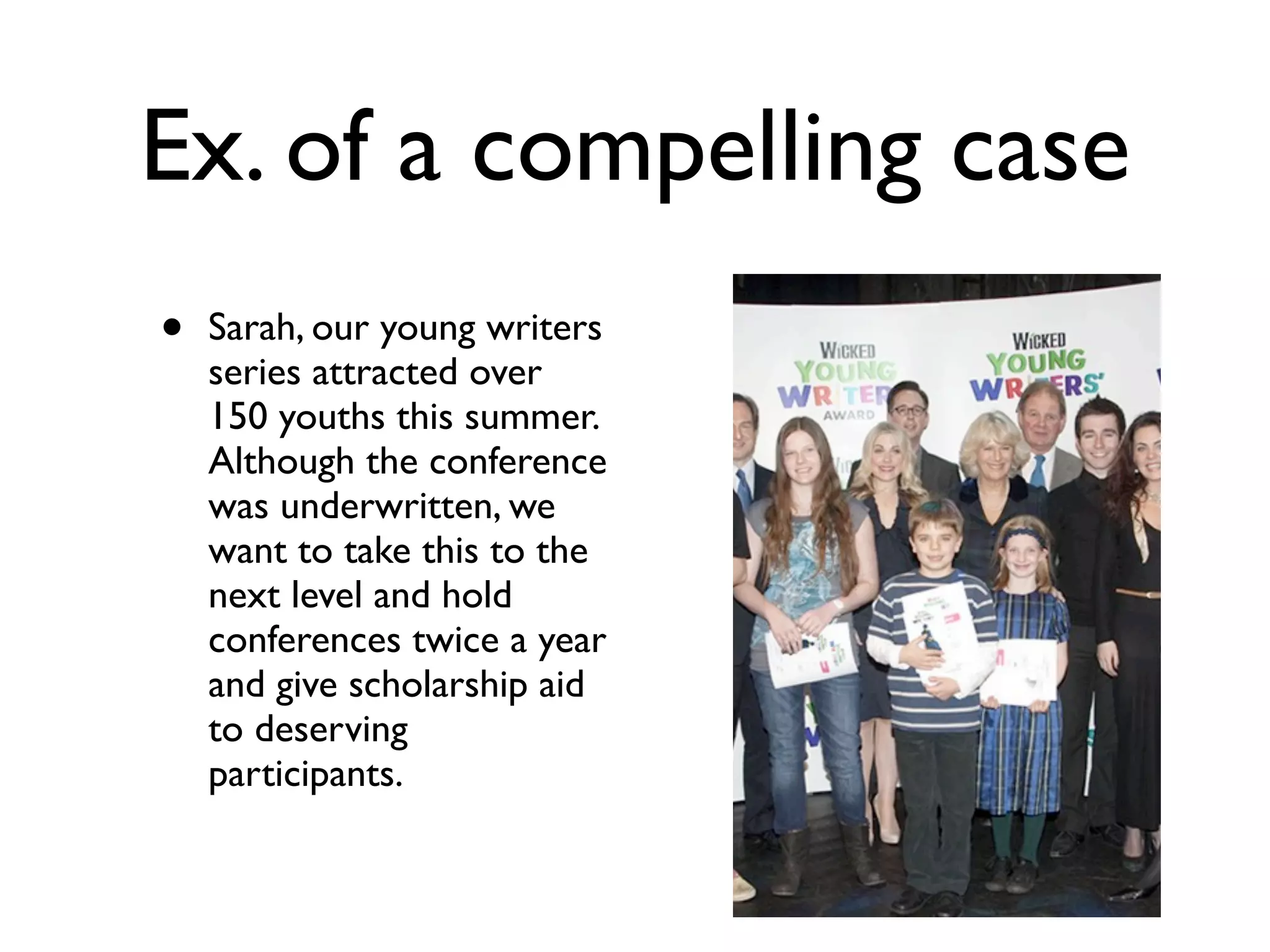
Ex. of a compelling case
• Sarah, our young writers
series attracted over
150 youths this summer.
Although the conference
was underwritten, we
want to take this to the
next level and hold
conferences twice a year
and give scholarship aid
to deserving
participants.
Ex. of a transitional
statement
• Sarah, your support of our young writers
series has put us on the map as the model
for these community programs.We have
the chance to take the program to a state
level that is exciting and equally challenging.
Let me take a few minutes to share with
you what needs to be done to make that
dream come true.
Ex. of a specific ask
• Sarah, we would like you to consider a gift
of $1,000 to help provide a scholarship for
a deserving youth.We can work with you
and whomever you desire on the terms of
that scholarship.
BE QUIET
• Key elements of the close
• Thank the prospect for the opportunity
• Thank the prospect for listening to you
• Restate the gift opportunity and the benefits
• Give the prospect a date when you will get back to her with further
information in response to her questions/concerns
• Ask the prospect if he has any additional comments or questions
• Speak with the prospect as though the prospect will make the gift
Ask me questions
and then
LET’s PRACTICE!

Joey lico presentation

  • 1.
    Fundraising: The AmericanModel of Individual Giving and How to Make it Work forYou March 24, 2014
  • 2.
    Topics • Some FundraisingEssentials • Why Do People Give? • The “Ask” - Individual Prospects • Cultivating Techniques • Hesitating To “Ask” • Making The “Ask”
  • 3.
  • 4.
    • People giveto people. Not to organizations, mission statements, or strategies. Be interesting and interested.
  • 5.
    • Fundraising isnot about money. It’s about necessary work that urgently needs doing. Money is a means to an end.
  • 6.
    • Fundraisers needto understand their donors. If they are to understand you, you must first understand them.
  • 7.
    • Friend makingcomes before fundraising. Fundraising is not selling. Fundraisers and donors are on the same side.
  • 8.
    • Fundraising isabout needs as well as achievements. People applaud achievement, but will give to meet a need.
  • 9.
    • Offer aclear, direct purpose people can relate to. For example: “Supply a choreographer with studio time. $50”
  • 10.
    • First opentheir hearts and minds. Then you can open their wallets.
  • 11.
    • Don’t justask people to give. Inspire them to give. Fundraising is an inspirational business.
  • 12.
    • Share yourproblems as well as your successes. Honesty and openness are usually prized more than apparent infallibility.
  • 13.
    •You don’t getif you don’t ask.
  • 14.
    • Successful fundraisinginvolves storytelling. Artists have great stories to tell and need to tell them with the pace and passion so as to inspire action.
  • 15.
    • Always say“thank you” properly and often. It’s also a good idea to be brilliant at welcoming new donors when they first contact you.
  • 16.
  • 17.
    • Tax break(USA only) • Ego, self-esteem (that’s the kind of person I am!) • The quest for immortality or self-preservation • Emotional response to a project or cause • In memoriam • Identify with the cause • Giving something back • Religious heritage
  • 18.
    • Social ambitionand desire to be recognized • Guilt • Because it’s the “right thing to do” • Because they were asked • Because it feels good!
  • 19.
  • 20.
    • Knowing theprospect before making the ask • General Cultivation Techniques: • Corresponding with and sending e-mails to • Calling prospects • Meeting with prospects as their offices, homes or restaurants • Giving a prospect a tour of your studio • Sending prospects personal messages attached to the direct mail they receive. • Sending prospects holiday, birthday, congratulatory, etc. cards • Asking for prospects advice on a particular subject • Inviting prospects to special events
  • 21.
    • Asking prospectsto volunteer for a special event committee, a standing committee, or an advisory board • Sending prospects newspaper or magazine articles on their interests • Joining a prospect at an event or activity when they extend an invitation to do so • Featuring prospects in your newsletter • Periodically call, write personal notes, or email prospects just to keep them informed about your work
  • 22.
    • Asking mustbe done in person • Remember, people give to people; they do not give to paper • A written note is a follow-up to ask • Distance media do not allow the personal exchange needed for the ask
  • 23.
    • Saying noto the gift is not saying no to you • Helpful hints on tackling the fear of rejection • When someone says no to the ask, he is not saying no to you. • Many prospects are uncomfortable right after the ask, so just sit back, remain silent, and listen. • If the situation feels awkward because you are friends with, are related to, or work with the prospect, state that upfront, and emphasize the opportunity to support a great project. • Also, no now does not mean no later!
  • 24.
  • 25.
    • Set thetone for the ask • Prepare the right atmosphere • Set a calm and quiet location • Bring energy, enthusiasm and charisma • Present a confident and professional image • Be extremely aware of your body language • Speak in a clear voice
  • 26.
    • The reviewprior to the ask • Essential facts every asker need to know about the gift proposal • Why this gift is the perfect match for this prospect • The purpose of the gift • The benefits of the gift • How the gift can be funded • The timing with which the gift can be paid • Why the gift opportunity “costs” this much • Other donors who have made gifts at this level • The suggested recognition that will be given for the gift
  • 27.
    • Components ofthe Script • The warm-up • The ask • The anticipated response • The close and follow-up
  • 28.
    • Essential Componentsof the Ask • Make a compelling case for the project and the need for support • Using transitional statements that specifically reference the prospects interests or prior support, or both • Asking for a specific amount for a specific purpose • Detailing the benefits of the gift • Remain silent
  • 29.
    Ex. of acompelling case • Sarah, our young writers series attracted over 150 youths this summer. Although the conference was underwritten, we want to take this to the next level and hold conferences twice a year and give scholarship aid to deserving participants.
  • 30.
    Ex. of atransitional statement • Sarah, your support of our young writers series has put us on the map as the model for these community programs.We have the chance to take the program to a state level that is exciting and equally challenging. Let me take a few minutes to share with you what needs to be done to make that dream come true.
  • 31.
    Ex. of aspecific ask • Sarah, we would like you to consider a gift of $1,000 to help provide a scholarship for a deserving youth.We can work with you and whomever you desire on the terms of that scholarship.
  • 32.
  • 33.
    • Key elementsof the close • Thank the prospect for the opportunity • Thank the prospect for listening to you • Restate the gift opportunity and the benefits • Give the prospect a date when you will get back to her with further information in response to her questions/concerns • Ask the prospect if he has any additional comments or questions • Speak with the prospect as though the prospect will make the gift
  • 34.
    Ask me questions andthen LET’s PRACTICE!