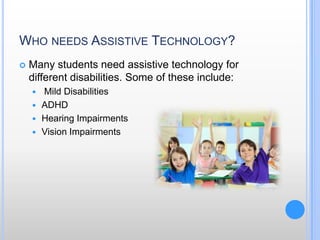
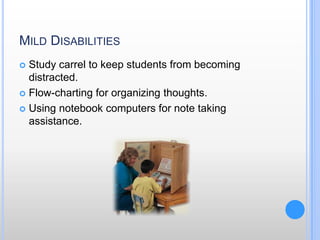
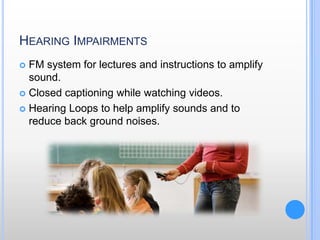
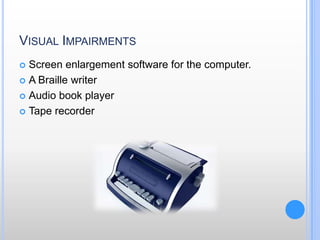
This document discusses assistive technology that can be used in classrooms to help students with various disabilities. It defines assistive technology as any equipment or product that is purchased or modified to assist an individual's functional capabilities. Some examples of disabilities that may benefit from assistive technology include ADHD, hearing impairments, and vision impairments. Assistive technologies are broken into three categories: no technology devices, low technology electronic devices, and high technology complex electronic devices. The document provides specific examples of assistive technologies that could help students with mild disabilities or hearing and vision impairments and stresses the importance of selecting technologies as a team to meet students' individual needs.