


Suman mahatoSuman mahato
The Global World of Wine:
Japan
The Global World of Wine:
Japan
Sara Maxwell
Christopher Pratt
Sev Samaniego
Ashish Shah
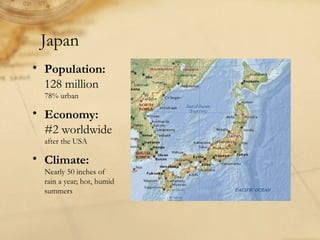
Japan
• Population:
128 million
78% urban
• Economy:
#2 worldwide
after the USA
• Climate:
Nearly 50 inches of
rain a year; hot, humid
summers
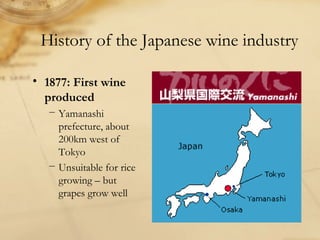
• 1877: First wine
produced
− Yamanashi
prefecture, about
200km west of
Tokyo
− Unsuitable for rice
growing – but
grapes grow well
History of the Japanese wine industry
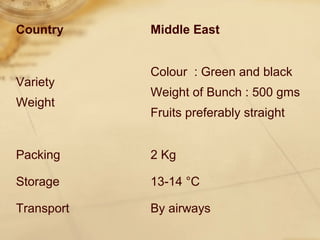
Country Middle East
Variety
Weight
Colour : Green and black
Weight of Bunch : 500 gms
Fruits preferably straight
Packing 2 Kg
Storage 13-14 °C
Transport By airways
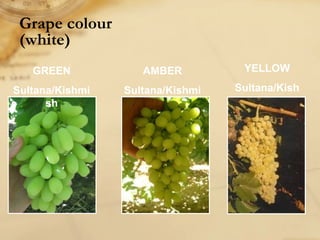
Grape colour
(white)
GREEN
Sultana/Kishmi
sh
AMBER
Sultana/Kishmi
sh
YELLOW
Sultana/Kish
mish
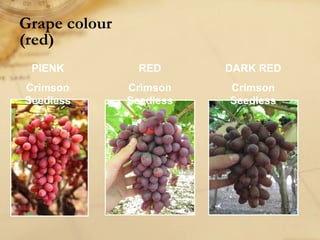
Grape colour
(red)
PIENK
Crimson
Seedless
RED
Crimson
Seedless
DARK RED
Crimson
Seedless
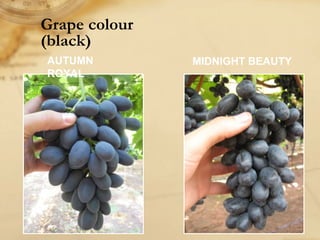
Grape colour
(black)
AUTUMN
ROYAL
MIDNIGHT BEAUTY
Local market versus Export market
• What are the differences??
• Why should we think differently about the two?
− Time between harvest and selling in local market is 1-
2 days
− Time between harvest and selling in export market is
7-30 days
• FRESHNESS or SHELF LIFE or
KEEPING QUALITY
MIND SET FOR EXPORT
• What are the main challenges we face to increase the
shelf life of the grapes?
• TWO MAIN CHALLENGES
− Decrease temperature as fast as possible after picking
− Maintain humidity as high as possible as soon as
possible after picking
• Large commercial exportation in USA, SA, Chile,
Australia
− Storage at 0-1 degree Celsius after fast cooling
− 90-98% Relative Humidity
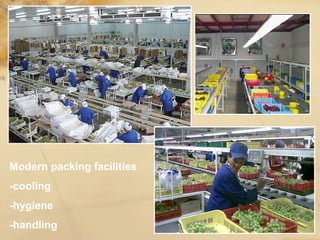
Modern packing facilities
-cooling
-hygiene
-handling
Modern cooling and
transport facilities
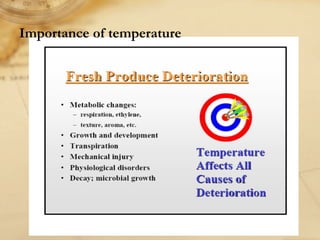
Importance of temperature
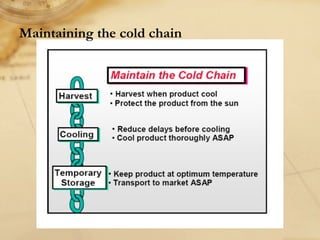
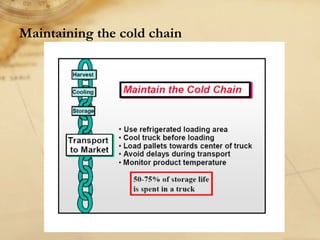
Maintaining the cold chain
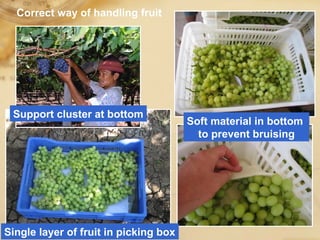
Correct way of handling fruit
Support cluster at bottom
Single layer of fruit in picking box
Soft material in bottom
to prevent bruising
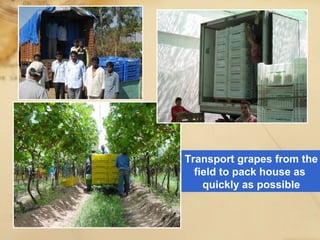
Transport grapes from the
field to pack house as
quickly as possible
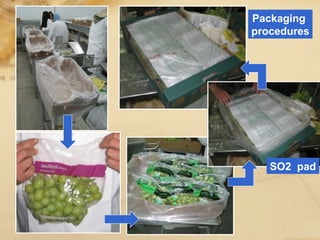
Packaging
procedures
SO2 pad
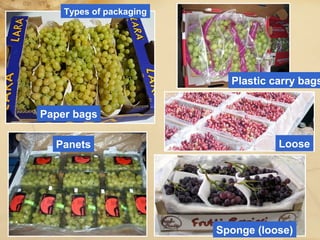
Types of packaging
Paper bags
Panets
Sponge (loose)
Loose
Plastic carry bags
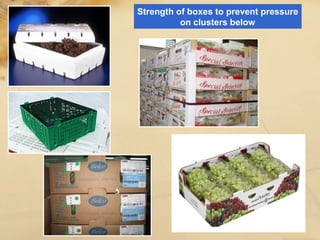
Strength of boxes to prevent pressure
on clusters below
Wine production statistics
• Harvest: 27,000 tonnes per year
− This is 1/10th
the size of the table grape harvest
• Geographical distribution:
− Wine is now grown and made in nearly every
prefecture in Japan
− There are approximately 120 wineries in Japan
The Japanese wine industry today
• Major companies:
− Château Mercian -36.4% market share
− Suntory [Iwanohara, Tomi no oka,
Freixenet, Penfolds, Gallo, etc.] – 12.6%
market share
− Sapporo [Polaire, Ureshii, Beringer, yellow
tail] – 21.4% market share
− Kikkoman [Manns Wines] – 14.8% market
share
− Asahi Breweries [Ste. Neige, Delicato,
Rosemount, Piper-Heidsieck, etc.] – 11.3%
market share
Wine production techniques
• Domestic:
− White wines usually vinified in stainless steel
− Oak does not go well with native grapes
− Some producers experimenting with extended lees
contact for Koshu
• Imported grape must:
− Most domestically produced wine is made from
imported grape concentrate or juice
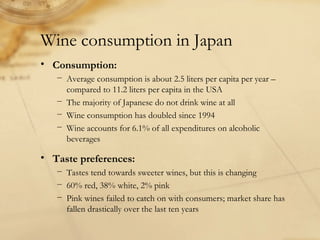
Wine consumption in Japan
• Consumption:
− Average consumption is about 2.5 liters per capita per year –
compared to 11.2 liters per capita in the USA
− The majority of Japanese do not drink wine at all
− Wine consumption has doubled since 1994
− Wine accounts for 6.1% of all expenditures on alcoholic
beverages
• Taste preferences:
− Tastes tend towards sweeter wines, but this is changing
− 60% red, 38% white, 2% pink
− Pink wines failed to catch on with consumers; market share has
fallen drastically over the last ten years

Itc grapes made bye suman