

IT KNOWLEDGE
CA Professional Stage - Knowledge Level, ICAB
Teacher: Mohammad Abdul Matin
Chapter 3
Management of IT
Chapter Outline
 Describe Policies and Management Processes
 Efficient Running of IT Systems
 What is an Asset? Describe IT Asset Management.
 What is a Software? How to Control Software Changes
 Management of IT Problems
 Information Technology Management
 IT Performance Management
 What is Informn. Security? Management of IT Security
 Accounting Software
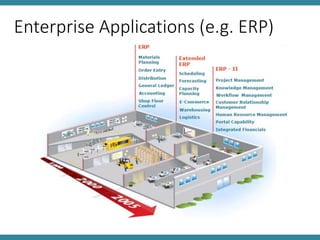
Enterprise Applications (e.g. ERP)
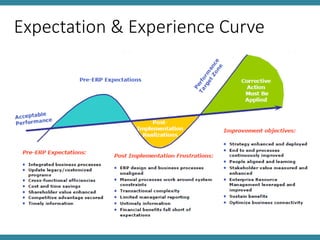
Expectation & Experience Curve
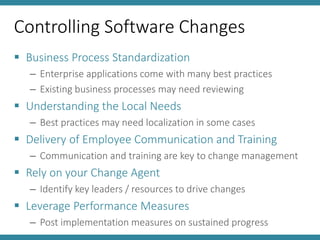
Controlling Software Changes
 Business Process Standardization
– Enterprise applications come with many best practices
– Existing business processes may need reviewing
 Understanding the Local Needs
– Best practices may need localization in some cases
 Delivery of Employee Communication and Training
– Communication and training are key to change management
 Rely on your Change Agent
– Identify key leaders / resources to drive changes
 Leverage Performance Measures
– Post implementation measures on sustained progress
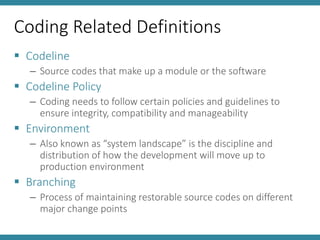
Coding Related Definitions
 Codeline
– Source codes that make up a module or the software
 Codeline Policy
– Coding needs to follow certain policies and guidelines to
ensure integrity, compatibility and manageability
 Environment
– Also known as “system landscape” is the discipline and
distribution of how the development will move up to
production environment
 Branching
– Process of maintaining restorable source codes on different
major change points
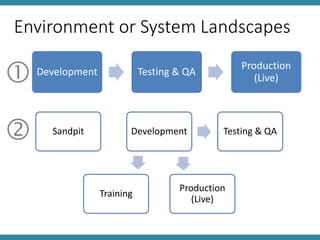
Environment or System Landscapes
Development Testing & QA
Production
(Live)
Sandpit Development Testing & QA
Production
(Live)
Training


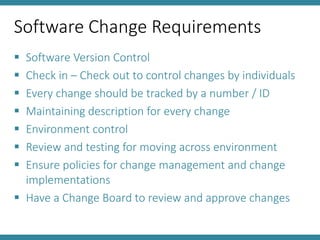
Software Change Requirements
 Software Version Control
 Check in – Check out to control changes by individuals
 Every change should be tracked by a number / ID
 Maintaining description for every change
 Environment control
 Review and testing for moving across environment
 Ensure policies for change management and change
implementations
 Have a Change Board to review and approve changes
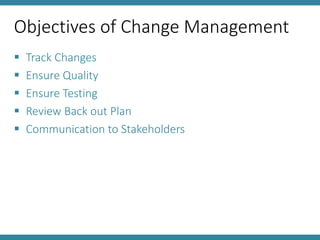
Objectives of Change Management
 Track Changes
 Ensure Quality
 Ensure Testing
 Review Back out Plan
 Communication to Stakeholders
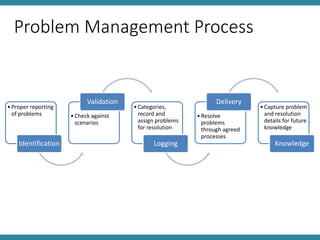
Problem Management Process
•Proper reporting
of problems
Identification
•Check against
scenarios
Validation
•Categories,
record and
assign problems
for resolution
Logging
•Resolve
problems
through agreed
processes
Delivery
•Capture problem
and resolution
details for future
knowledge
Knowledge
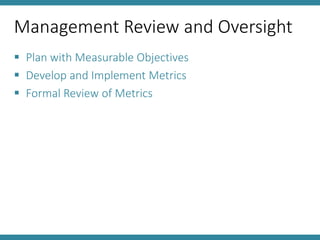
Management Review and Oversight
 Plan with Measurable Objectives
 Develop and Implement Metrics
 Formal Review of Metrics
Exam Questions
 What are the Software change environments?
SlideShare Link
Slides are uploaded at:
http://www.slideshare.net/mamatin
Thank You
Next Class
Topics: Continue on Chapter 3

ICAB - ITK Chapter 3 class 6-7 - Management of IT

  • 1.
    IT KNOWLEDGE CA ProfessionalStage - Knowledge Level, ICAB Teacher: Mohammad Abdul Matin Chapter 3 Management of IT
  • 2.
    Chapter Outline  DescribePolicies and Management Processes  Efficient Running of IT Systems  What is an Asset? Describe IT Asset Management.  What is a Software? How to Control Software Changes  Management of IT Problems  Information Technology Management  IT Performance Management  What is Informn. Security? Management of IT Security  Accounting Software
  • 3.
  • 4.
  • 5.
    Controlling Software Changes Business Process Standardization – Enterprise applications come with many best practices – Existing business processes may need reviewing  Understanding the Local Needs – Best practices may need localization in some cases  Delivery of Employee Communication and Training – Communication and training are key to change management  Rely on your Change Agent – Identify key leaders / resources to drive changes  Leverage Performance Measures – Post implementation measures on sustained progress
  • 6.
    Coding Related Definitions Codeline – Source codes that make up a module or the software  Codeline Policy – Coding needs to follow certain policies and guidelines to ensure integrity, compatibility and manageability  Environment – Also known as “system landscape” is the discipline and distribution of how the development will move up to production environment  Branching – Process of maintaining restorable source codes on different major change points
  • 7.
    Environment or SystemLandscapes Development Testing & QA Production (Live) Sandpit Development Testing & QA Production (Live) Training  
  • 8.
    Software Change Requirements Software Version Control  Check in – Check out to control changes by individuals  Every change should be tracked by a number / ID  Maintaining description for every change  Environment control  Review and testing for moving across environment  Ensure policies for change management and change implementations  Have a Change Board to review and approve changes
  • 9.
    Objectives of ChangeManagement  Track Changes  Ensure Quality  Ensure Testing  Review Back out Plan  Communication to Stakeholders
  • 10.
    Problem Management Process •Properreporting of problems Identification •Check against scenarios Validation •Categories, record and assign problems for resolution Logging •Resolve problems through agreed processes Delivery •Capture problem and resolution details for future knowledge Knowledge
  • 11.
    Management Review andOversight  Plan with Measurable Objectives  Develop and Implement Metrics  Formal Review of Metrics
  • 12.
    Exam Questions  Whatare the Software change environments?
  • 13.
    SlideShare Link Slides areuploaded at: http://www.slideshare.net/mamatin
  • 14.
    Thank You Next Class Topics:Continue on Chapter 3