 Disk Drive Components, Disk Drive
Performance, Host Access to Data, Direct-
Attached Storage , Storage Design Based on
Application Requirements and Disk
Performance, Disk Native Command Queuing,
Introduction to Flash Drives.
 Concept in Practice: VMware ESXi.
Storage System Environment - 2
Storage System Environment - 3
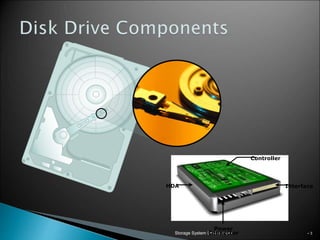
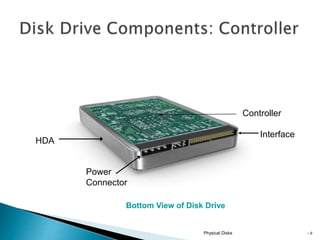
Interface
Controller
Power
Connector
HDA
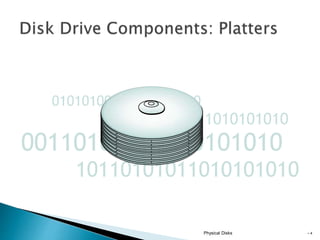
Physical Disks - 4
00110100111010101010
00110100111010101010
10110101011010101010
01010100111010101010
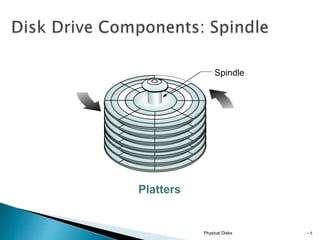
Physical Disks - 5
Spindle
Platters
Physical Disks - 6
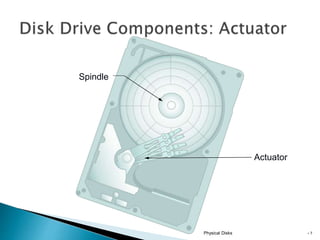
Physical Disks - 7
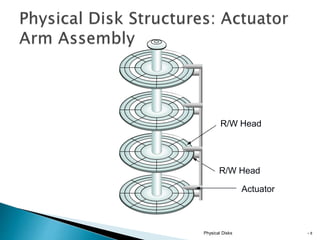
Actuator
Spindle
Physical Disks - 8
Actuator
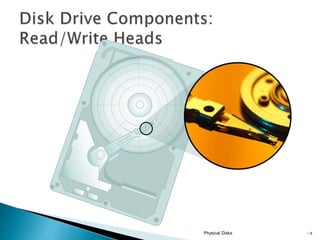
R/W Head
R/W Head
Physical Disks - 9
Bottom View of Disk Drive
HDA
Controller
Interface
Power
Connector
Physical Disks
-
10
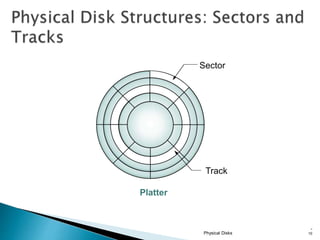
Sector
Track
Platter
Physical Disks
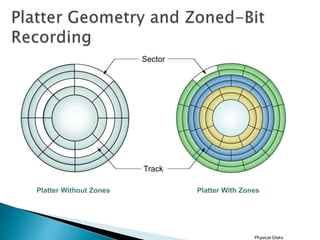
Platter Without Zones
Sector
Track
Platter With Zones
Physical Disks
-
12
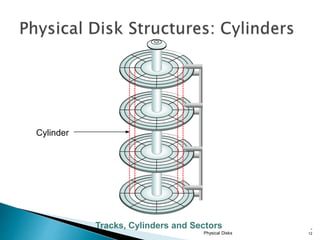
Cylinder
Tracks, Cylinders and Sectors
Physical Disks
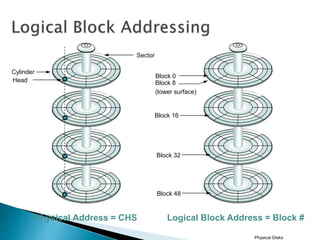
Physical Address = CHS Logical Block Address = Block #
Sector
Cylinder
Head
Block 0
Block 16
Block 32
Block 48
Block 8
(lower surface)
Physical Disks
-
14
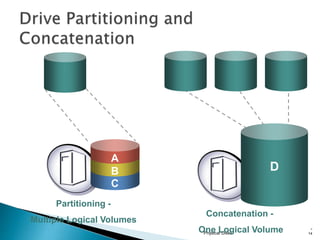
A
Concatenation -
One Logical Volume
Partitioning -
Multiple Logical Volumes
A
B
C
D
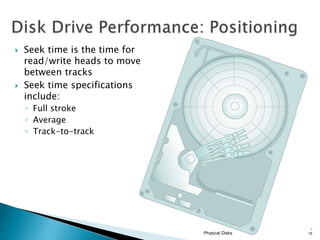
 Seek time is the time for
read/write heads to move
between tracks
 Seek time specifications
include:
◦ Full stroke
◦ Average
◦ Track-to-track
Physical Disks
-
15
 Direct – Attached storage (DAS) is a an
architecture where storage connects directly
to servers.
 Applications access data from DAS using
block-level access protocols.
 DAS is ideal for localized data access and
sharing in environments that have a small
number of servers.
 Ex: small businesses, departments and
workgroups do not share information across
enterprises
 There are two types of DAS depending on the
location of the storage device with respect to
the host.
 Internal DAS
 External DAS
 In the internal DAS architecture, the storage
device is internally connected to the host by a
serial or parallel bus.
 The physical bus has distance limitations and
can only be sustained over a shorter distance
for high-speed connectivity.
 Most internal buses can support only a
limited number of devices
 They occupy a large amount of space inside
the host, making maintenance of other
components difficult
 In the external DAS
architecture, the
server connects
directly to the
external storage
device.
 Communication
between the host
and the storage
device takes place
over SCSI (Simple
Computer System
 DAS needs lower initial investment than
storage networking.
 It is simple and can be deployed easily and
rapidly.
 Setup is managed using host-based tools like
host OS.
 It requires fewer management tasks and less
hardware and software elements to set up
and operate.
 But it is not scalable.
 A storage device has a limited number of
ports.
 A limited bandwidth in DAS restricts the
available I/O processing capability.
 The distance limitations associated with
implementing DAS because of direct
connectivity requirements can be addressed
by using Fibre Channel connectivity.
 Unused resources cannot be easily re-
allocated, resulting in islands of over-utilized
and under-utilized storage pools.
 Disk utilization, throughput, and cache
memory of a storage device, along with
virtual memory of a host govern the
performance of DAS.
 RAID-level configurations, storage controller
protocols, and the efficiency of the bus are
additional factors that affect the performance
of DAS.
 The absence of storage interconnects and
network latency provide DAS with the
potential to outperform other storage
networking configurations.

ISR UNIT2.ppt

  • 2.
     Disk DriveComponents, Disk Drive Performance, Host Access to Data, Direct- Attached Storage , Storage Design Based on Application Requirements and Disk Performance, Disk Native Command Queuing, Introduction to Flash Drives.  Concept in Practice: VMware ESXi. Storage System Environment - 2
  • 3.
    Storage System Environment- 3 Interface Controller Power Connector HDA
  • 4.
    Physical Disks -4 00110100111010101010 00110100111010101010 10110101011010101010 01010100111010101010
  • 5.
    Physical Disks -5 Spindle Platters
  • 6.
  • 7.
    Physical Disks -7 Actuator Spindle
  • 8.
    Physical Disks -8 Actuator R/W Head R/W Head
  • 9.
    Physical Disks -9 Bottom View of Disk Drive HDA Controller Interface Power Connector
  • 10.
  • 11.
    Physical Disks Platter WithoutZones Sector Track Platter With Zones
  • 12.
  • 13.
    Physical Disks Physical Address= CHS Logical Block Address = Block # Sector Cylinder Head Block 0 Block 16 Block 32 Block 48 Block 8 (lower surface)
  • 14.
    Physical Disks - 14 A Concatenation - OneLogical Volume Partitioning - Multiple Logical Volumes A B C D
  • 15.
     Seek timeis the time for read/write heads to move between tracks  Seek time specifications include: ◦ Full stroke ◦ Average ◦ Track-to-track Physical Disks - 15
  • 16.
     Direct –Attached storage (DAS) is a an architecture where storage connects directly to servers.  Applications access data from DAS using block-level access protocols.  DAS is ideal for localized data access and sharing in environments that have a small number of servers.  Ex: small businesses, departments and workgroups do not share information across enterprises
  • 17.
     There aretwo types of DAS depending on the location of the storage device with respect to the host.  Internal DAS  External DAS
  • 18.
     In theinternal DAS architecture, the storage device is internally connected to the host by a serial or parallel bus.  The physical bus has distance limitations and can only be sustained over a shorter distance for high-speed connectivity.  Most internal buses can support only a limited number of devices  They occupy a large amount of space inside the host, making maintenance of other components difficult
  • 19.
     In theexternal DAS architecture, the server connects directly to the external storage device.  Communication between the host and the storage device takes place over SCSI (Simple Computer System
  • 20.
     DAS needslower initial investment than storage networking.  It is simple and can be deployed easily and rapidly.  Setup is managed using host-based tools like host OS.  It requires fewer management tasks and less hardware and software elements to set up and operate.  But it is not scalable.
  • 21.
     A storagedevice has a limited number of ports.  A limited bandwidth in DAS restricts the available I/O processing capability.  The distance limitations associated with implementing DAS because of direct connectivity requirements can be addressed by using Fibre Channel connectivity.  Unused resources cannot be easily re- allocated, resulting in islands of over-utilized and under-utilized storage pools.
  • 22.
     Disk utilization,throughput, and cache memory of a storage device, along with virtual memory of a host govern the performance of DAS.  RAID-level configurations, storage controller protocols, and the efficiency of the bus are additional factors that affect the performance of DAS.  The absence of storage interconnects and network latency provide DAS with the potential to outperform other storage networking configurations.