Is neuromuscular inhibition a risk factor for hamstring strain? 
Tony Shield 
School of Exercise & Nutrition Sciences 
Institute of Health & Biomedical Innovation 
Queensland University of Technology
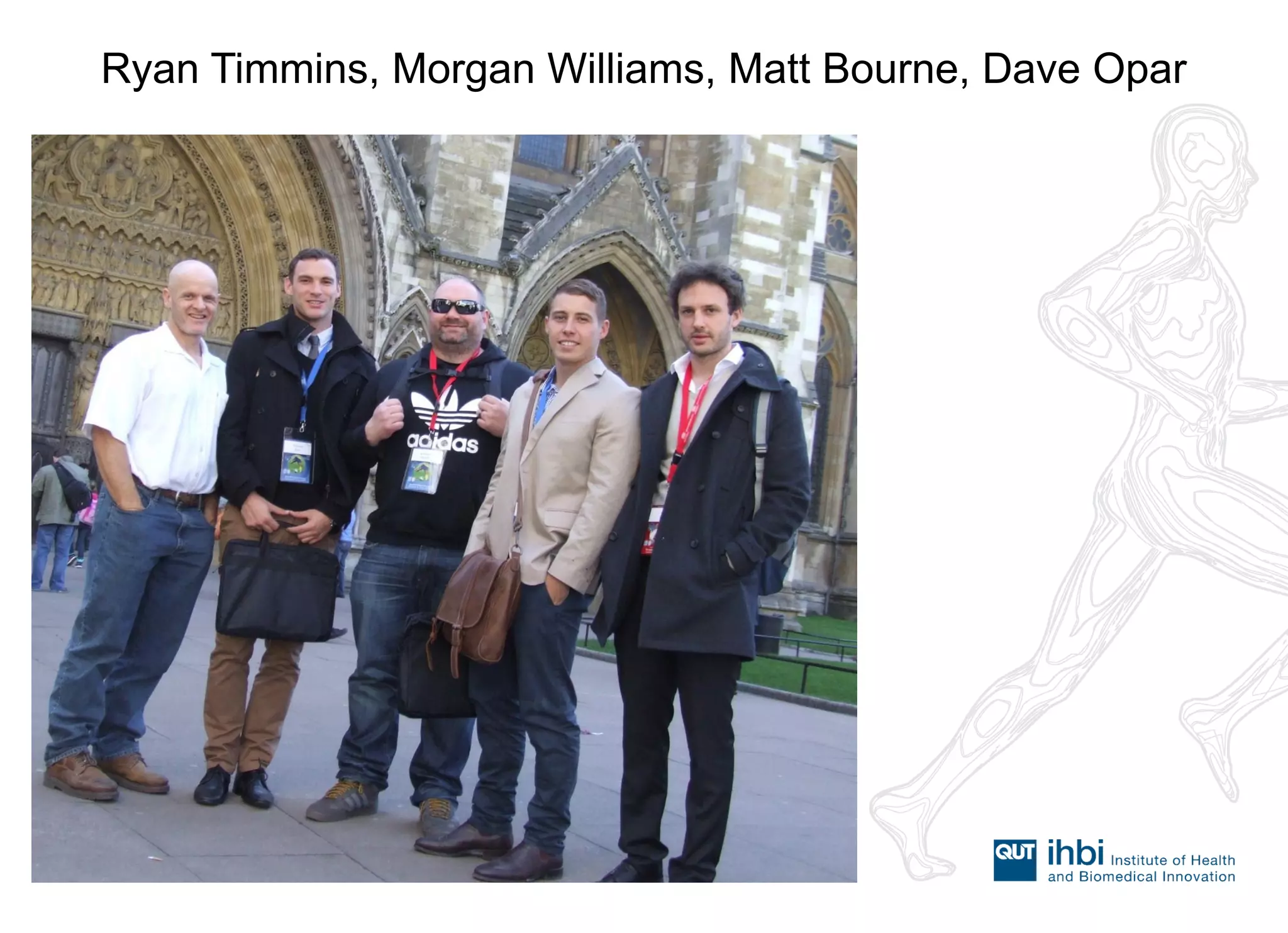
Ryan Timmins, Morgan Williams, Matt Bourne, Dave Opar
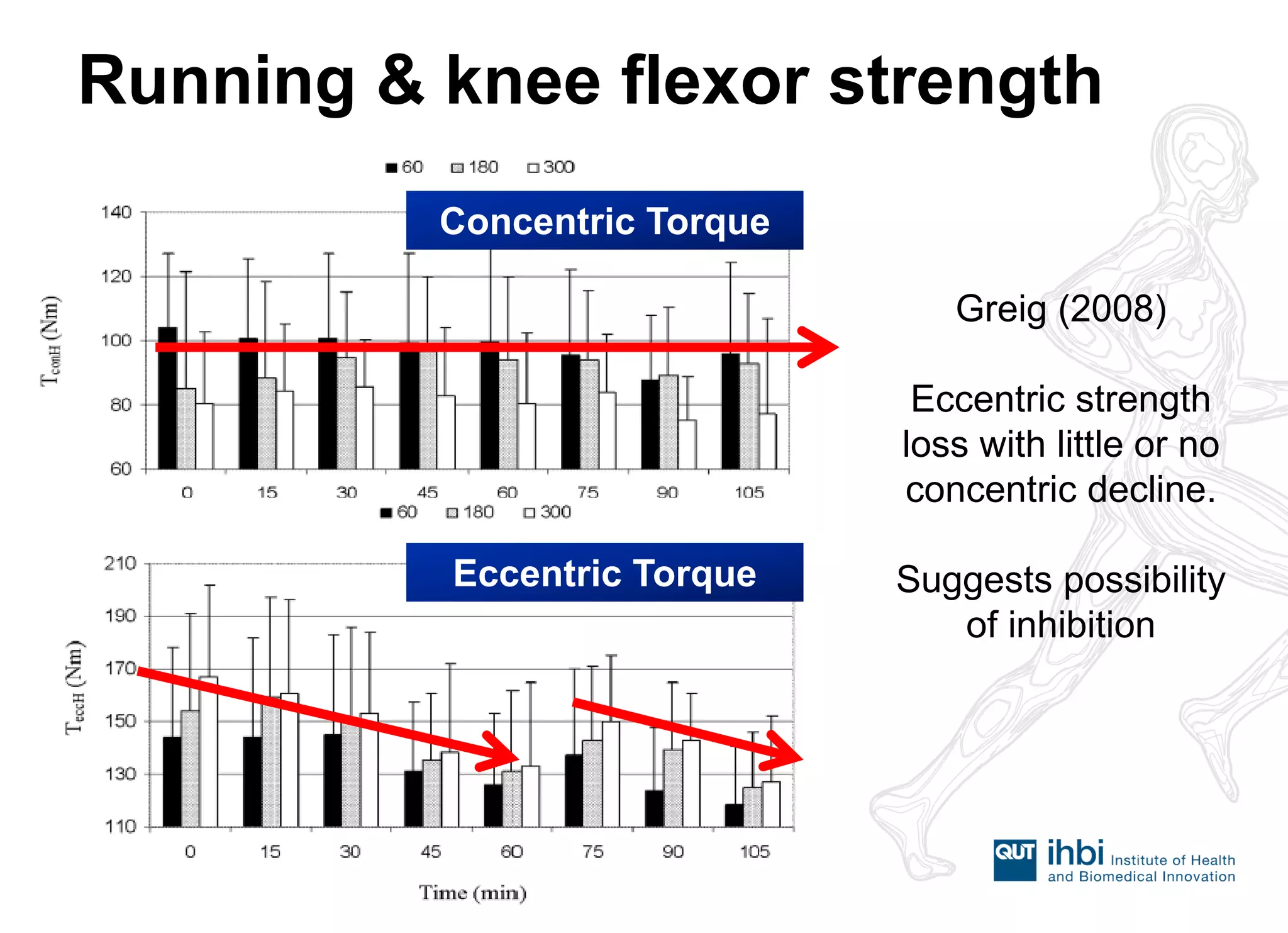
Running & knee flexor strength 
Greig (2008) 
Eccentric strength loss with little or no concentric decline. 
Suggests possibility of inhibition 
Concentric Torque 
Eccentric Torque
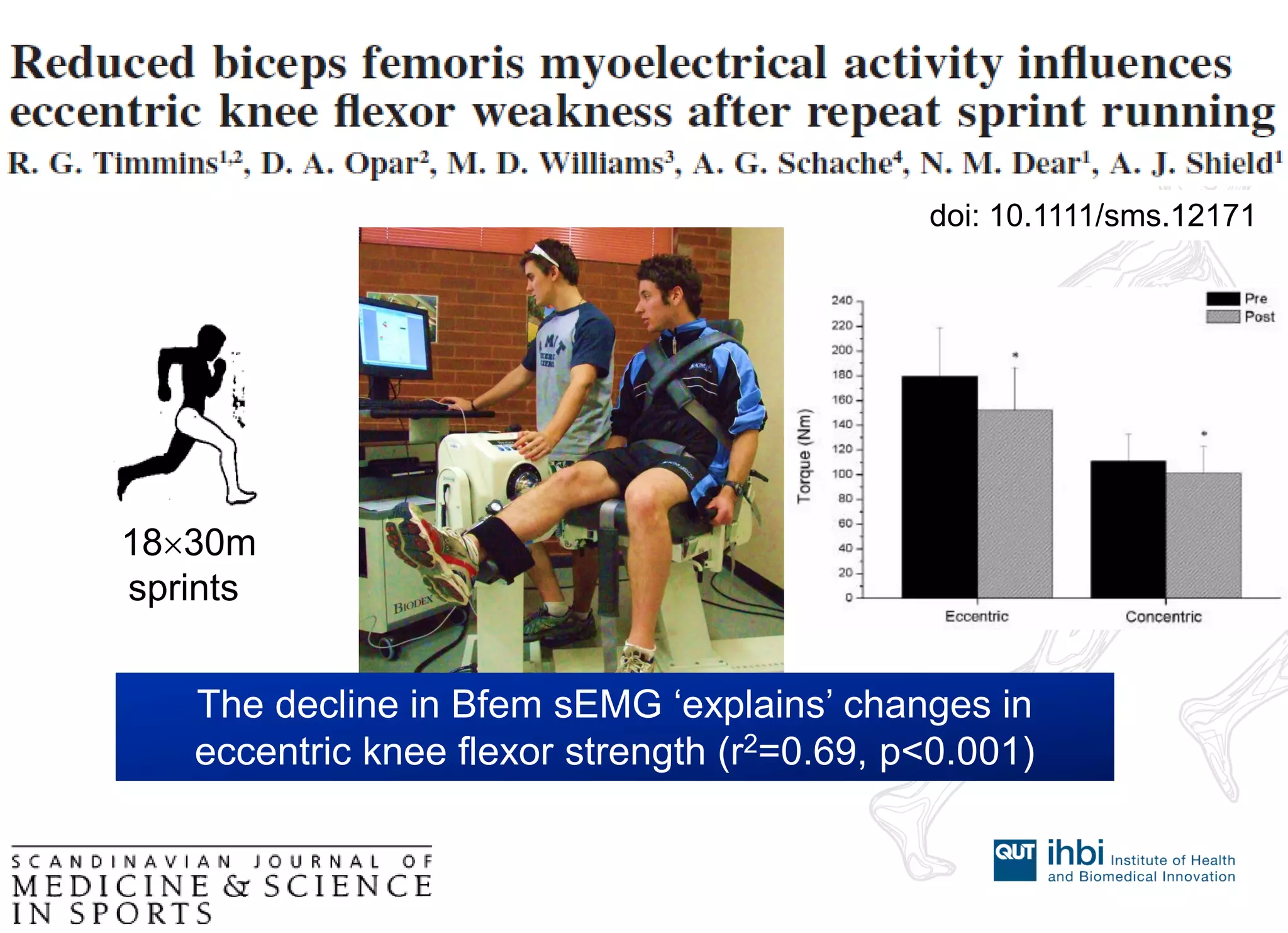
doi: 10.1111/sms.12171 
The decline in Bfem sEMG ‘explains’ changes in eccentric knee flexor strength (r2=0.69, p<0.001) 
1830m sprints
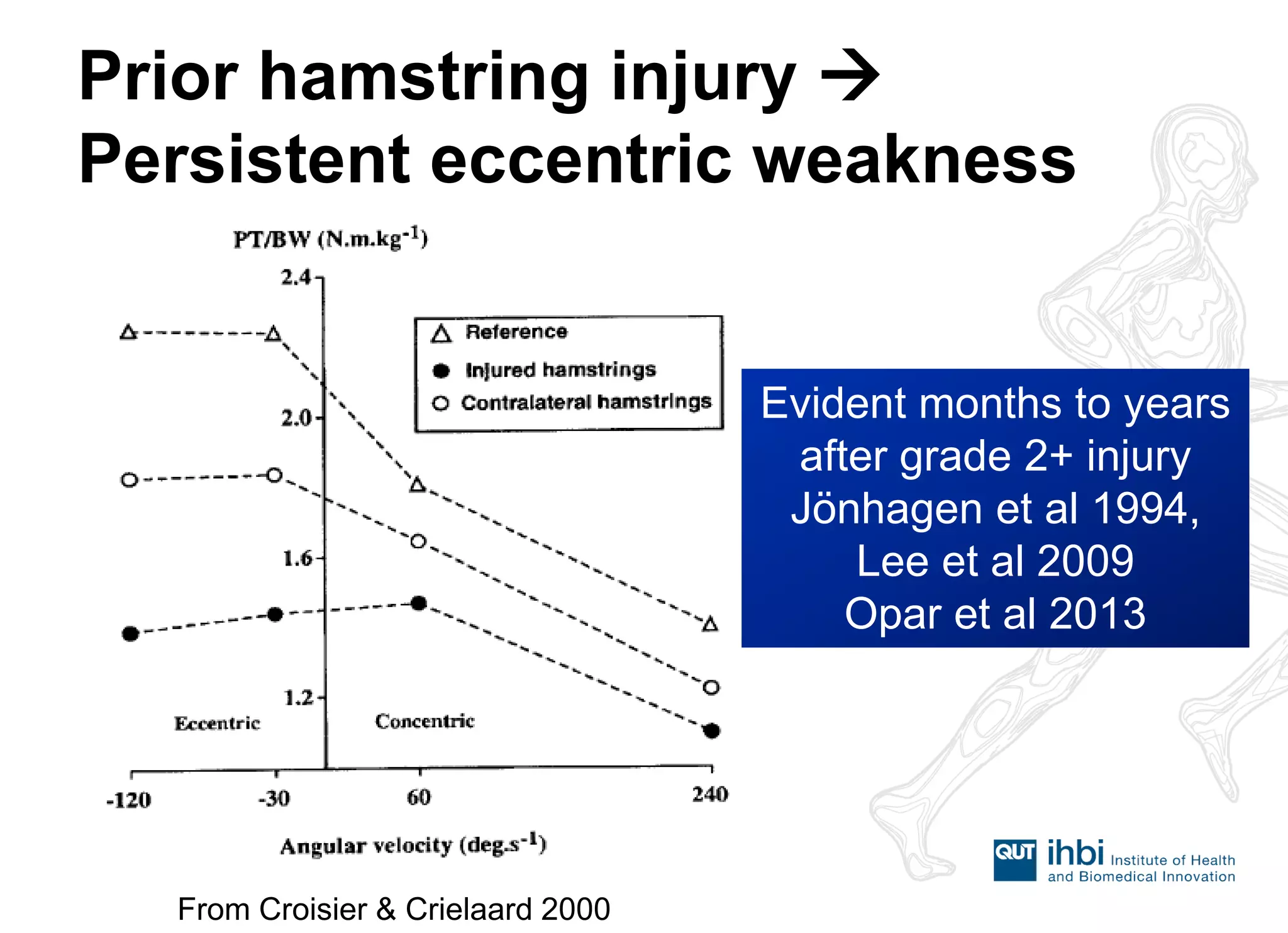
Prior hamstring injury  Persistent eccentric weakness 
From Croisier & Crielaard 2000 
Evident months to years after grade 2+ injury 
Jönhagen et al 1994, Lee et al 2009 
Opar et al 2013
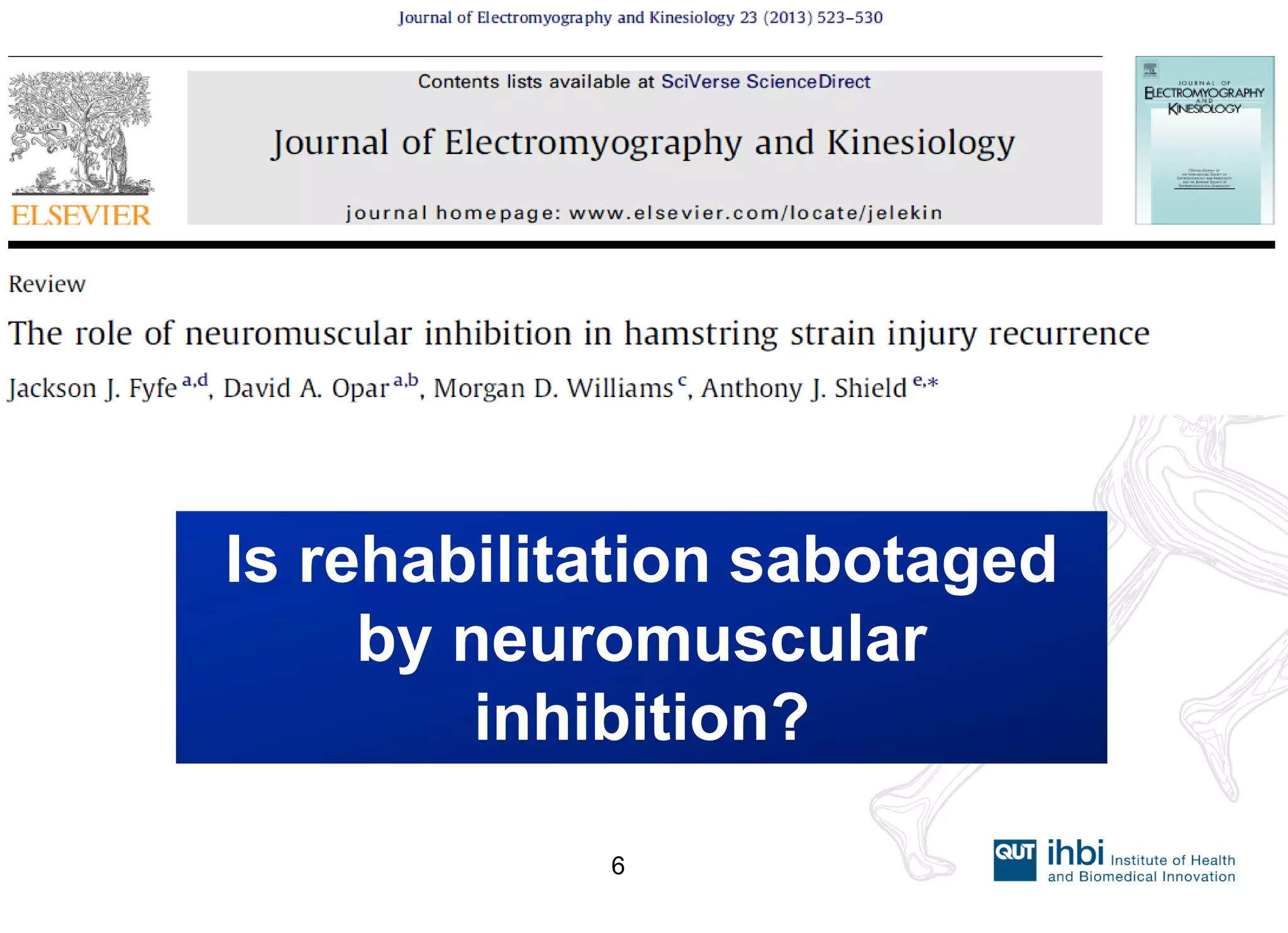
Is rehabilitation sabotaged by neuromuscular inhibition? 
6
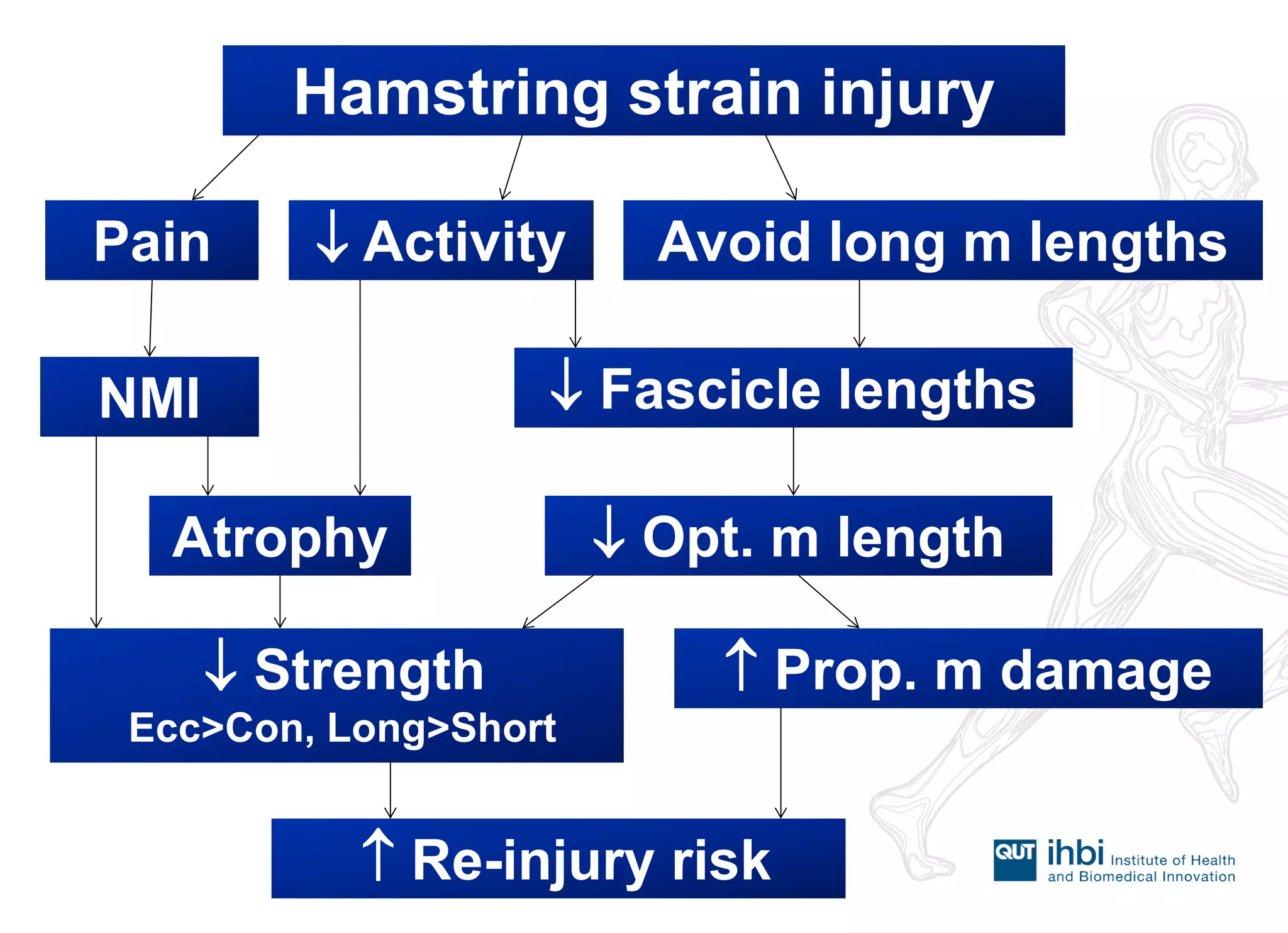
Hamstring strain injury 
Pain 
Avoid long m lengths 
 Activity 
NMI 
Atrophy 
 Fascicle lengths 
 Opt. m length 
 Strength Ecc>Con, Long>Short 
 Prop. m damage 
 Re-injury risk
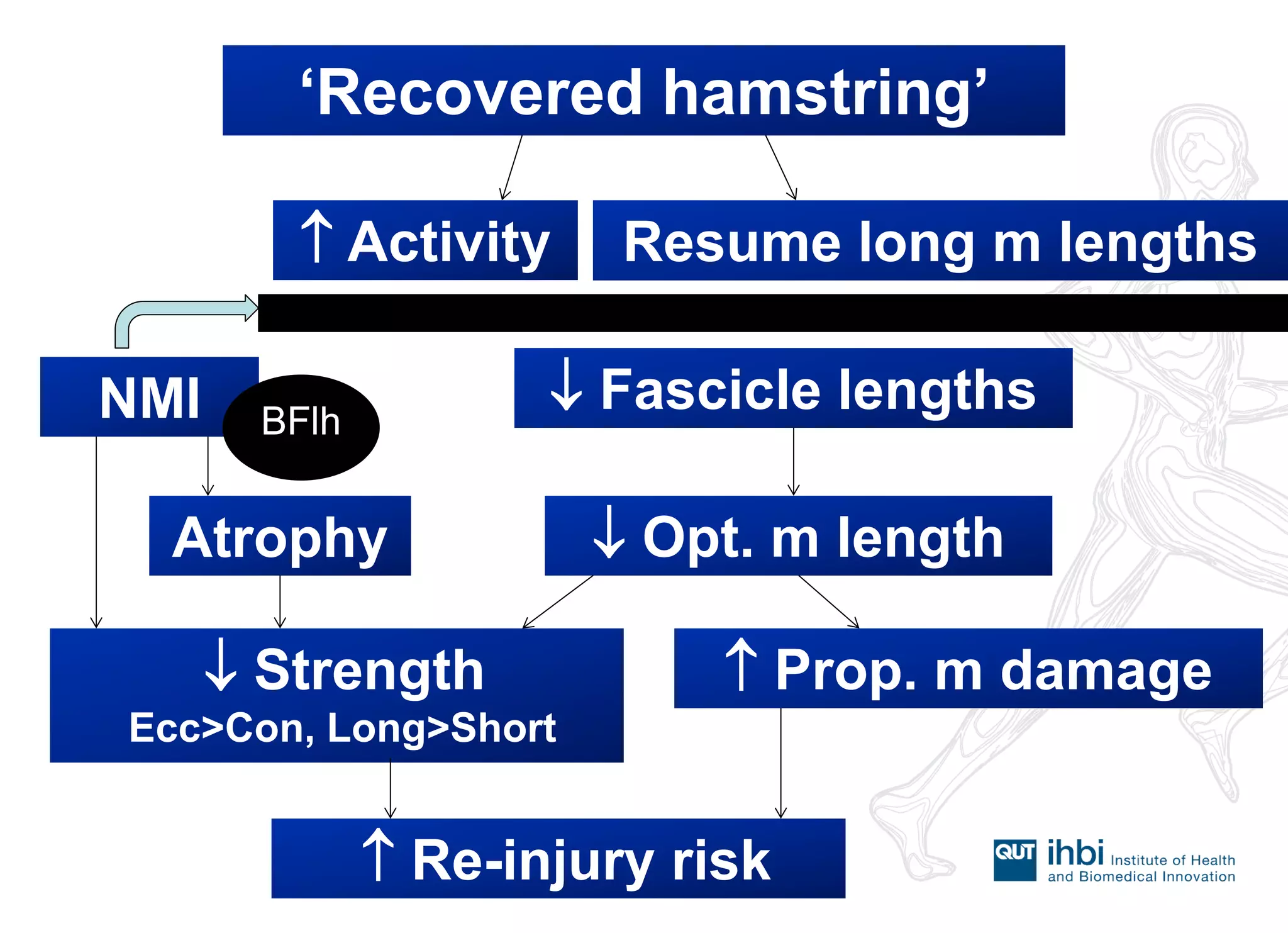
‘Recovered hamstring’ 
Resume long m lengths 
 Activity 
NMI 
Atrophy 
 Fascicle lengths 
 Opt. m length 
 Strength 
Ecc>Con, Long>Short 
 Prop. m damage 
 Re-injury risk 
BFlh
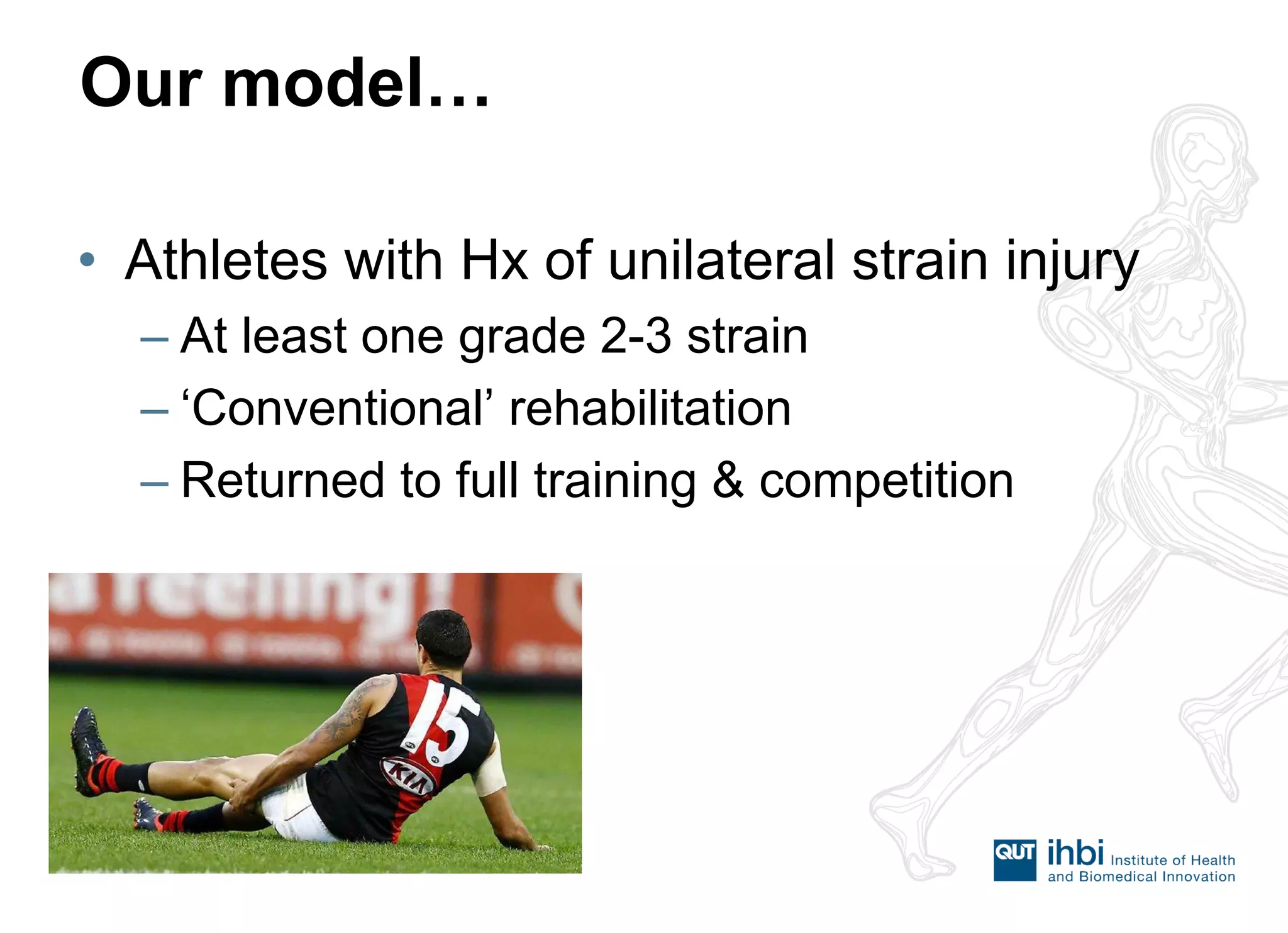
Our model… 
•Athletes with Hx of unilateral strain injury 
–At least one grade 2-3 strain 
–‘Conventional’ rehabilitation 
–Returned to full training & competition
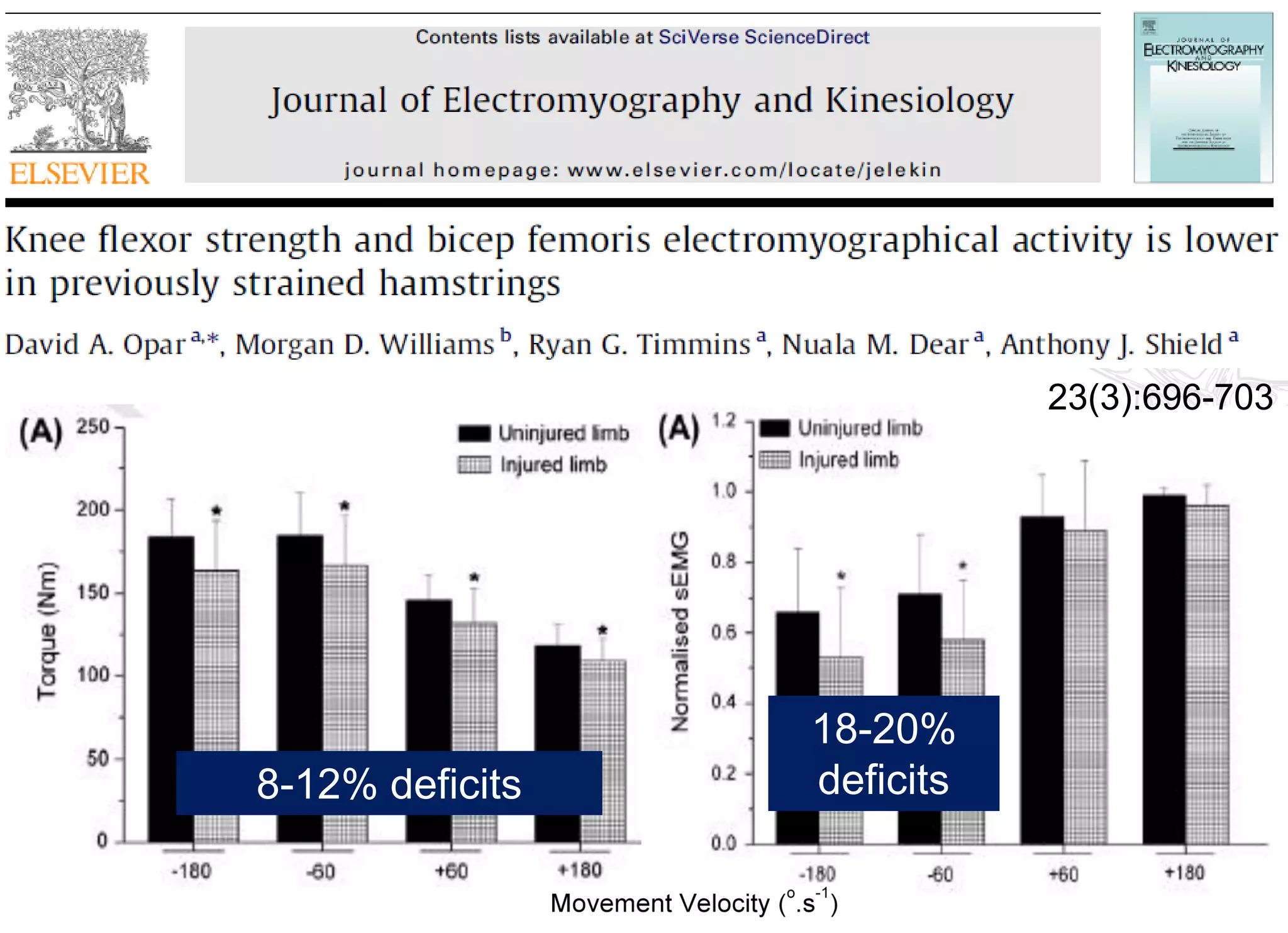
Evidence for inhibition 
8-12% deficits 
18-20% deficits 
23(3):696-703
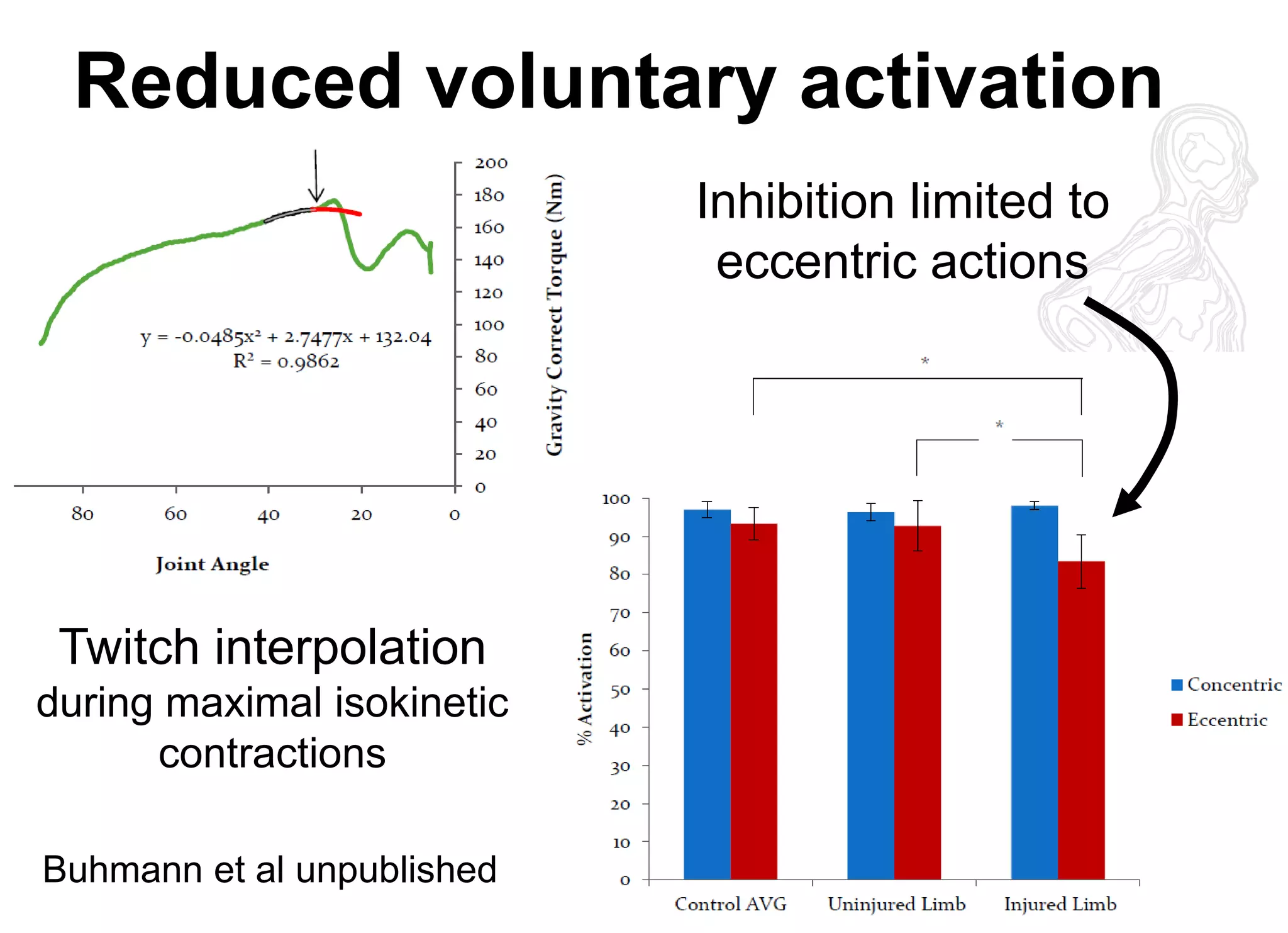
Reduced voluntary activation 
Inhibition limited to eccentric actions 
Twitch interpolation during maximal isokinetic contractions 
Buhmann et al unpublished
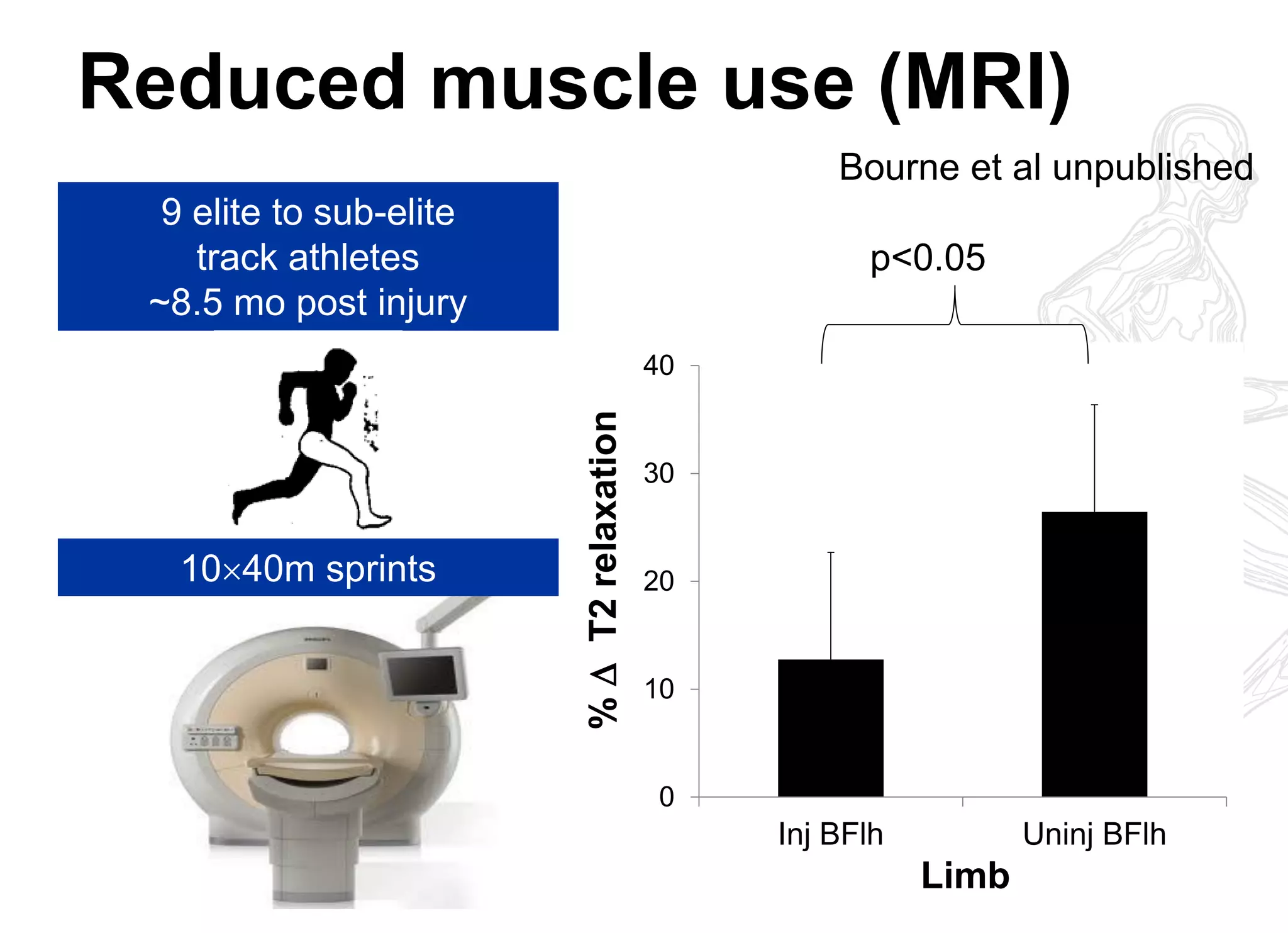
Reduced muscle use (MRI) 
0 
10 
20 
30 
40 
Inj BFlh 
Uninj BFlh 
%  T2 relaxation 
Limb 
9 elite to sub-elite track athletes ~8.5 mo post injury 
1040m sprints 
p<0.05 
Bourne et al unpublished
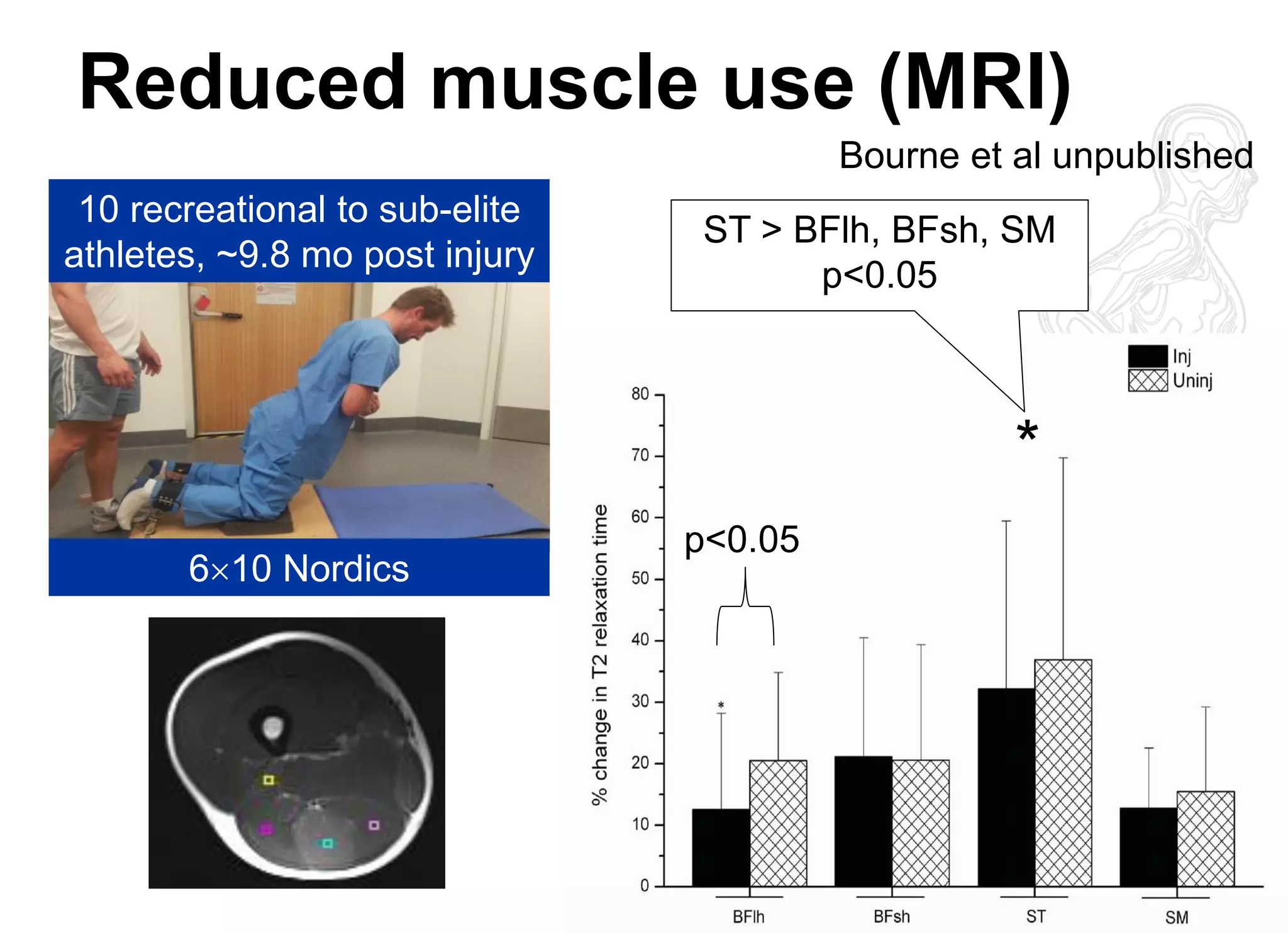
p<0.05 
* 
ST > BFlh, BFsh, SM 
p<0.05 
10 recreational to sub-elite 
athletes, ~9.8 mo post injury 
Reduced muscle use (MRI) 
610 Nordics 
Bourne et al unpublished
Timmins et al (2014) Med Sci Sports Exerc. [Epub ahead of print]
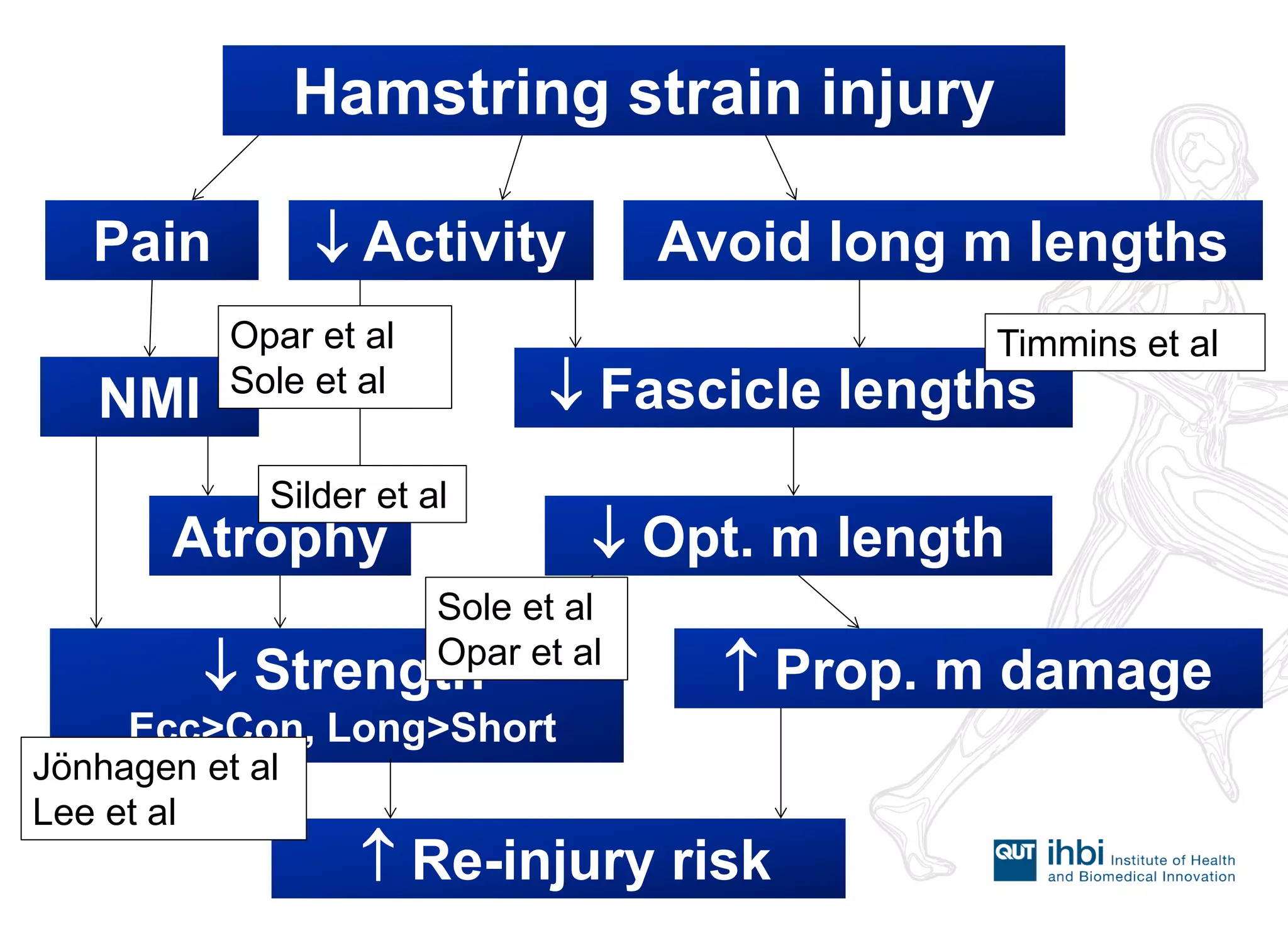
Hamstring strain injury 
Pain 
Avoid long m lengths 
 Activity 
NMI 
Atrophy 
 Fascicle lengths 
 Opt. m length 
 Strength Ecc>Con, Long>Short 
 Prop. m damage 
 Re-injury risk 
Opar et al 
Sole et al 
Timmins et al 
Silder et al 
Sole et al 
Opar et al 
Jönhagen et al Lee et al
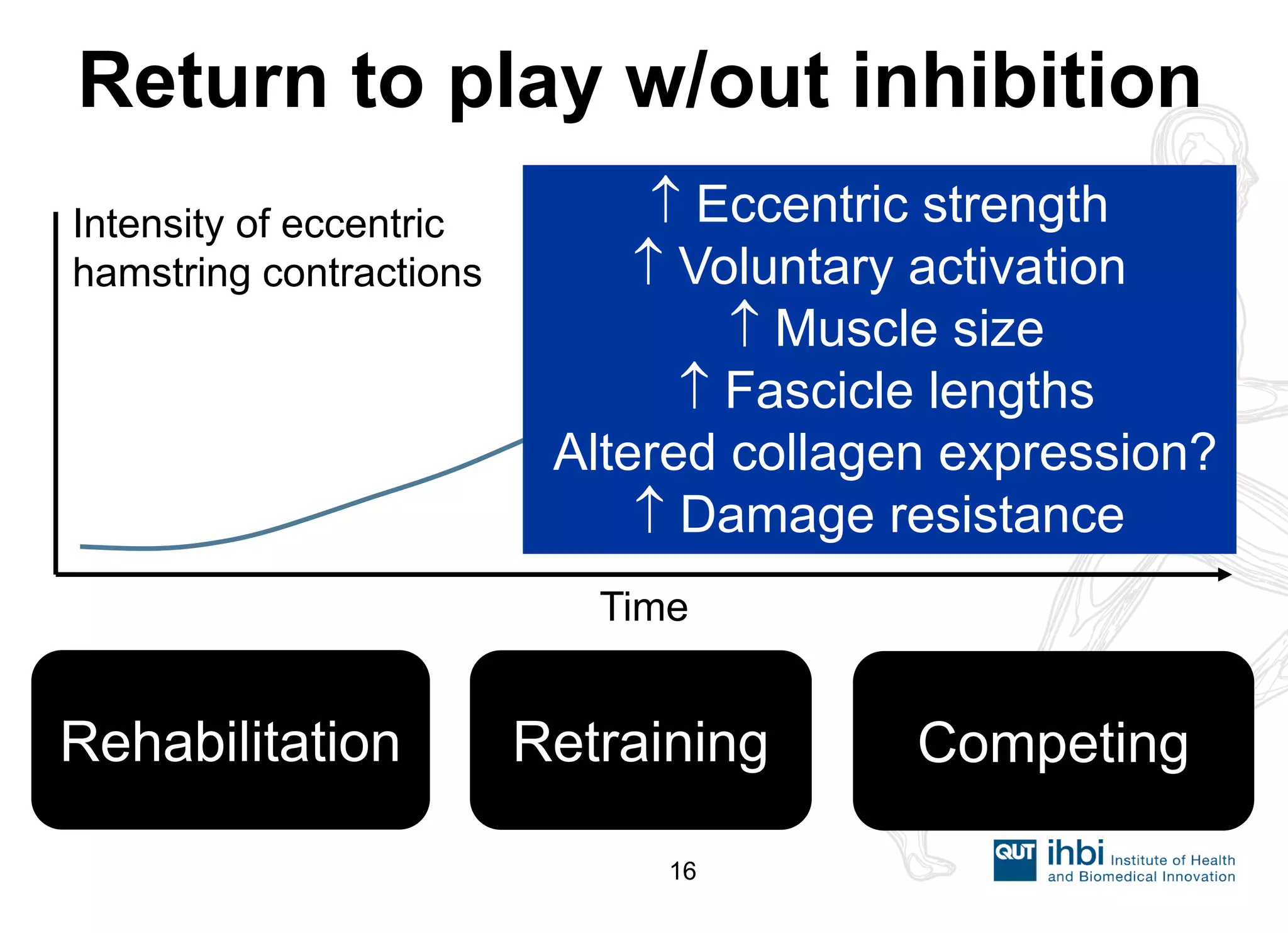
Return to play w/out inhibition 
Rehabilitation 
Retraining 
Competing 
Intensity of eccentric hamstring contractions 
Time 
16 
 Eccentric strength  Voluntary activation  Muscle size  Fascicle lengths Altered collagen expression?  Damage resistance
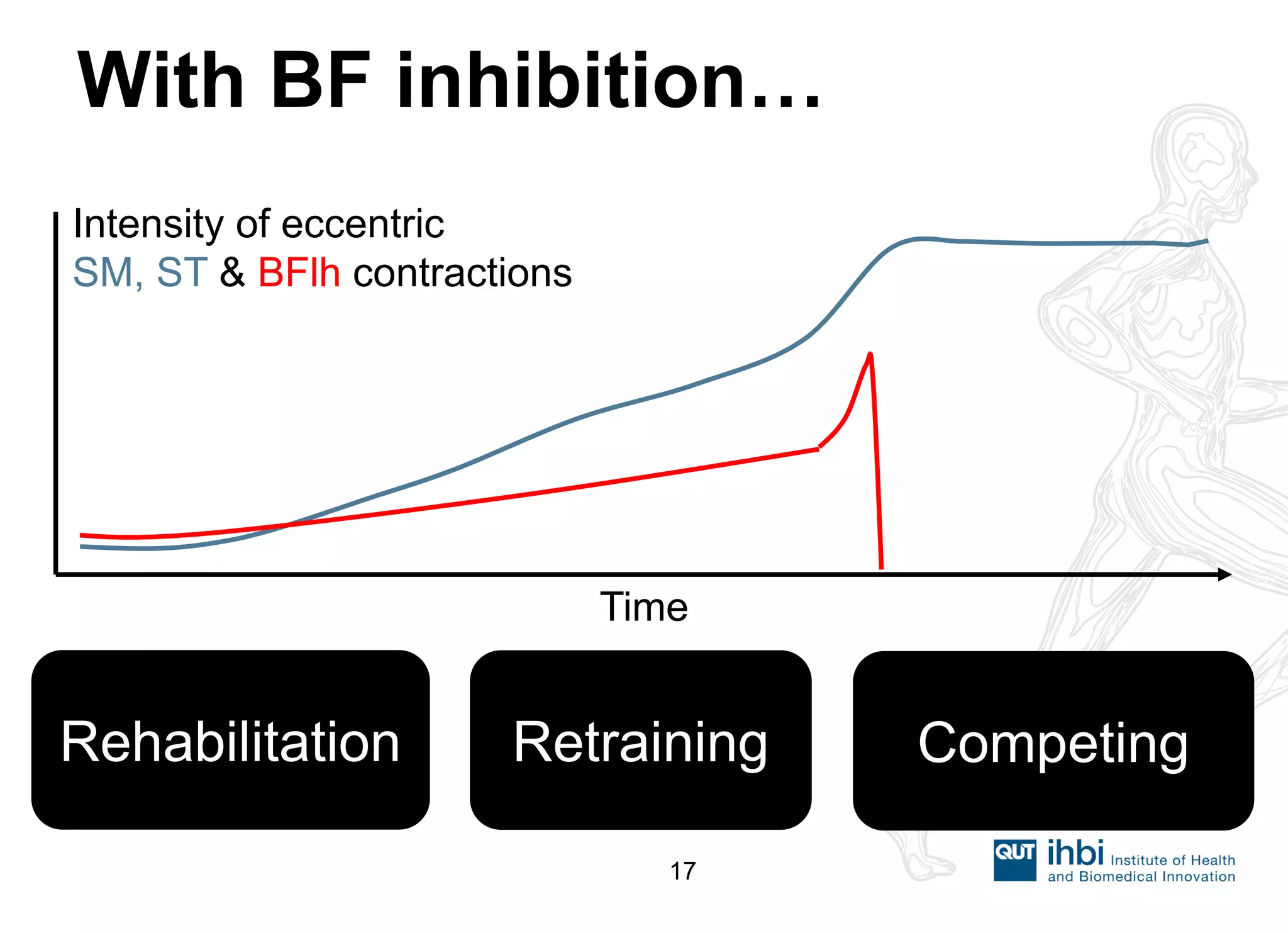
Rehabilitation 
Retraining 
Competing 
Intensity of eccentric 
SM, ST & BFlh contractions 
Time 
With BF inhibition… 
17
•Croisier JL, & Crielaard JM. (2000) Isokin Exerc Sci, 8:175-180. 
•Fyfe JJ, Opar DA, Williams MD, Shield AJ. (2013) J Electromyog Kinesiol, 23(3): 523-530. 
•Greig, M. (2008) Am J Sports Med, 36(7):1403-1409. 
•Jönhagen, S, Nemeth, G, & Eriksson, E. (1994) Am J Sports Med, 22(2):262-266. 
•Lee MJ, Reid SL, Elliott BC, Lloyd DG. (2009) Med Sci Sports Exerc, 41(10):1942- 1951. 
•Opar DA, Williams MD, Timmins RG, Dear NM, Shield, AJ. (2013) J Electromyog Kinesiol, 23(3):696-703. 
•Opar DA, Williams MD, Timmins RG, Dear NM, Shield, AJ. (2013) Am J Sports Med, 41(1):116-125. 
•Silder A, Heiderscheit BC, Thelen DG, Enright T, Tuite, MJ. (2008) Skeletal 
•Radiology 37(12):1101-1109. 
•Sole G, Milosavljevic S, Nicholson HD, Sullivan SJ. (2011) JOSPT, 41(5):354-363. 
•Timmins RG, Opar DA, Williams MD, Schache AG, Dear NM, Shield AJ. (2014) Scand J Med Sci Sport. Jan 15. doi: 10.1111/sms.12171 
•Timmins RG, Shield AJ, Williams MD, Lorenzen C, Opar DA. (2014) Med Sci Sports Exerc, Sep 9. [Epub ahead of print] 
References 
18

Anthony Shield - is nmi a risk factor for hamstring strain injury

  • 1.
    Is neuromuscular inhibitiona risk factor for hamstring strain? Tony Shield School of Exercise & Nutrition Sciences Institute of Health & Biomedical Innovation Queensland University of Technology
  • 2.
    Ryan Timmins, MorganWilliams, Matt Bourne, Dave Opar
  • 3.
    Running & kneeflexor strength Greig (2008) Eccentric strength loss with little or no concentric decline. Suggests possibility of inhibition Concentric Torque Eccentric Torque
  • 4.
    doi: 10.1111/sms.12171 Thedecline in Bfem sEMG ‘explains’ changes in eccentric knee flexor strength (r2=0.69, p<0.001) 1830m sprints
  • 5.
    Prior hamstring injury Persistent eccentric weakness From Croisier & Crielaard 2000 Evident months to years after grade 2+ injury Jönhagen et al 1994, Lee et al 2009 Opar et al 2013
  • 6.
    Is rehabilitation sabotagedby neuromuscular inhibition? 6
  • 7.
    Hamstring strain injury Pain Avoid long m lengths  Activity NMI Atrophy  Fascicle lengths  Opt. m length  Strength Ecc>Con, Long>Short  Prop. m damage  Re-injury risk
  • 8.
    ‘Recovered hamstring’ Resumelong m lengths  Activity NMI Atrophy  Fascicle lengths  Opt. m length  Strength Ecc>Con, Long>Short  Prop. m damage  Re-injury risk BFlh
  • 9.
    Our model… •Athleteswith Hx of unilateral strain injury –At least one grade 2-3 strain –‘Conventional’ rehabilitation –Returned to full training & competition
  • 10.
    Evidence for inhibition 8-12% deficits 18-20% deficits 23(3):696-703
  • 11.
    Reduced voluntary activation Inhibition limited to eccentric actions Twitch interpolation during maximal isokinetic contractions Buhmann et al unpublished
  • 12.
    Reduced muscle use(MRI) 0 10 20 30 40 Inj BFlh Uninj BFlh %  T2 relaxation Limb 9 elite to sub-elite track athletes ~8.5 mo post injury 1040m sprints p<0.05 Bourne et al unpublished
  • 13.
    p<0.05 * ST> BFlh, BFsh, SM p<0.05 10 recreational to sub-elite athletes, ~9.8 mo post injury Reduced muscle use (MRI) 610 Nordics Bourne et al unpublished
  • 14.
    Timmins et al(2014) Med Sci Sports Exerc. [Epub ahead of print]
  • 15.
    Hamstring strain injury Pain Avoid long m lengths  Activity NMI Atrophy  Fascicle lengths  Opt. m length  Strength Ecc>Con, Long>Short  Prop. m damage  Re-injury risk Opar et al Sole et al Timmins et al Silder et al Sole et al Opar et al Jönhagen et al Lee et al
  • 16.
    Return to playw/out inhibition Rehabilitation Retraining Competing Intensity of eccentric hamstring contractions Time 16  Eccentric strength  Voluntary activation  Muscle size  Fascicle lengths Altered collagen expression?  Damage resistance
  • 17.
    Rehabilitation Retraining Competing Intensity of eccentric SM, ST & BFlh contractions Time With BF inhibition… 17
  • 18.
    •Croisier JL, &Crielaard JM. (2000) Isokin Exerc Sci, 8:175-180. •Fyfe JJ, Opar DA, Williams MD, Shield AJ. (2013) J Electromyog Kinesiol, 23(3): 523-530. •Greig, M. (2008) Am J Sports Med, 36(7):1403-1409. •Jönhagen, S, Nemeth, G, & Eriksson, E. (1994) Am J Sports Med, 22(2):262-266. •Lee MJ, Reid SL, Elliott BC, Lloyd DG. (2009) Med Sci Sports Exerc, 41(10):1942- 1951. •Opar DA, Williams MD, Timmins RG, Dear NM, Shield, AJ. (2013) J Electromyog Kinesiol, 23(3):696-703. •Opar DA, Williams MD, Timmins RG, Dear NM, Shield, AJ. (2013) Am J Sports Med, 41(1):116-125. •Silder A, Heiderscheit BC, Thelen DG, Enright T, Tuite, MJ. (2008) Skeletal •Radiology 37(12):1101-1109. •Sole G, Milosavljevic S, Nicholson HD, Sullivan SJ. (2011) JOSPT, 41(5):354-363. •Timmins RG, Opar DA, Williams MD, Schache AG, Dear NM, Shield AJ. (2014) Scand J Med Sci Sport. Jan 15. doi: 10.1111/sms.12171 •Timmins RG, Shield AJ, Williams MD, Lorenzen C, Opar DA. (2014) Med Sci Sports Exerc, Sep 9. [Epub ahead of print] References 18