Irreversible
SHOCK
Dr. Nitin Khajotia
3rd
year MD Physiology Resident
SMS Medical College
Jaipur
MICRO-TEACHING
Learning Objectives
 What is Shock ?
 General Sign and Symptoms.
 What causes Refractory/Irreversible Shock?
 Positive Feedback Mechanism of Irreversible Shock
 General management.
What is Shock ?
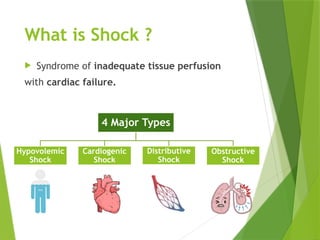
 Syndrome of inadequate tissue perfusion
with cardiac failure.
4 Major Types
Hypovolemic
Shock
Cardiogenic
Shock
Distributive
Shock
Obstructive
Shock
What is Shock ?
General Sign and Symptoms
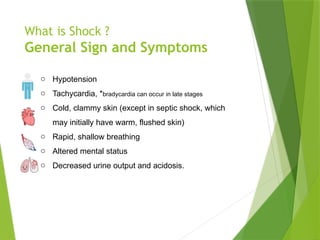
o Hypotension
o Tachycardia, *bradycardia can occur in late stages
o Cold, clammy skin (except in septic shock, which
may initially have warm, flushed skin)
o Rapid, shallow breathing
o Altered mental status
o Decreased urine output and acidosis.
What is Shock ?
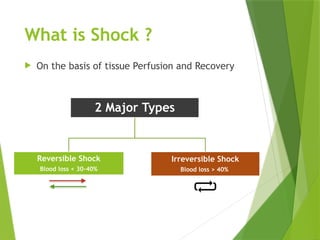
 On the basis of tissue Perfusion and Recovery
2 Major Types
Reversible Shock
Blood loss < 30-40%
Irreversible Shock
Blood loss > 40%
Refractory/Irreversible
Shock
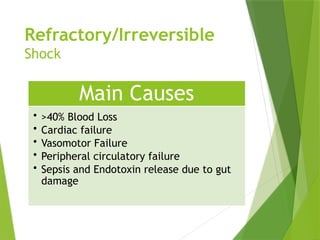
Main Causes
• >40% Blood Loss
• Cardiac failure
• Vasomotor Failure
• Peripheral circulatory failure
• Sepsis and Endotoxin release due to gut
damage
Refractory/Irreversible Shock
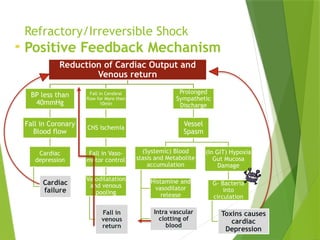
Positive Feedback Mechanism
Reduction of Cardiac Output and
Venous return
BP less than
40mmHg
Fall in Coronary
Blood flow
Cardiac
depression
Cardiac
failure
Fall in Cerebral
flow for More then
10min
CNS Ischemia
Fall in Vaso-
motor control
Vasodilatation
and venous
pooling
Fall in
venous
return
Prolonged
Sympathetic
Discharge
Vessel
Spasm
(Systemic) Blood
stasis and Metabolite
accumulation
Histamine and
vasodilator
release
Intra vascular
clotting of
blood
(In GIT) Hypoxia
Gut Mucosa
Damage
G- Bacteria
into
circulation
Toxins causes
cardiac
Depression
Shock
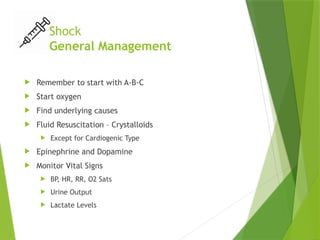
General Management
 Remember to start with A-B-C
 Start oxygen
 Find underlying causes
 Fluid Resuscitation – Crystalloids
 Except for Cardiogenic Type
 Epinephrine and Dopamine
 Monitor Vital Signs
 BP
, HR, RR, O2 Sats
 Urine Output
 Lactate Levels
Refractory/Irreversible Shock
Summary
Persistent shock despite adequate fluid resuscitation and
high-dose vasopressors/inotropes.
• Associated with severe, irreversible tissue hypoxia and
organ dysfunction
• Syndrome of inadequate tissue perfusion and Acute
Circulatory Failure
• Positive Feedback Mechanism
• High Mortality and Poor Prognosis
Refractory/Irreversible Shock
Question!
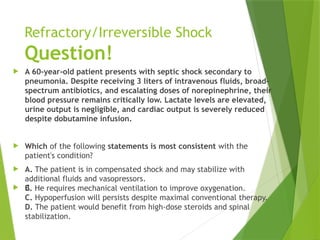
 A 60-year-old patient presents with septic shock secondary to
pneumonia. Despite receiving 3 liters of intravenous fluids, broad-
spectrum antibiotics, and escalating doses of norepinephrine, their
blood pressure remains critically low. Lactate levels are elevated,
urine output is negligible, and cardiac output is severely reduced
despite dobutamine infusion.
 Which of the following statements is most consistent with the
patient's condition?
 A. The patient is in compensated shock and may stabilize with
additional fluids and vasopressors.
B. He requires mechanical ventilation to improve oxygenation.
C. Hypoperfusion will persists despite maximal conventional therapy.
D. The patient would benefit from high-dose steroids and spinal
stabilization.
 C
Refractory/Irreversible Shock
Question!
 Correct Answer: C. Hypoperfusion will persists
despite maximal conventional therapy.
Explanation:
The patient's persistent hypotension, organ dysfunction, and
rising lactate despite fluid resuscitation and high-dose
vasopressors/inotropes indicate refractory shock.
C
Thank You
for your Patience

Irreversible Shock and its management - MBBS

  • 1.
    Irreversible SHOCK Dr. Nitin Khajotia 3rd yearMD Physiology Resident SMS Medical College Jaipur MICRO-TEACHING
  • 2.
    Learning Objectives  Whatis Shock ?  General Sign and Symptoms.  What causes Refractory/Irreversible Shock?  Positive Feedback Mechanism of Irreversible Shock  General management.
  • 3.
    What is Shock?  Syndrome of inadequate tissue perfusion with cardiac failure. 4 Major Types Hypovolemic Shock Cardiogenic Shock Distributive Shock Obstructive Shock
  • 4.
    What is Shock? General Sign and Symptoms o Hypotension o Tachycardia, *bradycardia can occur in late stages o Cold, clammy skin (except in septic shock, which may initially have warm, flushed skin) o Rapid, shallow breathing o Altered mental status o Decreased urine output and acidosis.
  • 5.
    What is Shock?  On the basis of tissue Perfusion and Recovery 2 Major Types Reversible Shock Blood loss < 30-40% Irreversible Shock Blood loss > 40%
  • 6.
    Refractory/Irreversible Shock Main Causes • >40%Blood Loss • Cardiac failure • Vasomotor Failure • Peripheral circulatory failure • Sepsis and Endotoxin release due to gut damage
  • 7.
    Refractory/Irreversible Shock Positive FeedbackMechanism Reduction of Cardiac Output and Venous return BP less than 40mmHg Fall in Coronary Blood flow Cardiac depression Cardiac failure Fall in Cerebral flow for More then 10min CNS Ischemia Fall in Vaso- motor control Vasodilatation and venous pooling Fall in venous return Prolonged Sympathetic Discharge Vessel Spasm (Systemic) Blood stasis and Metabolite accumulation Histamine and vasodilator release Intra vascular clotting of blood (In GIT) Hypoxia Gut Mucosa Damage G- Bacteria into circulation Toxins causes cardiac Depression
  • 8.
    Shock General Management  Rememberto start with A-B-C  Start oxygen  Find underlying causes  Fluid Resuscitation – Crystalloids  Except for Cardiogenic Type  Epinephrine and Dopamine  Monitor Vital Signs  BP , HR, RR, O2 Sats  Urine Output  Lactate Levels
  • 9.
    Refractory/Irreversible Shock Summary Persistent shockdespite adequate fluid resuscitation and high-dose vasopressors/inotropes. • Associated with severe, irreversible tissue hypoxia and organ dysfunction • Syndrome of inadequate tissue perfusion and Acute Circulatory Failure • Positive Feedback Mechanism • High Mortality and Poor Prognosis
  • 10.
    Refractory/Irreversible Shock Question!  A60-year-old patient presents with septic shock secondary to pneumonia. Despite receiving 3 liters of intravenous fluids, broad- spectrum antibiotics, and escalating doses of norepinephrine, their blood pressure remains critically low. Lactate levels are elevated, urine output is negligible, and cardiac output is severely reduced despite dobutamine infusion.  Which of the following statements is most consistent with the patient's condition?  A. The patient is in compensated shock and may stabilize with additional fluids and vasopressors. B. He requires mechanical ventilation to improve oxygenation. C. Hypoperfusion will persists despite maximal conventional therapy. D. The patient would benefit from high-dose steroids and spinal stabilization.  C
  • 11.
    Refractory/Irreversible Shock Question!  CorrectAnswer: C. Hypoperfusion will persists despite maximal conventional therapy. Explanation: The patient's persistent hypotension, organ dysfunction, and rising lactate despite fluid resuscitation and high-dose vasopressors/inotropes indicate refractory shock. C
  • 12.

Editor's Notes

  • #3 Hypovolemic – Hemoragic, non-hemoragic Cardiogenic – MI, Myocarditis, Valvular Dysfunction Obstructive Shock - Cardiac Tamponade, Abdominal Compartment Syndrome
  • #4 Why Bradycardia – Acidosis, Myocardial Ischemia