Download to read offline

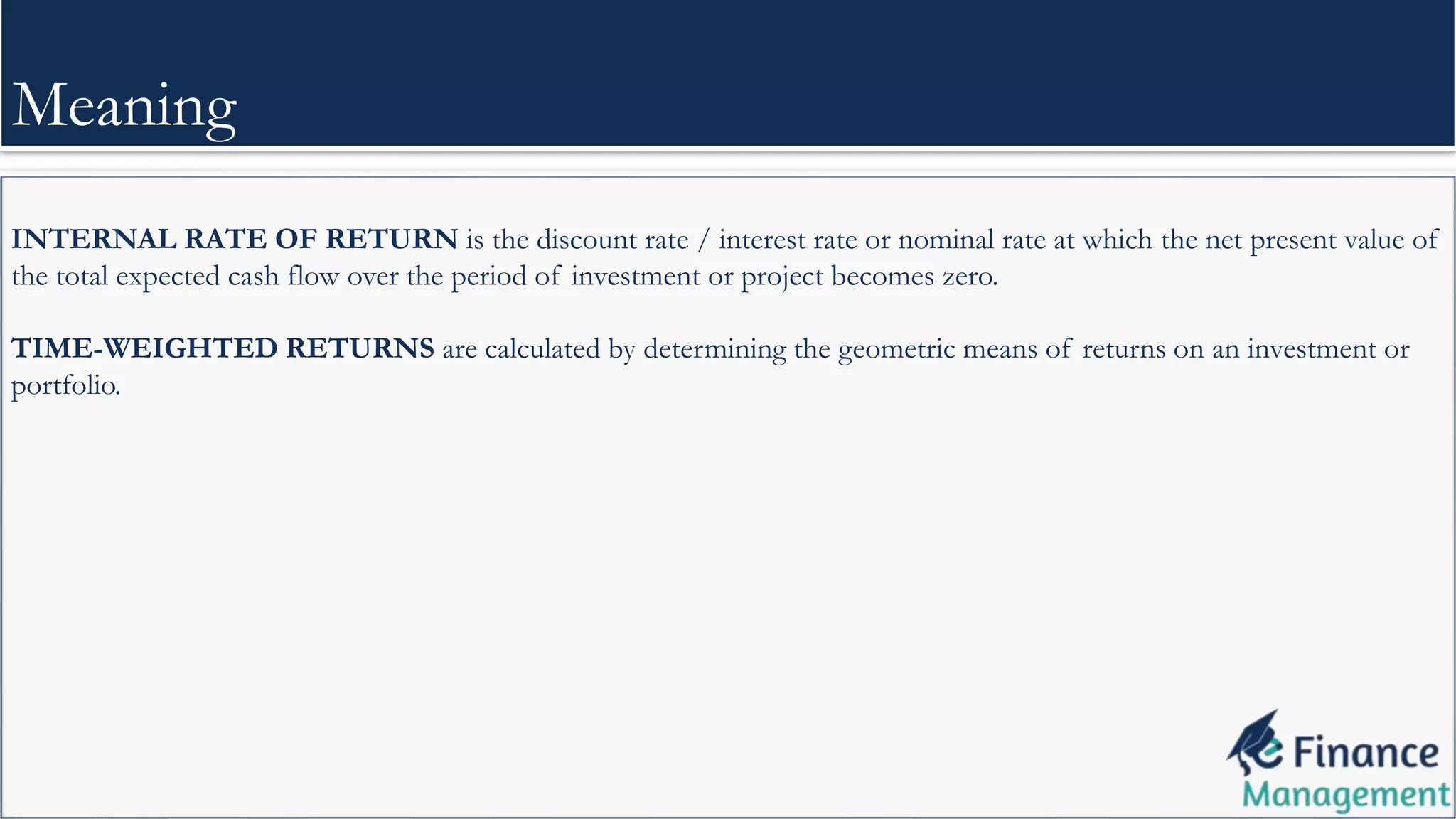

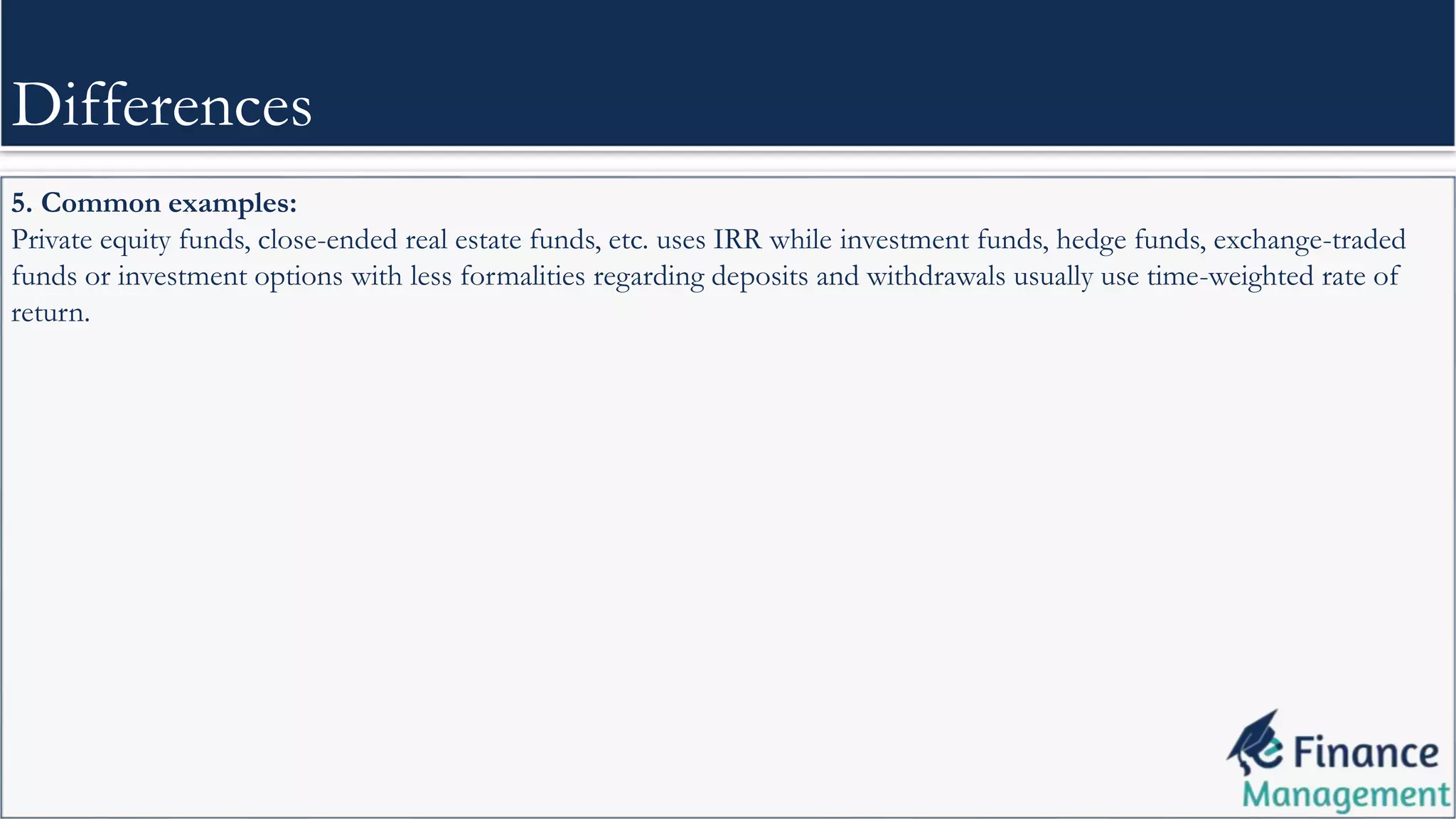


Internal rate of return (IRR) and time-weighted return are two methods for calculating investment returns. IRR is the discount rate that makes the net present value of cash flows equal to zero, while time-weighted return uses geometric means to determine returns over periods of time. IRR is more suitable when cash flows can be controlled, while time-weighted return is better for open-ended funds where cash flows are not controlled. Some advantages of IRR include its ability to account for cash deposits and withdrawals, while time-weighted return eliminates the effects of cash flows and better measures a fund manager's performance.


