IP spoofing involves lying about the source IP address in network packets. This allows an attacker to conduct various types of attacks, such as session hijacking, denial of service attacks, and spoofing attacks. Notable examples include Kevin Mitnick's 1994 attack on Tsutomu Shinomura where he determined the victim's TCP sequence number algorithm, and session hijacking attacks where the attacker can eavesdrop or take over communications between two parties. Defenses against IP spoofing involve making it more difficult for attackers to guess sequence numbers or determine addressing patterns if they are blind on the network. However, IP spoofing continues to evolve as a threat as long as different layers of the internet architecture implicitly trust each other.
Sources General Information:http://en.wikipedia.org/wiki/Ip_spoofing http://www.securityfocus.com/infocus/1674 http://tarpit.rmc.ca/knight/EE579index.htm (See ppts on subject) Mitnick Attack Sequence: http://www.gulker.com/ra/hack/tsattack.html Session Hijack Sequence: http://tarpit.rmc.ca/knight/EEE466Lectures/DA14/14%20-%20Security%20I.ppt DoS and DDoS attacks: http://tarpit.rmc.ca/knight/EEE466Lectures/DA14/14%20-%20Security%20I.ppt Conversation with Todd ‘Hot Toddy’ Jackson Phrack Article: http://www.phrack.org/issues.html?issue=64&id=15#article
3.
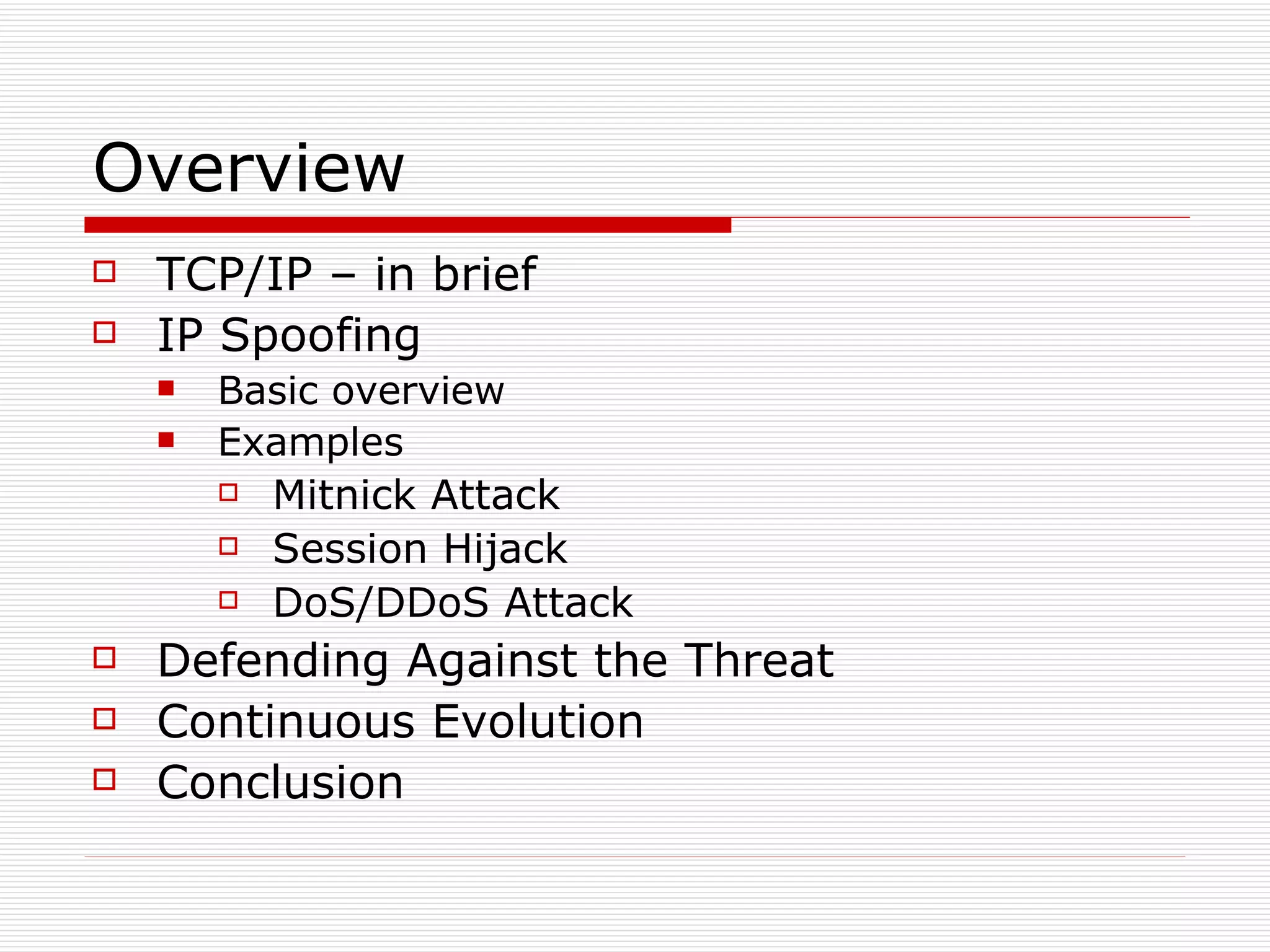
Overview TCP/IP –in brief IP Spoofing Basic overview Examples Mitnick Attack Session Hijack DoS/DDoS Attack Defending Against the Threat Continuous Evolution Conclusion
4.
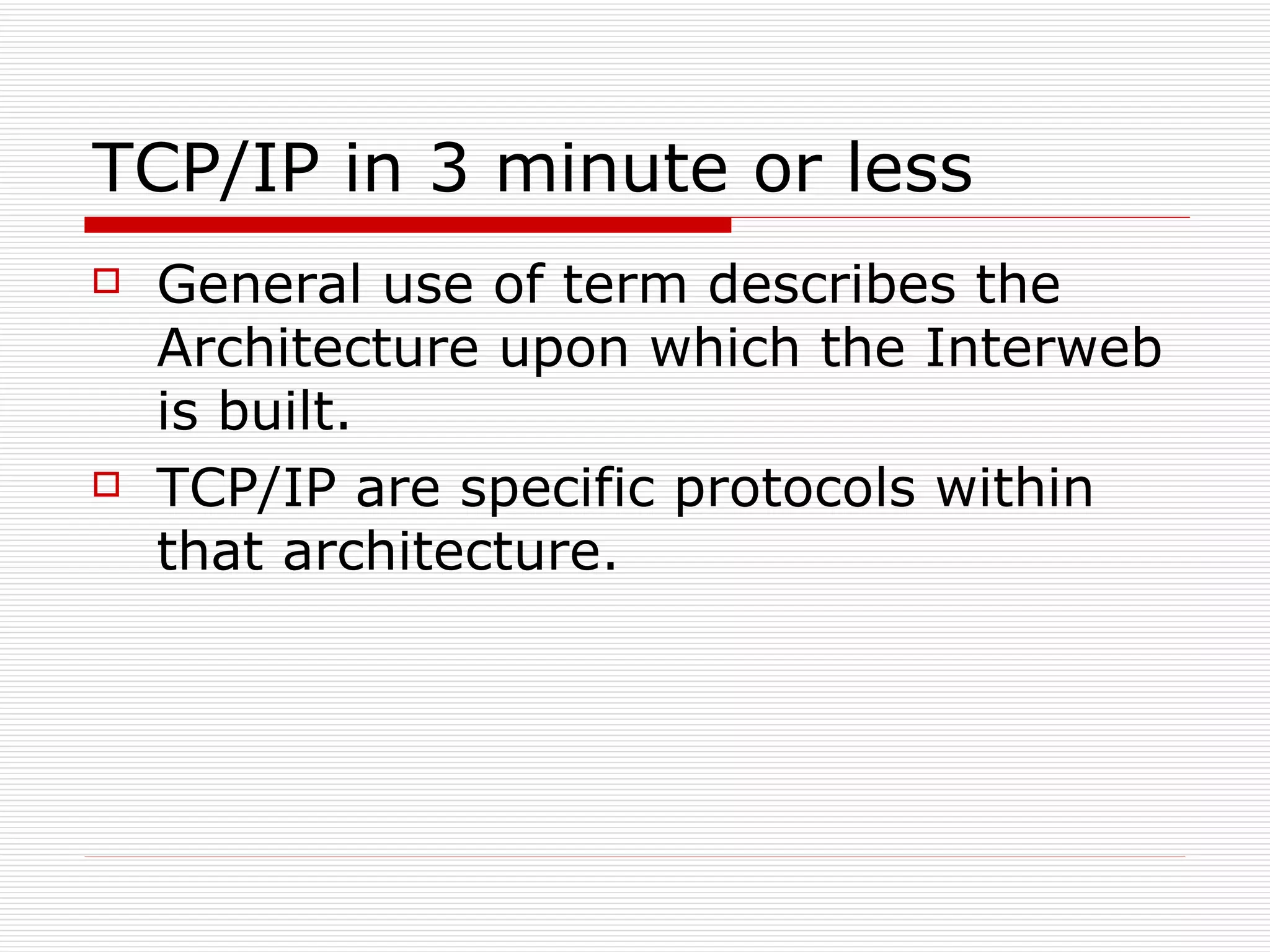
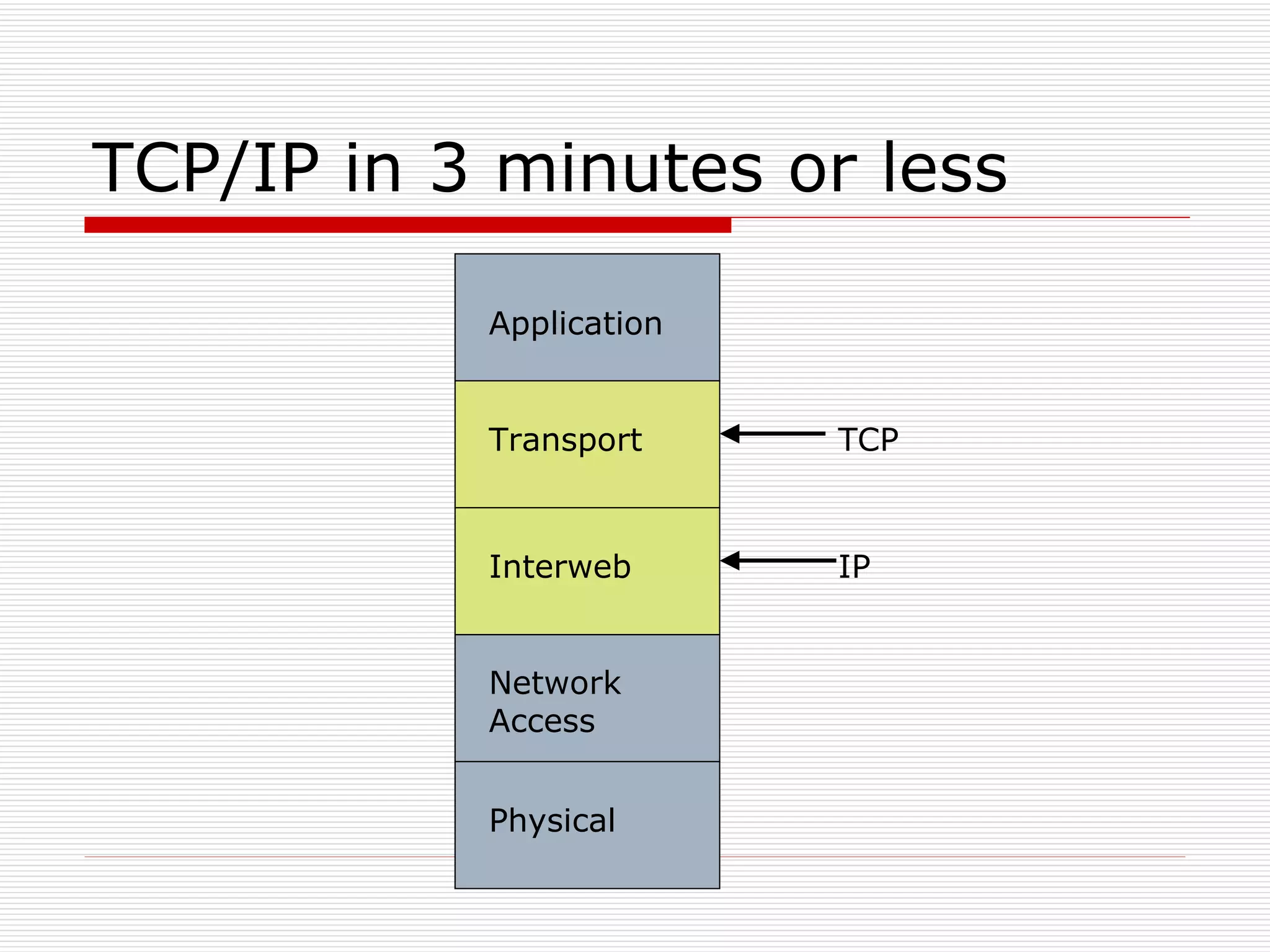
TCP/IP in 3minute or less General use of term describes the Architecture upon which the Interweb is built. TCP/IP are specific protocols within that architecture.
5.
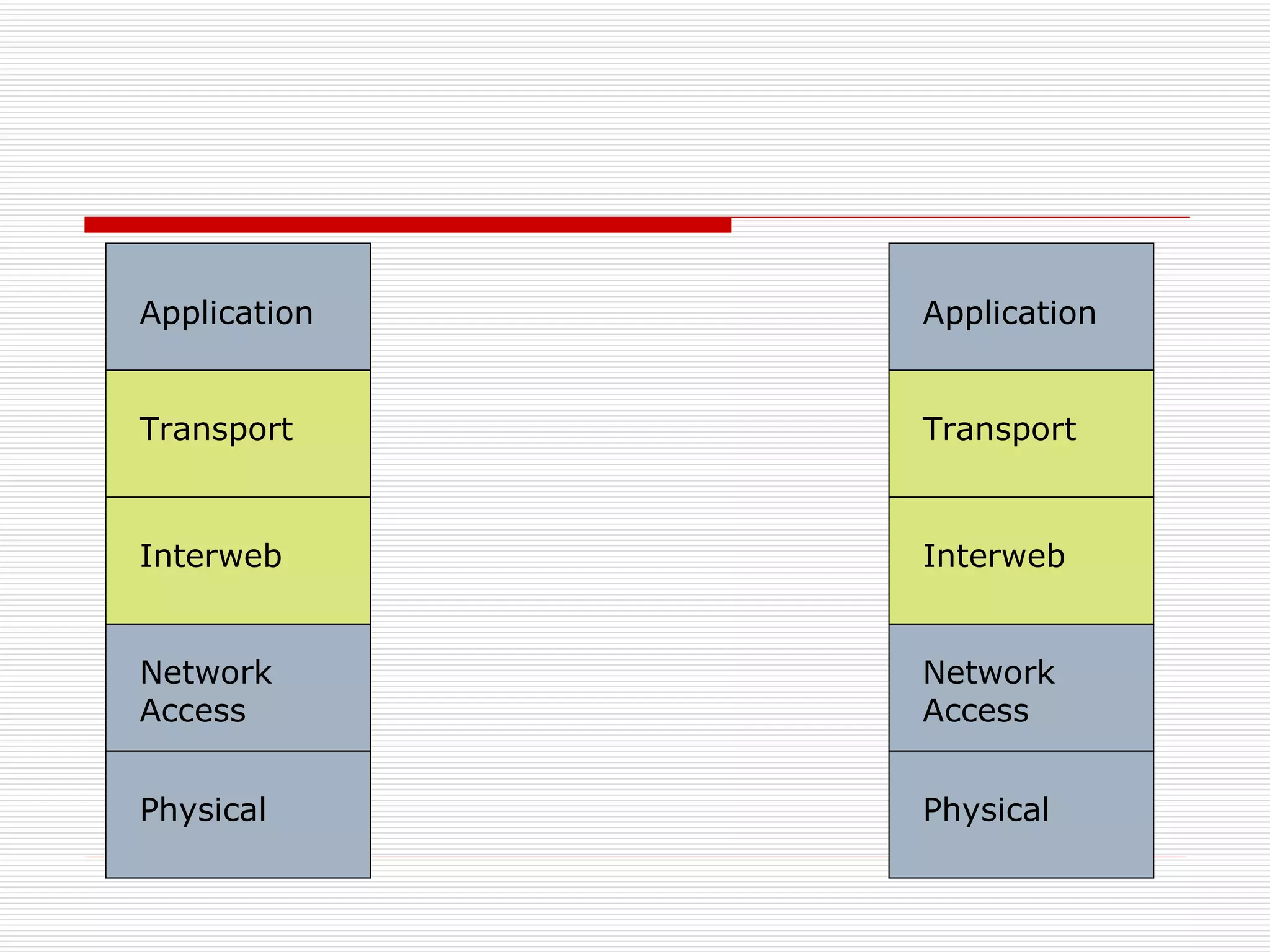
TCP/IP in 3minutes or less Application Transport Interweb Network Access Physical TCP IP
6.
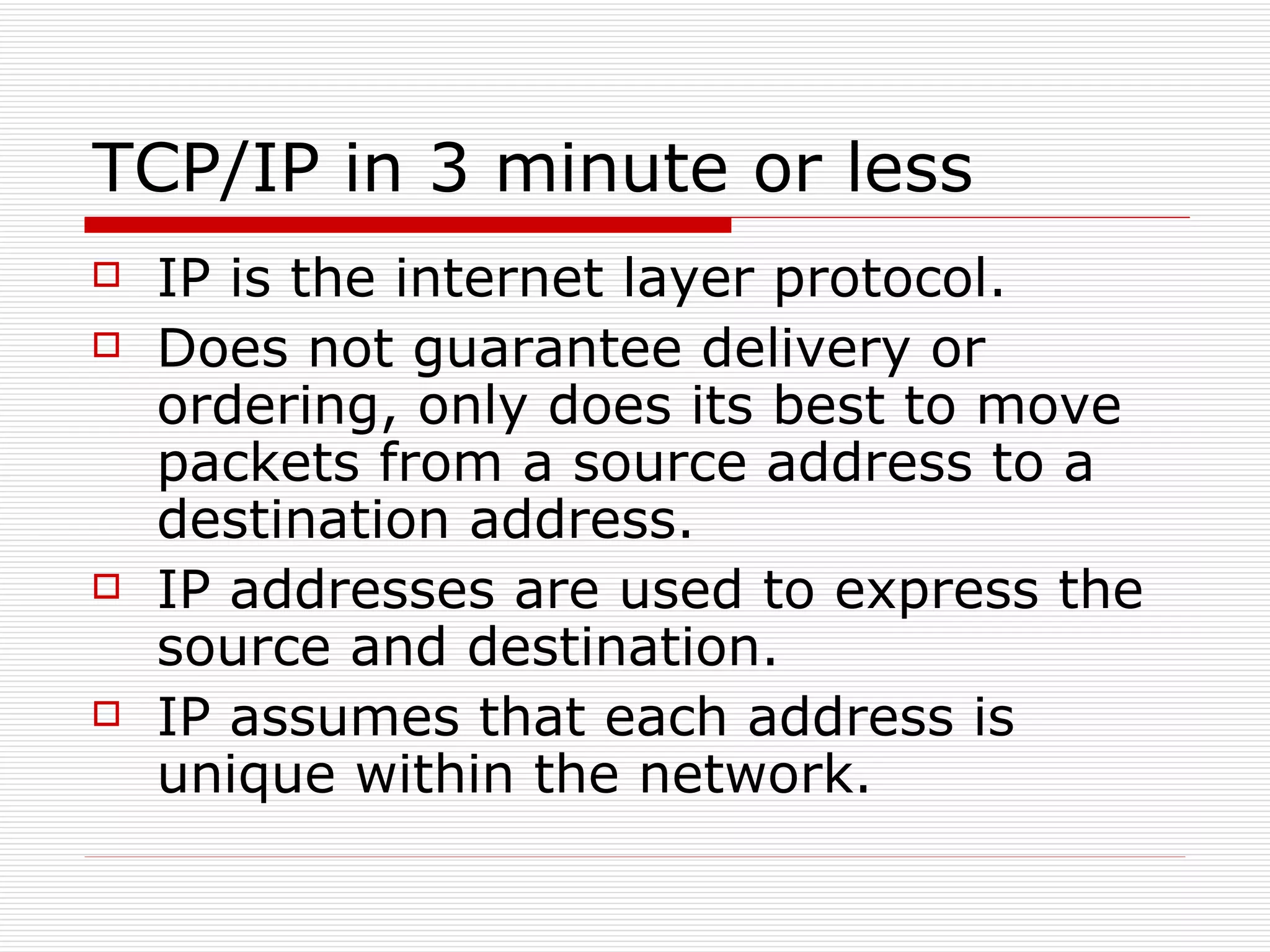
TCP/IP in 3minute or less IP is the internet layer protocol. Does not guarantee delivery or ordering, only does its best to move packets from a source address to a destination address. IP addresses are used to express the source and destination. IP assumes that each address is unique within the network.
7.
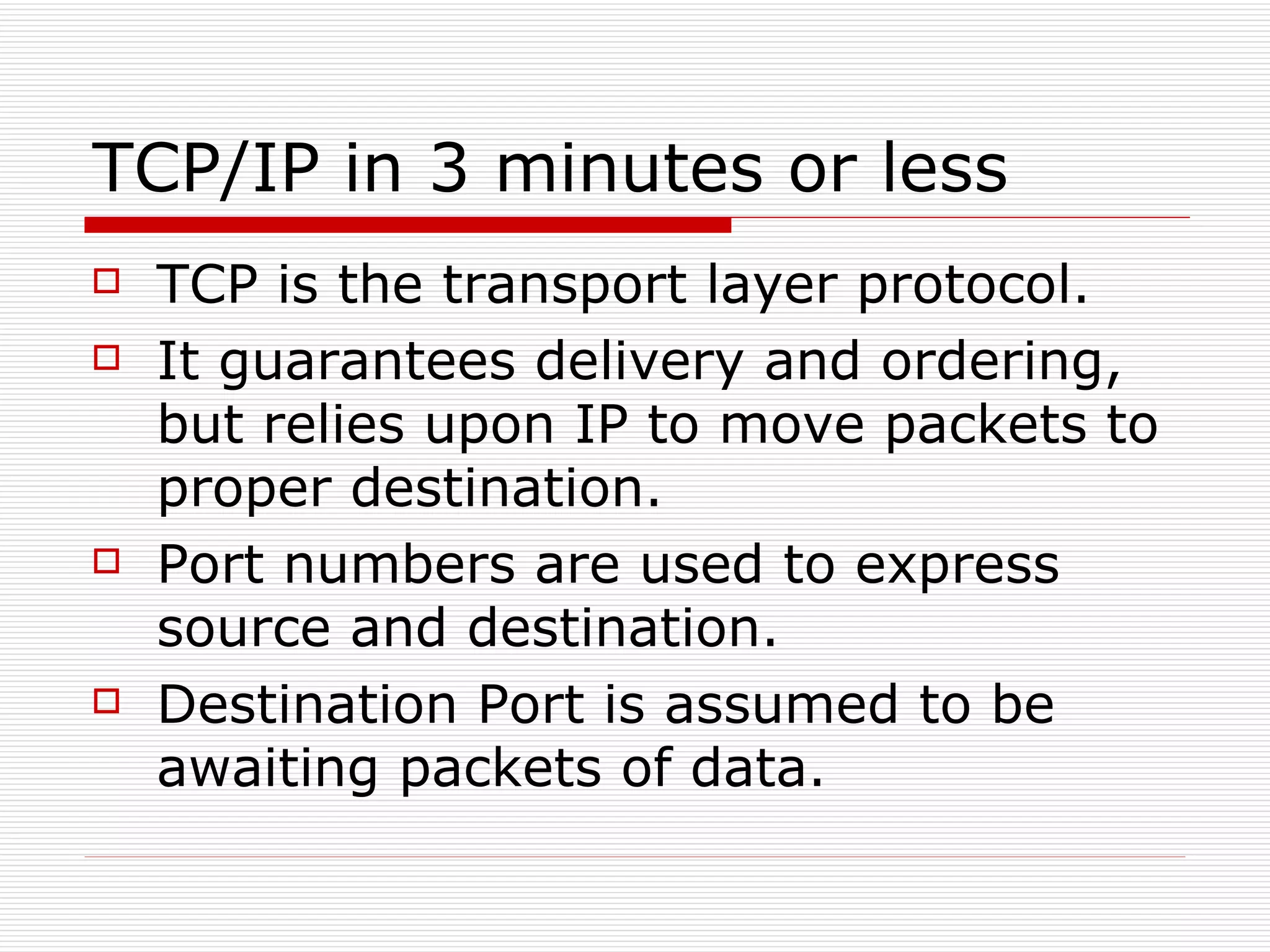
TCP/IP in 3minutes or less TCP is the transport layer protocol. It guarantees delivery and ordering, but relies upon IP to move packets to proper destination. Port numbers are used to express source and destination. Destination Port is assumed to be awaiting packets of data.
8.
TCP/IP in 3minutes or less Application Transport Interweb Network Access Physical Application Transport Interweb Network Access Physical Client Using Mozilla HTTP - GET Some Web Server TCP – Port 80 IP – 10.24.1.1 MAC – 00:11:22:33:44:55 1101001001110100110100110101 But what happens if someone is lying??
9.
IP Spoofing –Basic Overview Basically, IP spoofing is lying about an IP address. Normally, the source address is incorrect. Lying about the source address lets an attacker assume a new identity.
10.
IP Spoofing –Basic Overview Because the source address is not the same as the attacker’s address, any replies generated by the destination will not be sent to the attacker. Attacker must have an alternate way to spy on traffic/predict responses. To maintain a connection, Attacker must adhere to protocol requirements
11.
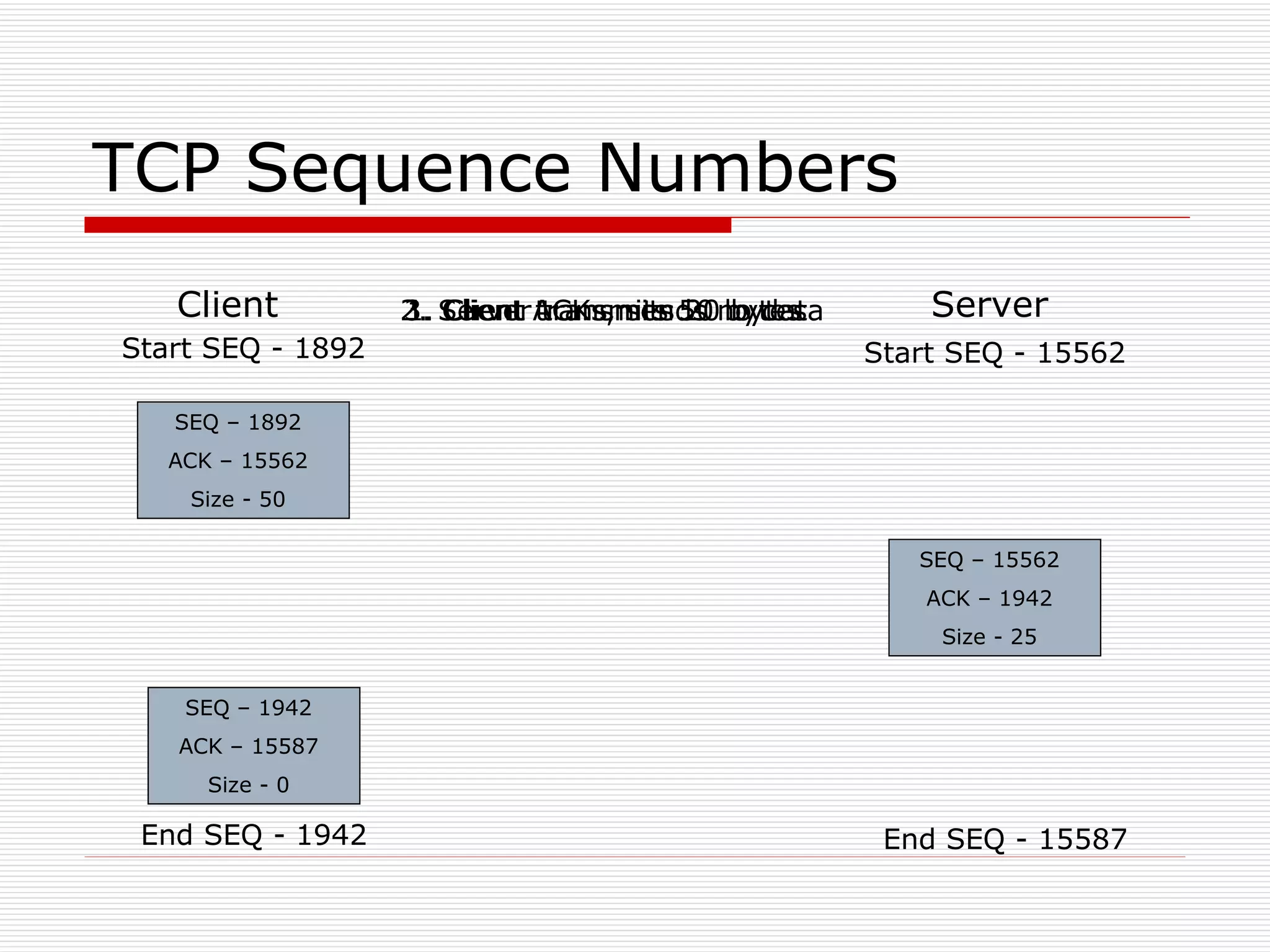
IP Spoofing –Basic Overview Difficulties for attacker: TCP sequence numbers One way communication Adherence to protocols for other layers
12.
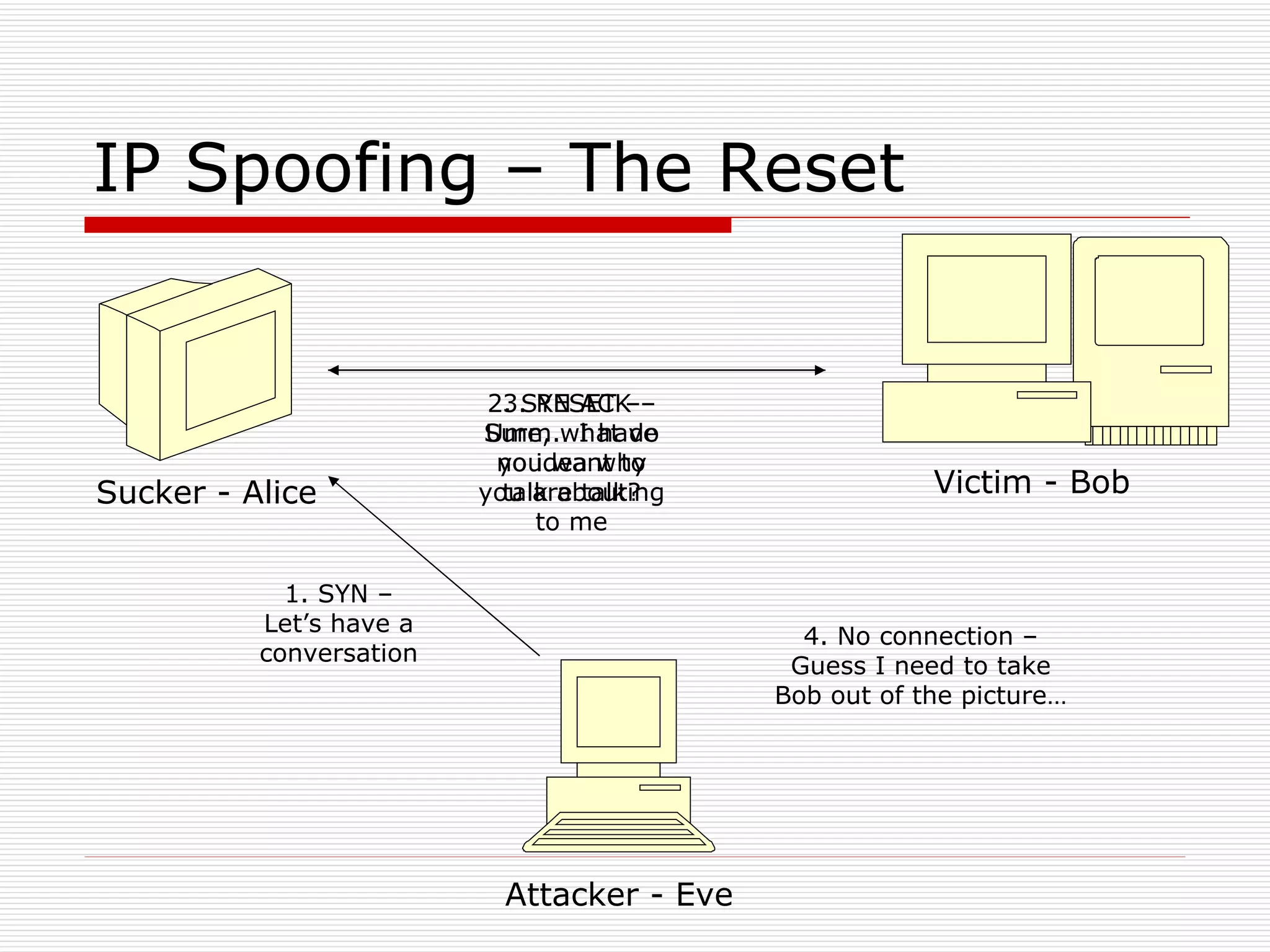
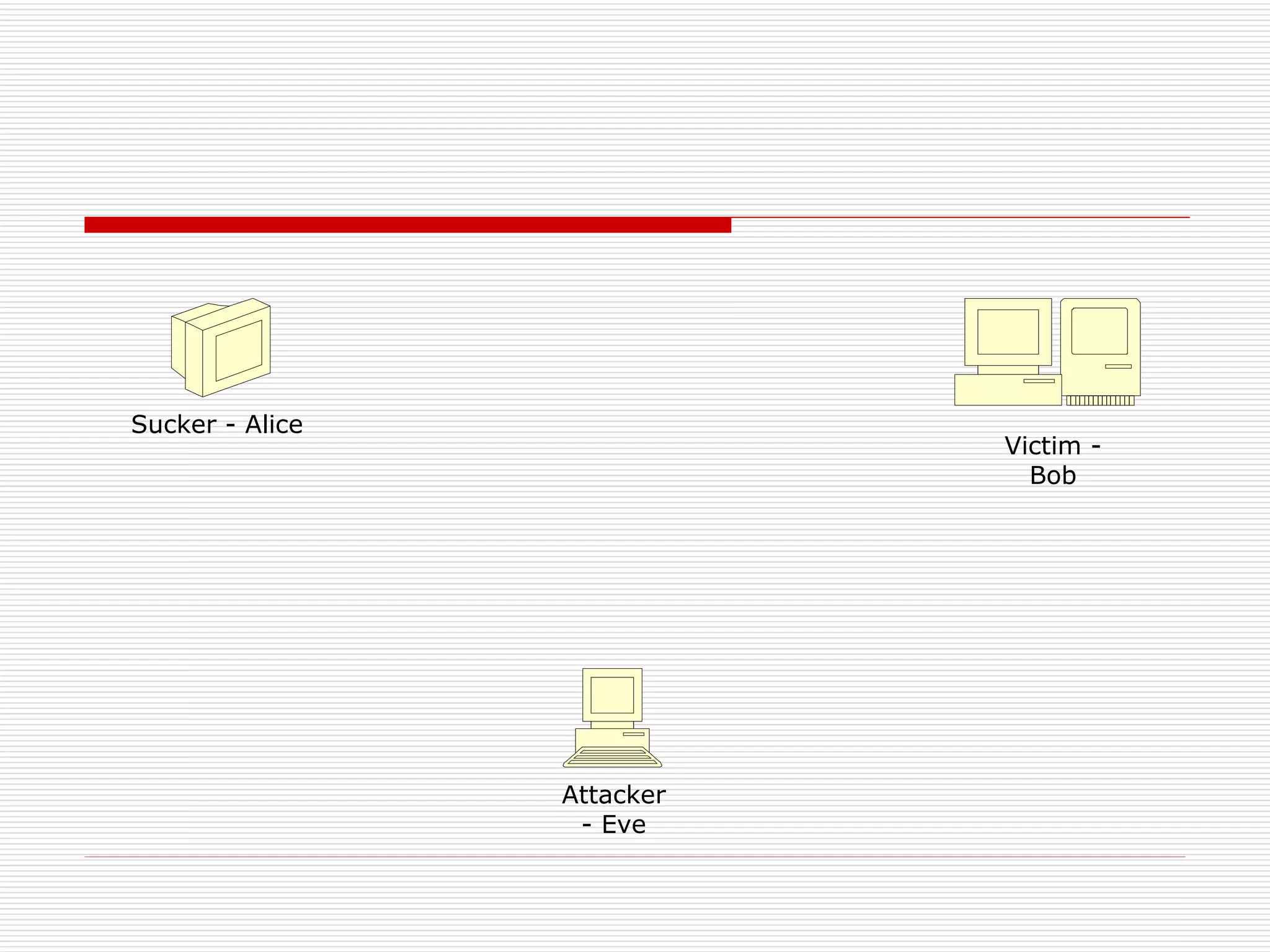
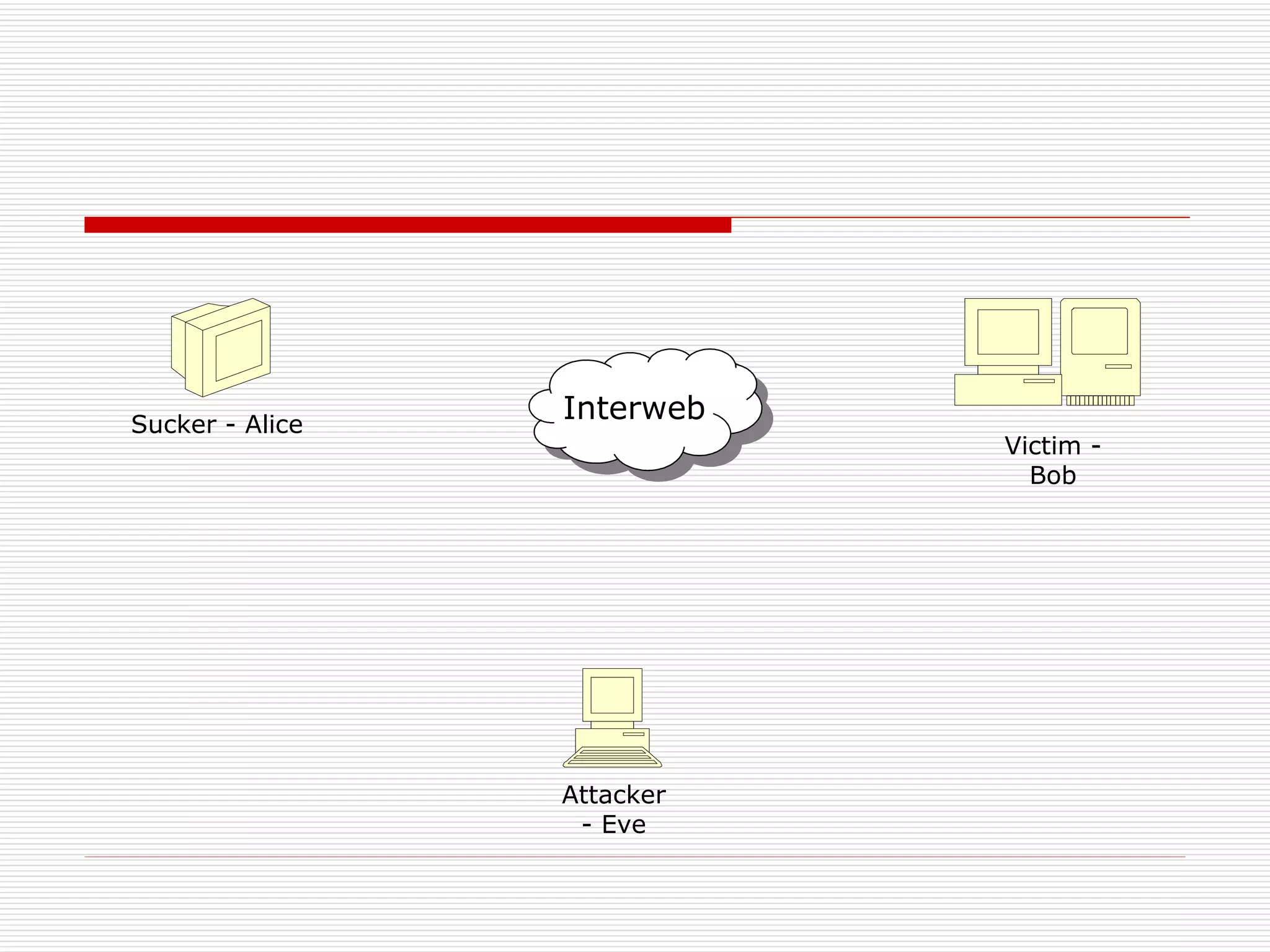
IP Spoofing –The Reset Victim - Bob Sucker - Alice Attacker - Eve 1. SYN – Let’s have a conversation 2. SYN ACK – Sure, what do you want to talk about? 3. RESET – Umm.. I have no idea why you are talking to me 4. No connection – Guess I need to take Bob out of the picture…
13.
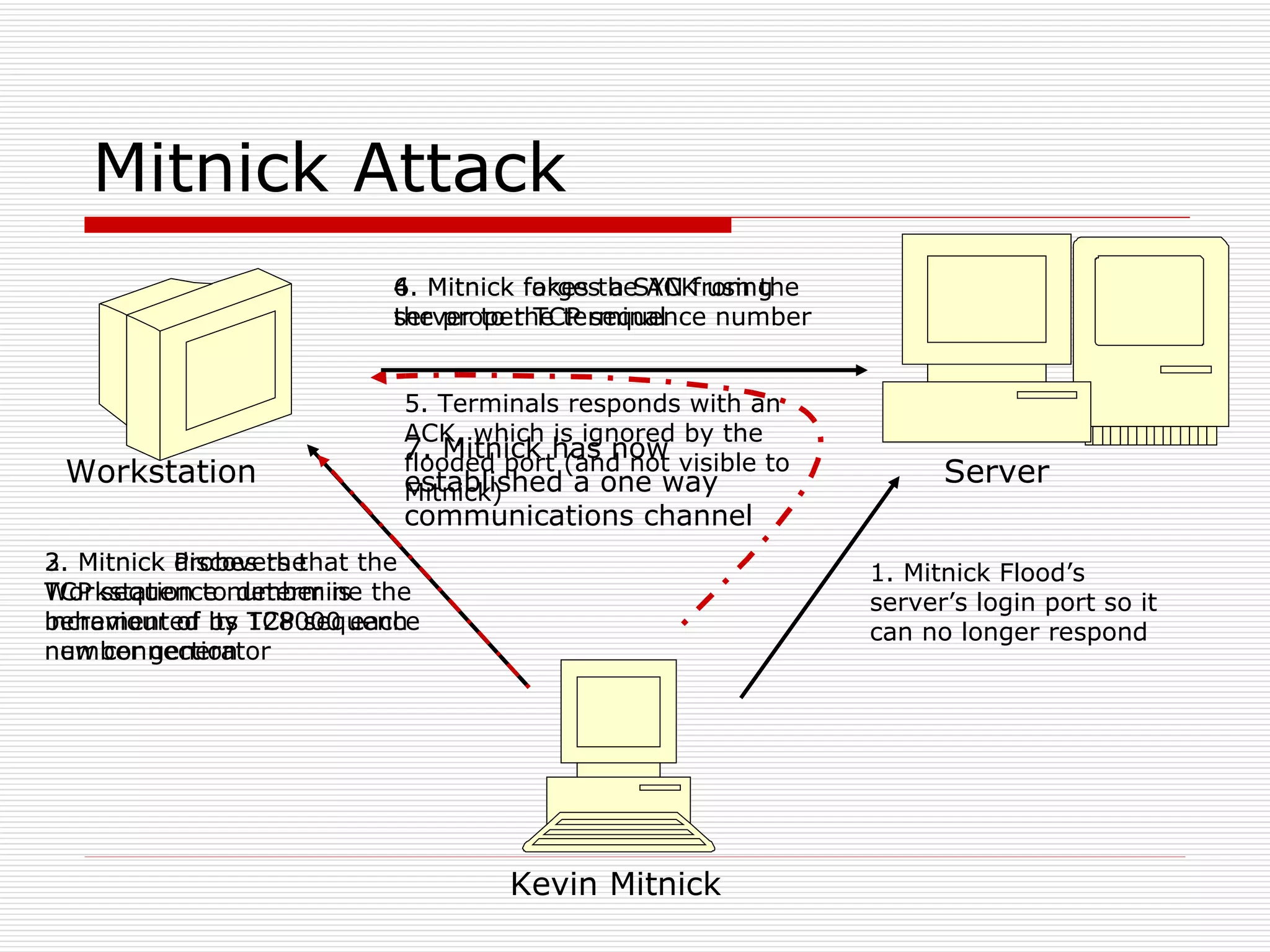
IP Spoofing –Mitnick Attack Merry X-mas! Mitnick hacks a Diskless Workstation on December 25 th , 1994 The victim – Tsutomu Shinomura The attack – IP spoofing and abuse of trust relationships between a diskless terminal and login server.
14.
Mitnick Attack 1.Mitnick Flood’s server’s login port so it can no longer respond 2. Mitnick Probes the Workstation to determine the behaviour of its TCP sequence number generator 3. Mitnick discovers that the TCP sequence number is incremented by 128000 each new connection 4. Mitnick forges a SYN from the server to the terminal 5. Terminals responds with an ACK, which is ignored by the flooded port (and not visible to Mitnick) Server Workstation Kevin Mitnick 6. Mitnick fakes the ACK using the proper TCP sequence number 7. Mitnick has now established a one way communications channel
15.
Mitnick Attack –Why it worked Mitnick abused the trust relationship between the server and workstation He flooded the server to prevent communication between it and the workstation Used math skillz to determine the TCP sequence number algorithm (ie add 128000) This allowed Mitnick to open a connection without seeing the workstations outgoing sequence numbers and without the server interrupting his attack
16.
IP Spoofing -Session Hijack IP spoofing used to eavesdrop/take control of a session. Attacker normally within a LAN/on the communication path between server and client. Not blind, since the attacker can see traffic from both server and client.
17.
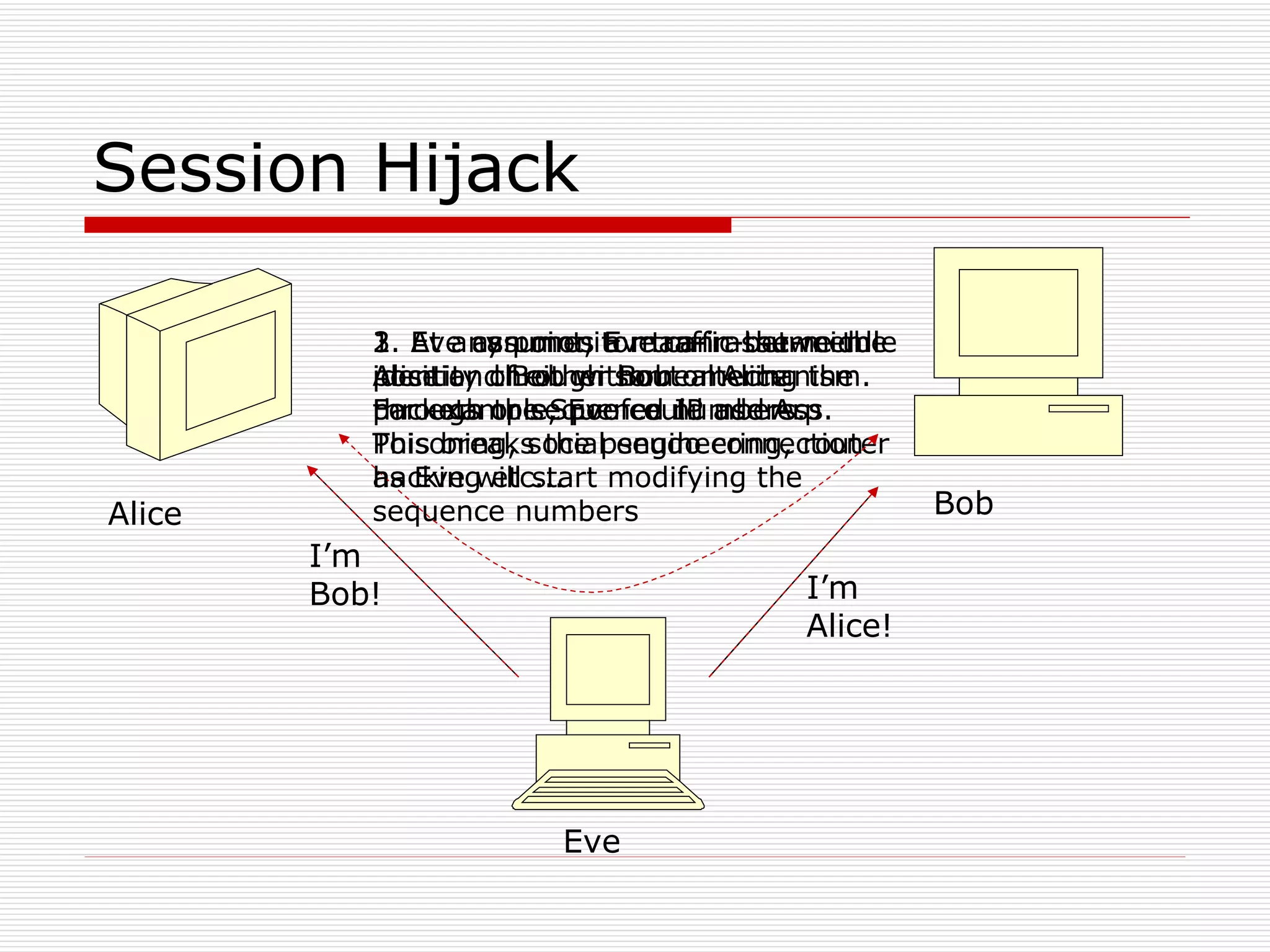
Session Hijack AliceBob Eve I’m Bob! I’m Alice! 1. Eve assumes a man-in-the-middle position through some mechanism. For example, Eve could use Arp Poisoning, social engineering, router hacking etc... 2. Eve can monitor traffic between Alice and Bob without altering the packets or sequence numbers. 3. At any point, Eve can assume the identity of either Bob or Alice through the Spoofed IP address. This breaks the pseudo connection as Eve will start modifying the sequence numbers
18.
IP Spoofing –DoS/DDoS Denial of Service (DoS) and Distributed Denial of Service (DDoS) are attacks aimed at preventing clients from accessing a service. IP Spoofing can be used to create DoS attacks
19.
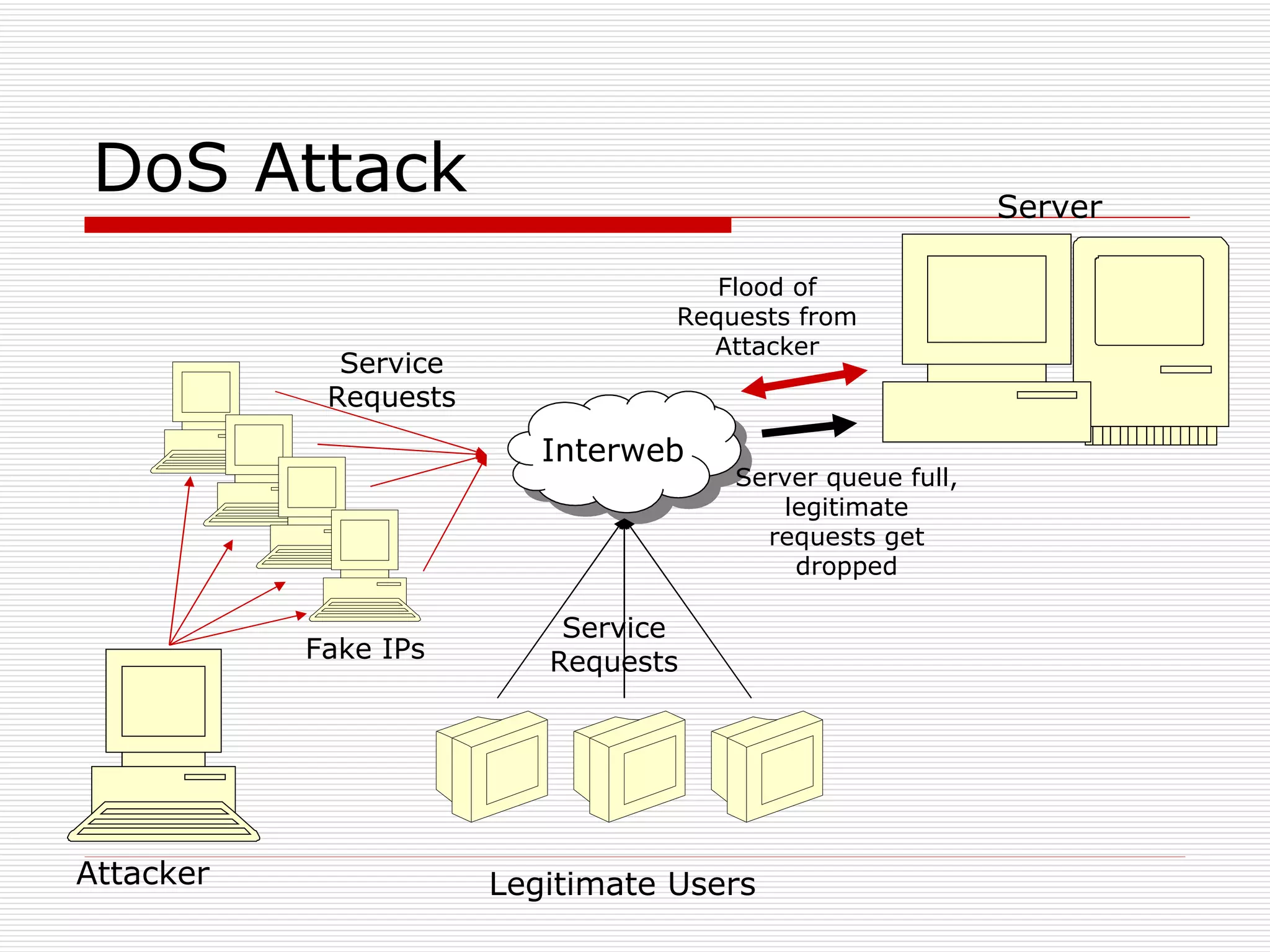
DoS Attack ServerAttacker Legitimate Users Interweb Fake IPs Service Requests Flood of Requests from Attacker Server queue full, legitimate requests get dropped Service Requests
20.
DoS Attack Theattacker spoofs a large number of requests from various IP addresses to fill a Services queue. With the services queue filled, legitimate user’s cannot use the service.
21.
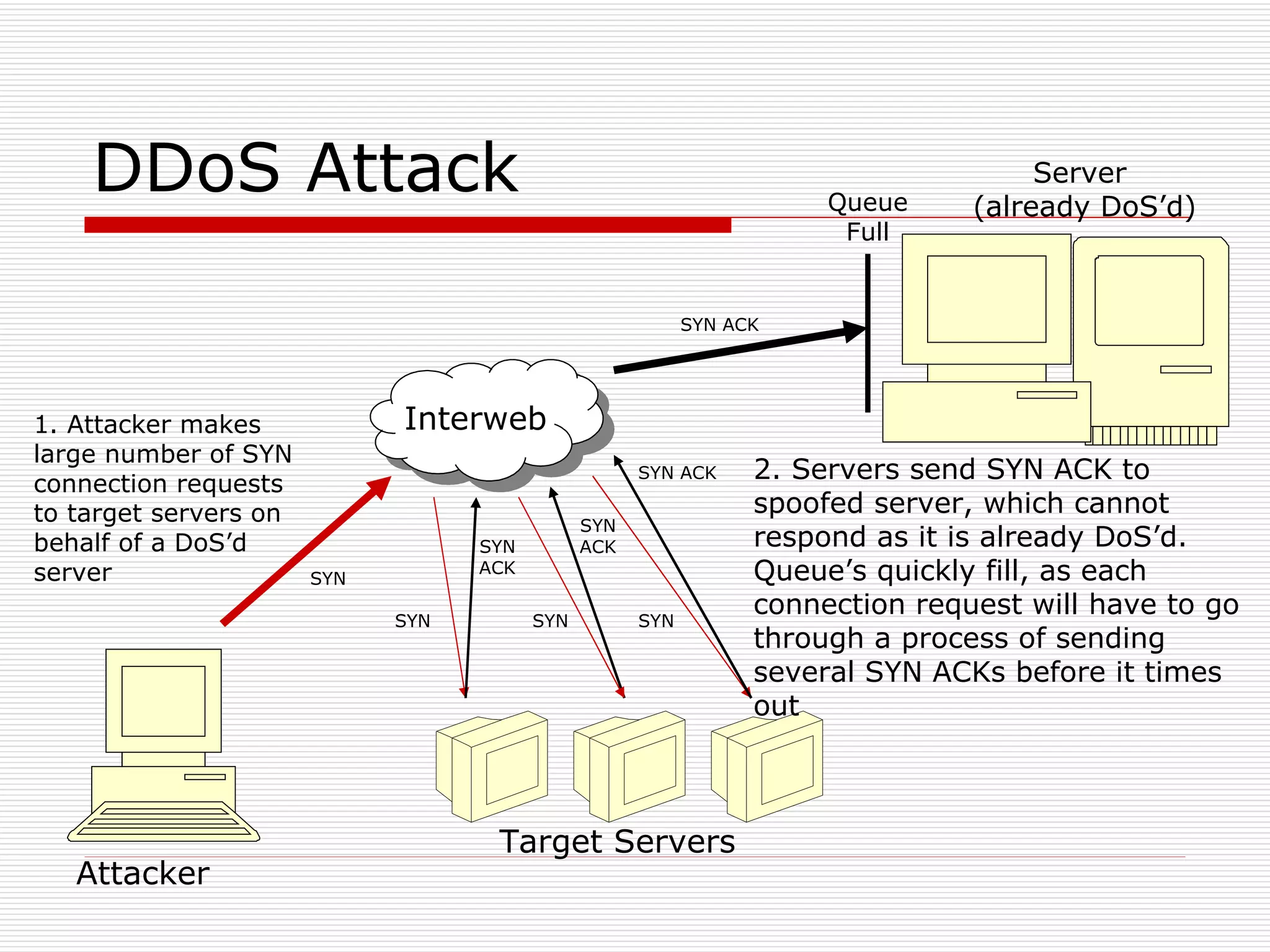
DDoS Attack Server (already DoS’d) Attacker Target Servers Interweb 1. Attacker makes large number of SYN connection requests to target servers on behalf of a DoS’d server 2. Servers send SYN ACK to spoofed server, which cannot respond as it is already DoS’d. Queue’s quickly fill, as each connection request will have to go through a process of sending several SYN ACKs before it times out SYN SYN SYN SYN SYN ACK SYN ACK SYN ACK SYN ACK Queue Full
22.
DDoS Attack Manyother types of DDoS are possible. DoS becomes more dangerous if spread to multiple computers.
23.
IP Spoofing –Defending IP spoofing can be defended against in a number of ways: As mentioned, other protocols in the Architectural model may reveal spoofing. TCP sequence numbers are often used in this manner New generators for sequence numbers are a lot more complicated than ‘add 128000’ Makes it difficult to guess proper sequence numbers if the attacker is blind “ Smart” routers can detect IP addresses that are outside its domain. “ Smart” servers can block IP ranges that appear to be conducting a DoS.
24.
IP Spoofing continuesto evolve IP spoofing is still possible today, but has to evolve in the face of growing security. New issue of Phrack includes a method of using IP spoofing to perform remote scans and determine TCP sequence numbers This allows a session Hijack attack even if the Attacker is blind
25.
Conclusion IP Spoofingis an old school Hacker trick that continues to evolve. Can be used for a wide variety of purposes. Will continue to represent a threat as long as each layer continues to trust each other and people are willing to subvert that trust.
Victim - BobSucker - Alice Attacker - Eve Interweb
30.
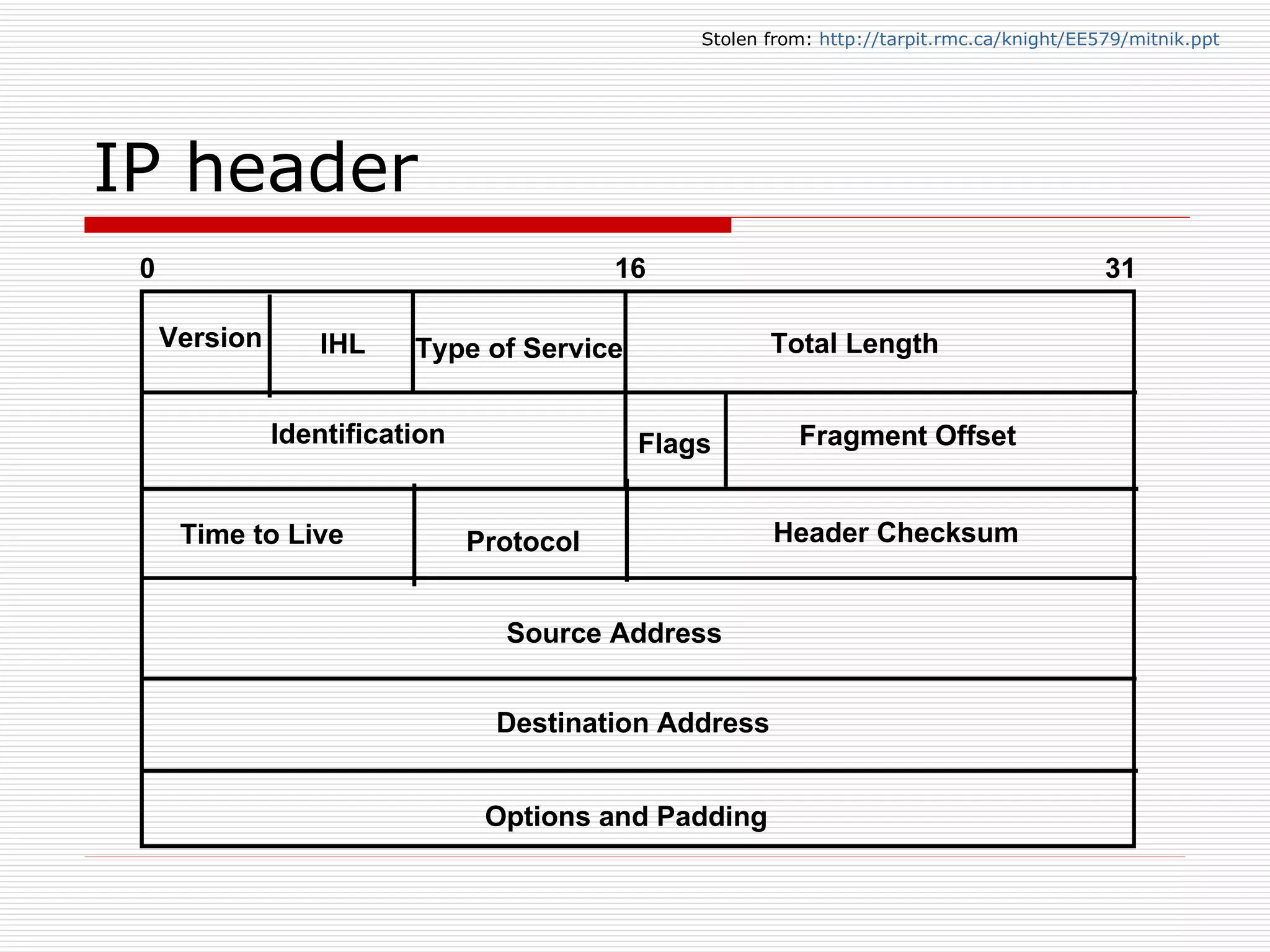
IP header 0 16 31 Options and Padding Source Address Destination Address Total Length Fragment Offset Header Checksum Time to Live Protocol Identification Type of Service Flags Version IHL Stolen from: http://tarpit.rmc.ca/knight/EE579/mitnik.ppt
31.
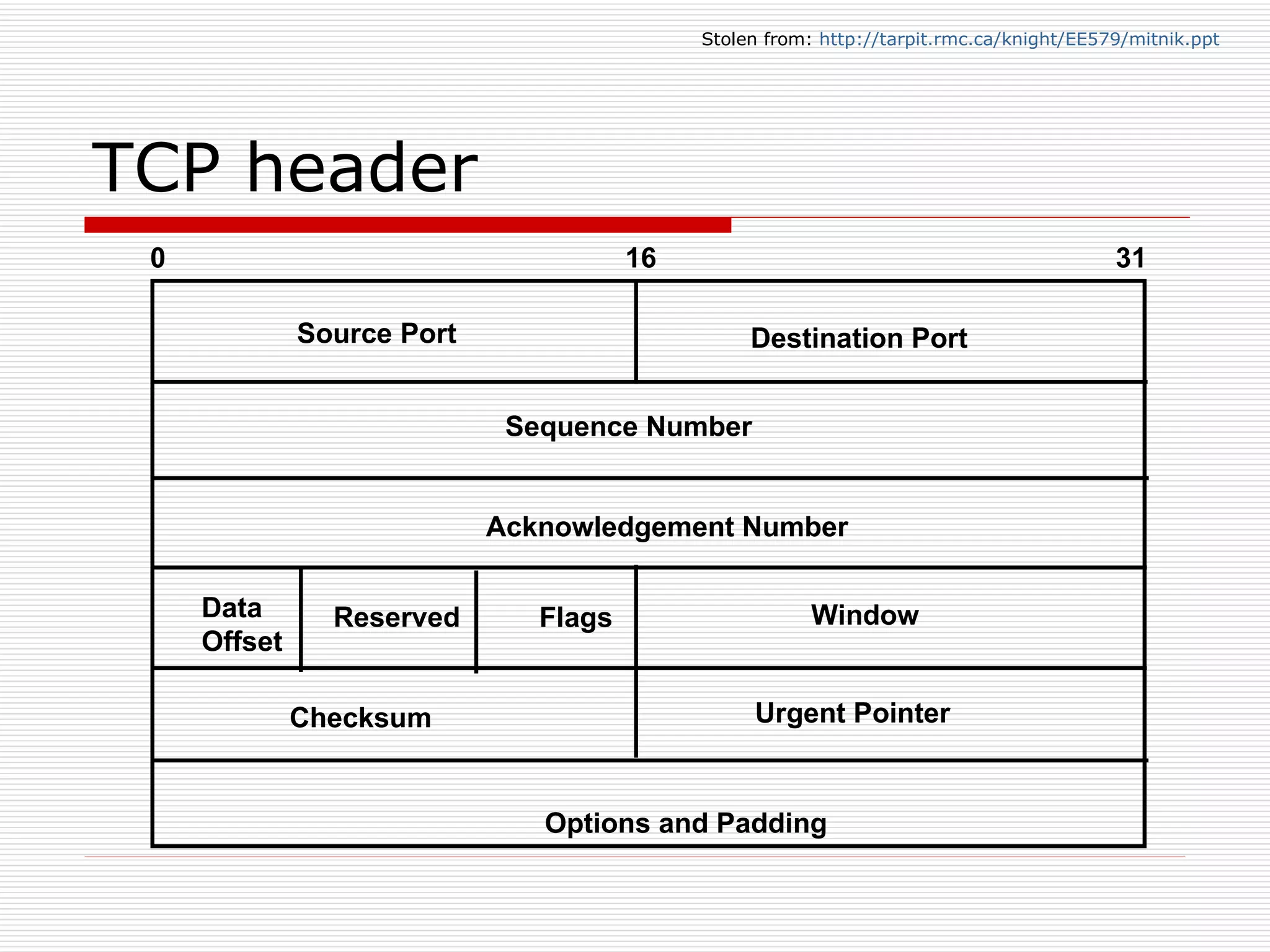
TCP header Stolenfrom: http://tarpit.rmc.ca/knight/EE579/mitnik.ppt 0 16 31 Source Port Destination Port Sequence Number Acknowledgement Number Window Urgent Pointer Options and Padding Checksum Flags Reserved Data Offset



![Vibe Coding vs. Spec-Driven Development [Free Meetup]](https://cdn.slidesharecdn.com/ss_thumbnails/vibecodingvsspecdrivendevelopment-251209105622-43f455e7-thumbnail.jpg?width=640&height=640&fit=bounds)


