Comparison
Between OSI and
TCP/IP Layers
Understanding the
fundamental
networking models.
Start here
Introduction
This presentation compares the OSI and
TCP/IP models, two fundamental frameworks
in networking that facilitate communication
protocols. We will explore their structures,
purposes, and practical applications for a
better understanding of how networks
operate.
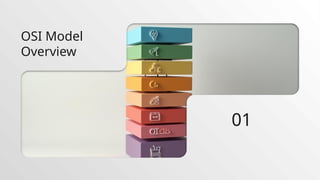
OSI Model
Overview
01
Definition and Purpose
The OSI (Open Systems Interconnection) model is a conceptual
framework used to understand and implement network
communications. It divides the networking process into seven
distinct layers, promoting interoperability between diverse
systems and technologies.
Layer Structure
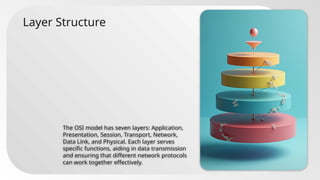
The OSI model has seven layers: Application,
Presentation, Session, Transport, Network,
Data Link, and Physical. Each layer serves
specific functions, aiding in data transmission
and ensuring that different network protocols
can work together effectively.
Significance in Networking
The OSI model is crucial as it provides a universal language for
different networking systems. Its layered architecture simplifies
troubleshooting and fosters compatibility among various
hardware and software configurations.
TCP/IP Model
Overview
02
Definition and Purpose
The TCP/IP (Transmission Control Protocol/Internet Protocol)
model is a suite of communication protocols used for the
Internet and similar networks. It streamlines networking into
four layers: Application, Transport, Internet, and Network
Access, designed to meet the practical needs of networking.
Layer Structure
The TCP/IP model comprises four layers: Application, Transport,
Internet, and Network Access. Each layer is responsible for
distinct processes involved in the transmission and routing of
data across networks, contrasting with the OSI's seven-layer
approach.
Significance in Networking
The TCP/IP model is the foundation of modern Internet
architecture. Its resilience and adaptability make it the standard
protocol suite for network communications, essential for
effective data transmission across diverse infrastructures.
Definition and Purpose
The OSI and TCP/IP models serve as guiding
frameworks for network communications. The
OSI model emphasizes the theoretical
understanding of networking tasks through
seven layers, while TCP/IP focuses on practical
implementation with four layers, driving the
development of the Internet and related
communications.
Layer Structure
The OSI model comprises seven layers: Application,
Presentation, Session, Transport, Network, Data Link, and
Physical. In contrast, the TCP/IP model simplifies networking
into four layers: Application, Transport, Internet, and Network
Access, streamlining the process and enhancing compatibility.
Significance in Networking
Both models are key to understanding network interactions.
The OSI model provides a universal reference that encourages
the interconnectivity of systems, whereas TCP/IP emerged from
real-world application, making it vital for modern network
design and operation.
Comparison of
OSI and TCP/IP
03
Layer Alignment
While both models address similar networking challenges, their
layer orientations differ. OSI's seven layers provide detailed
functions, while TCP/IP’s four layers integrate certain
functionalities, focusing on efficiency and practicality in
communication protocols.
Functionality Differences
Each layer in the OSI model has a specific role,
contributing to a modular framework.
Conversely, the TCP/IP model layers often
blend functionalities for streamlined
operations essential for data transmission and
network communication, prioritizing real-
world effectiveness.
Real-World Application
The TCP/IP model dominates modern networking due to its
robust architecture, minimal latency, and adaptability to various
technologies. The OSI model, while less commonly
implemented, remains a valuable educational tool for
understanding the components of networking.
Conclusions
In conclusion, the OSI and TCP/IP models are foundational to
networking, each serving distinct purposes. The OSI model
offers a comprehensive understanding of networking concepts,
while the TCP/IP model is essential for practical applications in
today's interconnected world.
CREDITS: This presentation template was
created by Slidesgo, and includes icons,
infographics & images by Freepik
Thank you!
Do you have any questions?
+00 000 000 000
IP Layers in TCP IP protocol suite.pptx

  • 1.
    Comparison Between OSI and TCP/IPLayers Understanding the fundamental networking models. Start here
  • 2.
    Introduction This presentation comparesthe OSI and TCP/IP models, two fundamental frameworks in networking that facilitate communication protocols. We will explore their structures, purposes, and practical applications for a better understanding of how networks operate.
  • 3.
  • 4.
    Definition and Purpose TheOSI (Open Systems Interconnection) model is a conceptual framework used to understand and implement network communications. It divides the networking process into seven distinct layers, promoting interoperability between diverse systems and technologies.
  • 5.
    Layer Structure The OSImodel has seven layers: Application, Presentation, Session, Transport, Network, Data Link, and Physical. Each layer serves specific functions, aiding in data transmission and ensuring that different network protocols can work together effectively.
  • 6.
    Significance in Networking TheOSI model is crucial as it provides a universal language for different networking systems. Its layered architecture simplifies troubleshooting and fosters compatibility among various hardware and software configurations.
  • 7.
  • 8.
    Definition and Purpose TheTCP/IP (Transmission Control Protocol/Internet Protocol) model is a suite of communication protocols used for the Internet and similar networks. It streamlines networking into four layers: Application, Transport, Internet, and Network Access, designed to meet the practical needs of networking.
  • 9.
    Layer Structure The TCP/IPmodel comprises four layers: Application, Transport, Internet, and Network Access. Each layer is responsible for distinct processes involved in the transmission and routing of data across networks, contrasting with the OSI's seven-layer approach.
  • 10.
    Significance in Networking TheTCP/IP model is the foundation of modern Internet architecture. Its resilience and adaptability make it the standard protocol suite for network communications, essential for effective data transmission across diverse infrastructures.
  • 11.
    Definition and Purpose TheOSI and TCP/IP models serve as guiding frameworks for network communications. The OSI model emphasizes the theoretical understanding of networking tasks through seven layers, while TCP/IP focuses on practical implementation with four layers, driving the development of the Internet and related communications.
  • 12.
    Layer Structure The OSImodel comprises seven layers: Application, Presentation, Session, Transport, Network, Data Link, and Physical. In contrast, the TCP/IP model simplifies networking into four layers: Application, Transport, Internet, and Network Access, streamlining the process and enhancing compatibility.
  • 13.
    Significance in Networking Bothmodels are key to understanding network interactions. The OSI model provides a universal reference that encourages the interconnectivity of systems, whereas TCP/IP emerged from real-world application, making it vital for modern network design and operation.
  • 14.
  • 15.
    Layer Alignment While bothmodels address similar networking challenges, their layer orientations differ. OSI's seven layers provide detailed functions, while TCP/IP’s four layers integrate certain functionalities, focusing on efficiency and practicality in communication protocols.
  • 16.
    Functionality Differences Each layerin the OSI model has a specific role, contributing to a modular framework. Conversely, the TCP/IP model layers often blend functionalities for streamlined operations essential for data transmission and network communication, prioritizing real- world effectiveness.
  • 17.
    Real-World Application The TCP/IPmodel dominates modern networking due to its robust architecture, minimal latency, and adaptability to various technologies. The OSI model, while less commonly implemented, remains a valuable educational tool for understanding the components of networking.
  • 18.
    Conclusions In conclusion, theOSI and TCP/IP models are foundational to networking, each serving distinct purposes. The OSI model offers a comprehensive understanding of networking concepts, while the TCP/IP model is essential for practical applications in today's interconnected world.
  • 19.
    CREDITS: This presentationtemplate was created by Slidesgo, and includes icons, infographics & images by Freepik Thank you! Do you have any questions? +00 000 000 000