Shivam Sood
17MI502
CSE(Dual Degree)
NIT Hamirpur
i. What is IOT?
ii. History of IOT
iii.How IOT works?
iv.Applications of IOT
v. Pros and Cons of IOT
vi.Conclusion
Almost every area, device, sensor, software, etc are connected
to each other. The ability to access these devices through a
smartphone or through a computer is called IOT. These devices
are accessed from a distance.
IOT (Internet of Things) is simply the network of interconnected
things/devices which are embedded with sensors, software, network
connectivity and necessary electronics that enables them to collect
and exchange data making them responsive.
• The most significant landmark in the history of IOT was in
1999.
• Kevin Ashton, in a presentation of Procter & Gamble in
1999, coined the term “Internet of Things”. Although he
prefers the phrase "Internet for Things". Ashton is also a
co-founder of MIT's Auto-ID Lab.
• At that time Ashton viewed radio-frequency
identification (RFID) as essential to the Internet of things, as
it would allow computers to manage all individual things.
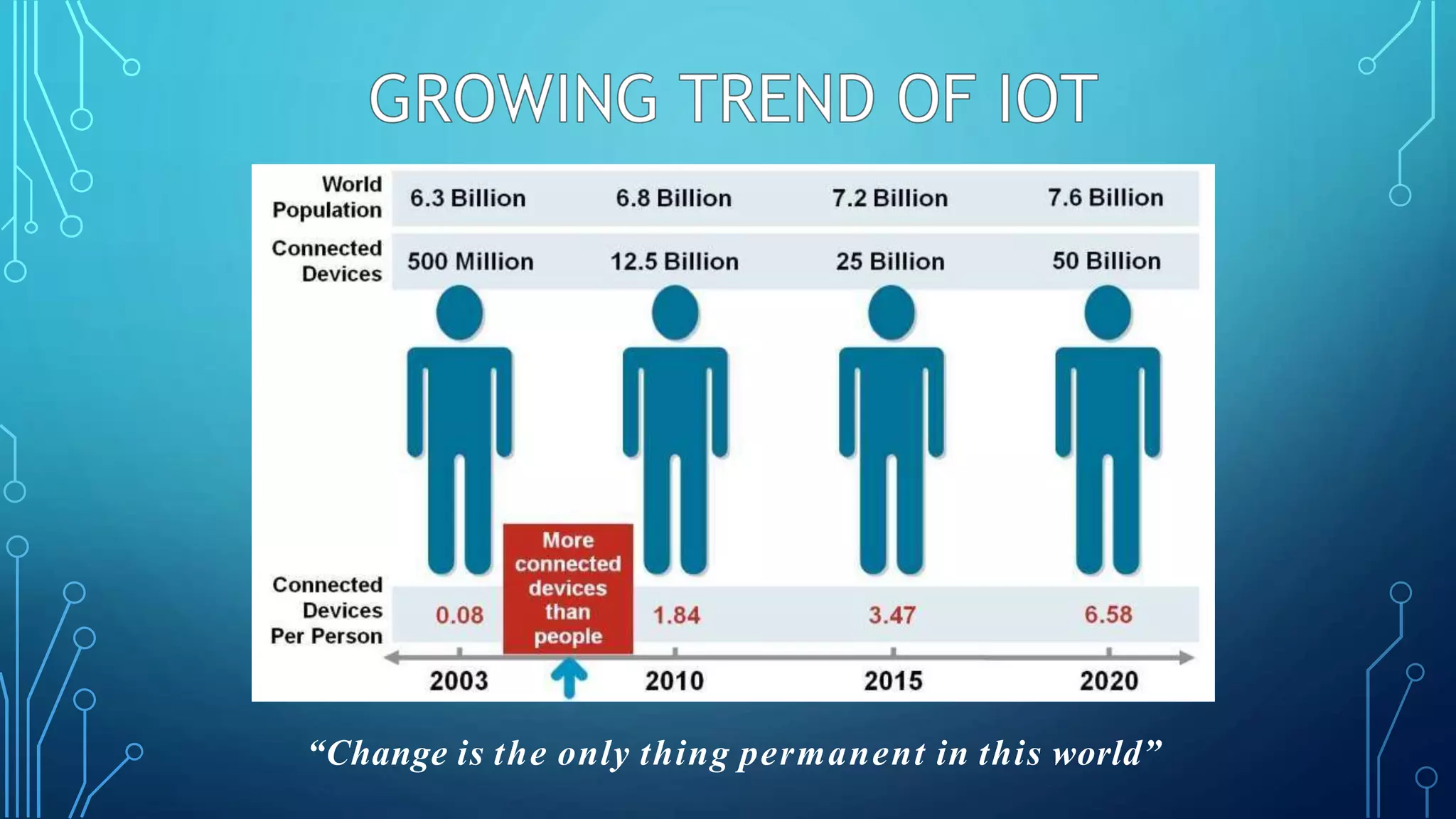
• Cisco Systems estimated that the IOT was "born" between
2008 and 2009, with the things/people ratio growing from
0.08 in 2003 to 1.84 in 2010.
“Change is the only thing permanent in this world”
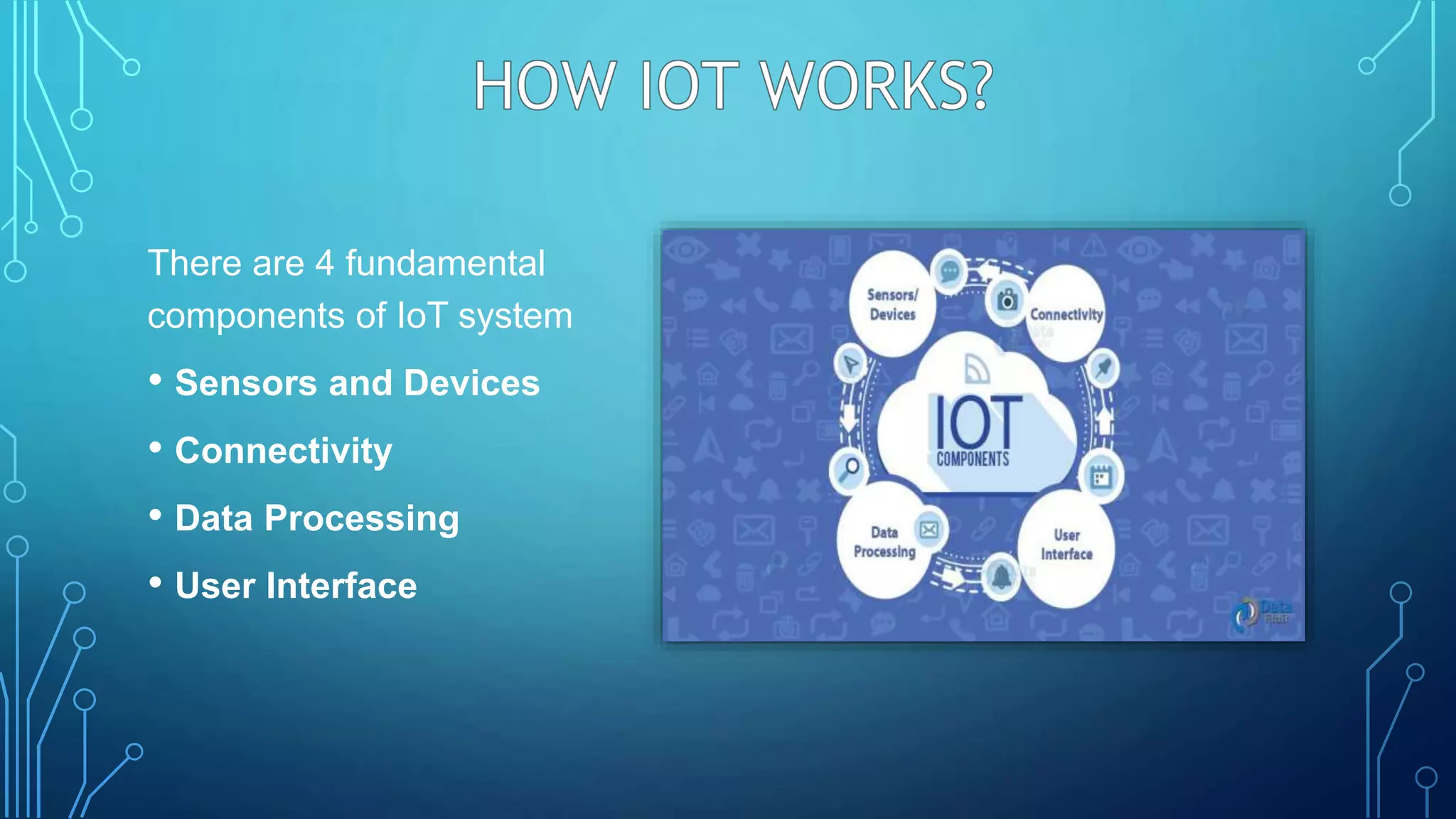
There are 4 fundamental
components of IoT system
• Sensors and Devices
• Connectivity
• Data Processing
• User Interface
• Sensors or devices help in collecting very minute data from the
surrounding environment.
• All of this collected data can have various degrees of
complexities ranging from a simple temperature monitoring
sensor or a complex full video feed.
• A device can have multiple sensors that can bundle together to
do more than just sense things. For example, our phone is a
device that has multiple sensors such as GPS, accelerometer,
camera, etc.
• The most rudimentary step will always remain to pick and
collect data from the surrounding environment be it a
standalone sensor or multiple devices.
Sensor details along with type of
usage
• Now that collected data is sent to a cloud infrastructure or server
but it needs a medium for transport.
• The sensors can be connected to the severs through various
mediums of communication and transports.
• For example : cellular networks, satellite networks, Wi-Fi,
Bluetooth, wide-area networks (WAN), low power wide area
network and many more.
• Every option we choose has some specifications and trade-offs
between power consumption, range and cost.
• So, choosing the best connectivity option in the IOT system is
important.
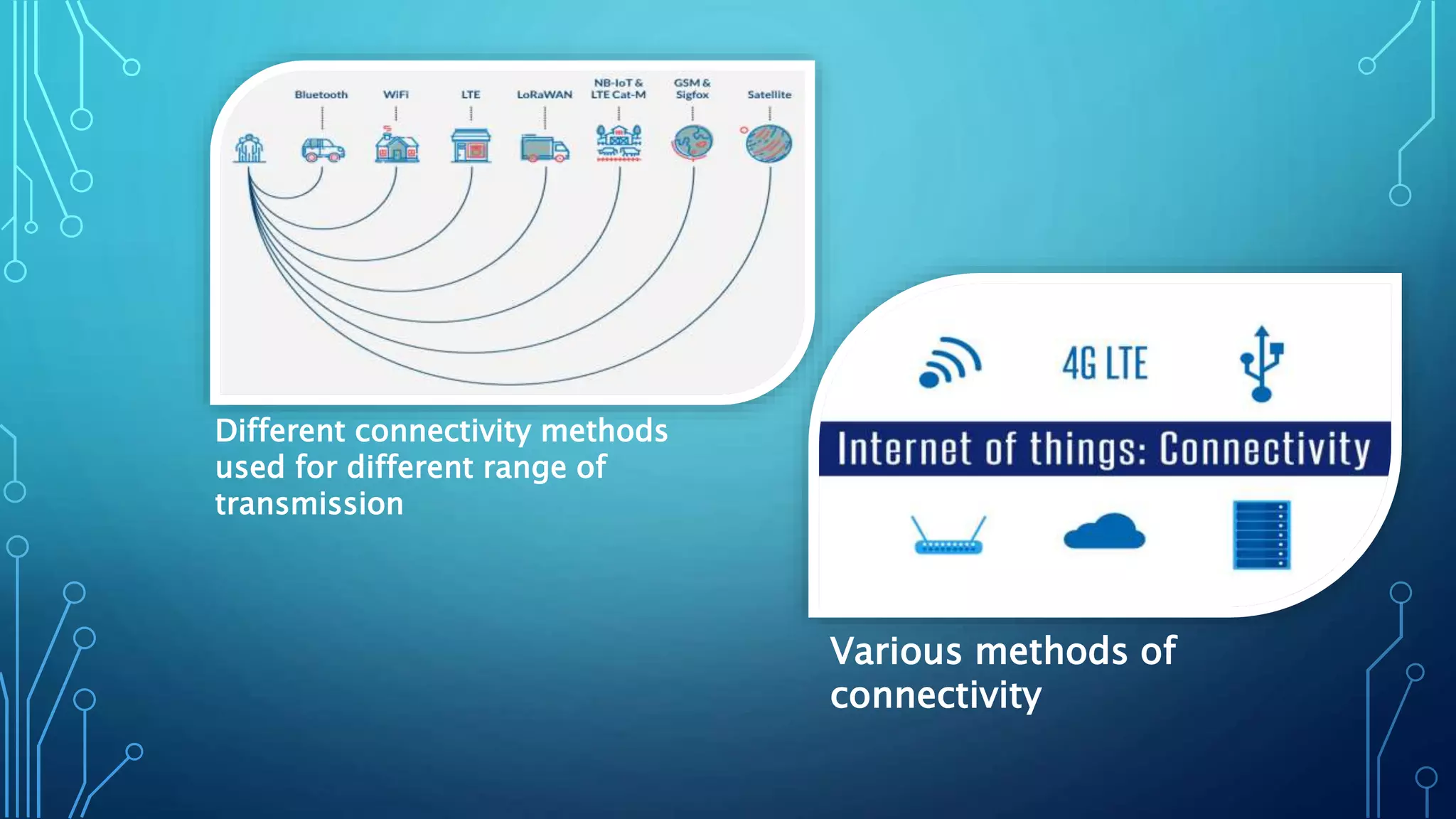
Different connectivity methods
used for different range of
transmission
Various methods of
connectivity
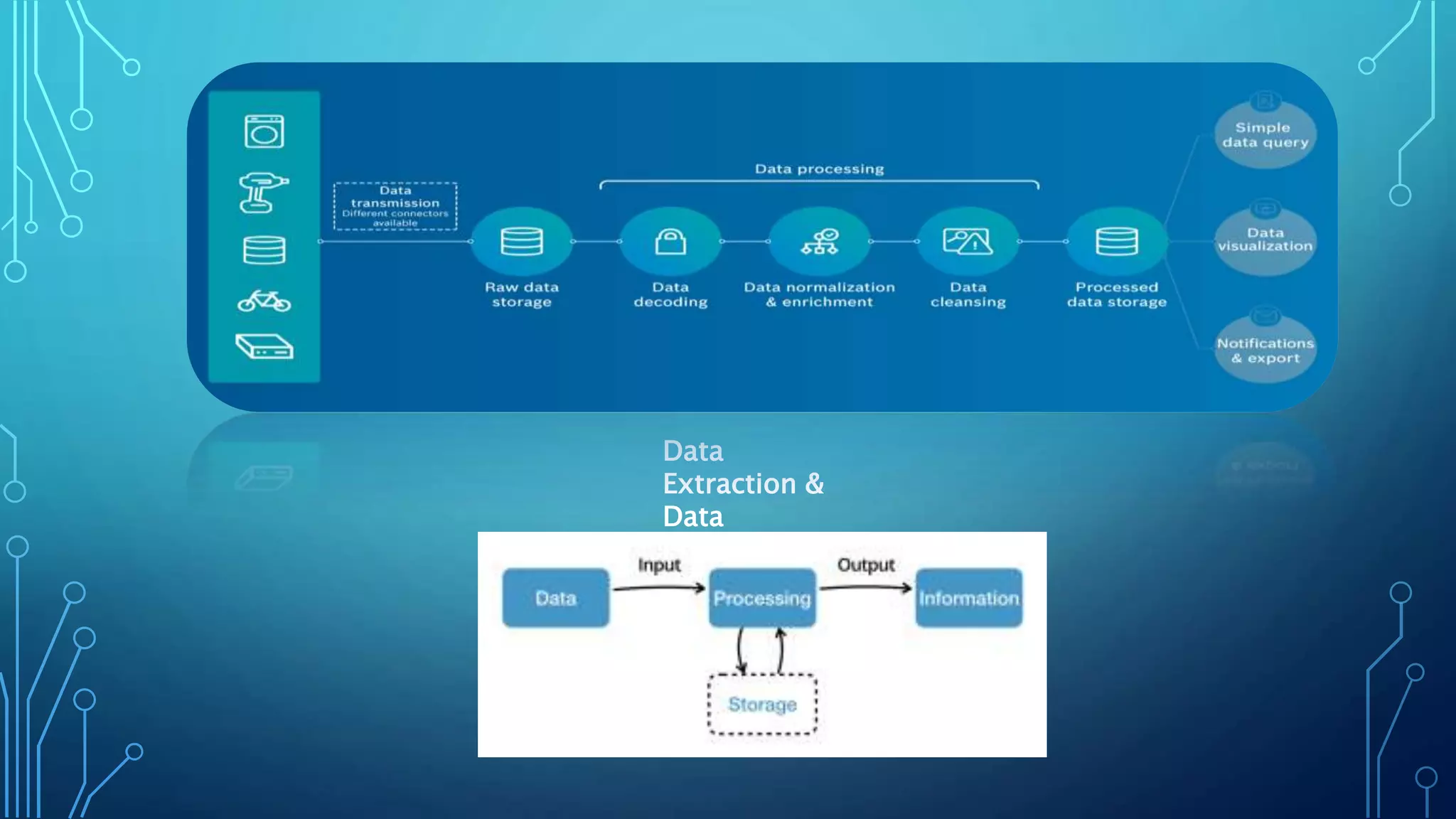
• Once the data is collected and it gets to the cloud, the software
performs processing on the acquired data.
• This can range from something very simple, such as checking
that the temperature reading on devices such as AC or heaters
is within an acceptable range.
• It can sometimes also be very complex, such as identifying
objects (such as specifications of an object) using computer
vision on video or camera. For example : Google Lens
Data
Extraction &
Data
Processing
• The information made available to the end-user in some way. This
can achieve by triggering alarms on their phones or notifying through
texts or emails.
• A user has a camera installed in his house, he might want to check
the video recordings and all the feeds through a web server.
• However, it’s not always this easy and a one-way street. Depending
on the IoT application and complexity of the system, the user may
also be able to perform an action that may backfire and affect the
system
• If a user detects some changes in the refrigerator, the user can
remotely adjust the temperature via their phone. Which may lead to
spoiling of food due incorrect change in temperature by the user.
• There are also cases where
some actions perform
automatically.
• By establishing and
implementing some
predefined rules, the entire
IOT system can adjust the
settings automatically and no
human has to be physically
present.
• For example: In case if any
intruders are sensed, the
system can generate an alert
not only to the owner of the
house but also to the
An app that allows the user to
change the temperature of the
thermostat installed in the various
rooms in his house.
"The Ultimate Goal of IOT is to Automate Human Life"
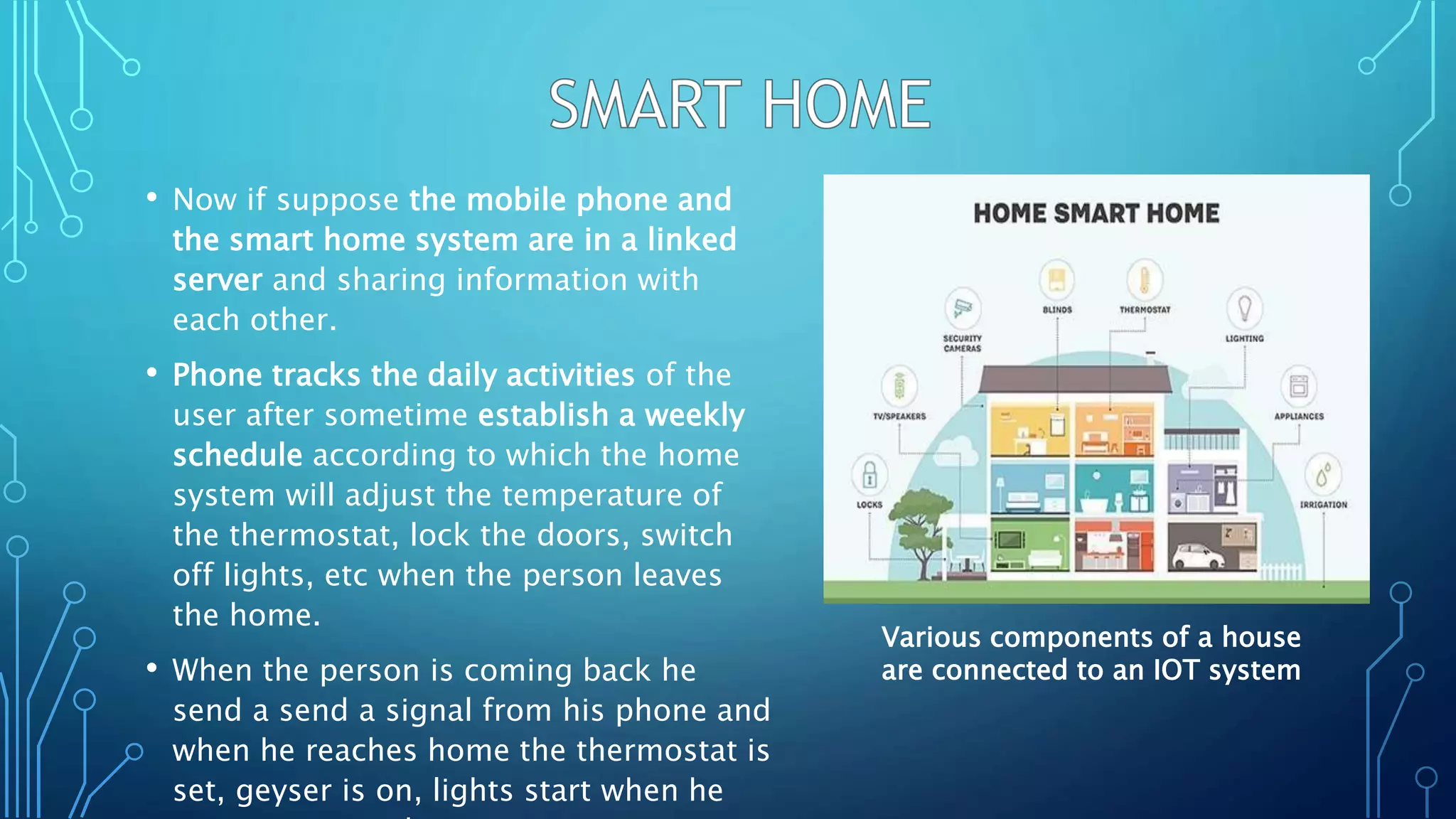
• Now if suppose the mobile phone and
the smart home system are in a linked
server and sharing information with
each other.
• Phone tracks the daily activities of the
user after sometime establish a weekly
schedule according to which the home
system will adjust the temperature of
the thermostat, lock the doors, switch
off lights, etc when the person leaves
the home.
• When the person is coming back he
send a send a signal from his phone and
when he reaches home the thermostat is
set, geyser is on, lights start when he
Various components of a house
are connected to an IOT system
• Wearable IoT devices, namely
smartwatches and fitness trackers, are
the among the most prominent
examples of Internet of Things (IoT)
technology.
• Currently there are devices available in
the market which will monitor the
number of steps you take in a day and
then compare them with the standards
according to age group. Therefore
suggesting to increase the steps for a
healthy lifestyle if necessary.
• There are even devices which monitor
the sleep patterns of a person and
inform whether the sleep pattern is
right or the changes required in it.
A person is wearing various IOT
devices which are monitoring
different things.
• Before Internet of Things, patients interactions with doctors were
limited to visits, and tele and text communications. There was no way
doctors or hospitals could monitor patients health continuously and
make recommendations accordingly.
• IoT for Patients - Devices in the form of wearables like fitness bands
and other wirelessly connected devices like blood pressure and heart
rate monitoring cuffs, glucometer etc. give patients access to
personalized attention.
• IoT has changed people’s lives, especially elderly patients, by
enabling constant tracking of health conditions.
• This has a major impact on people living alone and their families. On
any disturbance or changes in the routine activities of a person, alert
mechanism sends signals to family members and concerned health
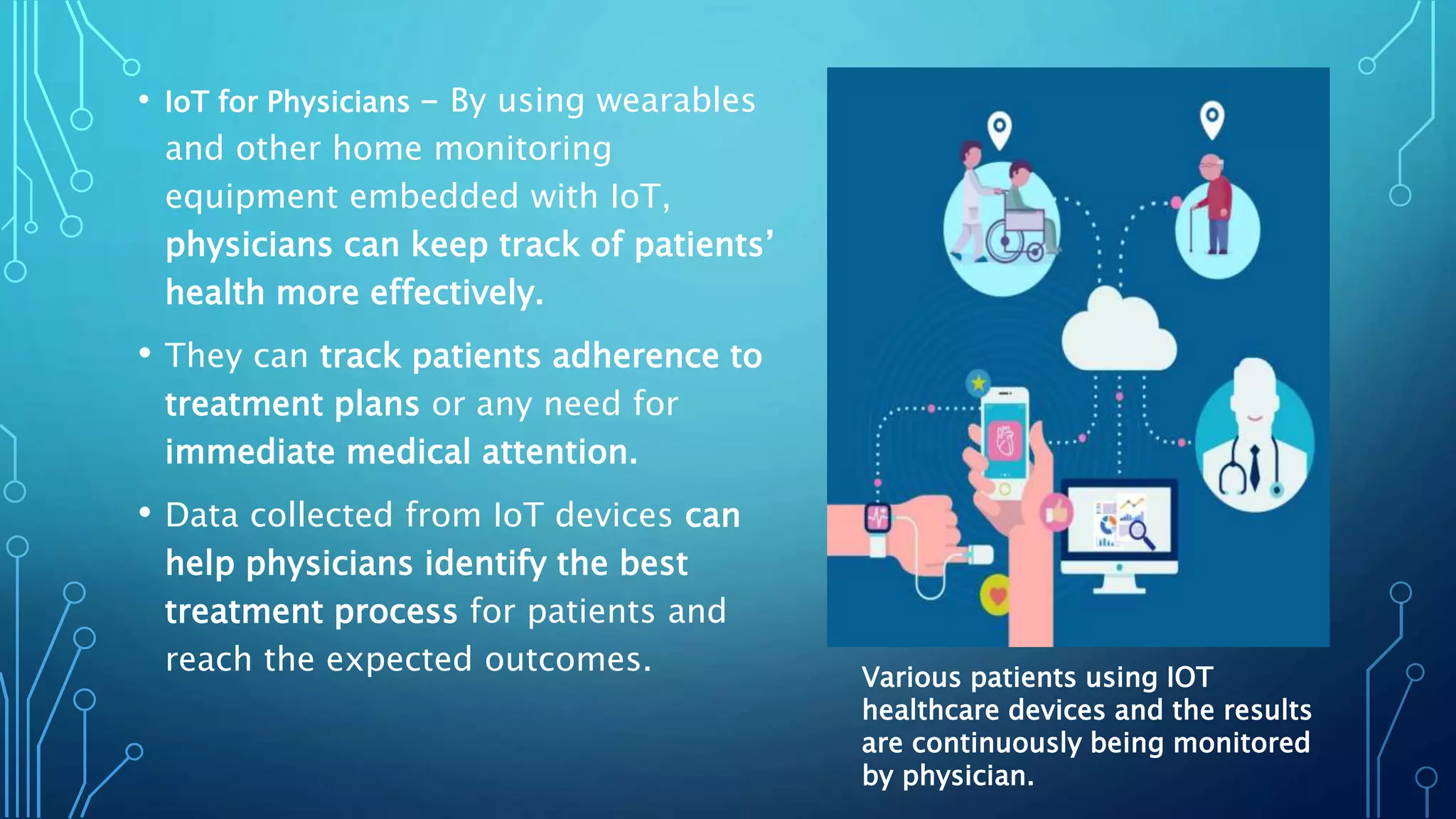
• IoT for Physicians - By using wearables
and other home monitoring
equipment embedded with IoT,
physicians can keep track of patients’
health more effectively.
• They can track patients adherence to
treatment plans or any need for
immediate medical attention.
• Data collected from IoT devices can
help physicians identify the best
treatment process for patients and
reach the expected outcomes. Various patients using IOT
healthcare devices and the results
are continuously being monitored
by physician.
• The future of IOT is virtually unlimited due to
advances in technology and consumers’
desire to integrate devices such as smart
phones with household machines.
• It is critical that both companies and
governments keep in ethics in mind as we
approach the next Industrial Revolution.
• With so much data traveling from device to
device, security in technology will be
required to grow just as fast as connectivity
in order to keep up with demands.
• Governments will undoubtable face tough
decisions as to how far the private the sector
is allowed to go in terms of robotics and
information sharing.
THANK YOU

IOT(Internet of Things) Seminar

  • 1.
  • 2.
    i. What isIOT? ii. History of IOT iii.How IOT works? iv.Applications of IOT v. Pros and Cons of IOT vi.Conclusion
  • 3.
    Almost every area,device, sensor, software, etc are connected to each other. The ability to access these devices through a smartphone or through a computer is called IOT. These devices are accessed from a distance. IOT (Internet of Things) is simply the network of interconnected things/devices which are embedded with sensors, software, network connectivity and necessary electronics that enables them to collect and exchange data making them responsive.
  • 5.
    • The mostsignificant landmark in the history of IOT was in 1999. • Kevin Ashton, in a presentation of Procter & Gamble in 1999, coined the term “Internet of Things”. Although he prefers the phrase "Internet for Things". Ashton is also a co-founder of MIT's Auto-ID Lab. • At that time Ashton viewed radio-frequency identification (RFID) as essential to the Internet of things, as it would allow computers to manage all individual things. • Cisco Systems estimated that the IOT was "born" between 2008 and 2009, with the things/people ratio growing from 0.08 in 2003 to 1.84 in 2010.
  • 6.
    “Change is theonly thing permanent in this world”
  • 7.
    There are 4fundamental components of IoT system • Sensors and Devices • Connectivity • Data Processing • User Interface
  • 9.
    • Sensors ordevices help in collecting very minute data from the surrounding environment. • All of this collected data can have various degrees of complexities ranging from a simple temperature monitoring sensor or a complex full video feed. • A device can have multiple sensors that can bundle together to do more than just sense things. For example, our phone is a device that has multiple sensors such as GPS, accelerometer, camera, etc. • The most rudimentary step will always remain to pick and collect data from the surrounding environment be it a standalone sensor or multiple devices.
  • 10.
    Sensor details alongwith type of usage
  • 11.
    • Now thatcollected data is sent to a cloud infrastructure or server but it needs a medium for transport. • The sensors can be connected to the severs through various mediums of communication and transports. • For example : cellular networks, satellite networks, Wi-Fi, Bluetooth, wide-area networks (WAN), low power wide area network and many more. • Every option we choose has some specifications and trade-offs between power consumption, range and cost. • So, choosing the best connectivity option in the IOT system is important.
  • 12.
    Different connectivity methods usedfor different range of transmission Various methods of connectivity
  • 13.
    • Once thedata is collected and it gets to the cloud, the software performs processing on the acquired data. • This can range from something very simple, such as checking that the temperature reading on devices such as AC or heaters is within an acceptable range. • It can sometimes also be very complex, such as identifying objects (such as specifications of an object) using computer vision on video or camera. For example : Google Lens
  • 14.
  • 15.
    • The informationmade available to the end-user in some way. This can achieve by triggering alarms on their phones or notifying through texts or emails. • A user has a camera installed in his house, he might want to check the video recordings and all the feeds through a web server. • However, it’s not always this easy and a one-way street. Depending on the IoT application and complexity of the system, the user may also be able to perform an action that may backfire and affect the system • If a user detects some changes in the refrigerator, the user can remotely adjust the temperature via their phone. Which may lead to spoiling of food due incorrect change in temperature by the user.
  • 16.
    • There arealso cases where some actions perform automatically. • By establishing and implementing some predefined rules, the entire IOT system can adjust the settings automatically and no human has to be physically present. • For example: In case if any intruders are sensed, the system can generate an alert not only to the owner of the house but also to the An app that allows the user to change the temperature of the thermostat installed in the various rooms in his house.
  • 18.
    "The Ultimate Goalof IOT is to Automate Human Life"
  • 20.
    • Now ifsuppose the mobile phone and the smart home system are in a linked server and sharing information with each other. • Phone tracks the daily activities of the user after sometime establish a weekly schedule according to which the home system will adjust the temperature of the thermostat, lock the doors, switch off lights, etc when the person leaves the home. • When the person is coming back he send a send a signal from his phone and when he reaches home the thermostat is set, geyser is on, lights start when he Various components of a house are connected to an IOT system
  • 21.
    • Wearable IoTdevices, namely smartwatches and fitness trackers, are the among the most prominent examples of Internet of Things (IoT) technology. • Currently there are devices available in the market which will monitor the number of steps you take in a day and then compare them with the standards according to age group. Therefore suggesting to increase the steps for a healthy lifestyle if necessary. • There are even devices which monitor the sleep patterns of a person and inform whether the sleep pattern is right or the changes required in it. A person is wearing various IOT devices which are monitoring different things.
  • 22.
    • Before Internetof Things, patients interactions with doctors were limited to visits, and tele and text communications. There was no way doctors or hospitals could monitor patients health continuously and make recommendations accordingly. • IoT for Patients - Devices in the form of wearables like fitness bands and other wirelessly connected devices like blood pressure and heart rate monitoring cuffs, glucometer etc. give patients access to personalized attention. • IoT has changed people’s lives, especially elderly patients, by enabling constant tracking of health conditions. • This has a major impact on people living alone and their families. On any disturbance or changes in the routine activities of a person, alert mechanism sends signals to family members and concerned health
  • 23.
    • IoT forPhysicians - By using wearables and other home monitoring equipment embedded with IoT, physicians can keep track of patients’ health more effectively. • They can track patients adherence to treatment plans or any need for immediate medical attention. • Data collected from IoT devices can help physicians identify the best treatment process for patients and reach the expected outcomes. Various patients using IOT healthcare devices and the results are continuously being monitored by physician.
  • 25.
    • The futureof IOT is virtually unlimited due to advances in technology and consumers’ desire to integrate devices such as smart phones with household machines. • It is critical that both companies and governments keep in ethics in mind as we approach the next Industrial Revolution. • With so much data traveling from device to device, security in technology will be required to grow just as fast as connectivity in order to keep up with demands. • Governments will undoubtable face tough decisions as to how far the private the sector is allowed to go in terms of robotics and information sharing.
  • 26.