Download as PDF, PPTX


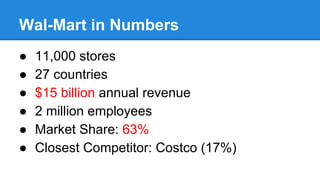
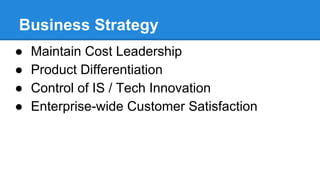
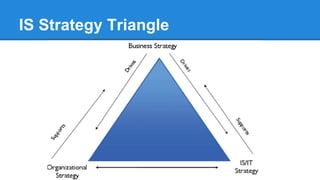
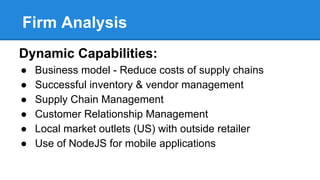
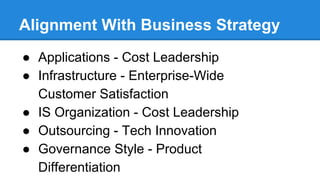
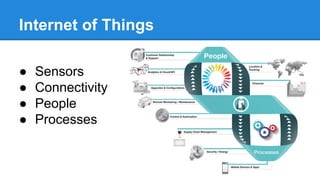
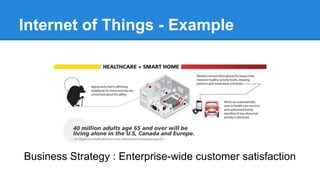
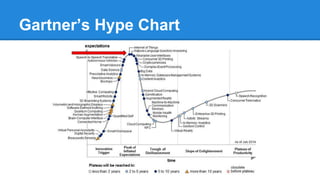
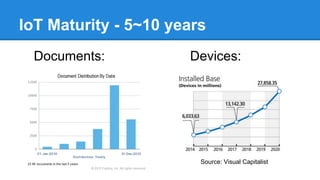
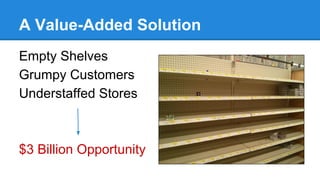
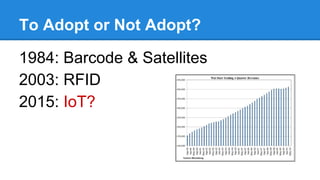


Walmart is the largest retailer in the world with over 11,000 stores in 27 countries generating $15 billion in annual revenue. It maintains a business strategy focused on cost leadership, product differentiation, innovation, and customer satisfaction. Walmart's information systems strategy supports this business strategy through applications that reduce supply chain costs, inventory and vendor management systems, and customer relationship management tools. Walmart is exploring opportunities with Internet of Things technologies to improve operations and customer experience, such as sensors to track inventory levels and prevent empty shelves. While Walmart pioneered barcode and satellite technologies, the company is evaluating whether and how to adopt emerging IoT solutions.


![Strategic_MANAGEMENT_OF_WALMART[1][1].pptx](https://cdn.slidesharecdn.com/ss_thumbnails/strategicmanagementofwalmart11-250328200648-787615bc-thumbnail.jpg?width=640&height=640&fit=bounds)


