• What is IOT?
• Why IOT?
• IOT in agriculture
• Applications
• Implemented method
• Advantages and disadvantages
• Conclusion
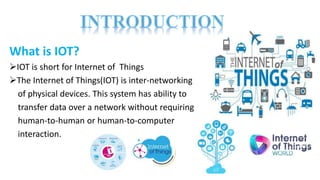
What is IOT?
IOT is short for Internet of Things
The Internet of Things(IOT) is inter-networking
of physical devices. This system has ability to
transfer data over a network without requiring
human-to-human or human-to-computer
interaction.
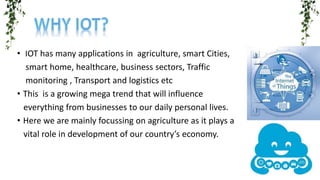
• IOT has many applications in agriculture, smart Cities,
smart home, healthcare, business sectors, Traffic
monitoring , Transport and logistics etc
• This is a growing mega trend that will influence
everything from businesses to our daily personal lives.
• Here we are mainly focussing on agriculture as it plays a
vital role in development of our country’s economy.
IOT IN AGRICULTURE
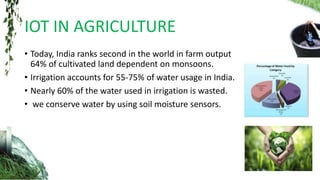
• Today, India ranks second in the world in farm output
64% of cultivated land dependent on monsoons.
• Irrigation accounts for 55-75% of water usage in India.
• Nearly 60% of the water used in irrigation is wasted.
• we conserve water by using soil moisture sensors.
IOT APPLICATION IN AGRICULTURE
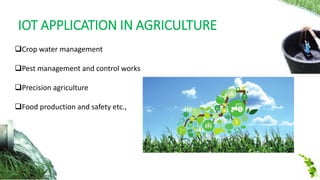
Crop water management
Pest management and control works
Precision agriculture
Food production and safety etc.,
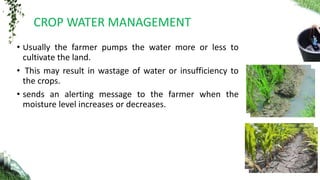
• Usually the farmer pumps the water more or less to
cultivate the land.
• This may result in wastage of water or insufficiency to
the crops.
• sends an alerting message to the farmer when the
moisture level increases or decreases.
CROP WATER MANAGEMENT
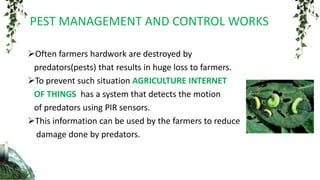
Often farmers hardwork are destroyed by
predators(pests) that results in huge loss to farmers.
To prevent such situation AGRICULTURE INTERNET
OF THINGS has a system that detects the motion
of predators using PIR sensors.
This information can be used by the farmers to reduce
damage done by predators.
PEST MANAGEMENT AND CONTROL WORKS
CROP
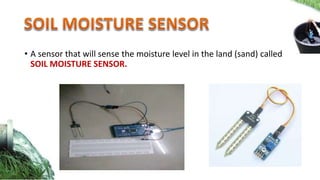
• A sensor that will sense the moisture level in the land (sand) called
SOIL MOISTURE SENSOR.
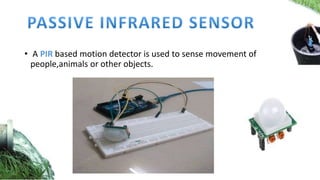
• A PIR based motion detector is used to sense movement of
people,animals or other objects.
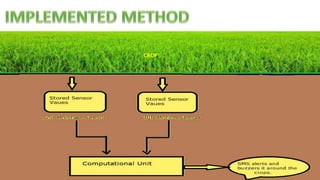
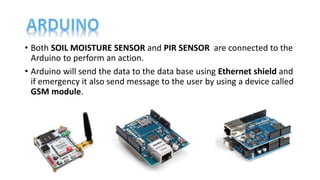
• Both SOIL MOISTURE SENSOR and PIR SENSOR are connected to the
Arduino to perform an action.
• Arduino will send the data to the data base using Ethernet shield and
if emergency it also send message to the user by using a device called
GSM module.
Cost effective method
Optimize water use
Sustain high-yielding
High quality crop production
Need for each soil
type is calibrated
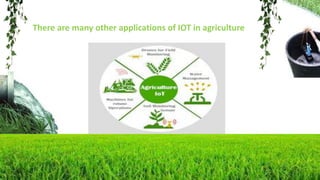
There are many other applications of IOT in agriculture
• We can predict soil moisture level and motion of predators.
• Irrigation system can be monitored .
• Damage caused by predators is reduced.
• Increased productivity.
• Water conservation.
• Profit to farmers.
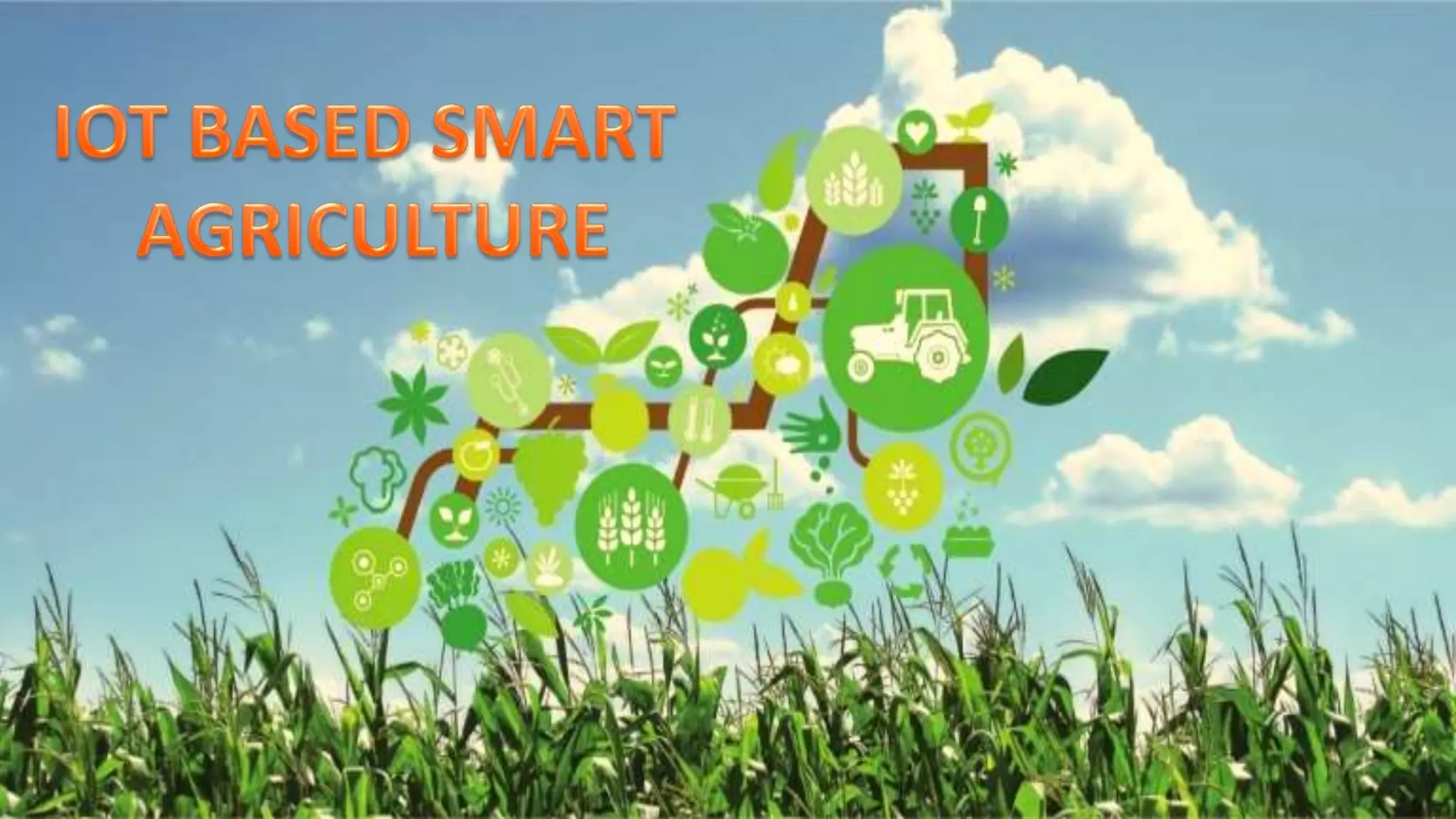
IOT BASED SMART AGRICULTURE

IOT BASED SMART AGRICULTURE

  • 2.
    • What isIOT? • Why IOT? • IOT in agriculture • Applications • Implemented method • Advantages and disadvantages • Conclusion
  • 3.
    What is IOT? IOTis short for Internet of Things The Internet of Things(IOT) is inter-networking of physical devices. This system has ability to transfer data over a network without requiring human-to-human or human-to-computer interaction.
  • 4.
    • IOT hasmany applications in agriculture, smart Cities, smart home, healthcare, business sectors, Traffic monitoring , Transport and logistics etc • This is a growing mega trend that will influence everything from businesses to our daily personal lives. • Here we are mainly focussing on agriculture as it plays a vital role in development of our country’s economy.
  • 5.
    IOT IN AGRICULTURE •Today, India ranks second in the world in farm output 64% of cultivated land dependent on monsoons. • Irrigation accounts for 55-75% of water usage in India. • Nearly 60% of the water used in irrigation is wasted. • we conserve water by using soil moisture sensors.
  • 6.
    IOT APPLICATION INAGRICULTURE Crop water management Pest management and control works Precision agriculture Food production and safety etc.,
  • 7.
    • Usually thefarmer pumps the water more or less to cultivate the land. • This may result in wastage of water or insufficiency to the crops. • sends an alerting message to the farmer when the moisture level increases or decreases. CROP WATER MANAGEMENT
  • 8.
    Often farmers hardworkare destroyed by predators(pests) that results in huge loss to farmers. To prevent such situation AGRICULTURE INTERNET OF THINGS has a system that detects the motion of predators using PIR sensors. This information can be used by the farmers to reduce damage done by predators. PEST MANAGEMENT AND CONTROL WORKS
  • 9.
  • 10.
    • A sensorthat will sense the moisture level in the land (sand) called SOIL MOISTURE SENSOR.
  • 11.
    • A PIRbased motion detector is used to sense movement of people,animals or other objects.
  • 12.
    • Both SOILMOISTURE SENSOR and PIR SENSOR are connected to the Arduino to perform an action. • Arduino will send the data to the data base using Ethernet shield and if emergency it also send message to the user by using a device called GSM module.
  • 13.
    Cost effective method Optimizewater use Sustain high-yielding High quality crop production Need for each soil type is calibrated
  • 14.
    There are manyother applications of IOT in agriculture
  • 15.
    • We canpredict soil moisture level and motion of predators. • Irrigation system can be monitored . • Damage caused by predators is reduced. • Increased productivity. • Water conservation. • Profit to farmers.