Organizing Secretary
Dr.R.Gunavathi,
Head & Associate professor,
PG & Research Department of Computer
Applications
PG & Research Department of Computer Applications
organized
IoT – Applications and Machine Learning
IOT - ?
The Internet of Things (IoT)is a
network of physical objects or
things embedded with sensors,
electronics, software and network
where the things sense and collect
data and send it to the internet.
It is also referred as
“Machine-to-Machine(M2M)
communication or “Internet of
Everything”
History
 Kevin Ashton is the Inventor of IoT” since he first
used the term in 1999 to describe a system where the
Internet is connected to the physical world via sensors.
How it works?
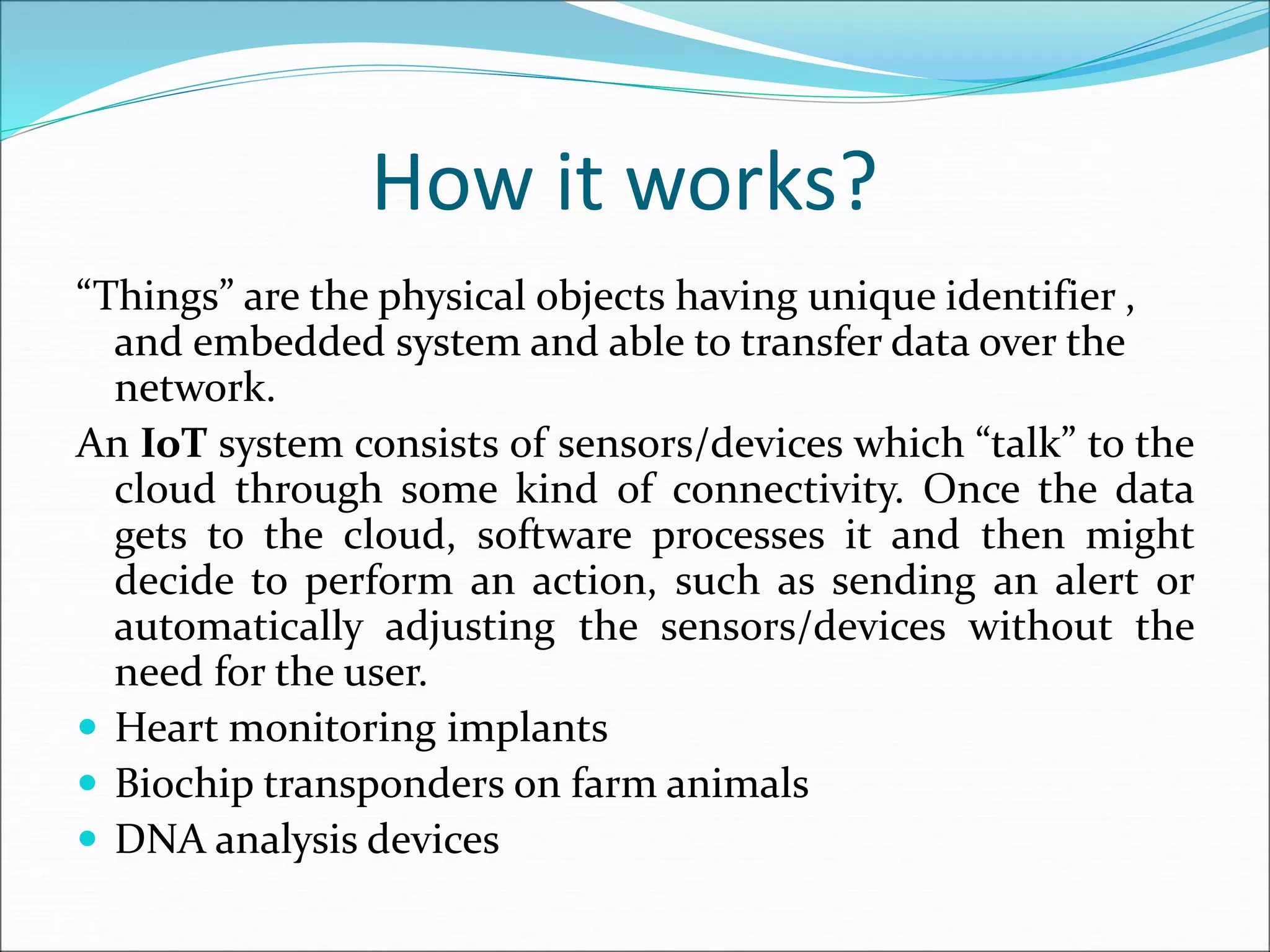
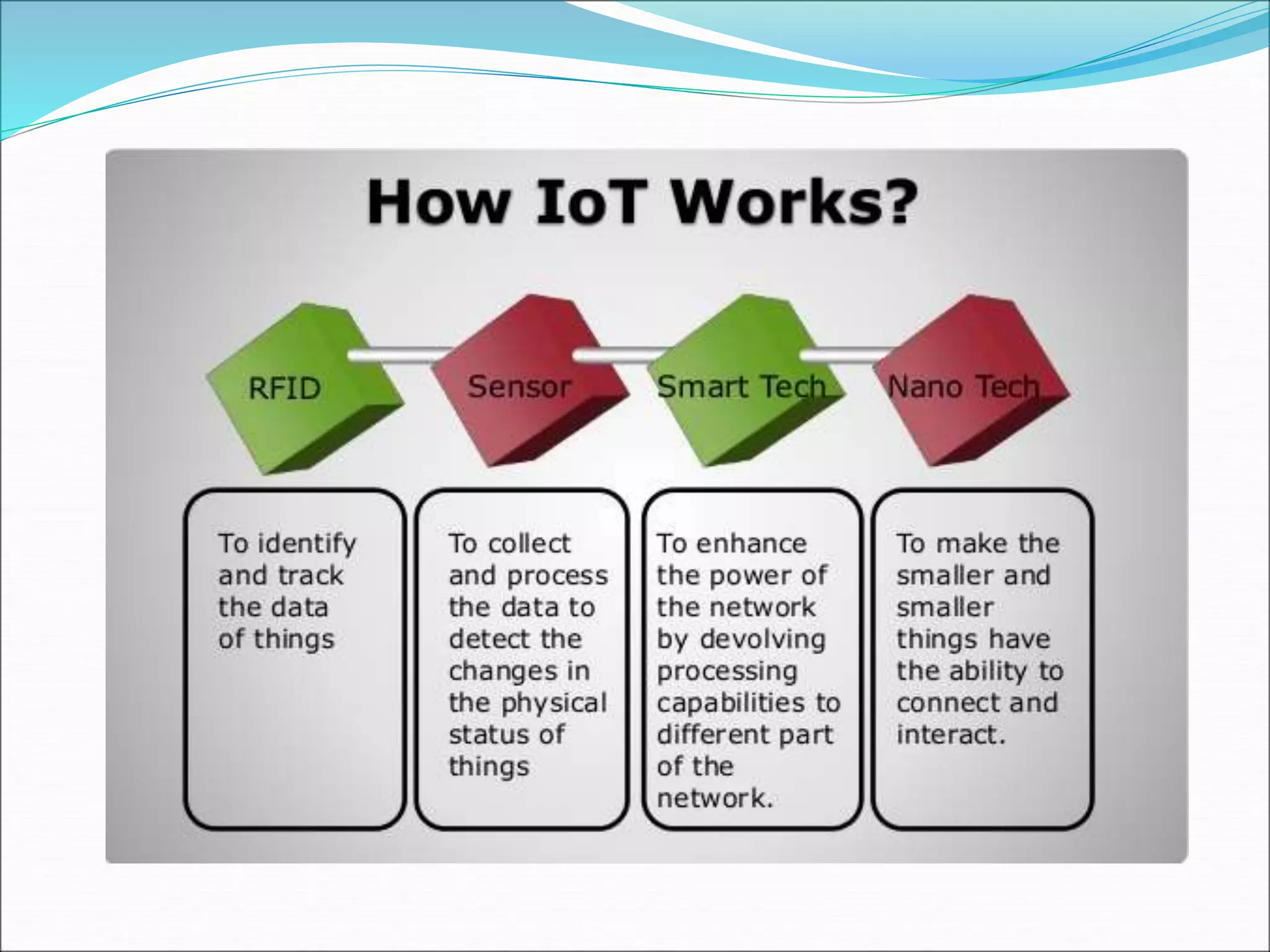
“Things” are the physical objects having unique identifier ,
and embedded system and able to transfer data over the
network.
An IoT system consists of sensors/devices which “talk” to the
cloud through some kind of connectivity. Once the data
gets to the cloud, software processes it and then might
decide to perform an action, such as sending an alert or
automatically adjusting the sensors/devices without the
need for the user.
 Heart monitoring implants
 Biochip transponders on farm animals
 DNA analysis devices
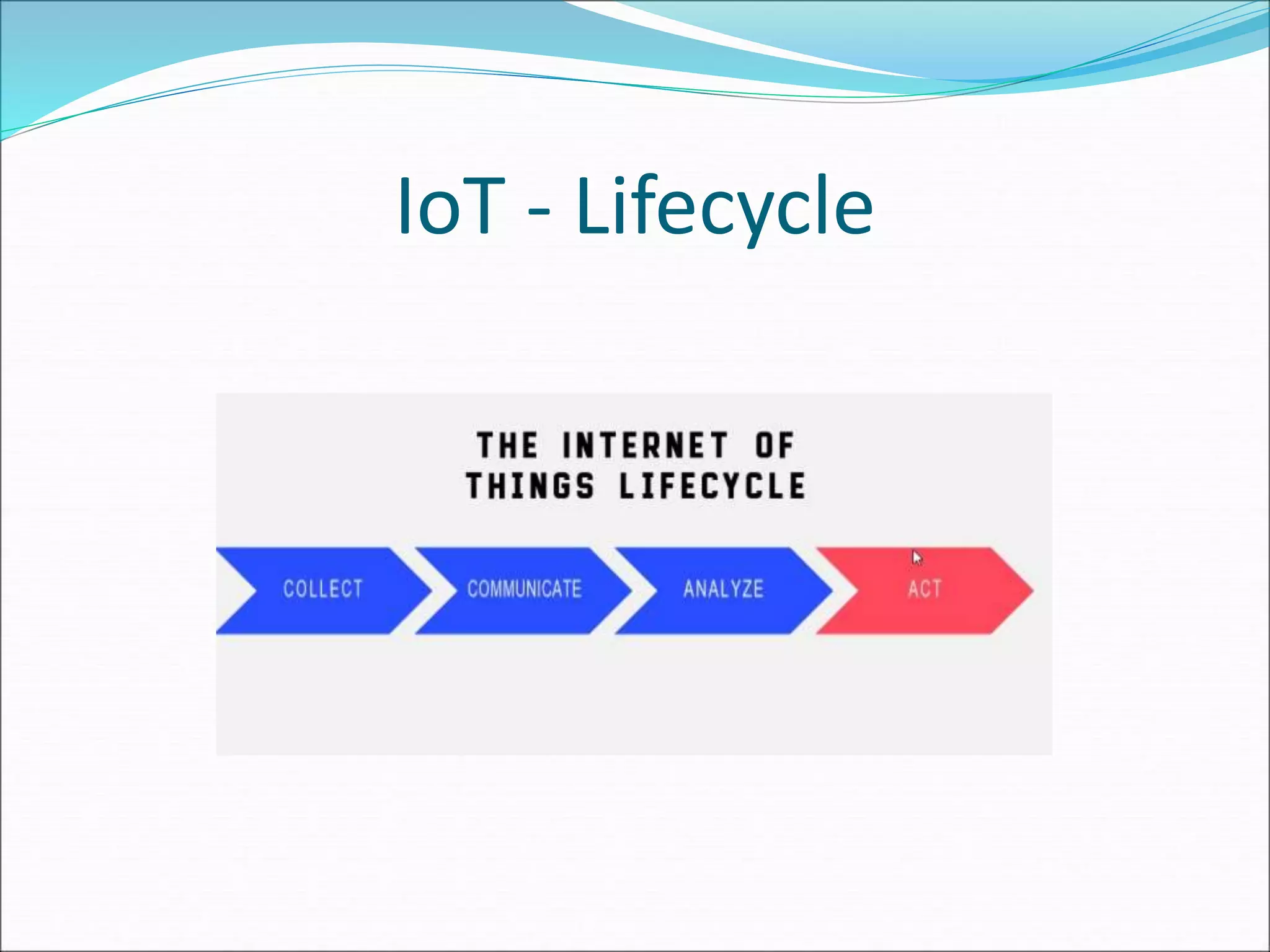
IoT - Lifecycle
Structure of IoT
 IoT is a gigantic network comprising of networks of
devices and computers connected through various
intermediate technologies.
Current status and Future Prospect
IoT – Gateway to the future
Applications of IoT
Various Applications
Cow – Healthcare Monitoring
Cow’s health can be monitored by implanting
ssensors in their ears. By this way their movements
can be monitored to ensure the healthiness,
increase the supply of milk and meat.
Uses of IoT
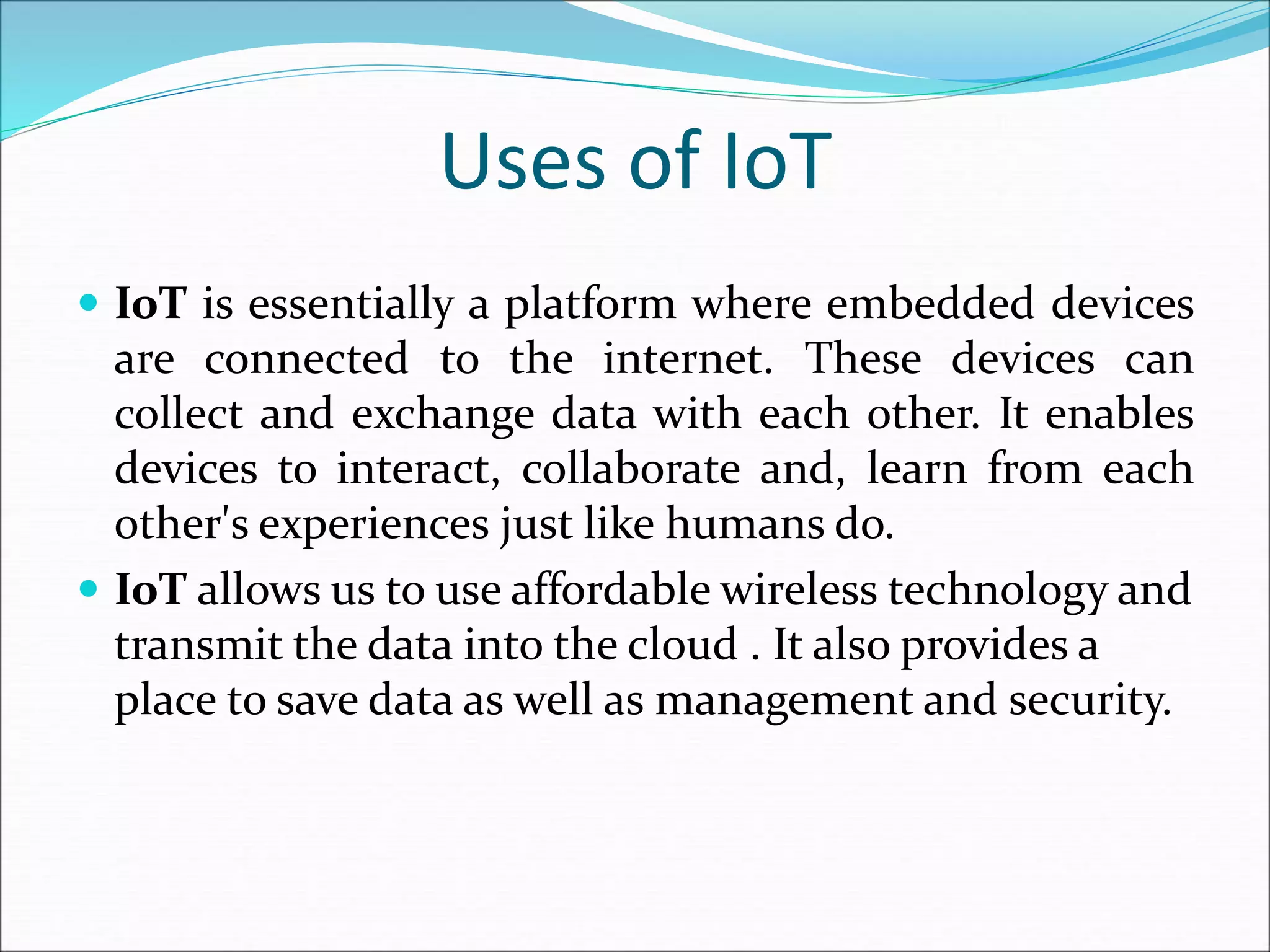
 IoT is essentially a platform where embedded devices
are connected to the internet. These devices can
collect and exchange data with each other. It enables
devices to interact, collaborate and, learn from each
other's experiences just like humans do.
 IoT allows us to use affordable wireless technology and
transmit the data into the cloud . It also provides a
place to save data as well as management and security.
Thank You !

Iot

  • 1.
    Organizing Secretary Dr.R.Gunavathi, Head &Associate professor, PG & Research Department of Computer Applications PG & Research Department of Computer Applications organized IoT – Applications and Machine Learning
  • 3.
    IOT - ? TheInternet of Things (IoT)is a network of physical objects or things embedded with sensors, electronics, software and network where the things sense and collect data and send it to the internet. It is also referred as “Machine-to-Machine(M2M) communication or “Internet of Everything”
  • 4.
    History  Kevin Ashtonis the Inventor of IoT” since he first used the term in 1999 to describe a system where the Internet is connected to the physical world via sensors.
  • 5.
    How it works? “Things”are the physical objects having unique identifier , and embedded system and able to transfer data over the network. An IoT system consists of sensors/devices which “talk” to the cloud through some kind of connectivity. Once the data gets to the cloud, software processes it and then might decide to perform an action, such as sending an alert or automatically adjusting the sensors/devices without the need for the user.  Heart monitoring implants  Biochip transponders on farm animals  DNA analysis devices
  • 7.
  • 8.
    Structure of IoT IoT is a gigantic network comprising of networks of devices and computers connected through various intermediate technologies.
  • 9.
    Current status andFuture Prospect
  • 10.
    IoT – Gatewayto the future
  • 11.
  • 12.
  • 14.
    Cow – HealthcareMonitoring Cow’s health can be monitored by implanting ssensors in their ears. By this way their movements can be monitored to ensure the healthiness, increase the supply of milk and meat.
  • 19.
    Uses of IoT IoT is essentially a platform where embedded devices are connected to the internet. These devices can collect and exchange data with each other. It enables devices to interact, collaborate and, learn from each other's experiences just like humans do.  IoT allows us to use affordable wireless technology and transmit the data into the cloud . It also provides a place to save data as well as management and security.
  • 21.