Public Health in Lincolnshire: 
What is the JSNA and how the 
local VCS can influence it 
Involving Lincs Conference 
28th October 2014 
Workshop Session 
Lisa Loy & Lorna Leaston 
Strategy and Performance 
Public Health
Health and Wellbeing Board required to: 
• Undertake a Joint Strategic Needs Assessment 
(JSNA) and agree shared priorities 
• Produce a Joint Health and Wellbeing Strategy 
(JHWS), using the evidence in the JSNA 
• Promote integrated working between NHS and 
local government (includes ensuring CCG plans 
align to JSNA and JHWS and agreeing future 
intentions for Integration Transformation Fund)
Background to JSNA 
What is the JSNA? 
A systematic review of the health and wellbeing 
needs of the population… 
…leading to agreed priorities across organisations 
that will… 
…improve the health and wellbeing of the 
community at the same time as reducing health 
inequalities.
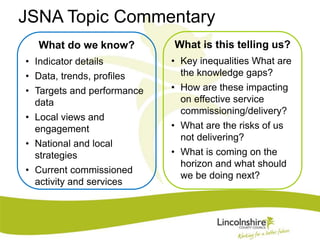
JSNA Topic Commentary 
What do we know? 
• Indicator details 
• Data, trends, profiles 
• Targets and performance 
data 
• Local views and 
engagement 
• National and local 
strategies 
• Current commissioned 
activity and services 
What is this telling us? 
• Key inequalities What are 
the knowledge gaps? 
• How are these impacting 
on effective service 
commissioning/delivery? 
• What are the risks of us 
not delivering? 
• What is coming on the 
horizon and what should 
we be doing next?
JSNA Priorities (Health and 
Wellbeing Strategy Themes) 
• Promoting healthier lifestyles 
• Improve the health and wellbeing of older 
people 
• Delivering high quality systematic care for major 
causes of ill health and disability 
• Improve health and social outcomes for children 
and reduce inequalities 
• Tackling the social determinants of health
Role of VCS in JSNA Process 
As service providers and advocates of local community 
members, local VCS organisations can play a role in: 
• Identifying health and social care needs (providing both 
qualitative and quantitative data) 
• Providing information on services that are available, 
gaps in provision and the effectiveness of current 
provision 
• Advising on how health needs can be met 
• Supporting and facilitating the engagement of their client 
groups in the JSNA process, particularly for those who 
are most vulnerable and seldom heard.
Getting Involved 
• Provides a crucial opportunity for VCS to shape the local 
agenda for health & well-being 
• Can represent & advocate for the needs of seldom heard 
/ under-represented groups & individuals 
• Can highlight unmet need (and gaps in provision) to 
inform future service planning. 
• Third sector can provide evidence for the most effective 
interventions at a local level advising on issues of quality 
to improve local provision. 
• Jointly develop a more enabling asset-led approach 
(starting with ‘what we do have’)
Case Study example 
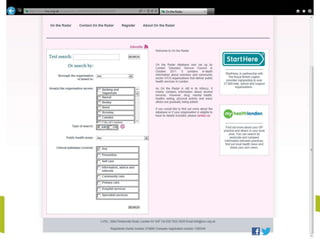
LVSC (London Voluntary & Community sector) set up 'On the 
Radar‘ - an innovative database of public health services 
delivered by VCS 
• Used by commissioners tendering new contracts; 
• Raises the profile of VCS & demonstrates their impact to a 
relevant audience of public health decision-makers, increasing 
opportunities for organisations to be commissioned in the 
future; 
• Enables London's public health commissioners to identify gaps 
in services & new development opportunities for VCS 
organisations; 
• Enables VCS organisations to use the database to research 
possible partner organisations in their area or if they want to 
know about a range of other public health services delivered 
by VCS organisations.
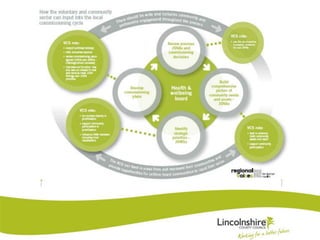
Group Exercise 
Looking at the Commissioning Cycle diagram devised by 
Regional Voices 
• Find 2 or 3 examples at the local level of what we 
do/could do (in each of the 4 areas of the cycle) – 
this shows what opportunities exist at the local level 
& where we might want to focus on improving them 
• Consider how can we demonstrate progress 
How can we measure the benefit and impact of 
the VCS's involvement?
Thank you 
Lisa Loy Lorna Leaston 
Programme Officer Programme Co-ordinator 
Public Health Directorate Public Health Directorate 
Lincolnshire County Council Lincolnshire County Council 
8 Email lisa.loy@lincolnshire.gov.uk 8 Email lorna.leaston@lincolnshire.gov.uk 
( Tel 01522 554017 ( Tel 01522 552538

Public Health in Lincolnshire

  • 1.
    Public Health inLincolnshire: What is the JSNA and how the local VCS can influence it Involving Lincs Conference 28th October 2014 Workshop Session Lisa Loy & Lorna Leaston Strategy and Performance Public Health
  • 2.
    Health and WellbeingBoard required to: • Undertake a Joint Strategic Needs Assessment (JSNA) and agree shared priorities • Produce a Joint Health and Wellbeing Strategy (JHWS), using the evidence in the JSNA • Promote integrated working between NHS and local government (includes ensuring CCG plans align to JSNA and JHWS and agreeing future intentions for Integration Transformation Fund)
  • 3.
    Background to JSNA What is the JSNA? A systematic review of the health and wellbeing needs of the population… …leading to agreed priorities across organisations that will… …improve the health and wellbeing of the community at the same time as reducing health inequalities.
  • 4.
    JSNA Topic Commentary What do we know? • Indicator details • Data, trends, profiles • Targets and performance data • Local views and engagement • National and local strategies • Current commissioned activity and services What is this telling us? • Key inequalities What are the knowledge gaps? • How are these impacting on effective service commissioning/delivery? • What are the risks of us not delivering? • What is coming on the horizon and what should we be doing next?
  • 5.
    JSNA Priorities (Healthand Wellbeing Strategy Themes) • Promoting healthier lifestyles • Improve the health and wellbeing of older people • Delivering high quality systematic care for major causes of ill health and disability • Improve health and social outcomes for children and reduce inequalities • Tackling the social determinants of health
  • 6.
    Role of VCSin JSNA Process As service providers and advocates of local community members, local VCS organisations can play a role in: • Identifying health and social care needs (providing both qualitative and quantitative data) • Providing information on services that are available, gaps in provision and the effectiveness of current provision • Advising on how health needs can be met • Supporting and facilitating the engagement of their client groups in the JSNA process, particularly for those who are most vulnerable and seldom heard.
  • 7.
    Getting Involved •Provides a crucial opportunity for VCS to shape the local agenda for health & well-being • Can represent & advocate for the needs of seldom heard / under-represented groups & individuals • Can highlight unmet need (and gaps in provision) to inform future service planning. • Third sector can provide evidence for the most effective interventions at a local level advising on issues of quality to improve local provision. • Jointly develop a more enabling asset-led approach (starting with ‘what we do have’)
  • 9.
    Case Study example LVSC (London Voluntary & Community sector) set up 'On the Radar‘ - an innovative database of public health services delivered by VCS • Used by commissioners tendering new contracts; • Raises the profile of VCS & demonstrates their impact to a relevant audience of public health decision-makers, increasing opportunities for organisations to be commissioned in the future; • Enables London's public health commissioners to identify gaps in services & new development opportunities for VCS organisations; • Enables VCS organisations to use the database to research possible partner organisations in their area or if they want to know about a range of other public health services delivered by VCS organisations.
  • 11.
    Group Exercise Lookingat the Commissioning Cycle diagram devised by Regional Voices • Find 2 or 3 examples at the local level of what we do/could do (in each of the 4 areas of the cycle) – this shows what opportunities exist at the local level & where we might want to focus on improving them • Consider how can we demonstrate progress How can we measure the benefit and impact of the VCS's involvement?
  • 12.
    Thank you LisaLoy Lorna Leaston Programme Officer Programme Co-ordinator Public Health Directorate Public Health Directorate Lincolnshire County Council Lincolnshire County Council 8 Email lisa.loy@lincolnshire.gov.uk 8 Email lorna.leaston@lincolnshire.gov.uk ( Tel 01522 554017 ( Tel 01522 552538