INVENTORY ACCOUNT SYSTEM
            on
    ABS Softech Pvt. Ltd.
        GROUP NO. 6
MEANING
• Inventory can be identified as tangible
  property held for sale in the ordinary course
  of business,
• Or in the process of production for such sale,
• Or for the consumption in the production of
  goods,
• or services for sale
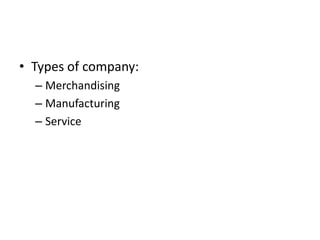
• Types of company:
  – Merchandising
  – Manufacturing
  – Service
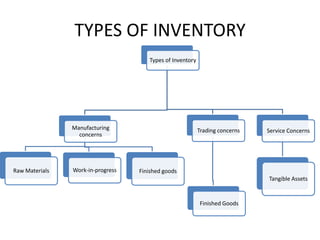
TYPES OF INVENTORY
                                      Types of Inventory


                Manufacturing                              Trading concerns   Service Concerns
                  concerns


Raw Materials   Work-in-progress   Finished goods
                                                                              Tangible Assets


                                                           Finished Goods
Basis of Inventory Valuation

   Cost                        Net Realizable value


          Whichever is less


          Value of Inventory
INVENTORY ACCOUNT SYSTEM
• There are two principal systems of
  determining the physical quantities and
  monetary value of inventories sold and in
  hand
  – Periodic Inventory System
  – Perpetual Inventory System
PERIODIC INVENTORY SYSTEM
• It is a method of ascertaining inventory
• By taking an actual physical count of all the
  inventory items on hand at a particular date
  on which inventory is required
• It is simple and less expensive than the
  perpetual system
• Stock amount is adjusted at the end of the
  accounting period to determine cost of goods
PERPETUAL INVENTORY SYSTEM
• It is a system of recording inventory balances
  after each receipt and issue
• Physical stock should be checked and
  compared with recorded balances
• CoG issued is directly and SoG is taken as
  residual figure with the help of stock ledger
• Maintenance of stock ledger to have record of
  goods on continuous basis
Distinction between PI and PIS
• Based on physical              • Based on book records
  verification                   • Provides continuous
• Provides information about       information about stock and
  stock and CoS                    CoS
• Determine inventory and        • Determine CoS and
  takes CoGS as residual           compute stock as balancing
  figure                           figure
• CoGS-loss of goods as goods    • CS- loss of goods as all
  not in stock are assumed to      unsold goods are assumed
  be sold                          to be in inventory
• Inventory control is not       • Inventory control can be
  possible                         exercised
• Simple and less exp.           • Costlier method
• Requires closure of business   • Determined without
  for count stock                  affecting the operation
INVENTORY METHOD

                                                                     Inventory
                                                                      Method

                                  Not- Ordinary
                                   interchange                                     Ordinary
                                                                                 interchange
              Historical Method                      Not- Historical
                                                       Method
                 Weighted
                                  Average         Base
FIFO   LIFO      average                                                            Specific
                                   Price          Stock
                  price                                                          identification
                                                                                    method
                                         Standard         Adjusted
                                           Cost
                                                                           LPP
                                                             SP

Inventory account system

  • 1.
    INVENTORY ACCOUNT SYSTEM on ABS Softech Pvt. Ltd. GROUP NO. 6
  • 2.
    MEANING • Inventory canbe identified as tangible property held for sale in the ordinary course of business, • Or in the process of production for such sale, • Or for the consumption in the production of goods, • or services for sale
  • 3.
    • Types ofcompany: – Merchandising – Manufacturing – Service
  • 4.
    TYPES OF INVENTORY Types of Inventory Manufacturing Trading concerns Service Concerns concerns Raw Materials Work-in-progress Finished goods Tangible Assets Finished Goods
  • 5.
    Basis of InventoryValuation Cost Net Realizable value Whichever is less Value of Inventory
  • 6.
    INVENTORY ACCOUNT SYSTEM •There are two principal systems of determining the physical quantities and monetary value of inventories sold and in hand – Periodic Inventory System – Perpetual Inventory System
  • 7.
    PERIODIC INVENTORY SYSTEM •It is a method of ascertaining inventory • By taking an actual physical count of all the inventory items on hand at a particular date on which inventory is required • It is simple and less expensive than the perpetual system • Stock amount is adjusted at the end of the accounting period to determine cost of goods
  • 8.
    PERPETUAL INVENTORY SYSTEM •It is a system of recording inventory balances after each receipt and issue • Physical stock should be checked and compared with recorded balances • CoG issued is directly and SoG is taken as residual figure with the help of stock ledger • Maintenance of stock ledger to have record of goods on continuous basis
  • 9.
    Distinction between PIand PIS • Based on physical • Based on book records verification • Provides continuous • Provides information about information about stock and stock and CoS CoS • Determine inventory and • Determine CoS and takes CoGS as residual compute stock as balancing figure figure • CoGS-loss of goods as goods • CS- loss of goods as all not in stock are assumed to unsold goods are assumed be sold to be in inventory • Inventory control is not • Inventory control can be possible exercised • Simple and less exp. • Costlier method • Requires closure of business • Determined without for count stock affecting the operation
  • 10.
    INVENTORY METHOD Inventory Method Not- Ordinary interchange Ordinary interchange Historical Method Not- Historical Method Weighted Average Base FIFO LIFO average Specific Price Stock price identification method Standard Adjusted Cost LPP SP