The Wonderful World of  Rock Weathering Mdm Masayu Mahmud Department of Humanities Innova Junior College, Singapore
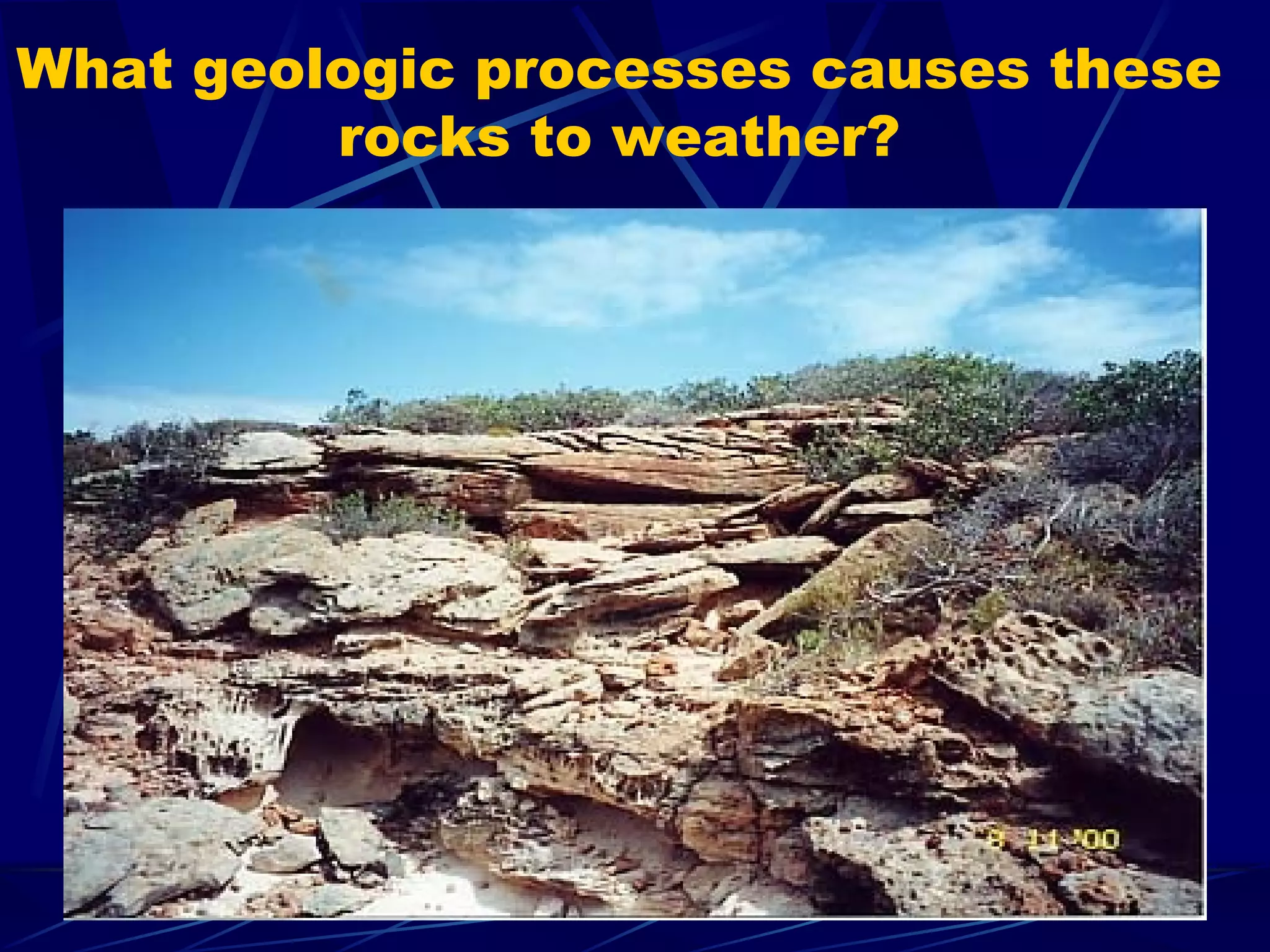
What geologic processes causes these rocks to weather?
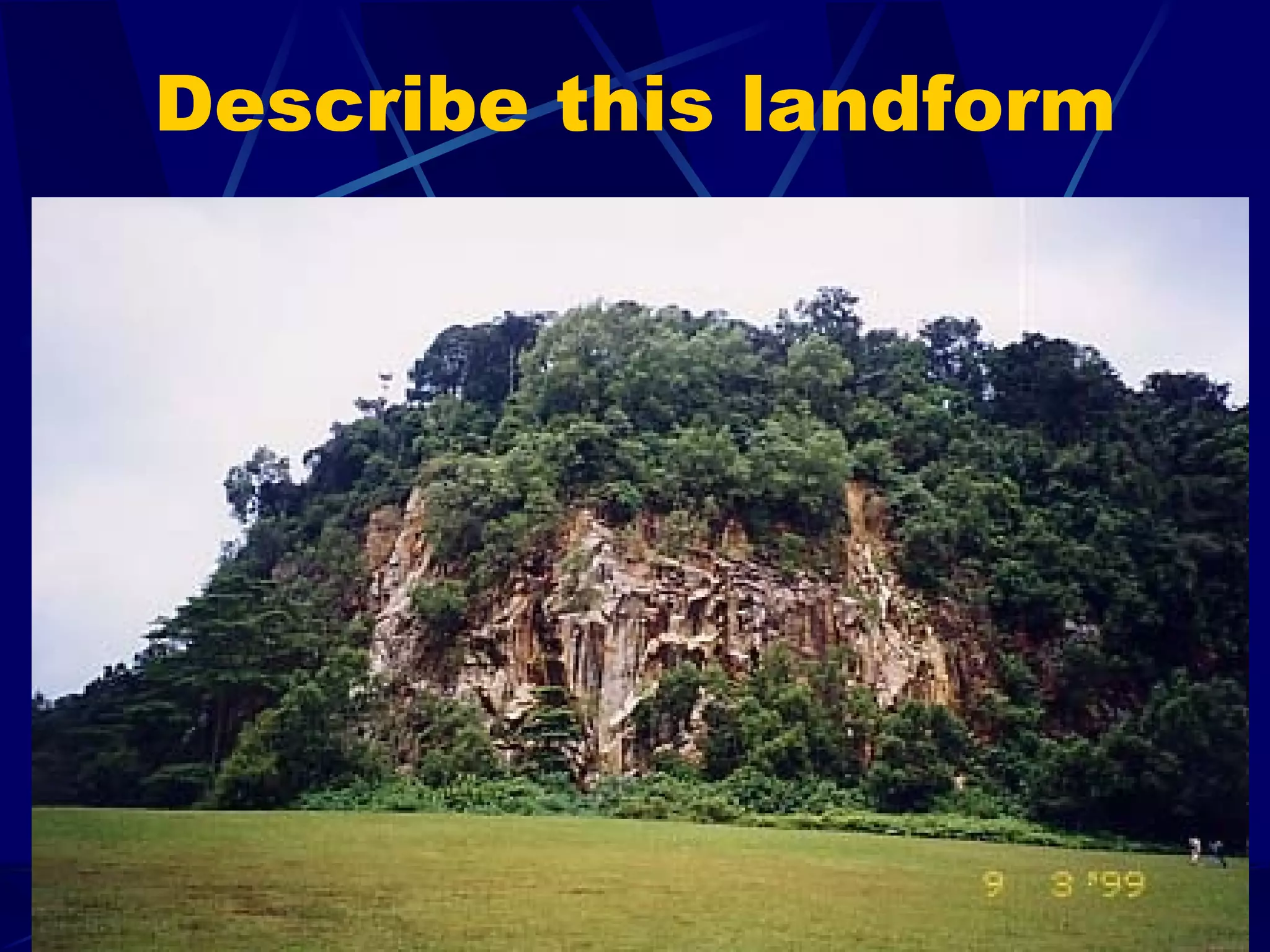
Dairy Farm Estate Granite Outcrop, Singapore
Describe this landform
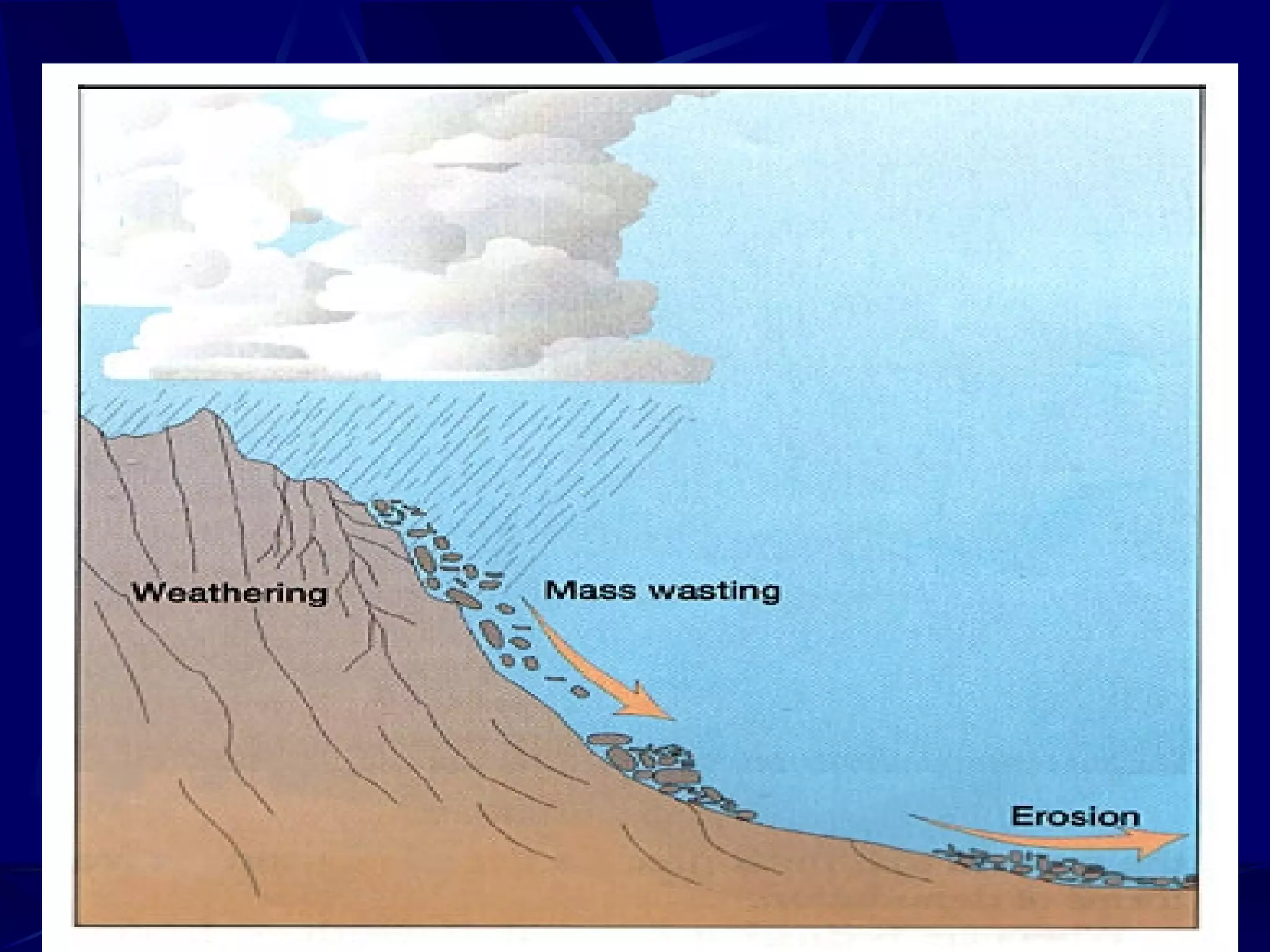
Denudation Includes all processes of wearing down of the rocks on the earth’s surface and their removal resulting in the lowering of the land surface. Major processes. 1. Weathering. 2. Mass movement/mass wasting. 3. Erosion. 4. Transportation. 5. Deposition
Weathering Weathering refers to the process of disintegration (physical breakdown) and decomposition (chemical decay) of rock in situ at or near the earth’s surface by climatic or biological elements.
Erosion Erosion refers to the wearing away of weathered rock material by agents such as running water (rivers), tornadoes, mudflows, moving ice (glaciers), waves and wind. Movement of loose rock material involved.
 
Why Do Rocks Weather? Formed at depth Under pressure No exposure to oxygen, carbon dioxide,water, temperature changes Composition of rocks – reaction? Weathering as a response to atmospheric and surface conditions? Slow process
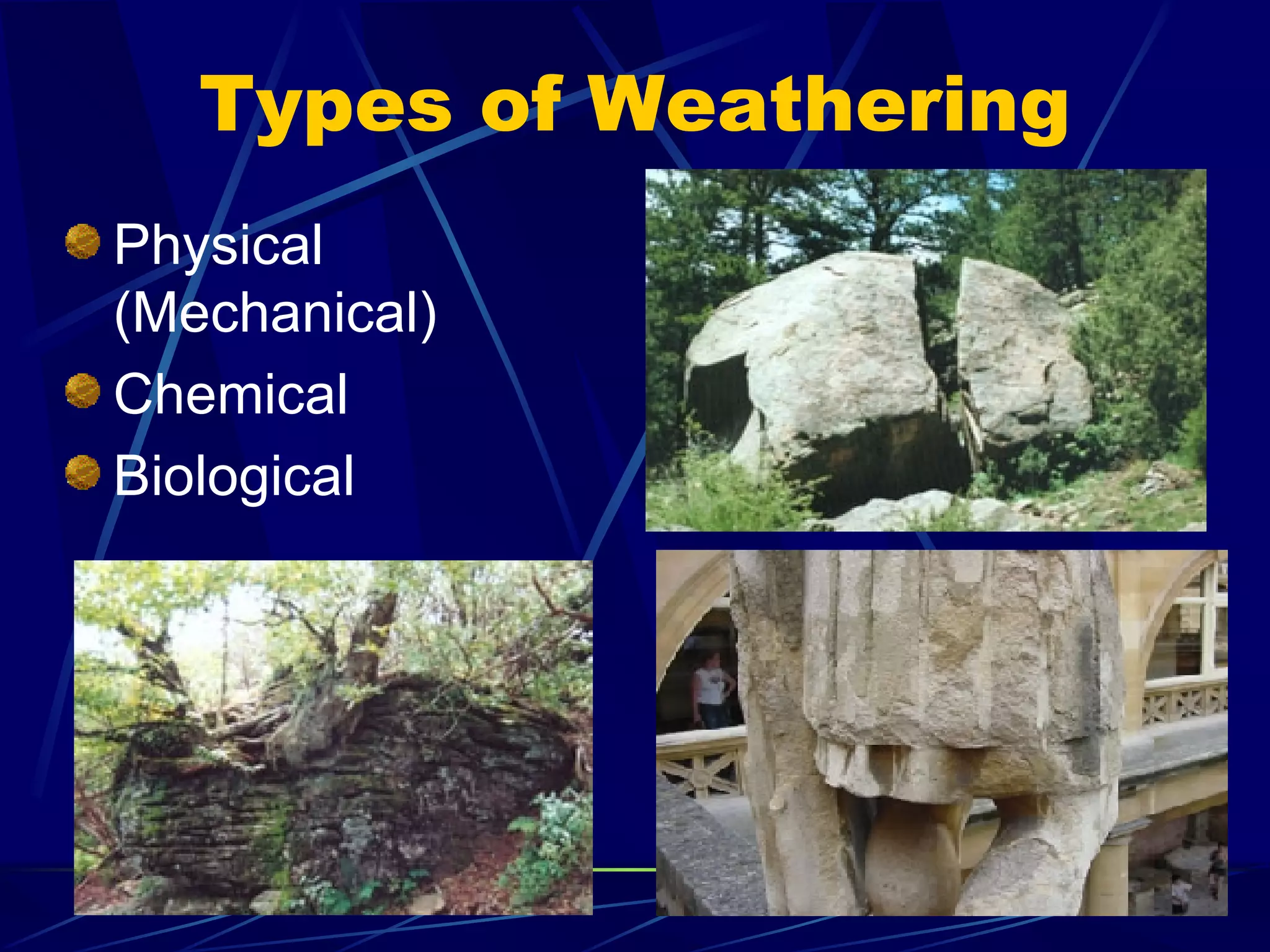
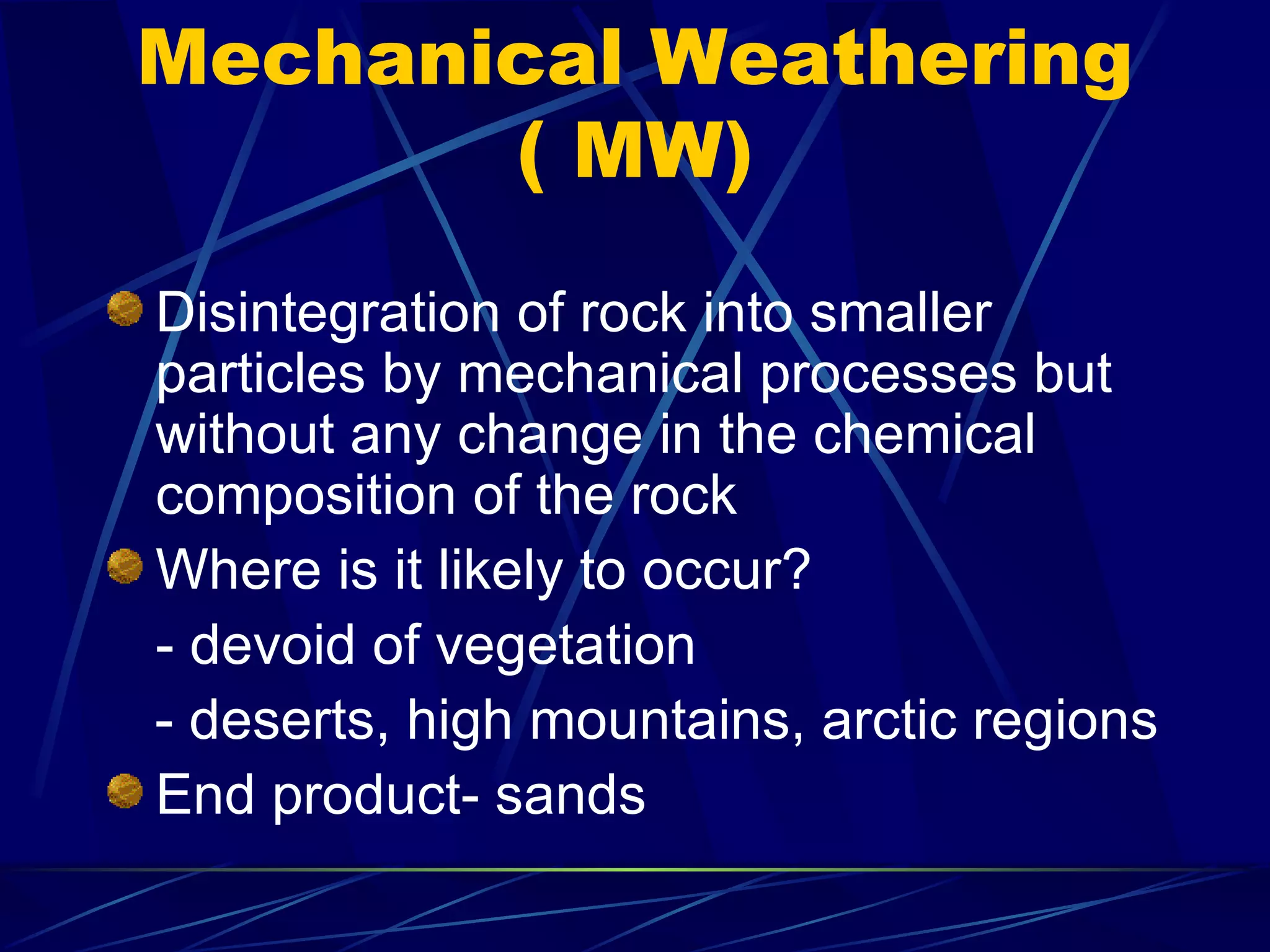
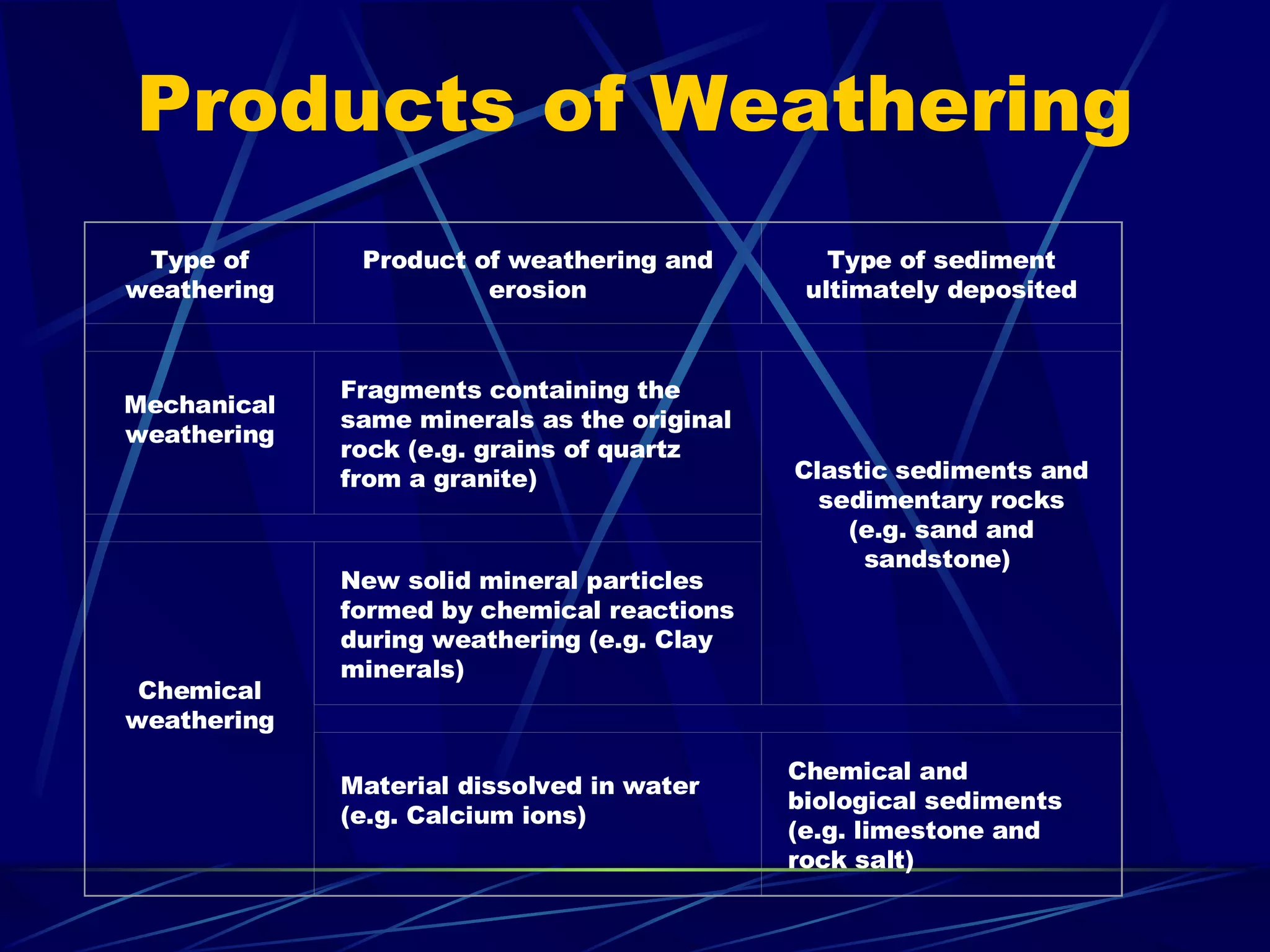
Types of Weathering Physical (Mechanical) Chemical Biological
Mechanical Weathering ( MW) Disintegration of rock into smaller particles by mechanical processes but without any change in the chemical composition of the rock Where is it likely to occur? - devoid of vegetation - deserts, high mountains, arctic regions End product- sands
Chemical Weathering (CW) Decomposition of rock resulting from chemical change Various components of rock – iron, mica, feldspar, calcium carbonate reacting with water, acids, heat etc Dominant Location- warmer climates with vegetation End product- clay
Biological Weathering (BW) Physical or chemical breakdown of rocks due to action of plants, trees, animals,algae, bacteria etc. Root pry, animals burrowing, humic acids reacting with rock.
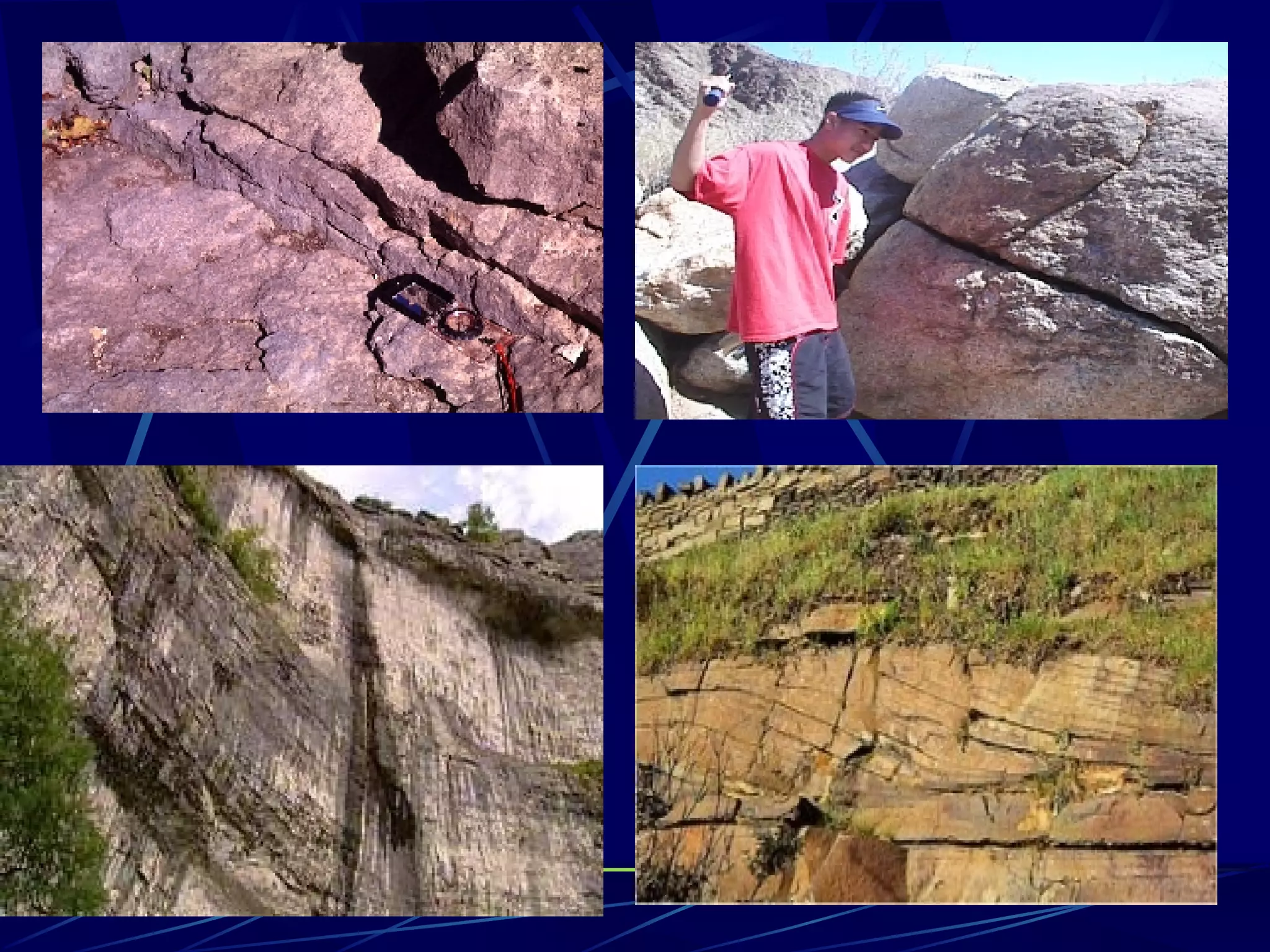
Products of Weathering Type of weathering Product of weathering and erosion Type of sediment ultimately deposited Mechanical weathering Fragments containing the same minerals as the original rock (e.g. grains of quartz from a granite) Clastic sediments and sedimentary rocks (e.g. sand and sandstone)  Chemical weathering New solid mineral particles formed by chemical reactions during weathering (e.g. Clay minerals) Material dissolved in water (e.g. Calcium ions) Chemical and biological sediments (e.g. limestone and rock salt)
A Point to Note Different types of weathering - dominant in certain regions - DO NOT occur in isolation
Factors Influencing Rate of Weathering Climatic factor Rock Types Relief/Topography/Slope Vegetation Impact of human activities
1. Climatic Factor Main influences- air temperature, humidity and rainfall CW dominant in hotter, wetter climates Hydrolysis, oxidation and solution common in equatorial regions MW dominant in regions with extreme temperature fluctuations- Which ones? Deserts, Temperate regions and mountainous areas
2. Rock Types Refers to Chemical composition (constituents minerals) –determines resistance physical structure Presence of joints Bedding planes Permeability of rocks
Jointed Structures
Hard Rock Not? Rocks composed of cemented particles less resistant compared to? Rocks consisting of mainly carbonates? Rocks of massive structure vs bedded structures Presence of joints (naturally occurring cracks in rocks), cracks, fissures?
Jointing in Granite
 
3. Relief, Topography  and Slope Aspect - slopes exposed to wind, rain and heat vs. sheltered slope - Slopes facing sun in high altitudes vs. cold and sunless slopes Slope - high, steep slopes lead to down slope washing and prone to runoff and erosion of materials Elevation - Higher elevation > opportunity for water movement - Flat terrain; slow removal of weathered material. Why? How does this affect weathering rates?
4. Effect of Vegetation Dense vegetation- retains more water; aids CW Decaying vegetation provides moisture and humic acids- aids CW Roots of trees and plants pry rocks and joints- increase MW
5. Impact of human activities Expose the rocks and accelerate weathering Clearing forests Road construction Industrial development Mining/quarrying Trampling
Results of Weathering Processes Joint blocks Boulder fields Exfoliated Rocks Spheroidal boulders Sand Clay Laterite
Boulder fields
Exfoliated Rocks and Spheroidal Boulders
Lateritic Soil A Laterite soil cross section in Brazil. The deep red color is due to Fe 3+  hydroxide minerals in the soil.

Introtoweathering

  • 1.
    The Wonderful Worldof Rock Weathering Mdm Masayu Mahmud Department of Humanities Innova Junior College, Singapore
  • 2.
    What geologic processescauses these rocks to weather?
  • 3.
    Dairy Farm EstateGranite Outcrop, Singapore
  • 4.
  • 5.
    Denudation Includes allprocesses of wearing down of the rocks on the earth’s surface and their removal resulting in the lowering of the land surface. Major processes. 1. Weathering. 2. Mass movement/mass wasting. 3. Erosion. 4. Transportation. 5. Deposition
  • 6.
    Weathering Weathering refersto the process of disintegration (physical breakdown) and decomposition (chemical decay) of rock in situ at or near the earth’s surface by climatic or biological elements.
  • 7.
    Erosion Erosion refersto the wearing away of weathered rock material by agents such as running water (rivers), tornadoes, mudflows, moving ice (glaciers), waves and wind. Movement of loose rock material involved.
  • 8.
  • 9.
    Why Do RocksWeather? Formed at depth Under pressure No exposure to oxygen, carbon dioxide,water, temperature changes Composition of rocks – reaction? Weathering as a response to atmospheric and surface conditions? Slow process
  • 10.
    Types of WeatheringPhysical (Mechanical) Chemical Biological
  • 11.
    Mechanical Weathering (MW) Disintegration of rock into smaller particles by mechanical processes but without any change in the chemical composition of the rock Where is it likely to occur? - devoid of vegetation - deserts, high mountains, arctic regions End product- sands
  • 12.
    Chemical Weathering (CW)Decomposition of rock resulting from chemical change Various components of rock – iron, mica, feldspar, calcium carbonate reacting with water, acids, heat etc Dominant Location- warmer climates with vegetation End product- clay
  • 13.
    Biological Weathering (BW)Physical or chemical breakdown of rocks due to action of plants, trees, animals,algae, bacteria etc. Root pry, animals burrowing, humic acids reacting with rock.
  • 14.
    Products of WeatheringType of weathering Product of weathering and erosion Type of sediment ultimately deposited Mechanical weathering Fragments containing the same minerals as the original rock (e.g. grains of quartz from a granite) Clastic sediments and sedimentary rocks (e.g. sand and sandstone) Chemical weathering New solid mineral particles formed by chemical reactions during weathering (e.g. Clay minerals) Material dissolved in water (e.g. Calcium ions) Chemical and biological sediments (e.g. limestone and rock salt)
  • 15.
    A Point toNote Different types of weathering - dominant in certain regions - DO NOT occur in isolation
  • 16.
    Factors Influencing Rateof Weathering Climatic factor Rock Types Relief/Topography/Slope Vegetation Impact of human activities
  • 17.
    1. Climatic FactorMain influences- air temperature, humidity and rainfall CW dominant in hotter, wetter climates Hydrolysis, oxidation and solution common in equatorial regions MW dominant in regions with extreme temperature fluctuations- Which ones? Deserts, Temperate regions and mountainous areas
  • 18.
    2. Rock TypesRefers to Chemical composition (constituents minerals) –determines resistance physical structure Presence of joints Bedding planes Permeability of rocks
  • 19.
  • 20.
    Hard Rock Not?Rocks composed of cemented particles less resistant compared to? Rocks consisting of mainly carbonates? Rocks of massive structure vs bedded structures Presence of joints (naturally occurring cracks in rocks), cracks, fissures?
  • 21.
  • 22.
  • 23.
    3. Relief, Topography and Slope Aspect - slopes exposed to wind, rain and heat vs. sheltered slope - Slopes facing sun in high altitudes vs. cold and sunless slopes Slope - high, steep slopes lead to down slope washing and prone to runoff and erosion of materials Elevation - Higher elevation > opportunity for water movement - Flat terrain; slow removal of weathered material. Why? How does this affect weathering rates?
  • 24.
    4. Effect ofVegetation Dense vegetation- retains more water; aids CW Decaying vegetation provides moisture and humic acids- aids CW Roots of trees and plants pry rocks and joints- increase MW
  • 25.
    5. Impact ofhuman activities Expose the rocks and accelerate weathering Clearing forests Road construction Industrial development Mining/quarrying Trampling
  • 26.
    Results of WeatheringProcesses Joint blocks Boulder fields Exfoliated Rocks Spheroidal boulders Sand Clay Laterite
  • 27.
  • 28.
    Exfoliated Rocks andSpheroidal Boulders
  • 29.
    Lateritic Soil ALaterite soil cross section in Brazil. The deep red color is due to Fe 3+ hydroxide minerals in the soil.