Introductionto theLean
Canvas
The Lean Canvas is a strategic management template that helps
entrepreneurs to create and validate a business model. It provides a concise
way to document and communicate a business idea, focusing on problems,
solutions, key metrics, and competitive advantages.
By : Siavosh Kaviani
KSRA Research Association
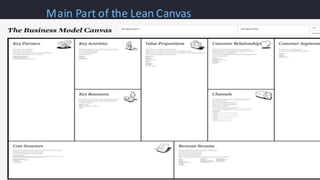
Main Part of the Lean Canvas
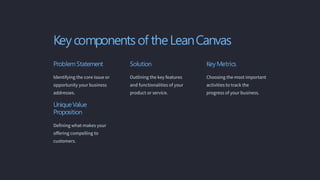
Key components of theLeanCanvas
ProblemStatement
Identifying the core issue or
opportunity your business
addresses.
UniqueValue
Proposition
Defining what makes your
offering compelling to
customers.
Solution
Outlining the key features
and functionalities of your
product or service.
Key Metrics
Choosing the most important
activities to track the
progress of your business.
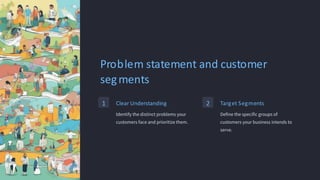
Problem statement and customer
segments
1 Clear Understanding
Identify the distinct problems your
customers face and prioritize them.
2 Target Segments
Define the specific groups of
customers your business intends to
serve.
Unique value propositionandsolution
UniqueValueProposition
Define the benefits customers can’t get
anywhere else.
SolutionDetails
Illustrate how your product addresses the
customer's pain points.
Channels and customer relationships
Diverse Channels
Outline different ways to reach and engage
with customers.
Relationship Building
Explain how to create and maintain strong
connections with customers.
Key metrics andcompetitiveadvantage
Key Metrics Measure customer acquisition, retention, and
satisfaction.
Competitive Advantage Highlight what sets your business apart from
competitors.
Using diagrams to illustrate the Lean
Canvas
Visual Representations
Utilize diagrams to simplify the understanding
of complex business concepts.
Interactive Models
Create dynamic visuals to communicate the
fluidity of business models.
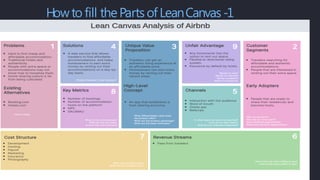
How to fill the Parts of LeanCanvas -1
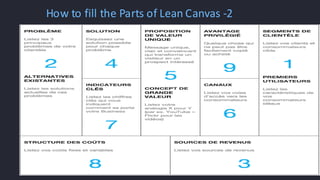
How to fill the Parts of Lean Canvas -2
Benefits of using theLeanCanvas
1 Efficiency
Streamline the process of business
model development and validation.
2 Clarity
Provide a clear and concise overview
of the business model.
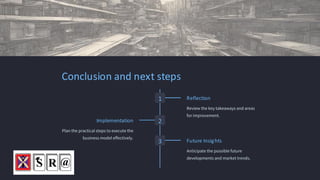
Conclusion and next steps
1 Reflection
Review the key takeaways and areas
for improvement.
2
Implementation
Plan the practical steps to execute the
business model effectively.
3 Future Insights
Anticipate the possible future
developments and market trends.

Introduction-to-the-Lean-Canvas.pdf

  • 1.
    Introductionto theLean Canvas The LeanCanvas is a strategic management template that helps entrepreneurs to create and validate a business model. It provides a concise way to document and communicate a business idea, focusing on problems, solutions, key metrics, and competitive advantages. By : Siavosh Kaviani KSRA Research Association
  • 2.
    Main Part ofthe Lean Canvas
  • 3.
    Key components oftheLeanCanvas ProblemStatement Identifying the core issue or opportunity your business addresses. UniqueValue Proposition Defining what makes your offering compelling to customers. Solution Outlining the key features and functionalities of your product or service. Key Metrics Choosing the most important activities to track the progress of your business.
  • 4.
    Problem statement andcustomer segments 1 Clear Understanding Identify the distinct problems your customers face and prioritize them. 2 Target Segments Define the specific groups of customers your business intends to serve.
  • 5.
    Unique value propositionandsolution UniqueValueProposition Definethe benefits customers can’t get anywhere else. SolutionDetails Illustrate how your product addresses the customer's pain points.
  • 6.
    Channels and customerrelationships Diverse Channels Outline different ways to reach and engage with customers. Relationship Building Explain how to create and maintain strong connections with customers.
  • 7.
    Key metrics andcompetitiveadvantage KeyMetrics Measure customer acquisition, retention, and satisfaction. Competitive Advantage Highlight what sets your business apart from competitors.
  • 8.
    Using diagrams toillustrate the Lean Canvas Visual Representations Utilize diagrams to simplify the understanding of complex business concepts. Interactive Models Create dynamic visuals to communicate the fluidity of business models.
  • 9.
    How to fillthe Parts of LeanCanvas -1
  • 10.
    How to fillthe Parts of Lean Canvas -2
  • 11.
    Benefits of usingtheLeanCanvas 1 Efficiency Streamline the process of business model development and validation. 2 Clarity Provide a clear and concise overview of the business model.
  • 12.
    Conclusion and nextsteps 1 Reflection Review the key takeaways and areas for improvement. 2 Implementation Plan the practical steps to execute the business model effectively. 3 Future Insights Anticipate the possible future developments and market trends.