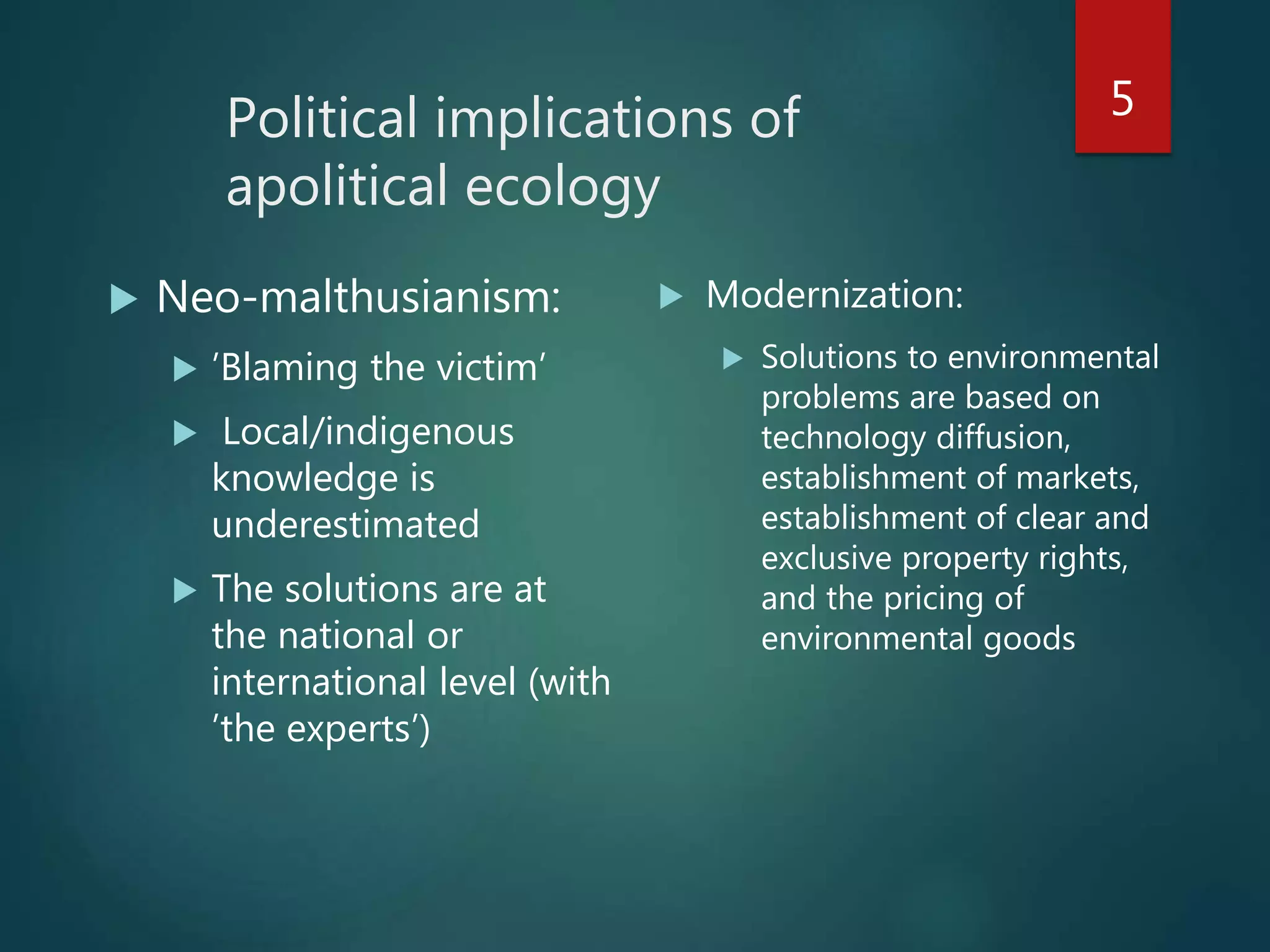
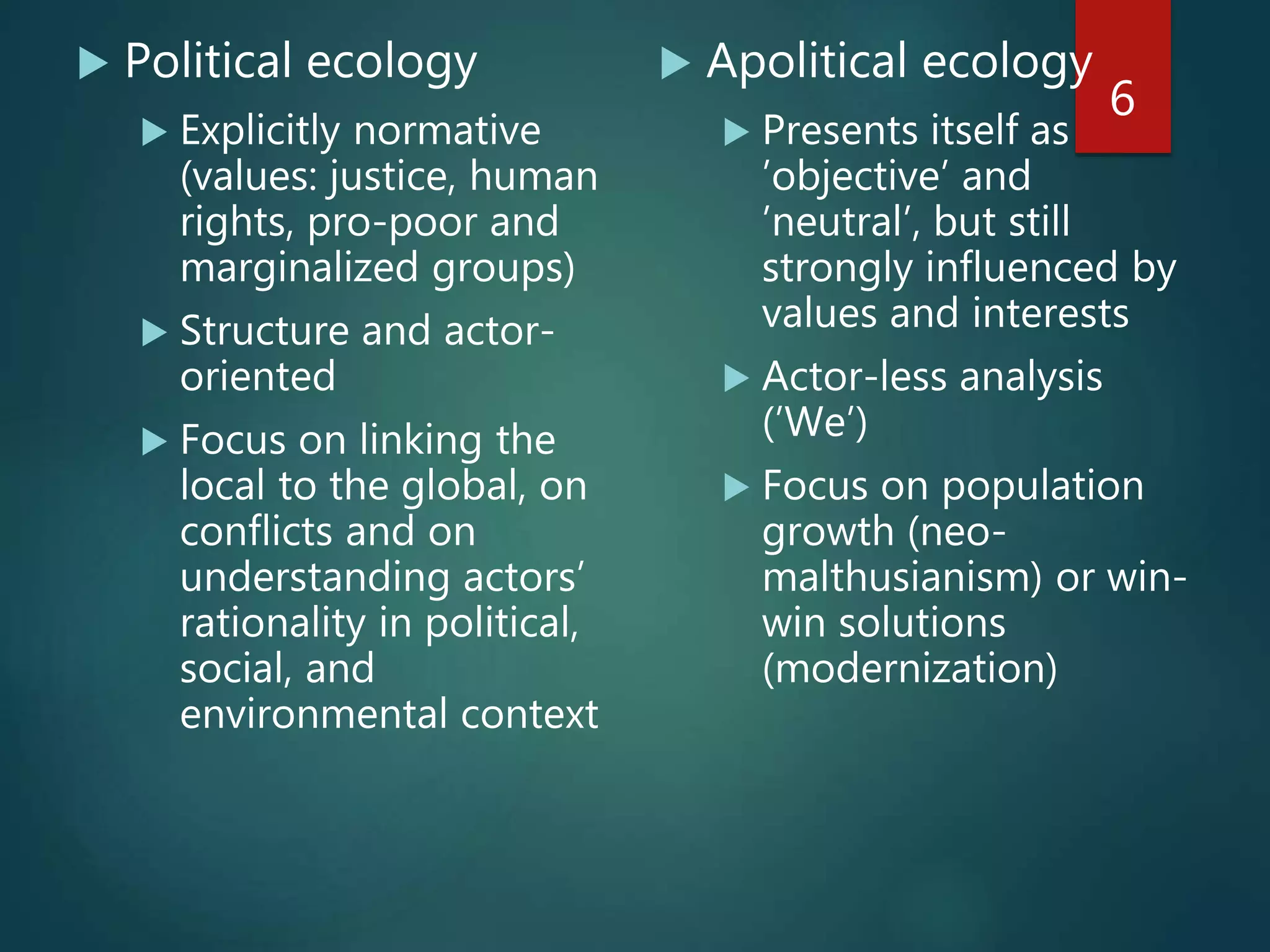
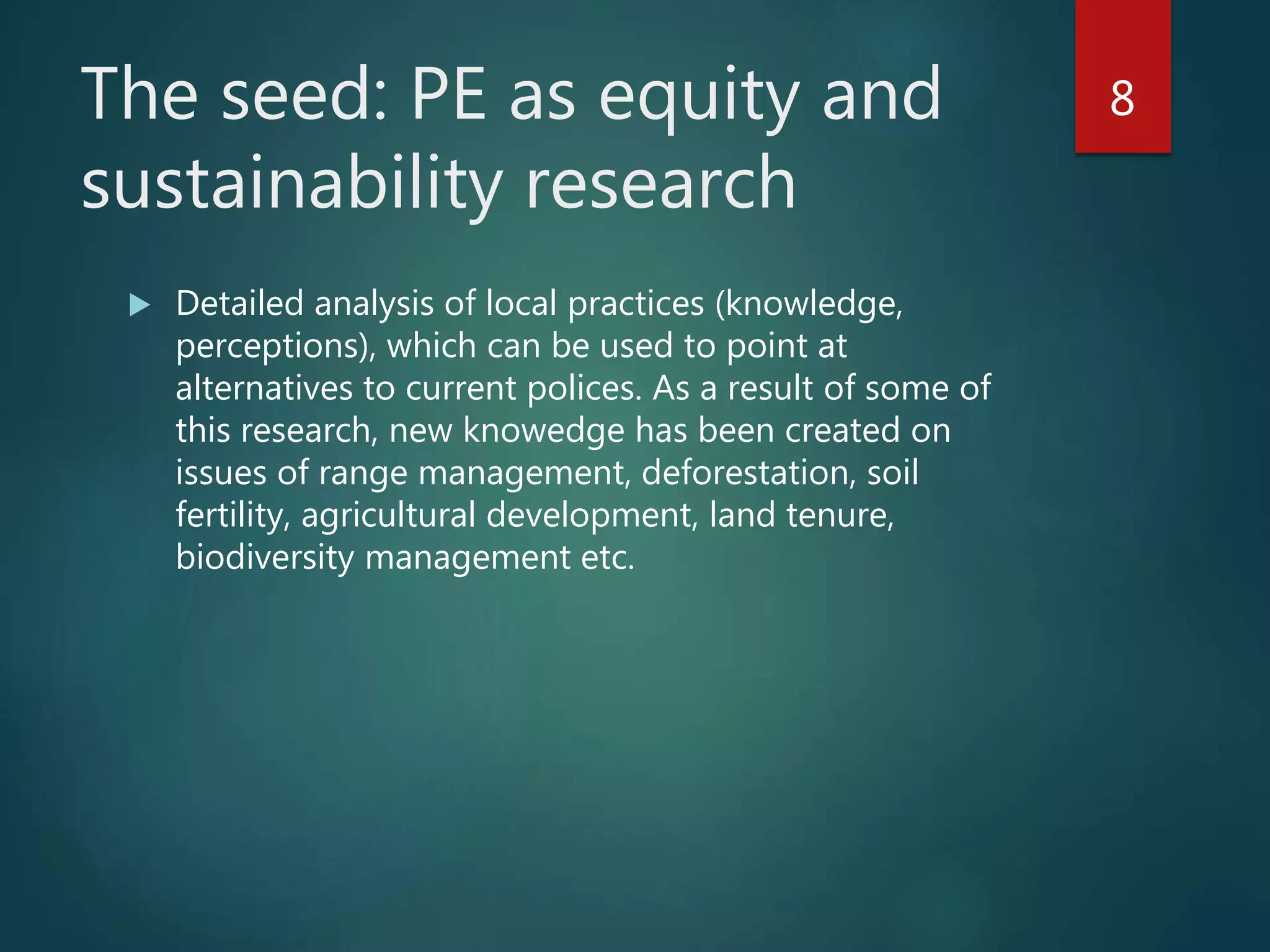
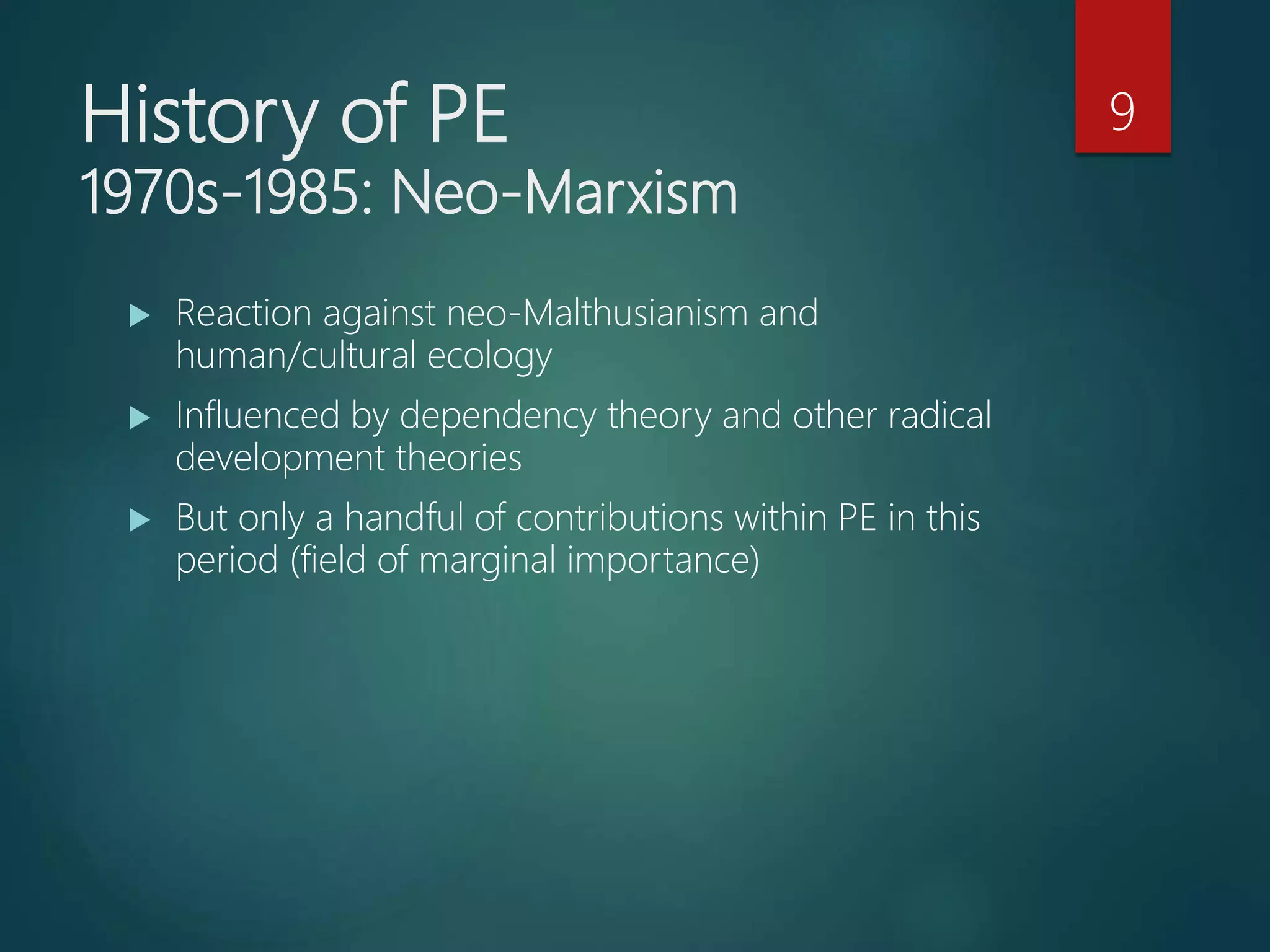
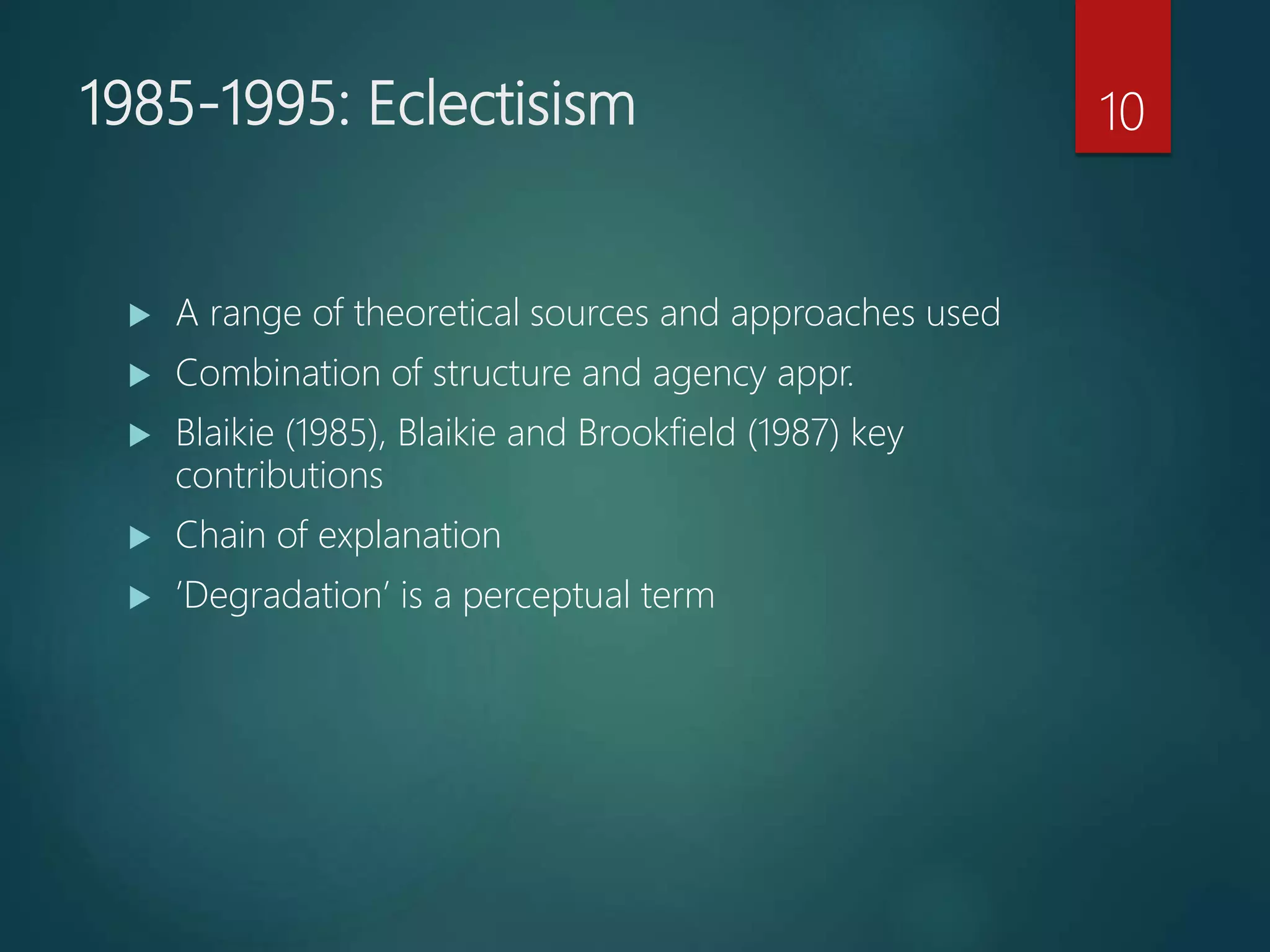
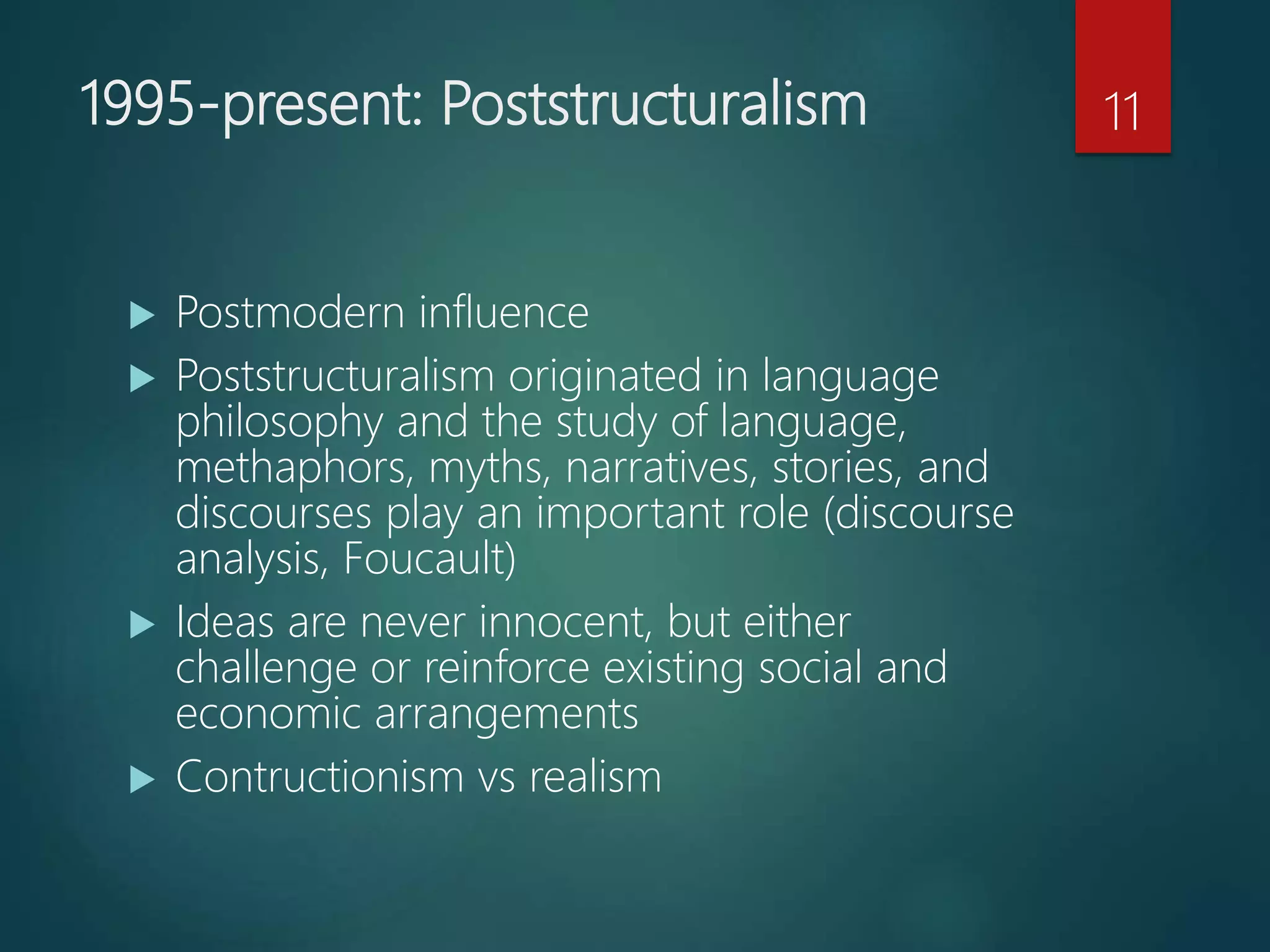
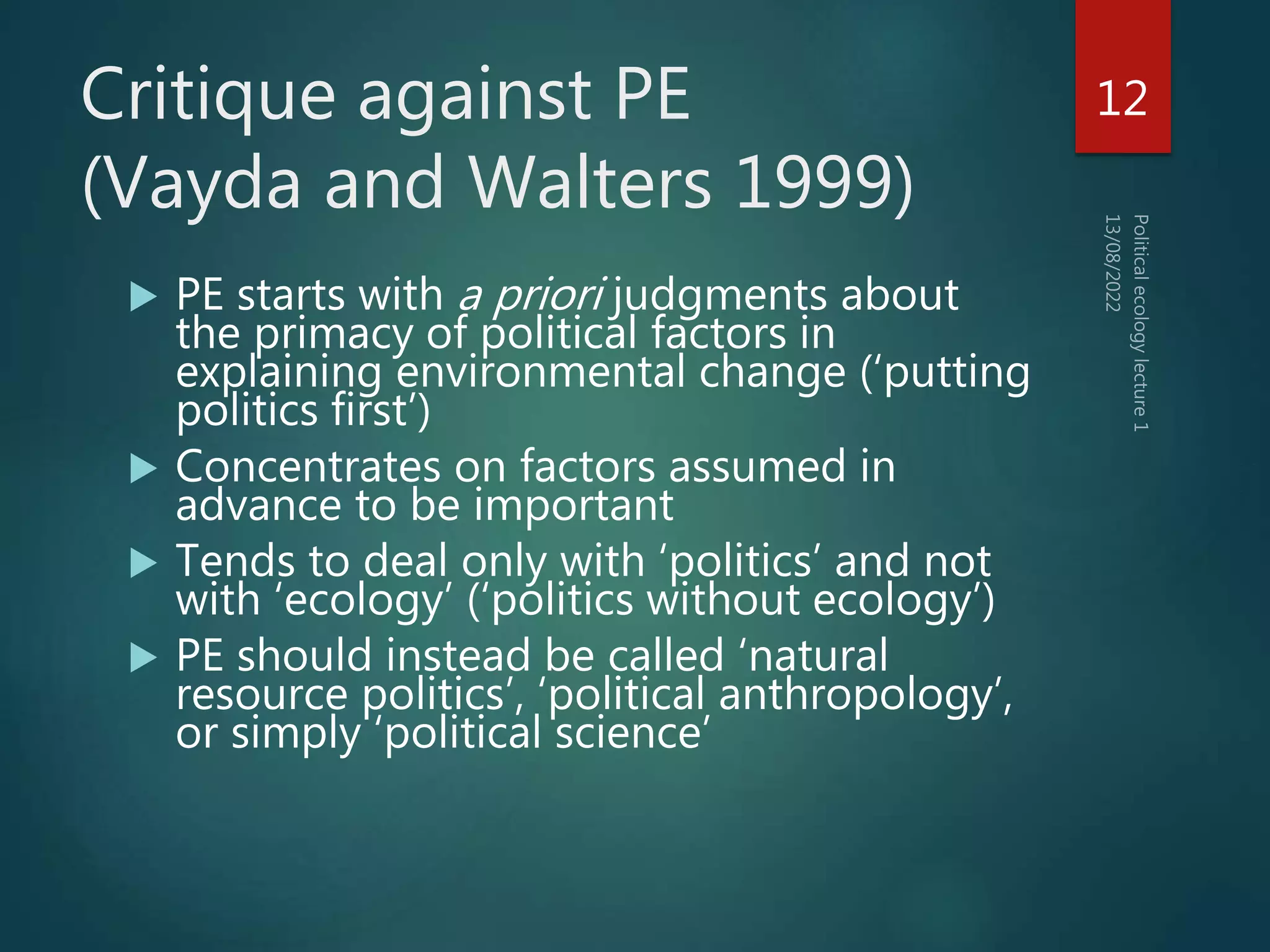
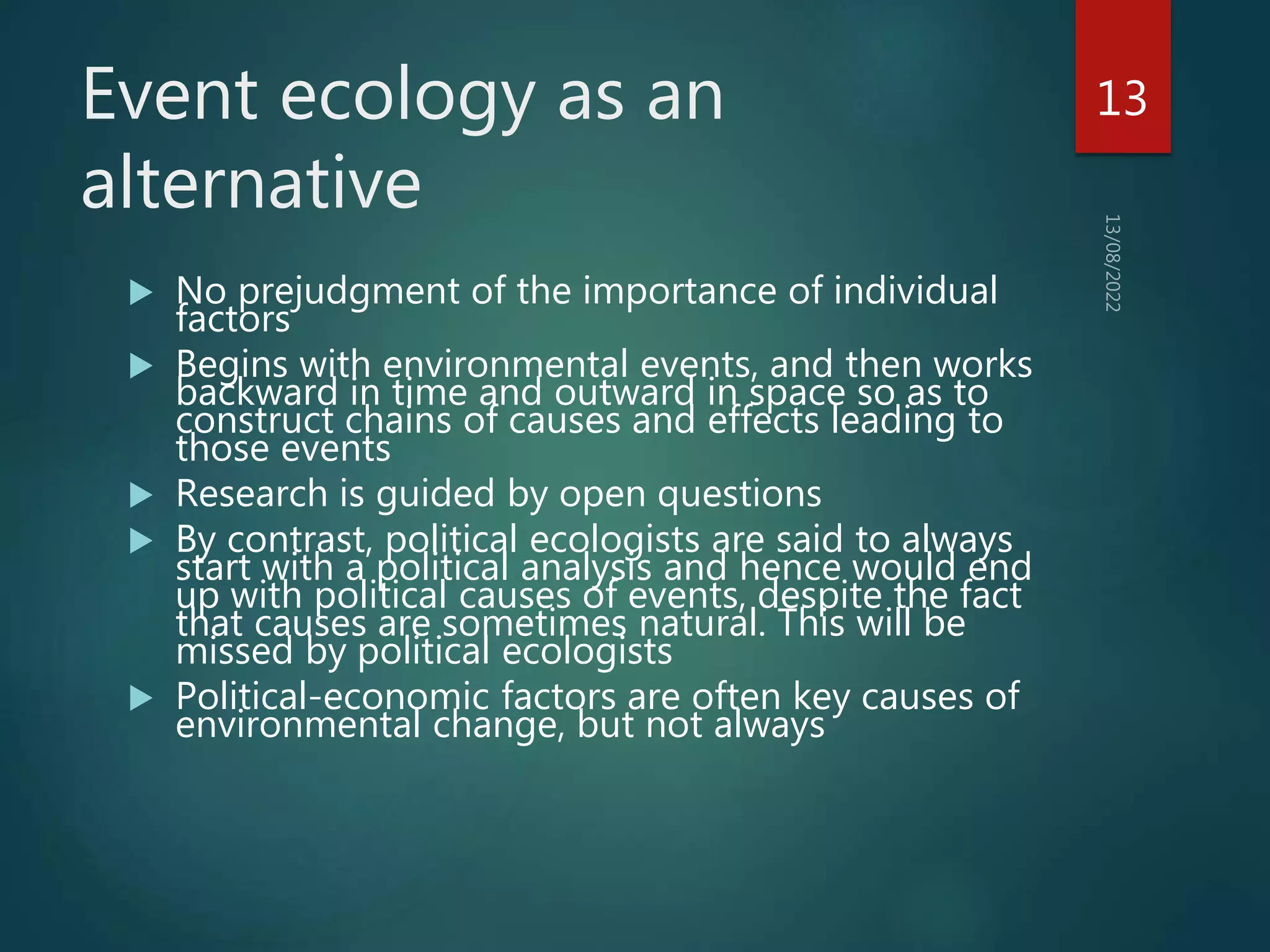
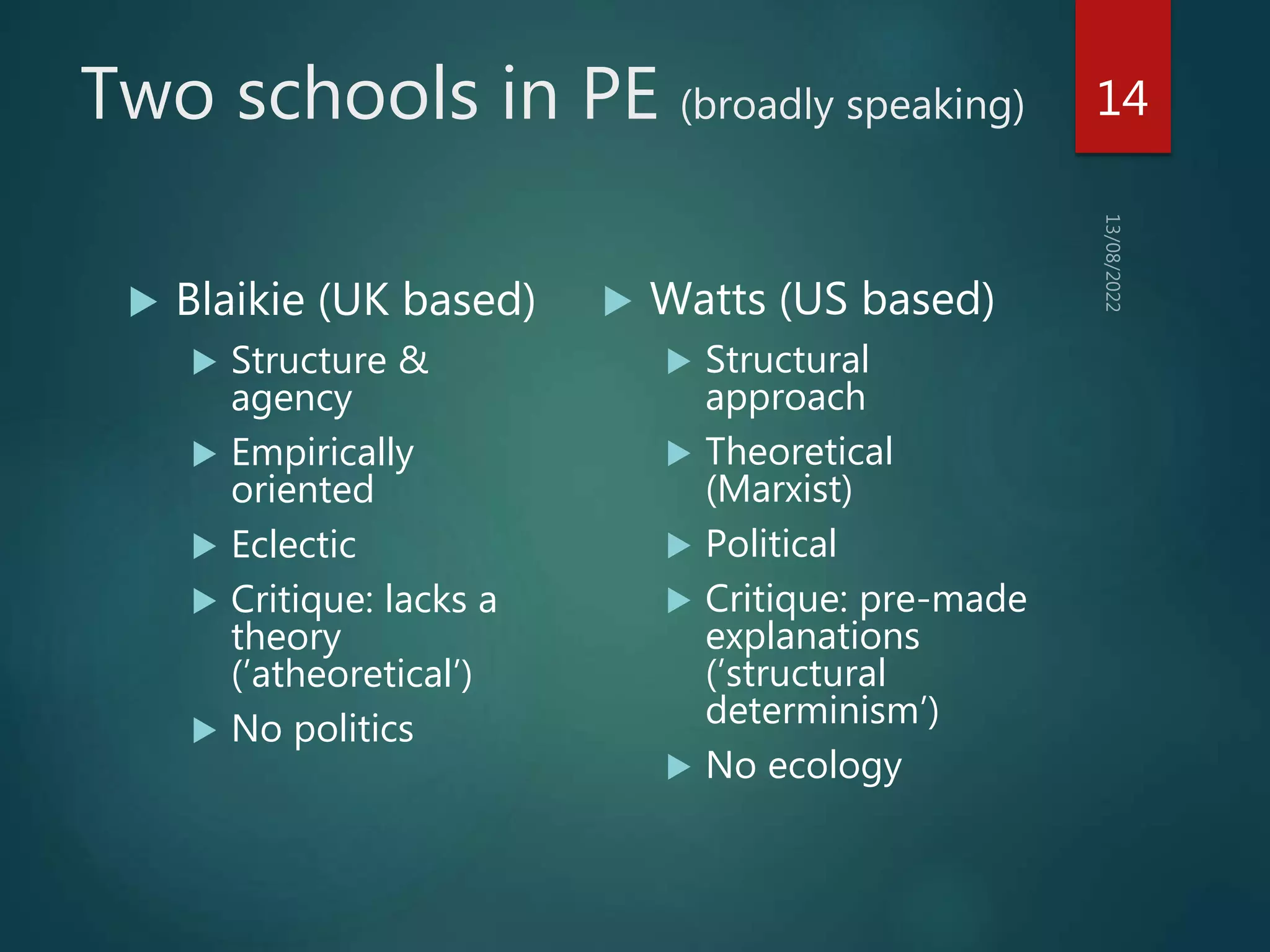
Political ecology is loosely defined as the study of power relations in land and environmental management. It combines various scales and focuses on unequal costs and benefits, winners and losers, how history matters, and environmental conflicts. Current research topics include conservation areas, environmental change, commodification impacts, gender and power, land tenure, and conflicts. Political ecology is explicitly normative and aims to support marginalized groups, while apolitical ecology presents as objective but is still influenced by values and interests.