Introduction to
Advocacy and
Campaign
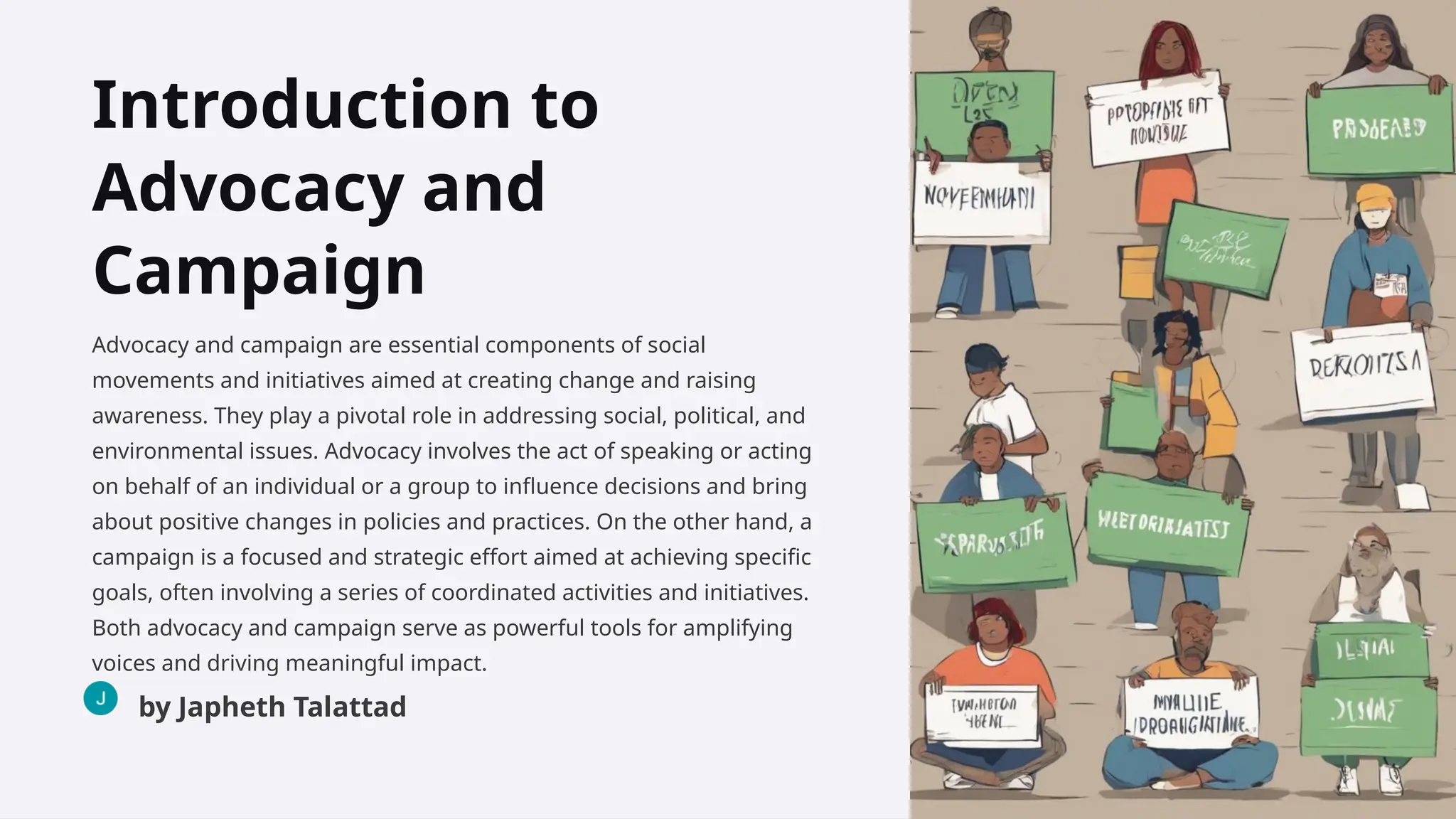
Advocacy and campaign are essential components of social
movements and initiatives aimed at creating change and raising
awareness. They play a pivotal role in addressing social, political, and
environmental issues. Advocacy involves the act of speaking or acting
on behalf of an individual or a group to influence decisions and bring
about positive changes in policies and practices. On the other hand, a
campaign is a focused and strategic effort aimed at achieving specific
goals, often involving a series of coordinated activities and initiatives.
Both advocacy and campaign serve as powerful tools for amplifying
voices and driving meaningful impact.
by Japheth Talattad
Definition and Purpose of Advocacy
Empowerment and
Representation
Advocacy seeks to empower and
represent individuals, communities,
or marginalized groups by
advocating for their rights, needs,
and interests. It aims to ensure that
their voices are heard and
considered in decision-making
processes.
Promotion of Change
The primary purpose of advocacy is
to promote change and influence
policies, laws, and practices to
address underlying societal issues
and inequalities. It often involves
raising awareness, educating the
public, and lobbying for systemic
reforms.
Collaborative Action
Advocacy fosters collaborative action among various stakeholders, including
nonprofits, activists, experts, and affected communities, to work towards achieving
common goals and creating positive societal impact.
Definition and Purpose of
Campaign
1 Raising Awareness
Campaigns are designed to raise
public awareness about specific
issues, causes, or initiatives with
the aim of fostering
understanding, empathy, and
support for the campaign's
objectives.
2 Mobilization and Action
The primary purpose of a
campaign is to mobilize
individuals, communities, and
organizations to take action,
whether through signing
petitions, attending events, or
participating in advocacy efforts.
3 Creating Impact
Campaigns are focused on creating tangible impact by driving change,
influencing public opinion, and garnering resources to address the identified
issues or causes effectively.
Key Features of Advocacy
Engagement and
Outreach
Advocacy involves engaging
with diverse stakeholders,
building partnerships, and
reaching out to
communities to ensure
inclusivity and
representation.
Promotion of Human
Rights
Human rights advocacy
plays a significant role in
addressing social justice
issues, promoting equality,
and safeguarding the rights
of marginalized and
vulnerable individuals and
communities.
Policy Influence
Advocacy efforts often aim
to influence public policies,
regulations, and
institutional frameworks to
create sustainable and
equitable solutions to
societal challenges.
Key Features of Campaign
1 Strategic Planning
Campaigns involve meticulous strategic planning, goal setting, and resource
allocation to ensure the effective execution of targeted initiatives and
activities.
2 Engagement and Communication
Effective campaigns prioritize engaging with the target audience, utilizing
various communication channels, and creating compelling messaging to
resonate with the public.
3 Measurement of Impact
Campaigns emphasize evaluating impact, measuring outcomes, and adjusting
strategies based on data and feedback to enhance effectiveness and drive
desired results.
Differences Between Advocacy
and Campaign
Primary Focus
Advocacy primarily focuses on driving systemic and policy changes to
address societal issues and inequalities.
Strategic Actions
Campaigns are centered on strategic actions and mobilization efforts aimed
at achieving specific short-term goals and outcomes.
Longevity of Efforts
Advocacy efforts are typically long-term and sustained, aiming for enduring
changes, while campaigns often have a defined timeline and are geared
towards achieving immediate objectives.
Similarities Between Advocacy
and Campaign
Impact-oriented
Both advocacy and campaign
initiatives are driven by a shared goal
of creating positive impact,
influencing perceptions, and
fostering change within society.
Community Engagement
Both advocacy and campaign efforts
involve engaging with communities,
mobilizing support, and amplifying
voices to address pressing issues and
causes.
Strategic Communication
Effective communication strategies play a vital role in both advocacy and campaign
activities, ensuring that messages are effectively delivered and resonate with
diverse audiences.
Examples of Successful Advocacy Efforts
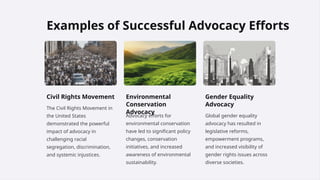
Civil Rights Movement
The Civil Rights Movement in
the United States
demonstrated the powerful
impact of advocacy in
challenging racial
segregation, discrimination,
and systemic injustices.
Environmental
Conservation
Advocacy
Advocacy efforts for
environmental conservation
have led to significant policy
changes, conservation
initiatives, and increased
awareness of environmental
sustainability.
Gender Equality
Advocacy
Global gender equality
advocacy has resulted in
legislative reforms,
empowerment programs,
and increased visibility of
gender rights issues across
diverse societies.
Examples of Successful Campaign
Strategies
Political Campaigns Election campaigns leverage strategic
messaging, media outreach, and
mobilization efforts to engage voters and
drive support for political candidates and
their platforms.
Social Media Campaigns Social media campaigns harness digital
platforms to raise awareness, initiate
movements, and foster online activism
around specific social, cultural, or
environmental causes.
Health Awareness Campaigns Campaigns focused on health awareness
utilize educational programs, public events,
and targeted messaging to promote health
initiatives and disease prevention.
Conclusion and Key Takeaways
1 Collaboration and Synergy
Advocacy and campaign efforts
are most impactful when they
synergize, leveraging collective
strengths, resources, and
strategies to drive meaningful and
sustainable societal change.
2 Empowerment and
Amplification
Both concepts serve as catalysts
for empowerment, amplifying
voices, and fostering the agency of
individuals and communities in
driving positive societal
transformations.
3 Continuous Evolution
Advocacy and campaign methodologies continuously evolve, adapting to
changing societal dynamics, technological advancements, and emerging global
challenges to remain relevant and effective.

IntroductiontoAdvocacy-and-Campaign.pptx

  • 1.
    Introduction to Advocacy and Campaign Advocacyand campaign are essential components of social movements and initiatives aimed at creating change and raising awareness. They play a pivotal role in addressing social, political, and environmental issues. Advocacy involves the act of speaking or acting on behalf of an individual or a group to influence decisions and bring about positive changes in policies and practices. On the other hand, a campaign is a focused and strategic effort aimed at achieving specific goals, often involving a series of coordinated activities and initiatives. Both advocacy and campaign serve as powerful tools for amplifying voices and driving meaningful impact. by Japheth Talattad
  • 2.
    Definition and Purposeof Advocacy Empowerment and Representation Advocacy seeks to empower and represent individuals, communities, or marginalized groups by advocating for their rights, needs, and interests. It aims to ensure that their voices are heard and considered in decision-making processes. Promotion of Change The primary purpose of advocacy is to promote change and influence policies, laws, and practices to address underlying societal issues and inequalities. It often involves raising awareness, educating the public, and lobbying for systemic reforms. Collaborative Action Advocacy fosters collaborative action among various stakeholders, including nonprofits, activists, experts, and affected communities, to work towards achieving common goals and creating positive societal impact.
  • 3.
    Definition and Purposeof Campaign 1 Raising Awareness Campaigns are designed to raise public awareness about specific issues, causes, or initiatives with the aim of fostering understanding, empathy, and support for the campaign's objectives. 2 Mobilization and Action The primary purpose of a campaign is to mobilize individuals, communities, and organizations to take action, whether through signing petitions, attending events, or participating in advocacy efforts. 3 Creating Impact Campaigns are focused on creating tangible impact by driving change, influencing public opinion, and garnering resources to address the identified issues or causes effectively.
  • 4.
    Key Features ofAdvocacy Engagement and Outreach Advocacy involves engaging with diverse stakeholders, building partnerships, and reaching out to communities to ensure inclusivity and representation. Promotion of Human Rights Human rights advocacy plays a significant role in addressing social justice issues, promoting equality, and safeguarding the rights of marginalized and vulnerable individuals and communities. Policy Influence Advocacy efforts often aim to influence public policies, regulations, and institutional frameworks to create sustainable and equitable solutions to societal challenges.
  • 5.
    Key Features ofCampaign 1 Strategic Planning Campaigns involve meticulous strategic planning, goal setting, and resource allocation to ensure the effective execution of targeted initiatives and activities. 2 Engagement and Communication Effective campaigns prioritize engaging with the target audience, utilizing various communication channels, and creating compelling messaging to resonate with the public. 3 Measurement of Impact Campaigns emphasize evaluating impact, measuring outcomes, and adjusting strategies based on data and feedback to enhance effectiveness and drive desired results.
  • 6.
    Differences Between Advocacy andCampaign Primary Focus Advocacy primarily focuses on driving systemic and policy changes to address societal issues and inequalities. Strategic Actions Campaigns are centered on strategic actions and mobilization efforts aimed at achieving specific short-term goals and outcomes. Longevity of Efforts Advocacy efforts are typically long-term and sustained, aiming for enduring changes, while campaigns often have a defined timeline and are geared towards achieving immediate objectives.
  • 7.
    Similarities Between Advocacy andCampaign Impact-oriented Both advocacy and campaign initiatives are driven by a shared goal of creating positive impact, influencing perceptions, and fostering change within society. Community Engagement Both advocacy and campaign efforts involve engaging with communities, mobilizing support, and amplifying voices to address pressing issues and causes. Strategic Communication Effective communication strategies play a vital role in both advocacy and campaign activities, ensuring that messages are effectively delivered and resonate with diverse audiences.
  • 8.
    Examples of SuccessfulAdvocacy Efforts Civil Rights Movement The Civil Rights Movement in the United States demonstrated the powerful impact of advocacy in challenging racial segregation, discrimination, and systemic injustices. Environmental Conservation Advocacy Advocacy efforts for environmental conservation have led to significant policy changes, conservation initiatives, and increased awareness of environmental sustainability. Gender Equality Advocacy Global gender equality advocacy has resulted in legislative reforms, empowerment programs, and increased visibility of gender rights issues across diverse societies.
  • 9.
    Examples of SuccessfulCampaign Strategies Political Campaigns Election campaigns leverage strategic messaging, media outreach, and mobilization efforts to engage voters and drive support for political candidates and their platforms. Social Media Campaigns Social media campaigns harness digital platforms to raise awareness, initiate movements, and foster online activism around specific social, cultural, or environmental causes. Health Awareness Campaigns Campaigns focused on health awareness utilize educational programs, public events, and targeted messaging to promote health initiatives and disease prevention.
  • 10.
    Conclusion and KeyTakeaways 1 Collaboration and Synergy Advocacy and campaign efforts are most impactful when they synergize, leveraging collective strengths, resources, and strategies to drive meaningful and sustainable societal change. 2 Empowerment and Amplification Both concepts serve as catalysts for empowerment, amplifying voices, and fostering the agency of individuals and communities in driving positive societal transformations. 3 Continuous Evolution Advocacy and campaign methodologies continuously evolve, adapting to changing societal dynamics, technological advancements, and emerging global challenges to remain relevant and effective.