Introduction to the British
Romantics
The Romantic Era
 Lasted from approximately 1780-1830
 A time of major changes and revolution
 Both the American and French Revolutions had a large impact
 A revolution of gender ideals was also arising
 Writers were resisting aristocratic society and the
politics of the Enlightenment
 They were also reacting to the rationalization of
nature.
Some Literary Trends
 Evoking or criticizing the past
 Speaking to the “common” people
 Love of nature
 Sense of nationalism and exoticism
Big Names in Literature
 Lord Byron
 William Wordsworth
 Samuel Taylor Coleridge
 William Blake
 Mary Wollstonecraft Shelley
 John Keats
 Percy Bysshe Shelley
 Mary Anne Radcliffe
3 Major Buzzwords
Sublime
Beautiful
Picturesque
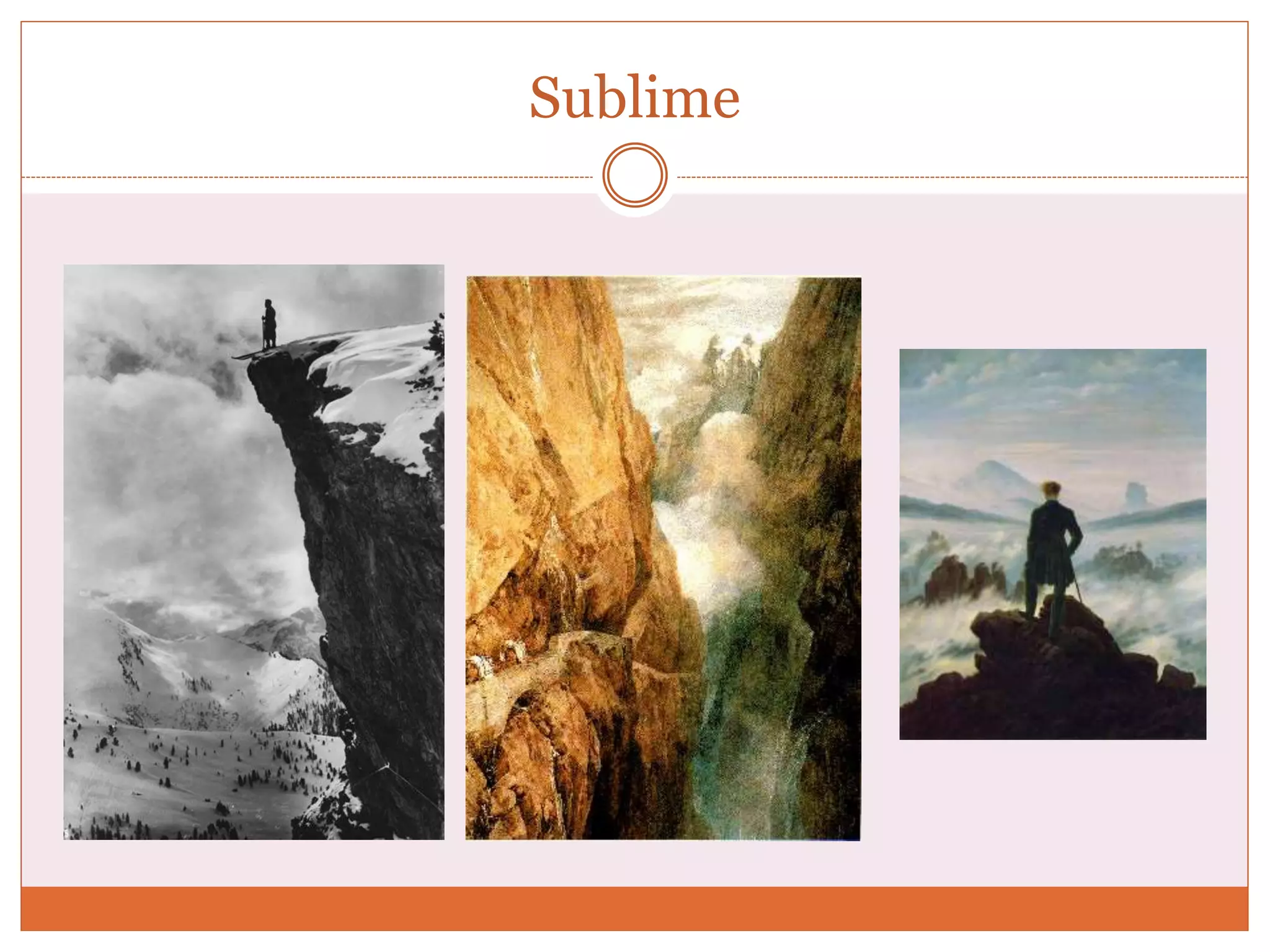
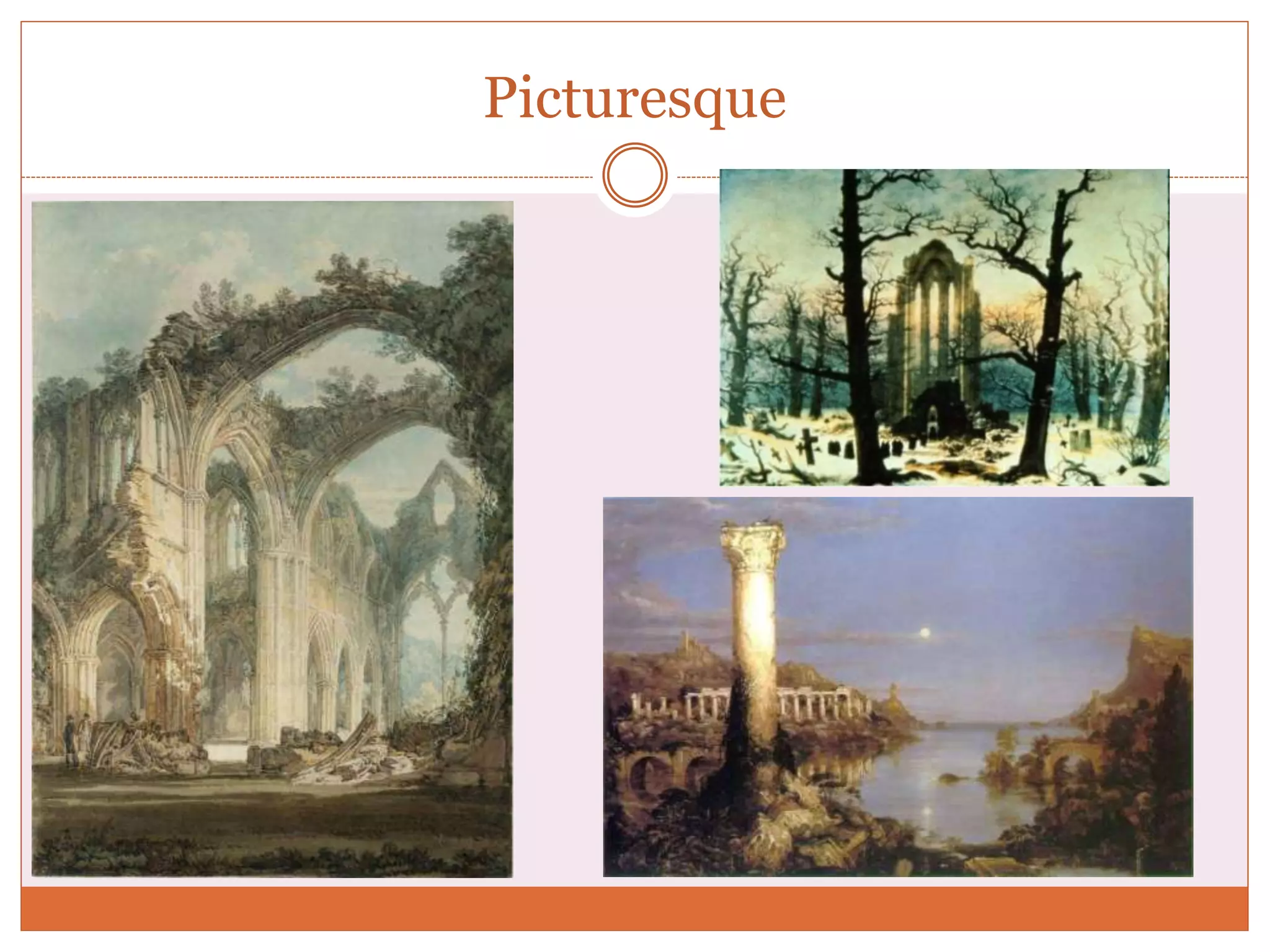
Sublime
 something that excites the ideas of pain and danger
or is associated with terror
 Produces the strongest emotions the mind is capable
of feeling
 Associated with: passion, terror, mystery, power,
vastness, infinity
 From Edmund Burke’s Philosophical Enquiry into the Origin of Our Ideas of the Sublime and the Beautiful
Sublime
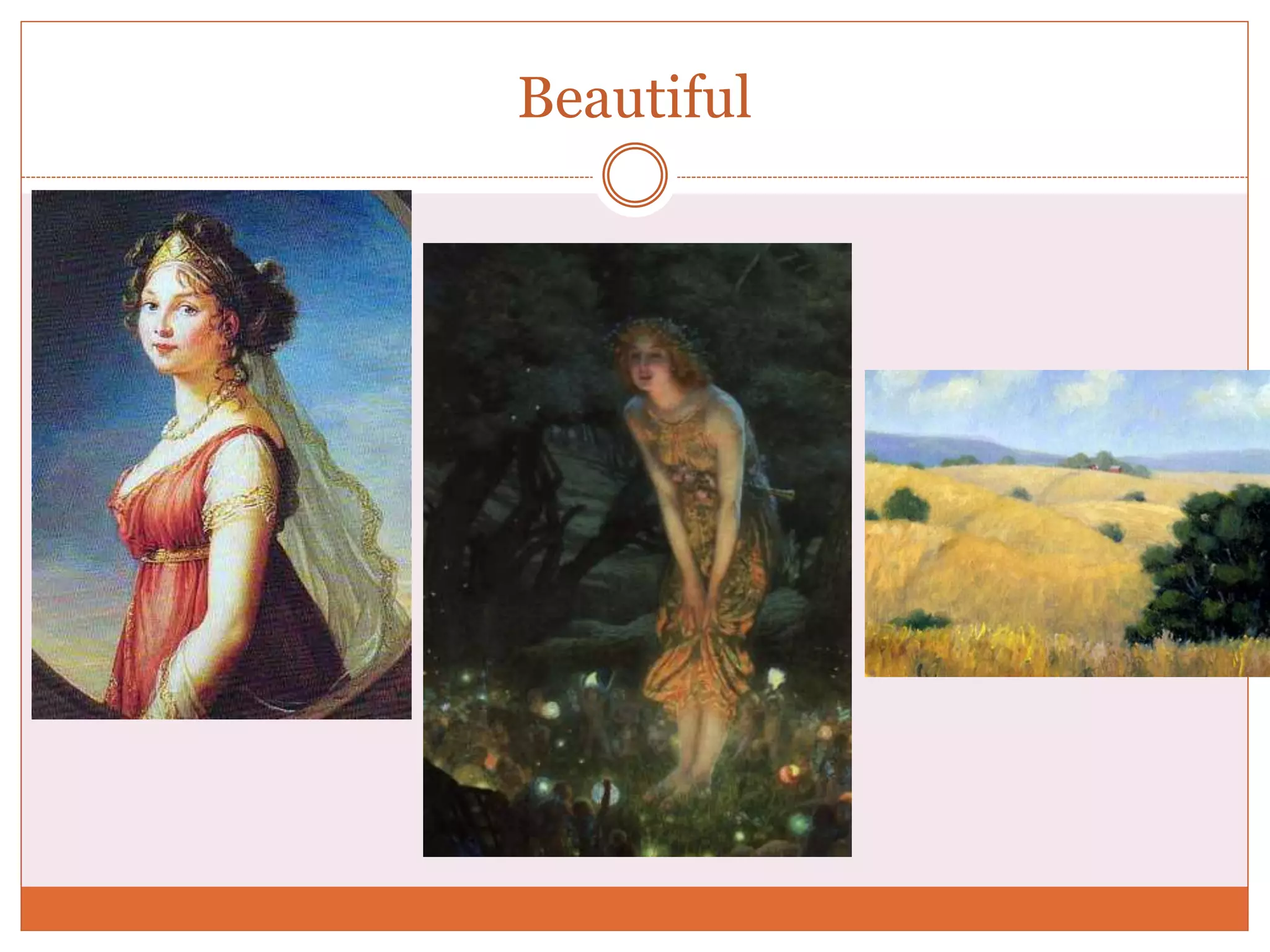
Beautiful
 A tactic allowance of imperfection; “beauty in
distress is the most affecting beauty”
 Has a lot to do with love; the feelings of love, etc.
 Smoothness, softness, neatness
 From Edmund Burke’s Philosophical Enquiry into the Origin of Our Ideas of the Sublime and the Beautiful
Beautiful
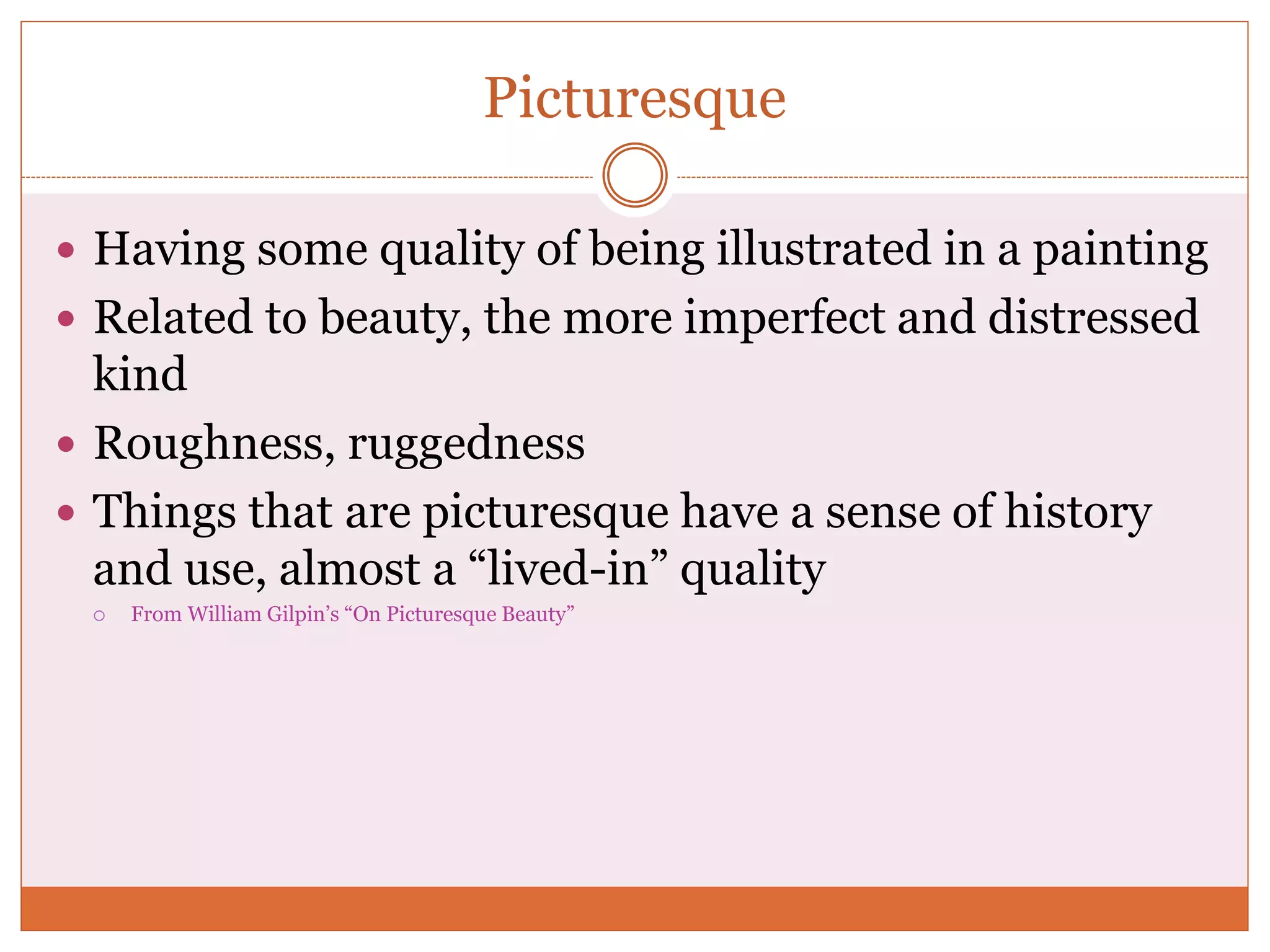
Picturesque
 Having some quality of being illustrated in a painting
 Related to beauty, the more imperfect and distressed
kind
 Roughness, ruggedness
 Things that are picturesque have a sense of history
and use, almost a “lived-in” quality
 From William Gilpin’s “On Picturesque Beauty”
Picturesque
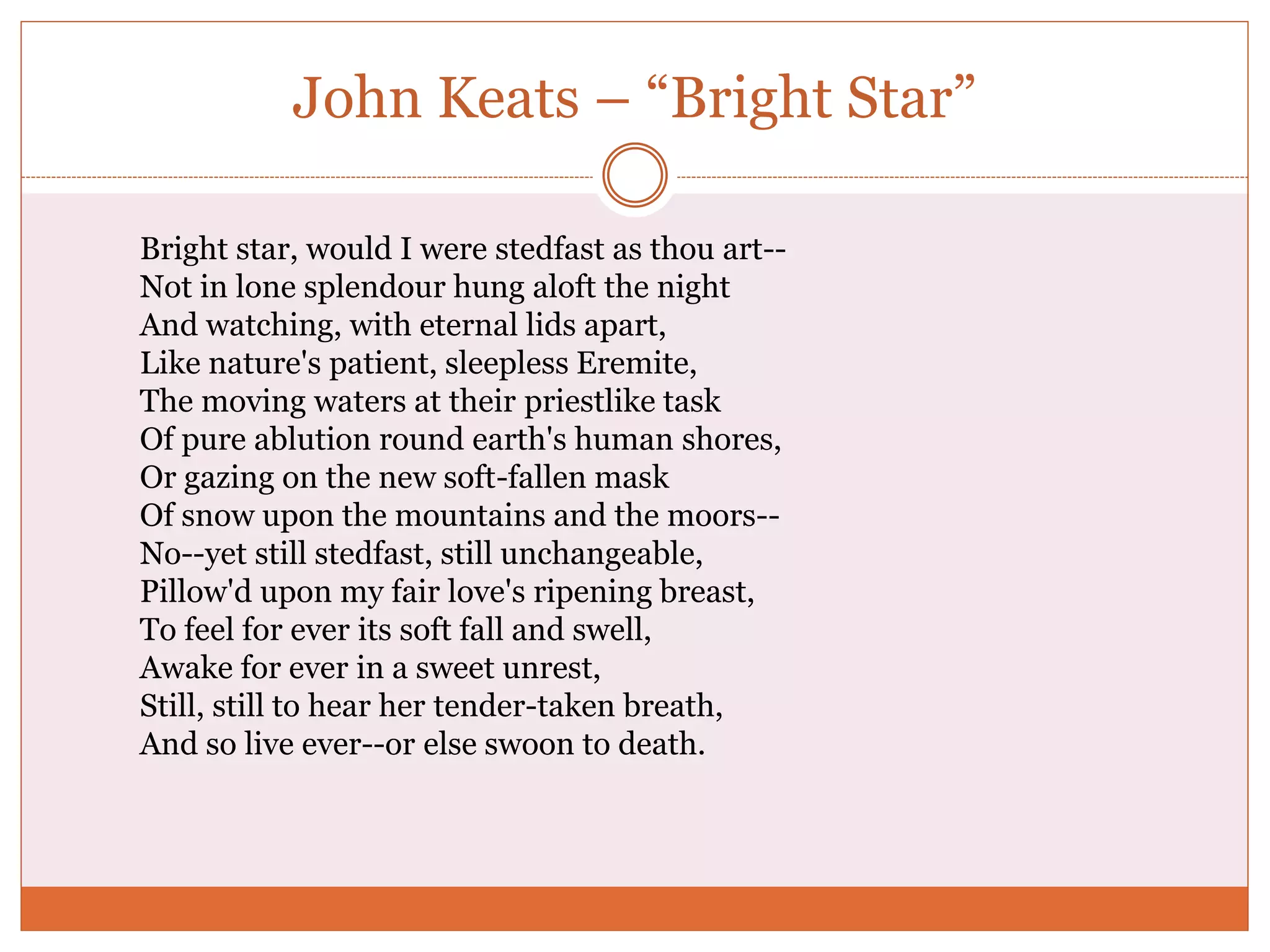
John Keats – “Bright Star”
Bright star, would I were stedfast as thou art--
Not in lone splendour hung aloft the night
And watching, with eternal lids apart,
Like nature's patient, sleepless Eremite,
The moving waters at their priestlike task
Of pure ablution round earth's human shores,
Or gazing on the new soft-fallen mask
Of snow upon the mountains and the moors--
No--yet still stedfast, still unchangeable,
Pillow'd upon my fair love's ripening breast,
To feel for ever its soft fall and swell,
Awake for ever in a sweet unrest,
Still, still to hear her tender-taken breath,
And so live ever--or else swoon to death.

Introduction to the British Romantics

  • 1.
    Introduction to theBritish Romantics
  • 2.
    The Romantic Era Lasted from approximately 1780-1830  A time of major changes and revolution  Both the American and French Revolutions had a large impact  A revolution of gender ideals was also arising  Writers were resisting aristocratic society and the politics of the Enlightenment  They were also reacting to the rationalization of nature.
  • 3.
    Some Literary Trends Evoking or criticizing the past  Speaking to the “common” people  Love of nature  Sense of nationalism and exoticism
  • 4.
    Big Names inLiterature  Lord Byron  William Wordsworth  Samuel Taylor Coleridge  William Blake  Mary Wollstonecraft Shelley  John Keats  Percy Bysshe Shelley  Mary Anne Radcliffe
  • 5.
  • 6.
    Sublime  something thatexcites the ideas of pain and danger or is associated with terror  Produces the strongest emotions the mind is capable of feeling  Associated with: passion, terror, mystery, power, vastness, infinity  From Edmund Burke’s Philosophical Enquiry into the Origin of Our Ideas of the Sublime and the Beautiful
  • 7.
  • 8.
    Beautiful  A tacticallowance of imperfection; “beauty in distress is the most affecting beauty”  Has a lot to do with love; the feelings of love, etc.  Smoothness, softness, neatness  From Edmund Burke’s Philosophical Enquiry into the Origin of Our Ideas of the Sublime and the Beautiful
  • 9.
  • 10.
    Picturesque  Having somequality of being illustrated in a painting  Related to beauty, the more imperfect and distressed kind  Roughness, ruggedness  Things that are picturesque have a sense of history and use, almost a “lived-in” quality  From William Gilpin’s “On Picturesque Beauty”
  • 11.
  • 12.
    John Keats –“Bright Star” Bright star, would I were stedfast as thou art-- Not in lone splendour hung aloft the night And watching, with eternal lids apart, Like nature's patient, sleepless Eremite, The moving waters at their priestlike task Of pure ablution round earth's human shores, Or gazing on the new soft-fallen mask Of snow upon the mountains and the moors-- No--yet still stedfast, still unchangeable, Pillow'd upon my fair love's ripening breast, To feel for ever its soft fall and swell, Awake for ever in a sweet unrest, Still, still to hear her tender-taken breath, And so live ever--or else swoon to death.