INTRODUCTION TO SYSTEMS ENGINEERING
FROM NASA’S PERSPECTIVE
Ali Saboonchi, Doctor of Systems Engineering
Morgan State University
At The End of This PresentationYou Should BeAble ToAnswer:
1. What is system?
2. What is systems engineering?
3. Why is systems engineering important?
4. What are the economic consequences and project problems of failing to do
proper systems engineering?
5. What does a typical systems engineering lifecycle look like?
What is System?
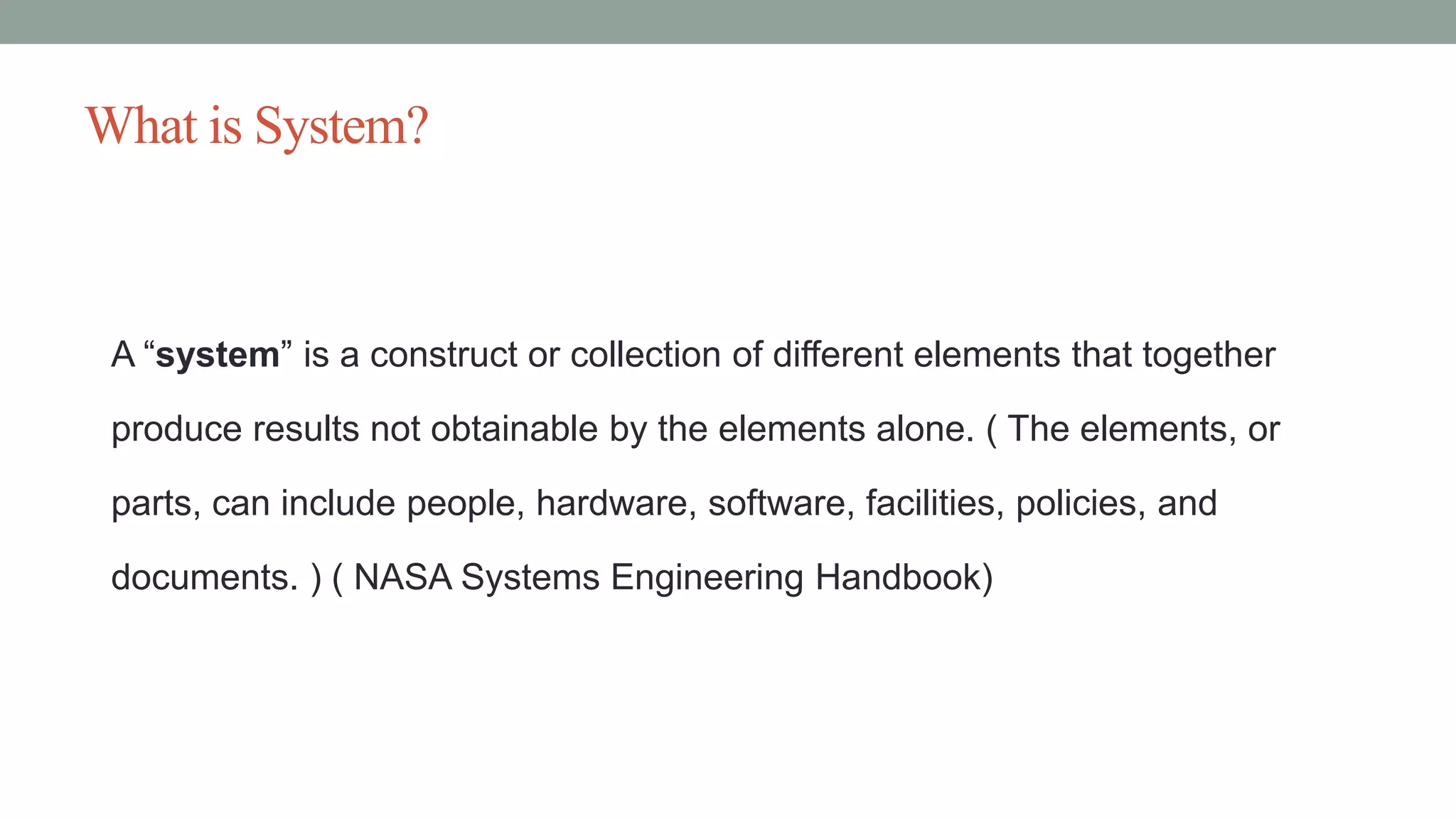
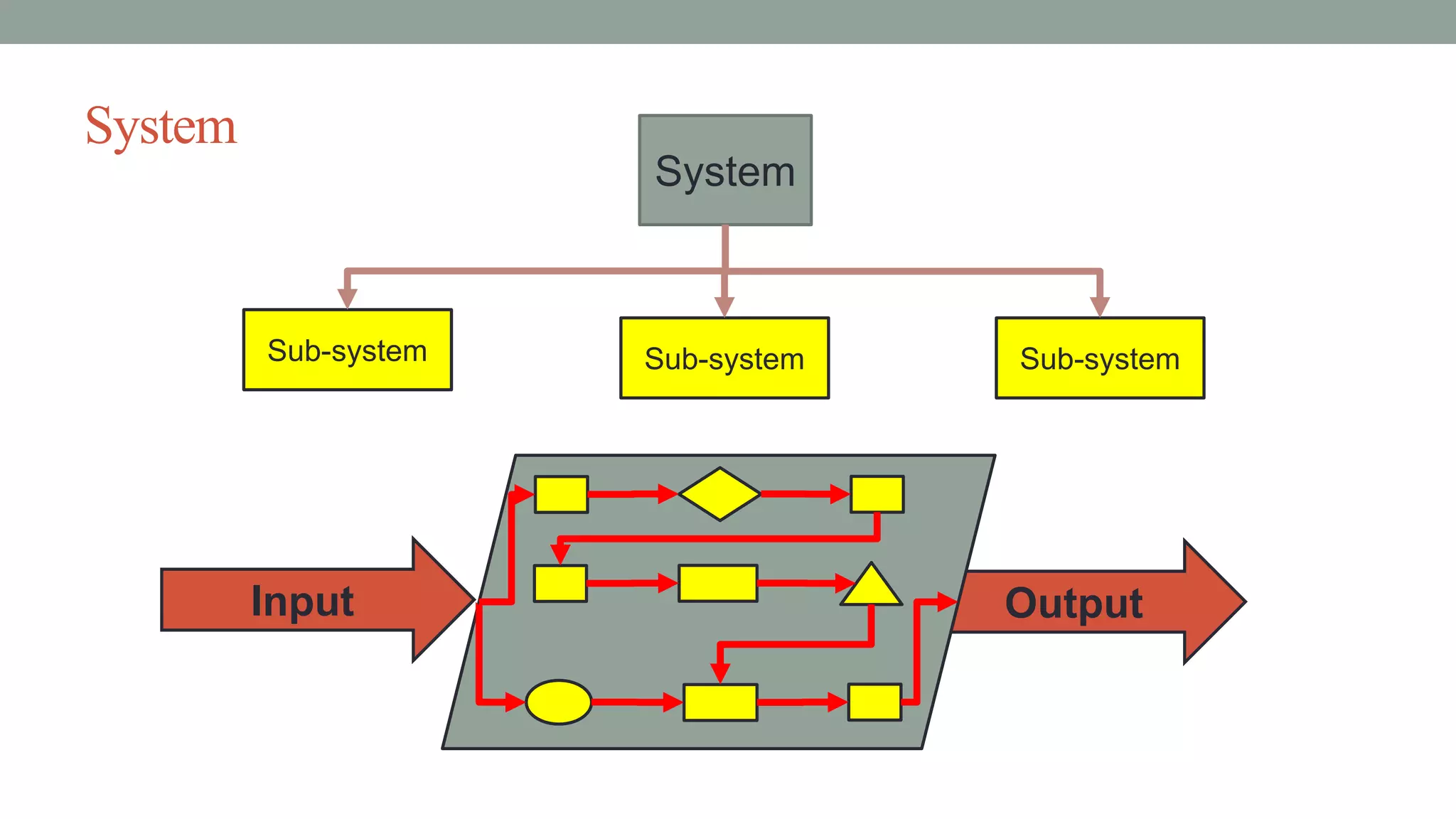
A “system” is a construct or collection of different elements that together
produce results not obtainable by the elements alone. ( The elements, or
parts, can include people, hardware, software, facilities, policies, and
documents. ) ( NASA Systems Engineering Handbook)
System
Output
System
Sub-system Sub-system Sub-system
Input
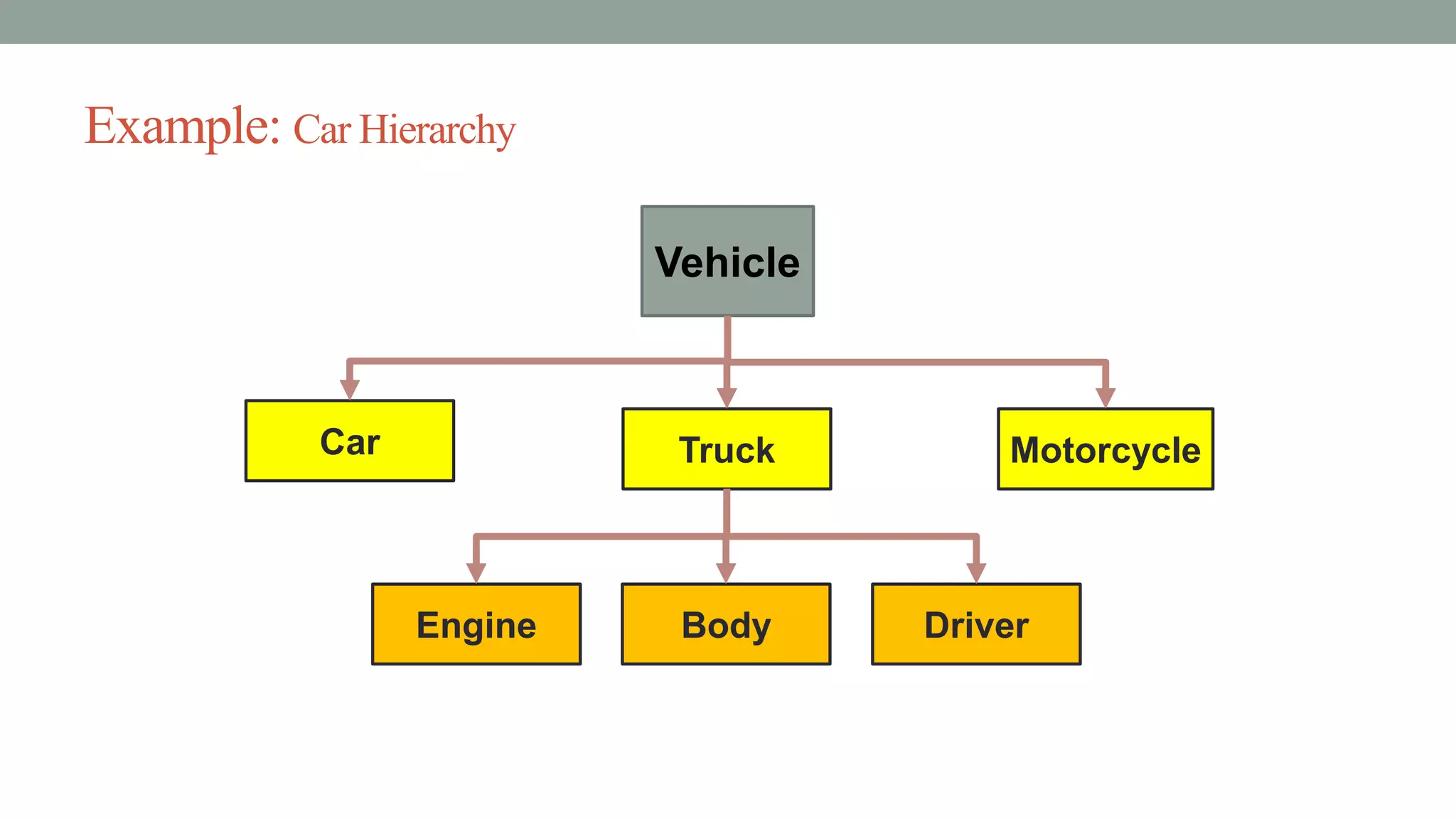
Example: Car Hierarchy
Vehicle
Car Truck Motorcycle
Engine Body Driver
What is Systems Engineering? (1/3)
Systems engineering is the art and science of developing an operable system
capable of meeting requirements within often opposed constraints. ( NASA
Systems Engineering Handbook)
What is Systems Engineering? (2/3)
Systems engineering is an interdisciplinary approach and means to enable
the realization of successful systems. (Successful systems must satisfy the
needs of its customers, users and other stakeholders.) ( INCOSE Systems
Engineering Handbook)
What is Systems Engineering? (3/3)
• Standardizes the flow-down and traceability of specifications for complex
products from customer requirements through production, operation , and
disposal
• It is a structured principal to manage human resource, project management,
business, rational decomposition, trade studies, requirements traceability,
integration, testing, verification and validation, operations, and end of life cycle
disposal of systems
• Transferring the experience to knowledge
Complex Projects & Systems Engineering
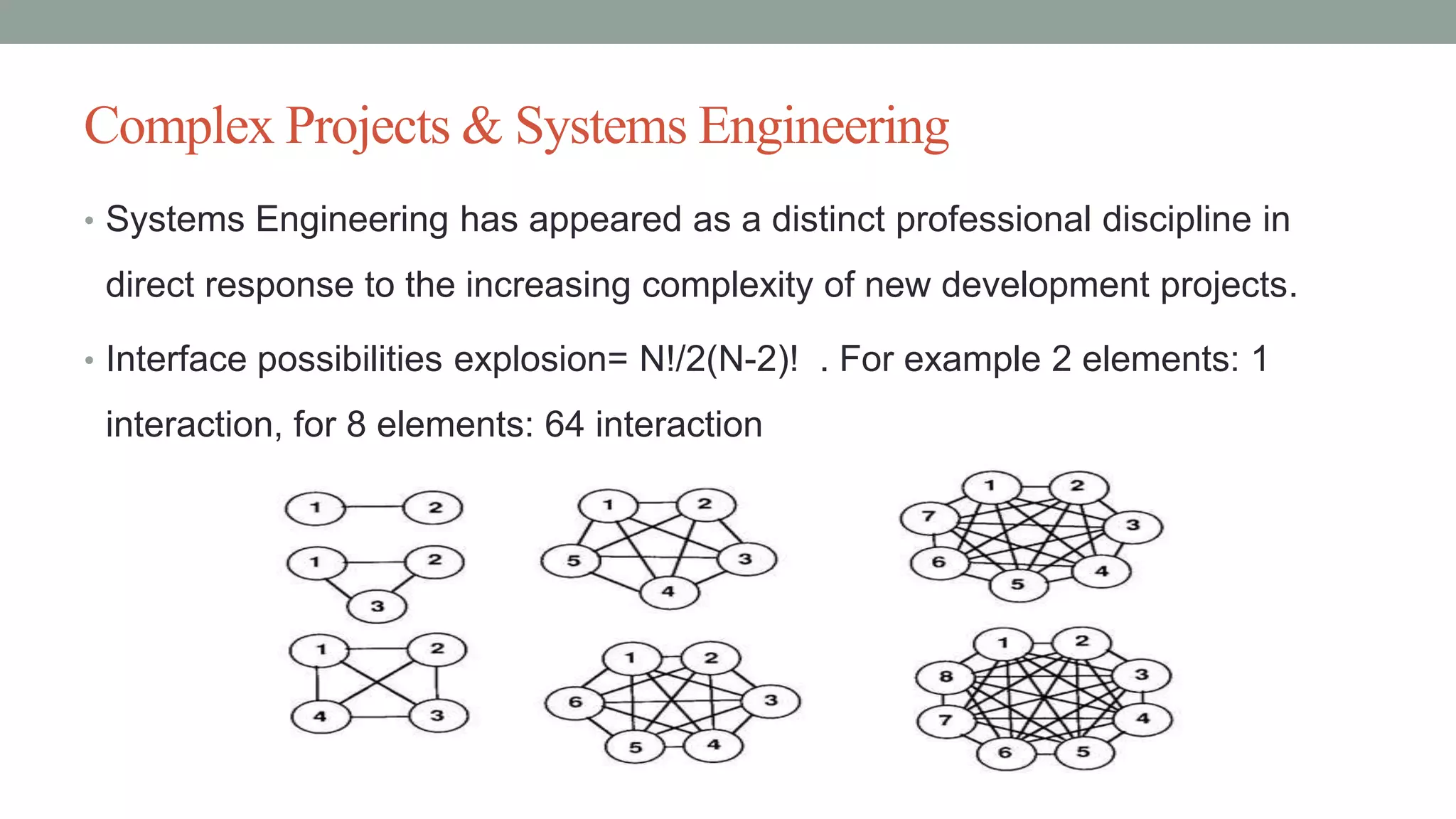
• Systems Engineering has appeared as a distinct professional discipline in
direct response to the increasing complexity of new development projects.
• Interface possibilities explosion= N!/2(N-2)! . For example 2 elements: 1
interaction, for 8 elements: 64 interaction
Timeline of Cars
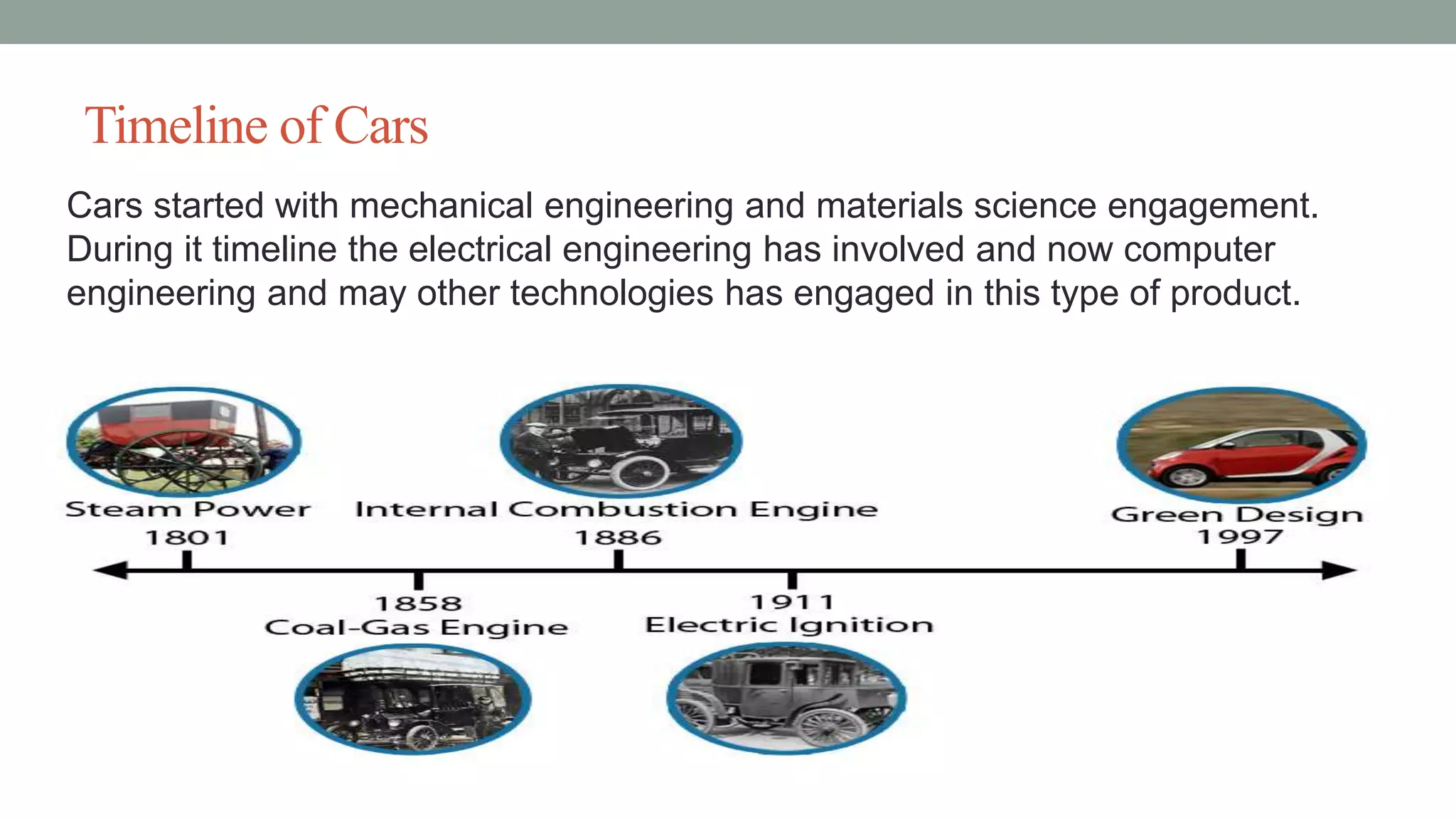
Cars started with mechanical engineering and materials science engagement.
During it timeline the electrical engineering has involved and now computer
engineering and may other technologies has engaged in this type of product.
Systems Engineering in a Project Setting
11
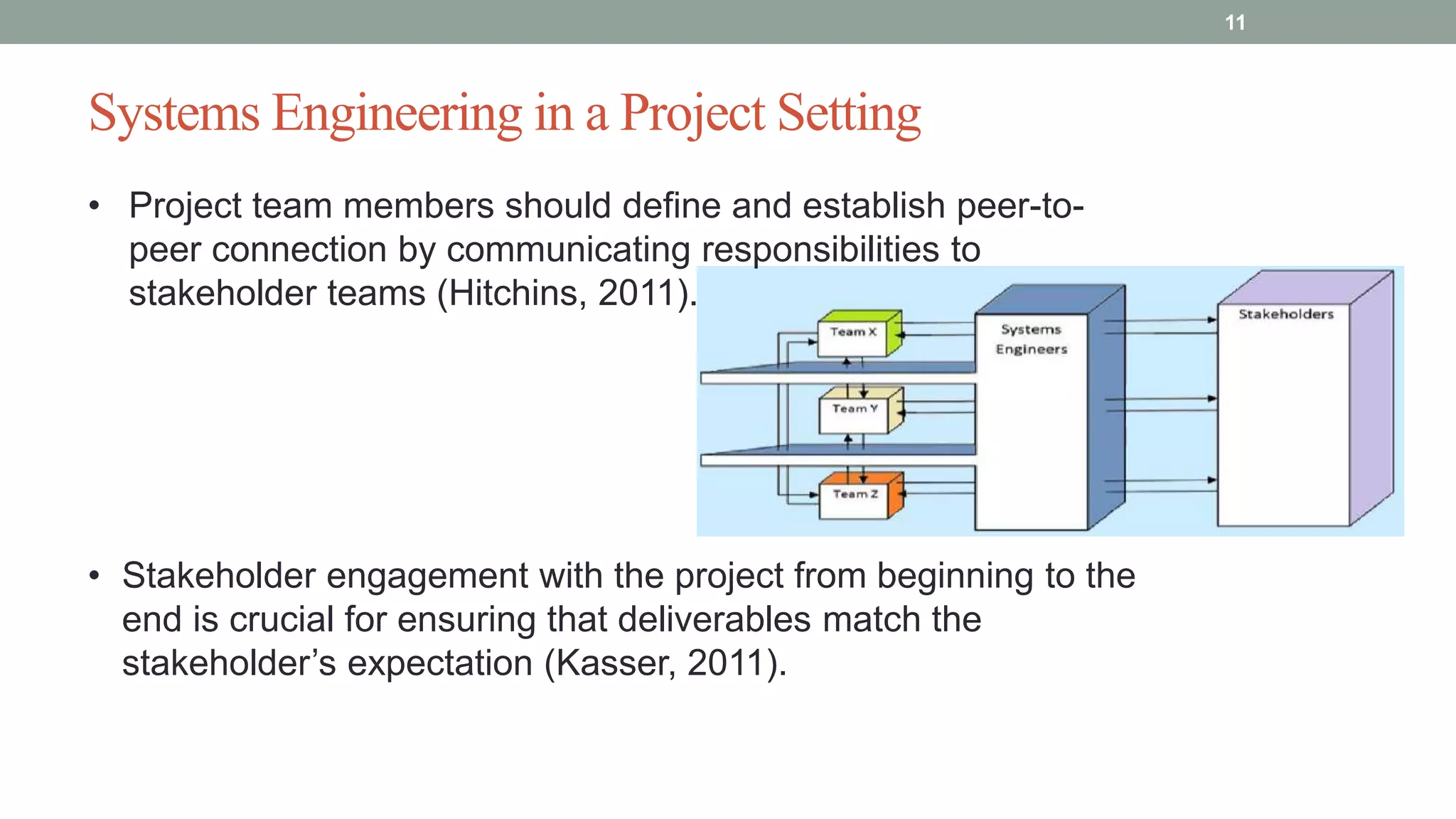
• Project team members should define and establish peer-to-
peer connection by communicating responsibilities to
stakeholder teams (Hitchins, 2011).
• Stakeholder engagement with the project from beginning to the
end is crucial for ensuring that deliverables match the
stakeholder’s expectation (Kasser, 2011).
Systems Engineering in a Project Setting
• Strong relationship between project team members and
stakeholders is required to come up with a clear Concept of
Operations (ConOps) (Hitchins, 2011).
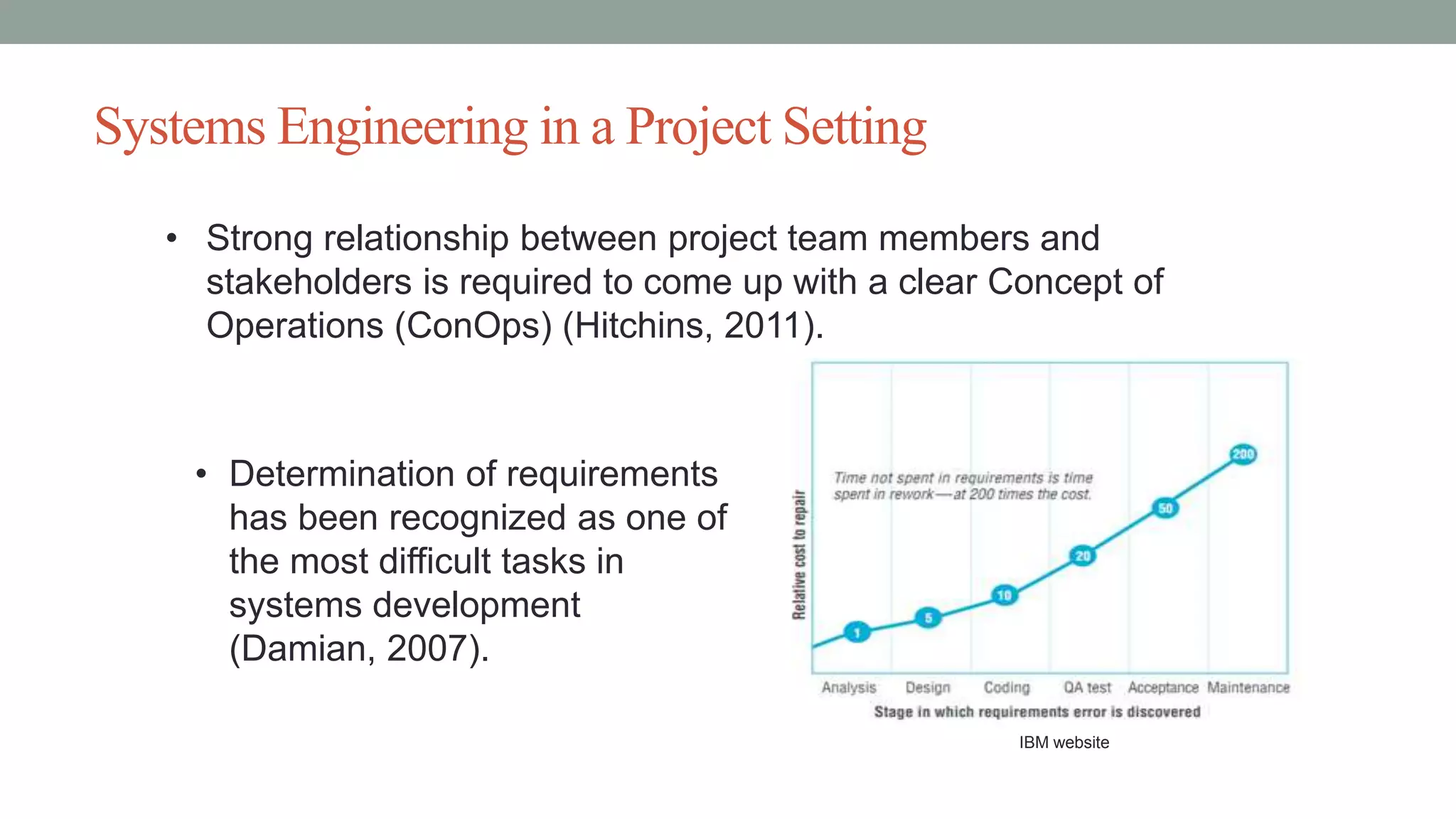
• Determination of requirements
has been recognized as one of
the most difficult tasks in
systems development
(Damian, 2007).
IBM website
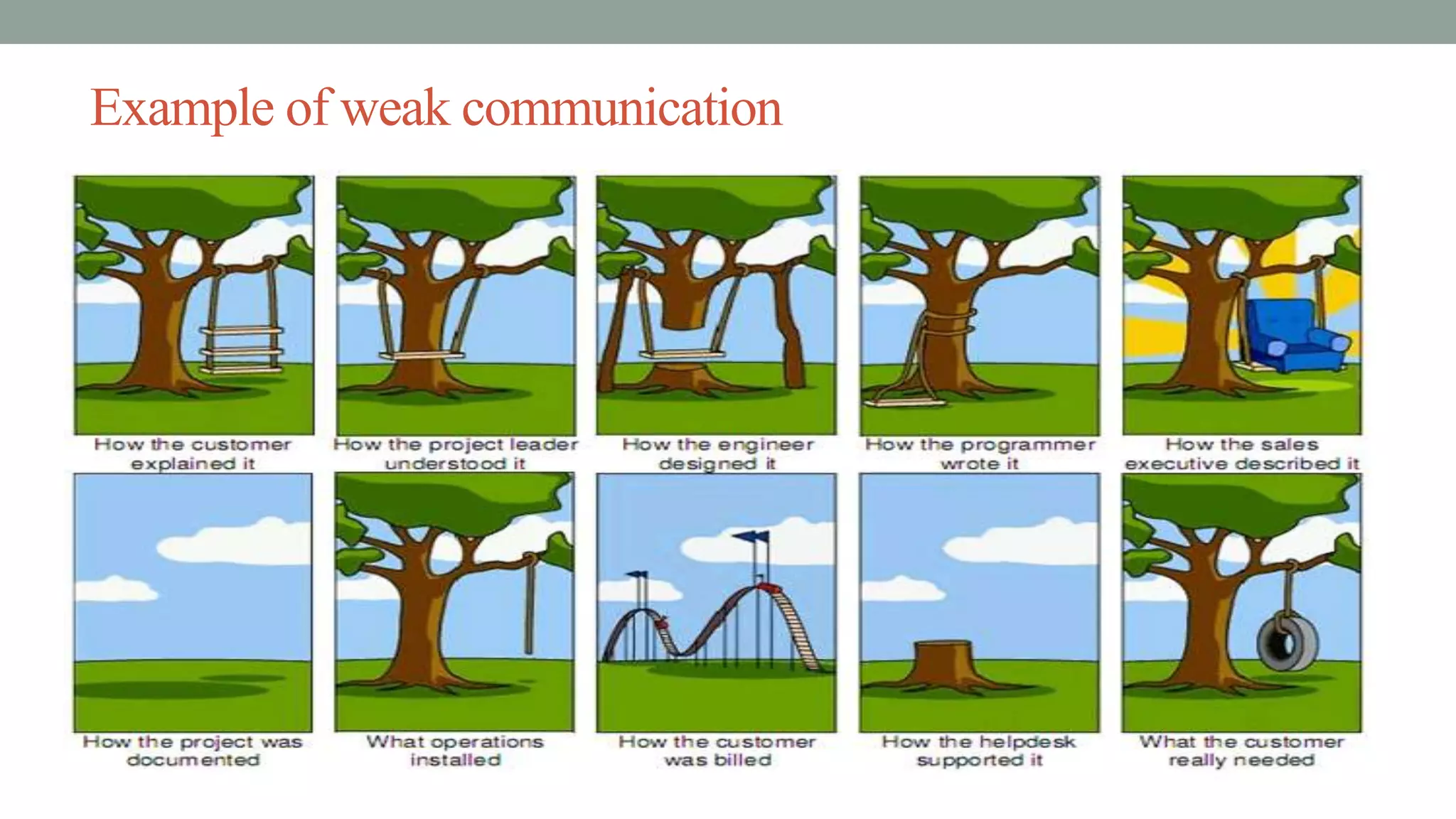
Example of weak communication
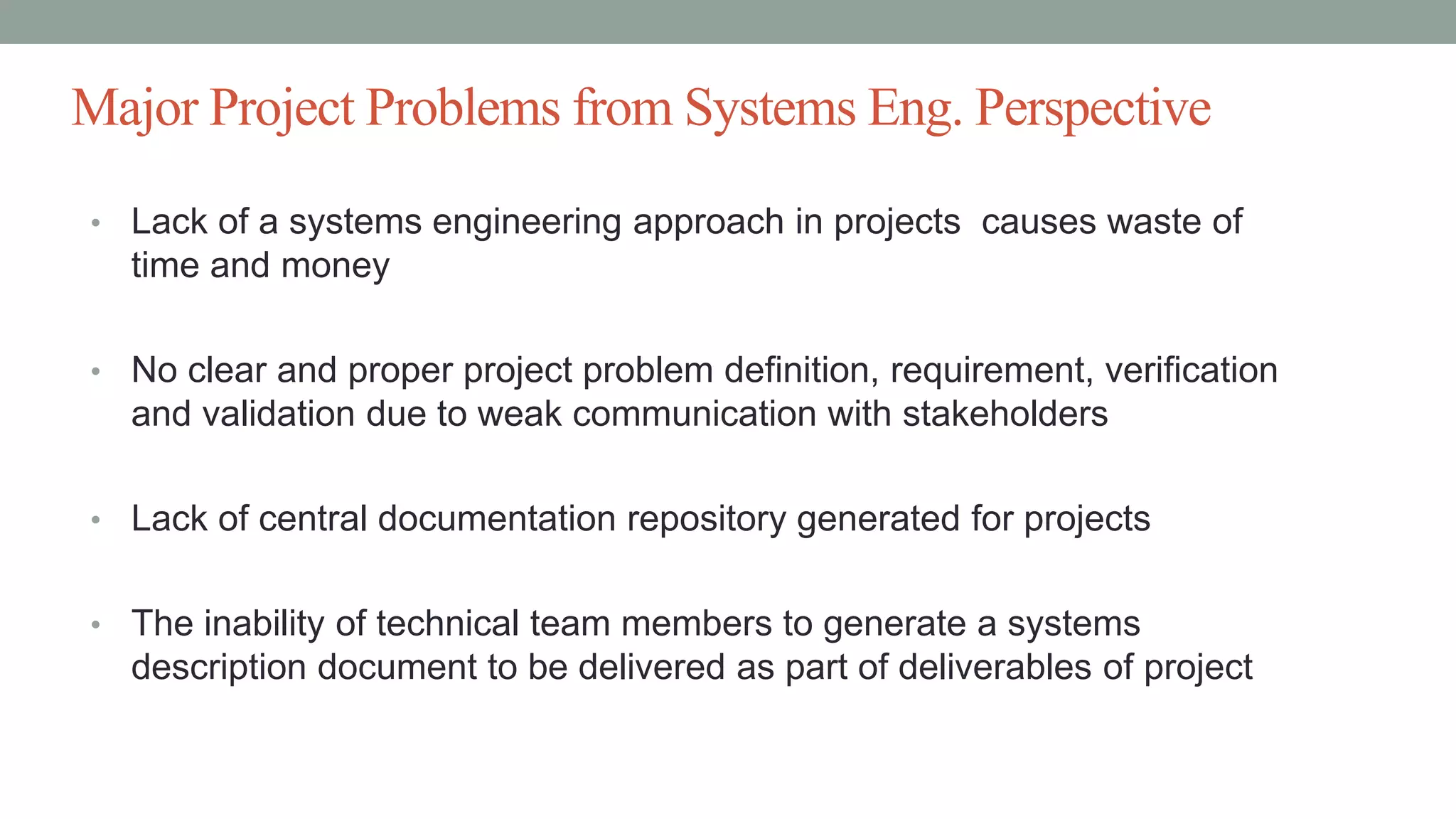
Major Project Problems from Systems Eng. Perspective
• Lack of a systems engineering approach in projects causes waste of
time and money
• No clear and proper project problem definition, requirement, verification
and validation due to weak communication with stakeholders
• Lack of central documentation repository generated for projects
• The inability of technical team members to generate a systems
description document to be delivered as part of deliverables of project
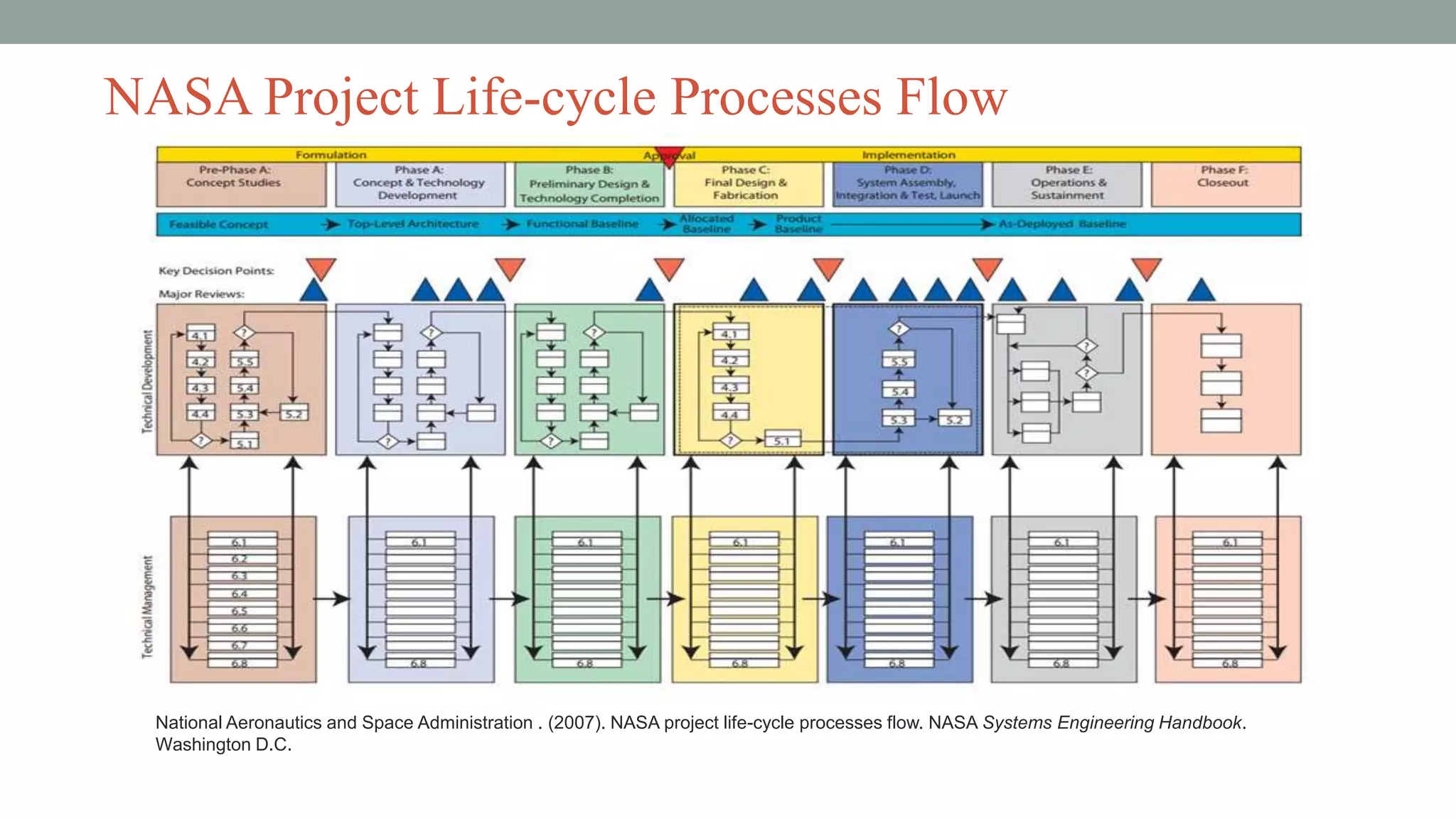
National Aeronautics and Space Administration . (2007). NASA project life-cycle processes flow. NASA Systems Engineering Handbook.
Washington D.C.
NASA Project Life-cycle Processes Flow
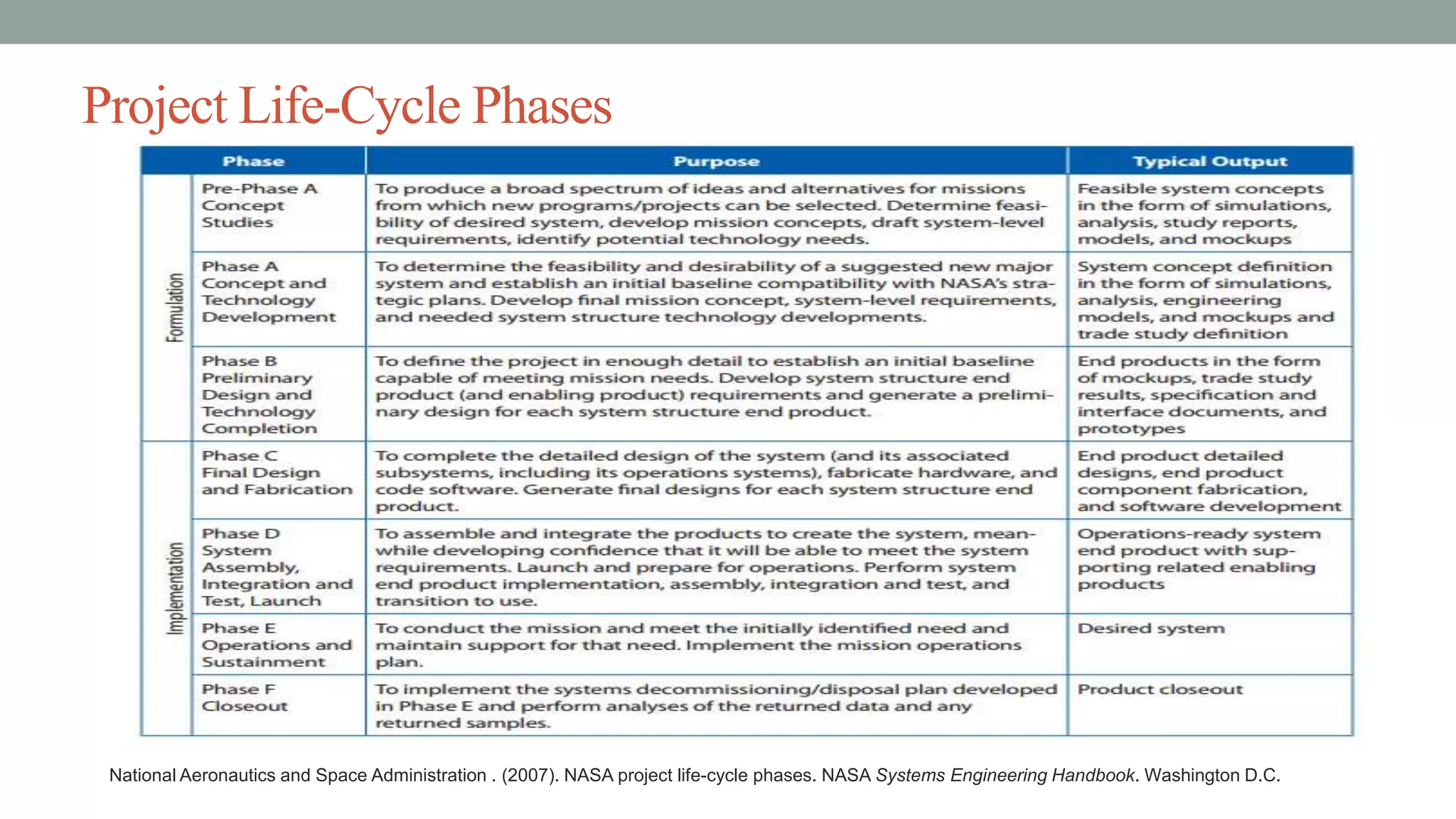
Project Life-Cycle Phases
National Aeronautics and Space Administration . (2007). NASA project life-cycle phases. NASA Systems Engineering Handbook. Washington D.C.
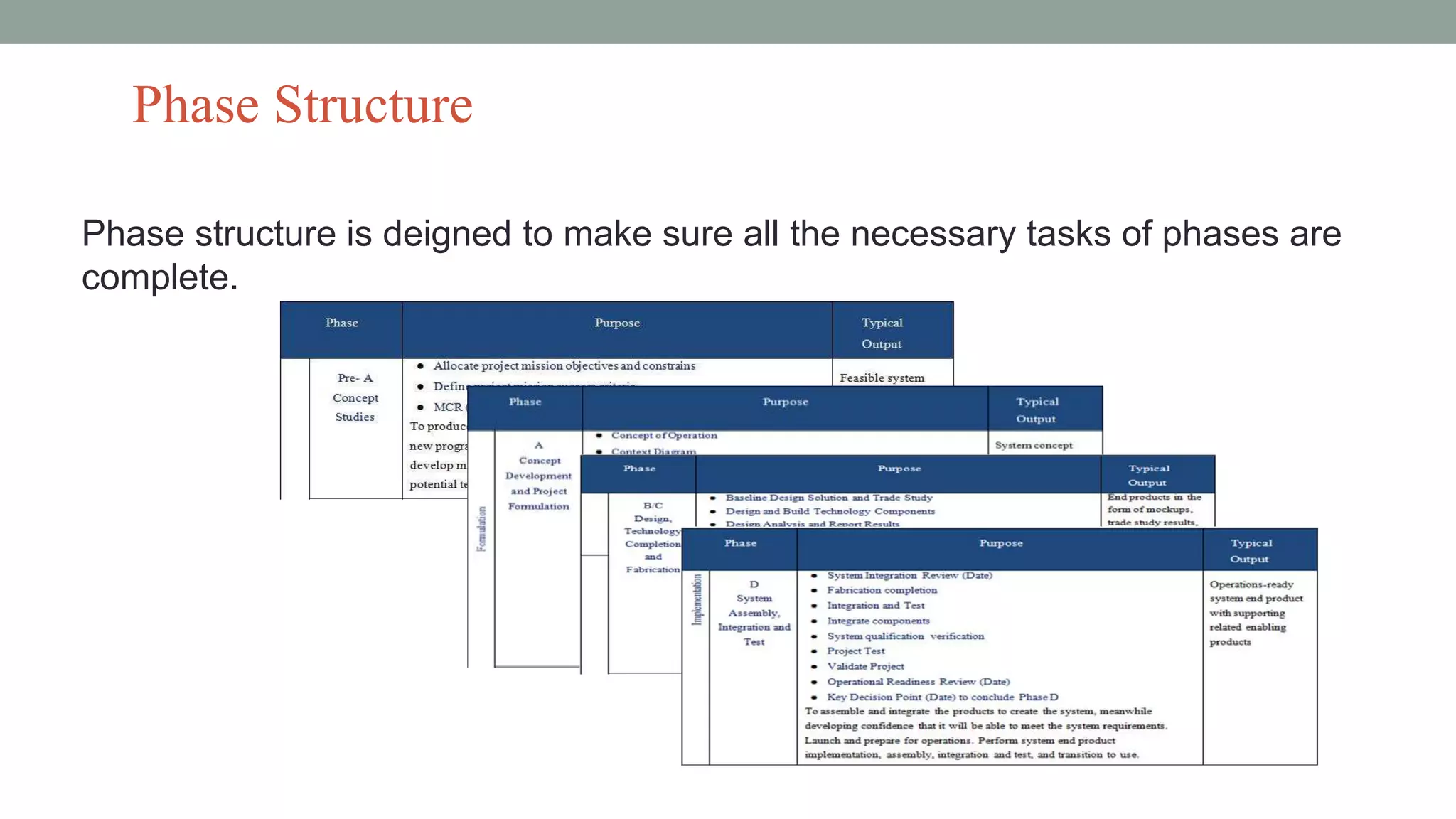
Phase Structure
Phase structure is deigned to make sure all the necessary tasks of phases are
complete.
Some Examples of Meeting Reviews
• Mission Conceptual Review (MCR)
• System Requirements Review (SRR)
• Preliminary Design Review (Peer Review/ PDR)
• Critical Design Review (CDR)
• System Integration Review (SIR)
• Operational Readiness Review (ORR)
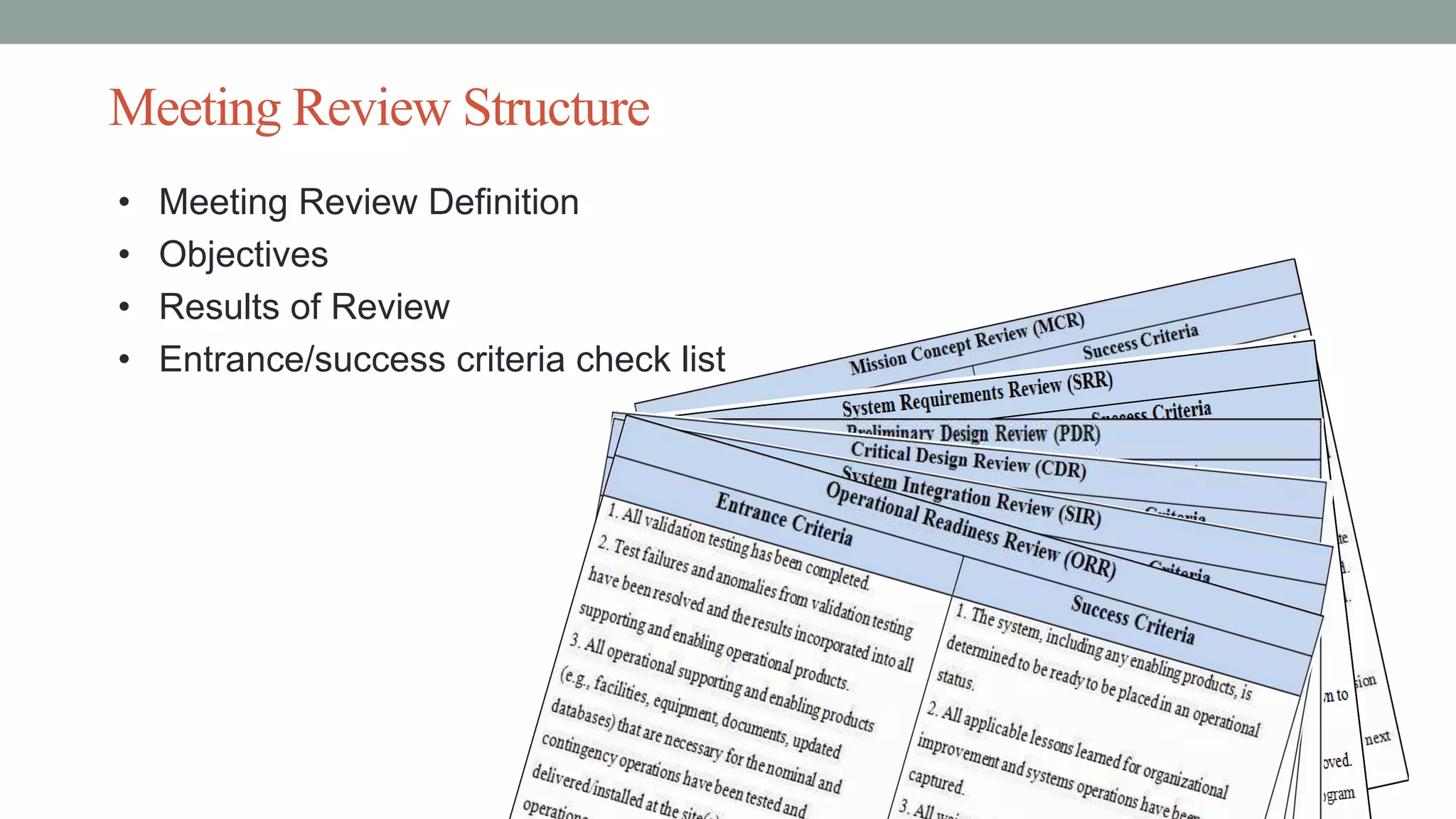
Meeting Review Structure
• Meeting Review Definition
• Objectives
• Results of Review
• Entrance/success criteria check list
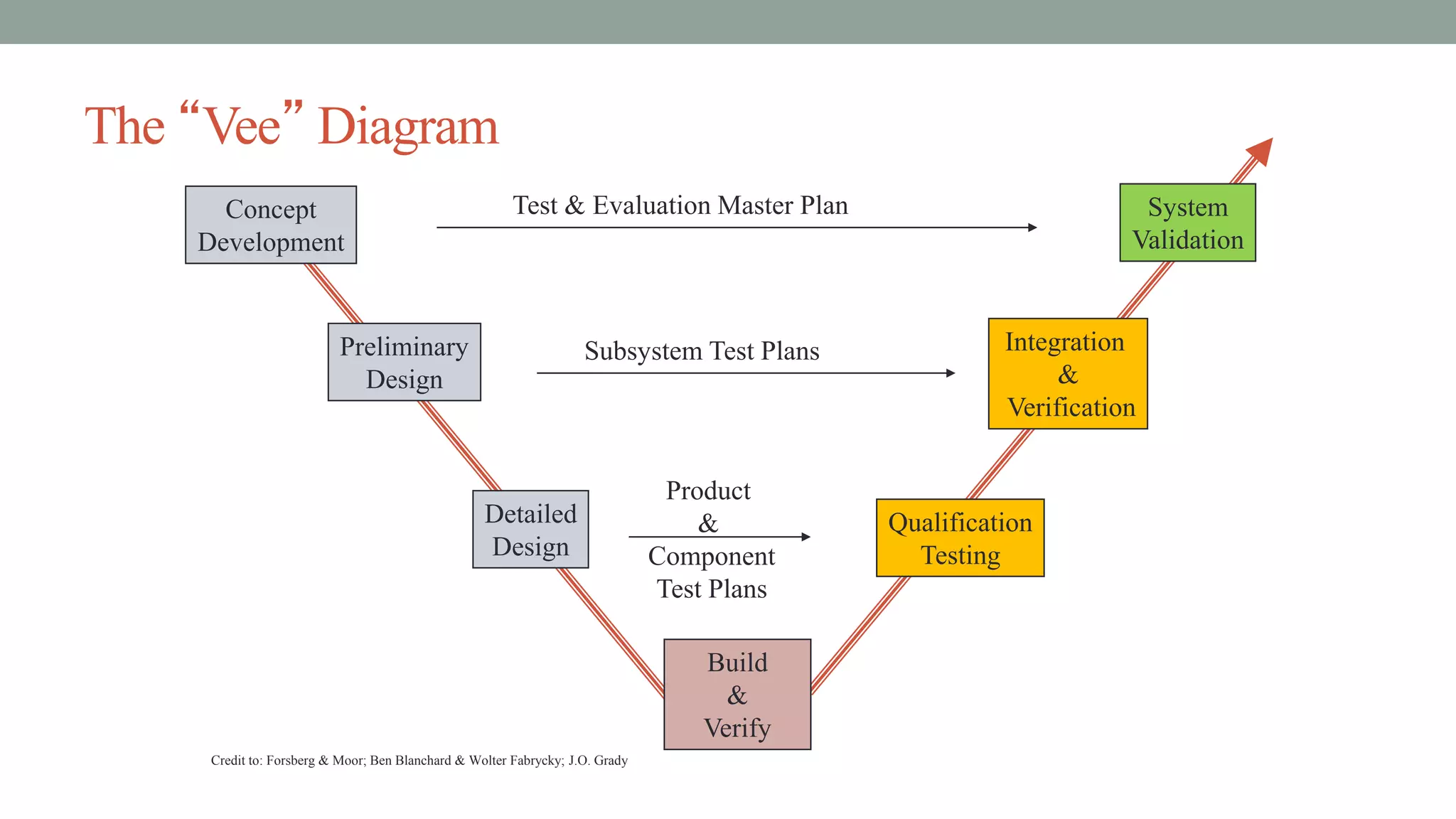
The “Vee” Diagram
Concept
Development
Preliminary
Design
Detailed
Design
Build
&
Verify
Integration
&
Verification
Qualification
Testing
System
Validation
Test & Evaluation Master Plan
Subsystem Test Plans
Product
&
Component
Test Plans
Credit to: Forsberg & Moor; Ben Blanchard & Wolter Fabrycky; J.O. Grady
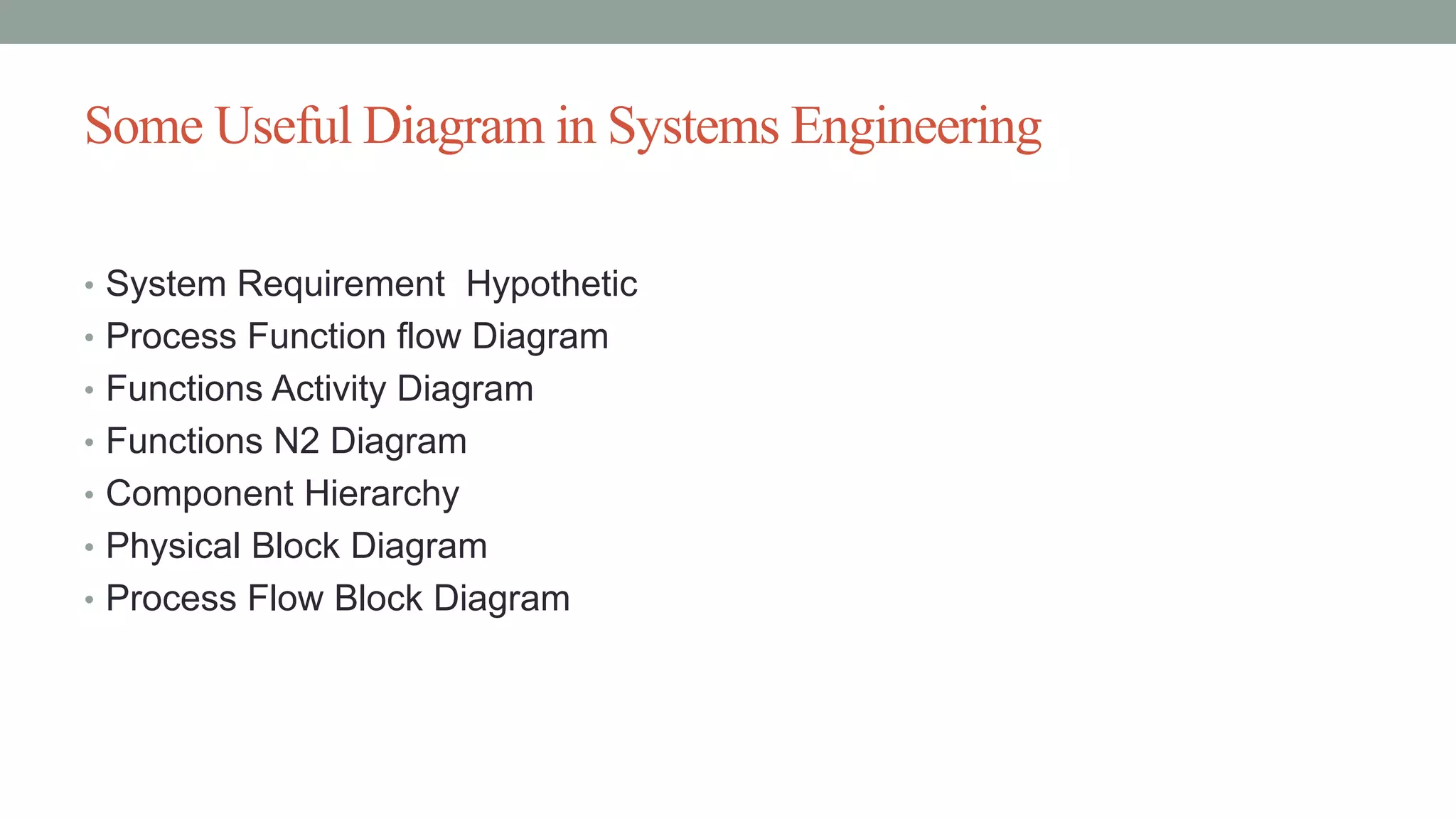
Some Useful Diagram in Systems Engineering
• System Requirement Hypothetic
• Process Function flow Diagram
• Functions Activity Diagram
• Functions N2 Diagram
• Component Hierarchy
• Physical Block Diagram
• Process Flow Block Diagram
Conclusion
Apply Systems Engineering to Assure That:
All technical activities are identified and managed
Communicate through technical approach to the broad development team
Document decisions and technical implementation
Establish the criteria to judge how well the system development effort is
meeting customer and management needs
Reference
• National Aeronautics and Space Administration, NASA Headquarters, NASA Systems
Engineering Handbook, December 2007.
• INCOSE. (2010). INCOSE Systems engineering handbook v3.2. Hampton, VA: International
Council on Systems Engineering.
• Saboonchi, A., & Chen, G. (2015). Implementation of Systems Engineering Approach in
Academic Projects: Software Defined Radio Technology Development as a Case Study.
Thank You

Introduction to Systems Engineering

  • 1.
    INTRODUCTION TO SYSTEMSENGINEERING FROM NASA’S PERSPECTIVE Ali Saboonchi, Doctor of Systems Engineering Morgan State University
  • 2.
    At The Endof This PresentationYou Should BeAble ToAnswer: 1. What is system? 2. What is systems engineering? 3. Why is systems engineering important? 4. What are the economic consequences and project problems of failing to do proper systems engineering? 5. What does a typical systems engineering lifecycle look like?
  • 3.
    What is System? A“system” is a construct or collection of different elements that together produce results not obtainable by the elements alone. ( The elements, or parts, can include people, hardware, software, facilities, policies, and documents. ) ( NASA Systems Engineering Handbook)
  • 4.
  • 5.
    Example: Car Hierarchy Vehicle CarTruck Motorcycle Engine Body Driver
  • 6.
    What is SystemsEngineering? (1/3) Systems engineering is the art and science of developing an operable system capable of meeting requirements within often opposed constraints. ( NASA Systems Engineering Handbook)
  • 7.
    What is SystemsEngineering? (2/3) Systems engineering is an interdisciplinary approach and means to enable the realization of successful systems. (Successful systems must satisfy the needs of its customers, users and other stakeholders.) ( INCOSE Systems Engineering Handbook)
  • 8.
    What is SystemsEngineering? (3/3) • Standardizes the flow-down and traceability of specifications for complex products from customer requirements through production, operation , and disposal • It is a structured principal to manage human resource, project management, business, rational decomposition, trade studies, requirements traceability, integration, testing, verification and validation, operations, and end of life cycle disposal of systems • Transferring the experience to knowledge
  • 9.
    Complex Projects &Systems Engineering • Systems Engineering has appeared as a distinct professional discipline in direct response to the increasing complexity of new development projects. • Interface possibilities explosion= N!/2(N-2)! . For example 2 elements: 1 interaction, for 8 elements: 64 interaction
  • 10.
    Timeline of Cars Carsstarted with mechanical engineering and materials science engagement. During it timeline the electrical engineering has involved and now computer engineering and may other technologies has engaged in this type of product.
  • 11.
    Systems Engineering ina Project Setting 11 • Project team members should define and establish peer-to- peer connection by communicating responsibilities to stakeholder teams (Hitchins, 2011). • Stakeholder engagement with the project from beginning to the end is crucial for ensuring that deliverables match the stakeholder’s expectation (Kasser, 2011).
  • 12.
    Systems Engineering ina Project Setting • Strong relationship between project team members and stakeholders is required to come up with a clear Concept of Operations (ConOps) (Hitchins, 2011). • Determination of requirements has been recognized as one of the most difficult tasks in systems development (Damian, 2007). IBM website
  • 13.
    Example of weakcommunication
  • 14.
    Major Project Problemsfrom Systems Eng. Perspective • Lack of a systems engineering approach in projects causes waste of time and money • No clear and proper project problem definition, requirement, verification and validation due to weak communication with stakeholders • Lack of central documentation repository generated for projects • The inability of technical team members to generate a systems description document to be delivered as part of deliverables of project
  • 15.
    National Aeronautics andSpace Administration . (2007). NASA project life-cycle processes flow. NASA Systems Engineering Handbook. Washington D.C. NASA Project Life-cycle Processes Flow
  • 16.
    Project Life-Cycle Phases NationalAeronautics and Space Administration . (2007). NASA project life-cycle phases. NASA Systems Engineering Handbook. Washington D.C.
  • 17.
    Phase Structure Phase structureis deigned to make sure all the necessary tasks of phases are complete.
  • 18.
    Some Examples ofMeeting Reviews • Mission Conceptual Review (MCR) • System Requirements Review (SRR) • Preliminary Design Review (Peer Review/ PDR) • Critical Design Review (CDR) • System Integration Review (SIR) • Operational Readiness Review (ORR)
  • 19.
    Meeting Review Structure •Meeting Review Definition • Objectives • Results of Review • Entrance/success criteria check list
  • 20.
    The “Vee” Diagram Concept Development Preliminary Design Detailed Design Build & Verify Integration & Verification Qualification Testing System Validation Test& Evaluation Master Plan Subsystem Test Plans Product & Component Test Plans Credit to: Forsberg & Moor; Ben Blanchard & Wolter Fabrycky; J.O. Grady
  • 21.
    Some Useful Diagramin Systems Engineering • System Requirement Hypothetic • Process Function flow Diagram • Functions Activity Diagram • Functions N2 Diagram • Component Hierarchy • Physical Block Diagram • Process Flow Block Diagram
  • 22.
    Conclusion Apply Systems Engineeringto Assure That: All technical activities are identified and managed Communicate through technical approach to the broad development team Document decisions and technical implementation Establish the criteria to judge how well the system development effort is meeting customer and management needs
  • 23.
    Reference • National Aeronauticsand Space Administration, NASA Headquarters, NASA Systems Engineering Handbook, December 2007. • INCOSE. (2010). INCOSE Systems engineering handbook v3.2. Hampton, VA: International Council on Systems Engineering. • Saboonchi, A., & Chen, G. (2015). Implementation of Systems Engineering Approach in Academic Projects: Software Defined Radio Technology Development as a Case Study.
  • 24.