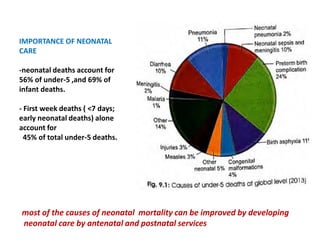
IMPORTANCE OF NEONATAL
CARE
-neonatal deaths account for
56% of under-5 ,and 69% of
infant deaths.
- First week deaths ( <7 days;
early neonatal deaths) alone
account for
45% of total under-5 deaths.
most of the causes of neonatal mortality can be improved by developing
neonatal care by antenatal and postnatal services
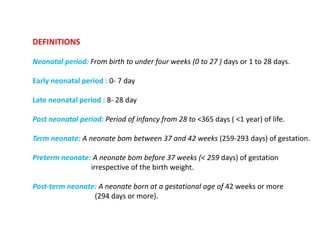
DEFINITIONS
Neonatal period: From birth to under four weeks (0 to 27 ) days or 1 to 28 days.
Early neonatal period : 0- 7 day
Late neonatal period : 8- 28 day
Post neonatal period: Period of infancy from 28 to <365 days ( <1 year) of life.
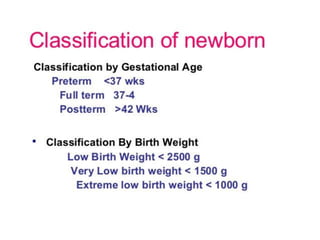
Term neonate: A neonate bom between 37 and 42 weeks (259-293 days) of gestation.
Preterm neonate: A neonate bom before 37 weeks (< 259 days) of gestation
irrespective of the birth weight.
Post-term neonate: A neonate born at a gestational age of 42 weeks or more
(294 days or more).
Low birth weight (LBW) neonate: A neonate weighing < 2500 g at birth
irrespective of the gestational age.
Very low birth weight (VLBW) neonate: A neonate weighing < 1500 g at birth
irrespective of the gestational age.
Extremely low birth weight (ELBW) neonate: A neonate weighing <1000 g at
birth irrespective of the gestational age.
Neonatal mortality rate (NMR): Deaths of infants under the first 28 days of life per
1000 live births per year.
Perinatal mortality ratio (PNMR): Number of perinatal deaths (stillbirths plus
neonatal deaths before 7 days of life) per 1000 live births per year.
CARE OF NORMAL NEWBORN BABIES
Care at Birth
Practice Standard precautions and asepsis at birth:
Five cleans to prevent sepsis at birth
1. Clean hands
2. Clean surface
3. Clean blade
4. Clean tie
5. Clean cord.
Prevention of hypothermia :
The temperature of delivery room should be 25°C , no wind blowing .
The baby should be received in a pre-warmed sterile linen sheet at birth .
The infant may be placed on the mother's abdomen immediately after the
birth for early skin-to-skin (STS) contact.
Baby should be appropriately clothed including caps and socks.
Delayed clamping of umbilical cord:
Umbilical cord clamping must be delayed for at least 30 seconds (in term
as well as preterm babies).
Benefits
1. in term baby-improved hematologic status, iron status and clinical anemia
at 2 to 6 months.
2. in preterm baby - reduced IVH and other morbidities.
Cleaning of baby:
Do with a clean and sterile cloth.
The cleaning should be gentle and should only wipe out the blood and the
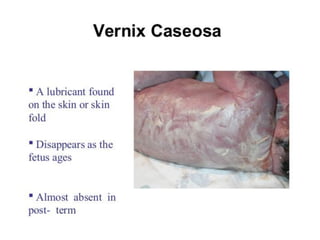
meconium and not venix caseosa (whitish greasy material on the skin).
Clamping of the cord:
at 2-3 cm away from the abdomen using a commercially available clamp,
or a clean and autoclaved thread .
Placement of identity band.

TRANSITIONAL CARE
The transitional period is usually defined as the first 4 to 6 hours after birth.
Common signs of disordered transitioning are
(i) respiratory distress,
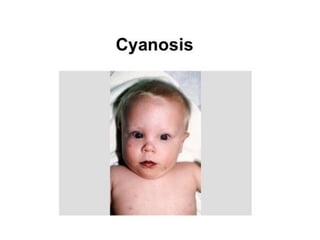
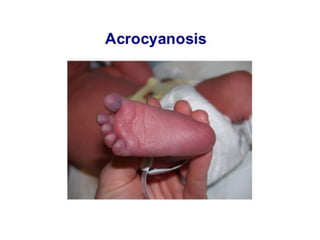
(ii) poor perfusion with cyanosis or pallor, or
(iii) need for supplemental oxygen.
Infants with persistent signs of disordered transitioning require transfer to a
higher level of care.
ROUTINE CARE
Healthy newborns should be with their mothers all or nearly all the time.
physical assessments, administration of medications, routine laboratory tests,
and bathing should occur in the mother’s room .
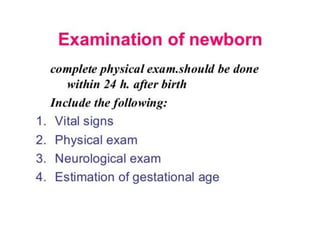
First examination: The baby should be thoroughly examined at birth from head to toe.
Initiation of breastfeeding: within one hour of birth
Vitamin K : IM 0.5- 1 mg
Assessment of the Newborn History
and
Physical Examination of the Newborn
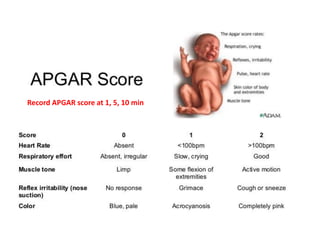
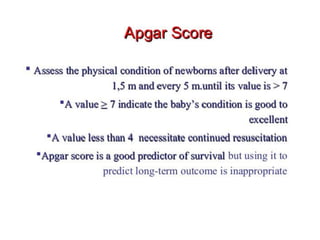
Record APGAR score at 1, 5, 10 min
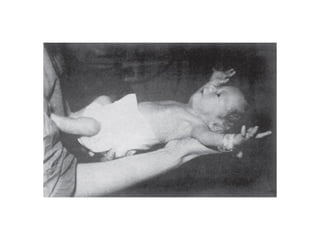
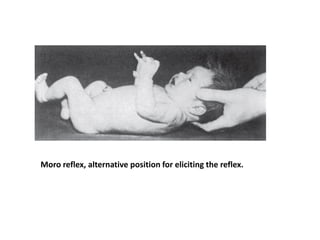
Moro reflex, alternative position for eliciting the reflex.
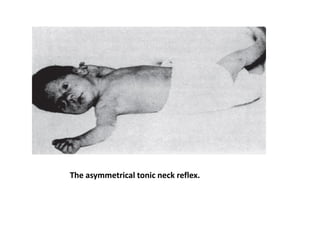
The asymmetrical tonic neck reflex.
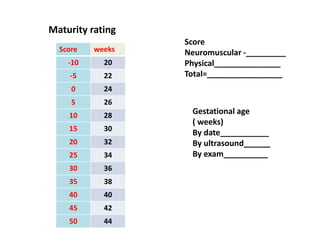
Score weeks
-10 20
-5 22
0 24
5 26
10 28
15 30
20 32
25 34
30 36
35 38
40 40
45 42
50 44
Score
Neuromuscular -_________
Physical_______________
Total=_________________
Maturity rating
Gestational age
( weeks)
By date___________
By ultrasound______
By exam__________

Introduction to newborn and normal newborn

  • 2.
    IMPORTANCE OF NEONATAL CARE -neonataldeaths account for 56% of under-5 ,and 69% of infant deaths. - First week deaths ( <7 days; early neonatal deaths) alone account for 45% of total under-5 deaths. most of the causes of neonatal mortality can be improved by developing neonatal care by antenatal and postnatal services
  • 3.
    DEFINITIONS Neonatal period: Frombirth to under four weeks (0 to 27 ) days or 1 to 28 days. Early neonatal period : 0- 7 day Late neonatal period : 8- 28 day Post neonatal period: Period of infancy from 28 to <365 days ( <1 year) of life. Term neonate: A neonate bom between 37 and 42 weeks (259-293 days) of gestation. Preterm neonate: A neonate bom before 37 weeks (< 259 days) of gestation irrespective of the birth weight. Post-term neonate: A neonate born at a gestational age of 42 weeks or more (294 days or more).
  • 4.
    Low birth weight(LBW) neonate: A neonate weighing < 2500 g at birth irrespective of the gestational age. Very low birth weight (VLBW) neonate: A neonate weighing < 1500 g at birth irrespective of the gestational age. Extremely low birth weight (ELBW) neonate: A neonate weighing <1000 g at birth irrespective of the gestational age. Neonatal mortality rate (NMR): Deaths of infants under the first 28 days of life per 1000 live births per year. Perinatal mortality ratio (PNMR): Number of perinatal deaths (stillbirths plus neonatal deaths before 7 days of life) per 1000 live births per year.
  • 5.
    CARE OF NORMALNEWBORN BABIES Care at Birth Practice Standard precautions and asepsis at birth: Five cleans to prevent sepsis at birth 1. Clean hands 2. Clean surface 3. Clean blade 4. Clean tie 5. Clean cord. Prevention of hypothermia : The temperature of delivery room should be 25°C , no wind blowing . The baby should be received in a pre-warmed sterile linen sheet at birth . The infant may be placed on the mother's abdomen immediately after the birth for early skin-to-skin (STS) contact. Baby should be appropriately clothed including caps and socks.
  • 6.
    Delayed clamping ofumbilical cord: Umbilical cord clamping must be delayed for at least 30 seconds (in term as well as preterm babies). Benefits 1. in term baby-improved hematologic status, iron status and clinical anemia at 2 to 6 months. 2. in preterm baby - reduced IVH and other morbidities. Cleaning of baby: Do with a clean and sterile cloth. The cleaning should be gentle and should only wipe out the blood and the meconium and not venix caseosa (whitish greasy material on the skin). Clamping of the cord: at 2-3 cm away from the abdomen using a commercially available clamp, or a clean and autoclaved thread . Placement of identity band.
  • 7.
    TRANSITIONAL CARE The transitionalperiod is usually defined as the first 4 to 6 hours after birth. Common signs of disordered transitioning are (i) respiratory distress, (ii) poor perfusion with cyanosis or pallor, or (iii) need for supplemental oxygen. Infants with persistent signs of disordered transitioning require transfer to a higher level of care. ROUTINE CARE Healthy newborns should be with their mothers all or nearly all the time. physical assessments, administration of medications, routine laboratory tests, and bathing should occur in the mother’s room . First examination: The baby should be thoroughly examined at birth from head to toe. Initiation of breastfeeding: within one hour of birth Vitamin K : IM 0.5- 1 mg
  • 8.
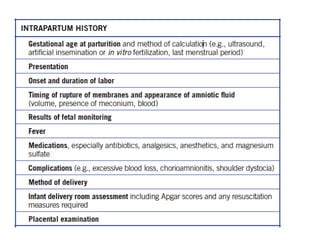
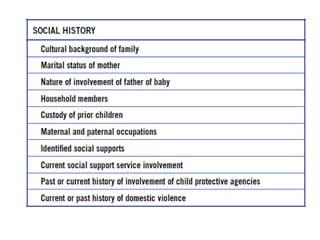
    Assessment of theNewborn History and Physical Examination of the Newborn
  • 22.
    Record APGAR scoreat 1, 5, 10 min
  • 125.
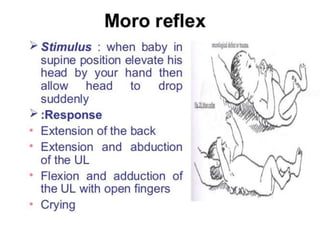
    Moro reflex, alternativeposition for eliciting the reflex.
  • 137.
  • 144.
    Score weeks -10 20 -522 0 24 5 26 10 28 15 30 20 32 25 34 30 36 35 38 40 40 45 42 50 44 Score Neuromuscular -_________ Physical_______________ Total=_________________ Maturity rating Gestational age ( weeks) By date___________ By ultrasound______ By exam__________