E-COMMERCE
PRESENTED BY
G.GEETHA PAVANI
DEPT OF COMPUTERS
INTRODUCTION TO E-COMMERCE
 E-Commerce means Electronic Commerce.
 Commerce –buying and selling.
 E-Commerce – the buying and selling of goods or services over the
internet or via a computer connection.
 A modern way of trading . The first example of E-commerce taking
place on the internet was only recorded in the mid 1990s.
A brief History
 1994- Netscape Navigator, an internet browser, is invented. Pizza hut
offers online Pizza ordering. The first online bank opens. Cars and
bikes are available on the internet.
 1995- amazon is created, an online company selling of books, DVDs
and CDs. Ebay is launched, the online auction company.
 1999- PayPal launched, allowing safe and secure financial
transactions to be carried out over the internet.
E-COMMERCE TODAY
 Almost all national and international companies offer E-Commerce.
 Many companies only offer E-Commerce services.
 Most major banks offer online banking.
Examples of E-Commerce
 Direct sales –Companies selling their product or services direct to
the customer via the net
 Online banking
 Online auctions- Bidding against other consumers for products and
services.
 Online media sales- Buying and download music, e-books, movies ,
computer software etc..
IMPORTANCE OF E- COMMERCE
 Direct payments
 Easy and speed delivery
 Cut down of transaction costs
 24/7 Access
 Web personalization
 Increase in Banking
DIFFERENT TYPES OF E-COMMERCE
 Business to Business E-Commerce (B2B)
 Business to Consumer E-Commerce (B2C)
 Consumer to Consumer E-Commerce (C2C)
 Consumer to Business E-Commerce (C2B)
 Non Business E-Commerce
 Intra-Organizational E-Commerce
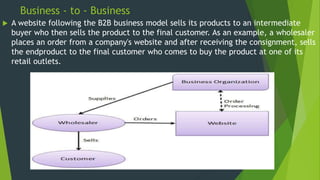
Business - to - Business
 A website following the B2B business model sells its products to an intermediate
buyer who then sells the product to the final customer. As an example, a wholesaler
places an order from a company's website and after receiving the consignment, sells
the endproduct to the final customer who comes to buy the product at one of its
retail outlets.
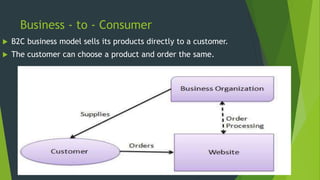
Business - to - Consumer
 B2C business model sells its products directly to a customer.
 The customer can choose a product and order the same.
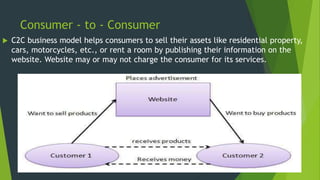
Consumer - to - Consumer
 C2C business model helps consumers to sell their assets like residential property,
cars, motorcycles, etc., or rent a room by publishing their information on the
website. Website may or may not charge the consumer for its services.
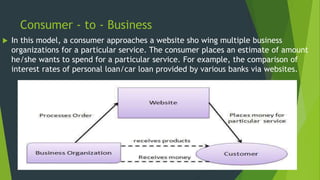
Consumer - to - Business
 In this model, a consumer approaches a website sho wing multiple business
organizations for a particular service. The consumer places an estimate of amount
he/she wants to spend for a particular service. For example, the comparison of
interest rates of personal loan/car loan provided by various banks via websites.
Non- Business
 In contrast to other types of E-commerce, non- business EC involves small scale
organizations for carrying out all the transactions.
Intra-Organizational
 The sixth and final type of electronic commerce is intra organisational electronic
commerce. Here, various organizations make use of internet services for conducting
transactions.
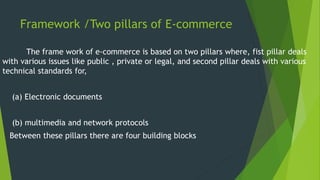
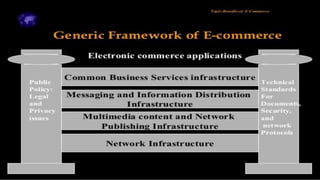
Framework /Two pillars of E-commerce
The frame work of e-commerce is based on two pillars where, fist pillar deals
with various issues like public , private or legal, and second pillar deals with various
technical standards for,
(a) Electronic documents
(b) multimedia and network protocols
Between these pillars there are four building blocks
INTRODUCTION TO E-COMMERCE

INTRODUCTION TO E-COMMERCE

  • 1.
  • 2.
    INTRODUCTION TO E-COMMERCE E-Commerce means Electronic Commerce.  Commerce –buying and selling.  E-Commerce – the buying and selling of goods or services over the internet or via a computer connection.  A modern way of trading . The first example of E-commerce taking place on the internet was only recorded in the mid 1990s.
  • 3.
    A brief History 1994- Netscape Navigator, an internet browser, is invented. Pizza hut offers online Pizza ordering. The first online bank opens. Cars and bikes are available on the internet.  1995- amazon is created, an online company selling of books, DVDs and CDs. Ebay is launched, the online auction company.  1999- PayPal launched, allowing safe and secure financial transactions to be carried out over the internet.
  • 4.
    E-COMMERCE TODAY  Almostall national and international companies offer E-Commerce.  Many companies only offer E-Commerce services.  Most major banks offer online banking.
  • 5.
    Examples of E-Commerce Direct sales –Companies selling their product or services direct to the customer via the net  Online banking  Online auctions- Bidding against other consumers for products and services.  Online media sales- Buying and download music, e-books, movies , computer software etc..
  • 6.
    IMPORTANCE OF E-COMMERCE  Direct payments  Easy and speed delivery  Cut down of transaction costs  24/7 Access  Web personalization  Increase in Banking
  • 7.
    DIFFERENT TYPES OFE-COMMERCE  Business to Business E-Commerce (B2B)  Business to Consumer E-Commerce (B2C)  Consumer to Consumer E-Commerce (C2C)  Consumer to Business E-Commerce (C2B)  Non Business E-Commerce  Intra-Organizational E-Commerce
  • 8.
    Business - to- Business  A website following the B2B business model sells its products to an intermediate buyer who then sells the product to the final customer. As an example, a wholesaler places an order from a company's website and after receiving the consignment, sells the endproduct to the final customer who comes to buy the product at one of its retail outlets.
  • 9.
    Business - to- Consumer  B2C business model sells its products directly to a customer.  The customer can choose a product and order the same.
  • 10.
    Consumer - to- Consumer  C2C business model helps consumers to sell their assets like residential property, cars, motorcycles, etc., or rent a room by publishing their information on the website. Website may or may not charge the consumer for its services.
  • 11.
    Consumer - to- Business  In this model, a consumer approaches a website sho wing multiple business organizations for a particular service. The consumer places an estimate of amount he/she wants to spend for a particular service. For example, the comparison of interest rates of personal loan/car loan provided by various banks via websites.
  • 12.
    Non- Business  Incontrast to other types of E-commerce, non- business EC involves small scale organizations for carrying out all the transactions. Intra-Organizational  The sixth and final type of electronic commerce is intra organisational electronic commerce. Here, various organizations make use of internet services for conducting transactions.
  • 13.
    Framework /Two pillarsof E-commerce The frame work of e-commerce is based on two pillars where, fist pillar deals with various issues like public , private or legal, and second pillar deals with various technical standards for, (a) Electronic documents (b) multimedia and network protocols Between these pillars there are four building blocks