Process Costing
Dr. Emon Kalyan Chowdhury
Professor & Head
Department of Accounting
CIU Business School
Director
Institutional Quality Assurance Cell (IQAC)
Chittagong Independent University
Email: emonkalyanchy@ciu.edu.bd
Phone: +880-1675875445
Learning Objectives
• Understand meaning and importance of Process Costing
• Differentiate Job Costing and Process Costing
• Learn accounting procedure of Process Costing
• Study valuation of Work-in-Progress (FIFO, LIFO, Weighted Average)
• Understand inter-process transfer and losses
Introduction
• Process costing is a form of operation costing used for standardized
goods.
• Applied in industries like chemicals, textiles, steel, rubber, sugar, and
petrol.
• Average cost per unit is obtained by dividing total cost by total output.
Meaning of Process Costing
• A method where costs are accumulated for each process or stage of
production.
• Cost per unit = Total process cost / Normal output of the process.
• Suitable for homogeneous, continuous production.
Definition
• Chartered Institute of Management Accountants (CIMA) London:
“That form of operation costing which applies where standardized
goods are produced.”
Features of Process Costing
• Continuous production and homogeneous output
• Standardized processes and departments
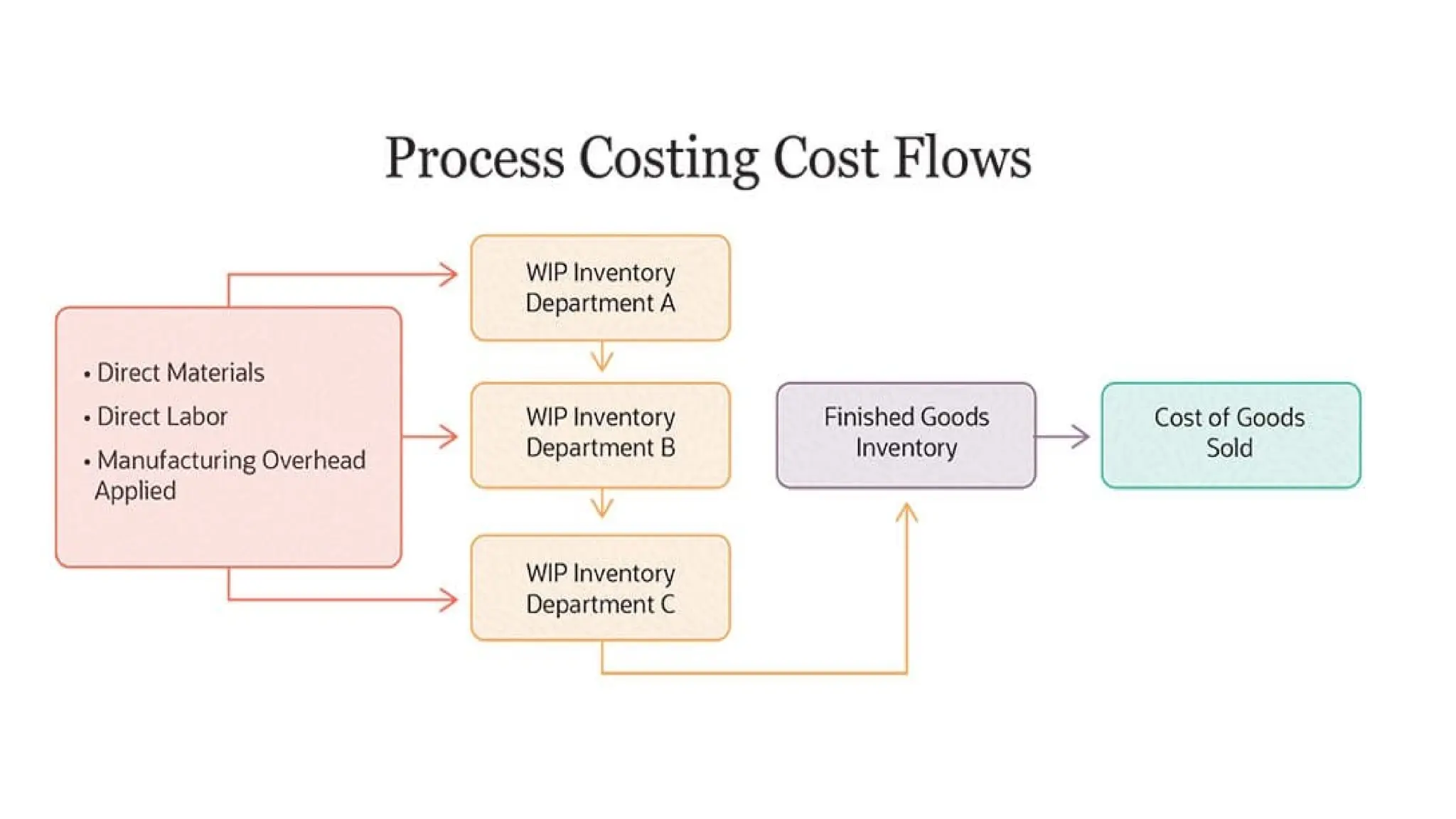
• Output of one process becomes input for the next
• Cost collected process-wise (material, labour, overhead)
• Work-in-progress expressed in equivalent units
• Average cost per unit determined at each process
Advantages of Process Costing
• Periodic computation of cost per process
• Simple and less clerical work
• Accurate allocation of expenses to processes
• Facilitates managerial control and decision making
• Helps in preparing quotations and tenders
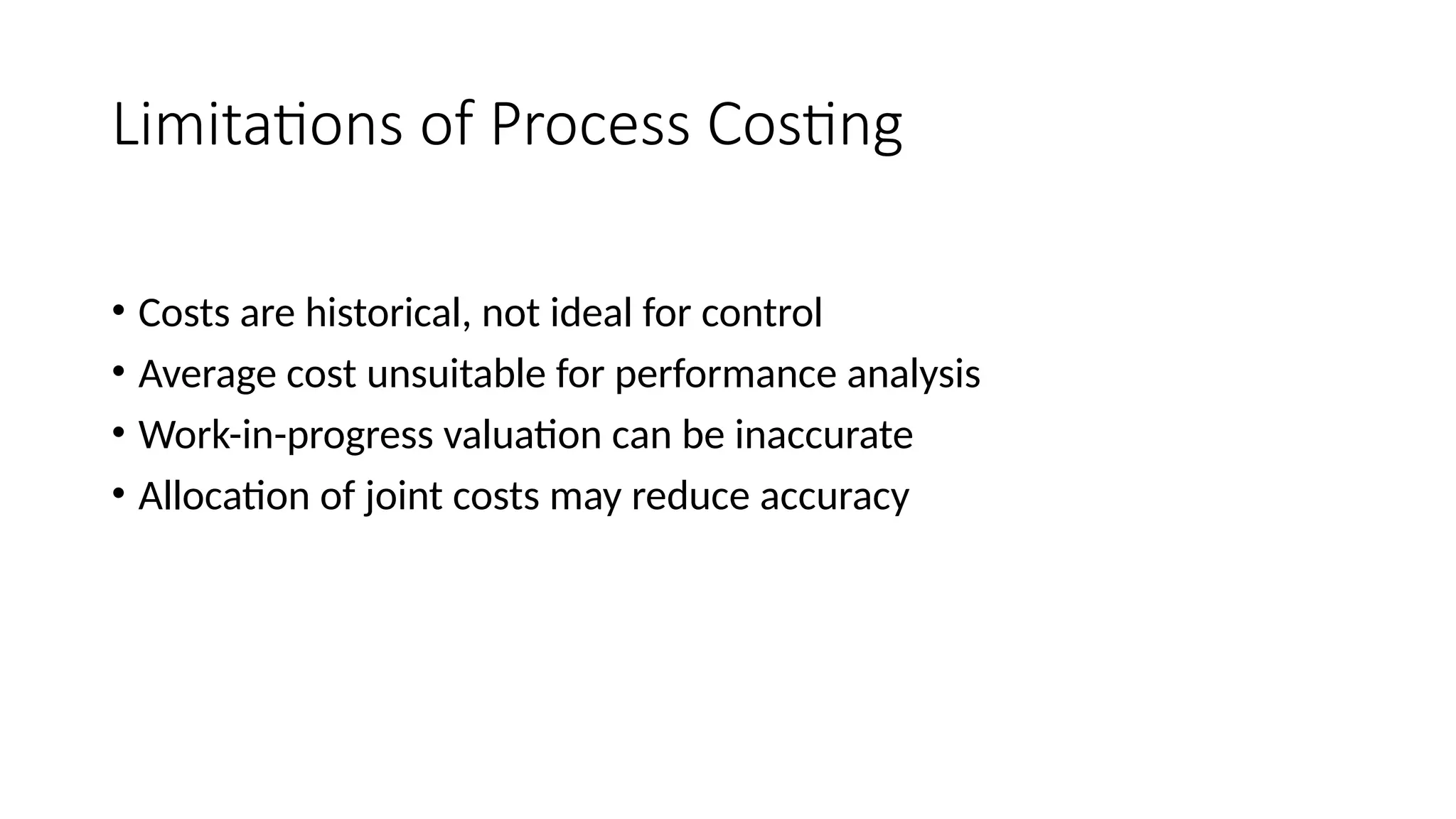
Limitations of Process Costing
• Costs are historical, not ideal for control
• Average cost unsuitable for performance analysis
• Work-in-progress valuation can be inaccurate
• Allocation of joint costs may reduce accuracy
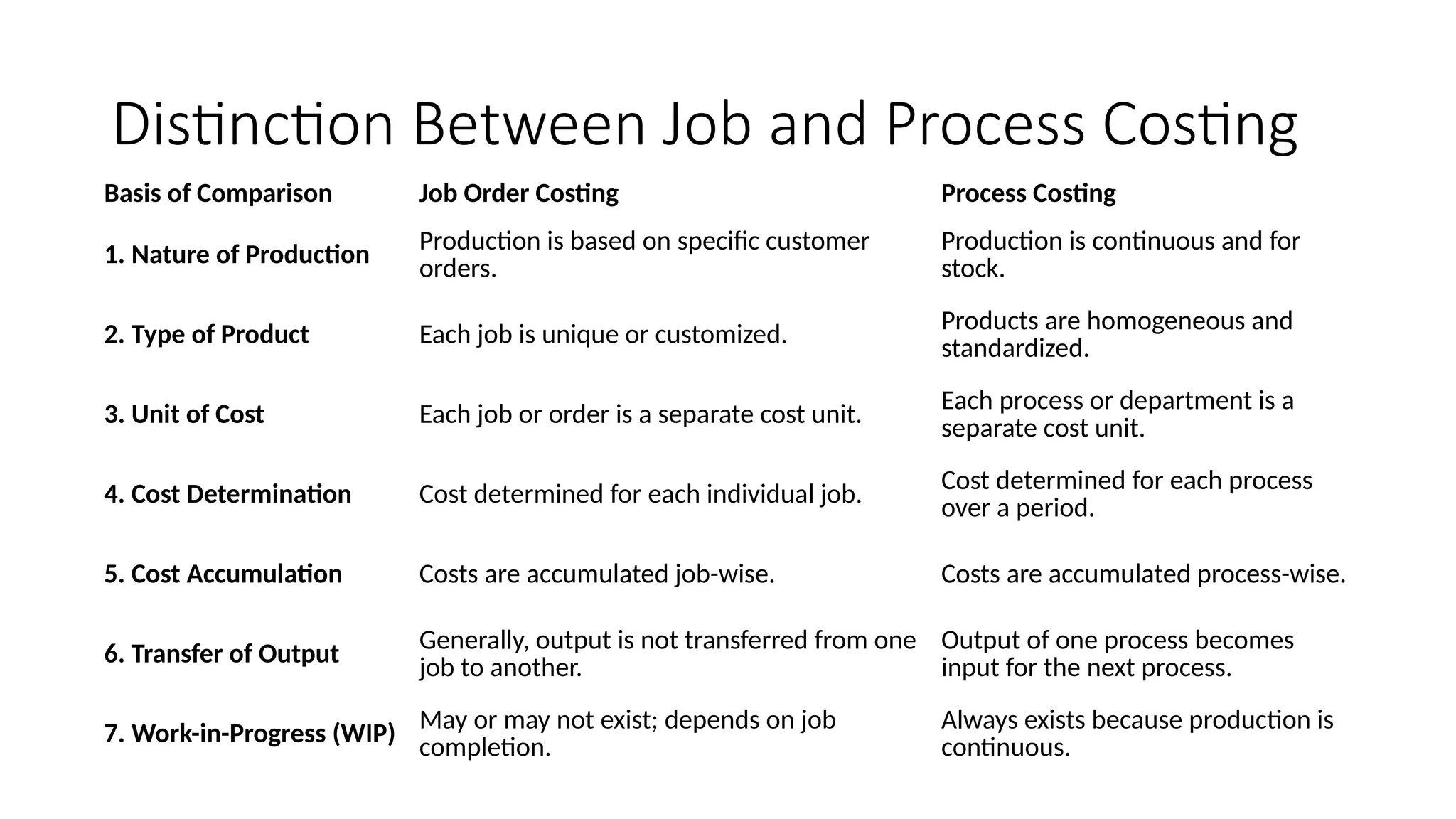
Distinction Between Job and Process Costing
Basis of Comparison Job Order Costing Process Costing
1. Nature of Production
Production is based on specific customer
orders.
Production is continuous and for
stock.
2. Type of Product Each job is unique or customized. Products are homogeneous and
standardized.
3. Unit of Cost Each job or order is a separate cost unit.
Each process or department is a
separate cost unit.
4. Cost Determination Cost determined for each individual job. Cost determined for each process
over a period.
5. Cost Accumulation Costs are accumulated job-wise. Costs are accumulated process-wise.
6. Transfer of Output
Generally, output is not transferred from one
job to another.
Output of one process becomes
input for the next process.
7. Work-in-Progress (WIP) May or may not exist; depends on job
completion.
Always exists because production is
continuous.
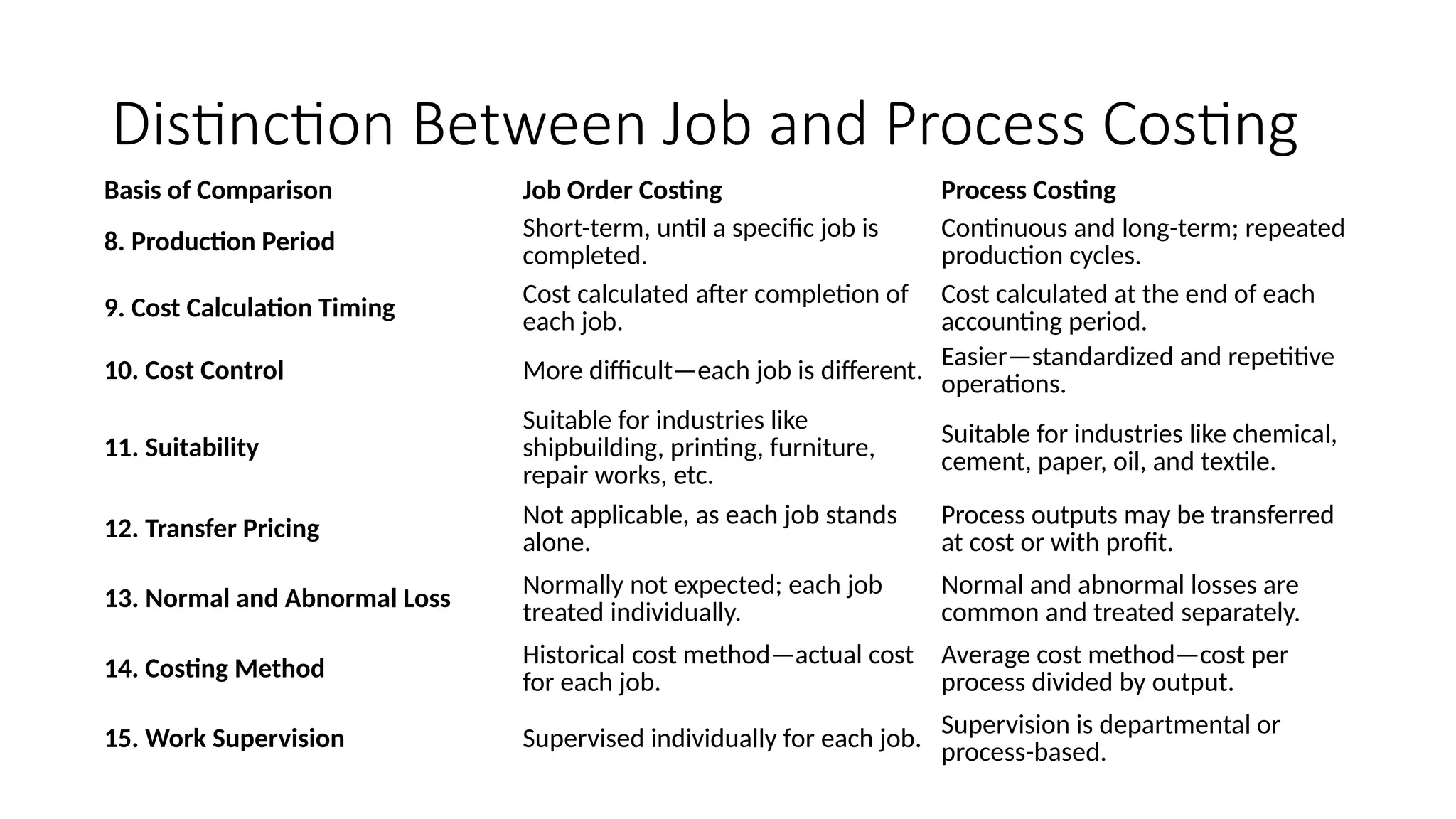
Distinction Between Job and Process Costing
Basis of Comparison Job Order Costing Process Costing
8. Production Period
Short-term, until a specific job is
completed.
Continuous and long-term; repeated
production cycles.
9. Cost Calculation Timing
Cost calculated after completion of
each job.
Cost calculated at the end of each
accounting period.
10. Cost Control More difficult—each job is different.
Easier—standardized and repetitive
operations.
11. Suitability
Suitable for industries like
shipbuilding, printing, furniture,
repair works, etc.
Suitable for industries like chemical,
cement, paper, oil, and textile.
12. Transfer Pricing Not applicable, as each job stands
alone.
Process outputs may be transferred
at cost or with profit.
13. Normal and Abnormal Loss
Normally not expected; each job
treated individually.
Normal and abnormal losses are
common and treated separately.
14. Costing Method
Historical cost method—actual cost
for each job.
Average cost method—cost per
process divided by output.
15. Work Supervision Supervised individually for each job.
Supervision is departmental or
process-based.
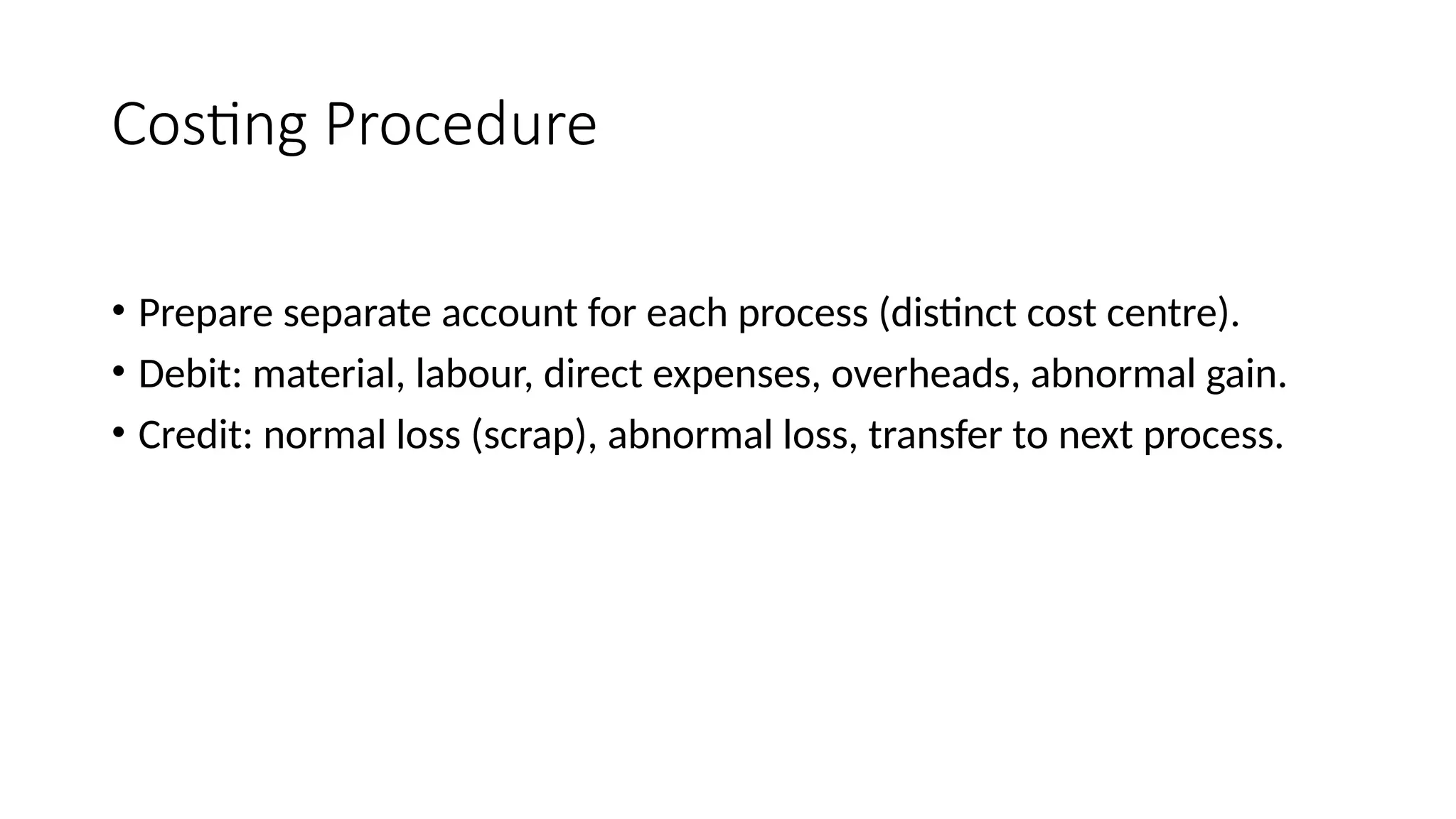
Costing Procedure
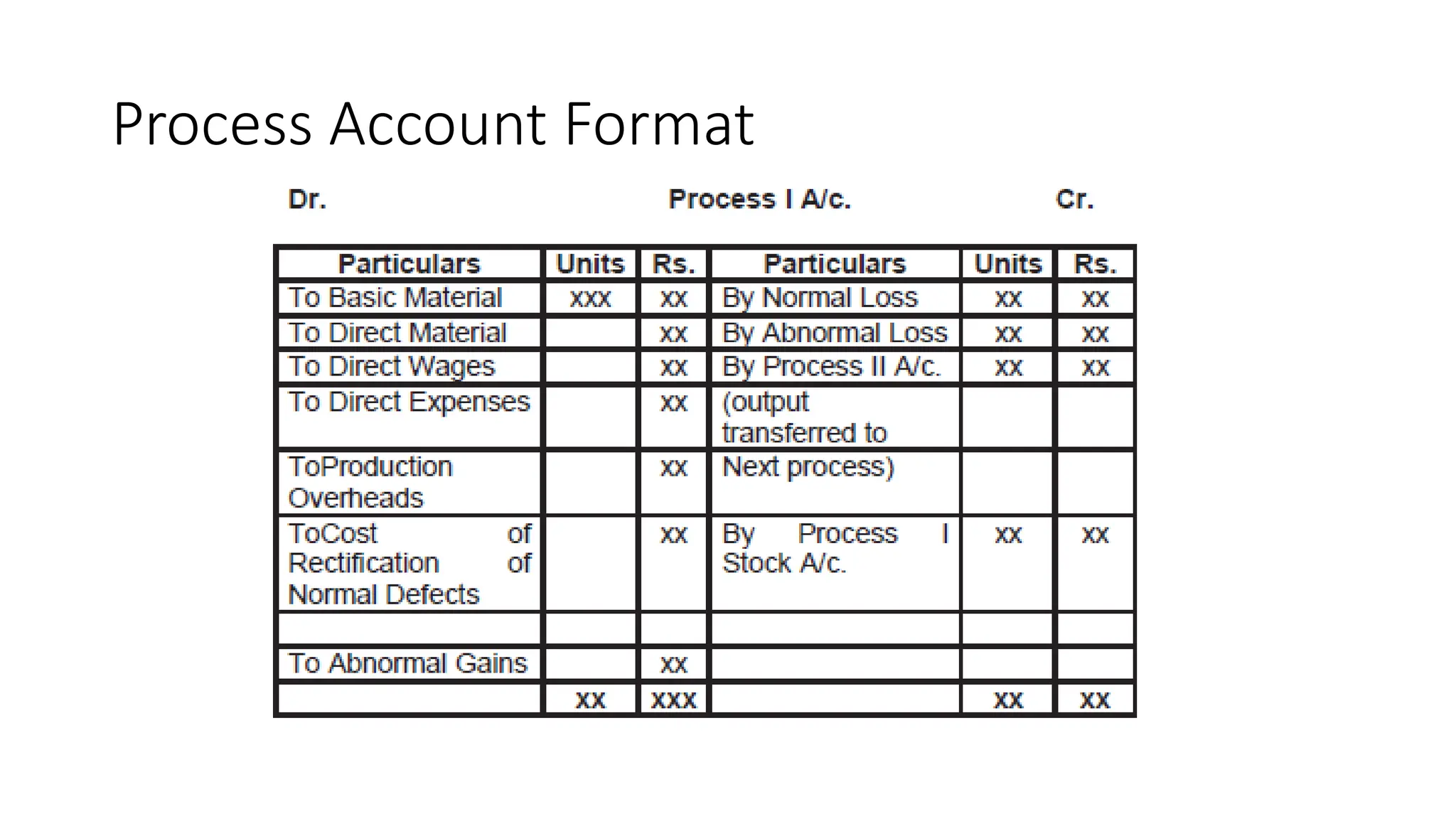
• Prepare separate account for each process (distinct cost centre).
• Debit: material, labour, direct expenses, overheads, abnormal gain.
• Credit: normal loss (scrap), abnormal loss, transfer to next process.
Process Account Format
Process Losses
• Two types: Normal Loss and Abnormal Loss.
• Normal Loss – unavoidable under normal conditions.
• Abnormal Loss – avoidable, caused by negligence or accident.
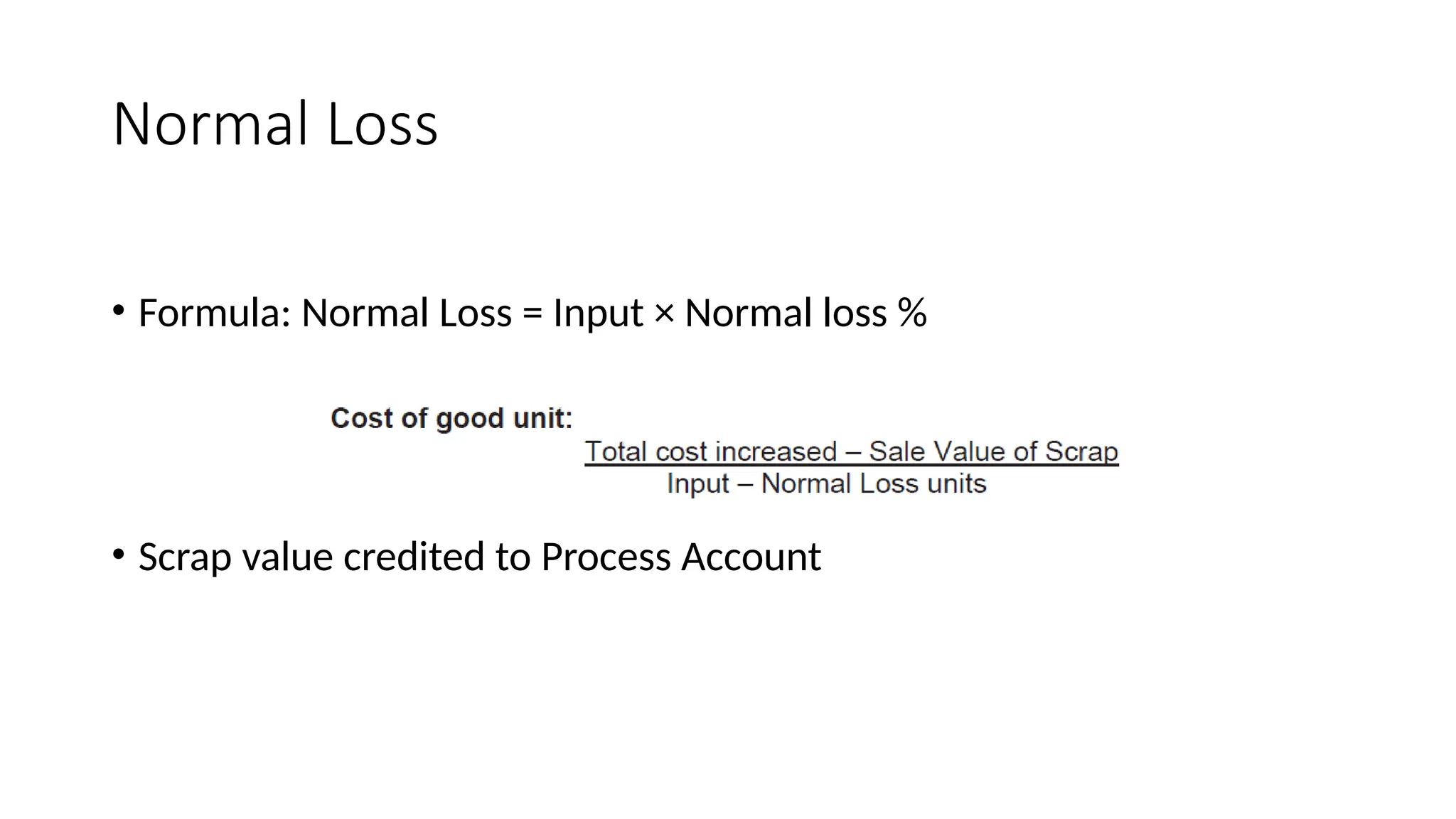
Normal Loss
• Formula: Normal Loss = Input × Normal loss %
• Scrap value credited to Process Account
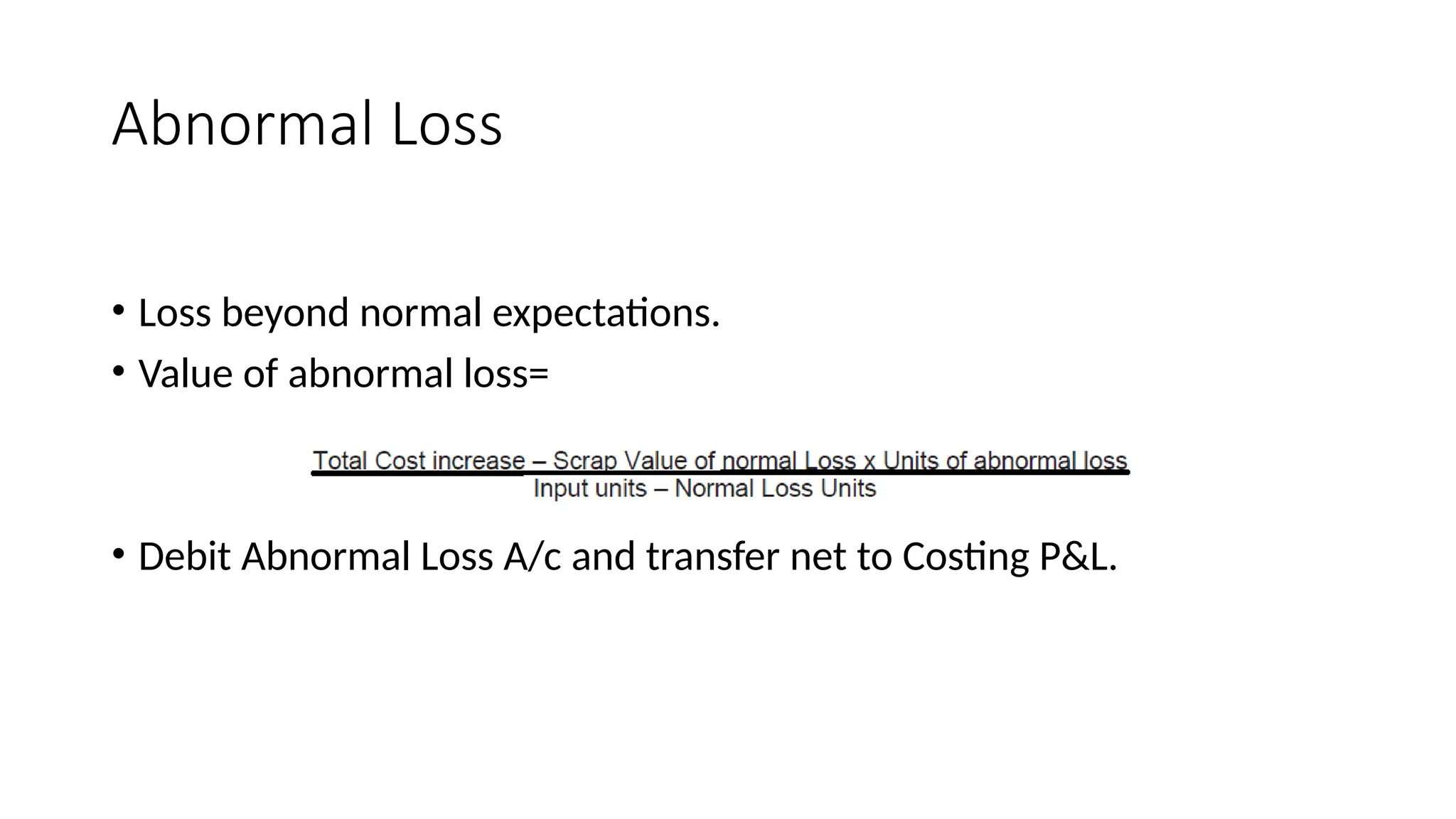
Abnormal Loss
• Loss beyond normal expectations.
• Value of abnormal loss=
• Debit Abnormal Loss A/c and transfer net to Costing P&L.
Abnormal Gain
• Occurs when actual loss < normal loss.
• Valued similar to abnormal loss.
• Credited to Normal Loss A/c, balance to Costing P&L.
Inter-Process Profits
• Output of one process transferred to next at cost or cost + profit.
• Helps determine profitability of each process.
• Unrealized profit in closing stock adjusted by creating a stock reserve.
Thank you

Introduction to Cost Accounting: Process Costing

  • 1.
  • 2.
    Dr. Emon KalyanChowdhury Professor & Head Department of Accounting CIU Business School Director Institutional Quality Assurance Cell (IQAC) Chittagong Independent University Email: emonkalyanchy@ciu.edu.bd Phone: +880-1675875445
  • 3.
    Learning Objectives • Understandmeaning and importance of Process Costing • Differentiate Job Costing and Process Costing • Learn accounting procedure of Process Costing • Study valuation of Work-in-Progress (FIFO, LIFO, Weighted Average) • Understand inter-process transfer and losses
  • 4.
    Introduction • Process costingis a form of operation costing used for standardized goods. • Applied in industries like chemicals, textiles, steel, rubber, sugar, and petrol. • Average cost per unit is obtained by dividing total cost by total output.
  • 5.
    Meaning of ProcessCosting • A method where costs are accumulated for each process or stage of production. • Cost per unit = Total process cost / Normal output of the process. • Suitable for homogeneous, continuous production.
  • 6.
    Definition • Chartered Instituteof Management Accountants (CIMA) London: “That form of operation costing which applies where standardized goods are produced.”
  • 8.
    Features of ProcessCosting • Continuous production and homogeneous output • Standardized processes and departments • Output of one process becomes input for the next • Cost collected process-wise (material, labour, overhead) • Work-in-progress expressed in equivalent units • Average cost per unit determined at each process
  • 9.
    Advantages of ProcessCosting • Periodic computation of cost per process • Simple and less clerical work • Accurate allocation of expenses to processes • Facilitates managerial control and decision making • Helps in preparing quotations and tenders
  • 10.
    Limitations of ProcessCosting • Costs are historical, not ideal for control • Average cost unsuitable for performance analysis • Work-in-progress valuation can be inaccurate • Allocation of joint costs may reduce accuracy
  • 11.
    Distinction Between Joband Process Costing Basis of Comparison Job Order Costing Process Costing 1. Nature of Production Production is based on specific customer orders. Production is continuous and for stock. 2. Type of Product Each job is unique or customized. Products are homogeneous and standardized. 3. Unit of Cost Each job or order is a separate cost unit. Each process or department is a separate cost unit. 4. Cost Determination Cost determined for each individual job. Cost determined for each process over a period. 5. Cost Accumulation Costs are accumulated job-wise. Costs are accumulated process-wise. 6. Transfer of Output Generally, output is not transferred from one job to another. Output of one process becomes input for the next process. 7. Work-in-Progress (WIP) May or may not exist; depends on job completion. Always exists because production is continuous.
  • 12.
    Distinction Between Joband Process Costing Basis of Comparison Job Order Costing Process Costing 8. Production Period Short-term, until a specific job is completed. Continuous and long-term; repeated production cycles. 9. Cost Calculation Timing Cost calculated after completion of each job. Cost calculated at the end of each accounting period. 10. Cost Control More difficult—each job is different. Easier—standardized and repetitive operations. 11. Suitability Suitable for industries like shipbuilding, printing, furniture, repair works, etc. Suitable for industries like chemical, cement, paper, oil, and textile. 12. Transfer Pricing Not applicable, as each job stands alone. Process outputs may be transferred at cost or with profit. 13. Normal and Abnormal Loss Normally not expected; each job treated individually. Normal and abnormal losses are common and treated separately. 14. Costing Method Historical cost method—actual cost for each job. Average cost method—cost per process divided by output. 15. Work Supervision Supervised individually for each job. Supervision is departmental or process-based.
  • 13.
    Costing Procedure • Prepareseparate account for each process (distinct cost centre). • Debit: material, labour, direct expenses, overheads, abnormal gain. • Credit: normal loss (scrap), abnormal loss, transfer to next process.
  • 14.
  • 15.
    Process Losses • Twotypes: Normal Loss and Abnormal Loss. • Normal Loss – unavoidable under normal conditions. • Abnormal Loss – avoidable, caused by negligence or accident.
  • 16.
    Normal Loss • Formula:Normal Loss = Input × Normal loss % • Scrap value credited to Process Account
  • 17.
    Abnormal Loss • Lossbeyond normal expectations. • Value of abnormal loss= • Debit Abnormal Loss A/c and transfer net to Costing P&L.
  • 18.
    Abnormal Gain • Occurswhen actual loss < normal loss. • Valued similar to abnormal loss. • Credited to Normal Loss A/c, balance to Costing P&L.
  • 19.
    Inter-Process Profits • Outputof one process transferred to next at cost or cost + profit. • Helps determine profitability of each process. • Unrealized profit in closing stock adjusted by creating a stock reserve.
  • 20.