Introduction to
Business Strategy
- Nitin Tyagi
At the End of This
Brief Lesson
• Explain the concept of business
strategy
• Understand what is NOT business
strategy
• Understand common types of business
strategies
What’s in it for you?
• Sound business decisions
• Budding entrepreneurs
• Big picture thinking
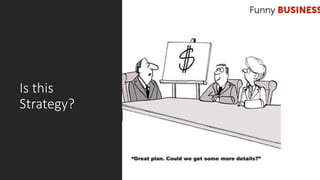
Is this
Strategy?
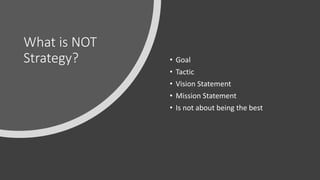
What is NOT
Strategy? • Goal
• Tactic
• Vision Statement
• Mission Statement
• Is not about being the best
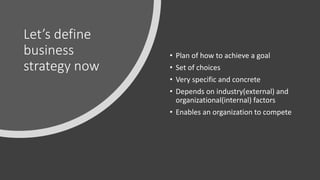
Let’s define
business
strategy now
• Plan of how to achieve a goal
• Set of choices
• Very specific and concrete
• Depends on industry(external) and
organizational(internal) factors
• Enables an organization to compete
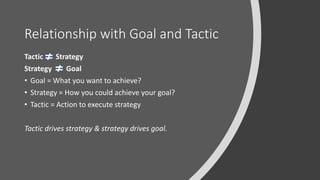
Relationship with Goal and Tactic
Tactic Strategy
Strategy Goal
• Goal = What you want to achieve?
• Strategy = How you could achieve your goal?
• Tactic = Action to execute strategy
Tactic drives strategy & strategy drives goal.
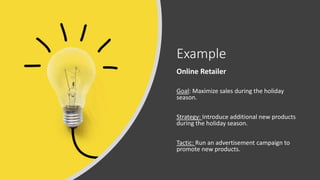
Example
Online Retailer
Goal: Maximize sales during the holiday
season.
Strategy: Introduce additional new products
during the holiday season.
Tactic: Run an advertisement campaign to
promote new products.
Types of Business
Strategies
• Growth/Acquisition: Customers or markets
• Innovation/Differentiation: New products and
services to market
• Cost Leadership: Short-term cost minimization
• Client Service: Consistent and stable client service
• Diversification: New products and services to
existing portfolio.
Factors in
Determining
Strategy
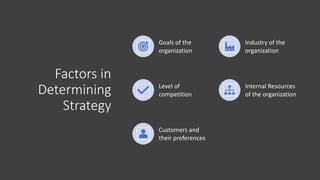
Goals of the
organization
Industry of the
organization
Level of
competition
Internal Resources
of the organization
Customers and
their preferences
Now let’s
determine the
future strategy
of your
organization
• Group discussion: Decide the best business
strategy (innovation, cost leadership, client
service, diversification etc.) for an
organization of your choice. Pay attention
to the following:
• Industry of the organization
• Goals, mission and vision of the
organization
• How best to achieve the goals, mission
and vision
• Consider external factors such as
customers, competitors, etc.
• Consider internal capabilities of the
organization.
Questions?

Introduction to business strategy

  • 1.
  • 2.
    At the Endof This Brief Lesson • Explain the concept of business strategy • Understand what is NOT business strategy • Understand common types of business strategies
  • 3.
    What’s in itfor you? • Sound business decisions • Budding entrepreneurs • Big picture thinking
  • 4.
  • 5.
    What is NOT Strategy?• Goal • Tactic • Vision Statement • Mission Statement • Is not about being the best
  • 6.
    Let’s define business strategy now •Plan of how to achieve a goal • Set of choices • Very specific and concrete • Depends on industry(external) and organizational(internal) factors • Enables an organization to compete
  • 7.
    Relationship with Goaland Tactic Tactic Strategy Strategy Goal • Goal = What you want to achieve? • Strategy = How you could achieve your goal? • Tactic = Action to execute strategy Tactic drives strategy & strategy drives goal.
  • 8.
    Example Online Retailer Goal: Maximizesales during the holiday season. Strategy: Introduce additional new products during the holiday season. Tactic: Run an advertisement campaign to promote new products.
  • 9.
    Types of Business Strategies •Growth/Acquisition: Customers or markets • Innovation/Differentiation: New products and services to market • Cost Leadership: Short-term cost minimization • Client Service: Consistent and stable client service • Diversification: New products and services to existing portfolio.
  • 10.
    Factors in Determining Strategy Goals ofthe organization Industry of the organization Level of competition Internal Resources of the organization Customers and their preferences
  • 11.
    Now let’s determine the futurestrategy of your organization • Group discussion: Decide the best business strategy (innovation, cost leadership, client service, diversification etc.) for an organization of your choice. Pay attention to the following: • Industry of the organization • Goals, mission and vision of the organization • How best to achieve the goals, mission and vision • Consider external factors such as customers, competitors, etc. • Consider internal capabilities of the organization.
  • 12.