• NAME:G.SURYAPRAKASH
• CLASS:B.Sc NURSING
• SUBJECT: BIOCHEMISTRY
• TOPIC: INTRODUCTION OF BIOCHEMISTRY
Introduction of
Biochemistry
Biochemistry is the study of chemical processes and substances that occur
within living organisms. .
What is Biochemistry?
Biochemistry is the branch of science that explores the chemical processes
and substances that occur within living organisms, including the structure,
composition, and function of biomolecules.
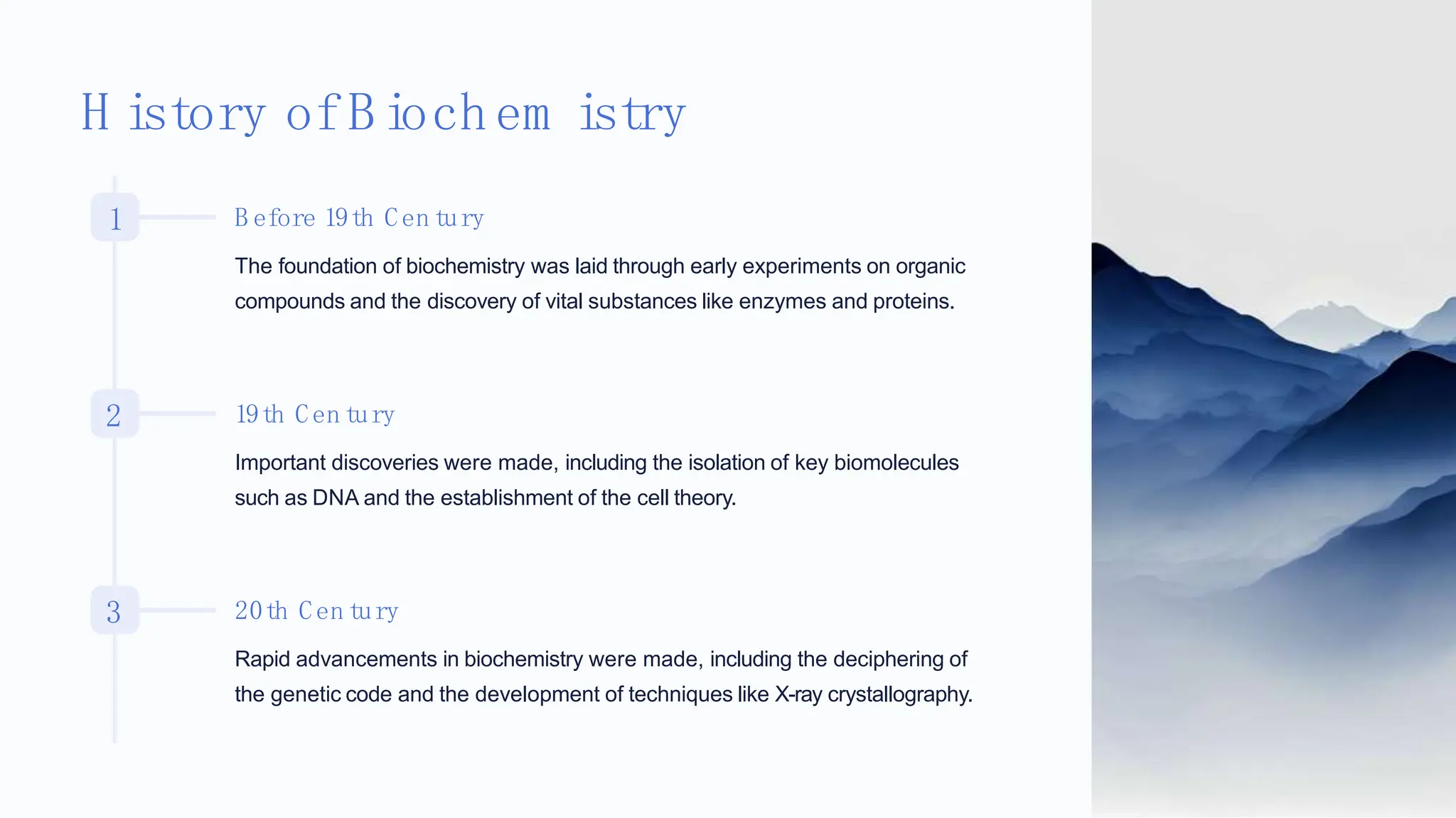
H istory ofBiochem istry
1 B efore 19th Cen tury
The foundation of biochemistry was laid through early experiments on organic
compounds and the discovery of vital substances like enzymes and proteins.
2 19th Cen tury
Important discoveries were made, including the isolation of key biomolecules
such as DNA and the establishment of the cell theory.
3 20th Cen tury
Rapid advancements in biochemistry were made, including the deciphering of
the genetic code and the development of techniques like X-ray crystallography.
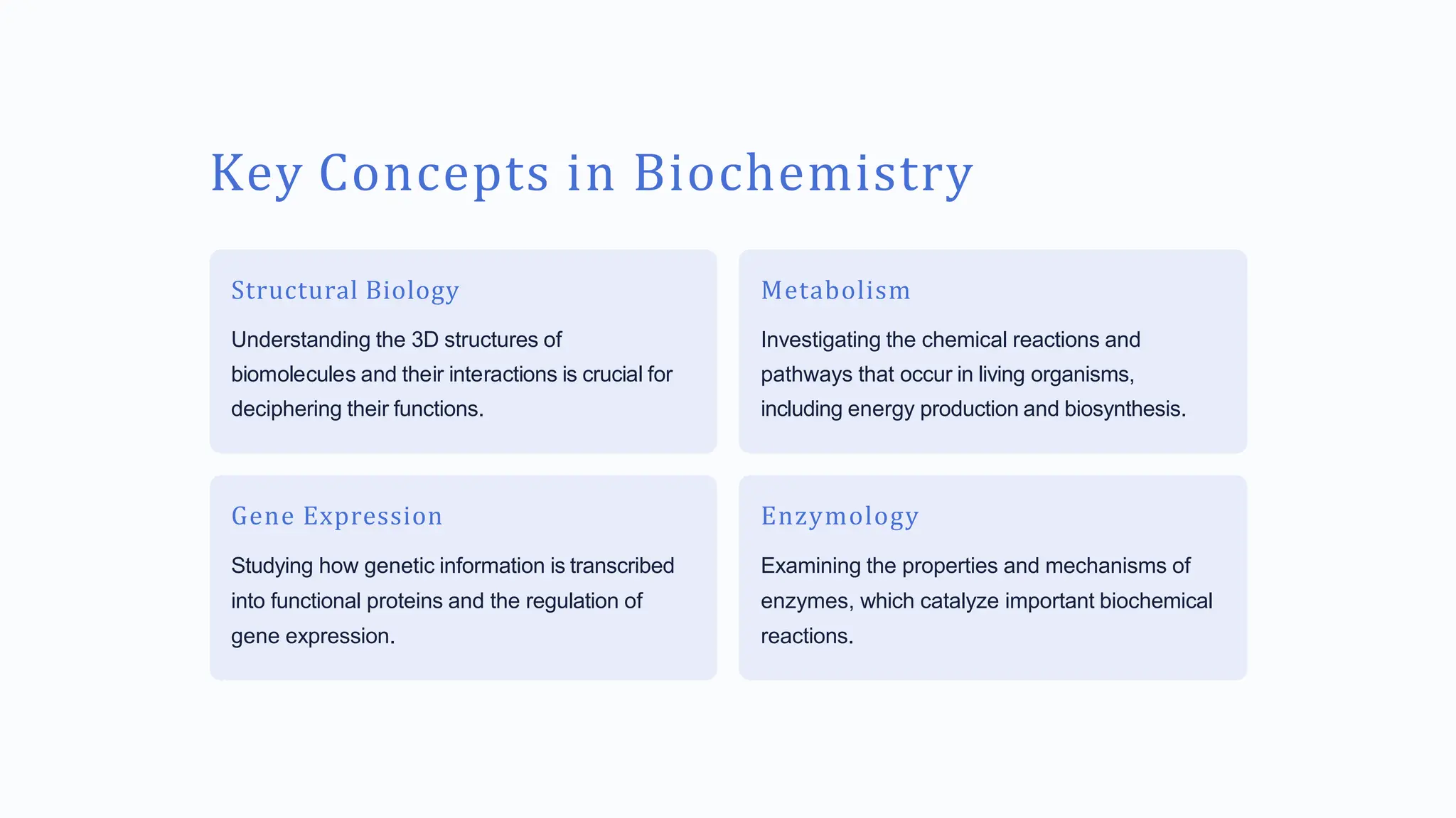
Key Concepts in Biochemistry
Structural Biology
Understanding the 3D structures of
biomolecules and their interactions is crucial for
deciphering their functions.
Metabolism
Investigating the chemical reactions and
pathways that occur in living organisms,
including energy production and biosynthesis.
Gene Expression
Studying how genetic information is transcribed
into functional proteins and the regulation of
gene expression.
Enzymology
Examining the properties and mechanisms of
enzymes, which catalyze important biochemical
reactions.
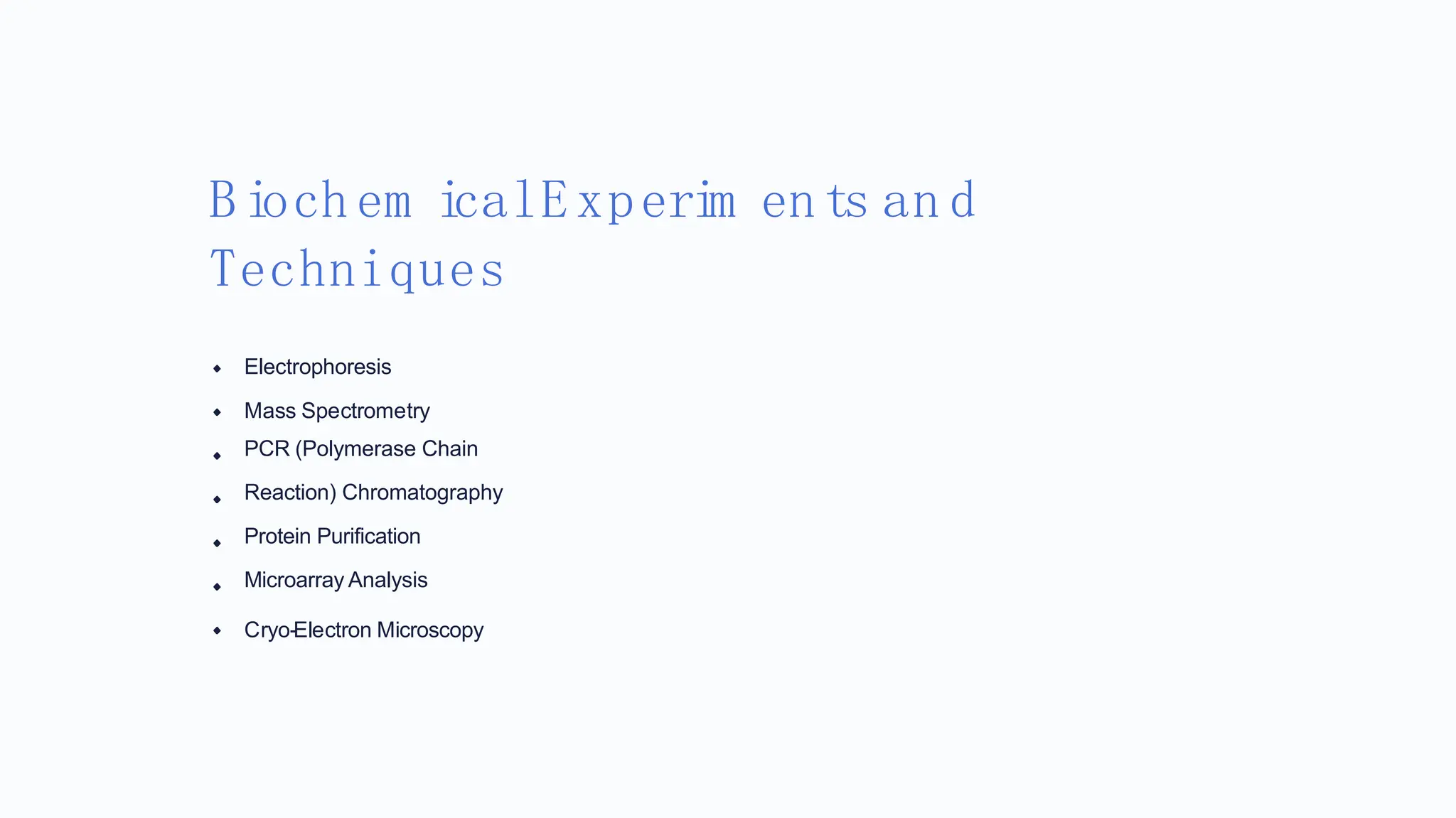
Biochem icalExperim ents an d
Techniques
Electrophoresis
Mass Spectrometry
PCR (Polymerase Chain
Reaction) Chromatography
Protein Purification
Microarray Analysis
Cryo-Electron Microscopy
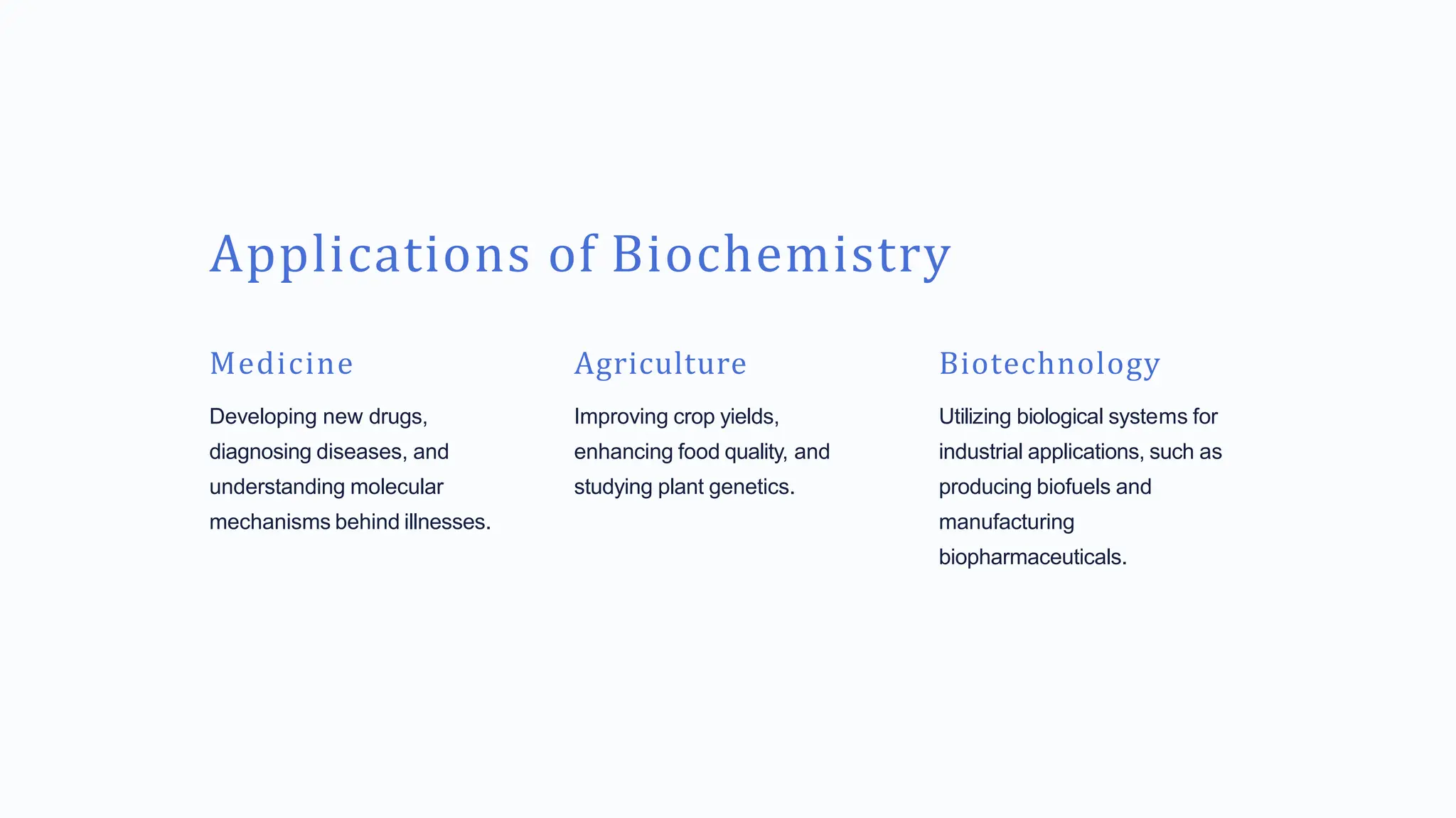
Applications of Biochemistry
Medicine
Developing new drugs,
diagnosing diseases, and
understanding molecular
mechanisms behind illnesses.
Agriculture
Improving crop yields,
enhancing food quality, and
studying plant genetics.
Biotechnology
Utilizing biological systems for
industrial applications, such as
producing biofuels and
manufacturing
biopharmaceuticals.
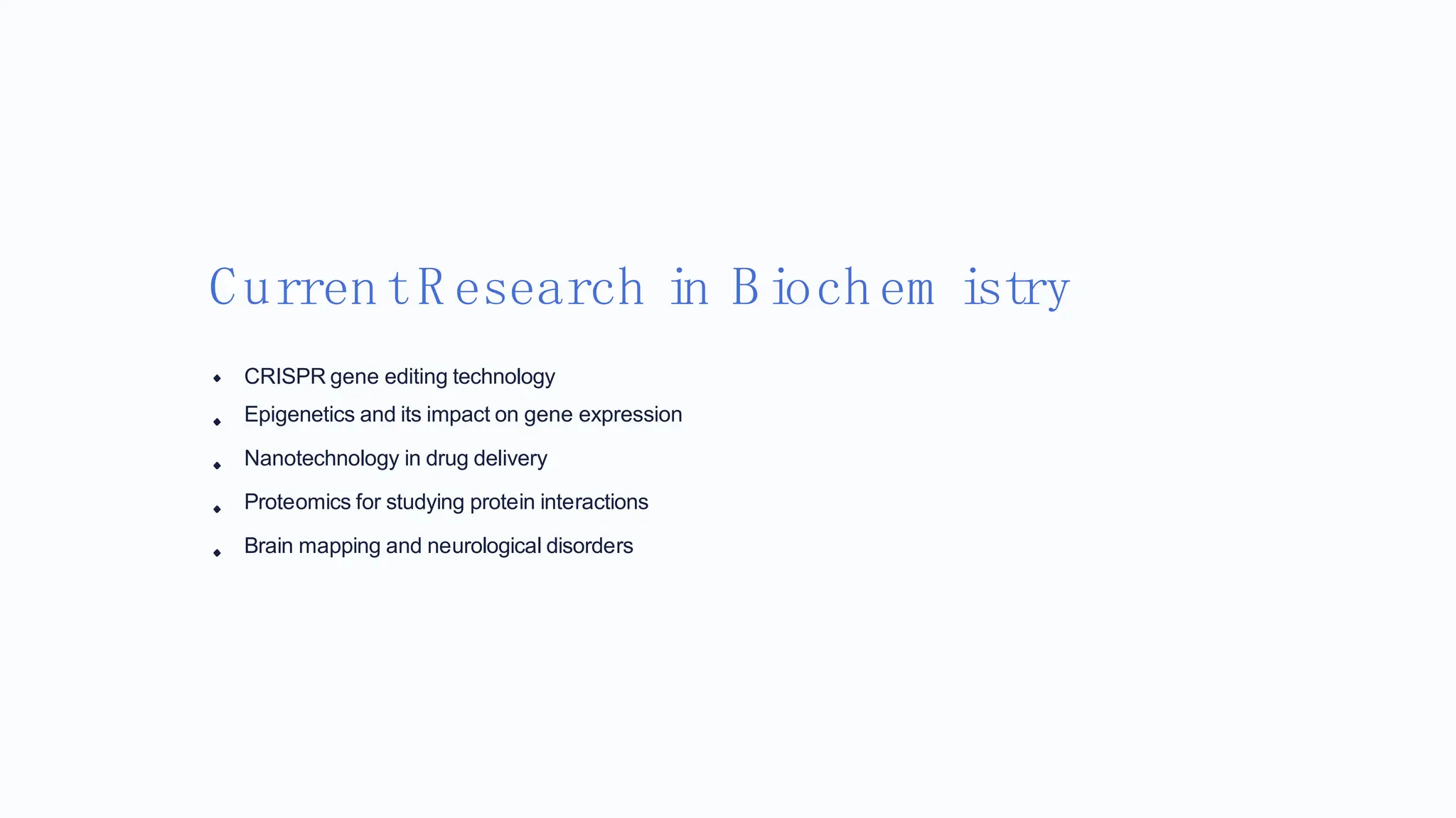
CurrentR esearch in Biochem istry
CRISPR gene editing technology
Epigenetics and its impact on gene expression
Nanotechnology in drug delivery
Proteomics for studying protein interactions
Brain mapping and neurological disorders
Conclusion
Biochemistry plays a vital role in understanding the complexities of life. Its applications are diverse and
continually expanding, contributing to advancements in various fields.

Introduction-of-Biochemistry.pptx in detail

  • 1.
    • NAME:G.SURYAPRAKASH • CLASS:B.ScNURSING • SUBJECT: BIOCHEMISTRY • TOPIC: INTRODUCTION OF BIOCHEMISTRY
  • 2.
    Introduction of Biochemistry Biochemistry isthe study of chemical processes and substances that occur within living organisms. .
  • 3.
    What is Biochemistry? Biochemistryis the branch of science that explores the chemical processes and substances that occur within living organisms, including the structure, composition, and function of biomolecules.
  • 4.
    H istory ofBiochemistry 1 B efore 19th Cen tury The foundation of biochemistry was laid through early experiments on organic compounds and the discovery of vital substances like enzymes and proteins. 2 19th Cen tury Important discoveries were made, including the isolation of key biomolecules such as DNA and the establishment of the cell theory. 3 20th Cen tury Rapid advancements in biochemistry were made, including the deciphering of the genetic code and the development of techniques like X-ray crystallography.
  • 5.
    Key Concepts inBiochemistry Structural Biology Understanding the 3D structures of biomolecules and their interactions is crucial for deciphering their functions. Metabolism Investigating the chemical reactions and pathways that occur in living organisms, including energy production and biosynthesis. Gene Expression Studying how genetic information is transcribed into functional proteins and the regulation of gene expression. Enzymology Examining the properties and mechanisms of enzymes, which catalyze important biochemical reactions.
  • 6.
    Biochem icalExperim entsan d Techniques Electrophoresis Mass Spectrometry PCR (Polymerase Chain Reaction) Chromatography Protein Purification Microarray Analysis Cryo-Electron Microscopy
  • 7.
    Applications of Biochemistry Medicine Developingnew drugs, diagnosing diseases, and understanding molecular mechanisms behind illnesses. Agriculture Improving crop yields, enhancing food quality, and studying plant genetics. Biotechnology Utilizing biological systems for industrial applications, such as producing biofuels and manufacturing biopharmaceuticals.
  • 8.
    CurrentR esearch inBiochem istry CRISPR gene editing technology Epigenetics and its impact on gene expression Nanotechnology in drug delivery Proteomics for studying protein interactions Brain mapping and neurological disorders
  • 9.
    Conclusion Biochemistry plays avital role in understanding the complexities of life. Its applications are diverse and continually expanding, contributing to advancements in various fields.